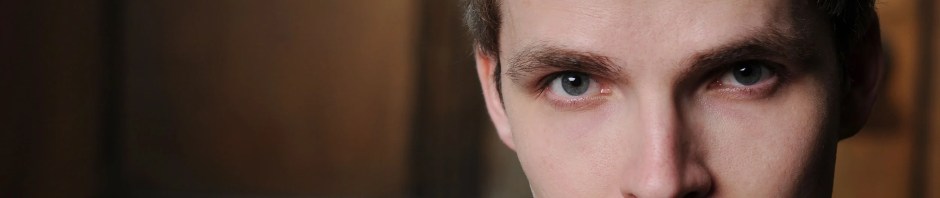
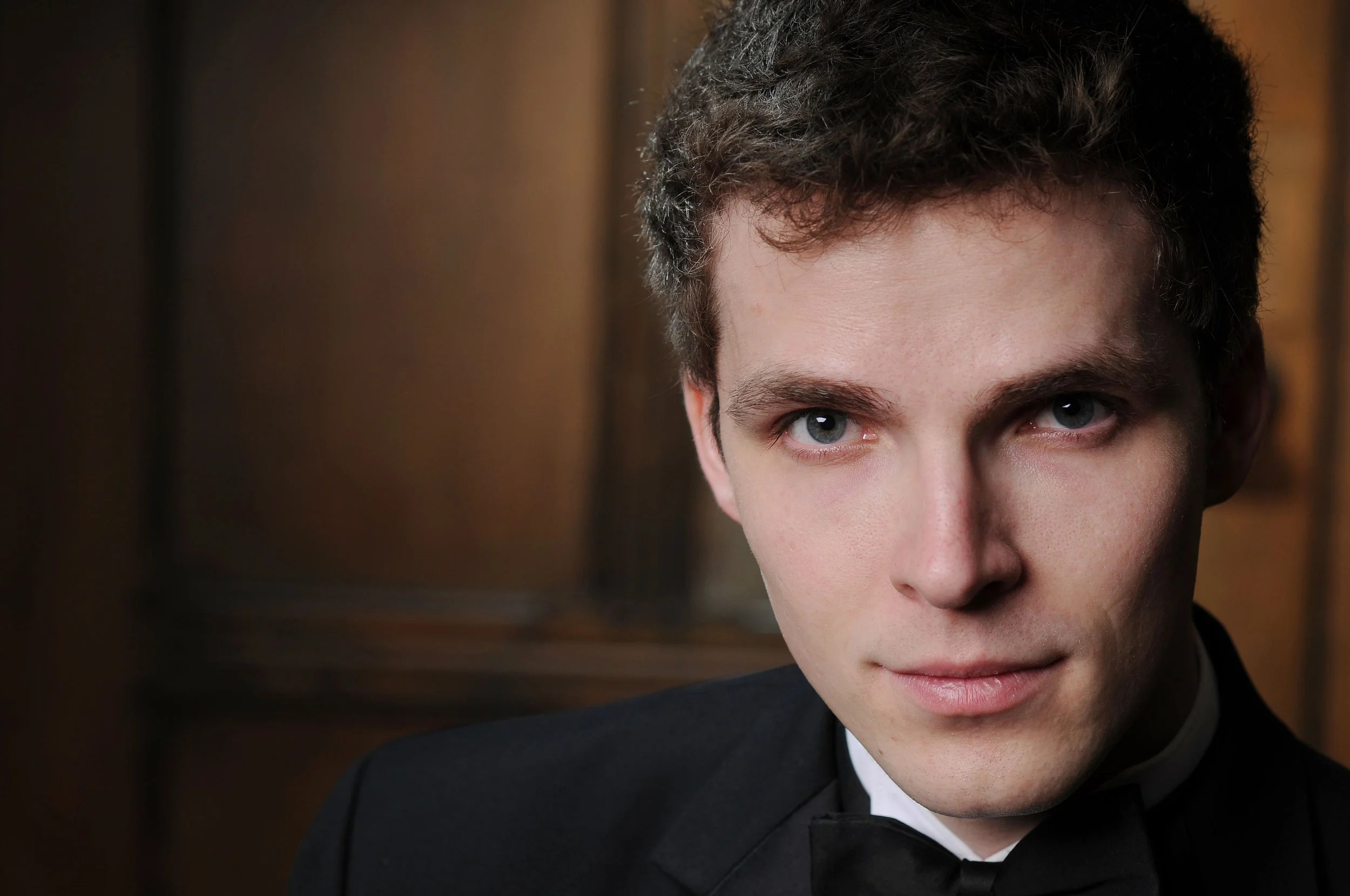
Christopher Bagan wears a lot of hats, as keyboardist, conductor, professor at University of Toronto, chamber musician, basso continuo specialist, coach & repetiteur. In the immediate future: Christopher joins Toronto Mendelssohn Choir’s presentations of Bach’s St. Matthew Passion March 24th-25th. April 15th is the world premiere of his new chamber arrangement for 14 players of Debussy’s Pelléas et Mélisande.
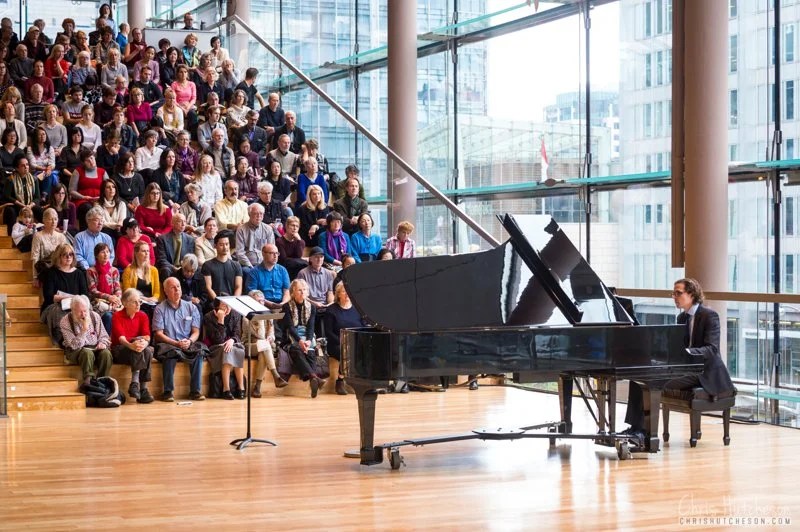
And although he does so much, yet he’s very humble about what he does, as you will see reading our interview. I was delighted & grateful that Christopher found time to answer some questions.
*******
Barczablog: Are you more like your father or mother?
Christopher Bagan: I was raised in a musical household; my father ran a recording studio out of our home, and my mother taught piano for much of my childhood. They never forced lessons on us, but by the time I was ten, I insisted on piano lessons—much to their secret delight. I never looked back.
In terms of personality and appearance, I’m much closer to my mother’s side of the family. However, I have a few significant characteristics of my father that do the “heavy lifting” during big projects. My dad will work diligently on a project, no matter how large, almost without food or sleep until it is done. His mind simply won’t allow him to stop before completion. I have a lot of that in me; it’s the engine that helps me arrive at seemingly impossible deadlines.
BB: What is the best or worst thing about what you do?
Christopher Bagan: I have an astonishing amount of variety in my work—teaching, performing, conducting, arranging, and typesetting. The repertoire is a wide, fascinating swath. The “worst” part is the schedule inconsistency. My partner is also a musician and is out at rehearsals most nights, so balancing family and home life can be quite a puzzle.
BB: Who do you like to listen to or watch?
Christopher Bagan: I don’t find much time for TV, so I tend to revisit old favorites like The Office or Seinfeld. As for listening, if I’m not reviewing scores for a rehearsal, you’ll usually find heavy metal in my headphones or a podcast playing.
BB: What ability or skill do you wish you had?
Christopher Bagan: I wish I played a stringed instrument and could better speak the “language of the bow.” If I had the choice, I’d pick the cello or the viola da gamba. I love the gamba’s repertoire, and it lends itself beautifully to self-accompanying.
BB: When you’re just relaxing, what is your favourite thing to do?
Christopher Bagan: I love to go on long walks. It’s a healthy outlet that gives me time to think while moving toward a goal. Occasionally, I’ll also find time to disappear into a video game on my PC.
BB: What was the first music you remember?
Christopher Bagan: My first “musical awakening” came from 1980s musical theatre—Les Misérables and Phantom of the Opera—alongside my parents’ classical records. I loved the freedom of pulling a disc off the shelf at nine years old, having no idea what I was about to hear. My tastes moved through many styles quickly before settling on heavy metal and Classical as my “home” genres.
BB: What do you enjoy playing at the keyboard for your own pleasure?
Christopher Bagan: It depends on the mood. Sometimes I’ll sit down to transcribe something, working until I’ve uncovered the DNA of the harmony and structure. Other times, I’ll go back to the 19th-century Romantic world—Chopin, Rachmaninov, or Schumann—to reconnect with my undergraduate roots.
The St. Matthew Passion & The Continuo Team
BB: What role do you take on in the JS Bach St. Matthew Passion with the Toronto Mendelssohn Choir?
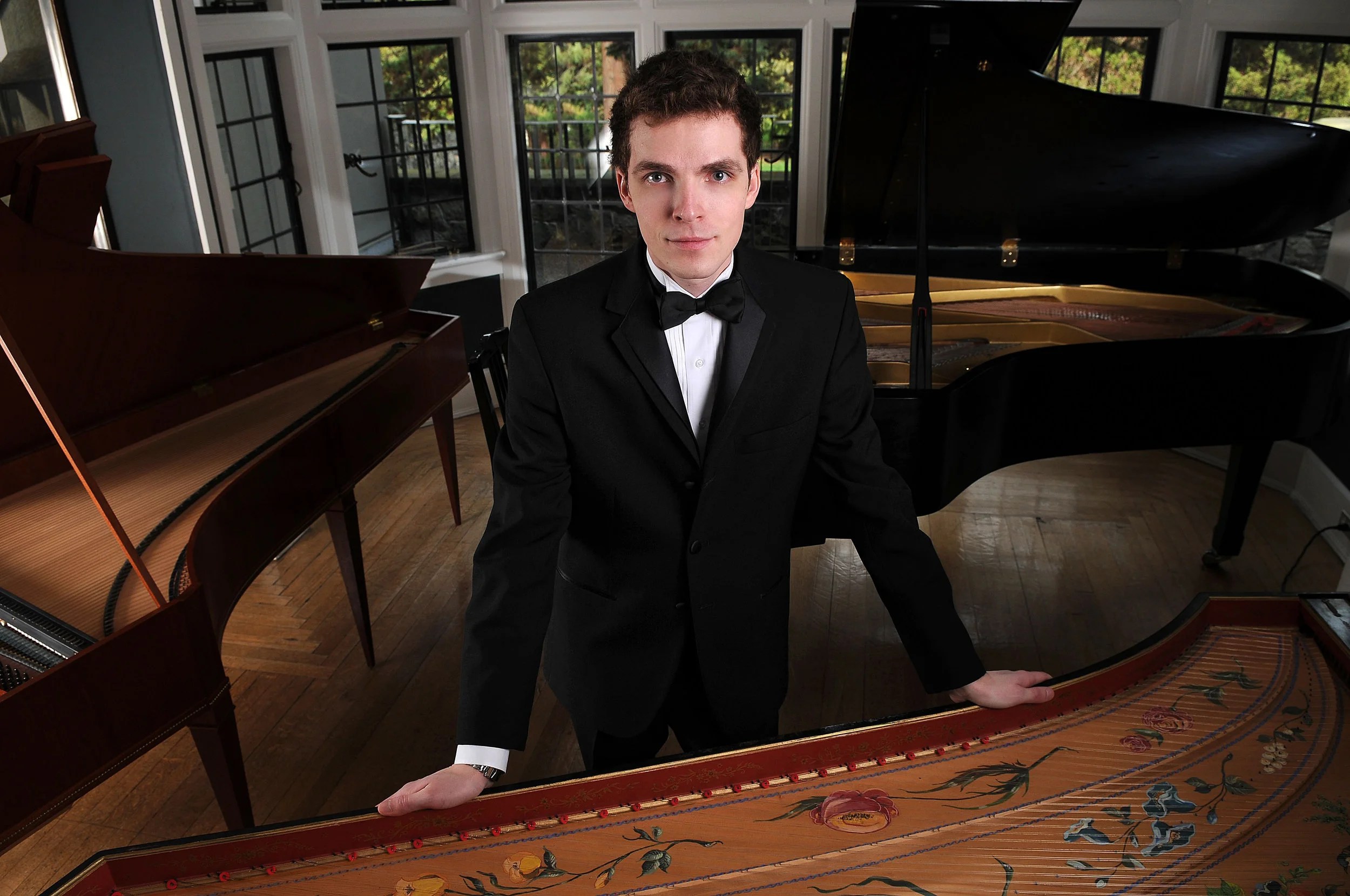
Christopher Bagan: My main role is part of the “continuo team.” We are the heartbeat of the piece—cello, organ, and harpsichord (sometimes joined by theorbo or bassoon) all playing the bass line. This is the backbone of Baroque music.
For this performance, I’m working with cellist Felix Deak and organist Jonathan Oldengarm. Because we’ve worked together so often, we speak the same musical language. A tight-knit continuo unit saves the conductor from getting bogged down in minutiae, allowing us to get to the “music-making” quickly and efficiently.
BB: How does this relate to your ideas for Pelléas et Mélisande?
Christopher Bagan: I’ve never really had a “usual” repertoire. I’ve always played modern piano and contemporary music alongside my deep dives into the Baroque. Historical performance practice has given me a “forward-oriented” approach to music history. It’s more interesting to watch stylistic innovation unfold sequentially than in hindsight.
Many Romantic composers were more connected to the past than we realize. For example, the first editor of the complete harpsichord music of François Couperin was actually Johannes Brahms!
BB: Do we misunderstand Debussy by thinking of him as “modern”?
Christopher Bagan: The labels are often more limiting than helpful. Debussy was an innovator, but he was also deeply aware of his history. The “programmatic” nature of his music—those evocative titles—owes a direct debt to the French harpsichord tradition of Couperin. He looked back to find the freedom to move forward.
Re-orchestrating Pelléas et Mélisande
BB: What were your objectives in re-orchestrating Pelléas?
Christopher Bagan: The goal was to make the score playable by a maximum of 14 players. I modeled the ensemble after Arnold Schönberg’s “Society for Private Music Making.” Schönberg sought to distill massive Romantic works (like Mahler or Bruckner) into intimate chamber versions that could be appreciated without the “bombast” of a massive hall. It maximizes individual color while sacrificing very little of the original atmosphere.
BB: Describe the changes you are making to the orchestration.
Christopher Bagan: Debussy originally wrote Pelléas as a piano-vocal score before expanding it for a massive orchestra of 60–80 players. I’ve essentially worked in reverse, using both the piano score and the full orchestration as guides.
I’ve distilled it down to a “soloist” ensemble: a string quintet, a wind quintet (flute, oboe, clarinet, bassoon, horn), and auxiliary players (harp, piano, percussion, and one trumpet).
BB: What do these changes mean for the way the opera works?
Christopher Bagan: It restores the “recitative” nature of the work. In many ways, Pelléas functions like a Monteverdi opera—one long, unfolding musical conversation. A full modern orchestra is a “lumbering creature” that is slow to react. A 14-player chamber ensemble, however, can move as deftly as a Baroque continuo section, responding moment-to-moment to the emotional nuances of the singers on stage.
The Future of the Art Form
BB: Are reduced productions like this helping to reinvent opera?
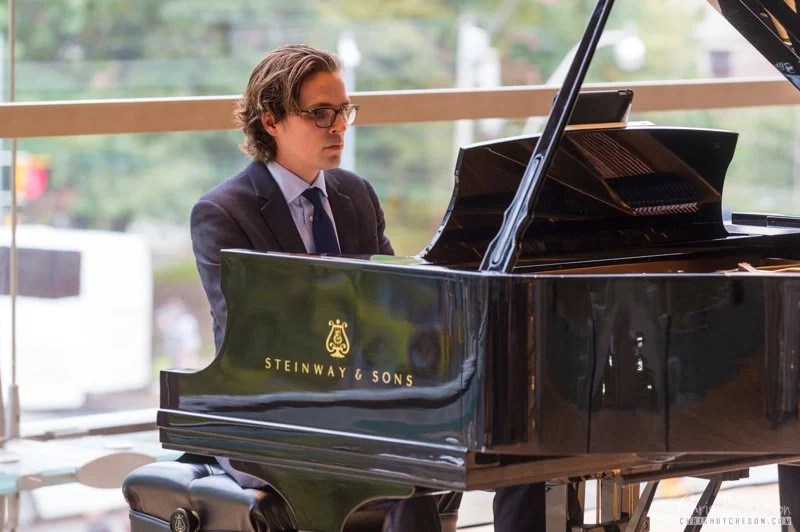
Christopher Bagan: Absolutely. I’ve always been more interested in the “spirit of the law” than the “letter.” Reducing the orchestration isn’t just about saving money (though that’s a great bonus); it opens the door to “lyric” singers who have incredible artistry but might not have the sheer physical volume to compete with an 80-piece orchestra. It makes the art form more mobile and accessible.
BB: What do you think Debussy would think of your orchestration?
Christopher Bagan: I’d like to think he would hear it and immediately want to get in there and “tinker” with me! He was aware of these types of chamber arrangements in his own time. I hope he’d see it as a living adaptation rather than a museum piece.
BB: I think you’re right, I agree. What’s coming up next for you?
Christopher Bagan: I’m moving more into conducting, which has been a tremendous learning experience. I’ve just finished Handel’s Hercules in Edmonton. This summer, I’ll be directing Dido and Aeneas for the Ottawa Chamberfest, followed by the fall Opera Atelier production of Charpentier’s La descente d’Orphée aux Enfers at Koerner Hall for the 2026-27 season. I’ve finally done enough of these to quiet the “imposter syndrome” and really start enjoying myself!
BB: Wow, that’s exciting!
But first:
March 24-25 Toronto Mendelssohn Choir’s presentations of Bach’s St. Matthew Passion.
April 15-19 Opera Atelier’s presentations of Debussy’s Pelléas et Mélisande.
May 22-24 Toronto Bach Festival performances.
 barczablog