
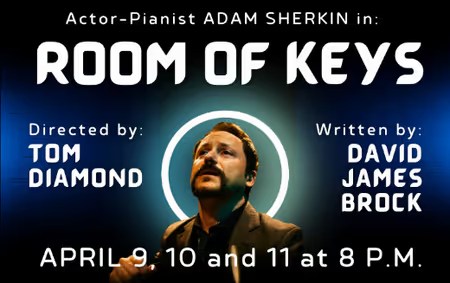
Room of Keys is David James Brock’s one act play, created with Adam Sherkin of Piano Lunaire, inspired by Béla Bartók’s Bluebeard’s Castle (1918).
It’s natural that a mysterious symbolist play invites exploration. As with the piano paraphrases of La Reine-garçon invented by Adam last year, a modern opera produced at the Canadian Opera Company functions as the departure point for something new, both an exploration of the opera and something original from Adam & Piano Lunaire: and this time, also David and his play.
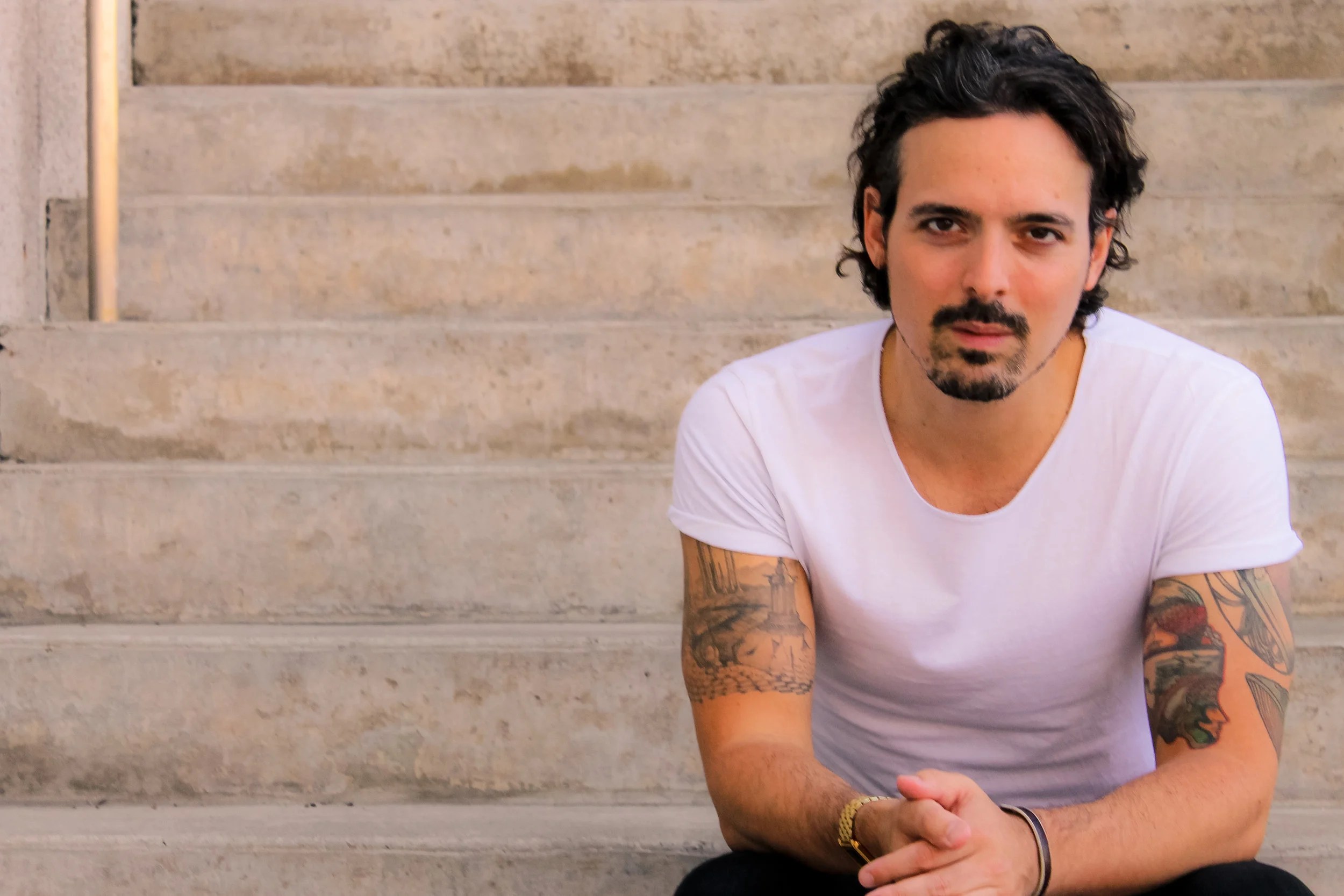
Let me unlock David’s clever title. Remember that Bluebeard takes his new wife into his castle, exploring one room after another: and she keeps asking for the next key, and the next key. Remember too that Bartók was both pianist (playing black & white keys) and composer (of music in major or minor keys).
As I’ve been listening to a new CD of orchestral music of Béla Bartók by the Toronto Symphony, I can’t help thinking that sometimes it takes a long time to fully understand an artist & their work. Later this month the Canadian Opera Company will revive their famous Robert Lepage double bill of Erwartung (by Arnold Schoenberg) & Bluebeard’s Castle (by Bartók).
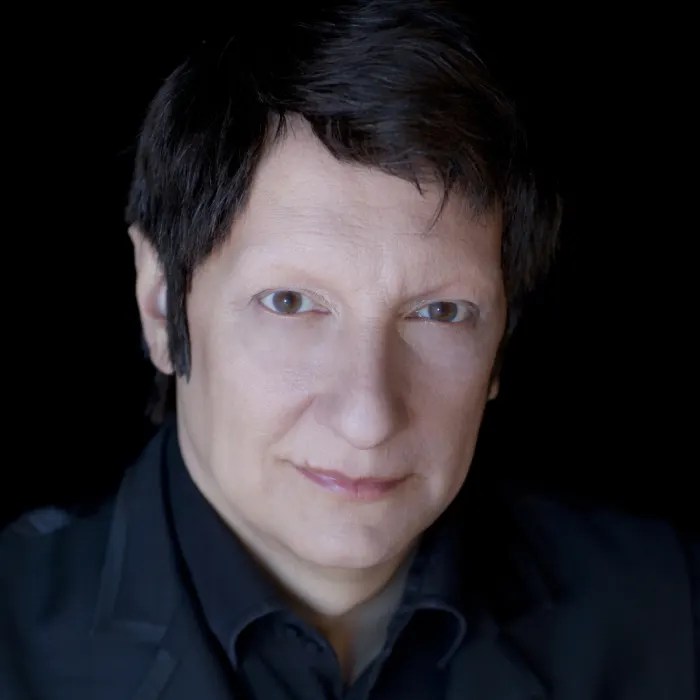
A work like Roomful of Keys offers new perspectives on the composer and their influence, a better & deeper understanding of Bartók. That’s one reason I had to ask a few questions.
Barczablog: Are you more like your father or mother?
David James Brock: If I’m anything like either of them, I’m lucky. They’ve been ridiculously supportive of what I’m up to with my life, even when I can’t always explain it well or don’t know myself. I often write “bad” parents in my stuff and Room of Keys portrays a father who’s maybe not so kind to his son, Greenie, the play’s main character. One way into Greenie was to ask…what would my Dad not have done in this situation?
I think it’s nice to have parents (or any family member, caregiver, friend) who ask questions but don’t question when the stakes are joy. My parents understand the joy of life. They live well, forgive, and have taught me to relax despite my anxious nature. Both are creative and curious people – my mom is a gifted stitcher and even designed and sewed costumes for plays I did in high school like Joseph and the Amazing Technicolor Dreamcoat (I was the Butler). I chase my mom’s aversion to procrastinate (get it done, now) and my dad’s hippie sense of humour. Room of Keys has Greenie wishing…wondering if his Dad could have “taught him funny” instead of forcing him to learn music. Greenie’s Dad makes cruel jokes, and I hate that for Greenie. My Dad is damn hilarious.
BB: Ha okay yes I want to see the play, but I also want to meet your dad. (oh well maybe later)
Your upcoming opera libretto for COC & Piano Lunaire in April is called “Beyond Bluebeard: room of keys”, anticipating the COC production of Bartok’s Bluebeard’s Castle. Please describe the project.
David James Brock: Room of Keys is a one act play, not a libretto, though that is a common form I write in.
BB: Whooops…!
David James Brock: I don’t want anyone to be disappointed that Adam doesn’t sing!
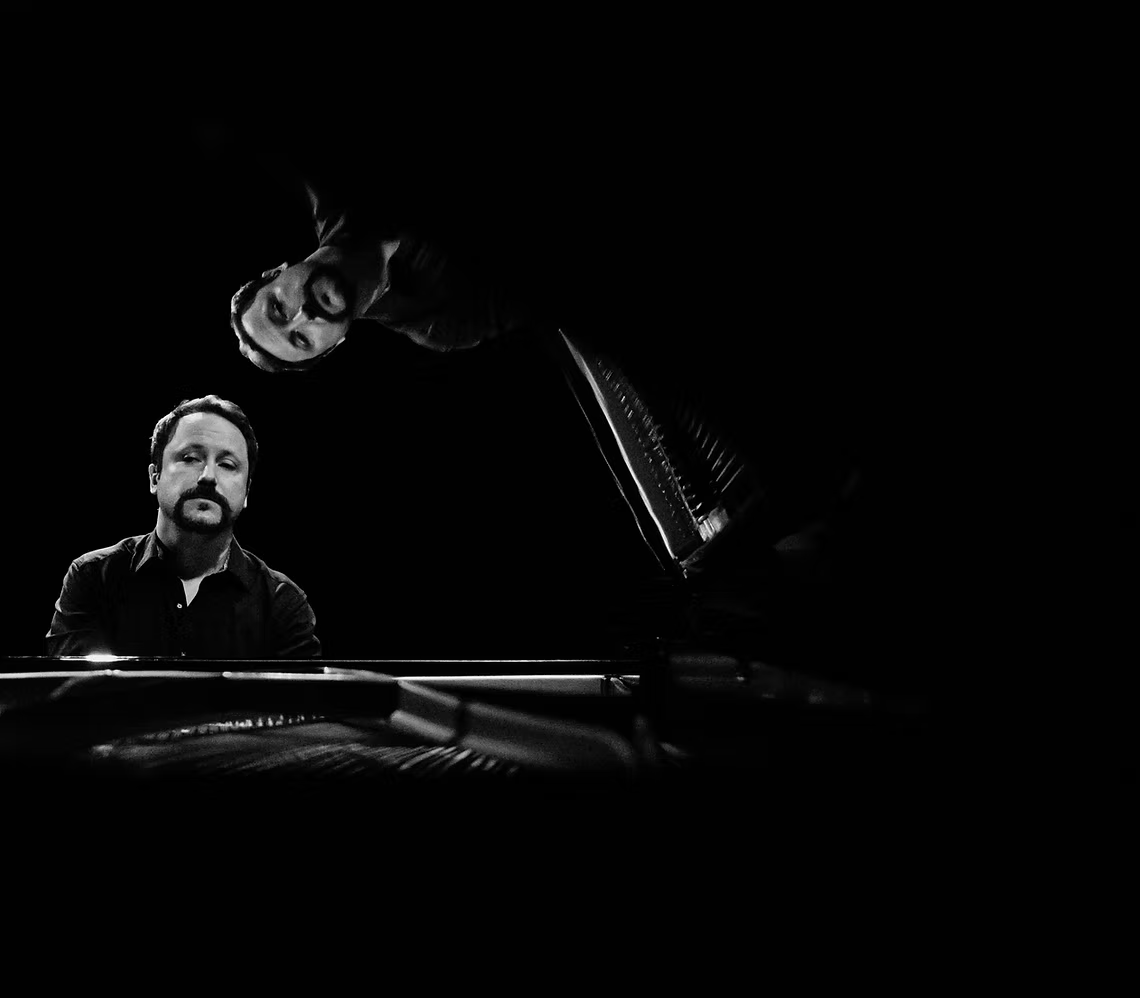
The play was made in reverse: my frequent collaborator Adam Sherkin had secured performance dates for a yet to be written show–a twenty-minute monodrama for acting pianist (himself) in conversation with COC’s April production of Bartok’s symbolist opera Bluebeard’s Castle. The incredible Tom Diamond would direct and did I have any ideas?
BB: Wow that’s interesting how that worked.
David James Brock: Call it a commission, call it cart-before-the-horse, call it a gift, but with these gentle conditions, I needed to find a way in. There’s Bluebeard’s Castle, seven rooms/seven problems, a team, a date, and a piece that means a hundred different things to a hundred different people. What to do? Eventually we got to the story about a man discovering his father’s secret music room and the seven instruments that tell the story of Room of Keys.
BB: Whose idea is that clever title Beyond Bluebeard: room of keys in its double meaning (door locks vs piano keys).
David James Brock: I suppose that was me when I asked Adam if he could play a harmonium. The creation of this play involved a bit of free associating: Bluebeard’s Castle has seven doors and I imagined seven locks, hence, a key would open the play. Each movement would be reflected in the instruments Adam would play (all with keys!). And of character: Adam would play Greenie, a man discovering his Dad’s abandoned music shop, with seven keyed instruments.
There’s a lot of play involved in the pieces we dumped out on the proverbial floor, and that’s why I think Tom Diamond is such a great director for this play/recital.
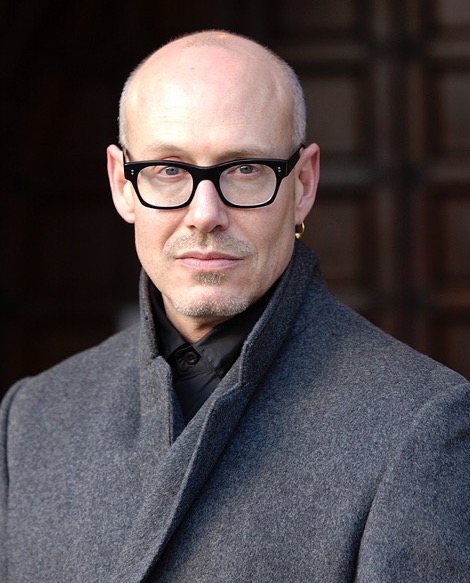
Tom has a sense of drama and music needing jokes, which I often need to be reminded of while still shaking the need to be taken seriously.
BB: Adam Sherkin of Piano Lunaire will be playing and performing in Beyond Bluebeard: room of keys. How will that work?
David James Brock: Greenie, the son left behind, is played by actor and pianist, Adam Sherkin.
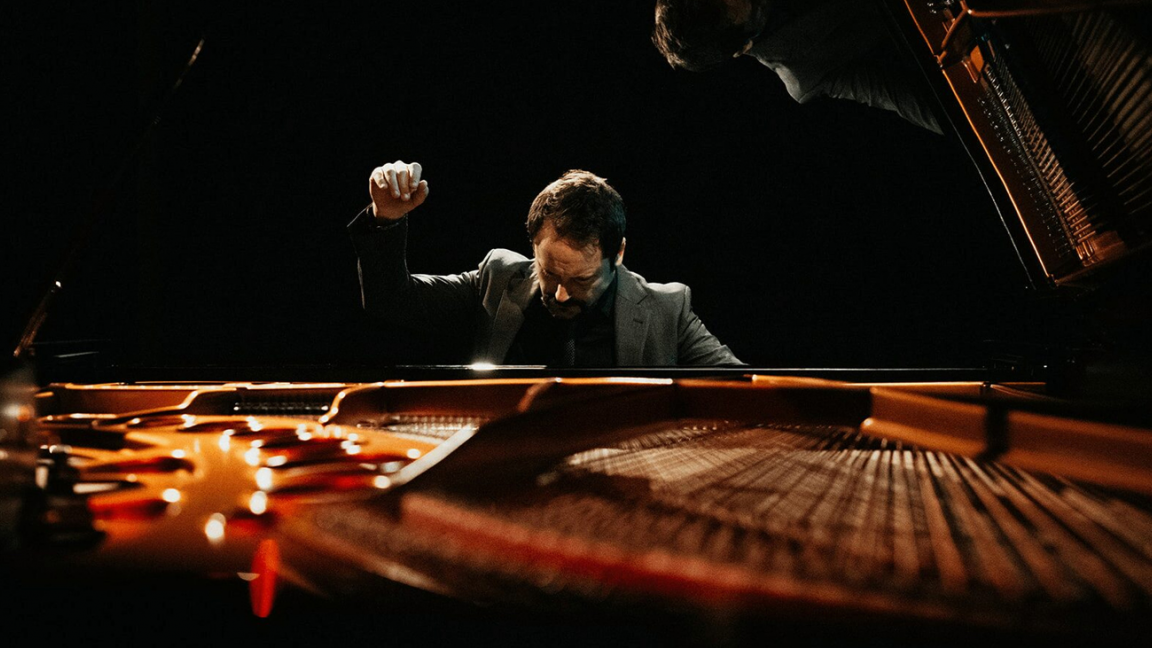
Musically, he’ll be playing two toy pianos, a melodica, harmonium, organ, a synth, and a grand piano. Each is a memory of his relationship with his father, with music. I wrote this as a one act play that would integrate with a 25-minute recital of Bartok’s music, all from around 1911, about the time Bartok wrote Bluebeard’s Castle. The goal was to highlight what Adam is known for (his piano) and what he should be soon known for (his acting). I love the tension of folks following the story of Greenie discovering his father’s music messages alongside certain audience members who just want to hear Adam play, already! The grand piano will be a bit of an elephant in the room for a lot of the spoken parts.
BB: Who do you like to listen to or watch?
David James Brock: I crave entertainment, and I understand that might be the ostrich’s reaction to shutting out the world’s noise. But we watch hot shows, dragon shows, hospital shows, shows with magic tricks. This sometimes makes me feel unserious, so when I wake up, I give myself thirty minutes of news, which I understand is a privilege. Still, I try to stop noise with more noise: my go-to is pro wrestling (Attitude Era, AEW) and baseball to soothe the eyes. Black metal and country rock go to the ears and skin. I think what I like to watch and listen to has made me speak louder than I used to.
I understand, specifically with something like pro-wrestling, that it can be antagonistic to some perception of classical music, poetry and opera – all forms I work in, but I’ve loved wrestling my whole life. It’s maybe a bigger topic: my love of wrestling’s storytelling, structure and audience immersion and why I write for the stage – why I’m attracted to brazen choices in real-time, like asking piano virtuoso Adam Sherkin to act and play seven instruments in 45 minutes on Room of Keys, which he does with an artist and athlete’s skill.
BB: What ability or skill do you wish you had, that you don’t have?
David James Brock: To get the exact sound I want out of a guitar, which usually means something nimble and dexterous like Paco de Lucia or Sister Rosetta Thorpe or Nancy Wilson or Jerry Reed or Dave Mustaine or Mike Haliechuk or…
BB: Talk a bit about your background training, and how you got here.
David James Brock: I’m a playwright with a zoology degree. I also attended university for creative writing, both as a second undergraduate (UVic) and graduate (Guelph) focusing on drama. Nothing has really been a straight line. I’ve been pretty lucky to work in theatre, film, new music, and opera, which I was introduced to through my participation with the Tapestry Lib Lab program way back. I’ve even published a few books with another on the way next spring, a collection of short stories. The vision I had of myself, to be a constantly produced playwright, hasn’t quite manifested the way I dreamed, but it’s probably gone a bit better than that.
Saying yes to everything and following uncertain paths has led to some fun projects. I co-created story and lyrics for F*cked Up’s Year of the Horse EP (another Tapestry introduction) & I wrote a hybrid play-opera for Young People’s Theatre called a million billion pieces with Gareth Williams, who is familiar to most Toronto opera-goers. This sort of variety means I sometimes get asked to participate in multi-hyphenated art forms like a one-act-play-recital and I’ll admit makes me a bit hard to categorize.
BB: When I went back to look at past blogs, I’ve written about you before.
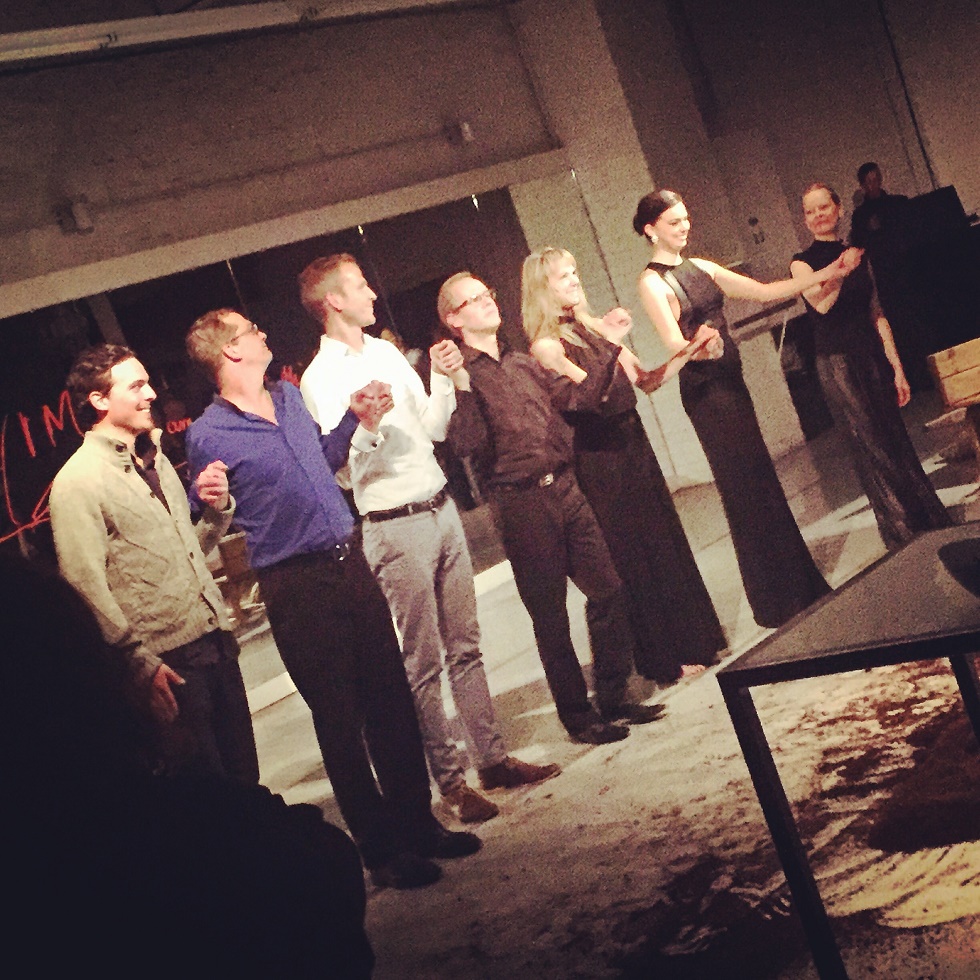
In 2015 I wrote about Sewing the Earthworm a piece done by Canadian Art Song Project, and even took your picture during the curtain call.
And in 2022 there was Mother Sorrow in a workshop, when I wrote the following words that seem highly relevant to the project in 2026:
I was very intrigued by some of the text from David James Brock, There’s some new spoken text that makes a fascinating kind of gloss on the old work, reminding me of old biblical texts that might include commentary in the margin beside the text. It’s the medieval version of metatext. There is a quality to some of this writing reminding me of the multiverse, as though there are different realities implicit within The Bible stories of Mary and Jesus, perhaps implicit in the multiple versions we encounter (such as the four Gospels). It’s powerfully suggestive without seeming to deconstruct or fight with the original. I use that modern word but want to emphasize that it’s not modern, not anachronistic, or fighting the ancient quality of the Biblical story. There are overtones of something very spiritual, as though we might be watching Mary encountering ghostly or angelic versions of her son, especially when we include the different bodies performing, multiple persons to portray a single character (a strategy i really love). I am reminded of a medieval gloss because it seems to exist in parallel, like a meta-reality or commentary, rather than in any sort of opposition or competition with the original.
Interesting to see David again combining old & new in a kind of meta-textual way..!
So on your website you list over 25 writing credits for film, TV, opera & theatre. Is there a favourite, the piece you might be proudest of, or the most enjoyable experience..?
David James Brock: The piece I’m proudest of is usually the next one, and in this case, that would be a movie I co-wrote with Melissa D’Agostino called The Christmas Witch Trial of La Befana which will be out this year. It has it all (theatre, music, even opera – with all music and original songs composed by Rebecca Everett). It’s an animated musical starring Anjelica Huston, who portrays La Befana, the Italian witch predating Santa Claus who brings oranges to the good Italian girls and boys on Epiphany! Well, three kids who get coal put La Befana on trial, wondering what they did that was so bad. It’s sort of like Arthur Miller’s The Crucible meets Miracle on 34th Street. It was neat to be able to bring in Toronto opera stalwarts like Peter McGillivray, Keith Klassen and Stephen Bell to record the opera vocals that are in the film!
BB: What was your first experience of music ?
David James Brock: I like this word experience, Leslie. I want Room of Keys to be an experience, not a “show.”
BB: We must understand the process and context to write about anything musical or otherwise, omitting nothing. I am more dramaturg than musicologist. My degrees were in drama & literature, not music although I’m a professional musician & singer. Thanks for noticing.
David James Brock: We’ve made an experience hosted in a lovely space. Folks might anticipate one of our city’s best piano players getting to that grand piano and playing the damn thing he’s known for! But he needs to navigate through this story Brock imagined and six “other” instruments: some of which the audience will have never seen or heard live. I like that this might be an anticipation or hard to explain when someone asks them what they did last night. Likewise, it’s hard to explain my first experience of music, but I do remember my Italian grandmother (we called her Munga) singing to me and my sister in a kitchen:
I love you, a bushel and a peck
and a hug around the neck
and a hug around the neck.
BB: I love the way you answered that, nice segue….Do you have any ideas about reforming / modernizing classical music culture to better align with modern audiences
David James Brock: I want to write about the time I exist in (politically, aesthetically, whateverly), but it might crush me to worry about reforming any art form as a central reason for playing with it. I guess this question relates to a work like Room of Keys which is a response to century-old ideas and music from Bartok and Balázs (maybe I’m trying to reform how we talk about opera by mentioning the librettist even though in our show, there is no singing – I’m not a librettist on this one).
But with this project specifically, where Bartok was offered up in advance, I’m trying to contextualize Bluebeard’s Castle and the pieces Adam plays on a timeline of listening for pleasure and experience. Bartok’s recordings exist in this same world as Beastie Boys and Pet Shop Boys and Right Said Fred and The Cure and Nine Inch Nails and Whitney Houston, which Greenie discovers as a teenager but keeps secret from his classical music loving father.
BB: True! I’m listening to a CD of Bartok played by the Toronto Symphony. The concerto for orchestra might be a difficult piece to play but it’s also full of irony and fun and playfulness. People need to expand their worlds. I think your piece is part of that process, helping to make someone like Bartok less scary & forbidding.
David James Brock: I like classical music and opera, but it’s not why I love music. My first tapes were Twisted Sister and Bel Biv Devoe and Samantha Fox. Same as a streaming playlist or a CD rack, Adam’s character Greenie reconciles the seven instruments his Dad left him as possibilities and tries to align them with his own desires, tastes and regrets, so maybe there’s something to that idea of pouring everything into the stew and seeing what it says about “the culture.”
BB: Timothee Chalamet called ballet or opera dying art forms “no one cares about anymore.” Do you mind the concern to (in his words) “keep this thing alive”; do you have any ideas how to sustain those art forms?
David James Brock: Classical is not the first thing I put on either during a summer BBQ or added to the mix CD of the high school crush when I was a teenager. I don’t agree with broad strokes that smart arse on anyone’s passion or hobby or tastes or fandom (“this artist sucks,” always gets my cankles up). How many times have we heard someone really into music say, “I’ll listen to anything…well, except classical.”?
BB: Very true (alas). Especially with opera.
David James Brock: That Timmy C doesn’t like these forms…it isn’t shocking. He doesn’t know everything yet. He’s young. He’ll know more later. Maybe he hasn’t had a WOW! Moment. I get it. We all have our experience timeline. We don’t see everything and then we see something. Until then, we speak mistakes and I-don’t-knows and pretend we know things we don’t.
I’m starting to defend him based on age, aren’t I? TC’s art form, though, is attention and he’s better at it than we are.
BB: OMG so true..! Hits – likes – traffic.
David James Brock: He’s monetizing it better, anyway. But since I’ve deleted Twitter, here’s what I imagine I might have said the day of his viral moment… “I don’t need your movies, Timmy C. What art forms do your movies sustain? How many billionaires did it take to make that table tennis movie? #Commerce #KevinLeary #thankyounext” [3 likes]
BB: If you could tell the institutions how to train future artists, what would you change?
David James Brock: This is something I think of a lot (I’m a professor of creative writing) and I do train future artists. I don’t think there’s one way to teach or train or create (don’t do AI is the hottest take I have). I also remember my own wonderful creative writing training as a student at both University of Victoria and Guelph and in some cases, I’m sharing the things I liked as a student.
I’m aware that my prof-job is to offer foundational ideas, soaked in my own bias and tastes and energy, so that maybe emerging artists are curious enough to go out and discover their own way. The people who taught me aren’t writing for me. Like any of us doing anything in this climate, future artists (which I still am, right?), will pick and choose what they respond to. Anyone who trains to create is subject to the coincidence of the teachers and influences they encounter.
BB: Do you ever feel conflicted, reconciling the business side and the art?
David James Brock: Sure…I’m conflicted! But these great questions you’re asking, Leslie, this is the business, isn’t it? A collective promote and critique creation ecosystem – such an important part of the conversation and it feels like it’s going away, partly because of budgets and partly because of artists who can’t handle the dirt. I mean, I probably can’t handle the dirt. I’ve been roasted in opera reviews (not yours – I don’t think) for trying stuff not in lockstep with opera text written 150, 250 years ago. That’s the business. Why should anyone feel invited to that highwire? How dare any of us try this in the shadows of Verdi, Puccini, Mozart, Bartok, Britten, John Adams…a new opera at the COC was getting booed at curtain call? Who wants to be on that business ladder? But then, what artist wouldn’t want to at least try? Yep…conflicted.
BB: If you could tell the institutions how to train future artists, what would you change? (Returning to this question!)
David James Brock: All we can do is share our living-breathing experience at various stages of the exploration (I remain a future artist, until I die or quit), but I know there’s almost nothing better for learning to be an artist than deciding to go make art! I love talking about stories with students because unlike most training programs, they are doing it from Go, not when they get some certificate telling the world they are ready now to write. Some of the students I teach will make a career out of this and that’s on them. Some are getting grades they don’t currently love. They are allowed to think that’s my mistake.
I think one tension I’ve liked exploring with Room of Keys is the concept of a trained artist, forced to practice by a parent. Art or not, maybe we all have an experience like this (sports, school, #adulting, a job). Maybe, like Greenie we all get a little good at something on someone else’s terms.

*******
And now I am curious, wanting to see this Room of Keys and to hear what Adam says & plays.
ROOM OF KEYS: Recital programme component
April 9, 10, 11, 2026 (The nanoSTAGE – 1001 R Bloor Street West) | Tickets & info
April 16, 2026 (Richard Bradshaw Amphitheatre)
By Béla Bartók:
Allegro barbaro, BB 63 (Sz. 49, composed 1911)(1881 – 1945)
From: Seven Sketches, Op. 9b/No. 5 Romanian Folk Melody; BB 54 (“Vázlatok,” Sz. 44, composed 1908-10)
From: Four Dirges, Op. 9a/Nos. 1-2, BB 58 (Sz. 45, composed 1909-10) I. Adagio; II. Andante
From: Seven Sketches, Op. 9b/No. 3 Lento
Three Burlesques, Op. 8c, Sz. 47, BB 55 (1908-11)
I. Quarrel. Presto
II. A little tipsy. Allegretto
III. Molto vivo, capriccioso
Allegro Benevolo* (after Bartok), Op. 45 by Adam Sherkin (b. 1982)
* world premiere; commissioned by Piano Lunaire Adam Sherkin, piano
 barczablog