I heard baritone Alexander Hajek singing at the Toronto Vocal Showcase 1.0 in August. He sang well.
Full disclosure? I grew up accompanying my brother baritone Peter Barcza. I tend to be harshest with baritone voices ever since. So it was a great pleasure to discover Alexander’s voice, the most impressive baritone sound I’ve heard in a long time.
Not only does he know how to sing, but he’s a personality with commanding stage presence. When it was his turn at the Showcase, he completely took over.
I noticed that Alexander appears regularly under the auspices of Opera Revue, a creative group who’ve been identified as a “gateway drug to opera” with their performances of opera arias and excerpts in bars around the Toronto area.

Here’s Alexander’s blurb from their webpage, giving you some idea of the larger than life personality behind the voice.
Economic refugee of an earlier plague ( Pre-Monkey Pox ) Baritone Alexander Hajek has only recently returned from his decade long Operatic European safari. While there he sang for lots of fancy people in lots of fancy places, but ultimately felt hollow because his razor sharp wit, sarcasm, and criticism would sail over their fancy heads. Alex discovered his passion for busking one evening at a Weihnachtsmarkt while fulfilling his part of a friendly glühwein inspired wager. He knew right away from the enraptured attention displayed by his captive audience that he was fulfilling his purpose of bringing comfort and distraction to the masses. The overflowing hat of unclaimed income was just icing on the cake. He has dedicated a considerable amount of his time and energy to raising funds for the defence of his spiritual homeland of Ukraine and defeating the mongrel invader. Having obtained his bachelors and masters singing license from the same school that Robin Williams studied at, the two met backstage for a few minutes and shared the most precious gift of all, a few laughs. The encounter left a Coco sized hand print on Alexander’s heart, and ultimately inspired the performances that you are about to bear witness to.
And I was pleased to see that he’s playing the role of Alberich in Edmonton’s upcoming Das Rheingold, one of the keys to any production of the opera.
So I interviewed him.
~~~~~~
Barczablog: Are you more like your father or your mother?
Alexander Hajek: I’m definitely more like my mother. My father was out of the picture for the majority of my life and upbringing. So I still have some odd genetic traits left over from him. Bad eyes (corrected with LASIK, a blessing ) and a gift for working with my hands. I got a hard work ethic and tenacity from my mother, along with fairness and integrity.
BB: What is the best or worst thing you do?
Alexander Hajek: I’d hope it’d be my singing, it’s the one thing on earth I’ve devoted the most time to, but I’d be happy to be known for my story telling and ability to empathize with my fellow humans.
The worst thing I do is try and cheer someone up who doesn’t want/need it.
BB: Who do you like to listen to or watch?
Alexander Hajek: Singing wise it’s old ( some dead ) opera singers.
Hvorostovsky, Bastianini, Vickers, Bruson, Del Monaco.
For “fun” I enjoy the late night and comedy/stand-up news shows.
Jon Stewart, George Carlin, John Oliver, Colbert, Robin Williams and Chapelle.
Big fan of Emo rock as well ( MCR, Billy Talent )
BB: What ability or skill do you wish you had, that you don’t have?
Alexander Hajek: I wish I could shred on an electric guitar. But my hands are not really build for the instrument, too soft and doughy for metal strings.
BB: When you’re just relaxing and not working, what is your favourite thing to do?
Alexander Hajek: I’ve been a fan of warhammer for about 30+ years.
BB (What is Warhammer, I wondered…. I had no idea so I looked…. )
Alexander Hajek: So you’ll usually find me at my desk assembling and painting some miniatures. It’s a great time to passively listen to music for enjoyment/study. I also attend tournaments around Ontario, it’s fun to meet other people in the niche hobby.
Big fan of nature and the sun in general so I also bike everywhere weather permitting.
BB: What was your first experience of music?
Alexander Hajek: It really clicked with Disney’s The little mermaid. I was kinda obsessed with singing along to the cassette in the car ( dates self ) after that is lots of choirs. Singing for me was like a fish taking to water ( parallel intended )
BB: What is your favourite opera?
Alexander Hajek: Cruel to ask for just one. Anything by Verdi, Susannah ( Floyd ) and Eugene Onegin.
BB: Do you ever feel conflicted, reconciling different aspects of opera, between the promotion and the art?
Alexander Hajek: For sure. Opera is an art form that you need to be trained to do. That training takes forever, and can be so focused on the minutiae that it takes great determination and obsession to stick it out. I can think of a dozen peers of mine, specifically in North America that have dropped out of the biz because they can’t sustain themselves, either financially and/or sacrificially when it comes to family commitments V “career”.
The traditional opera base is shrinking and not being replaced fast enough with new converts. It’s an uphill battle against changing demographics and cultural tastes.
And then the conductor points out that you’re turning that 8th note into a 16th or that you’re only sort of dotting that rhythm. Some days it’s harder than others.
BB: Of everything you sing (whether we’re talking about opera, lieder, pop tunes or anything else) what feels the best in your voice and what do you think sounds best?
Alexander Hajek: My voice, for whatever reason of nature lends itself to an Italianate sound. So I feel good singing Verdi because he was a clever lad and wrote for people with a voice type just like mine a few hundred years ago. The style of bel canto and verismo are like a yoga session for the voice. But singing something intelligible in English is pretty magic too. Then you can literally feel your audience hooking into your performance. Simply because they can understand you word to word as opposed to phrase by phrase.
Sometimes the nuances of the French and German languages elude me.
BB: You joined Opera Revue in 2019. Talk about your relationship to the team (Actor/Soprano Danie Friesen and Pianist Claire Elise Harris) and what kind of input you bring to their shows.
Alexander Hajek: I’ve been titled the “ideas guy” of the group. I come up with some zany ideas about an upcoming show or Schtick and the gals either enthusiastically agree or groan in disapproval.
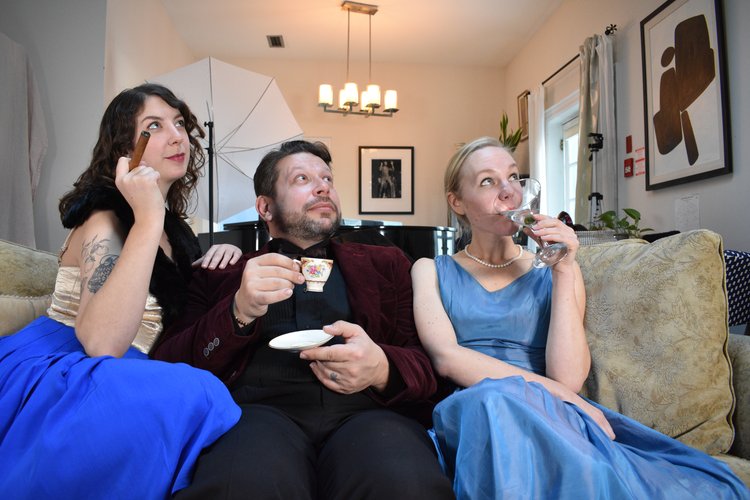
We all bring a wonderfully diverse perspective to our merry little band and so far balanced out to some success.
I also seem to enjoy playing librettist. I was initially very opposed to adapting classics with spoofy/modern lyrics. But I remember it was Mozart & Da Ponte’s explicit instructions that their operas be performed in the vernacular whenever possible. So if it’s okay for those guys? I got over my own elitism pretty fast.
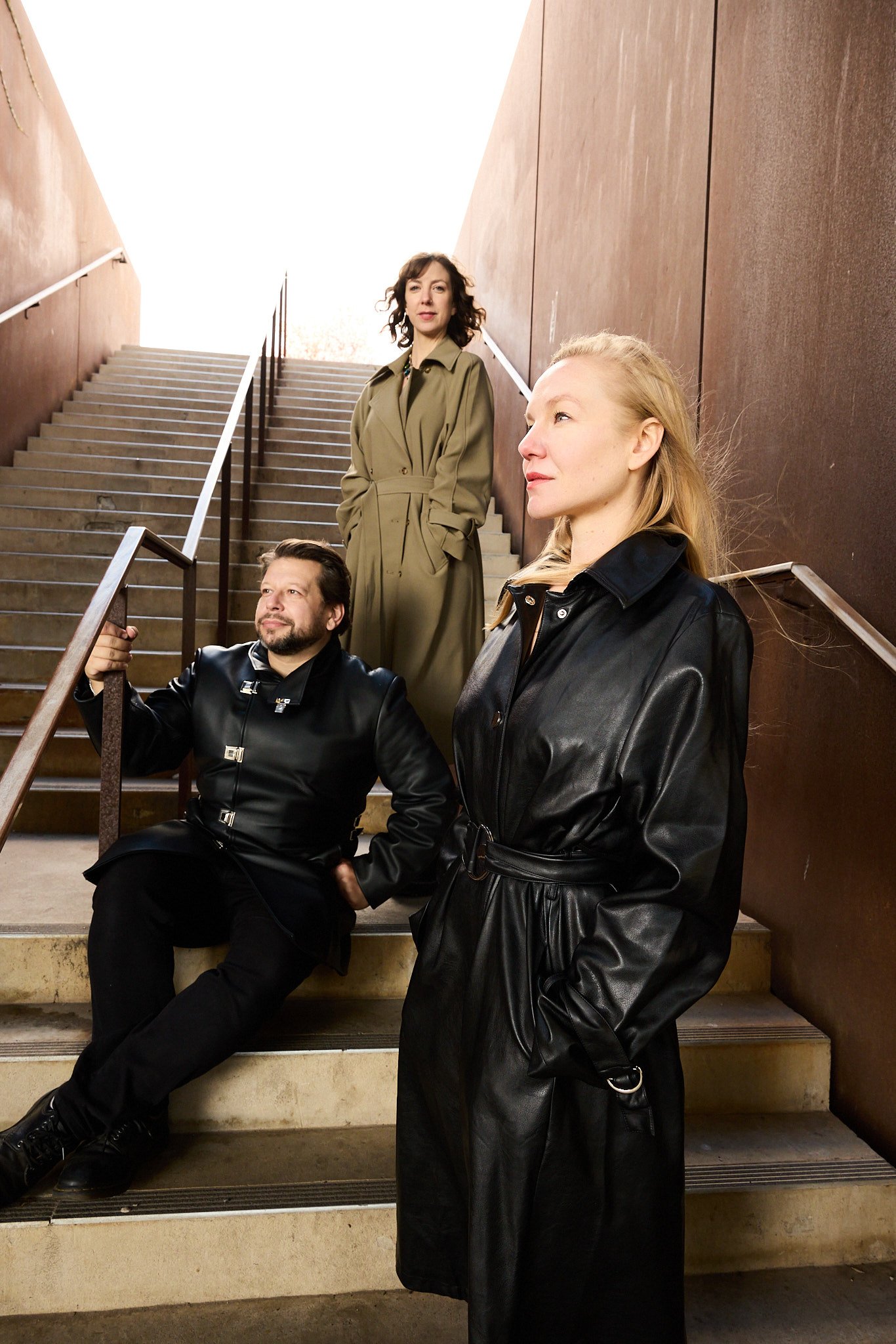
Our housing crisis/ papageni duet is an absolute show stopper and frequently interrupted by raucous laughter from the audience.
Hosting our own shows is really a dream come true. I mentioned I enjoyed listening to stand-up and political comedians in my spare time. Opera Revue has given me an avenue to scratch that itch through introducing our arias to the crowd in a relatable way, people often remark that’s one of the best parts of the show. It’s an old art form and provides endless material to make the guests cackle with laughter when viewed through a modern lens.
BB: I watched some of your YouTube videos, which includes some creative short films you’ve made. Will you do more, and what’s your favorite?
Alexander Hajek: I had a tad bit of time over the Covid lockdowns. With no outlets of public performance to look forward to. I turned to YouTube to create some content. It kept me sane. But the gulf between live opera singing and internet clips is too wide for me. It’s fun. But without a Hollywood budget to back it up it’ll always look amateurish by comparison of what you can get online, for free, these days, I’ll stick to the stage for the most part. Plus the whole idea of overtones of the human voice can never be captured on a recording properly.
IYKYK
BB: yes! Absolutely.
Alexander Hajek: The video that I have on my site called Sicut Ovis is my most cherished recording I probably have. It was recorded at the funeral of my best friend who had taken his own life a few years ago. A large group of former St Michaels Choir School alumni (classmates ) turned out to help sing some hymns for the service. We all agreed we should sing Sicut Ovis ( a Tenebrae staple sung at a special mass during Easter ) we didn’t have any tenors though. So I just said I’ll sing it cause his mum would have wanted it. Anyways. It was the most moving musical moment of my life.
BB: Wow thank you so much. That’s beautiful.
Singers come out of training programs, including the ensemble studio of the COC. And then what? Some people can make a living, some can’t. Stratford Festival and National Ballet function as places to employ almost 100% Canadian talent. Yet the fiction is out there that we need to bring in singers from abroad. Can you imagine Canadian opera with Canadian personnel?
Alexander Hajek: Oh Canada. I moved back here from Germany, which has a vast, thriving, and government subsidized operatic culture, and was a bit dismayed by the lack of opportunity for Canuck homegrown artists. Lots of the great talent goes to the States or Europe for work or to live.
There is just more over yonder.
They. Have 90 opera houses.
We. Have one.
I don’t know if it can be fixed. But I’m committing to staying here and giving it my best. With my voice in the traditional houses. And with Opera Revue in the spaces in between.
BB: You’re playing Alberich in the Edmonton production of Das Rheingold, one of the most important roles in that opera (and in the whole Ring Cycle).

Talk about preparing to sing the role.
Alexander Hajek: Alberich is new for me. And I immediately noticed that it’s not so much a singing role as an angry German rapper/sprechstimme.
BB: Wow I’m so impressed that you noticed, (speaking as someone who’s loved this opera since I was a teen) and especially if the conductor does it up to speed given that much of the Ring can be like a patter song, if done fully up to speed. Alberich is the one who starts the cycle off right in the first scene of Das Rheingold, when he steals the gold: and then makes it into a ring.
That rhythmic laugh (the last thing Alberich sings / barks in this short audio clip) is traditional even though it’s not written in the score. I wonder if they’ll hear that sardonic laughter in Edmonton..?
Alexander Hajek: There are only a few phrases here and there that give you room to expand the voice and “sing”. The rest is very sharply articulated speech, spitting lyrics like an irate chittering insect. I simply started learning it as quickly as possible. It’s not lyrical like Verdi and it doesn’t necessarily sink in the first time you hear it.
So it takes a LOT of repetition to make sense of the patterns.
BB: Do you see Alberich more as a villain or a hero?
Alexander Hajek: I’m only studying him now in depth, so I honestly can’t answer that. He seems like a downtrodden fellow for which nothing has gone right in his life. Then he is presented with unlimited power and….
wait for it…..
Absolute power corrupts.
But it wasn’t “absolute power” at all really. Wotan plays with Albrecht like a cat with a
mouse. He’s unafraid when Albrecht turns into a dragon and ultimately rips the ring off his finger without much effort. So. Hence the malicious curse the angry dwarf places on the gold.
Seems like a reasonable response to me.
As this is my first crack at the role, I’m very pleased it will be in a more intimate setting. Plus the drama can come across much more from the performers rather than just the music and little ants standing stiffly on stage barking as loudly as possible.
BB: Edmonton Opera’s Artistic Director is Joel Ivany, formerly of Against the Grain Theatre in Toronto.
AtG used to cleverly do shows in Toronto in smaller venues that would be 100% sold out and full, creating a “buzz”. There would be drama in the rush to get tickets for the smaller shows, and the excitement of a full house. I hope you get a similar buzz for your show in Edmonton. Have you had any previous experience with AtG or contact with Joel Ivany before?
Alexander Hajek: I sang a duet with Joel’s sister (Rochelle ) back in Mendelssohn Youth Choir, Robert Cooper conducting, so we met for the first time then. The next time we crossed paths was when Joel was redirecting a Carmen I was doing with the COC.
He had that “it” factor and I’m not surprised he’s become such a popular choice for Canada’s productions. I was also asked to jump in for a Candide at Banff a few summers ago and got to see the digital/aerialist Orfeo.
It’s a good indication of where the trends of modern stagings are going.
BB: I watched you sing in the Toronto Showcase back in the summer. Of all the singers you were by far the most confident, most comfortable in front of us both in your spoken introduction and in your arias. I especially liked your champagne aria from Don Giovanni. But of course this is familiar territory when you’re doing Opera Revue. Between a serious role such as Alberich, the videos, or the arias of Opera Revue, what’s your favorite?
Alexander Hajek: Thank you for that. Practice makes perfect to perform comfortably and I’ve luckily had plenty of performance opportunities recently thanks to Opera Revue. It had never crossed my mind to become an “entrepreneur/Artist”. But waiting for the traditional classical music business in North America to re-emerge from the pandemic to offer enough work to be able to sustain oneself necessitated some unexpected changes in my career plan.
I do “like them all” because they can each offer a rewarding feeling of accomplishment.
Making a video is fun and tedious cause of all the editing and post production work one has to do. Singing with a full orchestra is a high with few comparisons. Making people laugh in a pub is its own reward. As long as I’m telling the truth. It’s a privilege to have a medium to deliver it.
BB: Nowadays it’s very expensive to live in Toronto. Can a performer survive without a dayjob?
Alexander Hajek: Short answer. No.
The cost of living crisis in Toronto is driving many artists out of the city. They simply can’t afford to stay with the amount of work being offered, or the pay scale. 95% of the performers I know have multiple sources of revenue ( church gigs, teaching, chorus work, temping miscellaneous) this leaves them fatigued, burned out, and a tad bitter. I worked with a construction/house flipping company over the pandemic. The money was stable and great.
But it left my body broken and my throat full of concrete dust. Working a restaurant would equally damage the voice for obvious reasons of general din of noise.
BB: If you could tell the institutions how to train future artists for a career in opera, what would you change?
Alexander Hajek: How to do taxes. How to network. How to promote yourself. And have them work in an actual theater, whether that’s front of house ticket sales or on the catwalks operating follow spots.
BB: That’s what I did. My MA and PhD were at the Drama Centre where you get the practical experience of using the theatre as a laboratory to play around in.
Alexander Hajek: Get to know the space beyond the floorboards. It’s a living breathing organism and has many parts. Knowing how they work will make a more well rounded artist and human.
BB: Does one have to have a big ego to have a career in opera?
Alexander Hajek: No. There are very humble people out there who are just as capable of taking up as much space on stage. And I think the raging shouting narcissists of the not to distant past have had there time come to an end. The whole Me Too movement and “woke” “revolutions” have made the backstage a more pleasant place to work in my opinion. More work to be done but, so far so good.
BB: Do you have any influences or teachers you would care to mention?
Alexander Hajek: In roughly chronological order and hardly extensive
Steven Henrikson, William Perry, Daniel Ferro, Stephen Wadsworth, Tom Diamond, Darryl Edwards, Wendy Nielson, and Joel Katz
BB: What do you have coming up in 2024?
I noticed https://operarevue.com/upcoming (click the link for details)
listing shows Jan 19th, Jan 21st, Jan 28th and Jan 31st.
Alexander Hajek: Opera Revue have a few shows in the near future.
February 14th ( Valentine’s Day ) Opera Revue is producing our third debaucherous show. It’s gonna be a two show evening with the later show being substantially spicier than the earlier one. I promise an unforgettable performance with some local burlesque dancers.
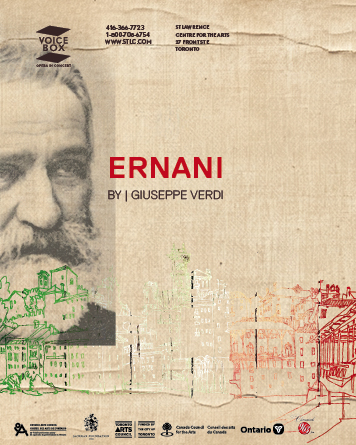
I’m also excited to sing my first Ernani with Opera in Concert Feb 25th. Verdi is my passion and his works seem to fit my timbre very well these days.
https://www.operainconcert.com/Ernani.html
BB And Alberich is coming later in the spring, in Edmonton.
For Opera Revue, follow them on Facebook or Instagram, or go to https://operarevue.com/upcoming.
 barczablog