I watched the last hour of Killers of the Flower Moon today.
I had heard terrible things about the violence in this film, although the same was true of Taxi Driver, another Martin Scorsese film with a brilliant orchestral score from a composer (Bernard Herrmann) making his last film. The title is a dead giveaway (if you’ll excuse the choice of words). So I downloaded the film and have been watching it on the small screen at home rather than submitting to the relentless dominance of a movie theatre.
I stopped partway through, earlier this week.
Yes it’s violent, but that’s not what I’m posting about. Let me simply say parenthetically that I now see a whole new market for streaming and downloading, where a movie might be overpowering in a theatre. I saw Oppenheimer in an IMAX theatre, and to be honest, was disappointed.
It’s almost time for the Academy Awards, an annual ritual that tends to drive me nuts. While I like the notion of celebrating excellence I don’t believe in awards that would say, for example, that Christopher Nolan’s direction of Oppenheimer is somehow better than Martin Scorsese’s direction of Killers of the Flower Moon, whether or not they even admit Barbie into that conversation.
I wanted to see Killers of the Flower Moon for a number of reasons, and I’m glad I bought it, as I will watch it again. It seems to capture our exploitive and genocidal relationship to the Indigenous populations rather well, horrific as it is. I always like Scorsese’s work, painful as it may be to watch.
But I was especially interested in hearing what Robbie Robertson contributes to this epic exploration of genocidal violence and exploitation in an American Indigenous community. After a lifetime of collaborations between Robertson and Scorsese this would be the climax.
I was not disappointed.
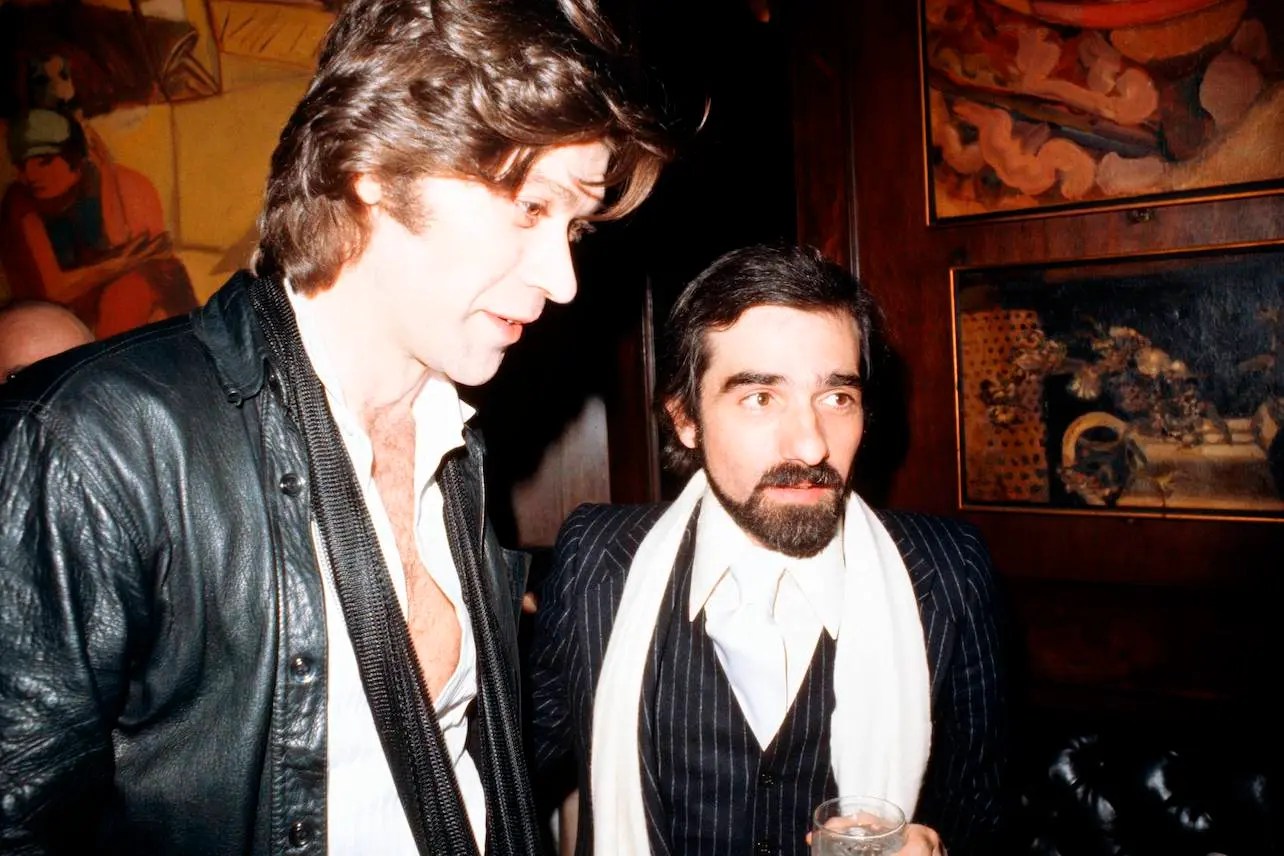
I believe Robbie Robertson deserves the Oscar for best Original Score. That may sound kind of stupid when I’ve only seen one other nominated film, namely Oppenheimer.
The nominees are:
AMERICAN FICTION -Laura Karpman
INDIANA JONES AND THE DIAL OF DESTINY -John Williams
KILLERS OF THE FLOWER MOON -Robbie Robertson
OPPENHEIMER -Ludwig Göransson
POOR THINGS -Jerskin Fendrix
If Karpman or Fendrix win, that would be a fascinating and unexpected turn of events. Perhaps they deserve an award. As mentioned, I haven’t seen those two films.
If the 92 year old John Williams wins I won’t be upset. But Williams has won the Oscar before. Williams is old, while Robbie Robertson died this past summer. Please note, I am not proposing Robbie Robertson as winner because he’s dead.
I saw Göransson’s film, which many are touting for best picture and best director and best actor nods.
What gets a little crazy is when the voters decide they need to reward a film in adjacent categories, that they love a film so much that it needs to win multiple Oscars. It made me crazy that Blade Runner, the most cleverly art directed film I’ve ever seen, with its brilliant imagery of a future dystopia, should lose the Art Direction Oscar to Gandhi, in that film’s sweep of the awards. Something similar may happen with Oppenheimer, even though Göransson, like Williams, has won an Oscar before.
Let me offer my criteria. The touchstone for me of music to accompany a play or film has always been Felix Mendelssohn’s music for Shakespeare’s A Midsummernight’s Dream. The 1935 Max Reinhardt film of the play, in the debut of Erich Korngold, makes a most impressive use of Mendelssohn to underscore the film.
Why is it impressive? Mendelssohn created a musical style for each of the three social milieux represented in Shakespeare’s play, namely 1) faeries 2) lovers and 3) mechanicals. Each of them has a distinct kind of music that aids the story-telling. For me that’s the ideal.
Robbie Robertson’s score isn’t playing music for three different groups, but it does underscore the social divide in Scorsese’s film, between the Osage Nation and the settlers of the American west. There are times when the music functions as a greek chorus, telling us what’s really happening beneath the surface. I want to watch it again and listen more closely, as I thought I detected times when Robertson underlines the cultural divide with music that illustrates a comparable spiritual divide.
Robertson’s roots from a Cayuga and Mohawk mother lends the musical score a special authenticity and authority.
Scorsese has a habit of showing up in his films to play a small part. I loved his appearance in Hugo as a cameraman filming at Georges Méliès’ studio. I wonder if the 81 year old Scorsese suspects he is coming to the end of his life, given that this time (spoiler alert) he delivers the stirring final speech of the film.
At the end we see that the film has been dedicated to Robbie Robertson. An additional heartbreaking thought that Erika gave me just now, is that the composer who died in August likely never saw the finished product, released in October.
I’m looking forward to seeing and hearing it all again.
 barczablog