From its title on down, Liz Appel’s new play Wights that opened at Crow’s Theatre last night had me astonished, perplexed, wondering whether I’d seen comedy satire or just the real lives of smart people using big words in their kitchens, an intense virtuoso display from a pair of actors who left it all out there on the stage.
It’s a passionate roast, a debate to the death, but what’s dying is truth and love and hope in the final days before the 2024 American election. As Appel located her story so precisely– in Connecticut among people confidently asserting Kamala’s expected victory–on Halloween night 2024 in a kind of academic never-land of activist optimism, I felt a satirical impulse in the absurdity of the behaviour we saw and heard.
We meet the first three of our four characters, engaged in friendly conversation surrounding Anita, who hosts her two guests on the night before an interview for a job that would change her life and validate her political beliefs. Celine and Bing are helping Anita prepare to be interviewed by Yale’s “Centre for Reparative Thought and Justice,” a fiction that’s a nice match with that expectation of Kamala’s victory. I wasn’t laughing, given that I too had naive hopes about how November 5th would turn out. Maybe the satire was close to home.
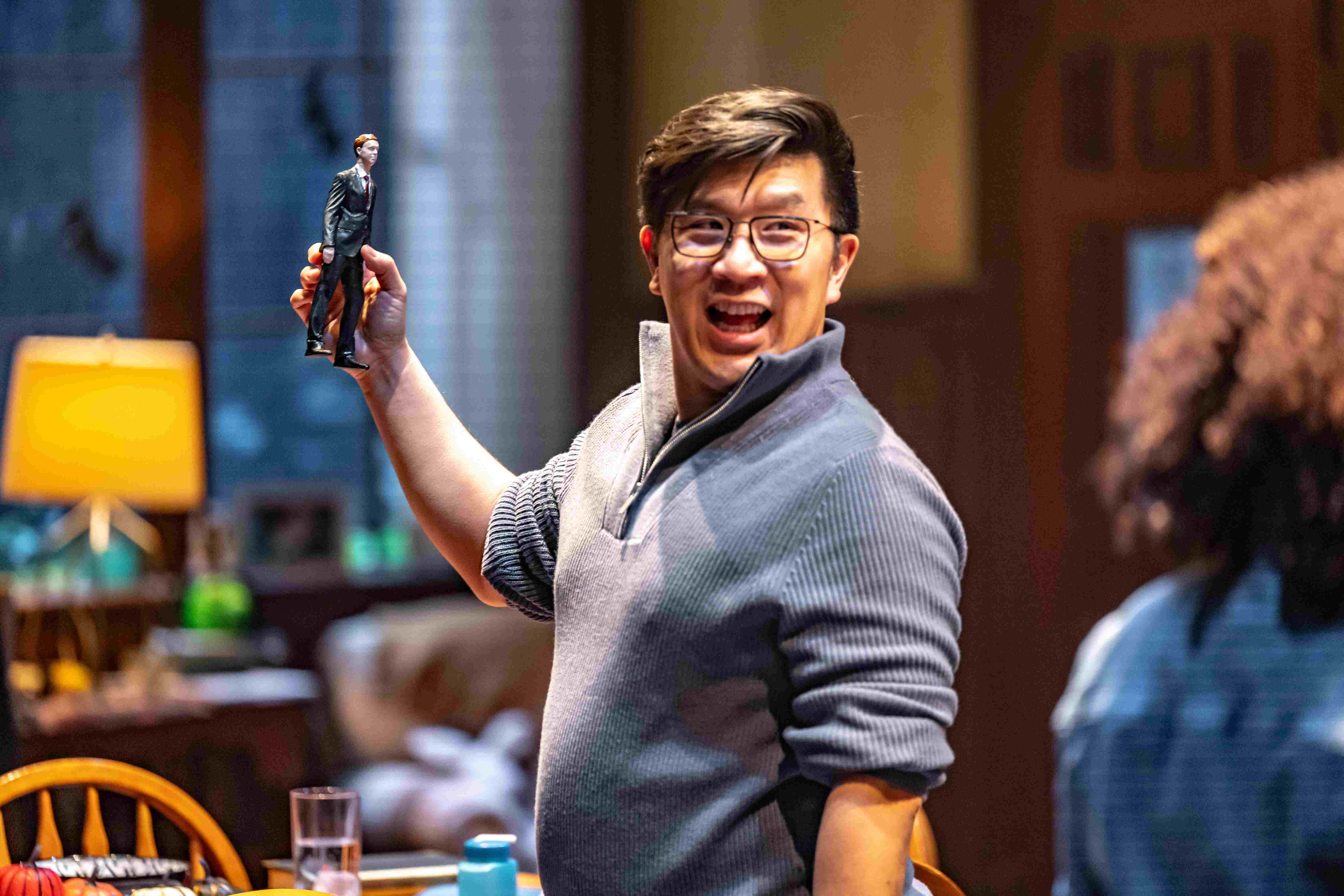
Before Anita gets very far in reading through her presentation, her husband Danny comes home, seemingly exhausted from a difficult day, and clumsily letting the guests plus the audience hear the disparaging way he refers to them, until he realizes that the guests are actually there, and he snaps back to a fake friendly jocularity with Bing.
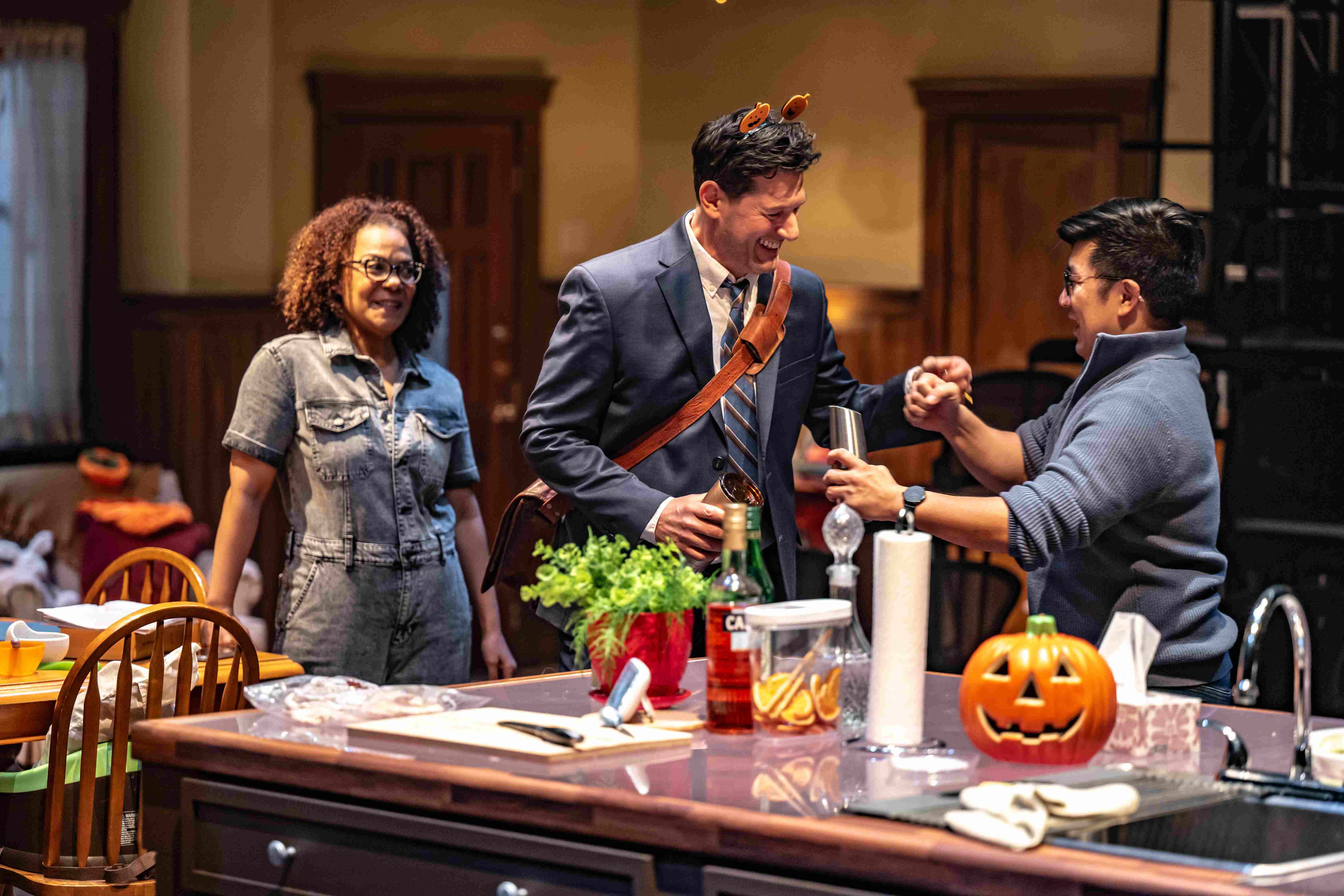
In due course hungry tired Danny will snack before dinner, while Anita tries to read her presentation, with Bing playing a devil’s advocate role to help her prepare. Celine is more supportive.
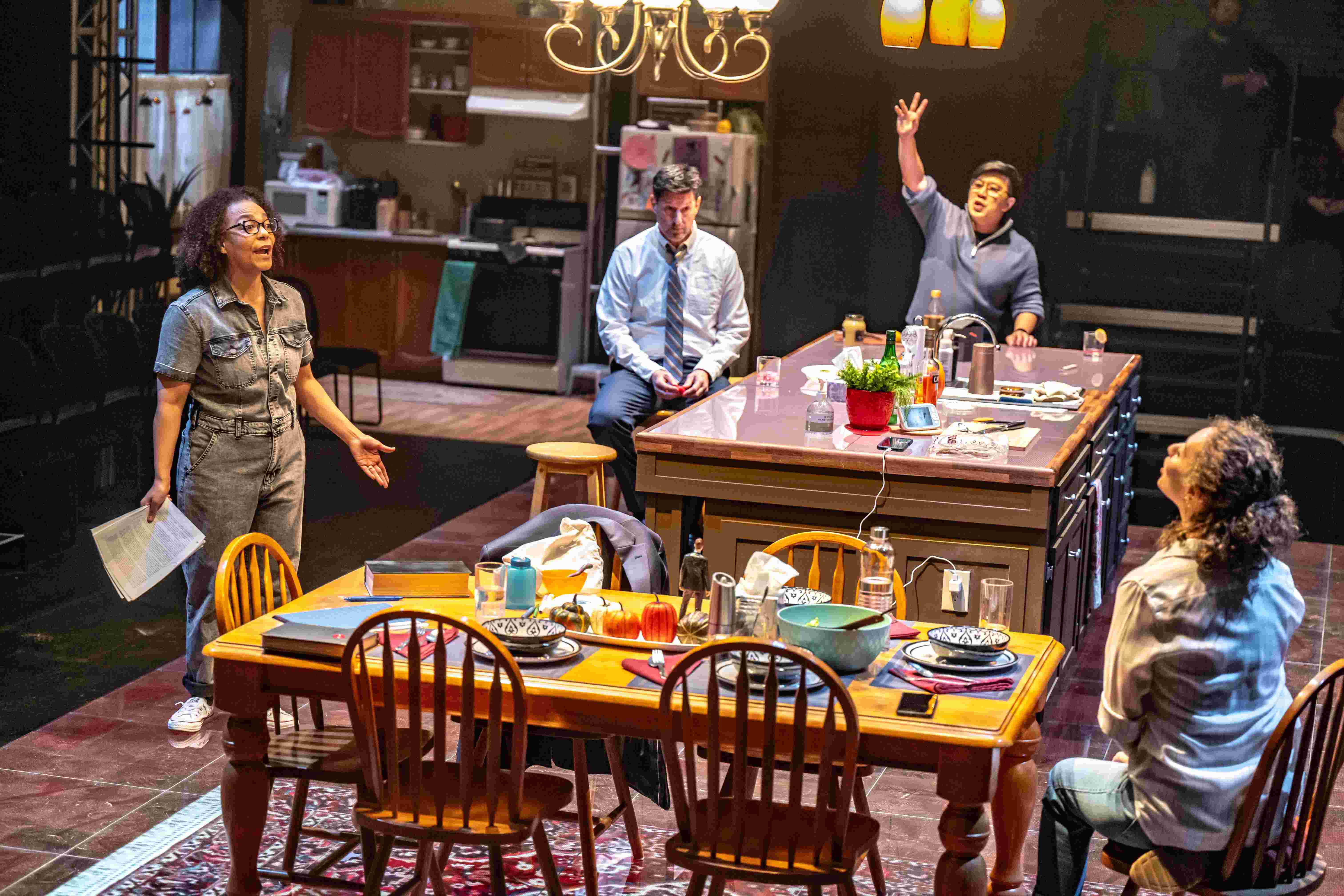
The masks they wear in polite social conversation gradually slip as their exchanges push closer and closer to truths underlying their lives. As each guest reveals their darker core beliefs, a polite dinner is impossible, as Bing & Celine rush off.
Without the moderating effect of the guests Danny and Anita go that much deeper in their exchanges. Their fantasy of control is slipping, whether in the sounds of their child through the baby monitor signalling their failure as parents (if you think I sound harsh, you should hear how they talk about the child!), doors falling off hinges, or an accident with a corkscrew leaving Danny bleeding. While people may intend to make things happen, in the real world of Murphy’s Law people fail to understand, as things inevitably will go wrong.
We are in a discursive space where meaning is being probed and poked to the point where it snaps, and the process of communicating might have broken. If you’re waiting for a clear explanation it’s not there. I’m reminded of the way Kubrick’s 2001: A Space Odyssey challenges the viewer by resisting the easy explanation, the clear resolution. The promotional literature for Wights is bang on, when it says that it is at once enigmatic and hard-hitting, WIGHTS delves into the intricate power of language and its profound influence on our relationships, society, and the very fabric of reality. Yes. just like 2001 its ending is mysterious, poetic, elusive. But then again the world itself is a big mess right now. There’s nothing warm and fuzzy here, just like the real world. There are apocalyptic overtones in the sound design, which at times is going to make you jump, jolted in your seat. I love that, even if I’m not saying I know what it means.
As I wrestle with my impressions I’m falling back on the genre question, that can be a handy way to tell people what to expect. I heard a lot of laughter in the first half of the show, but very little towards the end. I can’t decide if I should think of Wights as satire, a comedy of manners, or a dark drama, as we are not given clear signals as to how to react. I recall how Shakespeare broke all the rules in the ways he would combine elements across genres, confounding genre expectation.
Speaking of Shakespeare he comes up in the conversation, as Danny and Anita refer to sonnet 106, including only the title while commenting on the limits to expression. No the sonnet itself isn’t in the play but I thought it might be worth having a refresher.
Sonnet 106:
When in the chronicle of wasted time
I see descriptions of the fairest wights,
And beauty making beautiful old rhyme
In praise of ladies dead and lovely knights,
Then, in the blazon of sweet beauty’s best,
Of hand, of foot, of lip, of eye, of brow,
I see their antique pen would have express’d
Even such a beauty as you master now.
So all their praises are but prophecies
Of this our time, all you prefiguring;
And, for they look’d but with divining eyes,
They had not skill enough your worth to sing:
For we, which now behold these present days,
Have eyes to wonder, but lack tongues to praise.
I wonder if Liz Appel felt any sense of futility writing a play about breakdowns in discourse. Wights is a bit of an oxymoron, so many words about failures of meaning and breakdowns in understanding. What a troubling and paradoxical site for drama.
That word “wights” in the title and the sonnet has at least two meanings, plus the third sprinkled throughout the play’s text.
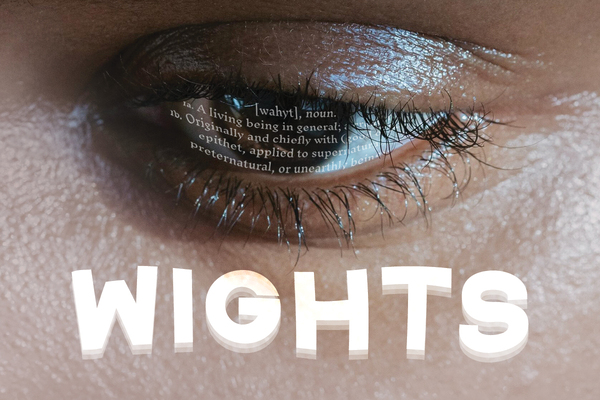
A wight is a being or creature, very much as Shakespeare used it, and was no big deal until fantasy started employing the word to suggest something supernatural or unearthly. I think it’s the same word but simply with added connotations. If I point my magic wand at you and call you a creature, that’s not really an additional meaning, just a different context via another genre.
While I may be over-thinking in noticing a third extra meaning I hope I can be forgiven for that, in a play populated by compulsive over-thinkers. But it’s the unavoidable homonym, the accusation with the unspoken word that lurks in the relationship between Anita and Danny. While Anita is a visible minority, Danny passes as Caucasian with his white privilege and the association with white supremacy, and is tormented by guilt that inspires impulsive actions: and I won’t say more for fear of spoiling the play for you.
Sometimes people are allowed to speak at length, sometimes they are interrupted incessantly. Do people normally listen? I ask that as a question of verisimilitude, and the conventions we build into drama or film, that simply don’t apply to real life. In Appel’s play there are lots of words, the cast delivering them at break-neck speed and largely getting out of the way when a tirade begins. In my experience I don’t find that people are usually this polite, to hear someone out when they go on at such length, especially when they’re passionate or angry.
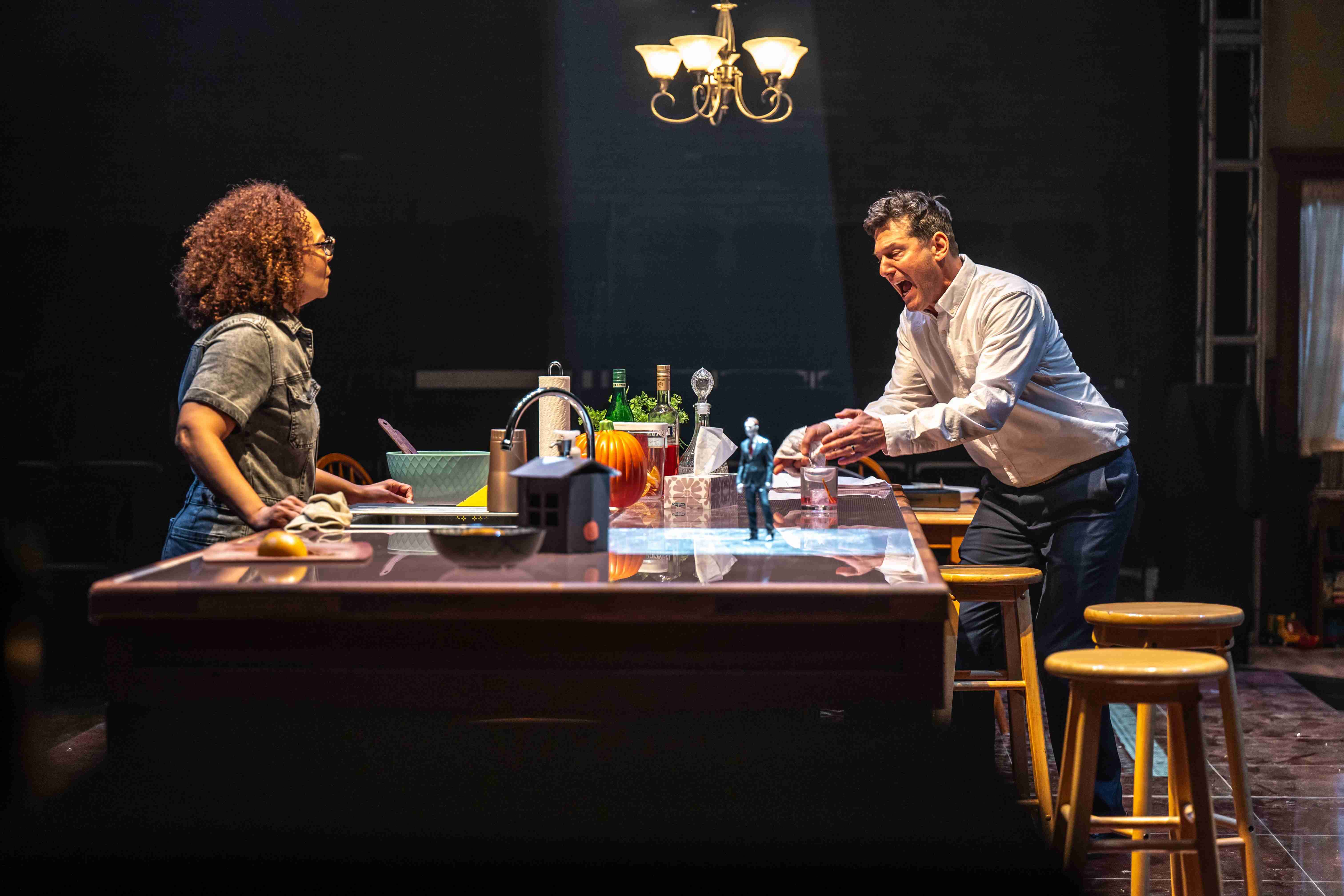
As Ari Cohen is much bigger than Rachel Leslie, when he starts ranting at her in the last half hour he can compel her attention by intimidation, although (tiny spoiler alert) thank goodness he doesn’t hit her. Ah but then this is a fictional space regardless of its resemblance to modern reality. My speeches get interrupted. Angry people strike one another or walk away.
The performance came in at two and a half hours due to rapid fire delivery of huge numbers of lines from Danny and Anita. As they relax into their roles perhaps they will deliver some parts more slowly, which might be interesting to see. So yes: I want to see the play again.
A Crow’s Theatre commission directed by Crow’s Theatre Artistic Director Chris Abraham, Wights will be onstage at least until February 9th at the Guloien Theatre.
 barczablog