This week the Toronto Symphony offer the first in a series of concerts featuring the music of Ludwig van Beethoven, one of the most popular and best loved of all classical composers. Wednesday night’s performances were a brilliant start.
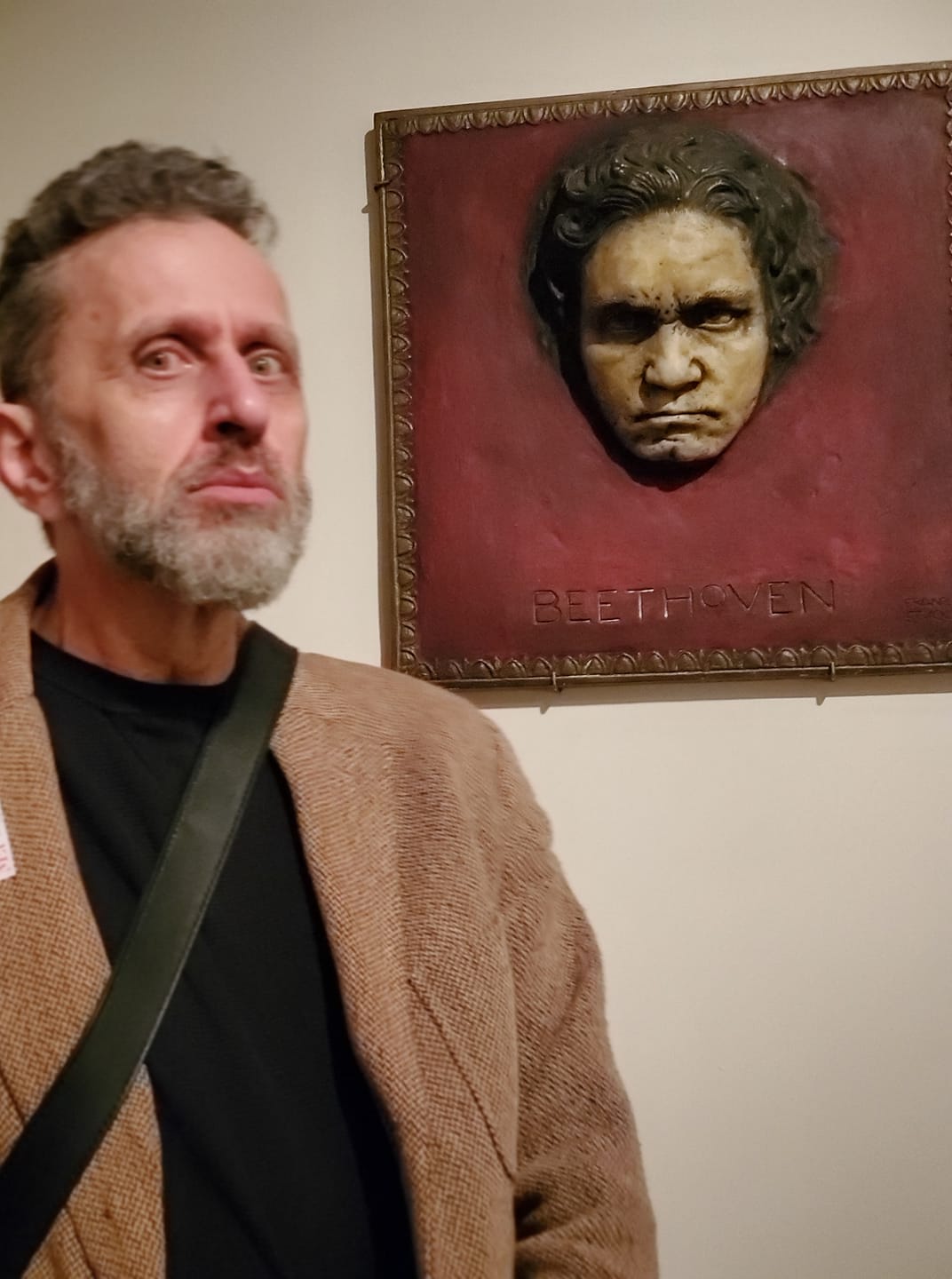
No it’s not really a festival, even if it feels like it to this admirer. I’m just calling attention to their programming because it’s exciting to get to hear so many of Beethoven’s best-known works over a relatively short period of time. Maybe the TSO programmers did it consciously? maybe not. Let me quickly summarize what’s to come, and you judge for yourself whether I’m wrong to point out the high number of Beethoven works we’re about to get. I can’t help being excited looking at this list.
- This week: Beethoven’s Violin Concerto (plus Schumann’s Symphony #2 and Unsuk Chin’s subito con forza, a brief modern homage to Beethoven last played by the TSO in October 2022), to be repeated Thursday January 23rd.
- February 5 & 6: Jan Lisiecki plays and conducts all five of the piano concerti on two consecutive nights: quite a feat from Mr Lisiecki!
- February 15: The Toronto Symphony Youth Orchestra get into the act with Beethoven’s 5th symphony alongside John Williams music from Star Wars and Kevin Lau’s Artemis.
- March 23: Beethoven Lives Upstairs is offered twice, a Young People’s Concert that also includes a Beethoven performance by Brampton’s Youth Orchestra the Rosebuds in the North Lobby.
- May 16: Beethoven’s 5th, this time from the National Arts Centre Orchestra. Maybe the TSO asked the NAC to play Beethoven?
- May 28, 30 & 31: Beethoven’s 3rd symphony Eroica, plus Arvo Pärt’s Cantus in Memoriam Benjamin Britten and Stewart Goodyear’s Callaloo—A Caribbean Suite for Piano and Orchestra

And so: there’s lots to hear whether Beethoven is new to you or your oldest vice. This week as I continue to ponder the recent passing of my mother at 103, I was looking at the oldest records in the family collection, my father’s old vinyl recordings, including the Toscanini set of symphonies and the Emperor aka concerto #5 played by Arthur Rubenstein, my first exposure to Beethoven. Whatever else you do raising your children, expose them to Beethoven.
But that reminds me. Yes I saw and heard a concert Wednesday night including the Beethoven violin concerto. While I grew up listening to the Mendelssohn concerto on another of my father’s vinyl discs, I recall the abrupt shift when I first heard the Beethoven concerto, one that for me stands alone above all others, possibly because it’s one of his greatest creations. I don’t think of it as a virtuoso piece so much as a brilliant composition that happens to be a violin concerto, one of the pieces where fundamental issues of sound are being explored. Again we must marvel at the creativity of a composer on the pathway to deafness exploring sonic attributes that he must have heard in his head if not in the real world.
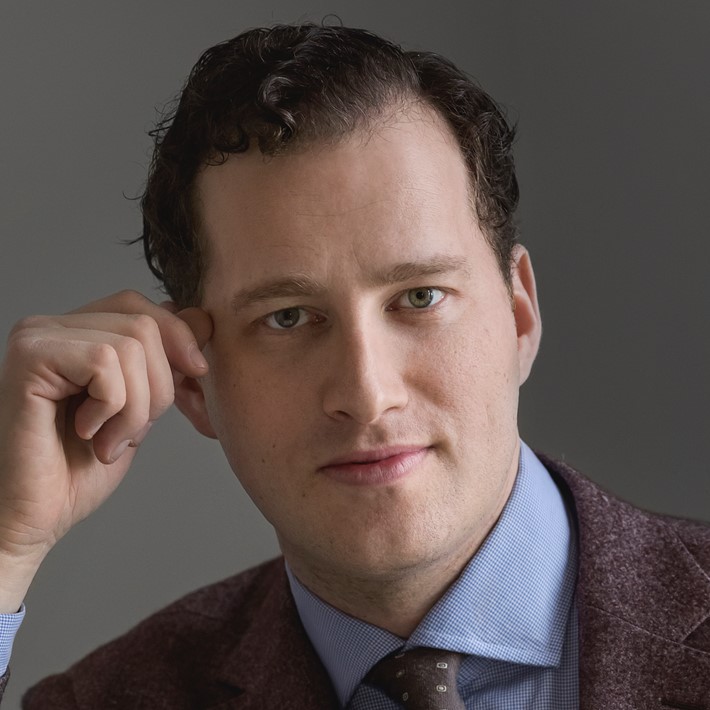
Nikolaj Szeps-Znaider, who has been music director of the Orchestre National de Lyon since 2021, was both the TSO’s conductor and violin soloist in the concerto. We must somehow get this brilliant artist back for another concert as soon as possible. His conducting, his playing, his artistry are remarkable. And actually he is back (as he is still here in Toronto) , for Thursday night January 23rd, so that’s the next chance to hear him repeat this program both as a soloist and as a conductor. My head is still pulsing with the music I heard tonight.
Znaider’s violin is part of the magic, an instrument once played by Fritz Kreisler, as he told us when he offered that composer’s Liebesleid as a stunning encore accompanied by the TSO. I shouted myself a little hoarse not truly in hopes of an encore, but simply overcome, tearful, listening to the Beethoven concerto.
Does it matter if the violin’s tone is sweet, that the violinist shapes phrases exquisitely? That’s the ideal. I love this concerto but heve never heard it like this, often played with great delicacy, restraint while letting the orchestra command the conversation: as so often happens in this unique concerto. I was a bit dumbfounded as to how the orchestra stayed with him, when he slowed, when he hesitated without a clear signal (he was busy playing after all), yet they knew to follow. I suppose that’s what rehearsal is for. But OMG this was stunning.
The first movement is epic in scope, as the timpanist begins almost inaudibly with a motif that we will hear throughout the movement, simply a pattern of five repeated notes. From this the first melody opens up passionately, sometimes in winds sometimes in strings, and in due course carried by the soloist himself. After so much drama, the second movement offers us a peaceful resting place, before the catharsis of the third movement. It’s brilliantly constructed, so that we gradually go from something more like an internal struggle to something extroverted, like a celebration in its dance rhythm.
I’m reminded of Anton Kuerti’s program notes in his complete sonatas recording when he said that to play Beethoven in a sense you have to become Beethoven, your identification a natural way to read the music. If we accept that idea –which I find very compelling–it makes even more sense to have a concerto that is also conducted by the soloist as we saw tonight. and we will have that opportunity again next month when Jan Lisiecki gives us all 5 piano concerti as player and leader of the orchestra on consecutive nights. The unity between Znaider’s violin and the orchestra was unmistakeable, as though they were reading minds: although I think this was as much about visceral feeling as intellect.
And it helps that Znaider’s violin has the most beautiful violin sound I have heard in a long time, perhaps ever.
After the intermission we heard a short piece that the TSO played in October 2022 namely Unsuk Chin’s subito con forza, a brief modern homage to Beethoven. We were now listening to Znaider the conductor, as he worked without a baton giving us something substantially different from what we heard last time. At that time I enjoyed what Chin had created even though her piece seemed somewhat incoherent, a series of effects. Znaider did something to subito con forza that we would also see him do with the concluding Schumann symphony. He looked at the score, decided on a prevailing effect and then organized the players around that effect, making the work seem more coherent. The effect borders on the miraculous, as he analyzed and then shaped the interpretation for desired impact in specific places. I suppose that’s what an interpreter does?
I use that word “miraculous” because of what I heard in the TSO performance of Schumann’s symphony #2. Znaider worked without either score or baton, conducting from memory. Presumably the program was one he asked to conduct, a fascinating combination of pieces. This symphony has a lot in common with that violin concerto, another work full of passionate appoggiatura moments, when we are suspended and teased by the composer’s tendency to leave us almost resolved and then hanging a note away for a moment or two. The impact is something resembling passion, emotions that feel unfulfilled.
Znaider led a very clean clear reading unlike any performance of the work I have ever heard. The thing about the Schumann second symphony is how difficult it is to really make it work as well as what we heard tonight. There are many notes, many voices, sometimes overlapping: unless you insist that the players observe careful phrasing and get off their notes judiciously, precisely, carefully. OMG that’s what I heard tonight, a revelation in a work I thought I knew. In several places the strings were playing very softly, the trumpet motif that can sometimes overwhelm the rest of the orchestra was held in check, blended rather than blasting. As with the short work, Znaider seemed to have clear ideas, an interpretation built around a series of coherent effects, when one or another section would clearly be heard while others got out of the way, or delicately answered: but without covering one another. To make Schumann sound so sane is quite a feat.
Znaider and the TSO will repeat the program Thursday January 23rd at 8:00 at Roy Thomson Hall. Go hear it if you possibly can!
 barczablog