
I went home satisfied from tonight’s Toronto Symphony concert, a program including some items exactly as expected plus a few surprises.
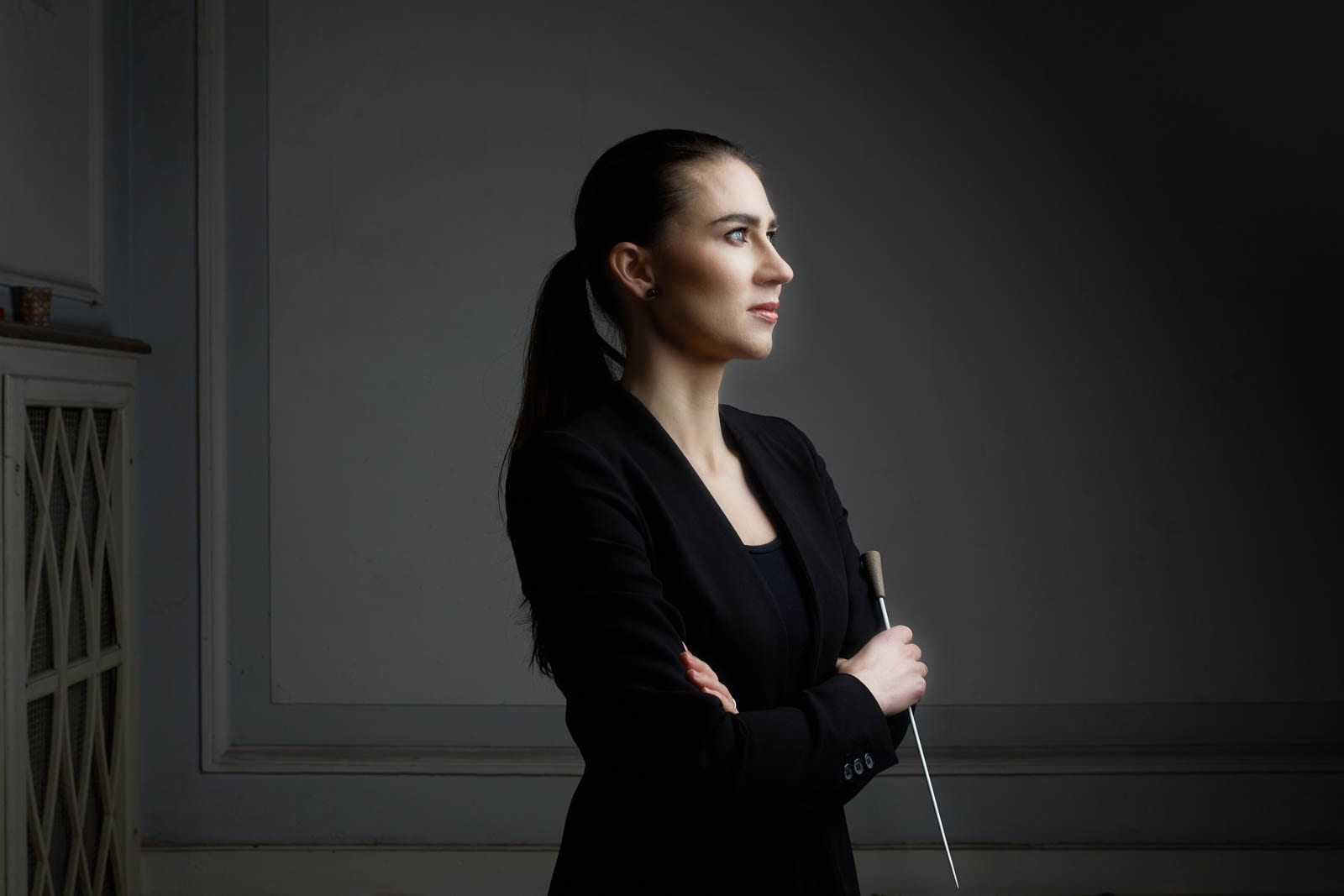
For an evening titled “Angela Hewitt Plays Mozart” it was a very solid collaboration between the famous pianist and a young conductor from Poland named Marta Gardolińska leading the TSO.
At times Hewitt moves her left hand in response to the orchestral music almost as though she were conducting, seeming at least to be a mentor to the ensemble and their youthful leader. I’ve been listening to this 21st piano concerto of Mozart K467 all my life, so I was grateful to hear a touchstone executed faithfully with a couple of wonderful cadenzas. Hewitt didn’t seem to be working hard, her performance as effortless and perfect as her smiles.

For an encore we went to the expected fountain of her inspiration, namely JS Bach. Before playing the Aria of the Goldberg Variations, she spoke of her joy being back in Canada, in Toronto, winning the enthusiastic applause of a patriotic crowd who had already risen to sing our national anthem.
We were told of the personal significance for Hewitt of 2025, as the 40th anniversary of a prize won here for playing Bach, the 50th anniversary of her first performance of the Goldbergs in Lunenberg NS. (I hope I got that right)
Her encore was pure magic.
For the remainder of the program we were in the realm of the unexpected.
We began with an Overture by Anton Reicha, a Czech-born contemporary of Beethoven whose work is largely forgotten, at least until recently. The first part of the Overture is conservative but before long it begins to employ an infectious dance rhythm in the uncommon time-signature of 5/4, that you might know from the modern piece Take Five, except we were in a folk idiom rather than anything jazzy.
Gardolińska showed herself to be firmly in charge during the Reicha Overture and the Mozart concerto.
The concluding work on the program, Mendelssohn’s Symphony #3 was for me the highlight of the evening, and reason to expect great things from this young conductor.
I’ve been listening to different interpretations of this work, subtitled “Scottish”. Mendelssohn is often singled out for the way his travels inspired works with local colour such as his Italian Symphony or his Hebrides Overture. This moody symphony is another great example of romanticism in music, although it can lead to a great variety of interpretation. There are four movements, two of them subdivided, allowing a great many ways to assemble the parts. I grew up on a very slow thoughtful disc from Otto Klemperer, recalling an admonition (from someone, surely not him but someone analyzing his approach) that a melody must never go so fast that it fails to be properly articulated. Of course tastes vary, and levels of skill may change from century to century especially as instruments are improved (valves for example), so that while his recordings clearly articulate every part, his tempi are largely out of favour, slower than what one usually encounters in a modern concert hall. Perhaps I am a bit of a dinosaur in adoring what Klemperer does on this symphony, even if for many other works I think he’s too slow.
I invoke him before mentioning the choices from tonight’s interpreter, Marta Gardolińska, who at times came closer to my beloved Klemperer than I’ve heard in awhile, particularly at the end. Her opening movement Andante con moto was sufficiently slow and thoughtful, preface to the Allegro un poco agitato (a little agitated), although I think her agitato was more than un poco. But it was tasteful, beautifully articulated as the TSO players responded to her leadership. The second movement vivace non troppo was as everyone does it nowadays, which is to say (in my opinion) ignoring that “non troppo” (not too much). The brass were magnificent in response, clearly phrasing the climax done at a pace I do find troppo. Perhaps the skills of modern players are improved beyond what Mendelssohn could have imagined in his time. Bold and brave as it was, I like it a bit more restrained, but it still works. Then when we reached the Adagio Gardolińska surprised me, taking things slower than anyone I’ve heard in a long time, carefully drawing out the luscious string melodies to make Otto proud (wherever he has gone), as we experienced the most deeply sensuous meditation. For one who appears to be so young, Gardolińska’s displays great maturity and good taste.
The finale, with its multiple segments, regularly frustrates me, conductors racing through the Allegro vivacissimo (although I wonder if Mendelssohn could have imagined the pace taken tonight): but one can’t blame her when the composer more or less asked for it, right? There is a slow transition passage to remind us of the fast themes in a dreamy reminiscence in A minor of the Allegro, before the A major asserts itself in the Allegro maestoso assai. I regularly cringe in horror because we don’t usually get something genuinely maestoso (majestic): that is, not if the conductor races through the finale.
Miraculo! Tears rolling down my cheeks for the whole movement, stunning, truly majestic, as the melody was allowed to take shape rather than forced. The ensemble built from a soft assertion of the hopeful melody. And once again this orchestra responded, making something stunningly beautiful.
I am once again impressed at the powers that be at the TSO who find new talent, in this case the brilliant Marta Gardolińska. I recommend this concert, repeating Thursday & Saturday at Roy Thomson Hall, plus Sunday afternoon at George Weston Recital Hall.
 barczablog