
Opera Atelier brought their opulent 2022 Versailles production of Marc Antoine Charpentier’s 1688 opera/ballet David and Jonathan to Koerner Hall in Toronto. Artistic Director Marshall Pynkoski reminded us last night in his pre-show speech that the company began forty years ago.
This version of the story largely matches what I recall from the Bible, a story that goes from something happy to something much darker including something like madness. Everyone is happy when David defeats the Philistine giant Goliath. But King Saul becomes jealous of the young champion, driving David away, turning upon his son Jonathan and becoming more erratic and demented. Although David and Saul’s son Jonathan love one another, both Jonathan and Saul both eventually die in battle. David becomes King of Israel, heartbroken in the midst of the celebration.
While the Old Testament may be the source, it’s presented through an operatic lens including a witch who conjures a ghost in the Prologue, a trouser role to add an intriguing layer of ambiguity and moments of joyous celebration, fierce passion, jealousy, madness and death.
The style of the work is ideal for Opera Atelier, showcasing their dancers. Instead of arias, Charpentier’s arioso builds up dramatic tension until it’s released through divertissements in dance and/or chorus. Before intermission the set-pieces are mostly celebratory dance, while after intermission we see dances including sword-play, choreographed by Jeannette Lajeunesse Zingg and Fight Director Dominic Who.
A program note from Marshall & Jeannette says
“For our 40th Anniversary we wish to reiterate our conviction that period performance is not a museum. It is a threshold–a point of departure and new discoveries”. Looking back on those four decades, one has to admit that not only have they and Opera Atelier been exploring and articulating historically informed performance practices, but we in the audience have been learning how to understand what’s put before us onstage. For this 17th century opera / ballet the gap between historically informed performance and modern interpretation seems narrower than usual, or in other words the work for Marshall and Jeannette on this production feels especially authentic.
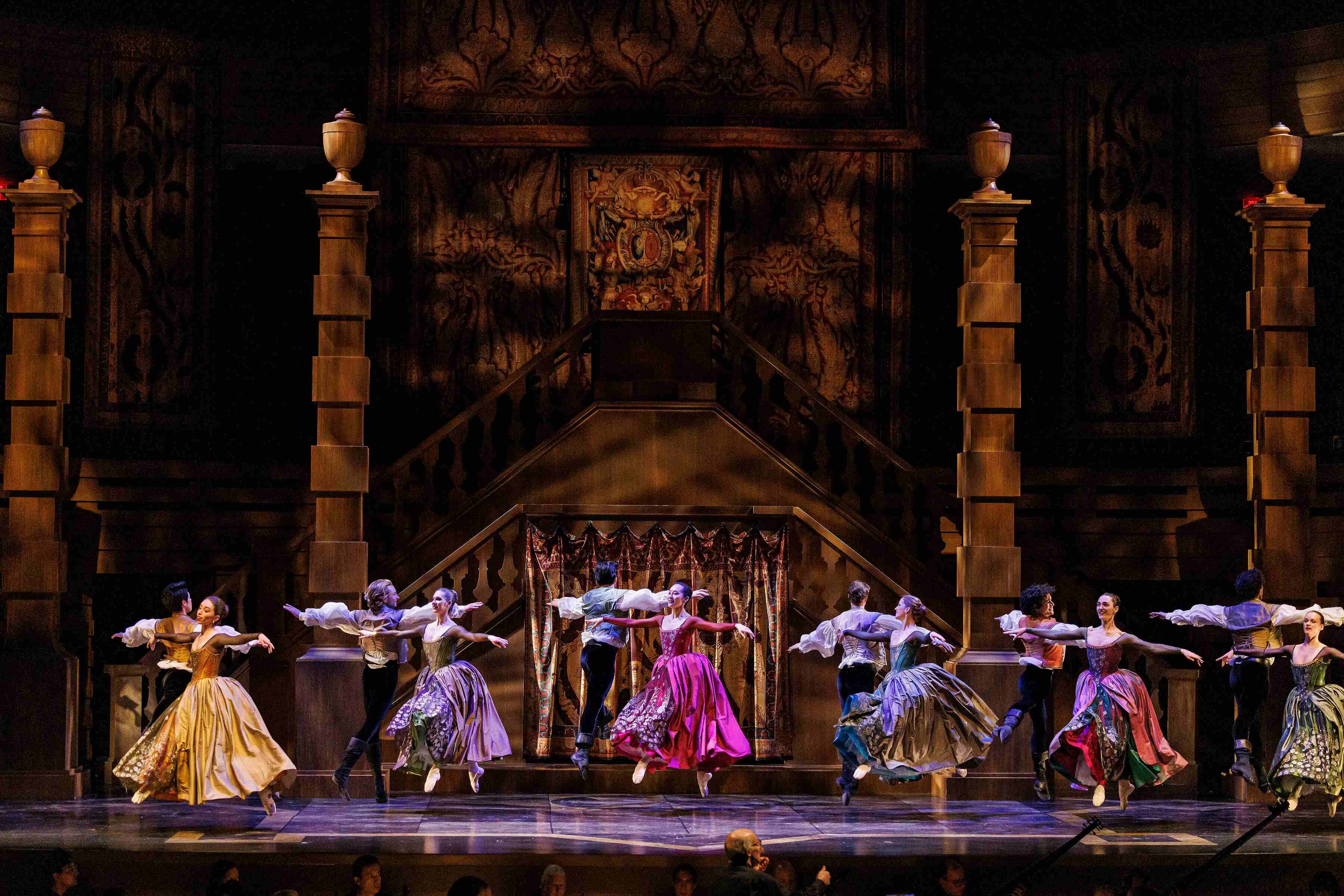
Gerard Gauci’s set is a perfect match to the wooden surfaces and colour scheme of Koerner Hall’s interior.
In this my first experience of the opera/ballet, I was not always clear on what I was seeing as there’s some ambiguity in the work & its presentation. When we are seeing the happy faces of David or Jonathan, or during the Prologue I had no problem. But the complex scheming and plotting of Achis (the Philistine King, played by Christopher Dunham) and Joabel (the Philistine general, played by Antonin Rondepierre), messing with Saul (the Israelite King, played by David Witczak) left me sometimes unsure whose rantings I was hearing.
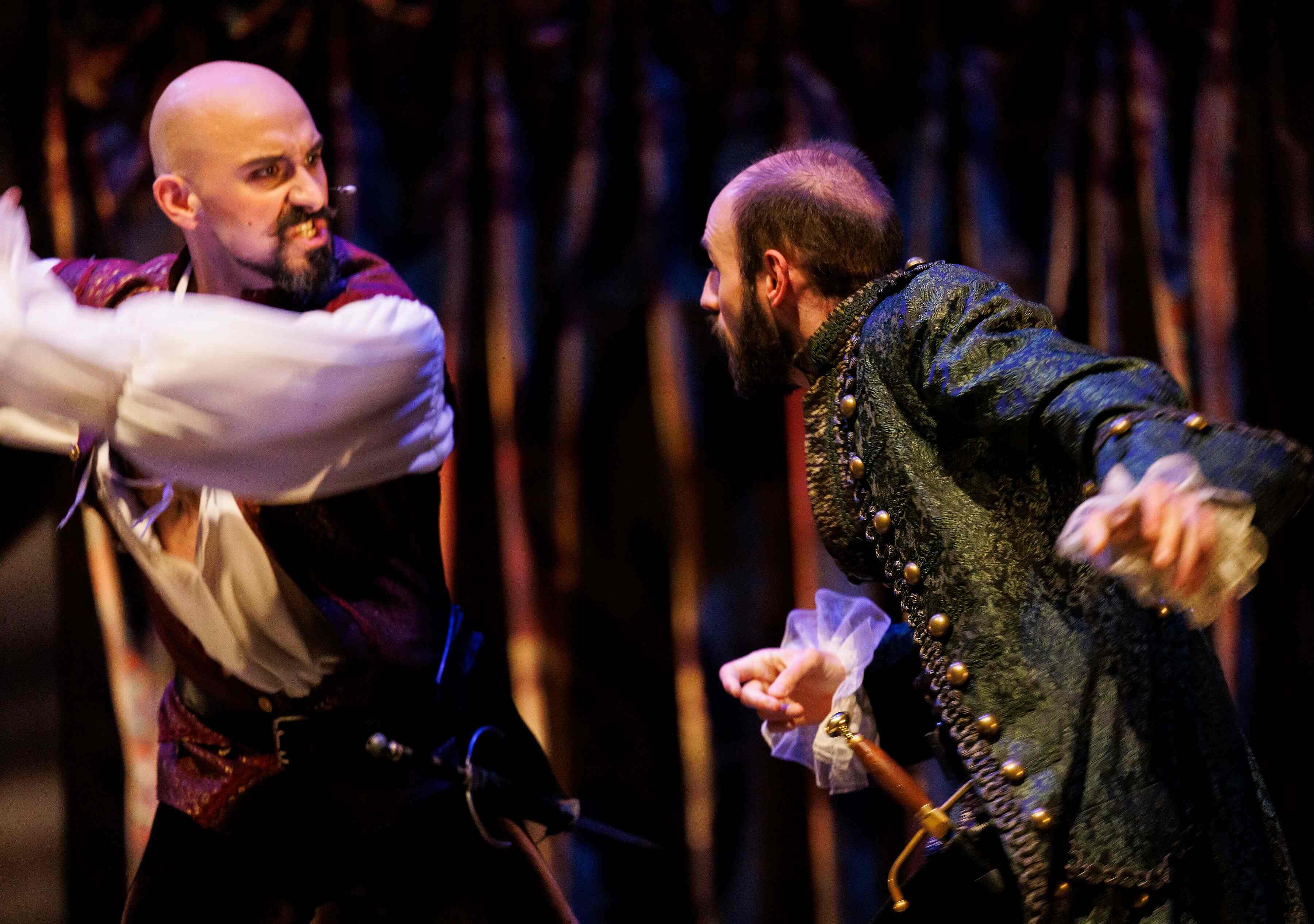
I wonder if there is a movement vocabulary or gestural language to assist in differentiating? except that if Marshall and Jeannette employed these techniques (ways of standing, posing, singing, to signify madness or anger or jealousy) I am not sufficiently literate in these elements to easily decode what I saw. Or maybe it’s simply that the opera is new to me and I will understand it better next time.
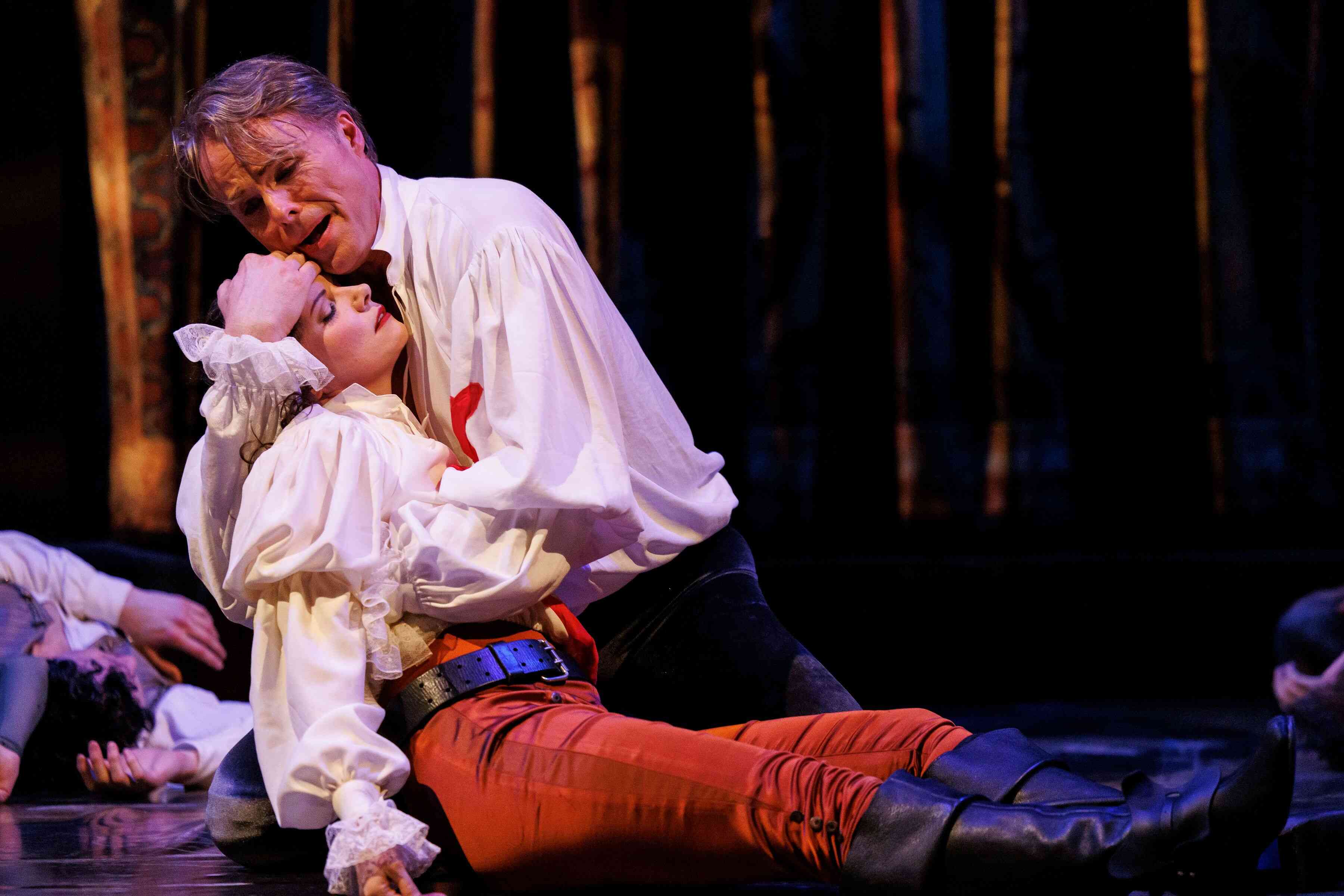
The principals were effective, working with the gorgeous sounds of the Tafelmusik Baroque Orchestra and Tafelmusik Chamber Choir, conducted by David Fallis, sensitively ensuring that the singers were never covered. At times the choir, singing from the balcony, seem to address thoughts inside a singer’s head, as in the scene where Jonathan (Mireille Asselin) contemplates his conflicting loyalties and the upcoming battle. The sanest happiest characters at the heart of the story are the title roles of David (Colin Ainsworth) and Jonathan, surrounded by intrigue and lunacy. It’s a thrill hearing the powerful tenor voice of Colin Ainsworth, a stalwart performer for Opera Atelier.
The Prologue was for me a highlight, Mireille Lebel singing powerfully at the bottom of her vocal range, as the Pythonisse (a witch) conjuring the spirit of Samuel (Stephen Hegedus), who tells Saul (David Witczak) that heaven has abandoned him, similar to what we can read in 1 Samuel 28. It was compelling theatre to watch a 17th century take on madness as seen in the gradual decline and collapse of Saul.
Charpentier’s David and Jonathan will be presented again at Koerner Hall this weekend with performances Thursday April 10 and Saturday April 12 at 7:30 pm, and Sunday April 13 at 2:30pm.
For tickets click here.
 barczablog