This has been a bit of a bewildering week, astonishing contrasts. I repeat my self-fulfilling mantra “I am a lucky guy,” grateful for what I’ve experienced.
Wednesday was Opera Atelier’s Magic Flute, Thursday Tapestry Briefs Under Where, Friday was the burial & celebration of life for my Aunt Vera, who passed away just a few days ago, and then Saturday was my second look at the Amy Lane Roméo et Juliette, in its final performance.
And on Sunday I rested, one might say, but am trying to understand, the different impressions still reverberating in me: especially Stephen Costello’s voice.
The July Celebration of Life for my mom has been influencing everything, inevitably. I said at the time I was anxious about forgetting my mom. I find myself obsessing over my role as an observer at the theatre or concert hall. I want to write testimony, to share observations rather than to judge or assess. I believe I am most helpful in explaining how something works and what it’s doing, as though I were helping the audience digest the performance, as though I were helping the artists be understood. In grad school I recall one role we had in creating lobby displays was to unpack complexities, to make theatre more intelligible.
I wrote about Magic Flute seeking to explain what I thought Opera Atelier were doing, as I’m not sure I’ve ever seen that explained properly before. Oh sure, people say “historically informed” and/or “period performance”, but what does that include? so I broke it down, seeking to list the components and hopefully that’s useful.
I wrote about the Tapestry Briefs Under Where evening, seeking to offer useful feedback. I may have seemed to be playing devil’s advocate somewhat. I hope the pieces were useful for participants, and yes the audience seemed to enjoy themselves. It’s funny how torn I felt, resistant to being judgmental or dismissive, when we were being invited to assess the best of the eleven pieces in the show. What bothers me is that the format –using a pencil to make quick notations — wasn’t conducive to really properly capturing my feelings. I could have easily sat for half an hour making notes after each one: but then again I’m funny that way. I loved the performances, the evidence of a creative process, and felt huge frustration that the meal was snatched away in each case before I really had a chance to let it hit my taste-buds (if the analogy works…I’m not sure).
It was especially wacky to watch Saturday Night Live (Sunday via the DVR), mindful of the challenges the Tapestry composers & librettists face, comparable to the sketch-writers on SNL. Writing is writing, in the end. Perhaps I need to let go of my assumptions about opera, maybe a 3 hour opera is obsolete (as the lady sitting beside me at Romeo et Juliette seemed to suggest, speaking of how her husband disliked Eugene Onegin, and this time she came alone). Maybe the Tapestry shorts are not so much a laboratory exercise, as a new normal, when I recall how many of the “operas” (in quotes) are actually song cycles, short works strung together. Maybe operas need to be shorter, indeed there was a trend there for awhile in the 19th century and early 20th century. Maybe the goal as I define it is all wrong, and the suite of short works is the new ideal, again reminding me of what Opera Revue and Against the Grain do in bar settings, stringing arias & short scenes together into entertainments rather than long complex operas. Do working professionals have the time to go see a four hour opera..? Maybe we’re now into the realm of playlists & downloads of portions of operas, and it’s only the nerds (that’s me…guilty as charged) who trouble themselves with the questions about the bigger longer works.
The great thing about my chance to experience the celebration of life for my Aunt Vera in the midst of these performances is how tender we get in these encounters, willing to listen differently, willing to be quiet and think. I see this in church too during a Christmas pageant. How funny that I want that for Thursday night’s event. In my church days (whether as choir-member, as soloist or organist)I saw the willingness to be supporting & loving to performers, less judgmental and more about appreciation & gratitude. I recall the notion some artists shared of the theatre as a temple, that the arts are sacred. The dramaturg or the critic can be, indeed must be like a steward of the arts, like a midwife to the new creations and protective of the artists. I wish we were as respectful and empathetic to the performers onstage as we are in church or at a funeral. Can we be that way all the time, rather than only rarely? Maybe I’m sounding unreasonable but I think we get glimpses of the ideal, that can inform what we do all the time.
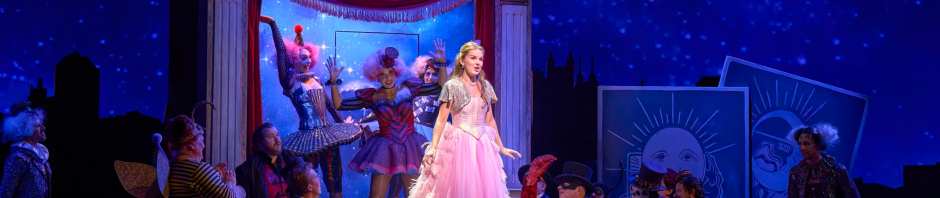
And so I’m going to remark again on the Roméo performance, especially knowing that the run is over. I got a private message from someone I won’t name asking “Was Romeo as bad as what I’ve been reading?” The review I published was arguably incomplete, as I spoke highly of what I saw director Amy Lane doing, even if I was perplexed at two moments (by the corset under Capulet’s clothes, unveiled strangely in the first act, and the moment at the end of the fight scene, where there’s an extra brutal murder that seems gratuitous and to no purpose). The dancers sometimes suggest to me a director who has no faith in an audience’s ability to stay awake, teasing us with endless diversions & distractions (is that so different from Gounod himself? i’ll just leave that question there….). At times that struck me as disrespectful, upstaging the singers. But then again maybe that’s reality, maybe it makes sense given what Juliette was singing about. My job is to try to see what’s in front of me, not to show up with a checklist of requirements & stipulations.
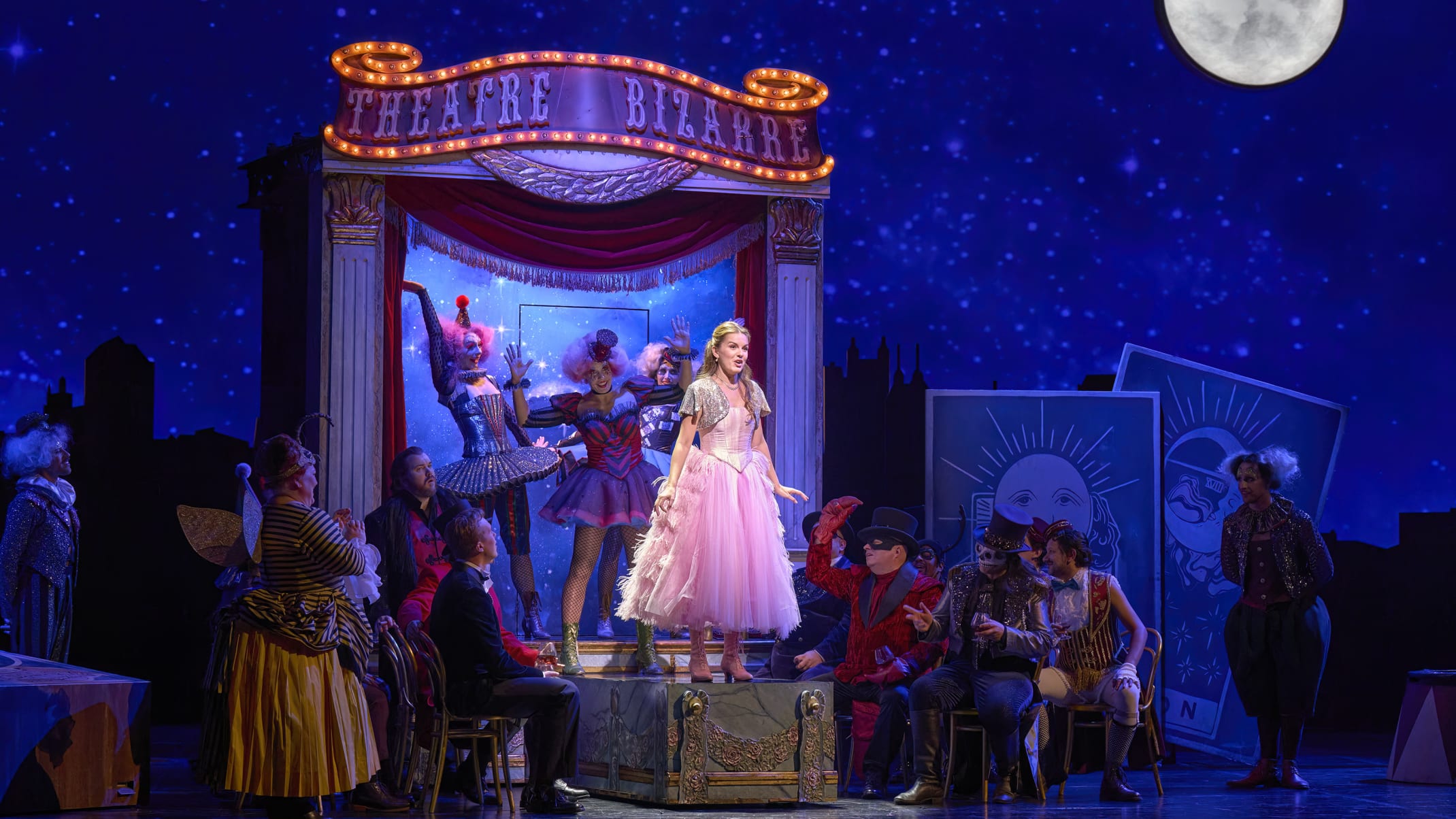
That being said, my basic sense of Amy Lane’s work was that she was working with Gounod, whose take on Shakespeare is sometimes sensitive, sometimes sentimental and superficial, adding some remarkable moments especially in the last act. I liked that a lot, as I said in my review.
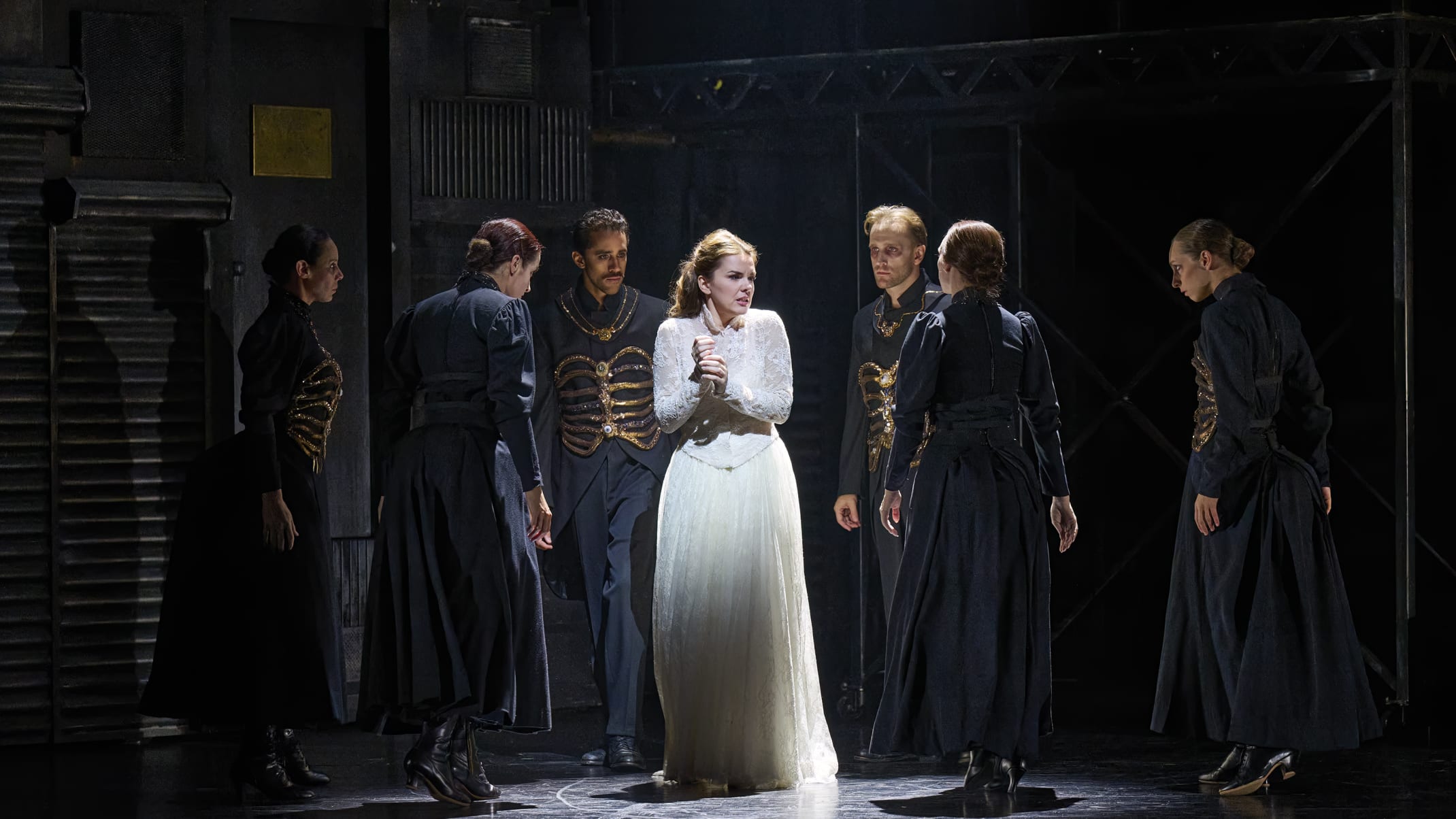
What I didn’t mention was my professor’s commentary back in my undergrad days, when he more or less dismissed Gounod for Berlioz (thinking of Faust). I think the truth is, Gounod was working with the theatre of his time, doing many of the things we see in Bizet & Puccini, namely the recurring themes and the sparkling entr’actes with clever orchestration. As I regularly try to remind myself, we need to stay in the present and observe & testify, rather than resisting and quibbling. To coin a phrase, “love the one you’re with”. Gounod isn’t Berlioz but he isn’t chopped liver either. In the last act we heard stunning music superbly played by the COC orchestra, conducted by Yves Abel. They tell the story in the way that Gounod did it. We can still see Shakespeare through the layers, and a great deal shone through.
Yes it’s nice to hear Romeo again singing the melody in the final scene from the love duet, especially when sung as well as what we heard from Stephen Costello. Yesterday perhaps knowing it was the last show he really let it all out, and I was moved.
I was glad to have the chance to see Korin Thomas-Smith undertake the role of Mercutio, well-sung throughout, as far as his Queen Mab aria, and nobly standing by Romeo in the big fight scene, dying quite beautifully, across from Owen McCausland’s Tybalt. Updating the opera to the 19th century impacted the way the fights were conducted, not with swords but with knives. I don’t know whose idea it was (between Amy Lane and fight director Siobhan Richardson) to stage it this way, Romeo relatively far from the action, instead of in the middle as we expect (given the line that the opera includes from the play) suggesting that by coming between them, Tybalt was able to sneak his sword (or knife) in to wound/kill Mercutio. I am accustomed to hating Tybalt for being such a coward, which (pardon me for this) assuages my conscience somewhat when Tybalt dies, evidently deserving his end. In this version they’re all just fighters and hurling words at each other without any elegant swordplay, perhaps laying the rhetoric bare and making the ugliness of the violence that much uglier. My job–as i keep coming back to it– is not to quibble with Amy Lane and have my nose out of joint that Shakespeare’s sword-fight is missing. I am to show up, bear witness, and seek to understand what the process is, to see what’s really happening regardless of expectations. We still had amazing arias, the layers of ballet & quirky visuals ultimately adding to the magic, not detracting.
I was impressed by both of the leads, even if my original impression when I heard ot the casting (at first two unknown imports, before Stephen Costello was added in place of the original Romeo) was to ask among my friends: why is the COC continually importing singers when there are competent Canadians available? Using a Canadian star has the possibility of building a following for a singer such as Gordon Bintner, Korin Thomas-Smith or Justin Welsh. I don’t understand why a singer we don’t know was imported for the role of Capulet. Justin was Schaunard in the last la Boheme, but should be promoted to the next level of larger roles such as Marcello or Capulet. He has a beautiful voice and is a superb actor. the guy singing Capulet, god bless him, did not sound as good as Justin. I restrain my frustration, only commenting after the last performance, because I go by the Hippocratic ideal, “above all do no harm.” But come on COC. Holly Chaplin sings Juliette, I saw her Mimi a few weeks ago. She has the coloratura and is a good actor. We watched Colin Ainsworth’s superb Tamino this week, he was asked to sing Lensky in USA while being ignored by the COC. Colin has a following in Toronto, in other words he could help sell tickets. Why is Colin ignored by the COC, after his tiny appearance in Falstaff a few years ago? Okay that’s my usual complaint. When a brilliant singer is being imported when a Canadian isn’t available, as for example Iestyn Davies in Orfeo: that’s great. Stephen Costello was superb. And yes, I liked Kseniia Proshina as Juliette, even though her presence does not sell tickets. If a Canadian is available who can sing the role, the COC should be trying to hire that person first.
I’ll be seeing Orfeo again later this week, having exchanged my Saturday subscription ticket for Tuesday night Oct 21, because I want to go see Opera by Request’s concert performance of The Consul (Bill Shookhoff’s baby) next weekend. And the following afternoon it’s the Toronto Operetta Theatre Mikado (Guillermo Silva-Marin this time).
I keep using a word that maybe needs a definition, namely “dramaturgy”. It was something I regularly encountered in grad school, where everyone used the word but no one seemed to have a working definition. You can’t define dramaturgy as “what a dramaturg does” as that’s really a circular definition. Is “the law” simply what a lawyer works with? surely one has to have a grasp of what we mean by “the law”, just as we need to understand what we mean by drama and how it works, what it can do, how broadly we might define it. I had to grapple with this, as it was central to my dissertation. I recall Eugenio Barba’s understanding dramaturgy as “the workings of drama in context”. The dramaturg is all about process, about how the thing works, hopefully holding up a mirror for the drama to know itself better & improve. It’s about process, how it works.
I’m likely broader than most given that I think I am being a dramaturg even when I watch the Toronto Symphony, observing the dramatic elements of their performance, their response to the text they are playing and the ways in which our knowledge of the work provides a context of expectations & familiarity (or lack thereof if the work is brand new). Above all I come back to the Hippocratic oath, that “above all do no harm.” Sticking to a mood of gratitude and a procedure oriented towards testimony, I feel is safest, recognizing that the audience experiences a process, and processes can be analysed & understood. That is part of testimony to report on a subjective experience. When I don’t understand I prefer to say “I don’t get it” rather than to use that as justification for some kind of judgment. Some works require multiple viewings. Amy Lane’s Romeo et Juliette was better on second viewing. I didn’t get why she did what she did with Capulet, but I liked what I saw in the last scenes.
I’m thrilled if anyone even bothers to read what I write here. Thanks for bothering with this big long blog.
 barczablog
Thank you! Excellent post.
Thanks for the kind words!