With every Remembrance Day, I wonder how best to respond to the implications of November 11th, a day when we are encouraged to honour those who gave their lives in wars, in service to the nation.
I went to a school where we had a very powerful ritual celebration every November 11th, led by Mr Bull, a teacher who was a war veteran, who taught us the meaning of solemnity.
He explained the metaphor of the Last Post & Reveille, that when you went to bed at war, you were not guaranteed to wake up the next morning. I liked the clarity of this presentation, which is never so clear anymore when the metaphor is mixed with other poems & songs between the two trumpet calls.
At the end of the service we were marched out of the auditorium, smallest kids first (which was scary the first time I did that), walking between the walls listing the students who had died in the wars. As the school was founded in 1910 we had graduates who died in both world wars and in Korea.
We were trained to be faithful to the flag and the country, perhaps in keeping with the instructions given in the poem “In Flanders Field”, a powerful injunction if you grow up being told to honour those who made the ultimate sacrifice. I wear a poppy, I support the Canadian Forces, especially those who served. All the friends I met in church who served overseas have now passed away. It’s apt that they are remembered both on November 1st and November 11th.
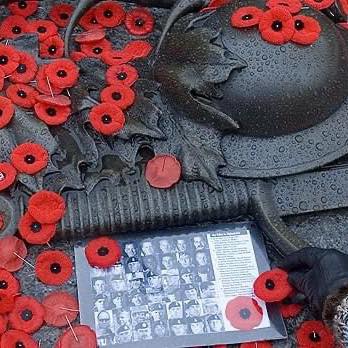
Some of us (me) were more naive and ready to follow our teachers than others. I only know that I felt conflicted by John McRae’s specific request. The last verse is clear.
Take up our quarrel with the foe;
To you from failing hands, we throw
The torch; be yours to hold it high.
If ye break the faith with us who die
We shall not sleep, though poppies grow
In Flanders fields.
We have been at peace for my whole life, although Canada’s soldiers sometimes went overseas as peacekeepers. That assuages my fears somewhat, when I think of McRae’s suggestion that they “shall not sleep”.
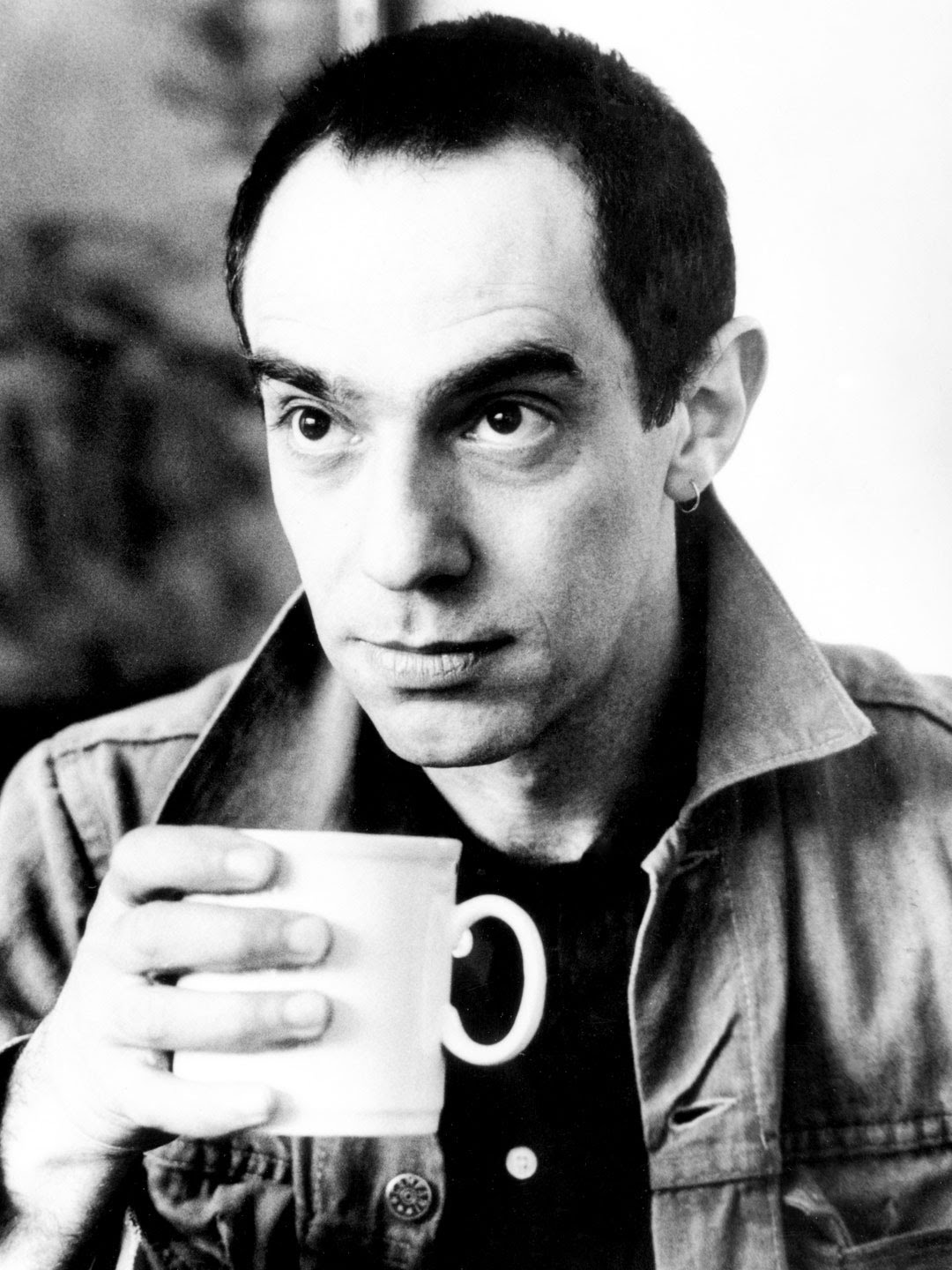
Today I watched Derek Jarman’s 1989 film War Requiem. Britten’s War Requiem, featuring lines from poet Wilfred Owen, is the soundtrack for this stunning film with no actual dialogue.
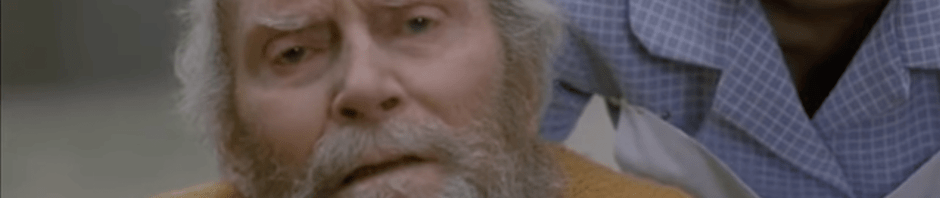
We see Laurence Olivier as an old soldier clutching medals in a wheel chair, pushed by a nurse played by Jarman’s frequent collaborator Tilda Swinton.

Because it’s November 11th, I heard the closing passage of Britten’s War Requiem as an answer to McRae, perhaps hearing it clearly for the first time.
The tenor and baritone sing “Let us sleep now.” More war means more young men called to arms, and dying.
If you’re someone who has lived through war and is easily triggered by loud sounds or images of death or battle, this is not the film for you. Jarman does not take an easy path, sometimes juxtaposing images of children playing at war with toy guns, to real images of life & death struggle.
I feel fortunate. I have uveitis, an inflammation of the iris that we used to call “iritis” twenty years ago. It’s one of the recurring symptoms of ankylosing spondylitis that would hurt far worse if I didn’t have the relief via steroid drops that take away the pain thank goodness. My eyes don’t want to work too hard, refusing to focus after a certain point. I emulate Ray Charles, wearing sunglasses indoors because bright light hurts my eyes. All being well my eyes will recover.
I mention this by way of explanation for why I’m going to fewer concerts than usual right now. After a certain point in the day my eyes seem to be working to rule, refusing to do anything complicated, especially in the evening.
But my eyes have an endless capacity to shed tears which is probably a healthy response. I had wetness on my cheeks during Lepage’s Far side of the moon, during the Mendelssohn Choir concert of Brahms A German Requiem and again today watching Jarman’s meditation on war.
At this point in his life, in 1989 one might call Jarman a dead man walking, aware of his AIDS diagnosis and a near-certain death in his future. He would pass away 5 years later. As of 1989 Europe was on the brink of a new era of peace. As of 2025 the optimism we recall when the Berlin Wall came down, with the excitement of glasnost & perestroika feels very remote, hard to recall. In the film the violence of war builds to the ultimate expression of violence, images of nuclear war. This is no glorification of men in arms but a portrayal of the futility of war. I hope we have not forgotten that part.
While it may go against the grain of November 11th and the poem with the poppies, I am grateful for Jarman’s film and what he says, a meditation on war that feels cathartic at a time when so many of the people I know are feeling despair. I will watch it again tomorrow.
 barczablog