
While there’s something comforting in being able to return to a classic text year after year, I always hope to find ways to make it a fresh experience.
Tafelmusik’s first 2025 Messiah on Thursday December 18th at Koerner Hall had drama to spare, from the first solo by tenor Benjamin Done.

Of course that’s because Benjamin was replacing an indisposed Nicholas Scott, the tenor who may or may not be back for any of the remaining Messiahs this weekend (either Friday & Saturday at Koerner Hall or the Singalong at Massey Hall Sunday).
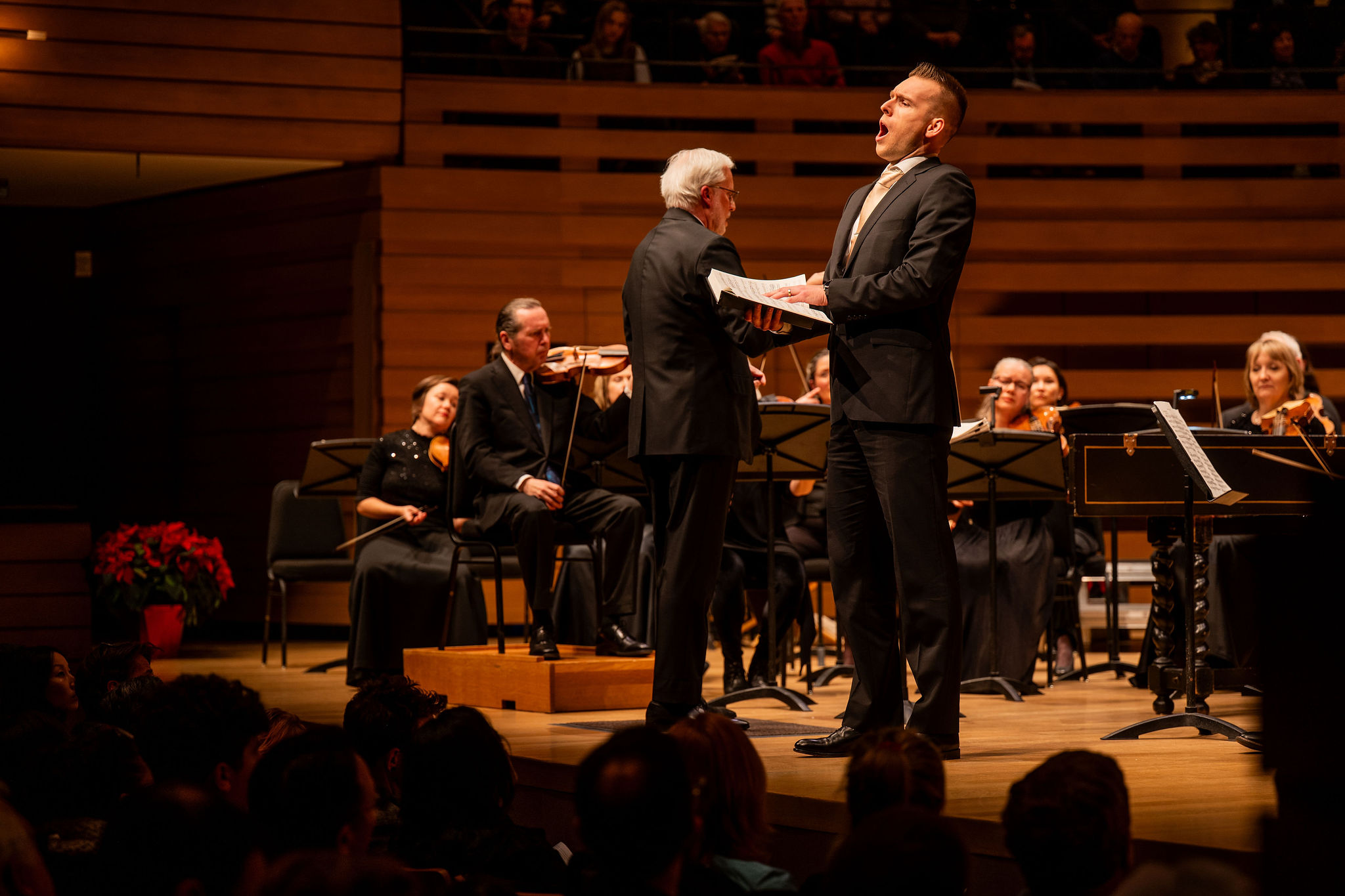
After singing the splendid solos that follow the Sinfonia, namely “Comfort Ye” and “Ev’ry Valley”, Benjamin went back to his station in the chorus for the remainder of Part The First. In Part The Second the tenor usually has an enormous role, although some of those solos were taken by Soprano Stefanie True. I don’t know whether that is unusual or not, only that our printed programs still showed the assignment for the missing tenor.
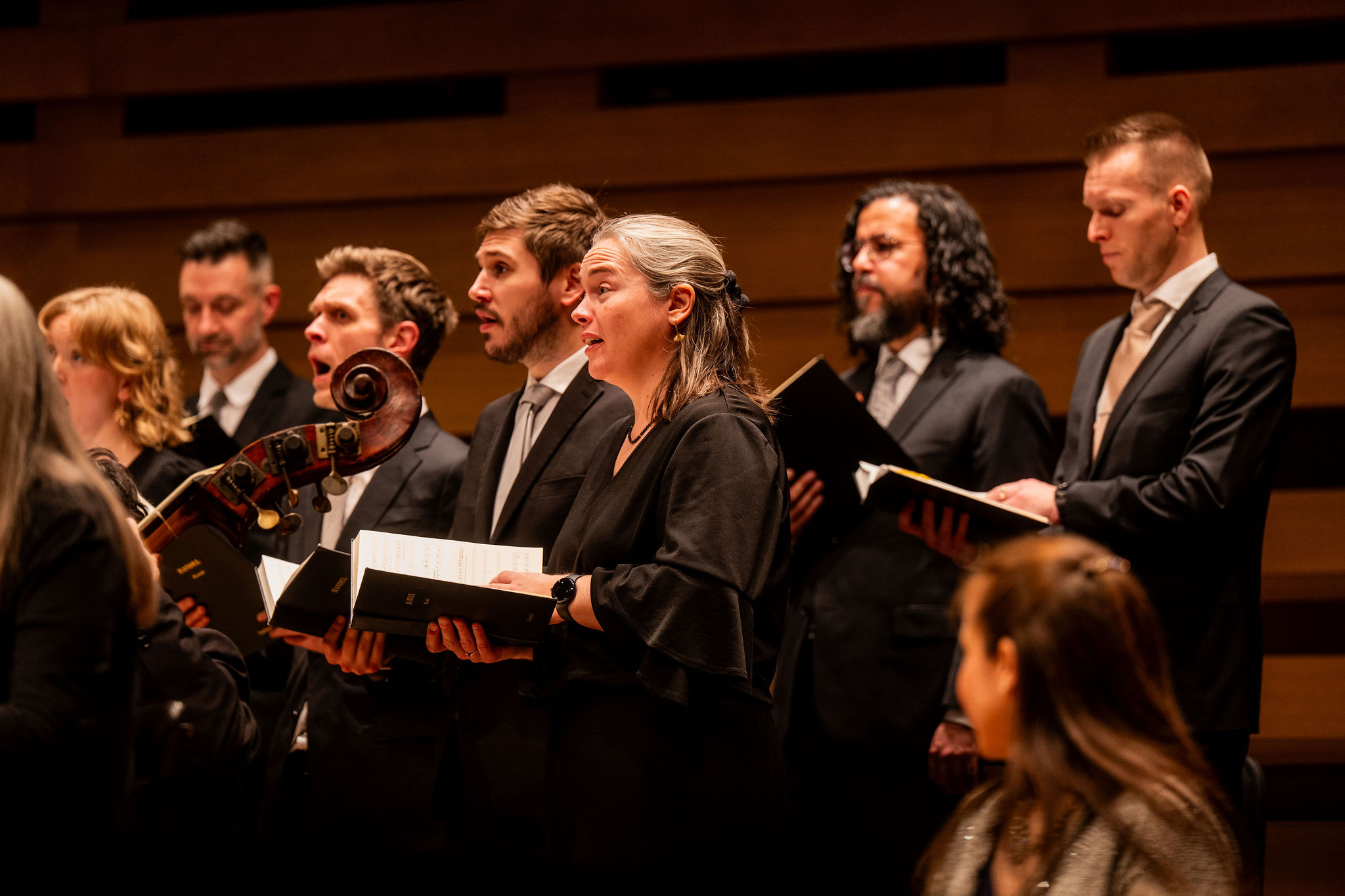
We may think of a solo as the hardest task a singer faces, but it’s not necessarily true, given the many choruses, particularly when the section is as small as in the Tafelmusik Chamber Choir, where Benjamin shares the tenor line with another four singers (Paul Jeffrey, Will Johnson, Robert Kinar & Cory Knight: you can see the bios of the Chamber Choir). The amount of singing Benjamin did when you include solos and choruses was “a big sing”. The glowing appreciation Conductor Ivars Taurins showed at the end of each part (when we responded with our applause) for Benjamin’s work might indicate the underlying drama faced in preparation for the performances.
Speaking of drama, what choices did they face in the hours leading up to the performance? What adrenaline did they (meaning not just Benjamin but also Nicholas, Ivars, Stefanie and other members of the Tafelmusik team) burn in the hours leading up to the event, pondering whether to make cuts or alter assignments. One can only speculate, wondering how well they slept. But this is live performance, and that means that sometimes, especially in peak flu season, singers are indisposed, unwell, sick, and therefore must cancel: and yet the show still must go on.
Before any of this unfolded, before we heard about the changes, we saw and heard Olivia Chow speaking before the event, the Mayor of Toronto adding a bit more drama.
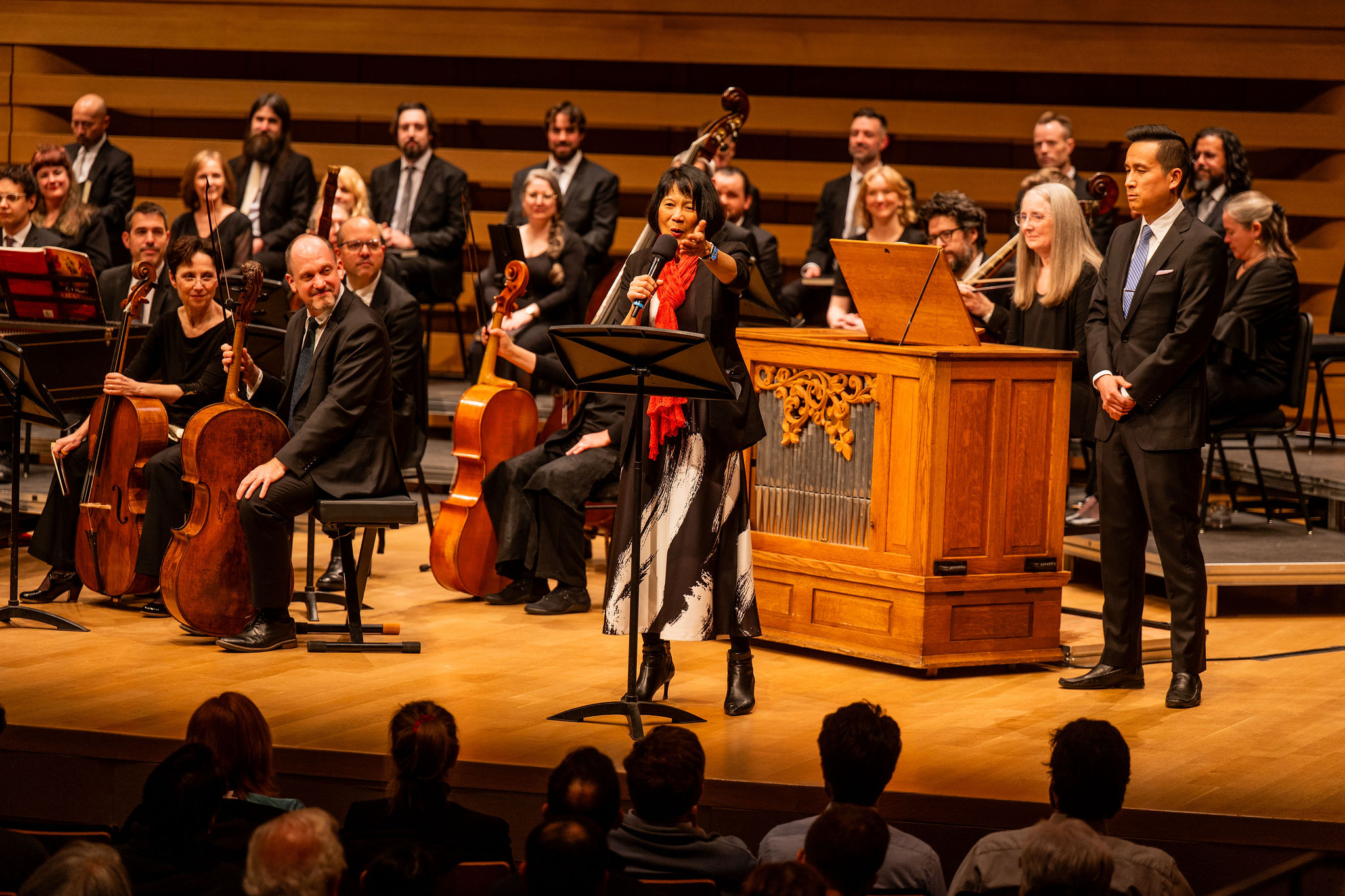
I wonder what butterflies were flying in the stomachs of participants, as the show went on as if it was just another year of Messiah, to be presented as usual.
I wanted to experience Handel’s Messiah as something new and different. In addition to the drama I alluded to in the changed solo assignments, I had the good fortune to hear Messiah in an entirely new way due to my seating in the gallery section behind the stage.
I was staring at faces that were very close, that I know vaguely from social media or from past concerts. I wondered why Kate Helsen’s face looked so familiar, sitting at the end of the row of Altos. But of course she was the musicologist – vocalist who gave the speculative YouTube lecture for the Double Dixit concert last month. I was so close in the Gallery seating that not only could I see faces more clearly than ever before, I could vaguely make out the music. Here’s a picture I took of Patrick Jordan’s music stand as we awaited the resumption of the Messiah after the intermission (and yes I did use the zoom lens).

I have often wondered what it’s like to see the fluid choreography & expressive movements of Ivars Taurins’ music direction from the vantage point of a chorister or orchestra player, rather than from the usual place behind him, sitting in the hall.

What a revelation!
If you want to hear a familiar piece as though for the first time, this is how to do it. The orchestra’s attacks, their climaxes, are all magnified, because from this vantage point you almost seem to be in the orchestra. The sound surrounds you. And with a conductor as demonstrative as Ivars, it’s especially exciting. I think I’ve said this before, that Ivars conducts orchestra and chorus alike as voices in a choir, that he brings out effects and moments with a vivid movement vocabulary suitable for dance, an eloquent body language.
Yes there are trade-offs. You’re no longer seeing the soloists from in front, so there’s a loss of the facial expression and much of the body language of a solo singer during one of their airs. If you are familiar with the work that likely won’t matter as the drama is very much there, via your identification with the performance. The eloquent silences in Krisztina Szabó singing “He was despised” hang in the air between the sung phrases and the soft responses from the orchestra. We see the audience responses. We see Ivars not merely as a leader of the ensemble but in such moments as a kind of ideal audience member, urging and guiding the performers, and he is clearly moved.

Is it always like this? I don’t know. But this was a magical performance to me both in my new location and especially watching the singers coping with the changed assignments.
As it has been a few years since I heard a Tafelmusik Messiah, I can’t be sure whether the glorious sounds I experienced are due to the location in the Gallery, where the orchestra is so close, or perhaps due to a renewed intensity in the interpretation from Ivars. The biting string attacks in Part the Second have never seemed so vivid, even if the effect was partly due to being closer to the players, partly also due to the chance to see Ivars’ directions from in front.
And as a sometime chorister it’s amazing to be so close to that chorus, a very cleanly articulated sound enunciated as never before. No they have never sung “For unto wuss a child is born” (a pitfall I was warned about in the 1990s by Art Wenk, when he conducted a Messiah at our church in North Toronto), every phrase from the chorus was clear, much clearer than what we heard from the soloists.
Whether singing softly as in “And he shall purify”, sung quicker than I’ve ever heard it anywhere else, or powerfully as in the Hallelujah or Worthy Is the Lamb, the voices of the Tafelmusik Chamber Choir surrounding us in the gallery achieve a remarkable sound that fills the space. Glorious.
The soloists perform important functions in the drama of Messiah. The radiant transparent sound from Soprano Stefanie True is essential to bring good news in the appearance of the angels to the shepherds on Christmas Eve, and again declaring I know that my Redeemer liveth, even before we speak of the additional solos on behalf of the indisposed tenor.
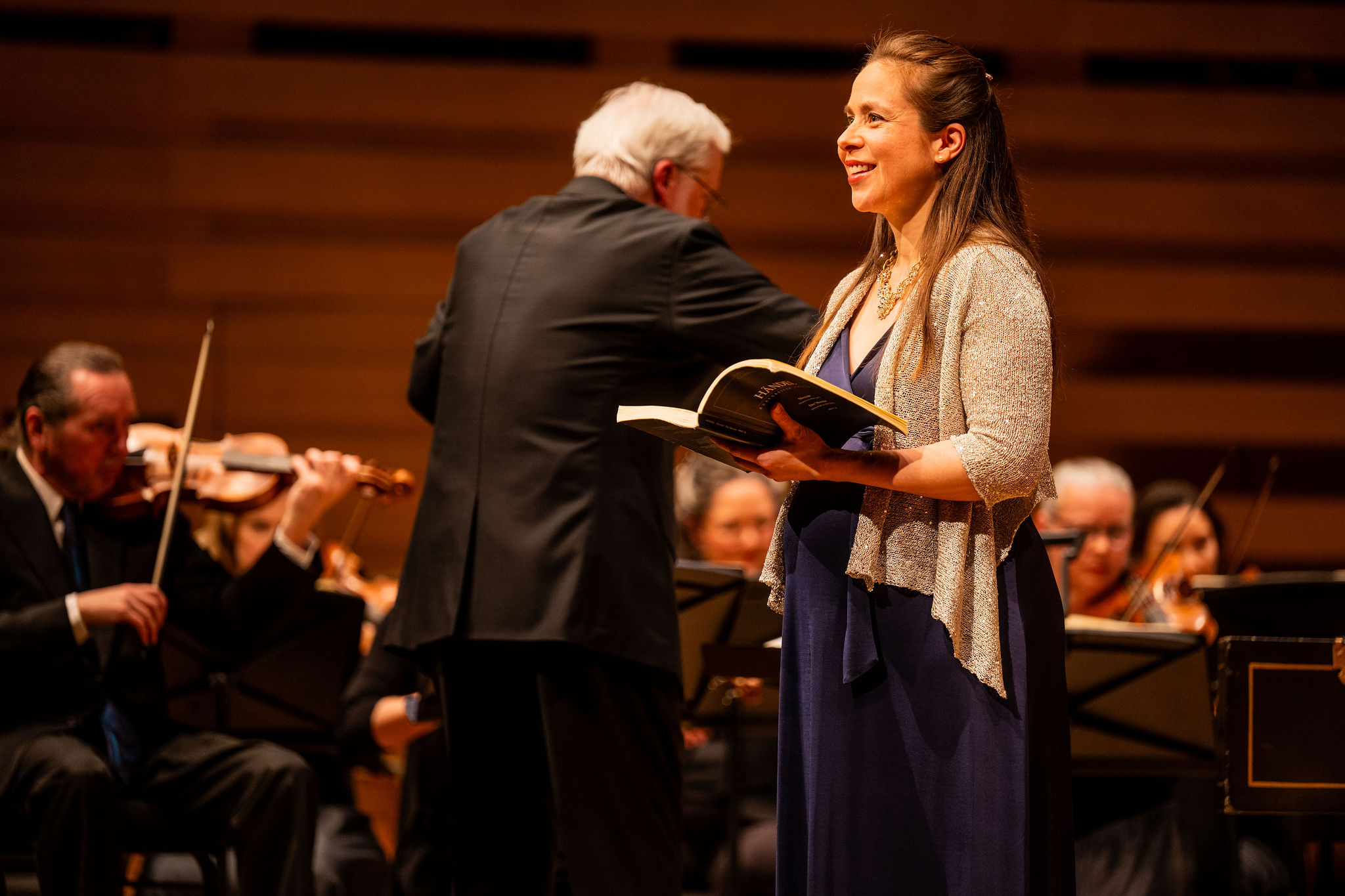
Krisztina Szabó offers operatic gravitas to every moment, commitment and focus. Bass Jonathan Woody announces that the trumpet shall sound with his own powerful clarion voice, in duet with the stunning trumpet sound from Kathryn James Adduci.
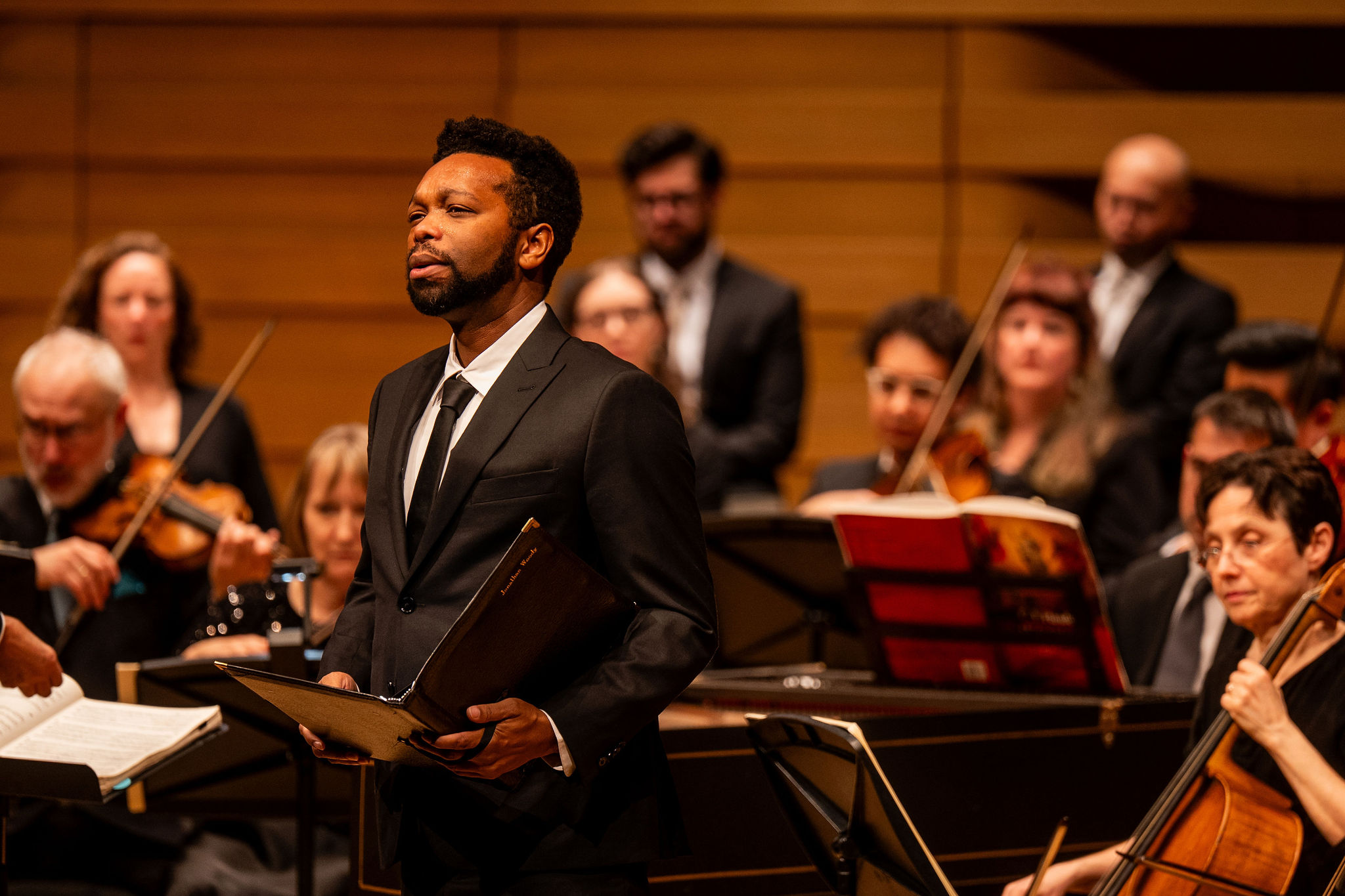
While I usually aim to do a night-of the concert write-up, I knew that the concerts are assured of selling out, not needing my promotion.
If I may insert one tiny quibble with the way Tafelmusik approach their media and self-promotion, I believe they are too reticent about Ivars, who has the charisma of a star in this community of self-effacing Torontonian artists. I wish others could see what I saw, given that we see a democratic approach showing every player in the orchestra, every singer in the Chamber Choir. For example watch this video I pulled up. It’s brilliantly played but Ivars is almost invisible, only seen from afar at the beginning.
If you compare that to how every other orchestra in the world works (where the conductor gets the focus of the camera) you may agree with me. Yes Ivars’ charisma enacting the role of Herr Handel in the Singalong Messiah is played up. But he is so much more than a comedian. His brilliant conducting in everything else does not get the attention it deserves.
 barczablog
Thank you Leslie for another insightful review! If you’d like to know how much the adrenalin was flowing on that opening night, we only found out about our ailing tenor soloist 45 minutes before showtime!!
We could see the commitment. It was wild. Thanks for the comment AND the amazing work.