At first glance the two operas being presented by the Canadian Opera Company represent a contrasting pair. Last week I reviewed the dark Christopher Alden Rigoletto, being offered in a revival with a strong cast. Tonight I saw the COC’s revival of the flamboyant Els Comediants take on Barber of Seville, directed by Joan Font, with set & costumes designed by Joan Guillén staged previously by the COC in 2020 and 2015, a co-production with Houston Grand Opera, Opéra National de Bordeaux and Opera Australia.
As with Rigoletto I got lost in the beautiful music, the melodies, and unlike the Verdi opera we also had the benefit of a happy ending.
The COC’s Barber is a triumphant musical performance led by conductor Daniela Candillari at a breath-taking tempo.
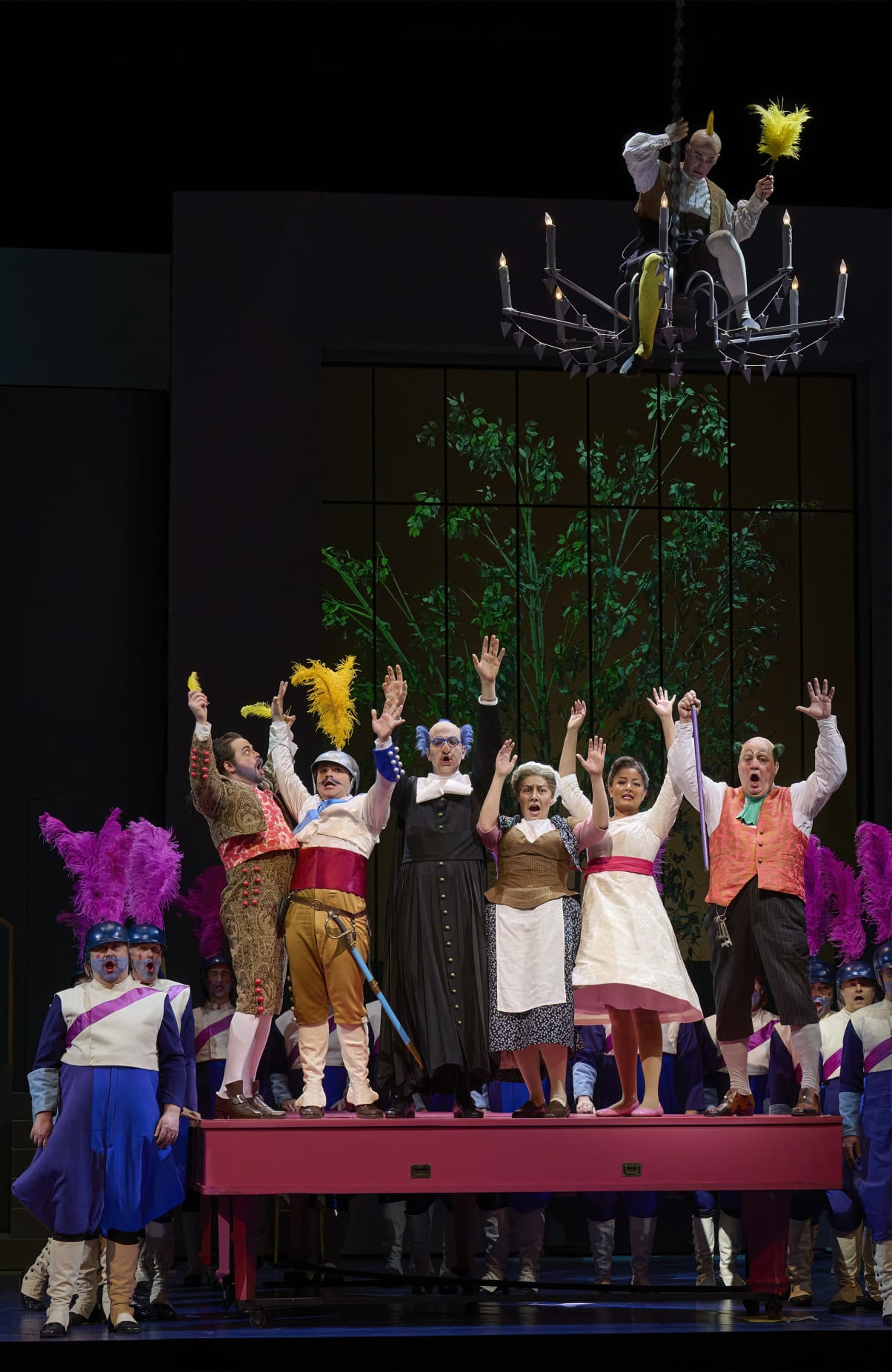
The energetic pace is especially helpful in the numbers where the ensembles reduce the humans to automatons, robotic mechanical behaviours that are hysterically funny, especially if the conductor can keep the singers together while speeding along so briskly: as she did repeatedly.

We were treated to stylish bel canto singing.
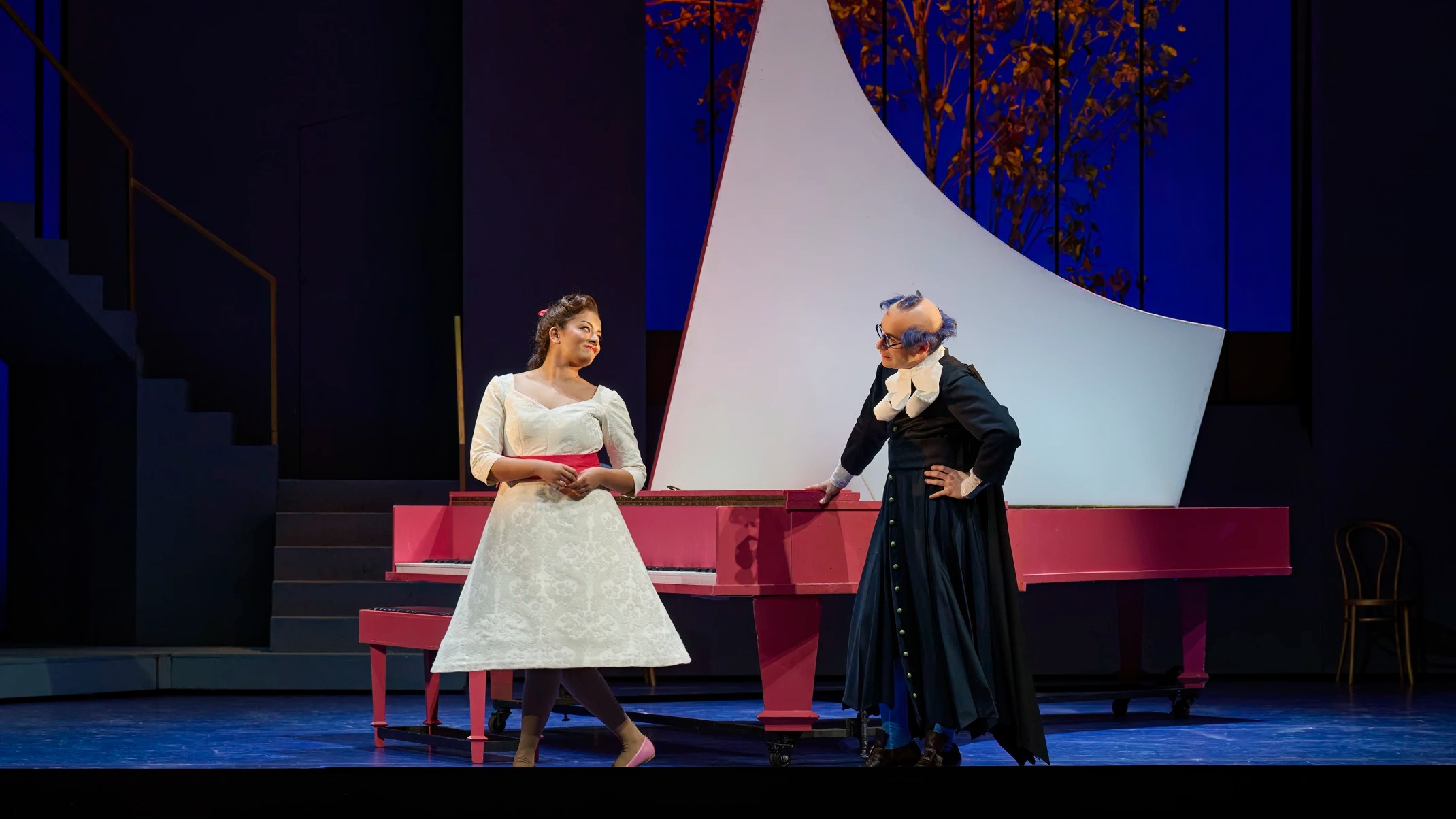
Deepa Johnny as Rosina was thoroughly compelling as the beautiful object of romantic pursuit by the men in the story and wonderful in her coloratura throughout.
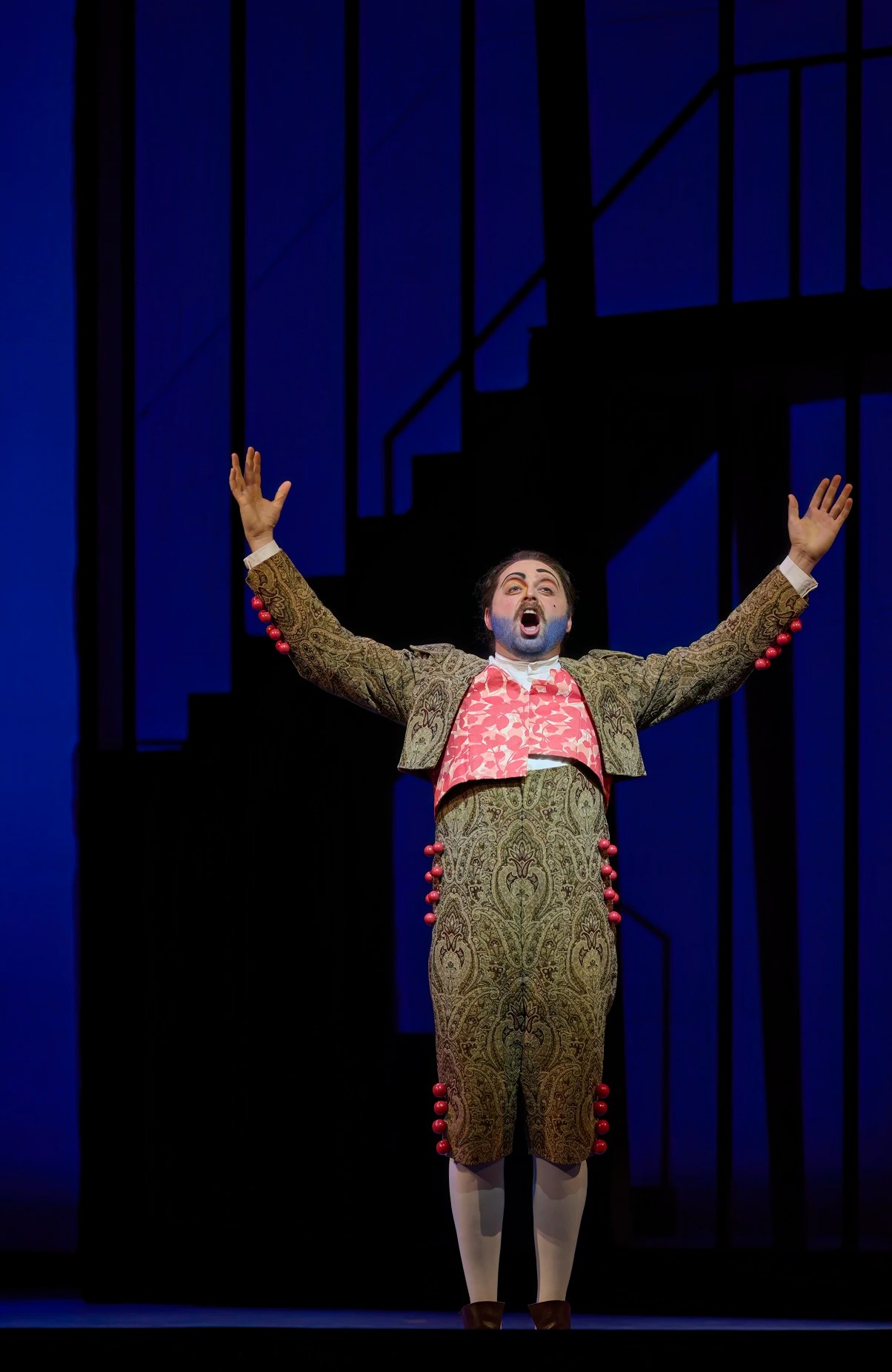
Tenor Dave Monaco made Count Almaviva more purely fun than what was seen in the two previous versions (in 2020 and 2015), playing up the physical comedy particularly after intermission, maybe because his solid technique and effortless high notes permitted him to surrender to the situations. His was a genuine bel canto, seemingly fearless because he knew he could sing the role so well, complete with at least one ringing high C in each act.
Luke Sutciff was his partner in hijinks as Figaro the barber, a fuller voiced baritone than what we’d heard in the previous two productions.
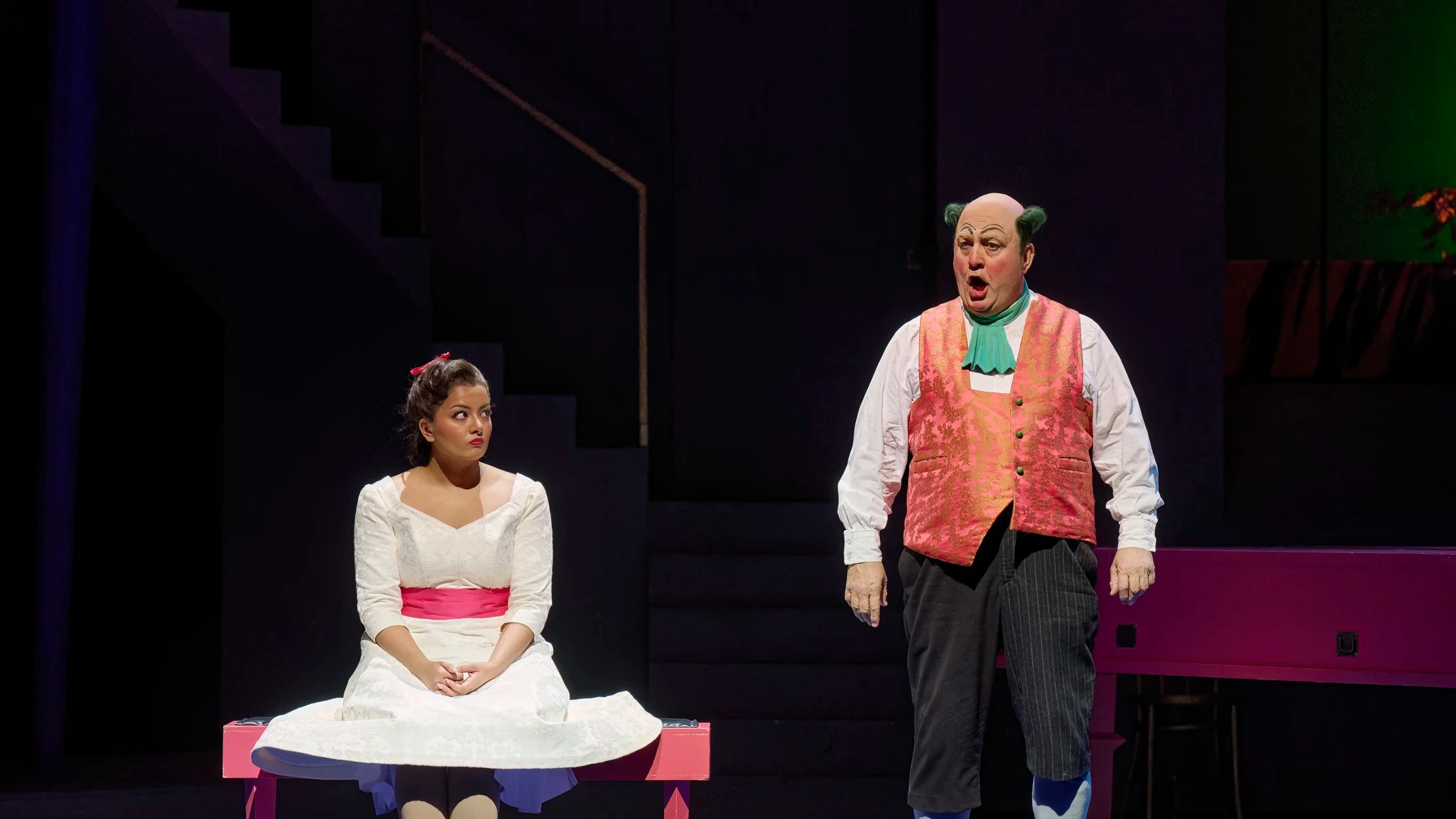
Renato Girolami is back again, having been the key exponent of the buffo style in both the 2020 & 2015 productions here in Toronto with the COC, still funny although his patter in his huge “A un dottor della mia sorte” aria (when we get to the crazy “Signorina,un’altra volta”, threatening to lock her up) is getting quieter, not as audible as before. Okay so he’s older, big deal. He’s a great exception to the usual agist trend, that has singers sidelined when they still have lots of voice left. It’s always good to have a singer who offers genuine gravitas to their portrayal.
So excuse me if I take a moment to look at the two operas offered as the COC’s winter season. Perhaps nobody noticed a troubling overlap between the two operas. Barber of Seville is a quintessential bel canto comedy of Gioachino Rossini (1792–1868), while Rigoletto is understood to be tragic, a melodramatic story from the middle period of Giuseppe Verdi (1813-1901) when he transitioned away from purely bel canto operas towards something deeper. Thanks to its placement this month alongside Rigoletto in the COC’s winter season, I see so much darkness in the comedy of the Barber, noticing that the stories are like the flip-side of one another.
The Duke of Mantua desires & pursues Gilda, who is 15 or 16 years old, presented in a brutal world where she is merely the latest in a series of conquests without any consequence for his insatiable libido.
The Count Almaviva pursues Rosina, who is marriageable age, likely late teens or early 20s (okay not quite so extreme), protected by Dr Bartolo from the men who might want to meet her, locked up inside her home for the entire opera.
The Duke pretends to be a poor student when wooing Gilda, singing a serenade as “Lindoro”. Oh no wait that’s the poor student alias taken by the Count in the Barber of Seville. The Duke pretends to be a different poor student named Gualtier Maldè. It’s not the first time I watched the Barber, wondering if Verdi was in a sense sending up Rossini’s world.
There’s a storm in the last act of each opera. In Rigoletto that signals that we are in a world of melodrama, forces beyond our control where no one has agency. The Duke gets lucky, saved by Maddalena from a possible murder. While the storm in Barber is perhaps also a reminder of forces beyond anyone’s control, the outcome is a happy one, as we’re in a comic world.
When I googled “does verdi’s rigoletto make ironic comment on barber of seville” I saw some interesting comparisons that you might want to search yourself, including reference to a Jean-Pierre Ponnelle film of Rigoletto framing the Duke as a sinister version of Count Almaviva (and now I have to find that video!). We can compare over-protective Bartolo to over-protective Rigoletto, the romantic Count to the libertine Duke (and the ploys they use as mentioned above). While it makes for a fascinating juxtaposition, I wonder if the COC were mindful in their choice of operas. I know that I was troubled through the first act of the Barber, watching a woman who is locked up, being courted by a man pretending to be poor student, using exactly the same ploy as the last sneaky fake I saw in Rigoletto. I had come to the theatre needing a laugh and was in dire need of diversion. While I have loved the Barber all my life, have played the score since I was a teen (and my brother first sang the role of Figaro in Hamilton), I’ve never felt so cynical about romantic opera plots as I did on this occasion.
And here’s the thing. As Erika remarked, how is it appropriate in a comedy we watch in 2026 for a young woman to be locked in, held prisoner, as Rosina is confined? Yes such things are always relative, that what’s funny & light-hearted in one century may become troubling in another era. It felt weird in context with Rigoletto especially the Alden production that reminds me so much of the Epstein saga unfolding in the press. I suppose no one at the COC noticed the overlap, programming these two for the winter season, and maybe my grouchy mood left me out of step with the enjoyment everyone else felt, watching this brilliant show.
I will shut up with the endless questions. Yes I was eventually seduced by Rossini in the last hour, especially the exemplary presentation of the musical side of the equation and a phenomenal reading by the COC Orchestra under Daniela Candillari. Thank goodness.
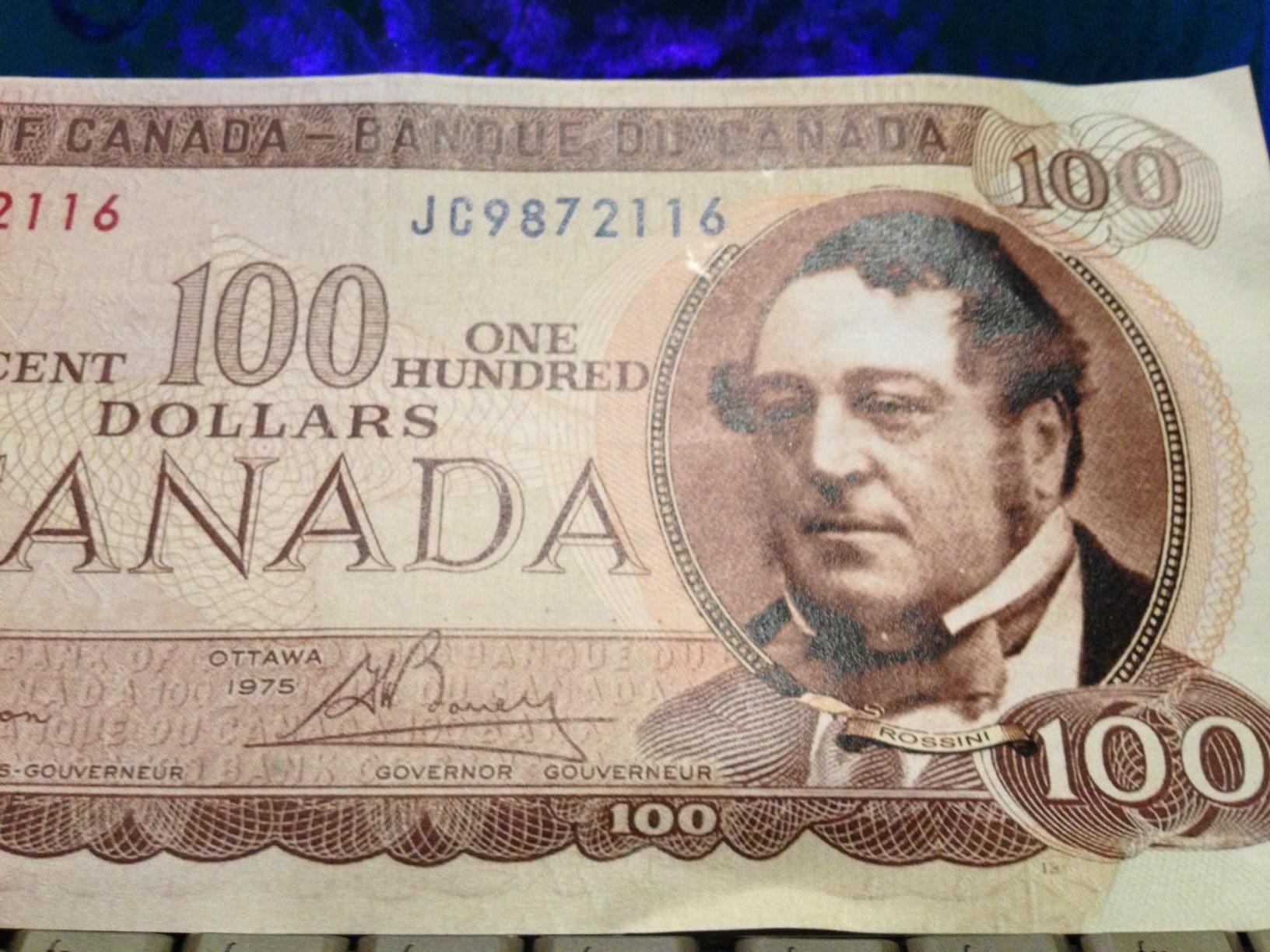
SPOILER ALERT this is a photo of the fake bills dropped on the audience at the end of the opera.
.
 barczablog