Wednesday March 25th I attended the concluding performance of Johann Sebastian Bach’s St Matthew Passion at Koerner Hall by the Toronto Mendelssohn Choir and the TMC Baroque Orchestra led by Jean-Sébastien Vallée.
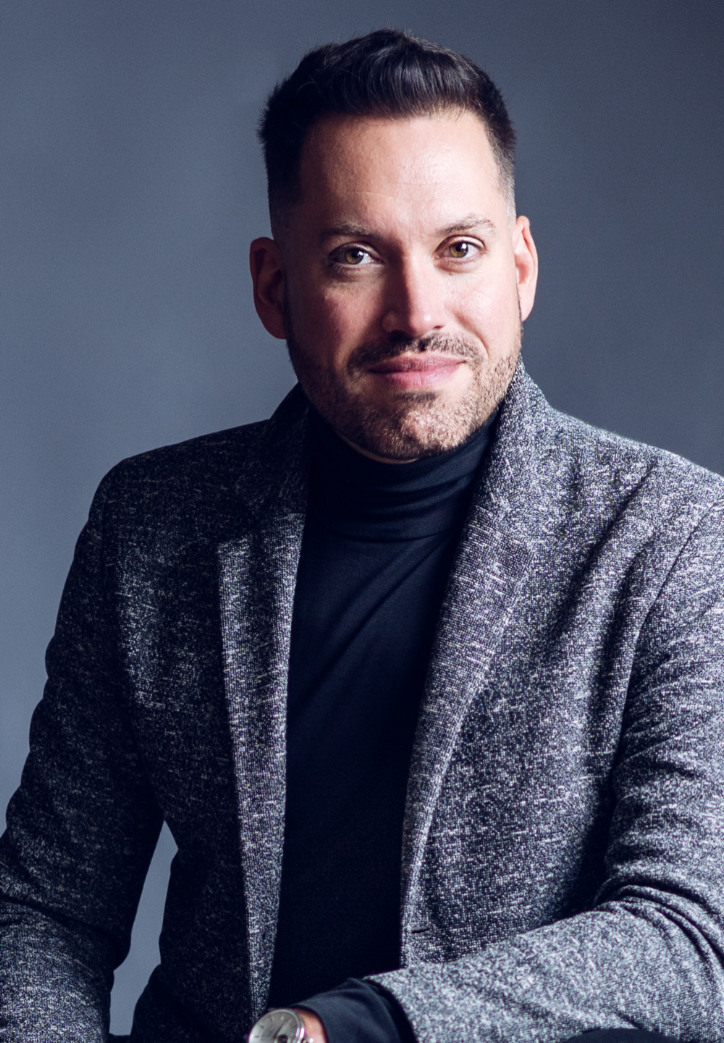
This massive work is the perfect celebration of the Lenten Season, even if we are now experiencing the compositions of Bach as art rather than liturgical celebrations at the relevant moment in the church year: a point made by Jean-Sébastien at his recent Singsation lecture, when he pointed back at the revival in 1829 by Felix Mendelssohn.
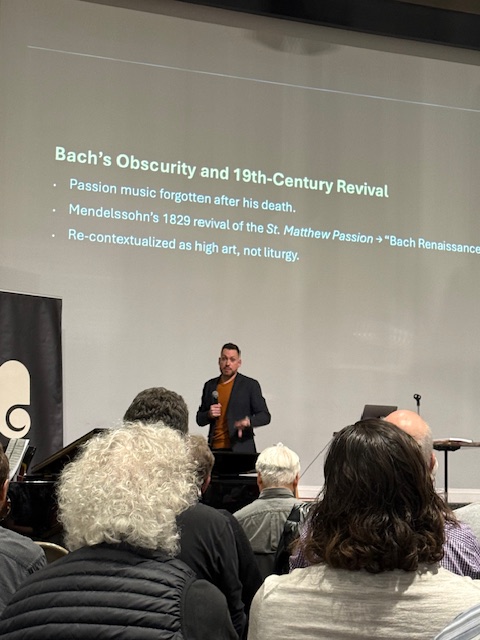
Please bear with me as I don’t think I can get to the bottom of this mystery (and I use the word in the sense of a sacred mythic puzzle), the meanings of “re-contextualized” that I find stir the deepest questions. Yes I had an amazing experience at the concert among enthusiastic fans, as I ponder Bach’s St Matthew Passion re-contextualized and what that means.
Everyone will have a different experience. As a sometime church musician who had a decade or two when I attended every week, I relate to this on a personal level. I recall a time when I used to select hymns weekly, singing as a soloist, sometimes playing the organ, scouring the Biblical readings every week, feeling like a curator assembling beautiful music and words, feeling the rhythms of the seasons that make up the church year. But notice that I am still a modern person looking backwards, a curator in the sense of a librarian of the old books, the keeper of ancient relics & specimens, lovingly collected & assembled. While Jesus is alive in one sense he did live long ago and the Christian churches I have been in all my life have never felt over-confident about the congregational support.
I digress as I am suddenly –perversely– mindful of what Timothee Chalamet said, but this time it’s not about ballet or opera. While it may seem silly to quote someone whose words have been re-hashed more than a Taylor Swift lyric (and please note that while I approve of her I couldn’t name a single one of her songs), I am placing it in a slightly different context, observing the parallels between being a regular at classical music concerts and being a regular in a church. TC said he wouldn’t want to work in ballet or opera because “no one cares about this anymore,” implying they are dying art forms, and in conversation with Matthew McConaughey, stated, “I don’t want to be working in ballet or opera, or things where it’s like, ‘Hey, keep this thing alive.’” The funny thing I’m observing is the parallel sensation of wanting to keep them alive, and delighting in the full house at Koerner Hall for this concert.
I try to be mindful of the liturgical context as I relate to Bach’s music, a different experience from what I feel with Handel’s Messiah or with Requiem Masses from classical composers such as Mozart, Berlioz, or Verdi. They are all part of that continuum of experience, between the secular and the liturgical, that brings something sacred out into the world of art and performance, a performance in a concert hall not a church, played for an audience, not a congregation, performed in German for an English speaking audience, silent & respectful to be sure, but still a group who are visiting an alien place that seems to be temporarily sanctified by this performance of Bach’s Passion according to St Matthew.
The gap between us and that old context is easy to forget. If we were living in that time, among people we would greet regularly in church singing many of the same hymns, where life-expectancy was shorter, infant mortality rates higher, we would hear Bach differently. Life and especially death have a different meaning when invoked in a hymn or a liturgical composition from Bach. At the end in Koerner Hall we exploded in our applause. I heard some afterwards in the hall and on social media later speak of Bach’s profundity. I wonder, is that because we are not accustomed to facing such questions every hour? But the community around Bach lived and breathed these concerns, as though they were fish swimming through these questions.
But I think it would be articulated as part of a Christian celebration of Good Friday and then Easter. Perhaps that meant something more self-effacing and played a part in the way Bach vanished for awhile after his death, that his music was not performed with fanfare and virtuoso singers, but simply as part of the normal celebrations of Easter. In 2026 we applaud to celebrate performances, but I suspect it was not the way the listeners of Bach’s time would respond. As hard as I try to enter into the spirit of the time, I am an alien in a strange world: as were we all. And in our applause we emerge back into our secular world, thanking the performers who took us into that new world.
I wonder just how their appreciation would be expressed. Would they approach the congregation member who sang the role of Jesus or Judas, thanking them, complimenting their performance? Was the Evangelist’s role to be cool & distant, without emotional engagement in the story they are narrating (as I have sometimes seen elsewhere), or showing emotion? Our Evangelist this week at Koerner Hall was tenor Nicholas Nicolaidis, who presented a superbly engaged reading, a huge role as far as the number of words and musical notes, but also the vast range of moments in the story he tells. I like that he did not choose to be cool nor distant but was at the centre of the dramatic story he was telling.
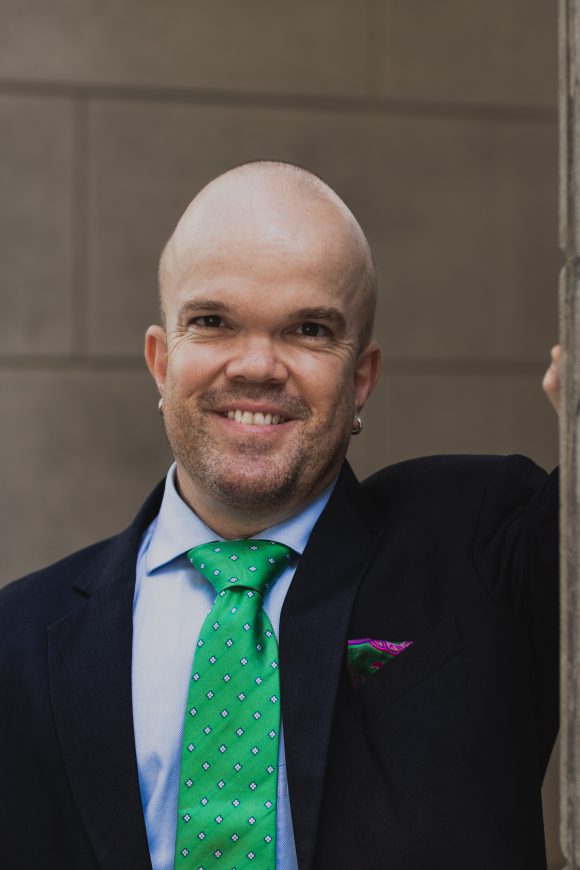
I believe that Nicholas’ emotional involvement in the Gospel story-telling would be truer to the spirit of the time. I really have no evidence (sorry I am not a baroque scholar), only my own experience with other performances, also as a regular church-goer. I see people reading from the Bible, and some attempt to be dispassionate, calm, detached. Others I have seen grab the spotlight and turn it into something more performative, exciting. I recall watching a few readings from a colleague, Dr Paul Babiak at Hillcrest, allowing his actor training to inform his powerful readings. I think given the range of possibilities, given the drama in the words and music, it makes sense to see Nicholas taking the stage as it were, bringing the Gospel vividly to life. There were so many moments one could remark upon, but the one that caught my attention was his gradual thoughtful delivery of the phrase “weinete bitterlich” (wept bitterly) for Peter’s guilt & self-recrimination at denying Jesus.
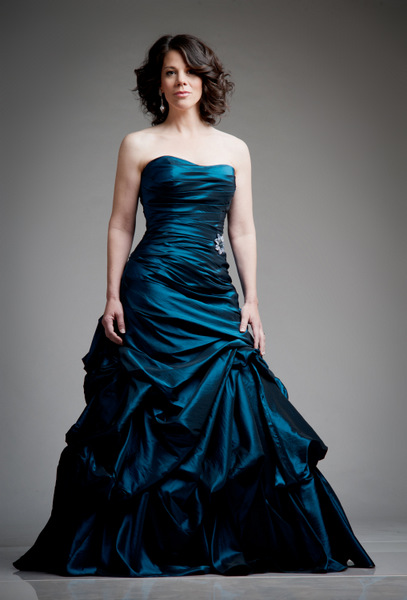
It was magical to be led deeper into the heart of the story, even if this was still art rather than liturgical. Allyson McHardy mezzo-soprano in a sort of duet with concertmaster Cristina Zacharias offered one of the highlights of the night, in Erbarme dich mein Gott (have mercy my God).
The Baroque orchestra featured several familiar names including cellist / gambist Felix Deak & harpsichordist Chris Bagan.
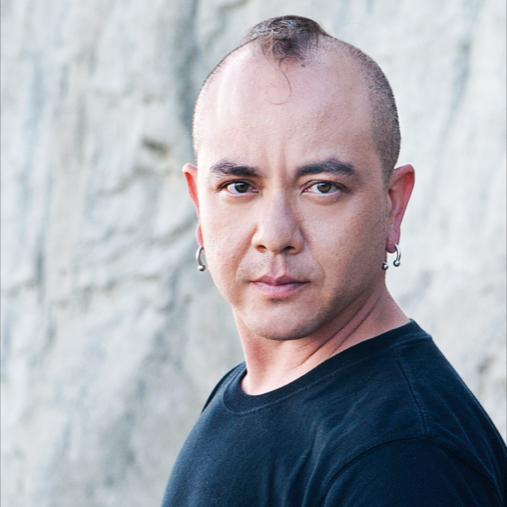
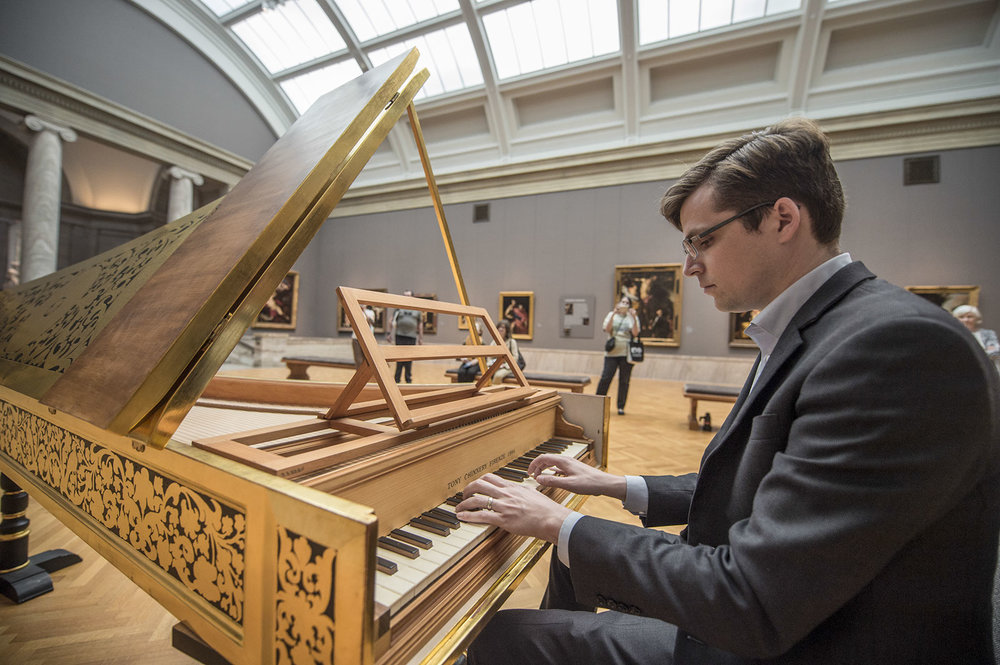
JS Vallée is a studious & tireless scholar who I trust as a proper champion of JS Bach, leading a wonderfully authentic sounding performance. As I look back on my acquaintance with JS Vallée, first in a collaboration with the Toronto Symphony singing Messiah under Gustavo Gimeno in 2022, or the concerts I’ve seen him leading, there can be no doubt that this choir are reaching new heights under his leadership.
I want to address the elephant in the room. I hope you don’t mind the metaphor but I think it’s apt considering we are pondering matters of size, and the Toronto Mendelssohn Choir are an enormous ensemble that likely dwarfs the forces Bach would have used in his time. I count 169 names in the program (47 sopranos, 54 altos, 31 tenors, 37 basses). And yet once again JS managed to make the TMC seem smaller & more intimate than expected, even given that Koerner Hall has such clear acoustics. I made a similar observation almost exactly three years ago, having enjoyed Bach’s B minor Mass with JS conducting the TMC.
Setting aside the Junior Choir of St Michael’s Choir School, who acquitted themselves admirably, singing in the upper loft, there are at least two distinct ways the singers of the Mendelssohn choir were employed. There are dramatic choruses, where a chorus engages in the drama as though they are a character in the story, as for example when Pilate asks about Barabbas & Jesus, and shortly thereafter they call for Jesus’s crucifixion. These were powerful, their German diction superbly well articulated considering the large numbers of singers, and the size of the ensemble effectively underlining the drama visibly (lots of faces looking down at us, singing passionately).
The other way we heard the TMC is in chorales such as O Haupt voll Blut und Wunden (O Sacred Head, now wounded, a well-known melody heard multiple times over the evening), lyrical compositions where the drama has stopped for moments of thoughtful contemplation. These were softer still, always tasteful, sometimes exquisitely restrained, and beautiful.
I find myself a wee bit perplexed as I contemplate modern behaviours, recalling the two choral workshops I recently attended. At Singsation (led by JS Vallée) singing Bach, or at BELT where we sang Harold Arlen’s Somewhere over the Rainbow, the event was regularly punctuated by enthusiastic applause. For TMC, soloists, and the St Michael’s Junior Choir plus JS Vallée we were very restrained in our responses, bursting forth at the interval and at the end but silent throughout. That’s is perhaps to be expected, that we behave with one of Bach’s Passions, Handel’s Messiah or a Requiem Mass from a classical composer almost as though we were in church. Don’t get me wrong, I am not complaining.
As I watched our excellent soloists, recalling those I had seen before (Nicholas Nicolaidis, Allyson McHardy, Isaiah Bell, Neil Aronoff, Sherezade Panthaki, Lindsay McIntyre) and those who were new to me, singling out Jonathan Adams whose performance of Jesus was striking, I wished many times that I could applaud especially listening to Jonathan.
Yes I know, the piece is already long, adding applause pushes us even later, the night even longer. Even so it’s not church, it’s art music and these were stunning performances.
While I might wish I had the nerve to applaud I also know that it would have upset everyone, and even have been understood as disrespectful. No I do not clap between the movements of symphonies, but I understand the impulse and delight in the anarchy implicit in those moments of spontaneous delight.
And so alongside the Timothee question I ask: why did Bach and his great music vanish, why was he forgotten? Was it because Bach didn’t have a good agent, didn’t have Instagram to promote himself as an influencer, no recordings,…? As Kapellmeister as Cantor humbly or proudly doing his duty in his congregation, I wonder, what were the years like after he passed. Did anyone notice, or was it that someone new took over and perhaps nobody was terribly upset. Maybe I need to read more books but I’ve never seen this question addressed. Thank you Felix, for giving your name to this Toronto choir (although you were not asked). And thank you that you revived the St Matthew Passion.
~~~~~~~
Toronto Mendelssohn Choir & JS Vallée will be back Saturday April 25 for The Sacred Veil in a co-production with Metropolitan United Church, including The Sacred Veil by Eric Whitacre and Mystical Hope by Stephanie Martin a TMChoir Commission & World Premiere.
Click for tickets & information.
 barczablog