*******
“Press releases and announcements” are presented verbatim without comment.

*******
“Press releases and announcements” are presented verbatim without comment.
Merle Garbe & Jeff Gilburd present
TOGETHER WE’RE UNLIMITED
A Benefit Concert in Support of Thyroid Cancer Research
Toronto, August, 2016 – TOGETHER WE’RE UNLIMITED is a benefit concert in celebration of Hope and Possibilities, with all proceeds designated to the Canadian Cancer Society in support of Thyroid Cancer Research.
Co-producer Jeff Gilburd, a long-time usher at the Toronto Centre for the Arts and Harbourfront Centre, was recently diagnosed with Thyroid Cancer. He has come together with friends and members of Toronto’s arts community to put on a night of musical theatre to raise money to help eradicate this often-overlooked type of cancer.
The Concert will showcase twelve of Toronto’s and Canada’s leading musical theatre performers, who have appeared on stages around the world, including Stratford and Shaw Festivals, Mirvish, Dancap, and Broadway — Louise Pitre, Jeff Madden, Mark Cassius, Thom Allison, Ma-Anne Dionisio, Graham Scott Fleming, Vanessa Sears, Gabi Epstein, Kelly Holiff, Joe Matheson, Shawn Wright. The show will be hosted by George Masswohl, and musical direction is by Jeannie Wyse.
According to Co-Producer Merle Garbe, “We are so delighted that these amazing performers have all donated their time and talents to help this great cause. This benefit was Jeff Gilburd’s idea, and it is a real tribute to him and his huge heart that so many artists care about him and wish to honour him by appearing in this show. It is a labour of love for all of us.”
This event in the exceptional acoustically-excellent George Weston Recital Hall, has been made possible through the generous sponsorship of the Toronto Centre for the Arts and Dancap Productions. The evening will also include a Silent Auction. We are now counting on the support of the community at large.
Tickets can be purchased in person at the Toronto Centre Box Office, online at http://www.encoreshows.com, or by phone at 1-855-985-2787. A service charge will apply on phone orders. VIP seats ($65 each) include entrance to a post-show reception with the cast members.
WHAT: Together We’re Unlimited: A Benefit Concert In Support Of Thyroid Cancer Research
WHERE: Toronto Centre for the Arts (George Weston Recital Hall) – 5040 Yonge Street
WHEN: Monday, September 19 at 7:30 p.m.
COST: $20-$65
CONTACT: Merle Garbe – Tel: 416-804-2722 | merlegarbe8@gmail.com
*******
“Press releases and announcements” are presented verbatim without comment.
I posted a press release earlier this week, concerning someone who passed through my life briefly. One paragraph in particular caught my eye:
About The Hilary Kilbourn Memorial Fund
Hilary continues to cast her spell over the Island through good works funded by the Hilary Kilbourn Memorial Fund. This fund was initiated by her family upon Hilary’s death in 2006. Contributions from the Fund have been made to Shadowland Theatre to support programming for Island youth. The Fund enables wonderful concerts to be offered at the church.
I was saddened to hear of her death: a decade ago.
I looked up her obituary.
Our paths crossed long ago. I saw her audition for a play in 1977, without ever speaking to her.
At the time I was one of the musicians working on a production of a work by Auden & Isherwood called The Dog Beneath the Skin, Michael Sidnell’s first show as director of the Graduate Centre for Study of Drama. It was done in a style that Brecht and Weill would have liked, with lots of outsized props and artifice, including songs in a popular style.
There was already quite a wonderful band creating songs for the show, so they shouldn’t have needed me: except for one puzzling little segment of the play. The text explicitly calling for something resembling Wagner opera, and so I was brought in to attempt the reconstruction. And that’s a whole other story, a really fun story I might tell another time.
But my small part in this show was the reason I was present for a magical moment during an audition. It was someone who was not eventually cast. Of course I mean Hilary Kilbourn.
If I recall correctly there was some reading but also a kind of an improvisation, reacting to an empty picture frame hung upstage. The actor was asked to walk by and then their response should help us to see what was there, to feel their responses.
Hilary Kilbourn made me believe she saw something divine in that blank frame. She walked by, then turned, and saw something profound. Afterwards she would explain to us what she’d seen, a kind of allegorical glimpse of the miraculous that she enacted for us as though she were Joan of Arc in the midst of a visitation from above.
I was young, perhaps easy to impress (still am I think). All I know is that if, at that moment, she had asked – no commanded—me to take up arms against the English I would have done so readily.
I felt drunk watching her perform.
And when she didn’t get cast I challenged the director, surprised.
But I realize that he was sensitive to her. Hilary had bipolar disorder, although i only understand this now, reading the obituary.
I had shouted at the director, asking why Hilary wasn’t cast, asking whether Hilary was too good to be cast.
He shouted “no of course not” right back at me.
I was young and foolish (as in the song). I think the purpose of the exercises in the audition was to see how well they would take direction. Gifted though she was, this was an ensemble production, and I believe he could feel her estrangement, as she wandered the stage as if in a beautiful trance.
Years later, everyone has gone on to other things, some of that wonderful team have passed away. It’s curious that I can’t help recalling that brief encounter with Hilary as a sign of a future even though she’s gone.She had some very special talents.
I can’t help feeling we will meet again.
September 6, 2016
Hilary Kilbourn Memorial Benefit
To raise money to purchase a grand piano
Toronto Island, ON. September 18, 2016 3:00-5:00PM
Toronto Island, ON – The St. Andrew-by-the-Lake Community proves time and again that great music is priceless & timeless. They believe the time has come to purchase a grand piano to enhance the vibrant music program at St. Andrew-by-the-Lake.
“We are grateful for the fine quality of sound that the architecture of St Andrew allows. Musicians comment on it and are eager to return to play within its walls. Martin Luther said, ‘Next to the Word of God, the noble art of music is the greatest treasure in the world.’ We wish to join together the beauty of space and sound at St Andrew with the fine performances of musicians and encourage people to feel the great treasures of word and music in this building.” The Reverend Michael Marshall
Along with a host of passionate musicians, donors and volunteers, a Piano Fundraising Party is to be held at the Church of St. Andrew-by-the-Lake on September 18th from 3:00 – 5:00. All proceeds will be used to acquire a new grand piano for the music program at St. Andrew-by-the-Lake.
Works of Mozart, Debussy, Gounod, and Jazz standards will be performed by Vadim Serebryany, Melissa Scott, Gilles Thibodeau, Kristin Day, Louis Lawlor, Jonathan Krehm, Rachel Krehm, Mike Milligan and Roger Sharp.
Throughout the event delicious light refreshments will be served. There will be a live auction of local art vacation retreats, unique experiences and wine from a local vintner.
Tickets are $25 and can be purchased either in advance from Roger Sharp at 416-779-3886/ rogerandersonsharp@gmail.com, or at the door.
Those who wish to contribute may make a donation to the Hilary Kilbourn Memorial Fund http://www.standrewbythelake.com/donate.html
About The Hilary Kilbourn Memorial Fund
Hilary continues to cast her spell over the Island through good works funded by the Hilary Kilbourn Memorial Fund. This fund was initiated by her family upon Hilary’s death in 2006. Contributions from the Fund have been made to Shadowland Theatre to support programming for Island youth. The Fund enables wonderful concerts to be offered at the church.
About St. Andrew-by-the-Lake
St. Andrew by-the-Lake (www.standrewbythelake.com) is a family church rooted in its Anglican traditions of worship and community service. It serves the Toronto Island community as well as many parishioners who live in the City of Toronto and surrounding region.
*******
“Press releases and announcements” are presented verbatim without comment.
The arts confuse us regularly, somewhat like life itself. One minute we’re kept at a distance by a performance using some alienating device calling attention to the artifice, the next we’re sucked into the world we’re watching. I believe we’re still in the long shadow of the romantics, who were so enthusiastic in their encouragement of our identification that we end up confused and even addicted to the illusion.
If the “willing suspension of disbelief” that occurs in a theatre during a performance is literally a matter of lifting and holding something –like weight-lifting—then we opera fans are especially strong of mind. I believe genuine opera fans are either trained by our exposure to this artform to have stronger and healthier imaginations, or naturally selected.
So to repeat, whether we are trained by this to be able to suspend logic and hold these concepts in the thin air of our minds OR simply selected (those who are drawn to opera come back for more while those who find it implausible and unbelievable walk away shaking their heads): opera is a special form in this regard.
I wonder, is it the same mental capacity that comes into play when we are asked to ignore aspects of a person? I mention this because there are some curious examples in the news, that are similar to what some opera fans are doing all their lives.
The biggest and best example I know of concerns Richard Wagner, the composer who often challenges us:
Do we let the character of the artist stop us from enjoying their art? There is a phenomenon that criticism teaches us called the “biographical fallacy”. Tempting as it might be to extrapolate from the life of an artist to an understanding of their work, it is not a good idea. Wagner is a good demonstration, that one can separate what a person does from who they are, even if part of us never forgets.
I find the same thing coming up outside the realm of opera.
The quarterbacks:
Tom Brady is one of the most successful quarterbacks in the history of the NFL, winner of several Superbowls. Colin Kaepernick is not, a younger player whose early promise has not panned out in the desired championship for the 49ers.
Both have been in the news for their political views. Brady plays golf with his pal Donald Trump. Kaepernick famously refused to stand for the American National Anthem, drawing a great deal of ire, while stirring up a controversy about freedom of speech. Whatever positions they took (and I am no fan of Trump, and an admirer of Kaepernick’s bravery, in taking such a stand in the conservative stronghold as the NFL), these are separate from the enjoyment of their performance. Painful as it is to admit, Brady is a pleasure to watch, a brilliant tactician, while Kaepernick has never had comparable success.
In other words, the aesthetics of the performance are a separate category from the positions taken by the performer, not unlike the separation we are challenged to make in our head for someone like Wagner.
The actor-director:
Clint Eastwood’s films represent an impressive body of work. Like Marty McFly (in Back to the Future), I confess that I’ve long admired and enjoyed Eastwood’s work in the westerns from the 1960s: although nowadays I am more likely to ascribe my responses to the collaborative team that includes the director (Sergio Leone) and the composer (Ennio Morricone) alongside the actors.
Yet in his attempts to influence the public, I’d say Eastwood has not been at all impressive. In a previous election we watched him self-destruct at a GOP convention in the presence of an empty chair that easily upstaged him. More recently he complained about Hillary Clinton’s voice.
The candidates:
There’s an unmistakable echo of 1964 in the current campaign. Back in ’64 the GOP candidate Barry Goldwater said he would use nuclear weapons in the Vietnam war. Lyndon Johnson capitalized on this in his campaign, winning in a landslide.
This time around it’s Donald Trump and his passionate pronouncements. Is he someone who could be trusted with the nuclear codes?
The intriguing thing –as far as the pattern I’ve been demonstrating—is that at least in theory, a person can transcend their history. Wagner was more than just an anti-semite, Brady and Eastwood are more than just a friends / fans of Trump.
But voting isn’t theatre, is it? We can suspend disbelief, ignore who a person is while surrendering to their performance, or the fantasy of what they promise. I have to think that one of the attractions of Trump is that he is very theatrical. If one looks at policies and qualifications it should be no contest.
But Trump keeps getting headlines regardless of the content of what he says, because of his aesthetics, the outrageous quality of his extreme positions. As Tom Green pointed out:
If you say something negative, that information travels faster. If you say something bigoted, and you’re a presidential candidate … everybody has to talk about it. The outrage is actually what’s been promoting his candidacy.“
The conversation around Trump sometimes gets lost in irrelevant details
What I see on social media suggests that at least some people are very clear, with a focus on policy rather than theatre. But social media can’t be trusted, given that one is usually preaching to the choir.
I can’t wait for the debates, to see whether he is able to invite a suspension of disbelief. I am afraid to see whether this will be an operatic moment or not, whether the audience remain within their senses or opt to surrender to myth and illusion.
Sabatino Vacca is a busy man, Music Director of the Cambridge Symphony, Milton Philharmonic and the Etobicoke Philharmonic Orchestras, and now the Artistic Director of the brand-new Southern Ontario Lyric Opera, or “SOLO”. For the launch of SOLO’s first season a semi—staged production of Verdi’s La Traviata is only a few days away, with a fully staged production of Puccini’s Tosca to follow in March 2017. With the loss of Opera Hamilton in 2014, SOLO may help fill the vacuum, performing in the Burlington Performing Arts Centre.
Sabatino has conducted orchestras in the Czech Republic, Symphony Hamilton, the Cathedral Bluffs Symphony, the Scarborough Philharmonic Orchestra, and the Brampton Symphony Orchestra. For Opera York he has served as Artistic Director for productions of Carmen, Suor Angelica/Gianni Schicchi, La Traviata, The Barber of Seville, Tosca, Rigoletto, La Bohème, and Madama Butterfly, and as Conductor for Le Nozze di Figaro, Così Fan Tutte, Cavalleria Rusticana and Pagliacci for Bel Canto Opera. For Brampton Lyric Opera he has conducted Pagliacci, and Rigoletto. For Opera Kitchener he has conducted Madama Butterfly and La Bohème. He is also currently on staff with Wilfrid Laurier University, has worked as an opera coach for the University of Toronto, as well as the Royal Conservatory of Music in Toronto. A recent soloist for Symphony Hamilton (in Liszt’s Totentanz at the piano), he also recently completed arrangements for Quartetto Gelato’s latest CD. Sabatino is the recipient of the Spirit of Ontario Award for the Arts by the National Congress of Italian Canadians.
On the occasion of SOLO’s inaugural production September 17th I asked him some questions to discover more about him and his professional life.
1-Are you more like your father or your mother?

Conductor Salvatore Vacca
I am flattered to reflect on my parents, and to think I have inherited qualities from both, as they shared many worthy and honourable characteristics. They were very opposite in many ways which complimented each other’s personalities. My mother could be very emotional and extroverted, while my dad was generally level-headed and more reserved. I have definitely inherited more of my father in this regard, and have never really been the social butterfly my mother could be.
I’m happy to say that they both shared a love and passion for music, especially opera! What a gift they passed on for which I’m ever grateful. Who knows what I would have ended up doing otherwise.
2-What is the best thing or worst thing about what you do?
I REALLY enjoy the challenge of building something from the ground up, developing a vision while at the same time being open and receptive to unexpected twists and turns in the journey. That’s when the creative juices really start to flow! The realization of how endless the possibilities are is both daunting and inspiring at times. It brings with it a great responsibility and motivation. One has to be careful to never lose sight of the bigger picture when one is immersed in the smaller details. If one is not careful it’s very easy to be left feeling dry and parched and wondering how you got there.
3-Who do you like to listen to or watch?
It’s fascinating to watch just how different conductors can be. Conducting styles often reflect the personality of a conductor, which then shapes the personality and style of an ensemble. I suppose the opposite can also be true to some extent, an ensemble can also exert its style and influence on a conductor. It’s very much give and take.
4-When you’re just relaxing and not working what is your favourite thing to do?
Play with my 3 year old son, soon to be 4. He’s at such an articulate and interactive age. I also enjoy gardening and looking after my vegetable garden. Part of what goes with that is coming up with an outdoor summer project every year. Last year I redid my deck, this year I redid my stairs leading up to the backyard lawn. I took my time with it and spread it out over several weeks a little at a time. I really miss that part of the outdoors during the winter.
*******
More about presenting La Traviata for Southern Ontario Lyric Opera.
1-Please talk about how you reconcile the different sides of yourself, as you function as a director of a show, where you are also artistic director of the company.
As I mentioned previously I REALLY enjoy taking something new and building it from the ground up. It’s been absolutely delightful to see our Board for Southern Ontario Lyric Opera (SOLO) grow this past year, one at a time. They’re a GREAT team and I look forward to Board meetings!! Essential roles have mostly been filled, we are still looking around for someone with grant-writing experience, but as with many other tasks I’ll be covering that for now.
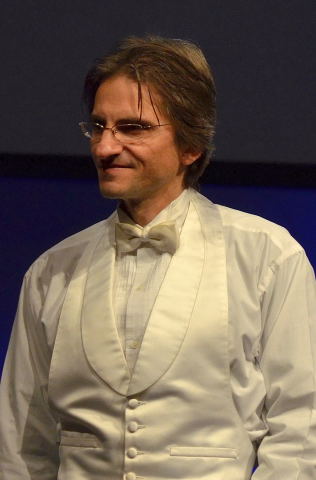
Conductor Salvatore Vacca
I’m the Music Director for 3 local orchestras: the Cambridge Symphony Orchestra, Cambridge is where I reside; the Etobicoke Philharmonic Orchestra; and the Milton Philharmonic orchestra which I founded 2 years ago. With each group I’ve gained a lot of experience beyond the music side of things, and have discovered skills and talents I didn’t know I had. All of this experience I’ve been able to bring to SOLO. I enjoy getting into the advertising aspect and the challenge of getting the word out about our upcoming Traviata performance and our company in general. This also involves creative outreach possibilities in the community. It’s our mandate to be really involved with the community and not just pop up a couple of times a year and proclaim “here we are, come and see our show.” We are very much starting to build a community profile and build lovely partnerships along the way. Part of this work is through our Chorus who act as ambassadors for the company. They have performed 2 concerts at a local seniors home, something we will be doing more of. The Chorus has participated in a local outdoor festival in Burlington. We performed the national anthem for a city council meeting which gave us great exposure to all the Burlington city councillors and Mayor. We didn’t change the lyrics! The company was also asked to organize and perform a fundraising concert to help sponsor a Syrian refugee family at a local church in Hamilton, which turned out to be the church where I grew up, so it was a bit of a homecoming experience. The Chorus will be taking part in Culture Days concerts in early October, and we’ll probably be doing some outreach concerts around Christmas time.
Currently and for the past little while I’ve been working on SOLO related tasks any moment I can and will continue at this pace until our Traviata performance is done.
Is it stressful? Not really, I don’t have the time to get stressed.
2- Tell us about Traviata and why you wanted to make it SOLO’s debut piece.
Audiences love Traviata and it has not been performed in the area for 10 years, 2006 was the last time Opera Hamilton had performed it. The music is timeless and direct with lots of memorable tunes. Traviata is easy to take in if you’ve never been to a live opera performance before. It’s easy to relate to the characters in the opera and their motivations. We can all empathize with Violetta and admire how honourable she is, and we see many sides to her throughout the opera. She really comes to life through her impending death! We come to love – hate – love Alfredo. We can sympathize with Papa Germont. What parent wouldn’t be as protective of their child and family reputation as he is. We may not wholly agree with him but we can understand where he is coming from.
As a debut work for us Verdi’s other popular middle period works were also in the running, namely Rigoletto and Il Trovatore. I decided against the former mainly because it only requires a male chorus and I knew how much our ladies of the chorus wished to perform and not be left out. The latter opera requires some real heavy duty mature voices for one and I wanted to try and keep things on the lighter side vocally. The characters and story line are also not as real as with Traviata. The music is still memorable and powerful but overall does not have the same kind of connection with audiences as Traviata does.
3-Tell us about your cast for the SOLO production of Traviata.
I am very pleased with our cast. I’ve worked with each of our 3 main leads before and felt they would have a good chemistry together on stage in these roles.
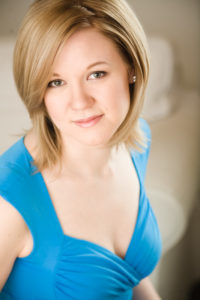
Soprano Allison Cecilia Arends will sing the role of Violetta for SOLO
Allison Arends has a great voice for the role of Violetta, and also the personality to play her many sides. Allison is a warm and engaging presence on stage (and off) and brings a great depth to the role.
Riccardo Iannello is a perfect counterpart to our heroine, bringing a passionate youthful naiveté to the role.
Jeffrey Carl is a commanding presence on stage with a rich baritone voice capable of great nuance and colour.
4-What is your favourite moment in Traviata?
Is it okay to say pretty much the whole opera? Sorry. Right from the get-go Verdi draws us into the world of Violetta Valery in the Prelude with a solemn opening for strings alone written in a high register. It is disputed among scholars whether Verdi took a cue from the Prelude to Lohengrin. Soon Verdi combines the “Amami Alfredo” theme in the cellos with more festive music in the upper strings, the latter shows Violetta’s other more social side, which then sets us up for the party scene. Verdi had a knack for writing great party music, i.e. the opening of Rigoletto, the end of Un Ballo in Maschera. There’s also more party music at Flora’s later in Act II; fun stuff! Another thing that strikes me about his opera scores in general is his sense of rhythm and off beat accents. If he were more contemporary I think he would be at home in a more jazz medium.
It might be easier for me to answer if there is a moment which is not particularly my favourite. Perhaps it would have to be Germont’s Cabaletta which is usually cut, it doesn’t seem as inspired as the rest of the opera.
5-Is there a teacher or an influence you’d care to name that you especially admire?
Definitely!! When I was at Opera School at U of T training as a coach Professor James Craig was a very big influence. In fact he got me involved with conducting which at the time was not even on my radar. Within the first few weeks I was there he asked me to prepare and conduct one of the choruses we were preparing for a concert. I quickly caught the conducting bug and have forever “blamed” him for it!!! We developed a friendship which continued long after he retired until he passed away in 2012. We spent time working through Traviata a work he was especially fond of and had conducted many times. He was very generous with his knowledge, and had lots of experience on which to draw. He was also one of the funniest persons I have ever met, often had me rolling in laughter when we went out for lunch or dinner together. He trained many generations of great Canadian singers who have had or are having major international careers.
*******
Southern Ontario Lyric Opera (SOLO) present Verdi’s La Traviata at Burlington Performing Arts Centre September 17th at 7:30 p.m. (click for ticket information)
Lawrence Wiliford (AKA Lance Wiliford) posted the following on Facebook today:
I challenge @CBCMusic @CBCclassical @CBCArts to air 15 mins/day of music by Canadian classical composers during 2017. Not film or crossover.#Canada150. Canadian Music Centre Canadian League of Composers/La Ligue Canadienne des Compositeurs The Huffington Post Canada Canada Council for the Arts | Conseil des Arts du Canada Canadian Art Song ProjectJustin Trudeau Mélanie Joly Canadian Heritage (I urge others to issue this same challenge to the CBC).

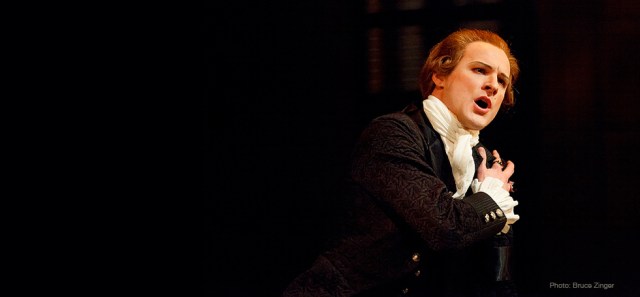
Tenor Lawrence Wiliford (photo: Bruce Zinger)
Lance has been putting his money where his mouth is as co-artistic director of the Canadian Art Song Project, whereby Canadian composers (let alone singers) are encouraged and supported through concerts, commissions & recordings of new vocal compositions: unlike the CBC.
I don’t know whether anyone has issued the same challenge, but I’m jumping in here.
2017 is significant as the 150th anniversary of Confederation aka the sesquicentennial. A few important promises have been made:


And yet the Canadian Broadcasting Corporation / Radio Canada is arguably a much bigger richer institution than the three Toronto institutions I mentioned.
What are you going to do CBC? I think we have a right to know what – if anything—you’re planning. How about it, CBC..!?
I had a look through my google-lens. Here’s something they announced, which doesn’t mention Canadian composers or music as far as I can see: but it’s still only the end of August. Perhaps there’s time for some kind of response? I remember a CBC that used to be the steward of music in this country, encouraging and funding all sorts of creativity.
It could be so once again.
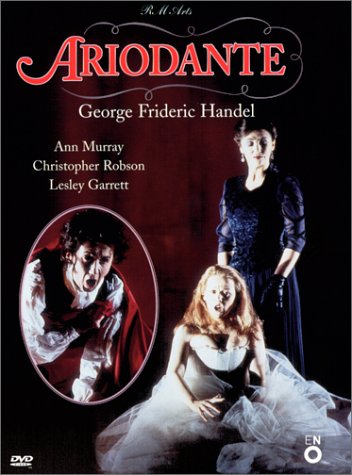
One of my objectives in my popular operas course (to begin in September at U of T) is to survey the operas being presented by the local companies. In anticipation of the Canadian Opera Company’s fall season production of Handel’s Ariodante –an opera that’s new to me—and one set to open in a few weeks’ time, I found a video at a library, a recording that’s still available.

You could do worse than to watch this erotically charged interpretation directed by David Alden, an English National Opera co-production with Welsh National Opera, from the London Coliseum, featuring the ENO chorus & orchestra conducted by Ivor Bolton.
Although the story is from Orlando Furioso it has some similarities to one of the romantic plots of Much Ado About Nothing. But where the Shakespeare plot sees a woman slandered to a fiancé denouncing her to a father who refuses to believe the slander, in this tale the betrothed is her champion to a condemning father.
This is a relatively simple plot to follow. Polinesso is an ambitious schemer, plotting against the happiness of a royal couple in love, Ariodante and Ginevra. Ginevra’s father is a king who approves of Ariodante both as a suitor and as his successor. The opera unfolds as a happy celebration for the first act, until a conversation early in the second act between Polinesso and Ariodante on the eve of the wedding, when Polinesso boasts he has been Ginevra’s lover. Polinesso enlists the aid of Dalinda (a woman who pursues him), who disguises herself as Ginevra. Polinesso fools Ariodante as well as his brother Lurcanio. The storyline turns from celebration to tragedy, as Ariodante despairs and then tries to kill himself, unsuccessfully. Ginevra is imprisoned, her fantastic dreams enacted in dance to end the second act. The last act leads to eventual redemption for all, as Lurcanio avenges his brother (whom he believed to be dead) by killing Polinesso. Ariodante re-appears, not dead after all, proclaiming Ginevra’s innocence and asking that Dalinda be forgiven. The story progresses from darkness to light and eventual celebration.
Ann Murray is very sympathetic in the trouser role of Ariodante, singing fabulously, as believable as one could wish in some very tight camera work. Joan Rodgers as Ginevra is especially good, whether as the joyful bride or the wronged woman going mad in her lonely cell surrounded by hallucinatory images.
Christopher Robson, counter-tenor, brings a genuine menace to the role of Polinesso, the evil genius at the heart of the story. Robson embraces the evil possibilities of the role, and invited by the direction to go a bit over the top. Lesley Garrett makes a great deal of the role of Dalinda, the one who obsesses over Polinesso and does his bidding in the conspiracy, and is later forgiven: a full night of singing and acting for any performer. Tenor Paul Nilon as Lurcanio brings a wonderful bright sound to his arias, including lots of interpolated high notes. Gwynne Howell as a solid and sympathetic King anchors the production.
I’m eager to see the COC production (a co-production with Féstival d’Aix-en-Provence, Dutch National Opera, Amsterdam and Lyric Opera of Chicago), set to open October 16th. Conducted by Johannes Debus, directed by Richard Jones, we’ll see Alice Coote as Ariodante, Jane Archibald as the wronged Ginevra, Ambur Braid as Dalinda and Varduhi Abrahamyan as the ambitious Polinesso (here’s a video from the young singer’s website). Given that the plot requires us to believe that Polinesso is irresistible to Dalinda, I think this will be very interesting.
I can’t wait.
Ever notice how patterns may appear around you?
The two films I saw this week (one on the big screen, one, seen now at least 3 times this past week at home) couldn’t be more different, at least on the surface.
Last night I saw Florence Foster Jenkins, a dramatization of the life of a rich woman who liked to sing. The performances by Meryl Streep, Hugh Grant and Simon Helberg were wonderful, exploring something that’s never really been explored in film. We’ve got a society that seems to make a hierarchy of everything, evaluating, competing, judging.
A week before I turned on TVO at the right moment, catching some of Love, Marilyn, a documentary from 2012 by Liz Garbus. I hunted it down at the library, permitting me to see it another 3 times.
Because my first time I came into the doc having missed the first few minutes, I didn’t hear the key sentence concerning the film’s premise. I was bewildered to encounter a documentary that was full of performances, full of stars reading lines: lines apparently written by Marilyn Monroe!

And so later—watching the film in its entirety—I saw that premise explained in a little note at the beginning, that recently a couple of boxes of MM’s notes had been found. This is a documentary like no other. We’ve watching a study of performance, of all life as performance.
It is repeatedly explained in different sorts of illustration throughout the doc that Marilyn created Marilyn, her persona was a creation. We see Lee Strasberg speak, we also see an actor portray Strasberg. We see some of those notes projected hugely on the back, and then an actor steps before us to read those words. Glenn Close, Viola Davis and Ellen Burstyn give us very under-stated versions of MM, Uma Thurman and Marisa Tomei are much more histrionic. There’s quite a large group of performers, including some very clearly influenced by MM such as the surreal Lindsay Lohan (so weird to see someone looking exactly like Marilyn speaking Marilyn’s lines, and someone so young). We are reflected back upon the process of signification, of getting inside words and speaking them. We encounter authorities, some like Strasberg or Billy Wilder, or Jack Lemmon from the realm of acting, others like Gloria Steinem or Norman Mailer, commenting on the MM phenomenon.
And magically we are seeing not just the phantom film clips of dead people, but living actors performing those fascinating diary entries and poems.
So I guess you can see the connection. I felt that the Florence Foster Jenkins film was a profound meditation on what we do when we seek to make art. And here was Love, Marilyn probing the same interface, between the self and art. It’s hard to imagine two more different people than MM and FFJ, one the sexual icon, the other so damaged by syphilis, in a sexless marriage. Yet they both defied convention. If you accept the studio fiction that I heard as a child —that MM was sexy but talentless—it may be heresy to be presented with the evidence that she’s a key agent of the sexual revolution, a brilliant creator. I hope this isn’t news to you.
It’s a fascinating coincidence to observe ways that both MM and FFJ were exploited. FFJ’s record was the top-seller for that label. MM’s nudes, for which she was paid $50, make Hugh Hefner’s fortune, and that’s only the first in a series of times she is underpaid, unappreciated.
I see them both as powerful women, who were in other ways, victims.
And there is a huge mystery at the core of both of their lives. I alluded to the mystery of FFJ – wondering just how much she knew, whether she was afflicted with syphilitic dementia, or safely ensconced in the cocoon of a loving husband – and of course the last hours of MM are a mystery.
I think one of the things I love most about both of these films is how they honour the mystery and don’t push one simple interpretation. That makes me want to go back, see them over and over, to pursue the snake that eats its tail, to enjoy the unfolding of these lives, and for a few moments to believe they’re still alive.
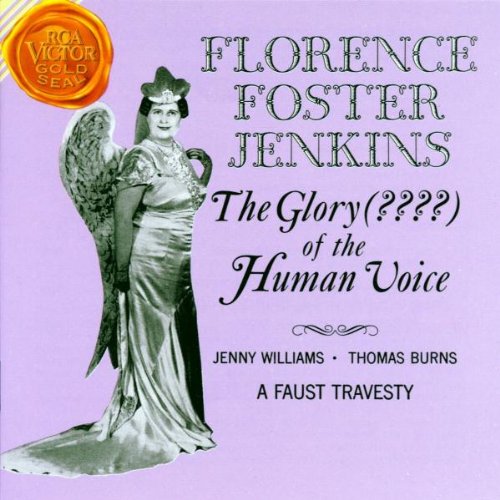
When I was a child I was introduced to the singing of Florence Foster Jenkins, on a record called “The Glory (??) of the Human Voice”.

There was a kind of illicit pleasure in listening to her singing, because
Ours is a society of sophistication. Whether you paint or dance or sing or play golf, we aspire to do these things well, and usually are aware of our handicap / limitation. When we fail to perform well we suffer, we are ashamed, we have stagefright.
The astonishing thing with FFJ: how much conviction she seemed to bring to her singing.
The great mystery with FFJ: did she sing this way without any inkling that she was not successful? that people were laughing?
Usually singing teachers discourage singers from undertaking repertoire that is beyond their capabilities. Indeed, a teacher who does not stop a student from over-reaching can damage a singer’s confidence and even ruin a voice.
And so, in our adoration of the virtuoso, our aspiration to excellence both for ourselves and what we enjoy, the Florence Foster Jenkins mystery is profound. Did she know that people laughed?
Florence Foster Jenkins is Stephen Frears’ new film with Meryl Streep as the singer and Hugh Grant as her devoted boyfriend, an actor who didn’t quite make it. Big Bang Theory’s Simon Helberg is FFJ´s pianist Cosme McMoon, another virtuoso who didn’t quite make it. I always thought that the pianist’s bizarre name suggested that it was a pseudonym, a good piano player who refused to be identified, but the story we get in Frears’ film tells quite a different sort of story.
I can’t help thinking that this might be the most profound meditation upon performance and art that I’ve yet encountered, precisely because, as far as FFJ is concerned there but for the grace of God, could go you or I. Some of us are more talented than others. I grew up in a household with a stunning voice –not my own but a sibling—that has forever got me thinking about such things. We can be very harsh critics of ourselves. FFJ is the other extreme, perhaps someone who was overly enabled by loving and supportive friends & loved ones.
How much did FFJ really know? I think this film offers one set of answers, even while displaying other possibilities.
Along the way we also encounter a very enlightened film about relationships, about unconditional love. For most of the film Streep is doing a remarkable impersonation of the messed up interpretations of opera arias I recall from childhood, although we get a tiny glimpse as if from FFJ’s perspective: as Streep suddenly gets to sing in tune, a poignant moment near the end.
In this electoral campaign where one of the candidates has ridiculed a disabled person’s speech, I can’t help feeling uncomfortable about the topic. In the darkened theatre I confess I giggled a few times even as I watched Grant as the boyfriend express outrage that anyone could laugh at her. Why is this kind of laughter okay and sanctioned by our sophisticated attitudes, while we disapprove of what Trump did? We go into a church or a school and when the little children in sunday school or kindergarten sing out of tune we think “aw isn’t that adorable” and withhold judgment.
But we judge ourselves harshly, because we expect too much of ourselves. Competence and sophistication seem to be the rocks upon which we wreck ourselves as we age, as we become progressively less competent. For some reason we forgive some, while judging others harshly. Florence Foster Jenkins is a delicate examination not just of this quirky story, but of the predicament of every performer, aiming to be great and squirming in the presence of failure.