10 Questions for John Relyea

John Relyea?  I remember hearing that one of Canada’s great singers, Gary Relyea, had a son who was making a name for himself in the USA, first at the Merola program of the San Francisco Opera and inevitably at the Metropolitan Opera.  He was still young in my mind when he stole the show in the 2008 High Definition broadcast of Berlioz’s Damnation de Faust as Mephistopheles, when it became abundantly clear that the man can sing and act. 

He came to Toronto to sing the villains – a varied series of roles —in Tales of Hoffmann c/o the Canadian Opera Company a few years ago, stunning singing and acting.  And last season he gave us another dark portrayal for the COC as Bartok’s Bluebeard.

John Relyea as Duke Bluebeard and Ekaterina Gubanova as Judith in the Canadian Opera Company production of Bluebeard’s Castle, 2015. director Robert Lepage, set and costume designer Michael Levine (Photo: Michael Cooper)

John Relyea as Duke Bluebeard and Ekaterina Gubanova as Judith in the Canadian Opera Company production of Bluebeard’s Castle, 2015. director Robert Lepage, set and costume designer Michael Levine (Photo: Michael Cooper)

Relyea is now recognized as one of the great basses in the world.  And we’re fortunate to have him back in town to share his gifts, this time in the Toronto Symphony’s Messiah later this month.  I had to ask him ten questions: five about himself and five more concerning singing about good & evil.

1) Are you more like your father or your mother?

Very tough question. I guess a bit like both. I know I definitely inherited my dad’s off the wall sense of humor. My mother and father are extremely unique, and pretty hard to duplicate!

2) What is the best thing about being a singer?

I think the best moments are those when you get into ‘the zone’ on stage.. being in the moment, living the role, while the voice finds its most natural sound without having to look for it. These are moments that always stay with me.

3) Who do you like to listen to or watch?

I will watch just about any great musician – singer or otherwise.. Since I tend to get my fair share of opera.

I tend to listen to other types of music in my free time. I was just rediscovering David Bowie last night. He is one of the most original artists out there. His projects have always been strong pieces of theater, music, and art all in one.

I also love the singer Cassandra Wilson. Reminds me of Nina Simone -smooth, dusky sounding voice. I also love the band the National.

4) What ability or skill do you wish you had, that you don’t have?

I wish I could write screenplays!

5) When you’re just relaxing and not working what is your favourite thing to do?

Usually something pretty mindless, in order to escape. The latest news is I have fallen for the zombie phenomenon, and am addicted to ‘The Walking Dead’ miniseries. Perhaps I will eventually move towards something a little more sophisticated…

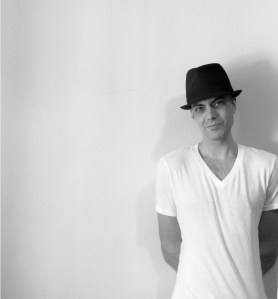
John Relyea (photo: Shirley Suarez)

John Relyea (photo: Shirley Suarez)

*******

Five (or six?) more about the upcoming TSO Messiah.

1)   In a work such as Messiah that is informed by religious text and spirituality, please talk about how you reconcile those different aspects in your interpretation.

Looking at words in biblical text can often be cryptic, to say the least, especially for singers without a religious upbringing. It is always useful to revisit the stories in the Bible which these texts occur, to the point where we can have some strong imagination of those events, to bring the drama into the text and in turn before the audience.

John Relyea performing Messiah with the TSO in the Toronto premiere of Sir Andrew Davis's orchestration in 2010 (Photo: John Loper) Francine

John Relyea performing Messiah with the TSO in the Toronto premiere of Sir Andrew Davis’s orchestration in 2010 (Photo: John Loper)

2) You often sing of abstractions when you portray Mephistopheles, Bluebeard, the villains in Tales of Hoffmann or the bass parts in Beethoven’s 9th or Messiah. What if anything is the difference between singing about good and evil, as opposed to a real life person such as Figaro or Escamillo?

I think the best, and for me perhaps the only approach in portraying any of these parts of my repertoire consists of just being the part, playing the text. For instance, there is often ample irony within a comic libretto. Such moments are best presented with minimal affect. It’s better leave it to the audience to do the reflecting and interpretation. Usually the result is much stronger, especially in comedy. So I suppose whether playing good or evil, the process of performing remains the same, so that something meaningful can happen.

3)    What is your favourite moment in Messiah?

And He Shall Feed His Flock. I think this has to be one of the most beautiful pieces of music ever written. I wouldn’t be surprised if Handel had his strongest spiritual moment writing this part.

4)  What is your next big gig?

I will be singing Zaccaria in Nabucco with the Royal Opera at Covent Garden.

5)    Do you have a favourite recorded version of Messiah?

The Neville Mariner recording.

6) Is there a teacher or an influence you’d care to name that you especially admire?

George London. To me, this was a voice and dramatic presence of the greatest level. A beautiful voice of soul-piercing blackness, and a truly visceral performer.

*******

click for further information

Let John have the last word concerning the TSO Messiah, to be presented the evenings of Tuesday through Saturday December 15-19, plus a 3:00 pm matinee Sunday December 20th.

You will love Andrew Davis’ new, bold and playful edition of Handel’s Messiah. It is a great evening, and will reopen your eyes to this legendary work.

I am really excited to share the stage with some truly great singers, the outstanding players of the TSO, and the Mendelssohn Choir!

Posted in Interviews, Music and musicology, Opera | Tagged , , | 2 Comments

L’Homme et le Ciel: worth the wait

I attended the opening of Adam Scime’s opera L’Homme et le Ciel at the Music Gallery, produced by FAWN Opera, directed by Amanda Smith and conducted by the composer. While I’ve seen two other presentations of portions from Scime’s opera –one from FAWN in April 2014, another from Bicycle Opera in their 2014 summer tour—and although there was another presentation of parts of the opera in Kitchener, also in 2014, this is the first complete presentation of the work.

Composer Adam Scime

There are several inter-woven storylines leading to this great moment for composer Scime and for Amanda Smith, FAWN’s artistic director. I say this as I try to keep it all clear in this attempt to capture a series of impressions about the event, fearing that I’ll omit something.

I want to properly acknowledge Scime’s work. His score for l’Homme is a combination of electro-acoustic music generated invisibly, and a live score for three singers and at least six players; while the program mentions piano, violin, flute/piccolo, cello and clarinet/bass clarinet there was also percussion (or was that produced when the piano wasn’t playing? I wasn’t watching closely enough to be sure). We begin very softly, with a repeated pattern that suggests we might be in minimalist territory, which is where we stay for awhile, the music soft with occasional silences to ground us in the here and now. For a piece concerned with matters of spirituality, this is not surprising, as Scime created a genuine sense of immanence with the voices & gentle sounds from his ensemble, at times very carefully rooting us in the moment.

Yet at other times the sonic space was saturated, voices coming strongly at us at the same time as complex textures overlaid one another, an effect calling to mind layers of fabric or splattered paint (thinking of Jackson Pollock), the layers transparent rather than opaque, but the complexity wonderfully significant. This is not a modernist complexity, even if at times we seemed to be in an atonal world, whereas at other times I heard extended chords suggesting something late-romantic, coherent and harmonic.

Scime is setting a libretto by Ian Koiter, that is in French based on a 2nd century story. While I understand French, the effect of the opera in another language creates some distance, some additional artificiality. We are moving away from realism and in the direction of something more symbolic, more purely abstract than what one usually sees on stage or screen.

Is the story as complex as the music that we hear? Most certainly.

Or to put it another way, the score is an eloquent answer to the most fundamental question to put to any of the composers whose operas I’ve encountered recently, namely “why tell this story via opera”? Often I can’t help thinking that composers are attracted to opera because it’s a big money prestigious field, a place to wield power and influence. At a certain point in their careers it’s inevitable that they’ll try to write an opera. As a person raised on opera as though it were mother’s milk, I’ve always distinguished between opera composers and those who don’t really get opera, especially when one senses that there’s no sense of attachment (let alone love & respect) to (for) the form. Scime’s score can’t be told any other way than in the operatic medium, and as such makes everyone –singers, musicians, director—look good in the process. A good opera should be like an argument advocating for the medium, making you want to hear more operas, and that’s exactly what I felt watching Scime’s opera.

This is not an opera about clarity but rather about unanswerable questions. I felt confusion, and by that I don’t mean an alienation from the work, but rather a purposeful fog created in the mind of the protagonist Hermas. This is an opera about a spiritual journey, as Hermas ponders and shows us his attempts to make sense of what he has experienced.

The one question I might have for Scime is to wonder myself whether his own journey and that of Hermas is over. The work ends with questions left in the air. Even though the spiritual text Scime has set is old, the setting is quite modern in its willingness to portray the psychology of Hermas’ struggle, to avoid the simple closure one gets from romantic works such as Parsifal or Lohengrin, where the allegorical is trumped by the need to tell a story with a clear ending even if such closure violates the higher purpose. Scime and Smith make no such surrender to a simplistic impulse. While I don’t think it becomes better if you make it easier for the audience –by supplying a bit more closure at the end—I couldn’t help wondering if there’s more here, more to the scenario and more music that Scime might yet bring to light.

Alex Dobson is the latest incarnation of Hermas, a portrayal showing us layers of wonderment & discovery, while employing that luscious instrument that we’ve grown to love & admire over the years. Larissa Koniuk, who is the only person I’ve seen undertake the role of Rhoda, seems very comfortable with Scime’s demands. Like Dobson, Koniuk has some big singing, at times competing with the ensemble’s fortissimo. The dense layers of sound & meaning cohere beautifully, both voices soaring through clearly. Adanya Dunn in the smaller role of The Messenger contributed to the sense of mystery, both in Hermas’s journey and in our own experience of the opera.

There have been several small opera companies in the Toronto area employing a variety of strategies to grow, to find repertoire, to make themselves stand out.  FAWN, through the vision of Amanda Smith their artistic director, have taken a very singular path, building this opera even though it has taken the past couple of years.  It was worth the wait.

L’Homme et le Ciel will be presented again Friday Dec 4th at the Music Gallery. I hope to hear it again someday.

Previously:

Posted in Music and musicology, Opera, Reviews | Tagged , , , , | Leave a comment

Puppetmongers presents Cinderella in Muddy York

Puppetmongers presents Cinderella in Muddy York
December 26, 2015 –January 1, 2016 at Tarragon Extraspace
Created and performed by Ann Powell and David Powell, Directed by Sue Miner

Toronto, November 30, 2015- Puppetmongers celebrates its 26th anniversary of delightful winter holiday performances this season with the return of its twice Dora-nominated family favourite, Cinderella in Muddy York, created by Puppetmongers’ Co-Artistic Directors (and brother and sister) Ann and David Powell, with the direction of Sue Miner.  Cinderella in Muddy York runs at Tarragon Theatre’s Extraspace with daily matinees from December 26, 2015 to January 1, 2016, for those aged 5 to 105.

A whimsical version of Toronto history that will tickle the funny bones of adults and children alike, Cinderella in Muddy York is the classic tale reset in 1834 Upper Canada.  Puppetmongers’ Cinderella is the tale of young Ella, a kind and capable young woman born and raised in Muddy York, whose good nature is imposed upon by her new step-family who have come from England with ideas about their own privilege, and haven’t a clue how to cope in this new environment.  When an invitation arrives from Government House, inviting them all to a ball in honour of the city’s renaming to Toronto, hopes are high of meeting the eligible bachelor son of the Lieutenant-Governor.   True to the classic fairytale, with a little magic Cinderella gets to the Ball, where she and Mr. Princely Charming are drawn to each other through their shared curiosity and excitement about life in this “new” land.

This witty and acclaimed work is ingeniously staged with rod-marionettes, inventive special effects and, and a traditional marionette theatre that is transformed to create scenes evoking the wilderness, settler life and early Canadian society.  This is a delightful way to learn about Canadian history, and at the end, children often ask, “Did this really happen here?”  An added pleasure for children after a Puppetmongers performance in the intimate setting of the Extraspace, is the opportunity to meet the puppet characters onstage and their puppeteers, Ann and David.

“…true masters of the art of puppetry.  Their work is elegant, detailed, loving and lovely.  It’s all done with wit and economy, and adults enjoy it every bit as much as younger audience members.” – Richard Ouzounian, Toronto Star

“Go to it immediately!” – Lynn Slotkin, CBC Radio

The winter holiday performances by the Puppetmongers’ brother and sister team Ann and David Powell have become a delightful tradition for families and theatre-goers in Toronto these last two and a half decades, although Puppetmongers Theatre has been bewitching audiences for 41 years with their extraordinary and innovative creations.  At the forefront of puppetry arts in Canada, Puppetmongers have won numerous awards including four UNIMA-USA Citations for Excellence in the Art of Puppetry, the Presidents Award from the Puppeteers of America, and many Dora and Chalmers nominations.  They have toured extensively in North America, Europe and the Middle East.

Director Sue Miner is the co-artistic director of Pea Green Theatre Group with Mark Brownell for which she has received numerous Dora Award nominations. She has thrice been nominated for the Pauline McGibbon Award for Direction. Some of her recent credits include The Tempest (Canadian Stage) and Celine Speaks (Toronto Fringe).

Puppetmongers presents Cinderella in Muddy York More info: http://www.puppetmongers.com or 416 469 3555
Created and performed by Ann Powell and David Powell, Directed by Sue Miner.

Tarragon Theatre Extraspace, 30 Bridgman Ave., Dec 26, 2015 – Jan 1, 2016; Suitable for ages 5 to 105
Performances: Daily matinees at 2:30pm
Tickets: $25 adults; $20 child/senior/student.  Special Family 4 Pack for $75.  Group rates are also available.
Tarragon Theatre Box Office: 416 531 1827
https://tickets.tarragontheatre.com/TheatreManager/1/tmEvent/tmEvent439.html
More info: http://www.puppetmongers.com or 416 469 3555

 “Press releases and announcements” are presented verbatim without comment

Posted in Press Releases and Announcements | Leave a comment

Vocalis 2 in the Great Hall

click logo for more info

There are so many opportunities to hear great music in this city that the one I chose tonight could easily have slipped under the radar.  There’s so much going on at the Faculty of Music, check out their schedule (click the logo at the right), where –alongside the talented students—you might discover a Sondra Radvanovsky master class or a Barbara Hannigan concert.  The calibre they offer is extraordinary.

“Vocalis” is a new series at the University of Toronto. Although i didn’t see her name in the programme, the series is the brainchild of Wendy Nielsen, who is head of voice at the U of T’s Faculty of Music. Tonight I heard the second in the series, Masters and DMA singers & collaborative pianists, plus a guest from the Opera Programme. The next concert in the series will take these talented young artists to the Tranzac Club to sing something more like cabaret rather than pure classical music. While I didn’t hear anyone use this word I shall invoke it all the same, namely “multi-disciplinary”. It’s a key concept for the past decade or more in the humanities, as everyone ventures beyond their own narrow turf in the interest of learning, breadth and authenticity.

But tonight was operatic, a series of semi-staged excerpts by Mozart, Britten, Tchaikovsky, Richard Strauss and Rossini. The singing was mostly good and occasionally great.

One reason I couldn’t miss this evening’s performances was evident after the intermission, as Margarete von Vaight sang most of the role of Ariadne, including both big arias and with very little rest time in between, a performance sounding astonishingly polished & professional for a free concert (lucky us!).   I’m partial to this opera so I wouldn’t miss a chance to hear even part of it. Max van Wyck’s Harlequin, and the trio of Arianna Ervin, Anna Sharpe and Stephanie Higgins as respectively, Naiad, Dryad and Echo were quite stylish musically, in collaboration with pianist Narmina Efendiyeva.

After the Straussian intensity with Ariadne, Alyssa DiMarco and Clarisse Tonigussi gave us something lighter in Rossini’s cat duet, complete with tails & ears.

Before intermission it was mostly Mozart although we enjoyed brief interludes, beginning with Britten, Rebecca Genge singing Tytania’s “Come now a roundel” with pianist Holly Kroeker and Dann Mitton singing Gremin’s aria with Efendiyeva. The Figaro excerpts featured “Sull’aria” with June Ekker blending beautifully with Claudianne Moreau as Countess & Susanna, with pianist Andrea Van Pelt, and an energetic bit of the Act II finale with Sonya Harper Nybe’s Countess, Janelle Lapalme’s Susanna, Peter Warren’s Count, with Melisande Sinsoulier moving things nicely from the piano.

We also heard two excerpts from La Clemenza di Tito, beginning with “Come ti piace imponi” featuring Kari Abraham as Vitellia opposite Meghan Symon’s Sesto, with pianist Braden Young. The tuneful “ah perdona al primo affetto” followed, featuring Kristina Alexander’s Annio, Maeve Palmer’s Serilia, with pianist Amy Seulky Lee.

SSorry i can't indentify the singers & pianists (who are named in the piece above), except for Wendy Nielsen who is in the foreground at the left, proud of her students at the end of a successful concert.

Sorry i can’t indentify the singers & pianists (who are named above), except for Wendy Nielsen who is in the foreground at the left, proud of her students at the end of a successful concert.

Posted in Music and musicology, Opera, University life | 1 Comment

Nuts for Stewart Goodyear’s Nutcracker

click for Amazon

I was never koo-koo for Coco-puffs, but the headline ambushed me as I sat listening, enthralled.  If it sounds childish, that might give you some idea of how this recording moves me.  I associate Nutcracker –the ballet, and the score– with Christmas and childhood. That hardly makes me unique.

Let me give you two pieces of context, and as usual, make a big digression to personalize this. No, I am not about to confess that I am nuts, period (although some who know me might protest).

Context part one concerns transcriptions. I play them, both in the sense of undertaking to transcribe, and playing transcriptions by others. There are some amazing ones out there, for instance Busoni’s Bach, Liszt’s Berlioz, Beethoven & Wagner (among so many others I could name), Rachmaninoff’s Bach, Mendelssohn & Schubert, among so many others one could name.

Context part two concerns the pianist.  I’ve written more about Stewart Goodyear on this blog than any other pianist. If you look at the tag cloud to your right, and exclude opera company names or dead composers, you might notice that the largest font belongs to a pair of Opera Atelier artists, namely David Fallis & Marshall Pynkoski. It could be a sign that I love them dearly, but it’s also a purely mathematical reflection of their presence in every single Opera Atelier review you’ll find here; Alexander Neef or Johannes Debus are smaller in font because they’re not in every performance. Robert Lepage (who is the same font size as Goodyear, another Canadian I admire very much) and Goodyear are the next biggest after Fallis & Pynkoski.

When we remember that I make a point of not mentioning an artist in a review if I am unhappy with their work, it’s a big deal that a solo pianist is in this position. Where I can talk about other aspects of an opera production if I don’t like the conductor or director, there would be no review if the solo pianist didn’t measure up. To be honest: I worry sometimes that if I go on too much about Goodyear, that people will simply assume I am partisan, biased, and not objective. In fact I would have written even more about Goodyear had I not feared I was beginning to sound like a broken record, like his shill.

While I enjoy everything from Goodyear at least on the level of his pianism, I put his Beethoven at a higher level. I was fascinated by his Rachmaninoff, which sounds different than any other reading of this composer I’ve ever encountered. I don’t say that in the sense of “oh wow you must listen” so much as an admiration of an original approach that hasn’t fully persuaded me.

And here we come to something rather intriguing. If you saw the segue coming, yes Tchaikovsky is also Russian. Goodyear plays this music as though he knows this music at a very deep level. Surely this began in the transcription process, where Goodyear sat at the piano and attempted to replicate the ballet by ear. In the liner notes he makes clear his deep lifelong connection to this music, and by that meaning the full ballet rather than just the short suite people sometimes hear played in concert halls. Goodyear’s transcription is over 82 minutes long, another astonishingly ambitious project to put alongside his marathons of Beethoven sonatas. The physical component alone would be daunting to other pianists, but Goodyear isn’t like other pianists.

I shall quote one tiny passage from the liner notes:

To hear Tchaikovsky’s music without the visuals is fascinating in that it allows us to focus on all the brilliant craftsmanship of the composer, while the piano brings with it a new palette of color. That Goodyear could undertake such a project speaks to his genius. That he succeeds speaks to Tchaikovsky’s. [Ben Finane]

Many effects are startlingly orchestral. The phrasing and dynamics suggest the ballet, the ongoing physical pulse of the dance, the drama of the story in full colour. Listening to it I kept getting lost in it as though I were watching one of my videos of the ballet.

I make no apologies to you, if you get into my car anytime in the next few weeks. If this is what you’ll hear on the sound system consider yourself fortunate.

Pianist Stewart Goodyear (Photo: Victor Avila)

Posted in Music and musicology, Reviews | Leave a comment

VOCALIS: a new series at the Faculty of Music, University of Toronto

VOCALIS

A new series of four concerts featuring the students of the Masters and DMA Voice programs, the Collaborative Piano program as well as students from the Instrumental program at the Faculty of Music, University of Toronto. This program is generously supported by Dianne Henderson.

  • Concert 1 October 23 at 7:30 pm at Walter Hall
    A program of Contemporary English Song Repertoire curated and hosted by Steven Philcox and Wendy Nielsen.
  • Concert 2 December 2 at 7:30 pm at the Great Hall of Hart House
    A program of Opera Excerpts in a semi staged setting curated and hosted by Stephen Clarke and Wendy Nielsen.
  • Concert 3 February 2 at 7:30 pm at the Tranzac Club, 292 Brunswick Ave
    A program of Cabaret Songs curated and hosted by Adi Braun and Wendy Nielsen. Special guest Michael Bridge accordion.
  • Concert 4 April 6 at 7:30 Emmanuel College Chapel
    A program of chamber works with voice curated and hosted by Annalee Patipatanakoon and Wendy Nielsen.

*******

Tentative program for Vocalis #2

Sull’ aria from Le Nozze di Figaro Act 3      W.A. Mozart
Countess Julie Ekker
Susannah Claudianne Moreau
Pianist- Andrea van Pelt

Act 2 Finale from Le Nozze di Figaro      W. A. Mozart
Count- Peter Warren
Countess- Sonya Harper Nyby
Susannah Janelle LaPalme
Pianist- Mélisande Sinsoulier

Come now, aroundel from A Midsummer Night’s Dream      Britten
Tatania Rebecca Genge
Pianist – Holly Kroeker

La Clemenza di Tito Act 1 duet      W.A. Mozart
Vitellia- Kari Abraham
Sesto- Meghan Symon
Pianist- Braden Young

La Clemenza di Tito Act 2 duet      W.A. Mozart
Annio- Christina Alexander
Servillia- Maeve Palmer
Pianist- Amy Seulky Lee

Gremin’s aria from Eugene Onegin      Tchaikovsky
Prince Gremin – Dann Mitton
Pianist – Narmina Efendiyeva

–Intermission–

Ariadne auf Naxos excerpt       R. Strauss
Ariadne- Margarete von Vaight
Echo- Stephanie Higgins
Dryade- Anna Sharpe
Nyade- Arianna Ervin
Harlekin- Max van Wyck
Pianist- Narmina Efendiyeva

I gatti        Rossini
Alyssa di Marco
Clarisse Tonigussi
Pianist Gary Forbes

VOCALIS_poster2

Posted in Opera, Press Releases and Announcements, University life | Leave a comment

Two Peters and The Wolf, with a little help from Rick Mercer

click for Sick Kids Foundation

Over $50,000 was raised at the first Toronto Symphony benefit for Sick Kids Hospital, likely to be an annual affair. The TSO put on a brilliant show.  There were two Peters, both the fictional one in the Prokofiev story and the real one on the podium –Peter Oundjian– conducting and addressing the audience.

I was not surprised at how much buzz there was when Rick Mercer appeared on the stage. There was a genuine electricity, aided by his willingness to embellish that familiar story with a few modern twists. For instance, when Mercer got to the part of the story with the cat, he quickly reminded us that in the internet, cats and cucumbers are trending now. (if you don’t believe me go to youtube and see for yourself).  We were simultaneously given relevance & humour. Mercer kept us grounded.

Even with his occasional extras, this was the familiar story, back and forth between Mercer & Oundjian. It’s a natural given that the TSO’s music director is also a gifted communicator, a natural in front of a crowd.

This isn’t their first encounter! 

The event seemed to be a success, both as a fund-raiser and as a promotional event for the TSO. I have a wee bit of feedback to offer, in the interest of improving this for next year.

There were four items on the program which wasn’t uniformly kid-friendly.

  1. We began with Britten’s “Young Person’s Guide to the Orchestra”, but without the explanatory narration. I wonder if that was the original plan? Without the pedagogical talk it becomes much harder for the kids, especially the fidgety ones, two of whom were seated right beside me, and two more just behind. If not Rick Mercer, perhaps some other upbeat person could make something fun out of this? As a purely musical performance it’s quite lovely, but not if the omission of the narration makes it harder for the young ones.
  2. Then came an arrangement of “Stardust”, contrasting in its brassy sonorities (featuring principal horn Neil Deland accompanied by nine brass players & the harp) as well as the visuals.
  3. The last item before the interval was the “Rhapsody on a Theme of Paganini” by Rachmaninoff. While the performance featured a young player –Coco Ma is 15, and so might seem to signify youthful content to the TSO management—the composition is dead serious for a child, especially if they were brought to Roy Thomson Hall with promises of “Peter & the Wolf.”
  4. And after the intermission came Peter & the Wolf.

Wonderful as the playing was in the Rachmaninoff, the drama of the piece brought out the worst in the kids beside & behind me who disappeared abruptly at the end of the piece, frog-marched to the lobby by frustrated parents. I have to think there were others if I saw this much misbehaviour within five feet of me. The child to my left seemed intent on surfing on the heads of the ladies in front of her, or in other words sought to aggravate her mother to the point of complete exasperation in order to salve her complete boredom during the Rachmaninoff. Next year there should be something for the kids before the intermission, whether it’s “Peter & the Wolf”, “The Carnival of the Animals”, or something else that is more kid-friendly. Tonight’s Peter & the Wolf only began around 9 pm, which is likely bedtime for the smallest.

I am torn.  As a parent i don’t believe you take a child into this kind of place unless you’re sure they’re ready, as in you’ve prepared them energetically, exposed them to the stories & music and they are enthusiastic rather than reluctant (the children i sat beside? their enthusiasm was all directed at getting out of the place).  Does the TSO have any responsibility to program everything for wee kids? not at all.  Indeed, an earlier version of myself would be sending angry letters to the moronic blogger (that is moi) who is proposing to enable bad behaviour. And yet… I know what I saw. The washroom & the corridors were full of children, and that’s a good thing. Now that they’ve been invited, why not ensure that they come back?

But the TSO must do this again, absolutely. This is a wonderful opportunity not only for fund-raising but for audience building. Maybe they should play some of Nutcracker while a dancer or two comes onstage, and the music & the action are explained for us. Or give us one of the Bugs Bunny cartoons with the classical content such as “The Rabbit of Seville”, OR a combination of cartoon and music. I’ll be eager to see what they do next year, and hope nobody minds a bit of constructive feedback.

Posted in Music and musicology, Reviews | Leave a comment

OSM: was it good for you?

I could use technical jargon, I could be very polite, OR I can simply tell the story as my viscera understood it. L’Orchestra Symphonique de Montréal—aka “OSM”—came to Toronto led by their music director Kent Nagano to play at Roy Thomson Hall tonight. At one point I sighed almost in synch with the person beside me, sensations verging on something sexual.

All that was missing was the post-symphony cigarette, or a moment to ask “was it good for you?” But of course there was such a moment after, as the crowd went wild in appreciation.

The OSM’s programme was a fascinating combination of old & new, all through a modernist lens. We began with Bach via Mahler, an idea of Bach that might be as obsolete as Stokowski (as in Fantasia), yet has to be respected, a way of understanding early music that is completely alien to modern ears accustomed to dry vibrato-less playing and historically informed performance. The “Suite for Orchestra, Harpsichord and Organ” by Bach, arranged by Mahler, resembles a greatest hits album –itself a curious anachronism that perhaps betrays my age—as Mahler assembled several lovely tunes into one entertaining collection. And yet I couldn’t help but notice that the OSM played this music in a way informed by the way we usually hear Bach, nowhere near as outlandish as I might have expected (and what we would have heard a century ago).

Yulianna Avdeeva, who will be playing the Capriccio Nov 26 & 28 with OSM in Montreal.

From a modernist sampler of baroque, we moved on to Stravinsky’s Capriccio for Piano and Orchestra, somewhere between neoclassical & primitivist, an exploration of sound and sonority. Yuliana Avdeeva was placed front & centre at the piano, addressing the keyboard in a manner reminiscent of a flamenco dancer or perhaps a bullfighter, her body making flamboyant gestures with her shoulders and arms, perhaps as an aid in the expression of phrases. I’ve never seen anything quite like it, although wow she sounds amazing. This is a deceptively challenging piece, one easily reduced to percussive attacks. Avdeeva brought a wonderfully fluid detachment to her phrasing, matched by a cleanliness of attack from this orchestra, so effortless in making a fulsome sound even when playing softly, but with that much more to offer when they decided to commit fully.

Final item on the program was another modernist piece. I’ve always felt a strong connection between Mahler & Shostakovich (I’m not the only one, if you google it further), the Russian taking Mahler’s forms a few steps further harmonically & rhythmically even while seeming to emulate some of his choices. Tonight for instance in the 10th Symphony, the two inner movements have the kind of colourful vitality you find in Mahler’s later symphonies. After the restraint of the first movement, the second movement is an ecstatic explosion of passion, the third another wild display. Nagano is a very skillful conductor, whom i admired in his appearance with Tafelmusik last year. He lets this music breathe, so that although there are moments throbbing with intensity, there are lots of soft reflective passages as well. This is a mature ensemble who turn on a dime, agile & supple, with just the occasional glint of teeth and claws as though wanting to remind us of our feral past.

I’m glad they took me along for the ride. FYI, L’Orchestre Symphonique de Montreal play this program again Nov 26 & 28 (back home in Montreal).


Posted in Music and musicology, Reviews | Tagged , , , , , , | Leave a comment

10 questions for James Gilchrist

Here is the “informal biography” from James Gilchrist’s website, and offers a much better portrait than anything I could attempt.

At the age of eight I came home from school one day and informed my parents that I was now in the local church choir, and needed to be at rehearsal every Thursday, and morning service every Sunday, thank you very much. If my parents were surprised or even annoyed, they hid it well. Our family was always surrounded by music, and I think I just assumed it was a normal thing to do. From then on, much of my vocal training has been in church choirs. I was lucky enough to sing in the choir of New College, Oxford as a boy treble, and as a tenor in that of King’s Cambridge. I think, though, that I never dreamt that I might one day earn my living through singing. It was just part of normal life – another straightforward way to communicate. Indeed, if anyone had asked me then what sort of a musician I was, I’m sure I would have (forgetting the self-derogatory terms) put my cello playing first. But I have come to realise that it’s the unique fusion of words and music that is singing that moves me beyond measure, and makes singing the essence of my musical self.

But I wanted to be a doctor. Not in a half-hearted way, but truly as a vocation, and it is only really by accident that I find myself not in medicine, but in the arts. I trained in the London Hospital, Whitechapel, very much using my singing in professional choirs both as a way of keeping me sane, but also to give me something to live off. And so, while studying and working in medicine, I sang in groups such as the Sixteen, the Tallis scholars and the Cardinall’s Musick, alongside appearing regularly in choral societies up and down the country as their tenor soloist. In retrospect, this was a wonderful training. I was learning huge quantities of repertoire, learning the importance of looking after one’s voice, and also how life was as a professional musician, while having the luxury of knowing that my life wasn’t on the line if it all went wrong.

So when I found my diary rather full of solo engagements, and having completed (and by some miracle passed) yet more medical exams (my MRCP), I went along to my consultant at the time to ask his advice. I must confess that I was terrified. He was a very well-respected nephrologist, and the job much sought-after, and I was wondering whether I might possibly have a month off. But his encouragement was immediate and whole-hearted. Go and try your hand in music and come back in a month to see how it feels. And a month has so far stretched to ten years, and I don’t think I have any regrets.

I do miss medicine, though. It’s not the sort of thing one goes into on a whim. I miss the academic challenge, the excitement of the diagnostic process, the sense of being in a team of so many different disciplines, the enormous privilege of being so intimately involved in people’s lives, and above all else the sense that one is doing something which is so manifestly useful and beneficial to your fellow human-beings. Of course, there are things I don’t miss. Not being one’s own boss, and working always to timetables and rotas. And, tellingly, the responsibility of knowing if you make a mistake that it might be someone else whose life is spoiled. I think I have found a way of life that suits me better now – I’m very much myself on stage. But I miss hospitals, and I and my family very much miss me not having a “normal” job, and having so many weekends away from home.

I was once accosted by someone after a concert in Aldeburgh, who told me I wouldn’t remember him (he was not quite right, but I certainly couldn’t place him), and telling me that he used to tell me off for humming during his operations when I was a student of surgery, and now look – he’s having to fork out a fortune to hear me! He was delighted to do so, of course, and it was an important lesson for me about why music is so valuable to us all. I believe the arts are in some profound way essential to all of us. Artistic expression and endeavour are what makes us human, and the most visceral and basic of our modes of communication. It’s glib to call music the medicine of the soul, but I think there’s some truth in that.

And in a few weeks tenor James Gilchrist will be singing with Tafelmusik as they present Bach’s Christmas Oratorio. I ask him ten questions: five about himself and five more about preparing to sing JS Bach.

1-Are you more like your father or your mother?

Our family always made music together. Chamber music with family and friends. Oddly, never singing. But music surrounded us since I can begin to remember. I was sent away to school at quite an early age, when I became a chorister. Then it was of course singing, and that to a high standard. But I mostly just got on with it. It was just normal life.

To answer your question, though, I dare say I’m a bit of a mix of my parents. Luckily for them, neither is very much like me!

Tenor James Gilchrist

Tenor James Gilchrist

2-What is the best thing or worst thing about being a singer?

The worst thing is easy: getting sick and the precariousness of vocal health. It’s horrid having to pull out of things and let people down. I’ve been lucky, and am rarely ill. But even so, I probably have to pull out of one thing a year. That, and the constant travelling. But the best things easily outweigh that. To sing is to communicate in an uncluttered and profound way. To sing makes you feel better. I hope that’s the case when people listen too! That’s the aim: to move people.

3-Who do you like to listen to or watch?

Funnily enough, I don’t listen to much recorded music. I love to go to things live. I’m like that with works I’m learning too: I rarely listen to recordings. Not sure whether that’s a good thing. One – alas rare – pleasure is the theatre.

4-What ability or skill do you wish you had, that you don’t have?

Too many!!!! Languages. I wish my German and French and Italian were better. But the overriding one would be a better memory for names and people: I’m spectacularly bad (drives my poor wife mad!)

5-When you’re just relaxing and not working what is your favourite thing to do?

Started sailing a while ago mainly because my eldest son wanted to see whether he enjoyed it. He did and is a natural. But I can see the attraction. There’s something totally magical about gaining power and movement from the wind. Can get awfully expensive, though!

*******

Five more about singing the tenor part of The Christmas Oratorio with Tafelmusik

1-Talk for a moment about Bach’s Christmas Oratorio, especially what he writes for the tenor.

The piece is really six separate cantatas which have been bound together, so each part has it’s own “flavour” (in our performance we’re only doing five). It tells the Christmas story very straightforwardly, in simple declaimed recicative (that’s the tenor’s job), which I hope is easy to understand. But interweaving this (and making up the vast bulk of the piece) are choruses and arias for the soloists. The choruses serve two purposes: first, they’re book-ends to each cantata, being sort of concerted utterances of the hopes and fears of the congregation in Leipzig who would have been there in the eighteenth century. Second, they are active participants in the action. Much less often than in the passions, but nevertheless there in the thick of it. The arias offer a thoughtful moment to ponder on, wonder at or otherwise explore the story.

So the tenor’s job is two-fold. First, he tells the story as it unfolds. Such a familiar story of Mary travelling to Bethlehem, the birth and naming of Jesus, the shepherds, the wise men, Herod. Second, he’s occasionally (especially in the last part, part six) one of the commentators. I love this duality in the role..

2-The Christmas Oratorio combines theatre, music, and sacred texts. Please reflect for a moment, on where you place the emphasis among those three (drama, music & spirit) and how this informs your preparation & your performance.

Of course it’s a profoundly Christian and spiritual work. And I suspect Bach would be bemused to find us performing it in a concert hall. The joy and power of the story and the music, though, make it exuberantly open for anybody to enjoy. It has moments of extreme tenderness and intimacy (perhaps Mary cradling her baby and singing to him) and rousing choruses. It’s about finding good and joy in the world with us now.

3-What’s your favourite moment in the Christmas Oratorio.

One of my favourite arias is in part 2 when the commentator is urging the shepherds to hurry along to visit the child. Bach writes runs of tumbling fast notes for the tenor and the flute, which is great fun to perform. You can almost see them whizzing down the hill. And the “evangelist” role (storyteller) is such a delight and so different from the hurtful, tortured role in the passions: you can really smile your way through the work.

4-How do you adjust from one century to the next? talk about the difference between the baroque and musics of more recent centuries & styles, and how you reconcile the many different requirements placed upon your voice.

Interesting question. Do I do anything technically different performing baroque and, say, romantic or modern music? I think the answer Is probably “not consciously – it’s all music”. But I think I’m kidding myself. I think there must be things I alter. Of course there are things – especially with singing – that remain the same. In particular, using the text to shape phrases and make sense of musical gestures. Composers have been inspired by something in the text to write the music and it’s out job to find that and bring it out. But there are differences in articulation, vocal production and so on. Of course, there’s no such thing as “original instruments” for voices. Or perhaps it’d be better to say there are only original instruments. In that way we have an advantage over our instrumentalist colleagues: we’ve never tried to sing Bach on any other instrument than that which Bach used. But that’s also a problem: because we have to do all periods of music, perhaps we lose sight of the advantages of specialisation. That being said, we all tend to gravitate towards music that suits our instruments. I don’t touch romantic opera: I’ve not got the voice for it. So that is a sort of specialisation.

5- Is there a teacher or an influence you’d care to name that you especially admire?

In Britain, we’ve recently lost two of the tenors I have admired beyond others: Anthony Rolf Johnson and Philip Langridge. But I think I’ve learned the most from the countless wonderful musicians whom I have had the privilege to work with over the years.

*******

Tafelmusik Baroque Orchestra & Choir present JS Bach’s Christmas Oratorio led by Ivars Taurins–in performances that are now completely sold out—on Thu Dec 3, Fri Dec 4, Sat Dec 5 at 8pm, Sun Dec 6 at 3:30pm  at Trinity-St. Paul’s Centre, Jeanne Lamon Hall.

Posted in Interviews, Music and musicology | Tagged , , | 1 Comment

High Def Lulu: Walmart Opera?

An irritated blast I sent to Facebook is the basis for this commentary (I don’t think it’s fair to call it a review), which is really more a series of speculative questions than answers.

At one point in Saturday Nov 21st’s High Definition Metropolitan Opera Broadcast, the transmission died.

Screen blank..!  just a faint wash visible.

No sound..! until i heard  a few people muttering.

I grabbed my iPhone and posted the first thing that came to mind. There had already been some conversation that included James Jorden, Ambur Braid, Ramona Carmelly, Stephen Farrow & other assorted friends & acquaintances (and yes this is shameless name dropping). I’d joked that while I was at a theatre in Scarborough (where I live btw, even if some don’t think much of the place, calling it “Scarberia” and worse), it was empty!

But at this point I posted

And right now we have SILENCE in this theatre. You get what you pay for.

High def = Walmart opera

We lost three minutes or so before the transmission came back, in medias res. If the delay had been longer I would have been more upset, but even so, this seemed reasonable at the price.

Let’s talk $ and the morality of saving money.  If I am all that matters, perhaps i can justify shopping for the cheapest option.  But I am not all that matters surely.

I never ever go to Walmart. I may have been there once, perhaps a decade or more ago, but I avoid those stores on principle. Yes I pay more by shopping at a store with higher prices, but I believe that keeps Canadians employed.

If you follow the analogy i wonder: could Canadian culture even exist if we were to contract everything out, producing all products abroad?  I am still breathing huge sighs of relief over our federal election, one with several subtexts including threats to the CBC due to funding cuts.  I’m hoping that we’ve dodged that bullet.  There are jobs for our actors, writers, technicians, musicians… or anyone else in the supply chain, because there are still productions Made in Canada. They compete with Hollywood, and thank goodness we have rules about Canadian content.

Composer Adam Scime, whose opera L'homme et le ciel will premiere in early December with FAWN Opera

Composer Adam Scime, whose opera L’homme et le ciel will premiere in early December with FAWN Opera

I can’t help thinking about the High-Def broadcasts in the same context.  Now of course, I’m a hypocrite if I decry Walmart while I go to High-Def broadcasts. I pay $28 to the Cineplex to see an opera, rather than support Bill Shookhoff or Guilermo Silva-Marin or AtG or FAWN or the COC or OA or the Canadian producers currently producing new opera such as CanStage/Soundstreams or Tapestry Opera ?

The fact is I am feeling a bit guilty because I chose the Cineplex Lulu over a downtown Prince Igor to be presented by Opera in Concert tomorrow afternoon: because I could only manage one this weekend, and chose the foreign product over the domestic.  It’s simplistic of course, because no single purchase decision is going to damn or save an industry. I can’t help reflecting on this for a few reasons:

  • Because this is my first High-Def broadcast in a long time…
  • Because I am noticing simultaneously, strengths (cheap price, close-up views, great performances) and weaknesses (irritating aspects such as the interviews with the singers, or the outrageous claims: “Only at the Met” they say. Excuse me?)

William Kentridge’s production team created a Lulu that screams out every moment “you’re missing half of the show, you need to come to the theatre to see this properly!”Almost every production in the High-def series teases you somewhat with what you see and what you can’t see, but I don’t believe I’ve ever felt it so keenly as this time, a design that employs a powerful stage picture comprised of illustrations, projected text, mime performers and complex effects framing the live performers, like a bad dream after reading too much Brecht. I don’t believe we had an accurate view of the production for even one moment out of the 3+ hours.

The stars of the production, especially Marlis Petersen, Johan Reuter, and Susan Graham, were especially powerful in closeups that omit the remainder of the stage picture. One can’t have it both ways, but in the relentless pursuit of the ideal close-up, we often were force-fed a paraphrase, an interpretation of what was actually happening on the stage. Chances are this is by now something the artists in question have accepted, possibly because they have no choice, possibly because I’m being too much of a purist.  I’m still pulsing with the emotions of the concluding scene, mostly presented in exquisite close-up of those three principals, even though the last thing we saw ripped us away, giving us a very sloppy full-screen shot that only makes sense if you’ve seen the show before. In the Cineplex one can’t really feel the power of the live human voice, the way it hits you when you’re within the same actual air-mass. Petersen, Reuter, Graham et al only moved me via proxy today, amplified and not really within the same space. The authentic experience of those voices (two of whom I’ve experienced live & in person) is perhaps a purist concern, when the virtual performance is so good.

Is this the future of music, theatre and opera? That is: will other companies follow this path? I know some have tried, including our own Stratford Shakespeare festival but I doubt there’s enough demand for this model to work for smaller companies. Could the National Ballet sell their Nutcracker for an audience beyond Toronto? Could the COC offer their own high-def Christmas treat comparable to what the Metropolitan Opera will offer in December (when they re-broadcast The Magic Flute)?  Whether they do their own Flute or perhaps Hansel and Gretel, there’s surely an audience out there. But I don’t think it has to be either-or, so much as a combination of channels / outlets whereby a content producer earns their revenues.

I am impatient to see another Lulu produced here in Toronto by the COC, or failing that by some other courageous producer; for instance, what about the Toronto Symphony, who have already brought Barbara Hannigan to town a couple of times? I must sound greedy, considering how many ambitious smaller companies are courageously carrying the ball for new & daring opera productions.

And then again I may have to content myself with seeing the Encore.

Posted in Opera, Personal ruminations & essays | Leave a comment