Ten Questions for Dr Gábor Maté

Doctor Gábor Maté is someone I’ve admired from afar for a long time, without really knowing more than a few superficial details.  He’s known for the sort of beliefs that go beyond mere image management, an advocate and activist who takes risks. Maté took on the conservative elements of the government (and to be fair, that would likely be true whichever party were in power) in his role with harm-reduction activities in the Vancouver area, helping drug addicts. If there is a single word I associate with Maté it’s “compassion”. In his books, his columns, in his public advocacy, he speaks of addiction and its relationship to health and disease, abuse and pain. Where the law enforcement culture obeys a paradigm where drugs = crime to be punished (and the police–who perhaps also deserve sympathy, follow the orders of their political masters and shouldn’t be blamed for ruinous policies created by people in Ottawa or Washington, far from the battle-ground and with no real understanding of the people involved) , and addicts = criminals to be locked away, Maté is part of a very different movement, one that attempts to understand the root causes of addiction, beginning with the assumption of personhood rather than blame: in other words, compassion.

You can hear his TED talk to get a better idea. 

Speaking of pain, Maté’s own life suggests that this isn’t merely an academic exercise, but wisdom acquired the hard way. He is a child of the European Holocaust (for example some family members were murdered in Auschwitz, and his father endured forced labour) born in 1944 in Hungary, whose family then emigrated after the 1956 uprising. Maté has been a doctor for decades, in the foreground of helping people, now mostly as a writer and an activist seeking to change the way we think.

He’s now going on stage in a play that creates a new platform for his ideas & research.

The Damage is Done: A True Story starring Dr. Gabor Maté and Rita Bozi

The Damage is Done: A True Story combines theatre, dialogue, essay, video, music and dance into a multi-layered event. Featuring Dr. Gabor Maté onstage with Rita Bozi, the show weaves together the story of three different Gabors, all of whom emigrated from Hungary to Canada and shaped Bozi’s life. The audience is taken on a journey from the invasion of the Nazis to a failed Revolution, from The National Ballet School to Canadian punk rocker BB Gabor, exploring the impact of historical trauma on its performers and on the characters they play. Gabor playing himself, and Bozi playing a multitude of characters, explore the cultural history and family dynamics that resulted in their experiences of depression, addiction and thoughts of suicide.

The performance reveals how the impact continues to haunt them today. Healing, they find, comes from the ability to look at traumatic events from infancy and early childhood with humour and compassion, and to defuse the emotional charge that first arose in response to those events. Infused throughout the performance are Gabor’s challenging insights as evident in his writing and workshops.

”Understanding that even though the damage is done, we can defuse its impact, is crucial to healing,” Maté says in the final moments of the play.

This is a 90 minute no intermission performance, followed by an audience-participation discussion.

The Damage is Done will be presented October 15th at the Banff Centre, then October 20-24 in Vancouver.

Maté is also busy lecturer appearing all over North America.  On September 28th he’s coming to London Ontario, and in the Toronto area (!) there are two appearance September 27th:

  • George Ignatieff theatre at the University of Toronto in the morning
  • Toronto Congress Centre, 650 Dixon Rd in the afternoon

I was fortunate to get Dr Maté to answer 10 questions, to get some idea about the man and his current work in The Damage is Done.

1-Are you more like your father or your mother?

Emotionally, I’m more like my mother with a tendency to be withdrawn and depressive. Temperamentally, more like my father, given to eruptions of frustration. Intellectually, more like my father. Although he was not educated, having had to leave school in Grade 8 to support his family,
he had a broad interest in the world, in history, in culture. He was also quite open in his opinions—both in expressing them, and also in a willingness to drop them when new information came along.

What neither of my parents had—this task fell to me—was a drive for self-knowledge.

I am compelled to mention here my maternal grandfather, Dr. Joseph Lővi, who perished in Auschwitz when I was five months of age. He was a hidden influence all my life. He was—could this possibly be a coincidence—a physician, writer, and political activist.

Dr Gábor Maté

2-what is the best thing about what you do?

What I most like is to witness the transformation my work helps to induce or support in people, whether through my writing or through personal interaction. My ego, of course, likes the recognition. But what my ego likes and what gives me joy are not at all the same thing. Donald Trump says that “show me a person without an ego, and I’ll show you a loser.” He has it exactly backwards, in line with the ego’s take on reality.

3-who do you like to listen to or watch?

Beethoven string quartets. He wrote sixteen and I have at least seven complete versions. Each is different every time I hear it. “He who divines the secret of my music is delivered from the misery that haunts the world,” the composer said. It’s true, in a relative sense. Not even Beethoven can deliver anyone else from misery, not even the Buddha or Jesus can—that possibility is for each of us to achieve for ourselves–but they can all point to liberation. In the musical realm Beethoven gets me there, transcending mundane reality.

4-what ability or skill do you wish you had that you don’t have

Being a great drummer. Or any kind of drummer. But, at least, I’ve always marched to the beat of my own drum.

5-when you’re just relaxing and not working what is your favourite thing to do?

Reading, music, bicycling, swimming, gazing into my wife’s loving eyes.

*********

Five more about The Damage is Done

1-Please tell us the history of The Damage is Done and how you came to be involved.

Rita Bozi (click image for more via her website)

Rita Bozi, the therapist/writer/dancer—a fellow Hungarian–who created the play was influenced or affected by my writings and speakings and, at some point, somehow wrote me into the production. So there I was and here I am, impersonating myself. Rita plays and dances herself and everyone else.

For me, usually a solitary flyer, it’s been an illuminating process to collaborate with writer, director,

Fellow performer, stage crew, sound people, lighting designer, etc. Difficult at times, since I don’t get to dictate the terms.

Again, the ego does not like that. And the more difficult, the more illuminating.

2-Talk about the intersection between personal history and personal healing in your work

Whatever I write, my books are not only about me, in part, but always for me. We teach what we have to learn. I’ve been deeply challenged throughout my life with the early childhood imprints of trauma, shame, depression and hopelessness. The work of transformation is to recognize the illusory nature not of suffering, but of the self-created dynamics that lead to suffering. The Damage Is Done is a staged embodiment of how historical trauma (Hungarian history, in this case) can severely affect a single family and express itself in the suffering of generation after generation. Ultimately liberation lies in the transcendence of history.

3- The title “The Damage is Done” is a very fatalistic expression. While I suspect the ultimate answer to this question lies in your presentation, please talk about the different ways one can understand this phrase.

I agree, and I argued against this version of the title. It implies that the damage is irrevocably fixed. That certainly does not need to be the case, and is not the case in this play. The Damage Done, I thought, would have been a more accurate title, because it would have left open the possibility of healing—which really is the message of this production. But I’m only a hired hand, playing myself. I don’t get to dictate the terms, as I said above. Well, that’s not true either. More true is that this is a debate in which my views did not prevail.

4-From what I know of your work, you are a healer. In The Damage is Done how do you reconcile the desire to, on the one hand, create (art or entertainment) and your genuine impulse to heal?

Why can’t healing be entertaining? If we succeed, the audience will both be engrossed in and entertained by our depiction of human life and experience for themselves the possibility of healing inherent in human existence. “If we don’t despair of life, healing is possible,” says Gabor Maté in this show.

And I get to play him…

5- Is there a teacher or influence you’d care to name that you especially admire?

In the show I acknowledge two of my great teachers: Eckhart Tolle and A.H. Almaas. They have been the most directly influential mentors in my life, a life I would not wish to imagine without the wisdom they manifest.

*********

Doctor Gábor Maté will be speaking twice in the Toronto area September 27th, and in London Ontario Sept 28th. The Damage is Done will be presented October 15th in Banff where it was workshopped earlier this year, then in Vancouver Oct 20-24. For further information on any of these appearances, or to see if he’s coming to your town (several in the USA as well as closer to home in Western Canada), see his events listing for further details.

Posted in Dance, theatre & musicals, Interviews, Politics, Psychology and perception | Tagged , | 5 Comments

Bicycle Opera: Shadow Box at Curbside Cycle

The Bicycle Opera Project are now in season four, cycling around from venue to venue, putting on opera. They carry their set, costumes & instruments along (except perhaps the piano…) in trailers pulled behind their cycles. I first encountered them last year (their third season) in  two programs (A and B)  in a coffee shop in Stratford rather than an opera house, dodging a live dog (well-behaved), children (not quite as well-behaved) and people in the aisles.  Each place they take their caravan is a different configuration of venue, a new set of logistical & dramaturgical challenges.dog

Now as they finish their tour in Toronto there will be two performances in spaces that resemble theatres (tomorrow at Music Gallery, Sunday at Evergreen Brick Works), but I wanted instead to see them cope with an odd venue, this time a bicycle shop.

Tonight seemed oddly fitting when BOP brought their 2015 program –titled “shadow box” – to Curbside Cycle on Bloor St West in the Annex. While cycles are only part of two or perhaps three of the pieces on the program, there is also the small matter of subtext. We know that this company of nomads ride from place to place, building up their muscles & their lung capacity. It is no surprise that they are as attractive to look at as a ballet company but without the tutus or funny shoes. And I like it when the voices open up in the relatively small space, the extra resonance sucked up by merchandise (and by our bodies I suppose), leaving something brilliant but not overly reverberant.

Geoffrey Sirett (L) and Christopher Enns in Bianchi, a Bicycle Opera Project specialty

Geoffrey Sirett (L) and Christopher Enns in Bianchi, a Bicycle Opera Project specialty.

Yet every venue is different, and BOP have to adjust, finding their props, their mark for a lighting cue, and yes, even occasionally wending their way up and down aisle-ways.
“Shadow box” is like an anthology, a series of short operatic vignettes linked by one unifying structural element. Where last year’s programs (two distinct ones) did not really aspire to unity, I think this time the bar has been set higher. The combination of works –some short operatic scenes, some instrumental compositions, plus some dialogue—hangs together very nicely. I don’t see an actual writing credit, so I have to wonder where some of the text comes from. Whoever did it –whether Artistic Director Larissa Koniuk, stage director Liza Balkan–the result is very smooth, as though we were watching one opera, which is quite an achievement when it is actually an amalgam of roughly 10 works from eight composers and as many librettists.

The unifying element I spoke of is really a single performer, who functions something like a narrator. Christopher Enns begins as the Auctioneer in The Auction, the first operatic work. If I understood what they were doing, parts of the Auction were used to get us to segue from short work to short work, the items being auctioned (wallpaper and a medal for example) being relevant to the works. Enns had other text though that wasn’t sung, which wasn’t identified in the program, but could be thought of as part of “shadow box” itself. The back and forth between his light-hearted interludes and heavier scenes gave the work a healthy balance, as there is a fair bit of gravitas to some of these brief stories.

Some of the short operas or excerpts from operas have been seen before. This was my second time encountering The Yellow Wallpaper and Submission, both having been created in Tapestry Opera’s Composer-Librettist Laboratory. But that doesn’t mean they were the same as before.

The Yellow Wallpaper benefited from the spare staging BOP employ, engaging our imaginations. While I found the Tapestry presentation absorbing –a short opera about a woman who sees things (ghosts perhaps? Or hallucinations?) that her husband does not see—the BOP presentation tonight seemed to push me to the edge of horror, as there were moments of wonderful ambiguity, as though we couldn’t tell where the sounds and images were coming from. Stephanie Tritchew’s expressions of terror were worthy of a Wes Craven movie (…and yes she made me jump). The score by Cecilia Livingston (libretto from Nicolas Billon) is constructed of some very soft, delicate textures encouraging you to pay closer and closer attention, as we sympathetically stare at the lights coming through the wallpaper.

Submission was highlighted by the most impressive acting of the night, in a short piece that moved me last time as well. Christopher Enns & Geoffrey Sirett are a couple discussing the ramifications of a draft notice received by one: a notice that forces a choice upon them, between exile or compliance. With a libretto by David Yee and music by Dean Burry, we’re in tuneful territory, fully intelligible, and watching performances that are complete commitment for every second of this work.

Our Lady of Esquimault Road (music by Leila Lustig and libretto from Geoff Hargreaves) the next vignette, is poised on the delicate interface between comedy and tragedy, as some laughed uproariously while others sat in silence, watching a depiction of madness that is ridiculed in the sharp remarks from her father, while her mother urges compassion. Lustig’s blues-infused score made it easy for me to see the story poised on the edge of comedy, although that may simply be my projection, coupled with Sirett’s deadpan delivery. I really love this score, especially the way the tension builds and the tone gradually shifts to something highly ambiguous, as the girl who might be called “our lady of Esquimault Road” assumes the role of a saint. The opera masterfully sits on the fence, never fully declaring to us whether she is truly having a vision or has lost her mind.

The other highlight for me was again from Jocelyn Morlock, namely her composition Asylum, serving as a kind of non-verbal epilogue to permit a space for reflection in our shadow box, something like the interludes in Wozzeck or Pelleas et Melisande.

All four performers are wonderful, each in their own way. I quite love the voices of both Larissa Koniuk and Stephanie Tritchew, and only wish we had been given more opportunities to hear them really sing loudly as their voices are fabulous, especially when they sing together. Geoffrey Sirett is the comic foil to the charisma of Chris Enns, the chemistry between these two men always a joy to behold.  Enns might be Seinfeld to Sirett’s Kramer…?  The final piece on the program was Tobin Stokes’ Bianchi, a piece even funnier this year than last, Sirett upping the melodramatic ante with his deadpan antics and romantically mellifluous singing.

I wonder if they’ll all be back next year. I know I will make sure to see and hear them.  But in case you are wondering there are still two performances left this year.

Posted in Opera, Reviews | 1 Comment

Bill Blair at the door

He wasn’t knocking on the door. He was in an SUV.

One of the members of the Lberal team had come to our front door and we immediately said we wanted a sign.

I had planned to wait until I returned from my vacation, perhaps getting a sign sometime around Labour Day. Today? well as the last day of August, with a guy at the door,  why not, we figured.

What we didn’t figure on was the candidate coming up to us and saying hello. I always put signs on my lawn because I’m a bit of a loud-mouth. I always take a position, which means I always have a sign. But since when does the candidate come and say hi?

We were a bit astonished, and maybe also a bit star-struck. Bill Blair is a tall friendly guy, one of the most recognizable people in this city over the past decade even without his police uniform. We shook hands, a kind handshake rather than the bone-crusher assault you might fear from such a big strong guy.

And he stood at the door talking to us for a good 15-20 minutes. I kept expecting him to need to run off but we had a wonderful conversation like none I’ve ever had with a politician, possibly because Blair isn’t a politician.

Now please note, I say that as a compliment.  Bill Blair may be running for office but he is not a politician.  In the ugly attack ads that try to suggest Justin Trudeau “isn’t ready”, i figure they might be right only in the sense that he isn’t ready to be the usual sort of politician.   After all, who needs the usual sort of politician?

Neither Trudeau nor Blair resembles the old-style politician: thank goodness.

At the doorway, we talked about several things, a rambling conversation. Rob Ford came up, because in our neighbourhood most of the signage (in the election that he won, that is) was for Ford, whereas we supported Smitherman.

I feel very lucky, as we were given some remarkable moments of insight in our conversation. Blair told us that the three parties all approached him about running.

  • The NDP asked him.
    Blair said he’d been a friend of Jack Layton, a man Blair clearly admired, but that’s not who the NDP is anymore he said. Forgive me if my paraphrase is off, but I was a bit starstruck listening to what Blair had to say.
  • The Conservatives asked him.
    Blair said the Harper Conservatives said “they’d let me run for them”. And then what? Blair more or less said he couldn’t abide a situation where he’d be a robot always on a tight leash, told what to say, with no autonomy. Mike Harris also came to talk to him (trying to persuade him to run for the Conservatives), and this was, I think a warmer conversation where Blair admitted he could not see himself working in the Harper government. As a person who never liked Harris’ policies, I have to say, I admire very much what Blair reports as Harris’s very gentle reply: that old MH said “have a good look and decide which one you admire the most, and then follow him”. Which brings us to the third party.
  • The Liberals asked him.
    And the thing Blair remarked upon at this point was that Trudeau said he wanted him to be part of his team. Trudeau recognized Blair’s huge expertise in law enforcement. And Blair spoke of his excitement that so many talented people were being brought together to form a strong team.

There was more said at the door than this of course. There was a big conflict between Harper and Blair (and other police chiefs, with whom he was in a solid consensus) concerning the long gun registry. Police chiefs wanted it kept but the Harper government wanted it gone, and so of course it went. Blair jokingly told us that Harper said Blair was a “leader of a cult”. The police chiefs a cult??

What a weird thing to say.

Trudeau and Blair (click for Ottawa Citizen piece by Mark Kennedy)

I’ve talked about attack ads. Whatever their purpose or affiliation I don’t like them. They are the ugliest kind of manipulation, distorting the conversation. Shouldn’t our political discourse be about vision rather than harping on mistakes, about possibilities rather than covering your butt? Yes the average person is probably too afraid to step into the public eye, too afraid to submit to the kind of scrutiny that one gets in attack ads. That in itself is one of the things wrong with attack ads.  Politics should be open to average people too. Anyone with ideas should be welcomed into the conversation. If I had my druthers the spending limit would be much much lower, so that anyone with an idea could immediately get into the race. Why are we limiting our conversation to the guys who have tons of money?

And the polls? I wonder about that. The early lead enjoyed by Mulcair reminds me a lot of the early lead enjoyed in Toronto’s mayoralty election by Olivia Chow. At first, when everyone was in terror of the bogeyman (someone named “Ford”), Chow’s candidacy was welcomed. In due course when the electorate got a better look at the field, saw Tory and Chow, and realized that they didn’t need to fear a Ford, that changed. I wonder if the same dynamics might be at work among those wanting “anyone but Harper” in the Prime Minister’s Office? Mulcair may have solid support in Quebec, but as this super long election campaign goes on I wonder if voters will discover Trudeau’s team?

Blair is not at my door anymore. No, but he is knocking on the door of Parliament.  I believe he’ll win in our riding, a star candidate whose support transcends party lines. Every party wanted him.

I know who I am voting for here in Scarborough Southwest.

Posted in Personal ruminations & essays | 19 Comments

Scary music in Theatres of Terror

Halloween is still several weeks away but already terror is more than a gleam in the eye of some.

Opera By Request are presenting Carl Maria von Weber’s gothic masterpiece Der Freischutz on Friday Sept 18th.  There will be no special effects in the wolfs-glen scene except what Weber wrote into the score.  Der Wilde Heer come riding, led by Samiel himself.

Eric Woolfe is planning a double feature with Eldritch Theatre

  • DOC WUTHERGLOOM’S HAUNTED MEDICINE SHOW returns Oct 7-11
  • THE HOUSE AT POE CORNER follows Oct 29- Nov 7.

And all over the continent, kids are thinking about their costumes. What will they wear? Will they be scary?

And I have my own little horror show planned.  I am presenting a course at the Royal Conservatory of Music that’s called “Theatres of Terror”  beginning September 22nd.
Tonight? I practiced the last few movements of Mussorgsky’s Pictures at an Exhibition, which contain more than their share of scary moments.  Sure, the piano player may be afraid: afraid of hitting a wrong note! but this composition is not for the faint of heart.  The piece is so powerful you can almost see the witch flying.  

Lots of music was meant to scare you. For example there’s Schubert’s Erlkonig, a song telling a story.    If the shadow puppets and the song aren’t compelling enough for you, here’s a site where you can see the German text with a parallel translation here.

And here are a pair of nightmare pieces that are not long after Schubert’s 1815 song, by Hector Berlioz.  His Symphonie Fantastique (1830) concludes with a pair of nightmarish movements.  They’re awesome in Liszt’s piano transcriptions that helped popularize the piece but originally were composed as orchestral pieces (unlike the Pictures,  where the piano pieces were later orchestrated to great effect by Maurice Ravel).

First there’s the “March to the Scaffold.”  I don’t listen to it too often because I want to preserve its power to move me.  It’s one of my absolute favourite pieces.    The hero of the piece has murdered his girl-friend and is being taken to execution.  Fear builds throughout, until, we hear the drums and then the guillotine, including the plunk of a severed head bouncing on the ground.

Gory!

And then there’s the Gothic “Dream of a Witches’ Sabbath” to conclude the work:

This is just the bare beginning of horror in music, before Weber’s infernal Wolfs Glen Scene in Der Freischutz, before the ghosts come out in the Flying Dutchman.

Do you dare see where it leads? We’ve had a century of film and more…

Posted in Music and musicology, Opera | 3 Comments

Introducing you to opera

How should one be introduced to opera?  It’s a question I’ve thought about, one I have seen tossed around lately.

  1. American opera educator & broadcaster Fred Plotkin was asked the question “how does one become an opera buff?” Here are his seven steps.
  2. The Canadian Opera Company has launched a new free series for adults entitled “Opera Insights”, designed to connect audiences to the 2015-2016 season. The details of the program along with bios of all the presenters and participants can be found at coc.ca/OperaInsights
  3. And then there’s my own course at the University of Toronto’s School of Continuing Studies, called The Most Popular Operas.  I have taught it for several years, adjusting it each year to include the operas being offered by the COC & Opera Atelier,  with a special emphasis on the operas that are most popular.  Are they “the best” or is something else at work in making them popular?  Some of you love a particular opera, while others love a particular singer, so there is also the question of opera as an artform vs opera as a vehicle for singers. . If we can’t reconcile these two pathways we can enjoy the contradictions between each point of view.  But at the very least the discovery of what we love is a great way to get started.

Most Popular Operas begins Sept 16th.

Posted in Personal ruminations & essays | Leave a comment

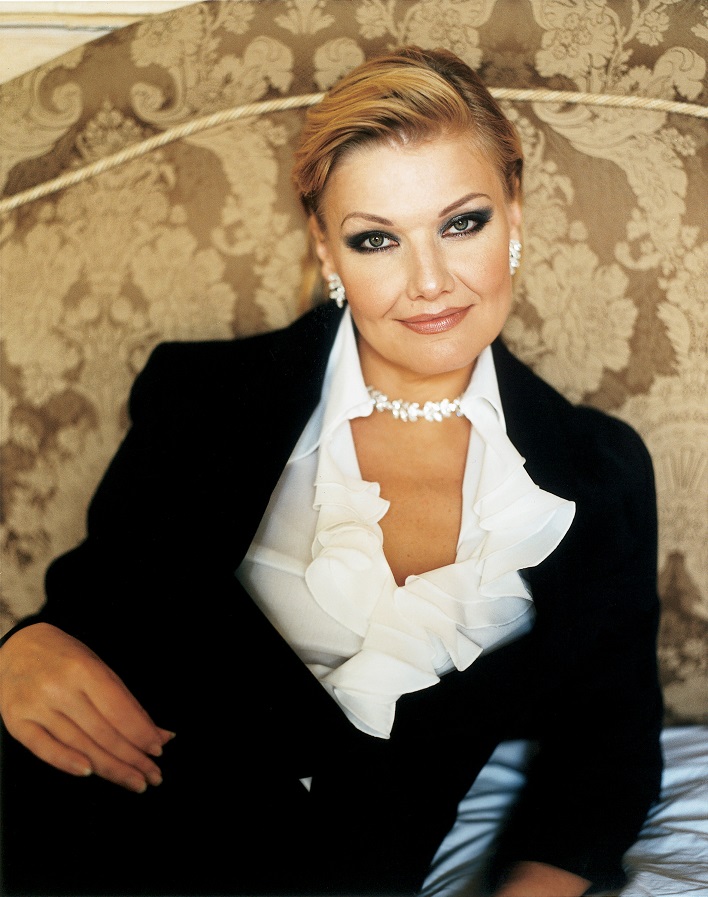
Karita Mattila at Koerner Hall: personalities on parade

There was more drama in this recital than any recital I can ever recall.  Karita Mattila assumed several roles, in several distinct voices in her concert tonight at Koerner Hall in Toronto as part of the Toronto Summer Music Festival.

It’s almost exactly a year since the biggest coup of last year’s TSM, namely, Sondra Radvanovsky’s concert.  Mattila’s concert is a perfect follow-up for Artistic Director Douglas McNabney, and surely a highlight of this year’s Festival.

One would not usually think of the broad range of sounds as a good thing, if it weren’t abundantly clear that Mattila is an artist of rare intelligence, exploring sound masterfully.  I have to think she sees her voice in a kind of transition as she prepares to undertake Kostelnička.  She is now in her mid-50s,  transitioning to a more mature kind of role (for instance Kostenička, who is older and sung in the mezzo-soprano range) as opposed to Jenufa (the young soprano role), a role she’s sung previously.

Karita Mattila (photo: Lauri Eriksson)

Karita Mattila (photo: Lauri Eriksson)

For parts of the concert we were listening not just to low notes but a voice blended with a great deal of the lower register mixed in, even on higher notes: the way one might sound as a mezzo-soprano.  And towards the end, we heard something different, as her youthful soprano sound put in an appearance singing Richard Strauss.  Obviously she can still sing this way –with the lighter colour that comes from using the high register without so much of the lower one blended in—but recognizes that the darker colour is more appropriate.

Or to put it another way, –and excuse me if I have to be negative for a moment—when Placido Domingo undertakes the baritone role of Giorgio Germont in la Traviata a generation after having sung the tenor role of Alfredo (Giorgio’s son), it is hugely frustrating to still hear the tenor colour, in a singer who has changed only in his loss of his top notes, but not in his essential timbre.  It sounds all wrong to my ear. What I realize tonight is that what Domingo would have to do is undertake something as bold as what Mattila seems to be doing, which is to make technical adjustments.  It is not enough just to sing lower notes, but one must sing with a different technique so that you acquire a different colour throughout your range, which is nothing less than the proper colour the composer would expect.  (end of rant)

The programme gave us three languages, five composers, nineteen songs, all strongly supported by pianist Bryan Wagorn.  Mattila can be playful & fun, or tragic& intense.  The Brahms songs to open were extremely accurate, a bit on the histrionic side, but gorgeous to hear.  The Duparc set that followed were suavely executed, flowing easily, even if we were again in territory that was more extroverted than what one usually encounters from such songs, both in terms of the voice and the physical presentation.  The songs from the two Finnish composers were especially dark, yet seemed especially congenial to her, the sound she made being especially congruent with her body, without any sense of effort or conflict in the production of the sound when she was singing in her native language.

When we came to the closing quartet of songs by Richard Strauss, it was as though a veil had been lifted, and indeed Mattila emerged as from a dream.  This was the soprano, the youthful sound. While almost the entire concert was pitch-perfect, there had been times that the singing was emotionally remote, even austere in the darkness created, the roles assumed.  Were these understood by her as part of her preparation for the lower roles? Or perhaps she simply loves this music, as she seems to get inside them completely with her entire being.  But I would assume that her vocal health requires that she use her whole voice.  And delightful as the first three Strauss songs had been, she kicked it into a higher gear for the last song, “Frühlingsfeier”, as much pagan ritual enactment as mere song.  The abandon with which she threw herself into this delightful piece brought the house down.

Towards the end of the concert we got a glimpse of her sense of humour, as she let the mask slip, possibly because she was now relaxed in the Strauss, singing in a fach and a style to which she was accustomed.  For the first part of the concert she was far more serious, more intense in her portrayals, whereas at the end it was as though this was closer to the real Mattila.  But I am being presumptuous, as I am not sure who that is, as she seems to be boldly inventing a new version of herself.  Throughout, though, it must be said that there was more facial expression, more gesture, more dramatization than I am accustomed to in a song recital.  But she made it work, creating some electrifying moments.  I have never seen such a kaleidoscope of voices in one recital.

Posted in Music and musicology, Opera, Personal ruminations & essays, Reviews | 2 Comments

SOLT’s Der Vampyr

It might seem dangerous to see Marschner’s opera Der Vampyr (The Vampire) on a full moon, but we lived to tell the tale.

Guillermo Silva-Marin, Artistic Director of SOLT

Der Vampyr was staged by Summer Opera Lyric Theatre and Research Centre (aka “SOLT”).  While SOLT offers training for advanced performers, these productions are also invaluable to the opera-going community, another opportunity to see an unfamiliar opera courtesy of SOLT Artistic Director Guillermo Silva-Marin, who regularly offers rarities in his other incarnation as AD of Opera in Concert (for example La Vida Breve & Louise last season).

Der Vampyr is a fascinating study, a work premiered in 1828 that hasn’t managed to catch on.  In places it’s similar to other operas, other music.  At times I felt we were listening to Schubert’s “Erlkonig”, both in the unfolding of the music and in the telling of a story that is very melodramatic.  Perhaps that was how story-tellers built suspense and created fear in the listener in the early 19th century. To a modern viewer? it’s a charming relic.

The subject fascinates me as I prepare to teach a course called “Theatres of Terror: Gothic Horror in Music, Opera and Film.”  Watching Der Vampyr¸one sees the continuity with other works of the time, such as Weber’s Der Freischütz and Wagner’s The Flying Dutchman.   I remember hearing in a course that Wagner supposedly listened closely to Marschner even if the dramatic styles of the two works are very different.

The cast were mostly professional sounding, including a wonderful contest of wills between the two men, namely baritone Andrey Andreychik as Lord Ruthven the vampire, struggling with tenor Cian Horrobin as Sir Edgar Aubry.  It’s fascinating to observe the vocal writing of a transitional work such as Der Vampyr, noticing how both the tenor & baritone seem to be in transition from lighter roles in earlier operas, pointing unmistakably to the heavier roles to follow.  One of the advantages of playing in the Robert Gill Theatre with a piano –instead of an opera house accompanied by orchestra—is that it’s not quite so taxing for the young singers.

The vampire stories we see in films of the last century aren’t so different from Der Vampyr, with erotic tension at the heart of the story.  There are three young women, two of whom are victimized by Ruthven.  Each of these speak of forbidden pleasures, while the third, who shows a more properly Christian outlook, is saved.

Maria H.Y. Jung led a tight performance from the piano, playing the score with bold dynamics.  Silva-Marin’s direction was suspenseful throughout.

SOLT will also be presenting von Flotow’s Martha and Strauss’s Ariadne auf Naxos in rotation with Der Vampyr this weekend & next at the Robert Gill Theatre. Click the logo (below) for more information.

Posted in Music and musicology, Opera | Tagged , , | Leave a comment

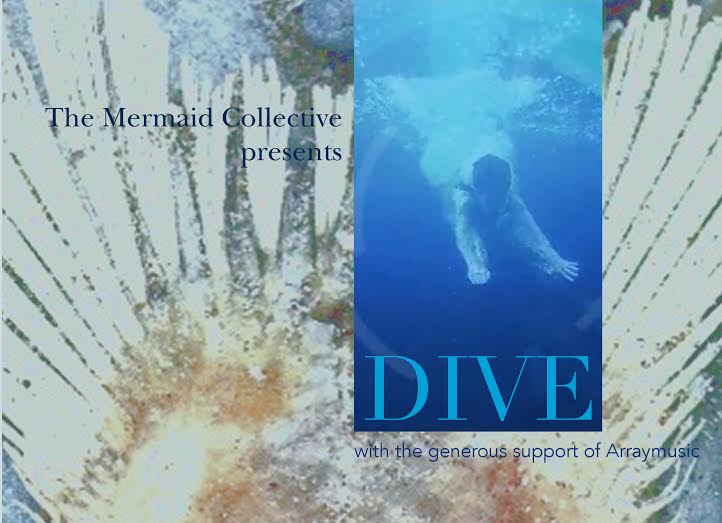
DIVE preview mesmerizing

I attended the preview performance of DIVE tonight, a new work from The Mermaid Collective: Nik Beeson, Alex Fallis, Fides Krucker and Richard Sanger. It’s quite erotic & funny, a little bit political and a powerful evocation of remembered passion.

For the past few weeks I’d been listening to a recent CD of music for this project titled DIVE: Odes for Lighea (which might be the title they were working with before, although tonight the program says DIVE and nothing further). I mistakenly spoke of it as “Nik Beeson’s new opera”, when I should have acknowledged the collective creation, and here I take a stab at identifying the roles in that Collective, even if I may be wrong again (luckily for me they’re a forgiving bunch):

  • Richard Sanger adapted a story by Giuseppe Di Lampedusa “The Professor and the Siren” into a libretto of sorts (I’ll explain further in a moment)
  • Nik Beeson composed music, even though
  • Fides Krucker, who sings the most throughout has a compositional role as well, at least via improvisations; her credit says “Musical Dramaturgy and Improvisation by…”
  • Alex Fallis has the director’s credit, although for a new work I have to think that in addition to directing the staging that he too contributed to some of what we saw

There are three players in DIVE, encompassing several characters:

  • Earl Pastko is Rosario, the aging classics scholar who seems to be misogynistic, but only because he had a brief magical fling with an immortal siren
  • Matthew Gouveia is Paolo, a young writer who functions as a kind of observer / confessor in the manner of Nick Carroway in Great Gatsby or the wedding guest in “Rime of the Ancient Mariner”
  • Krucker is the Siren (or mermaid) Lighea, as well as a few other incarnations, including Paolo’s ex-GFs and the server in a grungy bar

Richard Sanger

When you’re describing something new one works from existing models to make the newness intelligible. For the first half or more of the work, it didn’t seem operatic. There’s incidental music while Sanger’s words set up the key incidents of the story. I don’t think this is anything to worry about so much as a matter of seeking to understand. The core of the story, the last fifteen-twenty minutes is intensely operatic (although I am speaking of a subjective experience, so I might have the timing completely wrong). Where baroque and classical opera, or even modern musicals typically go back and forth between purely lyrical bits (numbers: songs, arias or ensembles), and either dialogue or recitative, here there is a gradual deepening of the musical side.

I am wary of using genre in a discussion, particularly when making a first acquaintance with a piece. The first half-hour is full of pithy dialogue and big laughs, sometimes bawdy, sometimes political. Pastko and Gouveia are a hugely likeable pair, drawing us in inexorably via the charm of the writing and the quirky characters each of them brings to life for us. They’re pulling us closer, to set up the scenario for the climactic set-piece, as though –to use one of the main metaphors of Sanger’s poetic text—we were opening a shell (the different pieces of dialogue setting up the scenario), that enables us to discover the pearl (the complex music number that ends the work) nestled inside. Speaking as someone who is no longer so young, this is one of the most sensitive portrayals of age & aging I’ve ever encountered.

Scott Penner’s set design puts the action in the midst of an audience surrounding the performers on each side, making the work even more theatrical (as if our imaginations weren’t already engaged by mermaids & singing).

Beeson and Krucker are real-life partners, so it stands to reason that he wrote with her in mind, that the composition is designed for her unique gifts. I’ve heard her before, and this time her special sounds seem to work especially well. Krucker’s performance is something to marvel at, in some of her characteristic uses of a trained voice to sound sometimes operatic, sometimes gently lyrical, sometimes taking on sounds that are superhuman with what sounds like extra over-tones. Lighea can’t be mistaken for Ariel, the cute Disney mermaid, oh no. As in the classical stories, the eroticism is there, but also danger. She is powerful, an immortal goddess. Odysseus had to cover his ears to protect himself from the irresistible sirens’ songs. The project is highly operatic in the traditional sense, when we recall that composers at one time would write with a singer in mind. But in truth it’s a collaboration, as Krucker’s improvisations bring the score to life.

The old saying about musicals is that the singing must begin where you can’t speak any more, where the music is necessary to illustrate or to tell the story. Indeed that’s the case here, as reality seems to change. We move into a realm that is ambiguous and unreal, and progressively more and more musical. We listen simultaneously to live performance and tape, to Krucker singing live and off a recording as though –as the Professor remembers and relives the ecstatic experiences of his youth—we are seeing it enacted and remembered. The experience is poised brilliantly on the edge between recollection and enactment, simultaneously in the present and the past, the Professor both young and old in the same moment.

DIVE is a spectacular new creation that deserves to be heard, running every day except Monday until August 9th , at 8 pm every night except Sundays (which are matinees) at the Array Space, 155 Walnut Ave.postcard

Posted in Music and musicology, Opera, Reviews | Leave a comment

Der Vampyr and the birth of horror

click the picture, if you dare..(!)

I’ve been immersed in blood for the past few weeks. No I am not training to be a butcher or a surgeon.  None of this gore is real. I’ll be teaching a new course at the Royal Conservatory of Music in the fall titled “Theatres of Terror: Gothic Horror in Music, Opera and Film.” (click link for info), and it has been my pleasure to watch films, listen to operas, and read stories designed to elicit terror.

Here’s the course description from the RCM website:

As long ago as Aristotle’s Poetics, tragedy was understood to achieve catharsis by means of pity and terror. Do you scare easily? While music and drama seek to stir the audience, not everyone likes to be terrified. However, theatre has long played upon our emotions, often pushing us to extremes. Over the centuries, the technologies of terror have been refined, so that the thrill of pure horror is now sought out as an end in itself: because of course it is now its own genre.
From the musical and dramatic perspectives, this course will investigate how terror has been done best. As artists, and as audience members, we will explore how this genre works when it works well. We will dissect a few bodies – the scores and films that is – to see what makes them tick or bleed. Maybe as we explore their anatomy AND our own we can discover a few things about what makes us scream.

This week Summer Opera Lyric Theatre will begin performances of Marschner’s Der Vampyr (1828) a romantic opera that has not quite found a place in the standard repertoire. It’s a tuneful work that brings out the best in its singers, and ideal for the students of SOLT.  For example here’s an aria sung by Jonas Kaufmann.

Like its predecessor Der Freischütz (1821) by Carl Maria von Weber, it encases dark deeds in a story of Christian redemption.

While Gothic novels were already being written (the first, Walpole’s the Castle of Otranto, dates from half a century before these two operas), the horror genre had not really been born as a recognizable type of drama or theatre.  Horror had a purpose, aiding mightily in the telling of a tale, but was not yet an end in itself, the reason to go to the theatre. Edgar Allan Poe –one of the masters –was only born in 1809. The first edition of Mary Shelley’s Frankenstein dates from 1818.  Classics such as Bram Stoker’s Dracula & Robert Louis Stevenson’s Dr Jekyll and Mr Hyde date from the 1890s, while Leroux’s Le Fantôme de l’Opéra only appears in 1909.

I am looking forward to hearing the young talent of SOLT on Friday singing Marschner’s lovely music, not expecting to be scared but certainly charmed.

Perhaps we’ll meet there, in the dark…(?)

Posted in Books & Literature, Cinema, video & DVDs, Music and musicology, Opera, Personal ruminations & essays | Leave a comment

Ten Questions for Nicole Brooks

Nicole Brooks is a filmmaker, director, performer, singer, playwright, composer, curator, teacher and “art-ivist,” who has devoted over 15 years producing innovative content (for the stage and screen), with a focus on narratives that illuminate the peoples of the African Diaspora. In 2012 Brooks officially added playwright to her list of talents with her debut theatrical work OBEAH OPERA which has been staged in various incarnations from festivals to staged workshop productions in Toronto between 2009 and 2014. Honoured with a Dora nomination in 2012 and with continued development thereafter, OBEAH OPERA now has its world premiere as a prestigious commission from Panamania, the cultural arm of the Toronto 2015 Pan American/Parapan American Games. She was also the 2014 recipient of the prestigious Harry Jerome Arts Award for her outstanding achievements in the arts. Brooks is Co-Artistic Director of Culchahworks alongside acclaimed musician and founder Andrew Craig as well as founder and Director of Asah Productions Inc.

The 2015 Panamania commission Obeah Opera begins next week.  Watch a flash mob performance of “Di Moon Song” from Obeah Opera.

I am thrilled to interview Nicole Brooks, asking her ten questions: five about herself and five more about the premiere.

Nicole Brooks

Nicole Brooks (photo by Cylla von Tiedemann)

1-Are you more like your father or your mother?

When reading this question, my knee jerk reaction had me thinking I would love to say my mother – but that is so inherently untrue – she is the strong, silent type and for those who meet my mother are shocked that she gave birth to a being like me.

LOL.

When people meet my dad (who I have not been close to for many years) they say ‘now it all makes sense!’  My father is one of the most outgoing, entrepreneurial, talkative, outrageous personalities you will ever meet.  Through example, and dare I say osmosis, he taught me the art of being a personable and irresistible sales person.  He has a gift in sales … and apparently so do I.     😉

2-what is the best thing about what you do?

I’ve been very fortunate in my life and career – the majority of the projects that I have embarked upon have all come to life and been presented to the world in the most amazing ways.  My career is my love and hobby – I am a storyteller and I have had the opportunity to express my stories through various mediums including film, television, music, teaching, and now theatre.  But in regards to this specific question I have to say the best thing about what I do:

I love collaboration.

For me this is where the true magic is created.

There is one thing to create a work but it is another to see it come to life – and I have found that a work can only come to life with the gifts and mastery of others.  I wish I can say I am good at absolutely everything, but hey I am not, so when I get in a room with masters of design, directing, producing, cinematography, visual art, choreography or any other medium that is required for that specific work, and then begin to experience their genius that adds to the work, it is just simply extraordinary.  It truly is a gift to have an army of artistic ‘gods’ and ‘goddesses’ make your work stellar – I have learned throughout the years that it truly does take a village to ‘raise’ a work.

3-who do you like to listen to or watch?

Wow not sure how to answer this one – as a filmmaker, I tend to watch a lot when I have the time.

Hmmm and the same applies to music.

But I guess upon reflection, I will say that I have observed in my time of great stress or a desperate need for an opening for inspiration, or even just to feel good, my go-to is gospel music.  For those who know me well, they know that I am girl who was not only raised in the church but I was a choir leader and led the church in song regularly.  Gospel music over the years has become my meditation I realize. Nothing in the world to me is more uplifting.  The realm of gospel artists that I listen to is quite extensive and ranges from groups to individuals. 

Richard Smallwood, James Hall, Kirk Carr, Mary Mary, Yolanda Adams, Leandria Johnson, Smokey Norful, Tamala Mann, Kirk Franklin, Fred Hammond, Commissioned are just a handful of artists in that genre that I grew up with and love to listen to even to this day.

You can take the girl out of the church, but you can’t take the church out of the girl.

4-what ability or skill do you wish you had that you don’t have.

Great question.  I have always wished I had the skill of a visual artist.  I envy and admire that talent – paintings, pottery, sculpting, needlepoint (yes I said needlepoint) – anything to do with the hands in this manner is amazing to me.

Answering this question makes me want to take a painting 101 class right now, LOL.

5-when you’re just relaxing and not working what is your favourite thing to do?

OK, for the record, I don’t know how to engage in the art of relaxing – “no” to me is an art form that I am desperate to embrace.  My time when not working is usually spent with my 2 kids which is a combination of heaven and hell depending on the day, LOL.

Outside of that – sleeping is most likely my favourite thing to do.  A good sleep calls in the most amazing dreams, and those dreams usually manifest the next work I am called to do.

*******

Nightwood Theatte, Obeah

Obeah Opera (photo by Cylla von Tiedemann)

Five more about preparing Obeah Opera as part of Panamania.

1-Tell us about the first version of Obeah Opera, what it meant to you.

The first version of Obeah Opera meant possibility.

I had the great fortune of meeting and working with ahri zina mandiela, the founder and artistic director of b current at the time.  Obeah Opera was submitted to b current’s rock.paper.sistahs festival (a festival specifically for presentation of new works for women of colour) as a concept, an idea in a form never been done before and when asked, I admitted to her that in addition to this new ‘form’ of expression, this would be my first attempt to write a piece for the stage and my first time really ever composing a musical work. It was ahdri who encouraged me to begin the process with writing 10 minutes with 5 women and see what would emerge.  That was in 2009 – what has happened each year for the following 6 years has been nothing short of amazing.

Each year the piece grew from 10 to 20 to 30 minutes until I was told ‘enough’ and write the play in its entirety. Each year I was pushed way out of my comfort zone, not only learning the new art of theatre but telling a theatrical story entirely sung.

I know that I was given an extraordinary privilege to have my first theatrical work mounted – and it is a privilege that I do not ever take for granted.  I am grateful for everything and everyone who has crossed my path in the Obeah Opera creation journey (good, bad or indifferent) because it is these experiences that have led me to where I am today.

Beyond what I have shared above, I also learned how imperative it is to share ‘your’ story.  One of the catalysts for me writing this work was simply a challenge from djanet sears (writer/director Adventures of a Black Girl In Search of God – a show I had the pleasure to be in) who, over the years, would counsel us as we would come to her and beg her to find a way to remount this show because of the content and our experience of being in a show.  She would always tell us, do not rely on me to tell these/our stories alone, go and write your own – we need it, the world needs it.  I listened.

2- the current version of Obeah Opera is apparently different, is much longer.  Please talk about the development of this new work, and how the work has changed from its original version.

Yes the current version of Obeah Opera is very different and indeed much longer. When the earlier incarnation of the work was mounted in 2012, I knew in my heart it was not finished and it was underdeveloped and a lot of the critics made the same observation even though it received strong and positive reviews.  I took this criticism to heart and, to a lot of people’s surprise, went back into development for about a year in 2013 with dramaturg Erica Kopyto (Nightwood Theatre) to really develop the narrative specifically – she was only interested in looking at the story arc and not the music ­– to really flesh out the journey to ensure that a strong narrative with a beginning, middle and end was carved out and created.

In addition, my colleague Andrew Craig also aided the process after hearing of my difficulty articulating the music (I do not write music or have any formal training) and supplied me with a multi- track recording device and encouraged me to sing all parts of every song and create guide tracks so everyone could hear what was indeed in my head.  The combination of those two things changed the work dramatically.

Most recently, I also had the privilege to have an intensive 6 weeks with New York director and dramaturg Kim Wield who I have to mention also brought the work to the next level – she really understood the new style of writing that I was doing and helped me identify more the ‘language’ of the piece which I didn’t really notice before.  One of my Oprah ‘aha’ moments in this development phase is that I discovered, most recently, that this work truly embraces the notions of Carnival, its archetypes, history and such.

It was such a huge learning for me and I was really grateful for the critique.  I would have done a huge disservice if I didn’t take that exclusive time off to work on it and present it to the world again.  The earlier incarnation can be now described as a piece that was presented in tableaux – it is now a full narrative of Tituba’s journey from even before she arrives in Salem to the moment of her trial.

This meant development and addition of characters – in the earlier version it only had 5 main characters including Tituba, The Elder and the 3 other slave women who accompany Tituba on her journey (Mary, Candy and Sarah).

The only Puritan that was really ‘showcased’ was Rev Parris – Betty, Abigail, Mercy, Captain, Doc Griggs and Elizabeth did not exist. So this version includes more of a ‘balance’ of white and black characters in the story.

Also, unlike many theatre shows (and this may be a critique in the end), the story actually begins with Tituba’s past in a flashback ­– the entire prologue shows Tituba’s beginning as a runaway slave and her spiritual encounter and thus ‘quest’ in the beginning; then she is shipped to Salem.  In that way, there is way more context as to what her journey is and, may I add, it is also more well rounded; it actually coincides more closely to the Crucible story line but has my take on the motivations behind why the hysteria occurs which lies in Abigail’s deep-rooted envy of Tituba’s relationship with Betty and her wanting power and attention, vowing to ‘bring her down’.

Panamania only commissions new works/world premieres.  To this end, part of my commission was to mount a workshop production in 2014 for them to see the new development.  I’m happy that it was clear to everyone that this was indeed a new piece and they were eager to have this new work be staged during the Games.

3-In traditional opera, women are the ones privileged to sing of their pain and suffering.   Please talk about how you see Obeah Opera either within this tradition or possibly breaking with that tradition.

Obeah Opera both stays within and breaks the traditional Opera form.

Indeed, this piece allows for women to have the privilege to sing of their pain and suffering so this piece works within that realm.

However what has to be noted is that this work is told exclusively by women.  There are no men in this piece – hence, we have gender-bending and all that good stuff presented here.  This is a piece written by a woman, told by women and, for me, that is seriously powerful.

Also traditional opera is usually akin to European classical genres of music – this work is definitely not that.  Obeah Opera tells the story of the Salem witch trials through the vantage point of the Caribbean slave Tituba and as such, the musical journey is also told through that experience.

A cast member just shared with me that she thought it was awesome that Obeah Opera in itself is a musical journey of the different arrays of Black music – this story is about Black women’s experience during the witch hunt so the music and words reflect that experience as well.

“Until Lion(esses) have their historians, tales of the hunt shall always glorify the hunter.” ~ Ashanti Proverb

4-Please talk about the women in this show, what they bring to the production.

OK, so how do I do this?  The current cast of 14 – they are ALL superstars within their own right…ugggh! I’m going to have to resort to the amazing Press Release just released that sums up each of the stars found in this cast:

Juno Award winner Divine Brown (Mary), Jesus Christ Superstar Broadway cast member Karen Burthwright (Candy), Jean A. Chalmers Award winner Diana Coatsworth (Captain/Doctor), musical theatre maverick Saphire Demitro (Auctioneer/Shapeshifter), versatile vocalist Deidrey Francois (Sarah), Collective of Black Artists – COBA – dancer Nickeshia Garrick (Shapeshifter), Acting Up Stage’s Falsettos company member Sarah Gibbons (Abigail), Mary Poppins Broadway and U.S. national tour cast member Janet MacEwen (Parris), artist educator and multi-forms dancer Debbie Nicholls-Skerrit (Shapeshifter), Afro-Cuban drum and dance ensemble Ilédè Artistic Director Melissa Noventa (Mercy/Shapeshifter), Juno-Nominated God Made ME Funky lead singer Dana Jean Phoenix (Betty), Dora Award nominee Sabryn Rock (Elizabeth) and international Calypso star Singing Sandra (Cultural Ambassador of the Republic of Trinidad and Tobago, two-time Calypso Monarch) as The Elder…

See what I mean in way of collaboration – I play Tituba and I am so honoured to be sharing the stage with these mega-song goddesses who just bring Obeah Opera to the next level.

5- Is there a teacher or influence you’d care to name that you especially admire?

I have to say that there are too many teachers and, dare I say, supporters of this work that I especially admire – I wouldn’t feel comfortable just naming one.

So I opt to talk about one of the major influences in my life and specifically in this work:  Bobby McFerrin.

For many years, I have followed his work and admired his greatness in improvisation, his ability to create ‘voices’ and his mastery of the a cappella musical style.  Many don’t know of his impressive body of work that goes wayyyy beyond his hit single ‘Don’t worry be, be happy’.  He is a 10-time Grammy award winner, defined as a music industry rebel, exploring uncharted vocal territory; he is an instrumentalist, a band leader and an orchestral conductor, just to name a few.  

I will share that his album ‘Medicine Man’ would be the base and launching pad for Obeah Opera – this album was released in 1990 and forever changed my life, musically and otherwise.  I was amazed that one person could create such a musical odyssey with just his voice and I would practice along with him and do my best to imitate his genius in sound and writing.

I had no idea that over 20 years later I would have a work that promotes ‘uncharted vocal territory’ similar to his work and, although I do not have his musical educational background or experience to any degree, in hindsight, I see that I, to some degree, have taken the term “imitation is the best form of flattery” to a whole other level.  One of my dreams come true would be to have him musically direct this piece – I WOULD DIE and go to heaven quite happily.

Forever grateful for his genius and influence in my life. Thank you Bobby.

Nicole Brooks
July 2015

*******

Culchahworks Arts Collective and Panamania presented by CIBC
Present the world premiere of
Obeah Opera
A Nicole Brooks Vision
in association with Nightwood Theatre and b current

Tuesday, August 4 to Saturday, August 8, 2015
Tuesday-Saturday @7pm; Saturday matinee @1pm
Baillie Theatre at the Young Centre for the Performing Arts
in The Distillery District
50 Tank House Lane, Toronto, ON, M5A 3C4

For tickets, call the Young Centre Box Office at 416.866.8666 or visit http://tickets.youngcentre.ca/single/PSDetail.aspx?psn=8461  or http://obeahopera.com/

For more information, visit Facebook/ObeahOpera and follow Obeah Opera on Twitter: @ObeahOpera

Posted in Dance, theatre & musicals, Interviews, Opera | Tagged , , , , | 1 Comment