TSO and Gimeno return

This Toronto Symphony Orchestra concert was a happening.

They’re back!

The audience clapped when the players appeared. And we clapped when Gustavo Gimeno came out for his first appearance as our New Music Director. The occasion was special for several reasons.

While we’ve seen him guest conduct this is different. He made a brief passionate speech about music and its power to communicate: and then defended his thesis in no uncertain terms.

I heard that the TSO are welcoming a thousand healthcare workers to concerts this week as a way of saying thank you for their heroics during the pandemic. Hear hear!

Everything about the concert seems new, partly because we’ve all been away.

The program notes are almost completely online now, saving a great deal of paper. I used to find it heart-breaking looking at the immense amounts of paper generated at the TSO as well as other venues around town. There’s just enough info in this program, as we know how many movements each piece has: except I was so lost in the experience that I applauded between movements, forgetting myself completely.

The gent sitting directly beside me happened to write the program notes, namely Michael Zarathus- Cook.
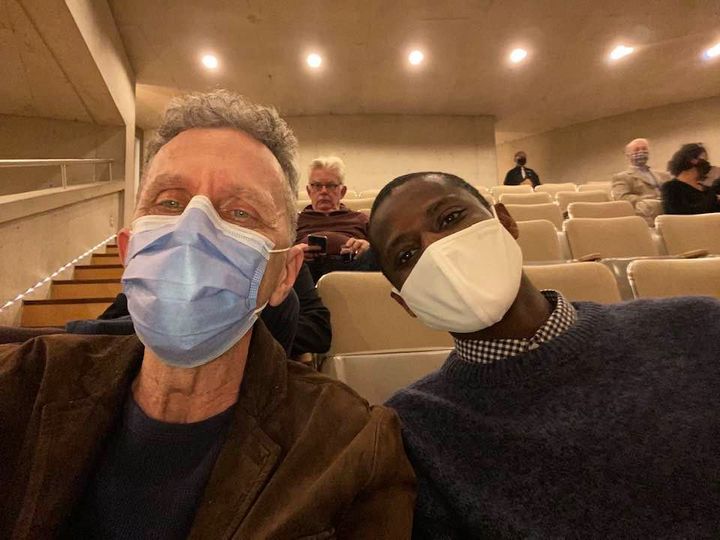
I asked for a selfie with Michael Zarathus-Cook, then captioned it on Facebook/Twitter as
“Wow the gent beside me seems to know as much about the music as the guy who wrote the program note. Remarkable.”

The protocol is new. The concert was roughly an hour long, that began 20 minutes late likely due to the bottleneck at the entrance as a big audience were required to show our vaccination documents. We had an hour without an intermission, likely because there is no way to accomplish social distancing in the Roy Thomson Hall washrooms (at least that’s my best guess). This surely hurts their revenue stream due to the loss of intermission sales. As I wondered whether this is just tonight or for longer, I saw on the TSO website the following statements about “resetting the stage”, and I quote:
• November through February concerts will be 60–75 minutes without intermissions, and include approximately 50 musicians on the stage.
• March through June Masterworks and Pops concerts will feature the entire ensemble in full-length programs with intermissions.

I also saw this factoid under :safety measures”
“Approximately 60% of available capacity will be offered for TSO performances in November at Roy Thomson Hall (roughly 1,550 seats out of 2,600).

I wondered a couple of times: is it my imagination? The acoustic of the hall seems: different. The brass especially had extra pop. I wondered if that was because of the new onstage configuration of players. The concertmaster and principal cello used to stare eye to eye from the lip of the stage, but Joseph Johnson’s cello cohort are now alongside violins on the same side of the stage, with the double basses deep on that side as well. The brass were fully upstage close to the wall.

Perhaps the powerful acoustic is a function of the hall capacity, given that a full hall of people sucks the energy out of the music, while an empty one would have more energy.

It’s nice if the pandemic can offer us a bonus.

Oh wait, and then there’s the music. Our hour-long concert was a wonderful welcome back, both for the audience and the TSO, consisting of four works:
Anthony Barfield’s Invictus in its Canadian Premiere
Haydn’s Overture to L’Isola disabitata (The Desert Island)
Hindemith’s Concert Music for Strings and Brass Op 50
Schubert’s Symphony #5

Recalling the promise I mentioned to limit the players onstage to roughly 50, it’s a brilliant choice of works. Both Barfield’s and Hindemith’s boast a dozen brass players featured prominently, while the Haydn and Schubert conform to a typical chamber orchestra giving us a wonderful contrast between the different sorts of musical sounds & styles in our hour.

Those two brass-heavy works (Barfield & Hindemith) reminded me of the good old days of stereo, when we’d select a work especially to test a sound system. I’m glad the brass (mostly) got to rest in the other pieces. Indeed we need to remember that in a real sense Gustavo Gimeno is testing out the fit between himself, the orchestra and the hall, calibrating the way they respond to him, like a driver taking his car for a test drive, noticing how the engine responds when he accelerates, how it corners, how it feels when he puts on the brakes.

I wonder how his experience compared to what he heard in the audience?

Meanwhile, I’m intrigued by what I’ve heard from Gimeno so far, a series of impressive performances. No wonder the TSO like him. During the ovations he was very generous in sharing the spotlight with his orchestra. Tonight they played for us and played for him, but that’s no surprise considering the special occasion.

It’s early days, but I think I detect signs that Gimeno is a “romantic” in his approach. In the Schubert, there were clear distinctions as he’d consistently get a slightly slower tempo for the second subject in the exposition, the repeat of the exposition and again in the recapitulation, but much more brisk in the main orchestral tuttis. When there’s a dotted rhythm Gimeno demands crisp & clear articulation, and seems to want them to play a bit faster. This was also evident in the Schubert finale, taken faster than I’ve ever heard before. Gimeno has a strong sense of meter, not just in his accuracy but also in his interpretive ideas. I think I remember hearing somewhere that in a previous part of his career he was a percussionist, which might explain his clear beat, his consistent and solid grasp of meter. The fast passages in the Haydn and the Schubert put me in mind of practitioners observing historically informed performance, for the brisk tempi and the crisp approach to articulation. But the story of Gimeno’s art will unfold in the years to come.

It’s going to be wonderful to hear what Gimeno does this season, especially with big powerful pieces such as the Mendelssohn “Reformation” symphony and the Rachmaninoff 2nd Symphony. Not only do we have the adventure of discovering the quirks of a new artist who seems to have a strong set of ideas about the music, we also have the adventure of hearing the music in halls with reduced capacity, aka enhanced acoustics.

Roy Thomson Hall never sounded so good.

This program will repeat Thursday November 11 and Saturday November 13, each at 8:00 pm.
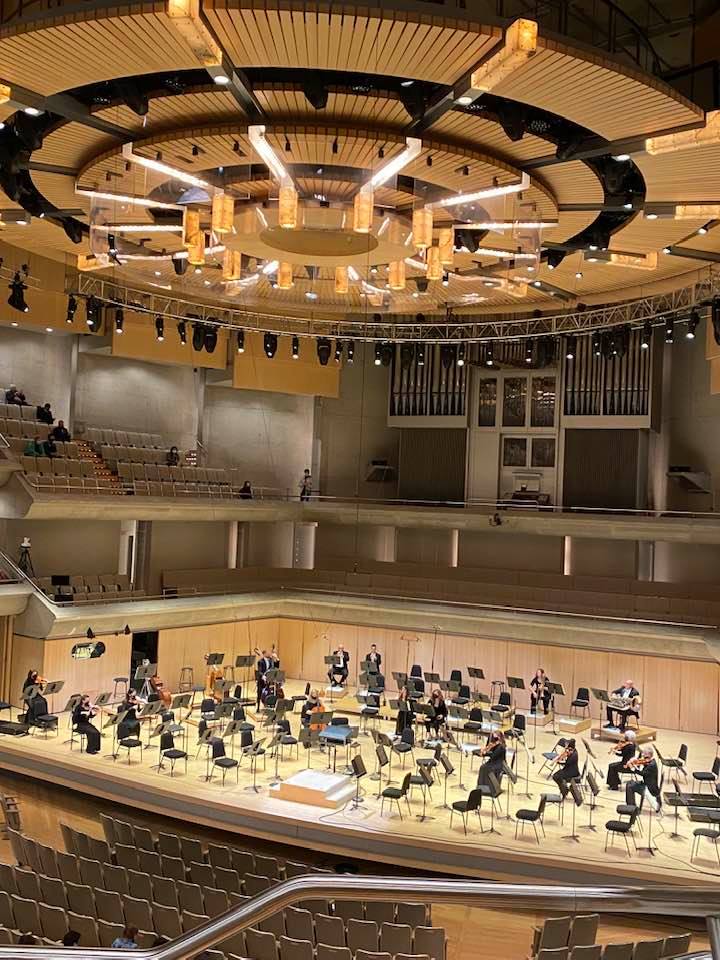
Roy Thomson Hall never sounded so good
Posted in Music and musicology, Reviews | Tagged , , , , , , , , , , | 1 Comment

Meghan Lindsay and Carson Becke in Recital

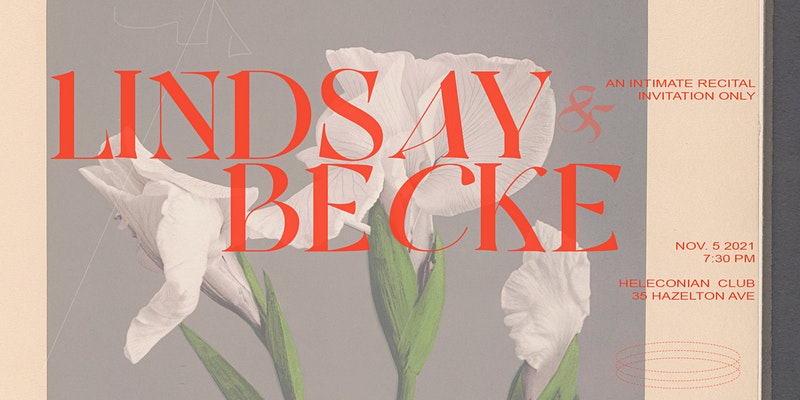
I was invited to an intimate performance by Soprano Meghan Lindsay and pianist Carson Becke at the Heliconian Club on Hazelton Ave last night.

I’m a lucky guy. I think I’ve explained before that this is my mantra, a self-fulfilling prophecy once you learn to say “I’m lucky” every day regardless of whether fortune smiles at you or gives you a wedgie. I must never forget how precious music and performance is, like the air we breathe.

Having seen Meghan so recently in the film Angel from Opera Atelier, that company known for authentic movement vocabularies and dance, I’m not surprised that she looks thin and fit: that is until I recall that just eight months ago she gave birth to a baby girl. You’d never know it.

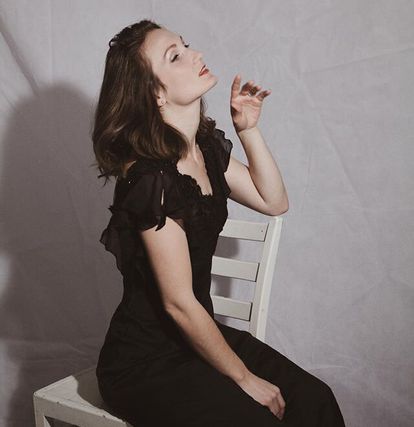
Soprano Meghan Lindsay

The main item on the program was a cycle of songs taken from Schumann’s Frauenliebe und Leben, leaving out some songs in hopes of improving the cycle. If the COC can remove offensive parts of Magic Flute why not edit a song cycle? And I think it’s an improvement. Meghan explained that their modified Schumann cycle was to be filmed in collaboration with Jennifer Nichols.

Carson also spoke of musical transitions between songs, of the history of improvised connections, something Clara Schumann for example used to do. I don’t know this cycle well enough to properly appreciate the changes he made, although it sounded very good, very idiomatic.

I hope Clara would approve.

Meghan and Carson took us in several different directions, with music by Poulenc, Duparc, Golijov, Obradors and a delightful encore by Reynaldo Hahn. After last night I must report that Meghan’s voice is in great shape, that there’s a great deal more to her than you might surmise from her usual Opera Atelier repertoire. Everything sounded fresh and relaxed.

Partway through Carson gave Meghan a bit of an intermission by playing a solo, Grainger’s take on Richard Strauss’s concluding love duet of Der Rosenkavalier, delivered with great delicacy. I was intrigued to hear about his concert series (he is co-director) Pontiac Enchanté. I looked it up online. While they perform in a lovely rural venue thirty minutes drive from Ottawa, that doesn’t have to stop anyone given that one can tune in virtually via YouTube. I’m intrigued to read about Carson’s February reunion with Meghan for their version of Enoch Arden. We read “In this performance, Meghan Lindsay and Carson Becke will weave music by other composers into Strauss’s score, using these pieces to expand on the ideas and emotions expressed in the story“. If you can’t wait that long, there’s a concert next weekend featuring works by Zemlinsky and Brahms. And there’s another concert each month through the spring.

Go to https://www.pontiacenchante.ca/ for more information.

Posted in Music and musicology, Press Releases and Announcements | Tagged , , , , , , | Leave a comment

Cheryl is back with a new team

I had my first salon hair-cut in over a year.

While the pandemic helped some billionaires increase their billions, as some businesses increased profits—so long as they were able to use the word “essential” to describe their work—many others have had a brutal time of it.

You know that for some it’s been rough.

“Lone and Co” live on, even if the original staff complement all departed in the carnage of forced closures. They opened for awhile in the summer of 2020 then closed again when infections surged in the autumn last year. They really re-opened in summer 2021, in a new and improved location but on the same stretch of Queen St East near Broadview. We’re all vaccinated, as another business carefully re-opens with a few special procedures and caveats. I’m glad to get back into the salon, but things have changed, and so have the people.

Four years ago I interviewed Cheryl Lone. But she is not the same person. Now she’s seeming more relaxed. No wonder when I think of the ordeal she’s gone through. To say nothing of the money she’s gone through.

This is a different space, a different sort of team. There’s less of an emphasis on brilliance, more on kindness. Is that because of who Cheryl has become? Possibly.

She tells me that they’re all empaths. That was the focus. Instead of hair virtuosos, she looked especially for communication and people skills.

In my first 30 minutes I talked to everyone on the new team, which come to think of it is more contact than I had with the other ones in five years. The previous group could be a little daunting and proudly so. This group are super friendly.

Of course it’s easy to be friendly to people when you’re all wearing masks.

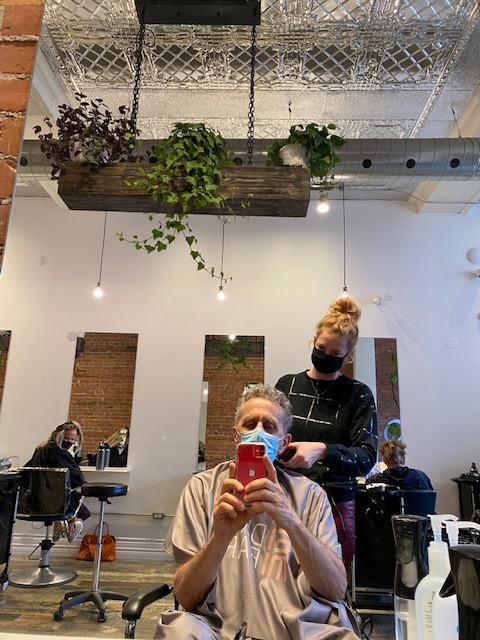
Who is that masked man…(?)

Jeepers that’s a complication.

How do you cut hair without hitting the strings in the mask? Obviously it can be done –and I watched Cheryl do it—but it’s a new set of procedures. When doing the short hair around my right ear, I took off the string on that side, while holding the mask in place, until she’d finished on that side. And then we did it on the other side. If there’s a procedure it can be learned and even before you know it, the new procedure becomes part of a routine.

But for me it’s a fascinating change. After all, the facial shape is altered by this weird thing covering my mouth and nose.

Cheryl laughed, pointing out another challenge. “Try cutting a new client with a mask on”. She explained that with me, even with a mask on, she knows what I look like.

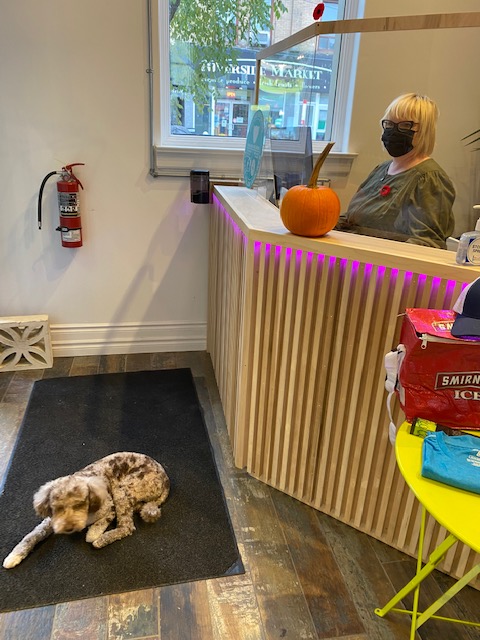
Dudley who sniffed me up and down because he could smell Sam on me, and Cheryl

Dudley is a new member of Cheryl’s family, and just like me he’s had a haircut too. Okay maybe not precisely like me. Dudley is about two years old.

I had been pleasantly surprised when I called up to make my appointment. It used to take a long time to get an appointment, but now I could get an appointment much quicker: because business is slower.

Why I wondered..? The world has changed. Some of us are cutting our own hair (guilty as charged… at least for the past year, with Erika’s help). Some of us work from home. Some are retired (me again). Some have moved away, out of the city altogether.

It’s a weird time, to be sure.

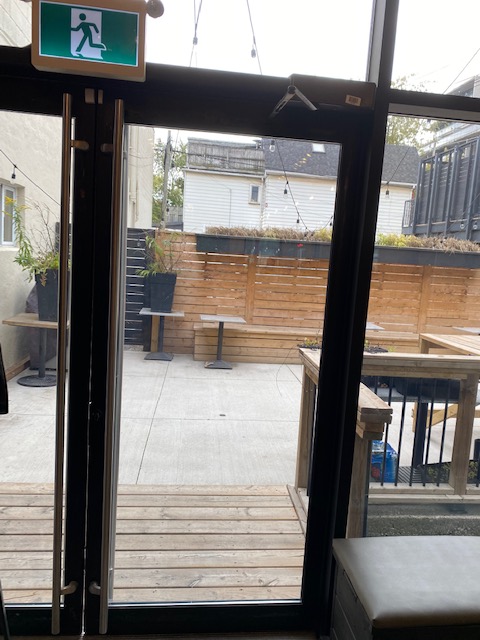
There’s an outside patio in the back of the new space. They used to have a liquor license (a previous tenant was a restaurant or bar), and might again, because Cheryl’s thinking of serving alcohol. I can’t be the only one who would love to have a beer while I get my haircut.

The patio in the back

I’ve found my thrill, not on Blueberry Hill, but holding Dudley. I may not be allowed to hug people yet, but for now I’m content hugging the adorable canine. He let me hold him and it was wonderful.

Lone & Co at 711 Queen St East can be reached at 647-351-8480, loneandcosalon@gmail.com

Posted in Animals, domestic & wild, Art, Architecture & Design, Personal ruminations & essays, Press Releases and Announcements | Tagged , , | Leave a comment

Quality of Life and Playing God

Pet-owners often make profound decisions about their dog or cat, given that the law treats animals as property, ours to dispose of as we wish.

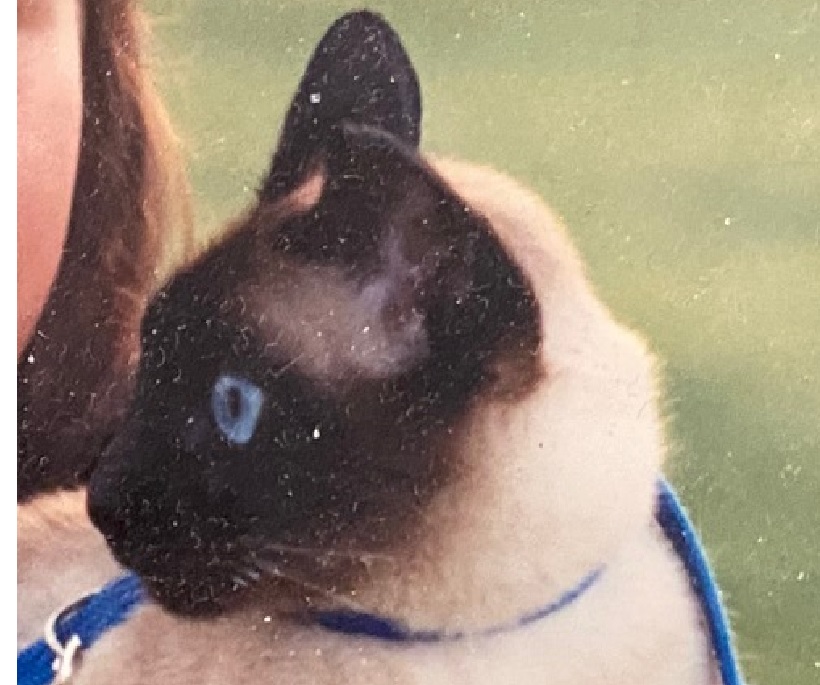
I shudder when I think about it, ashamed of the time 32 years ago when I was a coward, bowing to my landlord’s wishes to have our cat de-clawed, a brutal procedure that amputates their main weapon for self-defence.

Crystal lived a long life, clawless.

Yes I felt bad afterwards. But I wonder if I had any idea of how the cat felt?

News-flash #1: animals can’t talk, can’t tell us how they feel, except their screams of pain.

News-flash #2: humans have a great deal of power over animals.

Excuse me if I state the obvious. But we don’t always think about it, don’t always notice as we subdue the Earth.

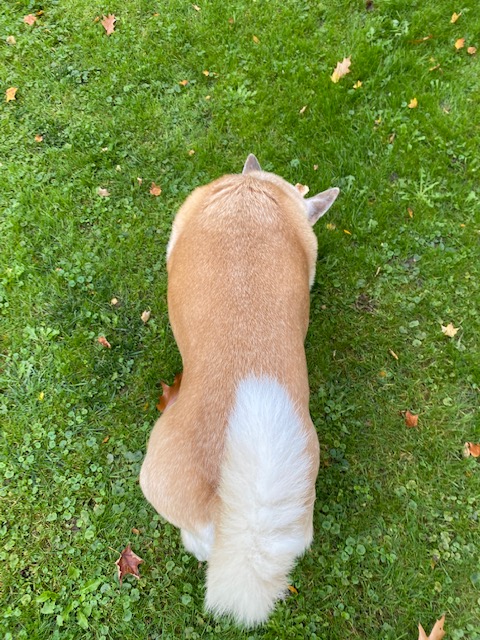
I’m thinking about this a great deal lately, living with a beloved dog nearing the end of her life. It’s a version of palliative care. We haven’t treated Sam’s cancer. She has a huge lump that keeps growing. We were offered the option to remove it, but Sam would have been learning how to function on three legs as a senior citizen: so we chose to leave her more or less intact while aiming to manage her symptoms.

Sam and her lump

When she seems to be in pain we give her a pain reliever, while watching for evidence that the cure is worse than the disease: such as tummy troubles brought on by the pain meds.

I’m hyper-sensitive to such questions, having argued with a doctor about my own illnesses & meds. I have the sound of a doctor engraved in my memory saying “who’s the doctor here”. But never mind, I’m lucky at how things have played out over the decades. My point is, we keep the essence of the Hippocratic Oath in mind.

Above all do no harm.”

While Sam is the smartest dog I’ve ever seen, able to understand a great deal of what we’re saying, we still can’t pretend that we always know what she’s feeling. I wonder whether dogs conceal their pain or somehow let us know. There are behaviours dogs will exhibit that may be signs of suffering, such as hiding, sleeping more, being less interested in play, less able to run.

Sam

In fact there’s a whole category of study for people wondering about their aging pet and whether it’s time to say goodbye. The HHHHHMM Quality of Life (QoL) Scale was invented by Alice Villalobos, employing seven categories (five beginning with an H, two with an M) of happiness and comfort, to assess your animal’s quality of life, namely
Hurt (evidence of pain),
Hunger (does the creature have an appetite),
Hydration,
Hygiene,
Happiness,
Mobility and
“More good days than bad”.

I’ve seen it done as a calculation, where each of the seven is rated out of ten, with a total that is somewhere between zero and 70. I’m not sure about trying to reduce a life to a number, but it’s a good wakeup call to the owner to recognize whether the animal is suffering silently.

I hope its clear why I put the headline “playing God” on this discussion. We use a QoL scale to look at the lives of the dogs or cats we own, whose lives are entirely under our control.

That word “life” is one we throw around a great deal, considering how rarely we seem to consider its meaning, let alone to consider the quality of our own lives. Perhaps I should speak for myself, but I’m going by what I see from friends and colleagues via social media.

If the pandemic has been good for one thing, it’s in the mirror it holds up to each of us, provoking questions we didn’t ask the same way before 2020. Last year I was working as a manager at the University of Toronto, while also juggling other responsibilities. Two or three times per week I’d zip to my mom’s to give her lunch. I found myself rethinking everything, as so many others are right now. I retired from my university job not just because I was over 65 but also because the risks I was taking at work were not just to my own health but to the health of my mom as well.

There’s currently an employee shortage in some workplaces. Employers are finding it harder to fill certain jobs. You’ll hear people speak of being underpaid, and perhaps that’s true. I believe that what we’re seeing in workplaces begins with the kind of questions a pandemic raises. No I’m not saying they’ve looked at a Quality of Life scale: although maybe we should all be thinking about such things. When you’re hearing about the virus and vaccines and statistics about death on a daily basis, it’s inevitable to also ask: is the job worth it? Does my job allow me to do enough of the things that make life meaningful? Or is it more a matter of safety and risk in the workplace that is at work right now? And there’s also the whole problem of childcare, so problematic when schools were closed or locked down.

I hope life is resuming. I miss concerts and operas, seeing friends across the table at restaurants. Perhaps, missing such beautiful and lovely things, we shall appreciate them rather than taking them for granted.

Posted in Animals, domestic & wild, Food, Health and Nutrition, Personal ruminations & essays | Tagged , | 1 Comment

Odin Quartet’s Journey Through Night CD launch Nov 6th

Does music tell stories?

I’ve been listening to the CD “Journey Through Night” by Odin Quartet.

Here’s how they describe themselves on one of the sites I found extolling their virtues:

Passionate about chamber music, the Toronto-based Odin Quartet represents the diversity and the promise of youth in Canada. Named after the one-eyed Norse god, seeker of knowledge and holder of the wisdom of the world, the Odin Quartet explores the role of classical music in modern-day storytelling. Since 2015, the ensemble is also dedicated to making classical music accessible to new generations of listeners, by promoting modern Canadian compositions, including those of cellist Samuel Bisson, alongside classical music literature.

Throughout the recording I found myself thinking about the ways music can signify, sometimes functioning as pure music while often aiming to do more. That phrase “modern-day storytelling” seems apt, especially in the ambitious creations I encountered today from seven Canadian composers.

Both of Ronald Royer’s contributions are studies in contrast. His Danzon Overture is in two parts like a French Overture (think for instance of the way Handel begins Messiah), although Royer’s second part is infused with Cuban dance rhythms. His String Quartet No 1 has two contrasting movements, where the first is contemplative and the second action oriented.

Bruno Degazio’s Suite from The Pearl is in two parts, based on the great Hymn of the Pearl, from the Gnostic scripture the Acts of Thomas the Apostle. The complexities of the story are outlined in the comprehensive program notes. Although I’m not yet able to say I really get what Degazio is undertaking, if nothing else it’s totally fascinating music. And I admire its ambition.

Samuel Bisson, the cellist in the quartet and their resident composer, is represented in For Mor, a piece that was his wedding processional and recessional. Its ceremonial function doesn’t get in the way of it as music.

That sure doesn’t sound like a wedding march.

Alex Eddington’s gibbons vs GIBBONS is such a cool idea for a piece, that I listened, bracing myself for the possibility that the concept is too brilliant for the piece. I’ve seen this before with music and visual art as well, tremendous ideas on paper that simply don’t fly in the execution. But Eddington’s idea is truly brilliant. Imagine a few apes of the species “gibbon”. Now imagine their encounter with the music of the composer “GIBBONS”. And of course, knowing that we’re talking about apes and music, it devolves into a kind of debate or battle. The quartet enacts an encounter between two simian gibbons with (the composer) Gibbons’ music, and the wacky collision we might imagine. It’s an electrifying 3 minutes and 24 seconds.

Daniel Mehdizadeh’s Dialectics is true to its name, a kind of musical exploration of discourse itself. While the program notes are among the briefest, that might be due to the purity of this composition that does exactly as its title would suggest, employing dissonance near the beginning and (spoiler alert) moving to a resolution.

I have listened to Victims of Eagles by Elizabeth Raum a couple of times, fascinated by its emotional contours, needing to listen to it some more. Commissioned by the Odin Quartet for Beethoven’s 250th birthday, the piece is based on Raum’s earlier song setting words of poet John Hicks. In its quartet incarnation she incorporates the “dot-dot-dot-dash” we know from Beethoven’s Fifth, the Morse code for the letter V of “Victory” as well as “victim”.

Chris Meyer’s three movement “Journey Through Night”, that gives its name to the CD, would aim for a kind of programmatic depiction of the moods associated with the transition from dusk to midnight to dawn. I’m reminded of Richard Strauss, the most extreme practitioner of pictorial realism that I can think of, as for instance in the overpowering sunrise we hear early in his Alpine Symphony. Can a composer of romantic music nowadays dare to be representational? Impressions and emotions are another matter I suppose. Meyer has us mostly inside the feeling, but the outside is still there as well, a welcome visit to terrain serious composers rarely seem to visit nowadays.

Does that sound like a lot of stories? I’m barely scraping the surface in what I said here. This CD at a little over an hour long, is a genuine Journey. I shall listen some more. If I weren’t already committed elsewhere, I would be attending their CD release concert Saturday November 6th at Metropolitan Community Church, 115 Simpson Avenue, an event which alas I can’t attend. Click the link if you want to know more, especially if you’re interested in tickets to the concert. I’m sure it will be a lot of fun.

Posted in Books & Literature, Music and musicology, Press Releases and Announcements, Reviews, Spirituality & Religion | Tagged , , , , , , , , , , | Leave a comment

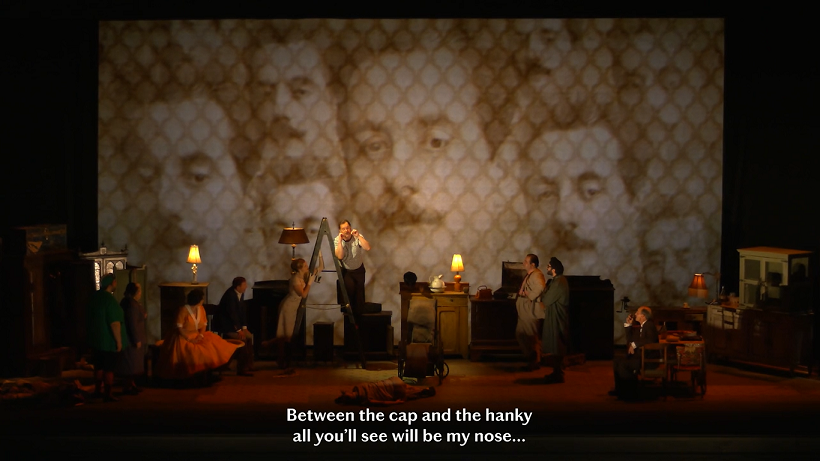
Be Not Too Bold: COC Schicchi

The headline is the inevitable result of a weekend watching and comparing two different virtual offerings from two opera companies, one much bolder than the other. Yesterday’s Opera Atelier headline aims to praise what’s praiseworthy, so I used the word “bold”, leaving my misgivings for the latter part of the review.

And I loved the new Canadian Opera Company Gianni Schicchi, their first opera presented using the new technological upgrades at the Four Seasons Centre, available via free download for six months.

Amy Lane is the director of this charming take on Puccini’s popular work, chosen by the COC for their first virtual opera.

Director Amy Lane

At times Lane turns the cast loose to play for laughs. Both Roland Wood in the title role and Doug MacNaughton as Maestro Spinelloccio amuse us with their vocal choices and physical prowess. Yet they’re mostly deadpan. The comedy is underplayed except when it’s time for the group to explode in fury. I find my taste in comedy has changed over the years, as I’m not amused by operas that are too broad, too blatant in their expectation of laughs. The camera sometimes comes in tight upon a committed series of performances without any trace of overacting. It works. And there’s even a bit of a surprise at the end.

Puccini’s indestructible romance can’t fail so long as it’s entrusted to sympathetic singers. Lauretta (Hera Hyesang Park) and Rinuccio (Andrew Haji) win our hearts by being authentic and real. How do you approach something so well known? Park’s execution of the famous aria is subtly understated, a gentle delivery that works especially well with the intimacy of the virtual medium. Haji, who has been busy this year (at least in what I’ve been watching, between the Barber of Seville in Quebec and Against the Grain’s Savitri), also acquits himself well in an aria that’s not nearly as famous nor used in many films (we hear it briefly in Serpico).

Today (again making a comparison in my head between opera presentations on consecutive nights) I recalled words from the third book of Edmund Spenser’s epic The Faerie Queen, a sign over a door saying something like “be bold, be bold, but not too bold”. Spenser’s knights could just as easily be artistic directors striking a balance between creativity (“be bold”) to entice and intrigue the audience, and fiscal prudence (“be not too bold”) to avoid bankruptcy.

On November 1st as I write this, my deadline to renew my COC subscription is just over a week away on November 10th. Many of us have credits in our accounts due to operas cancelled last season. No Parsifal, no Figaro, no Aida, no Dutchman, (if I am recalling correctly), and yet these were paid for by subscribers. So now when the COC offer us three operas to begin 2022 (Butterfly, Flute and Traviata), they owe some of us money for the shows that they had to cancel. Let that be preamble to the question of what the COC offer us, in their virtual offerings in the autumn of 2021, the three operas to re-open in 2022, and thereafter. I wonder how they can manage to stay afloat, how to pay all those people.

But for now (with Gianni Schicchi) and in February (Butterfly) the COC count on the assistance of Mr Popularity, aka Giacomo Puccini.

For now? The fact that the COC are still in business is bold enough for me.

The face of Mr Popularity.
Posted in Cinema, video & DVDs, Opera, Reviews | Tagged , , , , , , , , | 2 Comments

Bold Angel from Opera Atelier

Opera Atelier’s new film of Angel –fully-staged and filmed at St. Lawrence Hall—will be streaming until Friday, November 12.

Angel is a bold experiment. I’m not sure how to describe the work, an interesting mixture of styles and idioms that crosses boundaries between disciplines and centuries.

It seems operatic at first glance. Angel enlists Tafelmusik baroque orchestra in the simulation of something old and authentic even as they play music revised and/or repurposed in a new context. While we encounter familiar texts from Milton and Vivaldi, they’re reframed, alongside new compositions from Edward Huizinga and Christopher Bagan: or at least that’s what I’m surmising from the press release.

The most exciting musical moments for me were “Summer 1” and “Winter 1”, Max Richter’s re-composition (their word), or perhaps more properly, adaptation, of music we know from Vivaldi’s Four Seasons. They say “Angel marks the first time Richter’s recomposition will be played on period instruments.” I think of it as adaptation, because we recognize the original in a new guise, as though this were a cover version of a well-known song.

I’ve been surrendering to the piece while suspending judgment, as per the suggestion from Opera Atelier’s Co-Artistic Director Marshall Pynkoski, who said “It is our hope that the music, text, dancing and staging of Angel will wash over you like a dream”. I am enjoying the disorientation, especially Richter’s modern rhythms played on the baroque instruments of Tafelmusik. The reworking of Vivaldi’s brilliant violin writing in the hands of Elisa Citterio? fabulous as usual.

While it’s not hanging together for me (speaking as someone who stopped watching in the middle), and couldn’t hold my attention for more than a few minutes at a time, it’s lovely to watch. On a big screen it’s quite lovely to look at. There’s much beauty in this film, many talented artists including the Nathaniel Dett Chorale, soprano Measha Brueggergosman, tenor Colin Ainsworth, soprano Mireille Asselin, baritone Jesse Blumberg, soprano Meghan Lindsay, baritone John Tibbetts, and bass-baritone Douglas Williams working together on something that resembles a big song cycle filmed (rather than staged) by a ballet company.

Soprano Measha Brueggergosman

Not for the first time, I find myself thinking “Opera Atelier” is a ballet company not an opera company. There is static beauty, lovely moments, but more lyricism than drama, opportunities through camera close-up for their usual delight in youthful physiques, without much of anything spiritual to go with a title like “Angel”, unless of course we’re using modern connotations of the word as found in New Age philosophy or in films such as Wings of Desire. Indeed, there’s more of Milton’s Satan (mistaken by some romantics as the hero of Paradise Lost, who becomes a fish out of water without more grounding in an actual story) than any other angel so far (I’m about 2/3 of the way through Angel as I write this).

No Angel is not a complex story, indeed I can’t quite discern what the ‘story’ is: which is surely why Marshall suggested we let it wash over us like a dream. You’ll encounter Rilke’s poetry, different music in different styles, fascinating dances. But it also lacks some of the rewards of the baroque, in short segments that aren’t required to work as individual set-pieces, zipping ahead to the next brief sequence. Less is more, and I think Angel would work better if it had less text that was explored more fully, fewer talents, properly exploited, rather than this cavalcade of brilliant moments. I miss Marshall’s keen dramatic instincts deconstructing an opera, indeed if I didn’t know better, I’d say that this time co-artistic director Jeannette Lajeunesse Zingg seems to be in charge of a work that is so intensely balletic—even when opera singers are asked to dance in front of the camera—as to turn the singing and music into a mere soundtrack for dance.

In some ways it’s like an album or anthology especially when we view it not in a theatre but on our electronic devices: where I can choose to skip ahead to the parts I like. Such are the risks of being bold in creating something “new” while employing so many of the vestiges of something “old”.

YMMV, as they say.

Single tickets for the streamed presentation are $30 and on sale now. Tickets and information at OperaAtelier.com.

Posted in Art, Architecture & Design, Cinema, video & DVDs, Dance, theatre & musicals, Music and musicology, Opera, Reviews, Spirituality & Religion | Tagged , , , , , , , , , , , , , , , | Leave a comment

ARC Ensemble –Dmitri Klebanov Chamber Works

Exile doesn’t just occur when you’re distant from your homeland. What about artists ignored or silenced inside their country? I never thought of it that way before reading Simon Wynberg’s excellent essay in the liner notes to ARC Ensemble’s new recording Chamber Works by Dmitri Klebanov. It’s much more than musicology, illuminating a terrific recording, the latest of their “Music in Exile” series.

The politics surrounding a work of art changes our reception of that art, especially when the life and career of the artist is impacted by non-artistic concerns.

Who is Dmitri Klebanov? Having listened over and over to this new CD, I am surprised at how good the music is from this unknown figure whom I’ve only discovered for the first time in 2021. You can take a step in learning about Klebanov and his music with this CD, a splendid introduction to a composer who deserves to be better known and more fully explored. The CD can be obtained through this website.

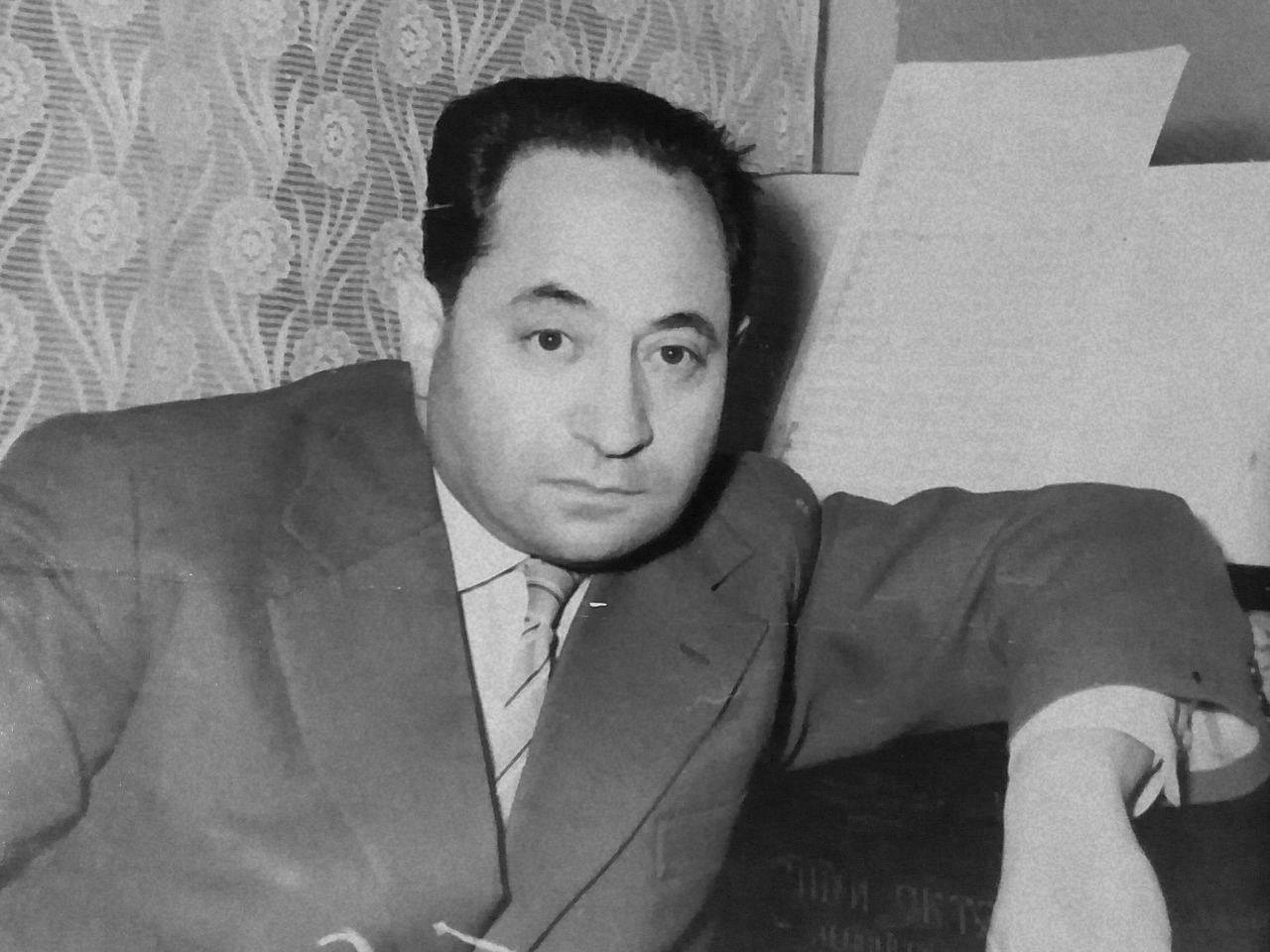
I’ll quote a paragraph from the RCM website that answers my question about the composer:

A casualty of Soviet-era cultural suppression and anti-Semitism, Jewish-Ukrainian composer Dmitri Klebanov (1907-1986) is among the scores of musicians whose works are largely forgotten and rarely performed. Fortunate not to have been among those artists and intellectuals arrested, killed, or sent to forced labour camps during Stalin’s brutal reign, Klebanov understood that his career and survival depended on producing works that glorified Soviet accomplishments. But he also managed to produce compositions that reveal a boundless imagination, a spirited vivacity, and melodic confidence, all of which justify his inclusion in the classical canon.

Dmiti Klebanov (1907-1987)

The CD and its performances are a step in that direction, of getting Klebanov’s music included in the classical canon. This excerpt from the CD is on YouTube.

You’ll recognize a melody from a Christmas carol in the opening to the first movement of the 4th String Quartet, a motiv developed further in that movement and then taken further in the third movement.

The quartet #4 (dating from 1946) is the earliest of the three big works on the CD, that also features trio #2 (1958) and quartet #5 (1965).

Listening to these marvelous pieces, I can’t help but muse about the cruel machinations controlling our access to great works of art. I’ve been listening to an old recording of his third symphony.

Klebanov composed nine symphonies, among works that have been suppressed, possibly lost. I am eager to find out more about this composer, to hear more of his music. I saw mention in Wynberg’s essay of piano pieces that I wish I could obtain to play: but when I looked in the U of T Faculty of Music online catalogue could only see one piece mentioned, the Japanese Silhouettes (also on youtube).


Popularity is a funny thing. Would we judge Khatchaturian solely on the basis of his Sabre Dance but forgetting his ballets Gayaneh or Spartacus, or Rimsky-Korsakov from the Flight of the Bumblebee while ignoring his operas, or Scheherazade? And when you insert politics into the discussion the picture is distorted much further, when we recall that a composer such as Klebanov was dissuaded or discouraged from purely artistic creation and required to promote Soviet ideals in his art. We need to remember that when listening to something like this melody for strings, one of the pieces that survived Soviet era censorship:

There are many wonderful moments on the ARC Ensemble CD. I find myself listening over & over to it, finding new depths every time through, in performances of wonderful commitment.

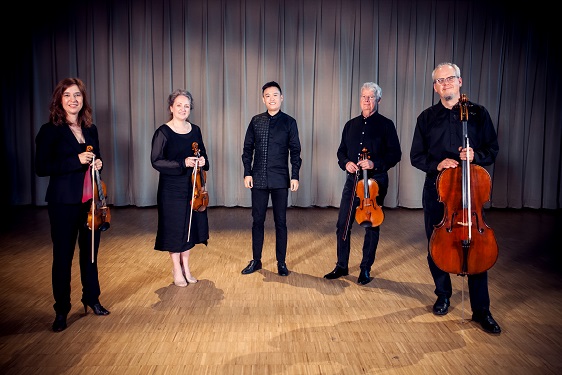
ARC Ensemble: Erika Raum and Marie Bérard (violins), Kevin Ahfat (piano),
Steven Dann (viola), and Thomas Wiebe (cello). (photo: Suane Hupa)

Klebanov reminds me of several composers, partly because he’s influenced, partly because he’s an original. Don’t be put off by the dates of these works, a period (1940s – 1960s) when the most dissonant of the modernists were at their height in Europe. Klebanov is more like Gustav Mahler or Dmitri Shostakovich. Like Mahler there are occasional suggestions of something spiritual or even religious in his music, yet he regularly dances back and forth between major and minor, playing with your expectations. Like Shostakovich the instruments are employed in the most flamboyant & virtuosic fashion even while employing soulful melodies, arching solos or unexpected dramatic effects from the players.

I happily play through the whole CD in my car, even if the latter two pieces (the trio and quartet #5) are my favorites. The trio is especially impressive. The second movement is a fandango in 6/8 that reminds me of the opening Bernard Herrmann wrote for North by Northwest, flamboyant, energetic, breath-taking. Just when you think you know who Klebanov is, he pulls back into something resembling a waltz, a bit of nostalgia Mahler would have approved of: before resuming the hair-raising chase worthy of Hitchcock. But for the next movement it’s moody and profound, more like Debussy or Ravel in its refusal to rush, self-possessed and confident. And the finale to this trio is like quicksilver, writing of gossamer fluidity. Again, just when I thought I saw where he was going with his ever darker phrases, we close with shimmering sonorities reminding me of Strauss or Korngold, a sweet glimpse of eternity.

For the Quartet #5 we’re in a more serious world, I think, less playful and more tightly controlled. There’s still melody but less of a need to entertain or be popular. Perhaps Klebanov felt he could safely express himself freely. The second movement sounds quite modern, as in modernist, reminding me of the despair in the orchestral introduction to Marie’s scene that opens the last act of Wozzeck, lost to the world and any clear tonal landmarks. Gradually we find our way into something more urgent, less Berg and more like Ravel in its willingness to play with us.

And then the finale seems like a parody of Schubert’s wild finale to his Death and the Maiden quartet, an acid trip with hell-hounds or the secret police in pursuit. Moods shift abruptly but deftly, the management of the materials so sophisticated as to take your breath away. I felt at times we were in the world of the late Mahler we hear in the 9th and 10th symphonies. In the last minute, has the nightmare finally caught up to us?

There’s a resolution but I can’t decide whether it’s happy or not. What do you think?

I will keep listening, and if I ever figure out the answer, I shall let you know.

The CD can be obtained through the Royal Conservatory’s website.

Posted in Cinema, video & DVDs, Dance, theatre & musicals, Music and musicology, Politics, Reviews, University life | Tagged , , , , , , , , , , , , , , | 1 Comment

Levity in Longevity  

I’m not a philosopher although I do enjoy asking questions.

“Longevity” has nine letters, including the six letters of “levity”.  Is a sense of humour the secret to a long life?

All I know right now is that I’m confronted with such questions daily.

My mother is over 100. My dog Sam is fifteen: which is comparable when you adjust for the normal life expectancy.  I know that neither Sam nor my mother will live forever. I wish I could forget. 

I’m lucky, observing friends mourning the passing of dogs & humans in their families.   

My mom writes playful rhymes that I’ve sometimes quoted in this blog. When she recites them I carefully take them down for posterity as though she were John Keats or George Faludy.

She keeps a straight face while reciting, totally deadpan even though she usually makes me laugh. Sometimes when she sees me laughing, she’ll join in.

Here are a couple of recent ones.

I am not young, I’ve passed my time
But I could write some silly rhyme.
Summer’s gone, it got so old
The green leaves are turning gold.
The gentle breeze is getting bold
October is blowing cold
I have time to watch it unfold.

My eyes are bad
My ears are bad
They’re connected to this old head
And this old head
Doesn’t like to stay too long in bed
.

When I write her words down she will ask me if it’s worth the trouble, whether it’s not a waste. I’m just grateful to be able to hear her speak. She’s outlived her siblings, and her best friend. The last time I saw her, earlier this week, she was having some arthritis pain that afflicts her in a few places, and disturbs her sleep.

But she manages to stay positive even on her worst days. The least I can do is try to make her smile. She’s a perfect audience, because she’ll smile even when my jokes are bad, in appreciation for the effort.

Sometimes we play a game that I recall from my childhood, that later I would play with my daughter, a game that’s called “Squiggle”.  The basic idea is that one person scribbles something that functions as a challenge to the other person: who must make something out of it. And then you trade, going back and forth either making the squiggle or turning the squiggle into a dubious work of art.

She made the shark, I made the duck and the Medusa figure

Sam behaves like a puppy. Of course she has no idea of her age. She has a big lump growing in her left thigh that keeps getting bigger. 

The lump doesn’t seem to hurt her, thank goodness.

But she will flip over and roll on the grass, knowing that I can’t resist the implicit invitation to rub her tummy.

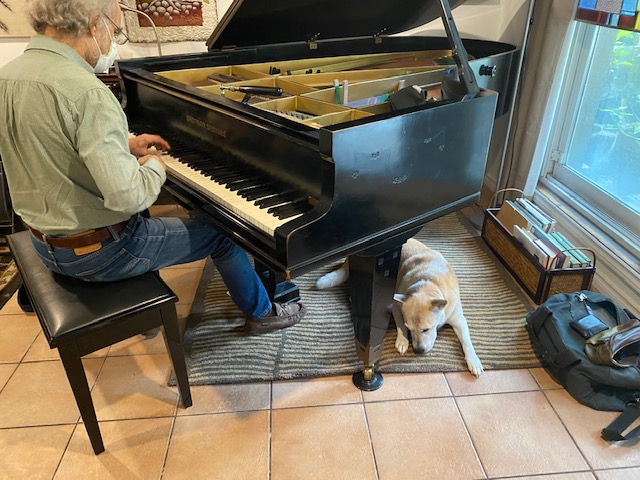
Perhaps the key is to ignore the calendar and just enjoy the moment.  Sam is happy lying under the piano no matter how loudly I play.

Sam relaxing under the piano, while George tunes it.

It helps, whether listening to the piano being tuned or to my loudest pieces, that Sam has no concept of time.

I wish I could forget about it.

Posted in Animals, domestic & wild, My mother, Personal ruminations & essays | Tagged , , | 6 Comments

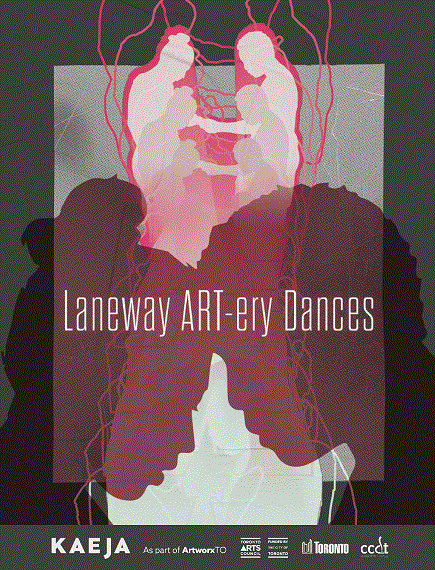
Kaeja d’Dance presents: Laneway ART-ery Dances

Kaeja d’Dance presents: Laneway ART-ery Dances, a site-specific interactive digital installation. As part of ArtworxTO: Toronto’s Year of Public Art 2021-2022, two of Toronto’s alleyways will be animated with thought provoking contemporary dance. Launching on September 22, 2021 for a full year. Audiences can visit anytime at no cost.

Laneway ART-ery Dances features 4 short dance films including one augmented reality (AR) experience. All films can be accessed using a mobile device. The AR experience will ignite the dancers to appear as if they are dancing live in the laneway, allowing each audience member to become fully immersed in the installation. While Kaeja d’Dance has been creating dance films for many years, this is their first project to incorporate augmented reality technology. Both the films and the augmented reality experience can be viewed from any mobile device, making the performance personalized and safe to enjoy while adhering to COVID protocols. The dance films feature 7 professional dancers, 7 community participants, and a commissioned score by Edgardo Moreno.

“I see Laneway ART-ery Dances as an invitation to consider the many stories and experiences that pass through the alleys of Toronto. Images of passing vulnerability, strength, and resilience come forward in these works, as if these alleys hold the stories of all of those who pass through. This metaphor becomes apparent in the AR component. We see two wonderful dancers appear in the alley, but we can only witness them through the screen of our devices. It is like the camera of your device is able to harness the memories that live in the alley, memories that are impossible to experience through the naked eye.” – Mateo Galindo Torres,
Artistic Producer

Laneway ART-ery Dances was funded by Toronto Arts Council and is part of ArtworxTO: Toronto’s Year of Public Art 2021–2022, a year-long celebration of Toronto’s exceptional public art collection and the creative community behind it. Working closely with artists and Toronto’s arts institutions, ArtworxTO will deliver major public art projects and commissions, citywide, from fall 2021 to fall 2022. Supporting local artists and new artworks that reflect Toronto’s diversity, ArtworxTO is creating more opportunities for citizens to engage with art in their everyday lives. The City of Toronto invites the public to discover creativity and community– everywhere. Visit artworxTO.ca for full details.

DATE: Launching Wednesday, September 22, 2021 to view until September 21, 2022.
LOCATIONS:
Alley 1: Broadcast Lane (Cabbage town) – Start at the north end of the lane (Winchester St)
Alley 2: Ciamaga Lane (Seaton Village/ West Annex) – Start at the north end of the lane (Barton Ave)

CREDITS:
CONCEPT AND CHOREOGRAPHY BY: Karen and Allen Kaeja
DANCERS: Aria Evans, Nickeshia Garrick, Karen Kaeja, Mio Sakamoto, Elke Schroeder, Katherine Semchuk, Irma Villafuerte
FILMS BY: Drew Berry and Allen Kaeja
AR DESIGNERS: Mateo Galindo Torres, Jacob Niedźwiecki

FOR MORE INFORMATION: www.kaeja.org/laneway

ABOUT KAEJA d’DANCE
Established in 1990, Kaeja is driven by two distinct artistic forces, Karen and Allen Kaeja. Kaeja creates award-winning contemporary dance performances for stage, film & communities that have toured the world. The foundation of their stage and film creation began with fifteen years of Holocaust inspired dance works. Allen is the child of a refugee and Holocaust survivor. Kaeja presents local and international dance artists in Toronto through festival platforms, commissions and mentorships, creating with people of all identities, practices and ages.

Passionate engagers of bridging professional and community dance art, Kaeja has received 40+ awards & nominations.

Press releases and announcements” are presented verbatim without comment

Posted in Dance, theatre & musicals, Press Releases and Announcements | Leave a comment