You know you’re at a special concert when you can’t identify the highlight, between pianist Jean-Yves Thibaudet’s flashy reading of the Gershwin Concerto in F before intermission, or an overwhelming Rite of Spring filling Roy Thomson Hall with sound. As he did last season Music Director Gustavo Gimeno cleverly combined pieces encouraging us to hear the music in new ways in last night’s second of two concerts to open Toronto Symphony’s 101st season.
I’m not sure we really understand Gershwin yet, although performances like this one give me hope that we’re finally decoding his contribution. In his time he was often dismissed as a Tin Pan Alley song-writer, as though that were easy, let alone the condescension of insecure conservatory academics, perplexing the composer himself. Meanwhile the use of the word “jazz” to describe his music is problematic, given that this music isn’t improvised nor is it really jazz unless we use the idiom in the broadest terms. What I really loved about this performance was the sense that we were hearing Gershwin presented as a peer of Lili Boulanger or Igor Stravinsky, in other words another classical composer seeking to write good music.
Thibaudet was sometimes big & blunt in his attack, sometimes very subtle and soft especially in the middle movement, particularly in the long solo passage. Yes the trumpet and the clarinet fearlessly bent their notes, wailing away as though in a night-club rather than a concert hall. But the result is still a concerto.
For his encore Thibaudet treated us to a gentle reading of Liszt’s D-flat Consolation, sounding (excuse me for saying) a bit jazzy in his approach to the solo voice. Or maybe the concert encourages me to see connections back to Liszt from Gershwin. I suppose it’s because Gimeno encourages us to look for connections and parallels. The nature sounds that begin Lili Boulanger’s orchestral tone poem D’un matin de printemps (Of a spring morning) are a gentle foretaste of the opening passages of Rite of Spring. And I thought I heard echoes of Gershwin in Stravinsky.
But before intermission ended I was sitting in my seat looking at social media, seeing a picture shared by Gustavo Gimeno.
He wrote this above the photo.
“Much enjoying sharing time and performing with dearest Jean-Yves Thibaudet. A wonderful artist and a generous person.“
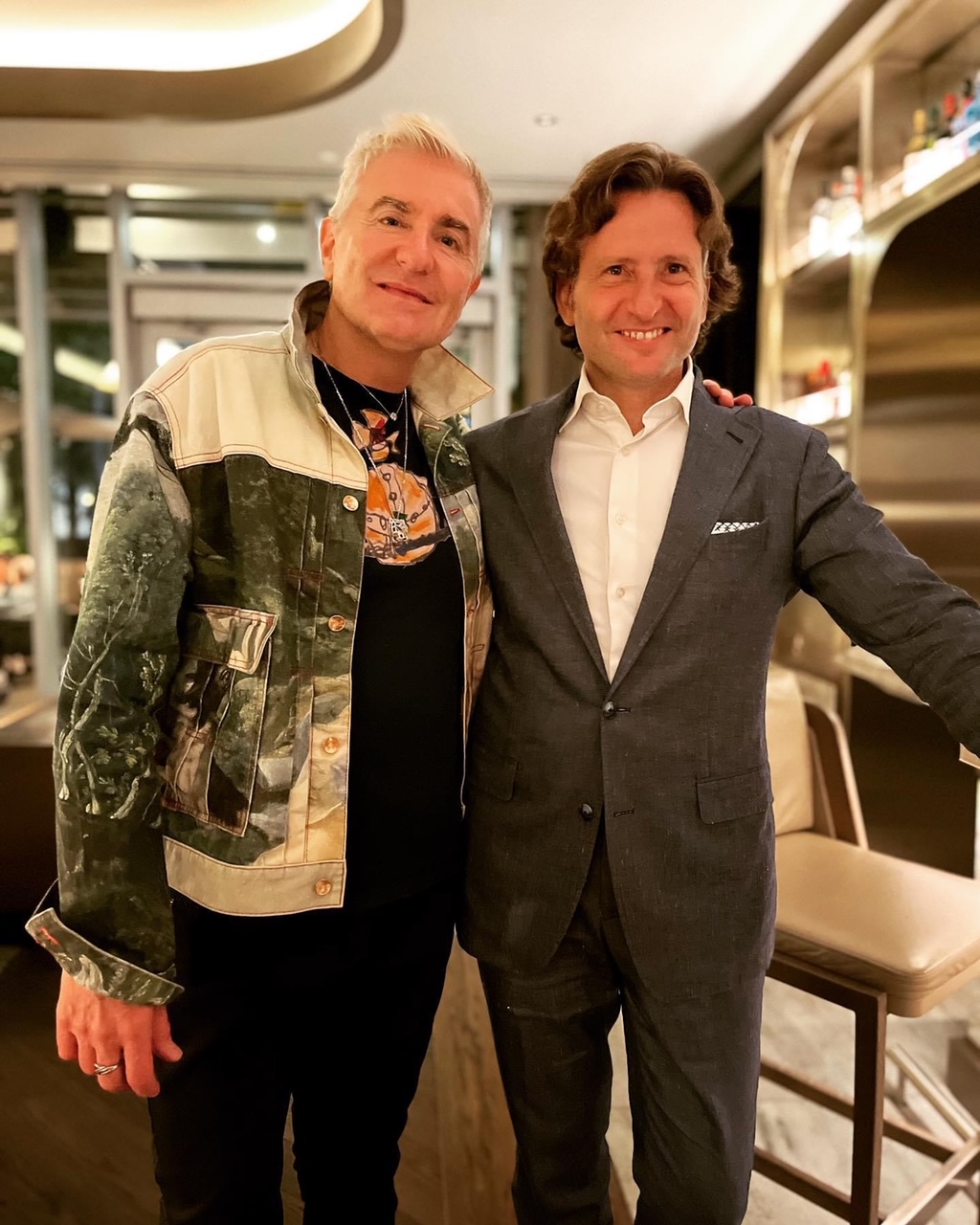
I showed this to the gentleman sitting beside me, and chuckled saying “isn’t this wonderful, probably a picture from last night”.
He introduced himself as The French Consul, intrigued to discover culture like this in Toronto, wondered “do you get other soloists from France?”
I should have said “I’ll have to look it up” but I replied: we have soloists from all over… Europe, USA, and Canada.” And I said that Gustavo conducts in Luxembourg and elsewhere, it’s a golden age of international co-operation, except perhaps for the war. I joked that Zelensky is in Canada.
We chatted for awhile about culture, while in the back of my mind was the recent Kitchener-Waterloo Symphony disaster (announcement of the cancellation of their season with two days notice to the unfortunate players who just signed a contract) . I blustered on for a few moments, that I’m a lucky, privileged to hear the TSO, that I’ll be hearing another great orchestra in a few days (Tafelmusik’s Beethoven on the weekend), that we have opera and ballet and it brings our city to life.
I wish I could grab one of those conservative politicians who wants to cut arts funding. We need culture, THIS is how Toronto impresses a visitor, not with expressways or tall buildings. And with an audience silent even reverent for the performance and applauding wildly afterwards. Toronto makes me proud at such moments. Tell the politicians. This is a big reason why people want to live here, even if artists can’t afford to live here.
And so on to Le Sacre du printemps, on the autumnal rather than the vernal equinox. There was an electricity in the air, a full audience quietly awaiting. If nothing else Gustavo has made us a better behaved audience, quieter than ever. No I don’t mind applause between movements, not when it’s an eruption of joy as we heard after TSO and Thibaudet’s first movement of the Gershwin.
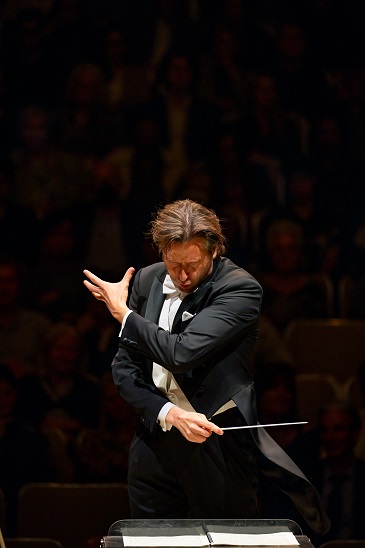
As I watched and listened I recall again that Gustavo was a percussionist, wondering how it felt for him to have played as a member of the team banging drums or making sounds for some previous Sacre years ago before he started conducting. The piece enacts moments when there’s a tension verging on fearful suspense of what’s to come, sometimes very soft and restrained, sometimes as loud as anything you will hear. For this to work the musician wants to be certain they are making their loud sounds at the right time, confident in the leader and his beat (especially in such a piece with changing time signatures and perplexing entries) and his clear instructions. I’ve seen this piece conducted by someone who did not inspire that confidence, I’ve heard it played without conviction. Coming to this from the inside, as a player, Gustavo seems to really know this piece, and thereby to inspire a level of conviction in the orchestra. I’ve never heard Roy Thomson Hall sound so small, so filled with sound, as last night. At times it felt as though the percussion took over, although the brass gave them a run for their money. The sound was brilliant, amazing. Stravinsky was well-served, perhaps beyond what he imagined (as his own recording is rather staid in comparison).
It follows nicely on the performances and recording of Turangalila last year, when I think the TSO and Gustavo are beginning to serve notice, that they have arrived as an ensemble who can play anything, and play it really well. This was the best Rite I’ve ever experienced.
Gustavo Gimeno and the TSO are back next Thursday Friday & Saturday playing a program of Ravel and Scriabin.
 barczablog