The Year of Czech Music is an event that since 1924 has commemorated the major figures of Czech music. I understand that it began in 1924 for Bedřich Smetana’s 100th anniversary, and has been repeated on every year that ends in a “4” , as a worldwide celebration.
2024 has additional significance, with the centennial of Janacek’s The Cunning Little Vixen (composed in 1923, premiered in 1924), that opens this week with the Canadian Opera Company, and the bicentennial of Bedrich Smetana, born March 2nd 1824.
John Holland is the founding director of the Canadian Institute for Czech Music. In the fall of 2014, he produced the Canadian premiere of Dvořák’s opera Jakobin. For 2024 the year will be commemorated in Canada with several presentations of opera and concert repertoire.
John is a singer and musicologist who recently published The Lost Tradition of Dvořák’s Operas: Myth, Music, and Nationalism. Other than Rusalka (an opera that’s regularly produced), you might never know that this great composer actually composed ten operas.
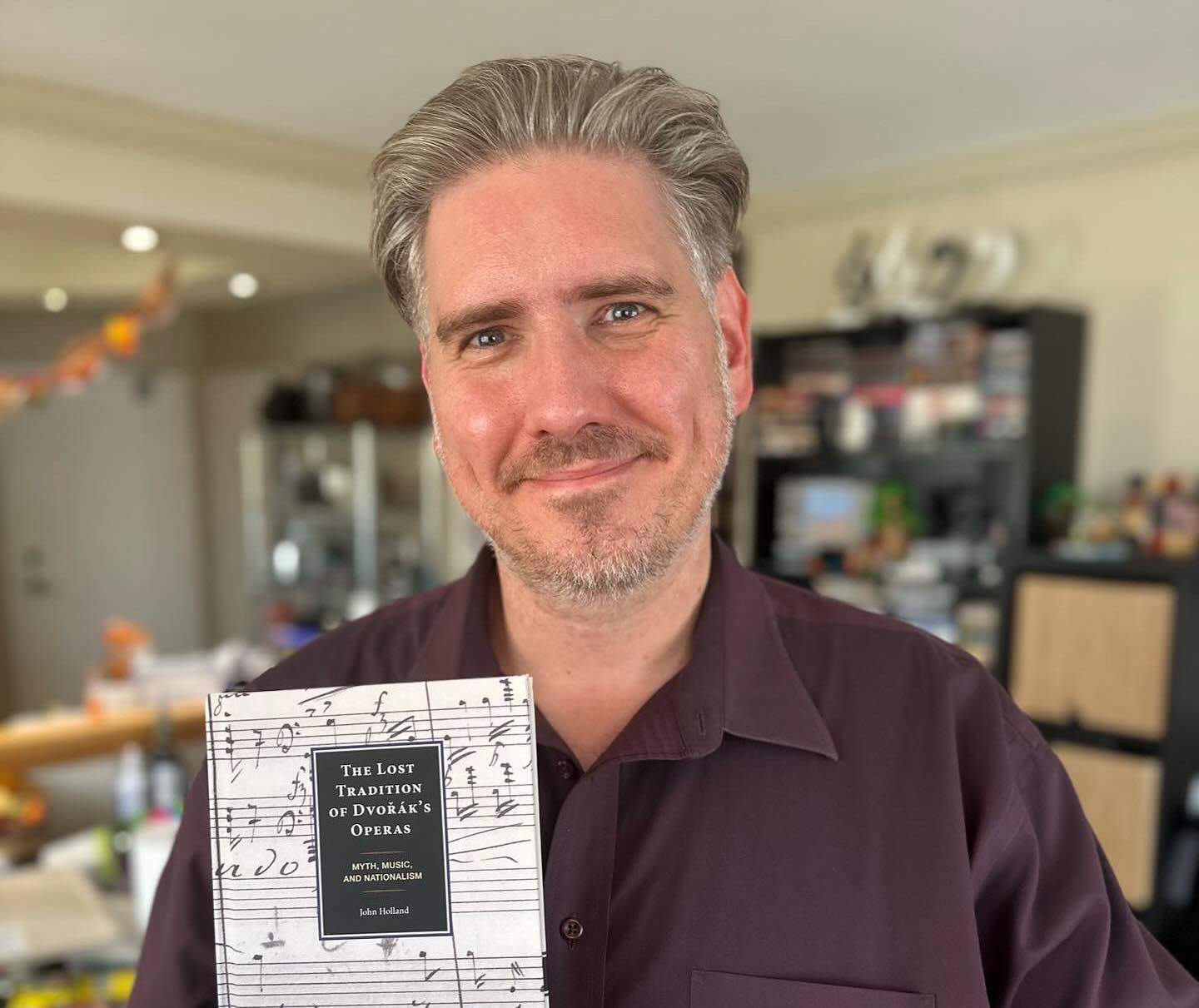
I was glad to interview John in the middle of a busy month of teaching and singing to talk about opera and especially his first love, Czech Music.
~~~
Barczablog: Are you more like your father or your mother?
John Holland: I feel I have the analytical mind, critical thinking, and wit of my father, and the drive, determination, and creativity of my mother. My parents worked in very different fields, my father was a lawyer, and my mother is a professional skating coach. I grew up having a love of reading and thirst for knowledge, but also a love of swimming, skating, and outdoor activities.
With regard to music, my father’s side didn’t have a lot of music, but with us living in Windsor, my father had a huge affinity for Motown. The music definitely comes from my mother’s side, the Czechoslovakian side of the family. A visit to my grandparent’s house would never go without LPs of Czech and Slovak folk songs being played, or even dancing polkas in the family room. My family even has a family polka band, the Polkadelics, which was founded by my two uncles and their friends. At one point or another several of us nieces and nephews have sung or played in the family band.
BB: What is the best or worst thing about what you do?
John Holland: The best thing about what I do is that I get to surround myself daily with music that I love, and work in a performance art, whether on stage or in concert. I teach music, I write about music, I plan music projects, and I also conduct. The central aspects of my life revolve around being a complete musician, and being able to work in a field that I adore is sheer joy.
Without a doubt, the worst thing about the music industry is the devaluing of music and performing arts. It is heartbreaking to see the juxtaposition in worth between someone who plays a professional sport and someone who is a professional performing artist. I have many colleagues who are at the top of their art, and struggle to make a living, while people in other fields do the bare minimum, and collect a livable wage.
When I look back at the pandemic lockdowns, everyone was stuck at home and wanted to consume arts content, whether stream of operas, musicals, concerts etc. What those people forgot is that musicians were some of the most affected by the lockdowns. Concert halls, opera houses, music theatre productions, choral ensembles, and the like were the last things to open up, and always the first things to be shut down. Even today, many auditions I go to have the caveat of “this production may or may not happen because of the tenuous nature of the arts post-pandemic.” Lawyers, dentists, custodians, mechanics, all do not work for free or for exposure, and it is time there was more value for the profession of performing artist. The world cannot function without music and the arts. Art is work, as the slogan goes, and it needs to be valued as such.
BB: Who do you like to listen to or watch?
John Holland: I have always been proud of my eclectic musical tastes. Even while answering these questions, I have been listening to Dave Brubeck’s Time Out Quartet, Queen’s Greatest Hits, and a recording of Palestrina Motets. Of course, I love opera and art song, and all forms of classical music, but I have many other favourite genres of music. Working in classical music often means that when I am not working, I want to listen to other genres. Some may call them guilty pleasures, but I hold no guilt about them. I am a big fan of jazz music of the swing era, and also neo-swing. There is a band called the Squirrel Nut Zippers, and their album titled HOT is one of the great modern swing albums. I have my dad’s affinity for Motown, and really enjoy Michael Jackson, Billy Joel, Sam Roberts, Buena Vista Social Club, and lots of other non-classical music. I worked at Grigorian music store on Yorkville for over 15 years, and through that time, was able to hear so much diverse music, and really expose myself to new sounds. It was great!
What do I like to watch? Well, I am a big hockey fan. Being from Windsor, my friends were either Detroit Red Wings fans or Toronto Maple Leaf fans, but I was raised with a more discerning taste. It is very interesting living in Toronto and being a die-hard Montreal Canadiens fan. Watching my Habs in 2020-21 eliminate the Leafs from the playoffs was so amazing. The next day, I walked around the city decked out in all of my Canadiens swag. It was glorious.
Aside from hockey, I love sci-fi. I was raised on Star Wars and Star Trek, and love them both to this day. I am also a fan of sitcoms, historical dramas, britcoms, and the like. The brit coms ‘Are You Being Served?’ and ‘Black Books’ are on my top tier list. One of my favourite things to watch are ghost hunting videos.
BB: What ability or skill do you wish you had, that you don’t have?
John Holland: This is easy. I wish I had the ability to teleport. There are so many things I wish I could experience or participate in, and travel or travel time is usually the mitigating factor in not being able to do it. Also, being able to visit distant family in the blink of an eye would be wonderful. I do a lot of singing in Ottawa, and the drives can get pretty tedious sometimes. If I could snap my fingers and be there, that would be great, and if I cannot have that superpower, then someone better develop that Star Trek transporter very soon.
BB: If we had high-speed rail? Not quite teleporting but its carbon footprint is better than air travel. Can you imagine being in Ottawa or Montreal in an hour or two, no trip to the airport, guilt free environmentally? Not sci-fi: they’ve already got it in Japan & Europe, at 320 km/hr. Oh well…
When you’re just relaxing and not working, what is your favourite thing to do?
John Holland: In those rare down times, I have a variety of things I like to indulge in to relax and recharge. I like to read and go on walks, as they help me zone out from the thoughts of a music career, and help me refocus. Swimming and Skating are also good because they are very different from music. I am also an avid gamer, and even have a live stream video game channel on www.twitch.tv/johnholland2000. I regularly stream games, and even do some of my singing practice on twitch. Gaming is another activity that takes me away from the heavy focus that professional music often demands.
BB: What was your first experience of music ?
John Holland: The aforementioned Czech music afternoons at my grandparent’s house were probably some of the earliest musical memories I have, including the family polka band. My mom and dad would always play music around the house, and often sing along. Being a skating coach, my mom was always playing a variety of music on the stereo as she created skating programs for her students. My dad listened to basically anything that caught his fancy, but had a great love for Motown, R & B and Soul music. Many a day the house would be filled with The Temptations, Smokey Robinson, Vivaldi, Tchaikovsky, and many others. We were a household of Mozart to Motown.
BB: What is your favorite opera?
John Holland: For someone who is a singer and a musicologist, this is a tough question. There are so many mainstream operas that I enjoy, but also rarities. If I have to pick a favourite, I would have to say Mozart’s Le Nozze di Figaro. It is simply sublime. There is a reason it has the longevity and performance frequency that it does. I have a soft spot for it as Figaro is a role I sing very often, and it is different from say, Leporello in Don Giovanni, which is my most performed role. Figaro is smart and quick-witted, and gets to work with an equally sharp partner in Susanna. Beautiful arias, amazing ensembles, and vibrant characters make this work a masterpiece.
So, if I have to pick a favourite obscure work, it is Dvořák’s Jakobín. The score is terrific, and the arias and ensembles have that distinctive Dvořák flavour. You’ll be hearing more about Jakobín this year!
BB: I’m looking forward to it! First I need to get that score out of the library, have a closer look.
The Canadian Opera Company have done lots of Czech operas over the years, including The Bartered Bride, Jenufa, Rusalka, Makropolous Affair, From the House of the Dead and coming later this week: The Cunning Little Vixen. Is there a Czech opera that you’d like to see produced by a major company like the COC or the Met?
John Holland: Without hesitation, it is Dvořák’s opera Jakobín. It is simply his best operatic music. Dvořák didn’t limit himself to one idiom, and composed in the two leading operatic styles of the day, Verdian and Wagnerian. Within these two styles, he added his singular talent for creating music in folk music and folk dance style. Jakobín was a major focus of my PhD research and my recent book. While Rusalka is his most well-known opera (and don’t get me wrong, it is beautiful), I feel Jakobín has a wonderful story, stronger characters, and a seamless amalgamation between art music and folk music. Jakobín is also similar to The Bartered Bride in that it presents a window into Czech village life. The plot has moments of tenderness, moments of comedy, and moments of absolute charm. The soprano role of Terinka has one of the most beautiful arias that mixes folk and art music. The opening of act two takes place in a schoolroom where the village music teacher is rehearsing one of his own compositions with the children of the school, and some of the villagers. This is one of the rare instances in music that shows a music rehearsal process within the stage action, and it is filled with charm and fun. Some of the kids sing in wrong spots, some of the basses come in late. It is pure joy! Something like Jakobín would suit the COC, MET, or professional companies because aside from a robust chorus role (and the COC has a fabulous chorus), there is a large part for children’s chorus, which the COC has, and should definitely be utilized more. All that said, Jakobín would be a no-brainer for the COC, and I actually proposed the idea on a few occasions, but in the interim, it falls to groups like the Canadian Institute for Czech Music to carry the torch of this marvelous work. I produced the Canadian premiere of Jakobín here in Toronto back in 2014, and we are remounting it for the autumn of 2024. It is a chance for Torontonians to see this beautiful and unjustly neglected work.
BB: Do you ever feel conflicted, reconciling different aspects of opera, between the promotion and the art, between the perspective of a scholar or that of a performer?
John Holland: This is a very interesting question. Personally, I have never had issues with promotion of opera, and especially being paid for it. There are so many wonderful music projects, opera or otherwise, that are not promoted to the extent they should be, and then those involved don’t end up feeling valued, and then we get the misconception that opera and the arts don’t make money. While I do think there is a problem with public perception of opera (people thinking it is elitist, etc), many things are not promoted. As performers, we should never feel apologetic for promoting ourselves and our hard work, and we should never feel ashamed for wanting to make money in our profession. Too many professional-level musicians still take gigs that pay far less than what they should, or are even pro bono.
This hurts the industry for all of us.
The conflict between scholar and performer is a fun topic for sure. As a musicologist and opera singer, I am both, and have never felt that one has diminished the quality of the other. I have had several colleagues and teachers over the years who have tried to guide me towards one field, forsaking the other, but I feel that my work as a musicologist gives me a great understanding of the music I am singing or conducting, and that my work as a performer gives me unique insights into musicological research. I feel that all musicians should have the duality of music research and performer, at least on some level.
BB: Of everything you sing (whether we’re talking about opera, lieder, pop tunes or anything else) what feels the best in your voice and what do you think sounds best?
John Holland: First and foremost, Mozart. Give me Mozart all the time. In the opera world, Mozart is the music I have sung the most often, and what I have been lauded. Next, Dvořák…anything Dvořák. The style and music just suits me. Haydn, Handel, Bach, Schubert, Rossini, Donizetti, are all composers whom I adore, and whose music feels good to sing. I have always had a soft spot for music theatre, so things like Phantom of the Opera, Les Mis, and the classic musicals are all fun. Also, another non-guilty pleasure, anything from Gilbert & Sullivan. It is brilliant musical comedy, and suits my voice well.
BB: Singers come out of training programs, including the ensemble studio of the COC. And then what? Some people can make a living, some can’t. Stratford Festival and National Ballet function as places to employ almost 100% Canadian talent. Yet the fiction is out there that we need to bring in singers from abroad. Can you imagine Canadian opera with Canadian personnel?
John Holland: I can imagine that, and wish for that every day. As a singer who has sung around the world, I often hear from foreign directors and conductors about the high calibre of singers that come out of Canada. I spent three summers studying with Nico Castel from the Met, and he said to me, “Every singer I hear from Canada is world class…it’s just a shame it is so difficult for you to work in the United States.” This is the crux of this argument. It is restrictive for foreign singers to work in other countries because they want to promote and encourage their home-grown talent first. Now, I love singing in Europe, but why is it that I can sing Leporello and Figaro in Prague and Salzburg, and receive wonderful reviews, but struggle to find opportunities to sing them here? I have a colleague, a baritone, who has a world-class voice, and has still never sung at the COC. Why is that? The calibre of singers in Toronto alone is enough to warrant a Toronto Opera Company, let alone a Canadian one. There are elite singers in this city who have to scrap and scrounge to be able to continue their art, yet if they had been born in Italy or Germany, would have a proper career as a house singer and given their due. Also, hiring local singers is cost effective for major companies. Travel expenses and accommodations would virtually be wiped from the operating budgets. We train singers in this country, why can we not employ them?
Also, from a staffing standpoint, I am in no way criticizing the current artistic and administrative staff of the COC, but there are people in this country who can do all of those jobs, and at the same level. Again, it is not a knock against those people, but why are we so averse to engaging local singers, GMs, conductors, etc?
BB: Nowadays it’s very expensive to live in Toronto. Can a performer survive without a day job?
John Holland: I think this ties into the previous question a bit. If there were more A-level opportunities, then perhaps more singers could make a living just as an artist. As it stands now, it is very difficult to make it solely as a singer. Those who do often have independent wealth or financial backing, which makes it a very exclusive group. Can you imagine if a professional hockey player had to have financial benefactors (outside of their wage) to play their sport? Or a dentist having to apply for financial aid to be able to practice dentistry? The sad reality is that most of the professional singers in Toronto have to have other sources of income. We all have church music jobs, but we all have to have ‘day jobs’, whether it be teaching, the service industry, the tech industry, etc. I currently teach at York University, teach private voice lessons, conduct a church music program, and work as a professional singer. Many of us juggle schedules like this and succeed in spite of it. It is a wonderful celebration of the dedication of singers in this city, but also a signal of the shocking state of the financial reality of Toronto.
BB: You’re both an academic who has recently published a book as well as a practitioner. Please reflect for a moment on the connection between the two
John Holland: There are many instances where an academic pursuit informs a performance focus, but for me, it was somewhat the other way around. I was looking for unique repertoire to bring to auditions, something that would set me apart from the thousands of other baritones out there (I know all of the sopranos out there understand this to the Nth degree). Simultaneously, my Czech grandfather used to bemoan the fact that I seemingly sang in every other language other than Czech. Necessity is the mother of invention, so I started looking for Czech opera arias and art songs to bring to auditions, and boy were they hard to find. I ended up putting a Dvořák aria on my audition repertoire, and instantly was asked questions about what that was. People were shocked to know it was Dvořák, and even commented on how they never realized Dvořák composed operas. I also became known for singing Czech music, and it helped me stand out in auditions. I was also conscripted by a musicology professor of mine during my masters degree to present a two-hour lecture on an opera, either Rusalka or Midsummer Night’s Dream.
I had recently sung the Britten opera, so of course I picked Rusalka, something I knew very little about. What happened is that there were zero resources upon which to draw, so I found that I was doing much of the analysis and research from scratch. The end result was that I went into a two-hour lecture with about four-hours of material, including a self-created catalogue of leitmotifs. That was a tell-tale sign that work needed to be done in this field.
This leads into my book, which is on Dvořák’s operas, and came out of the necessity for awareness on this music, and was the focus of my PhD work at York University. The performer and academic have always gone hand in hand with me. I feel that when I know the story of a piece of music, I sing it better, and I feel that when I have performed a piece, I have unique and intimate knowledge of it that a solely music theorist may not. The expertise in Czech repertoire has also given me the opportunity to coach the sung Czech language. I have coached singers all over the GTA, both university singers and professionals, and through zoom, have even been coaching singers across the United States. This also helps in awareness and accessibility of Czech music, and thus aids me in my quest!
BB: Tell us about your new book on Dvorak’s operas.
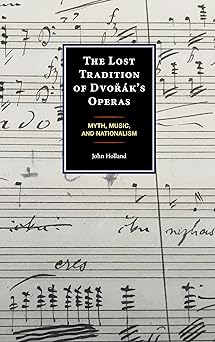
John Holland: My book ‘The Lost Tradition of Dvořák’s Operas: Myth, Music, and Nationalism’ was published in October 2023 by Lexington Books, which is part of Rowman & Littlefield. The book grew out of my PhD research and a need to create awareness and understanding about Dvořák’s operas. Think of it this way. When one examines the compositional oeuvre of Antonín Dvořák, one bears witness to a catalogue of well-known works, and critical successes, in every genre except one, opera.
The question then arises, ‘What happened to Dvořák the opera composer’? With ten operas to his credit, which span his life, Dvořák was no stranger to the genre. While some of Dvořák’s operas have remained popular at home, the majority of them are lost in obscurity. Only Rusalka has begun to break onto the international opera scene, and only within the last thirty years. This book examines Dvořák’s operas, specifically Jakobín and Rusalka, from a critical standpoint, focusing on such criteria as tonal structures, thematic material and motives, subject matter, Czech folklore and musical influences, textual language, nationalism, characters, compositional history, performance history, and reception. The intent of this research is to vindicate and validate Dvořák as an opera composer; to show him to be an overlooked master in Nineteenth Century opera and the bridge between the Verdi and Wagner traditions. Now, well over one hundred years after his death, it is now time for Dvořák to take his rightful place in the operatic echelon. There are definitive reasons why Dvořák’s operas have been lost to the greater operatic world, through political intrigue, social climates, and ethnic bias, all of which are part of the story that this book tells. The book is available through the publisher and Indigo, but is on the shelves and in stock at Remenyi House of Music, so my advice is to buy it there and support local stores.
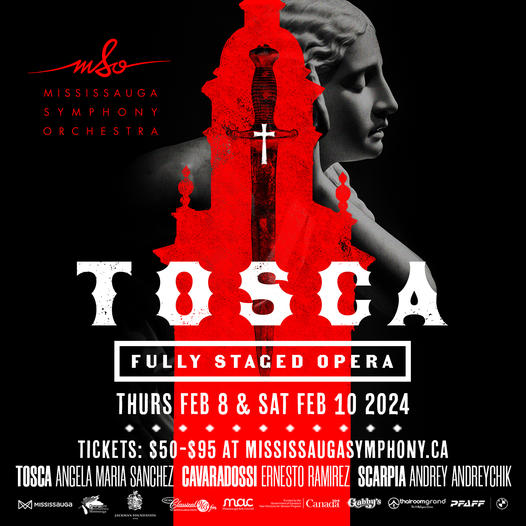
BB: You’re singing the comic role of the Sacristan in the Mississauga Symphony production of Tosca, followed by the more serious role of Marullo in Rigoletto (a character whom Rigoletto identifies, rightly or wrongly as a friend) for Opera York. Recalling your portrayal of Papageno last year with Opera York, when your friendly demeanor was very welcome, do you have a preference for a comic role or is it more accurate to say you’re flexible and can sing any sort of role?
John Holland: If you ask my mom, she will say that I have always been a ‘character’ my whole life. I have loved telling stories, and so opera and music theatre are the perfect ways for me to tell stories through music. I had, and still have, a very vivid imagination. Growing up, I was always kind of quiet, except when I was singing. When I began high school, I became involved in musical theatre and since then, I have been addicted to the stage, and haven’t shut up. Essentially, I will sing any role I feel will suit me. I mean who doesn’t enjoy playing the villain now and then, but I love being part of musical comedy, and have been told I am a good stage comedian, which is a heart-warming compliment.
Comedic timing, especially in opera, is a real skill in itself. Making an audience laugh while you are singing in a foreign language takes as many physical cues as it does musical. That’s why I really jump at the opportunities to sing Bartolo in Barber of Seville, or Leporello, or Figaro or Papageno. They are challenges beyond just the music. Also, when you find that synergy with comedic cast members, it can really create something special. I sang a Figaro in 2022, and the Susanna I was paired with, Grace Quinsey, was just as much of a stage comedian as I am, and we found ourselves anticipating each other and creating jokes on the fly during performances. We had a chance to rekindle that synergy as Papageno and Papagena with Opera York in 2023. That kind of comedic timing and connection is very rare, and when you find it, you have run with the opportunity.
BB: Does one have to be an extrovert or even an egotist, to be a good opera singer?
John Holland: Ironically, I know many singers who are tremendous stage characters, but quite introverted and soft-spoken when not on stage. I think that many of us save our extroverted bursts for when we are on the stage. When I am on stage, I try to be larger than life, but when I am at home, or with family or friends, I am just myself.
As far as being an egotist, there are those types of people in the opera world, but there are also those people in every walk of life. One thing I will say, aside from ego, to be a good opera singer, you have to have confidence in your abilities, know your strengths, and play to them. If you are good at what you do, don’t be apologetic for it.
BB 2024 is the Year of Czech Music. Every year that ends in a 4 gets that honour. Your organization The Canadian Institute for Czech Music has planned some events to commemorate, as it did ten years ago. Three operas will be presented, beginning with The Bartered Bride on March 9th from Opera by Request. This coincides with the 200th anniversary of the birth of the composer, Bedrich Smetana. Please talk about the CICM, its history and what you have planned for this year.
John Holland: The Canadian Institute for Czech Music was formed in 2013 to promote research and performance of Czech Music in Canada. It grew out of my PhD work, but has since become its own entity with projects and collaborations with groups such as Opera By Request, Toronto Orpheus Choir, Nocturnes in the City, and the Czech Consulate. In 2014, the previous Year of Czech Music, we produced the Canadian premiere of Dvořák’s Jakobín at Trinity St. Paul’s with soloists, two choirs, and an orchestra. It was a real triumph for our organization, but also for bringing this music to light.
Toronto has a large Czech diaspora, many of whom came here to escape WWII or the Communist occupation, and one lady came to me after that performance and said she had heard Jakobín in Prague as a child and never thought she would ever hear that music again, and thanked me. It was uniquely touching.
Now, in 2024, the CICM is proud to present the Year of Czech Music Opera Fest. This encompasses three operas over the course of 2024, including Smetana’s Prodaná Nevěsta (The Bartered Bride), Janáček’s Věc Makropulos (The Makropulos Case), and a remounting of Dvořák’s Jakobín.
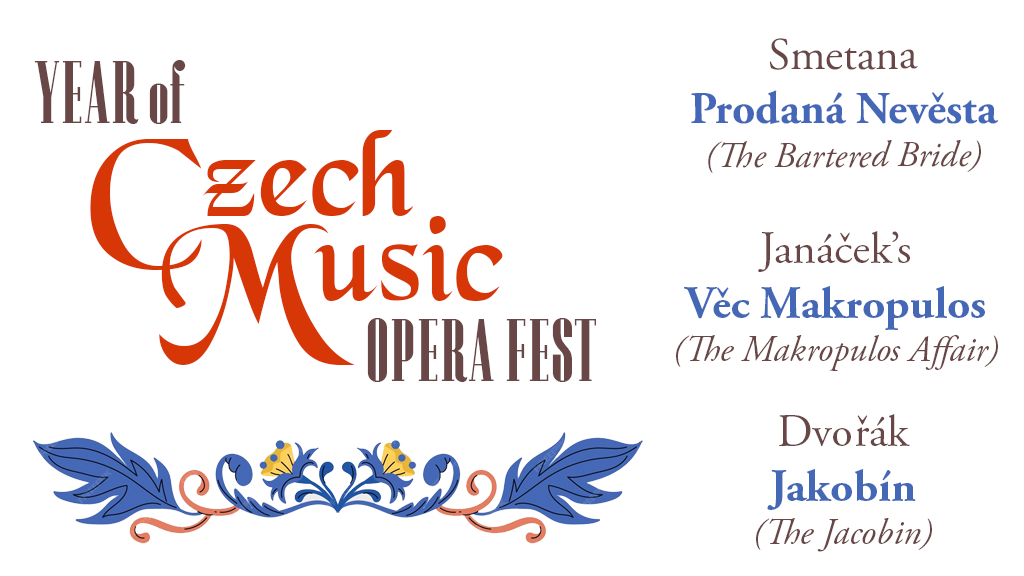
Other projects include lectures, a book release, and the touring duet recital The Voices of Prague.
Starting off the activities is the recital The Voices of Prague, which features music composed for or premiered in Prague. We know that Mozart’s Don Giovanni was written for Prague and premiered at the Estates Theatre in 1787, but it was possible due to the success of Mozart’s Figaro earlier. This exciting recital includes music by Mozart, Dvořák, Smetana, and more. Arias and scenes from Jakobín, Don Giovanni, Le Nozze di Figaro, Prodaná Nevěsta, etc. Soprano Grace Quinsey and bass-baritone John Holland (that’s me!) are joined by William Shookhoff on piano to bring this wonderful music to life! It will also provide some teaser music for what is to come on March 9th. The recital is on March 8th, 2024, as part of the ‘Fridays at Noon’ recital series at St. Andrew’s Presbyterian Church. For more information, click here.
The first opera in our Opera Fest is the quintessential Czech opera, Smetana’s Prodaná Nevěsta (The Bartered Bride), and will be on Saturday, March 9th at 7:30pm at College Street United Church. We celebrate the 200th Anniversary of Smetana’s birth (March 2nd), and this performance is linked with the Czech Philharmonic’s Smetana200 project. This collaboration with Opera By Request will be presented in concert with piano accompaniment, and sung in Czech with English supertitles.The amazing cast features soprano Grace Quinsey as Mařenka, a young village woman betrothed to another man, tenor David Walsh as Jenik, her true love, and bass-baritone John Holland as Kecal, the marriage broke trying to split them apart. Tenor Alexander Cappellazzo plays Vašek, the man Mařenka is promised to. Her parents are Krušina, baritone Henry Irwin, and Ludmila, played by soprano Mila Ionkova. Vašek’s parents are the wealthy landowner Mícha, played by bass Mikhail Shemet, and Háta, mezzo-soprano Alex Beley. A trio of stellar circus performers round out the cast; Ringleader, Mezzo-soprano Catharin Carew, Esmerelda, soprano Thera Barclay, and Akrobat, bass Kyle Simpson. William Shookhoff is the pianist and music director. The score is filled with folk melodies and dances, and moments both comedic and touching. There is the possibility of a second performance on the afternoon of Sunday, March 10th, so stay informed through our social media. Ticket information can be found here.
In the spring of 2024, one of the most curious opera plots returns to Toronto in Janáček’s Věc Makropulos (The Makropulos Case). The story about the mysterious history of Emilia Marty is filled with intrigue. The cast is led by soprano Antonina Ermolenko as Emilia, and baritone Michael Robert-Broder as Baron Jaroslav Prus. The performance will be in concert with piano accompaniment and sung in Czech with English supertitles.
In autumn of 2024, the CICM revisits its success from 2014 in the remounting of Dvořák’s stunning opera Jakobín. The story features themes dealing with mistaken identity, a music schoolroom, a love triangle, family reconciliation, patriotism, and the healing power of music. The plot centres around a small Czech village, and gives a glimpse into village life during Dvořák’s time. Benda, the music teacher, lives in the village with his daughter, Terinka, played by soprano Grace Quinsey. She is in love with Jiří, a peasant singer, played by Ryan Downey, but is also courted by an older man, the Purkrabi (village bailiff), played by bass-baritone John Holland. Strangers come to the village from France, where the French revolution has been taking place, and word has spread around the village that these strangers are Jacobins who are coming to bring the persecution of the revolution to the Czech lands. In fact, the strangers are Bohuš, played by baritone Michael Robert-Broder, and his wife Julie, played by soprano Paulina Swierczek. Bohuš is the estranged son of Count Vilém of Harasov, bass Dylan Wright, and is at odds with the count’s nephew, Adolf, played by baritone Alasdair Campbell.
There may be some more Czech surprises added to the season, so be sure to visit our website: http://www.canczechmusic.ca and follow us on instagram.
BB: If you could tell the institutions how to train future artists for a career in opera, what would you change?
John Holland: Opera is a competitive field, and while you don’t need to be cutthroat about it, you do need to be focused, driven, and determined. You need to know that YOU are the marketable commodity, and nine times out of ten, you will be doing your own self promotion, and artist driven projects. Young singers need to know that the phone is not just going to ring with companies offering you role after role, you have to be comfortable with pounding the pavement, and hounding groups for auditions and opportunities. The music training is always good here in Canada, but the career training is something that needs to be revamped. Canada is a country with far more choirs than opera companies, so don’t ignore oratorio and sacred music, as many of us joke that November and December Messiah gigs can cover months of rent. All of the stagecraft skills I learned and I have been praised for, were not taught in the classroom, but learned by watching professionals and working with them. Institutions should take more of a proactive approach to preparing artists in this manner. Lastly, this is less for the institutions, and more for the music students, a music degree does not a career impart. You cannot rely on your degree and expect a career to just come to you. I have seen music students excel in their degree but fade away outside of an institution, and I have seen others who may not have been the best student rise to the challenge. There are even those who have professional careers and didn’t even study music at an institution. Your career is what you make it. Talent gets you the degree, but hard work gets you the career.
BB: Wow several good thoughts there…!
Now please talk a bit about your own educational pathway and how it prepared you for your current career.
John Holland: I really do feel I have been on a proverbial “road less taken” along my education and music career. While I always did music as a youth, it was focused on piano, trumpet, and choirs. I started my university studies at the University Windsor, majoring in Physics and History. I had never had a formal voice lesson until halfway through that first year, and was instantly thrown into an opera workshop in February of that same year. Concurrently, I was taking a music history class as my arts elective, and little did I know that the musicology bug had bitten me. The next year, I transferred into music (even though I had the highest mark in first-year physics) and I never looked back. I spent my undergrad immersed in musicology, theory, and early music (I spent these years singing as a countertenor). After completing my undergraduate degree, my mom picked up a flyer about a summer program happening at the University of Western Ontario, and I applied on a whim. I met Theodore Baerg, and he gave me a voice lesson that changed my life. We worked on breath support and opening up the sound, and in 15 minutes I began to realize myself as a baritone. It felt good to have my voice open up like that. I enrolled in the Artist Diploma degree, and then my Masters degree. Again, musicology reared its head, and I took a myriad of opera history courses with Don Neville. Upon completion of my Masters, I began to do auditions, performing, conduct choirs, lectures, and teaching. I also began working at Grigorian Music Store. When I was accepted to my PhD at York, one of the things I was told is how much they were impressed with the broad scope of my music career, and how I wasn’t limited to just one focus, but proficient in a variety of them. This is something I have always been very proud of…the fact that I am a well-rounded, multi-faceted musician.
BB: Do you have any teachers or influences you would care to mention?
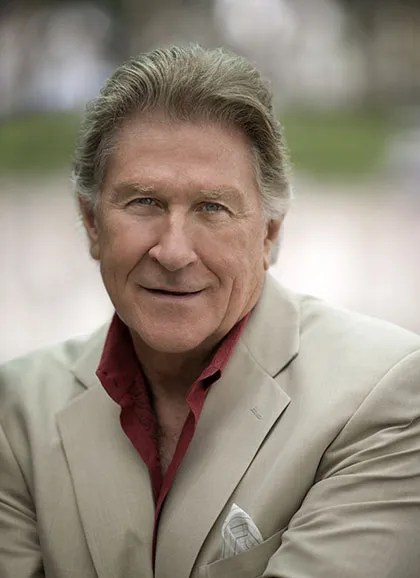
John Holland: At the University of Windsor some of the standout teachers for me were Edward Kovarik, Richard Householder, David Palmer, and Gillian McKay. While at Western, Theodore Baerg, Don Neville, Torin Chiles, and John Hess were instrumental (pun intended) in shaping my professional career and musicality. At York, Lisette Canton, and the late Michael Marcuzzi were excellent guides through the mazes of musical research. In the professional world, I have great respect for what I learned from Gerald Fagan, Robert Cooper, and Edward Moroney. Working with the late Nico Castel for three summers was invaluable.
I also had the honour of being directed in Don Giovanni and Le Nozze di Figaro by Sherrill Milnes. Singing Leporello recitative rehearsals with Sherrill singing Don Giovanni is something I will cherish. I learned a lot about Italian recitative from him and Nico, and now it is something I am somewhat of an expert with. I am always open to learning, which is what we do as musicians for our entire lives.
BB: What do you have coming up, including The Year of Czech Music?
John Holland: Things are busy, but that is very good!
February 8th and 10th, I have the Sacristan in Tosca with Mississauga Symphony.
March 1st and 3rd, I have Marullo in Rigoletto with Opera York.
Sandwiched in between those two shows is a trip up to Ottawa to sing on the Ottawa Bach Choir’s all Monteverdi concert on March 2nd.
A week later, The Voices of Prague recital is a St. Andrew’s ‘Fridays at Noon’ series, and then the next day, March 9th, is The Bartered Bride as part of the Year of Czech Music Opera Fest.
In the spring, we have The Makropulos Case, and more tours of The Voices of Prague recital.
On August 6th, I will be singing Figaro in Le Nozze di Figaro with the Toronto Concert Orchestra. This includes a stellar cast including Grace Quinsey, Allison Arends, and Michael Robert-Broder.
Into the Autumn, we return to Jakobín ten years after we premiered it in Toronto. And if anyone is interested in what I am up to, you can always find out info at my website: John Holland – Baritone, Conductor, Musicologist (johnhollandmusic.ca) https://www.johnhollandmusic.ca/.
 barczablog
Pingback: Year(s) of Czech Music at the piano | barczablog