
I miss Neil Craighead, who’s currently studying, working and living out west. You may know him as a Dora Award nominee in 2015 for his Leporello in #UncleJohn with Against the Grain Theatre.
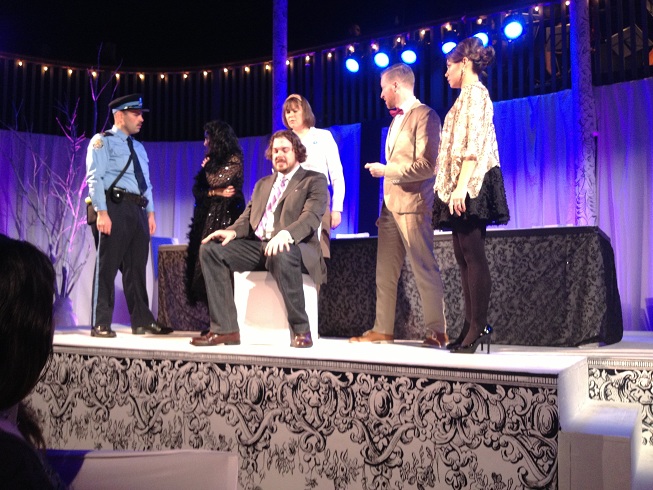
Time flies, look at how young he is in that picture. Fast forward to 2023, with Neil studying at UBC including a portrayal of the Forester in their production of Cunning Little Vixen.

Neil was already a superb comedian, stealing the show in that Against the Grain transladaptation of Don Giovanni. In graduate school while singing several roles in his spare moments he’s sure to get better.
This interview was my chance to catch up with him.
~~~~~~~
Barczablog: Are you more like your father or your mother?
Neil Craighead: Maybe it’s a cop-out but I think I’m a pretty good mix of both. I have my mom’s tenacity and focus, which has served me well as a musician and in pretty much every other job I’ve ventured into. Physically I’m more of my dad who is also tall, and luckily, I’ve inherited a strong head of hair as well. I’ve just turned 40, and as I spend more time with my parents lately, I find it’s my dad’s calmness and kindness that I want to emulate more in my own behavior. I admire my parents’ relationship which is still going strong after more than 40 years.
BB: What is the best or worst thing about what you do?
Neil Craighead: The best thing about what I do is just the act of singing. The physical sensation of joyfully making music with one’s own body is irreplaceable. At its core singing is a primal, communicative function rooted millennia in the past, perhaps even predating language, and it just feels good. Society places all kinds of expectations around what it should or shouldn’t sound like that place hangups, mental hurdles, technical and physical blocks along the way, but in the end, singing for oneself can be extremely gratifying, regardless of the ‘product’.
BB: Who do you like to listen to or watch?
Neil Craighead: We could do a whole article on my listening and viewing preferences. I LOVE to listen to music of all kinds and have a vinyl collection with over 1000 albums that grows constantly (I just rescued 35 from Value Village here in Victoria). I adore Pavarotti singing pretty much anything, but especially Rodolfo, Cavaradossi, and Calaf on those fabulous Decca recordings. I’m also a Kaufmann fan, and regularly find myself watching the ‘Nothung’ scene from Walküre on YouTube for a shot of energy. Amongst my own voice type, I’ve always admired the singing of Nicolai Ghiaurov since I was introduced in undergrad to him singing “Le veau d’or” on his fantastic LP of operatic hits. George London is also a favorite of mine with his booming power that seems effortless. Outside of the classical realm I listen to a lot of beat heavy music like jazz, funk, and hip-hop, especially the 90’s-2000’s era niche. I’m fascinated by beat producers like J Dilla or Dr. Dre, and that’s led to a love for classic hip-hop, drum-n-bass, house, and electronic dance music. Other highlights that regularly make a spin on my turntable are Billy Joel, Joan Baez, Chicago (the band not the musical), Johnny Cash, Zeppelin, Wu-Tang Clan, Rage Against the Machine.
BB: Sigh, I’ve got a few discs that I haven’t listened to in awhile, because my turntable isn’t working, hasn’t been set up in awhile. But I have a big CD collection. We need to have another conversation about our collections…
What ability or skill do you wish you had, that you don’t have?
Neil Craighead: I wish I was a better pianist. My brain struggles with multiple musical lines as I’m used to processing music horizontally as a soloist, reading multiple notes vertically is slow. I have incredible respect for all the pianists I work with on a regular basis.
BB: When you’re just relaxing and not working, what is your favourite thing to do?
Neil Craighead: Fishing. Over the last few years, I’ve become an avid fisherman and spending the day on the ocean or a lake is my favorite way to pass the time.
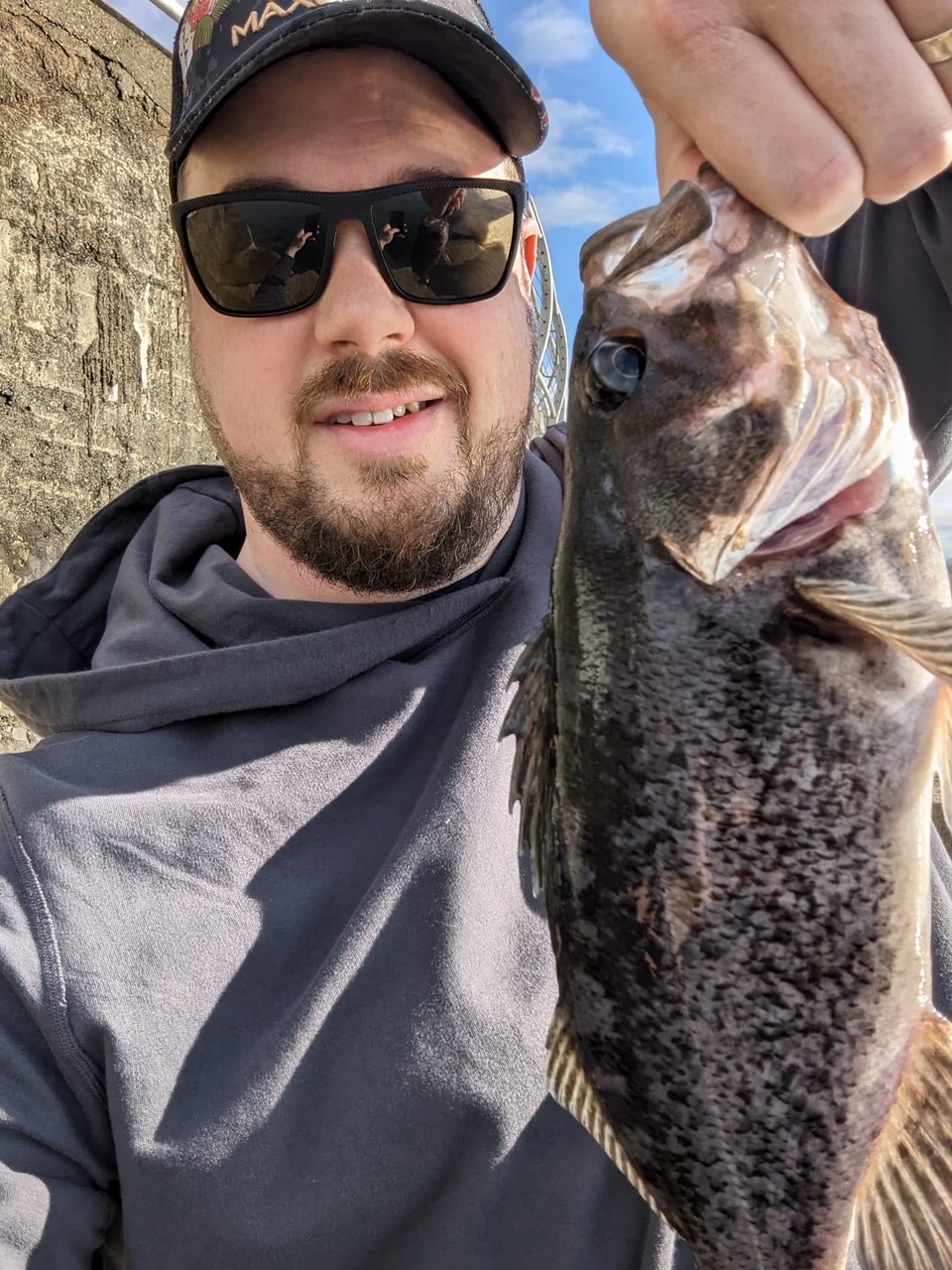
I love the peace of an early morning sunset on the water before the crowds arrive on the beach or the water-skiers crank up their music. I caught my first pink salmon this past year from the beach in West Vancouver, a highlight of the summer for sure.

BB: What was your first experience of music ?
Neil Craighead: My family is musical and though I can’t recall a specific first experience, music was around me my whole childhood. My mom’s mother was the church organist and my mother is a decent pianist. My father played the guitar, and his brother was in a band. I joined the Calgary Boys Choir at the age of 8 and spent nearly a decade in the choir which at that time was led by Gerald Wirth, the current director of the famed Vienna Boys Choir. He is in my mind, the reason I am a classical musician today as he instilled so many lessons to us youngsters about theory, instruments, languages, and world music. He was also one my first voice teachers and guided me through my break from 1st soprano to 2nd bass over the course of a summer.
BB: What is your favorite opera?
Neil Craighead: My favorite opera is I Pagliacci. In my humble opinion, it is a near perfect example of what opera can be. Its brevity combined with the density of spectacular music from the prologue to the commedia finale is unmatched. The characters are all so visceral, Canio’s soul crushing pain, Nedda and Silvio’s hope and passion, Tonio’s jealousy, and the chorus’s horror. Second place might be Salome, which is just so weird and wonderful I could listen to it endlessly. John the Baptist is a bucket list role for me. I’ve always had a soft spot for Hansel and Gretel as well.
BB: In November 2023 you were the Forester in a student production of Cunning Little Vixen at UBC, but will be in professional productions at Pacific Opera Victoria in February and Edmonton Opera later this spring.

BB:How did you approach the role of the Forester? And do you find much of a difference between student & professional shows?
Neil Craighead: My approach to learning a role is no different for a student or professional production at this point, as I must assume that if the role is a good fit, I will sing it again. Cunning Vixen is an incredibly challenging score in so many ways, not the least of which is the Czech language which uses sounds and letter combinations (especially the rolled r/z) that we North Americans struggle with. I have some experience with the language as I spent two summers in Czechia (then the Czech Republic) during my undergrad at UBC, which has a partnership with a theatre in Teplice. The most important component for me is translating the language so that I understand each word in Czech, this is my memorization method as I find it much easier to remember words and phrases than syllables and sounds. Then working to combine the text with the complex rhythms and not quite tonal melodies takes quite a bit of time and repetition. I started working on the role nearly 4 months before we opened the show and listened to Thomas Allen’s version on YouTube quite a bit.
Between student and professional shows there is very little practical difference. UBC’s program produces 3-4 operas a year with orchestra, sets, costumes, lighting, hair and makeup, and most of the features of professional productions. This is amazing training for the students, and they emerge ready to participate in mainstage productions anywhere in the world. The major difference is in the funding and budgets of productions. This forces schools to be resourceful, whether building and saving their own sets, furniture, props, and costumes, or limiting rehearsal and performance schedules. Students themselves also take on major roles of stage managers, set builders, stage crews, costume teams and most of the other backstage positions that would be filled by industry union professionals. Double casting is another feature of student productions that allows more people an opportunity to get stage time and learn alongside peers, but this also means splitting rehearsal time, which means one must be efficient to learn and memorize staging quickly.
I enjoy my role at UBC as a professional student. I have opportunities to mentor the younger students and help them figure out a Mozart recit or how to see the conductor in a vital moment. I also have opportunities to try out a role like Forester in a safe environment with guidance from a teacher.
BB: You’re appearing in Golijov’s Ainadamar at Pacific Opera Victoria. Tell us about the role and the opera.
Neil Craighead: When I got the phone call about participating in Ainadamar I said, “come again?” and my agent laughed before explaining this wonderful show to me. It tells the story of the tragic end of the Franco-era Spanish poet and thinker Federico Garcia Lorca (sung by Polish mezzo Hanna Hipp) through memories of his muse, actress Margarita Xirgu (played by my wonderful friend, soprano Miriam Khalil).
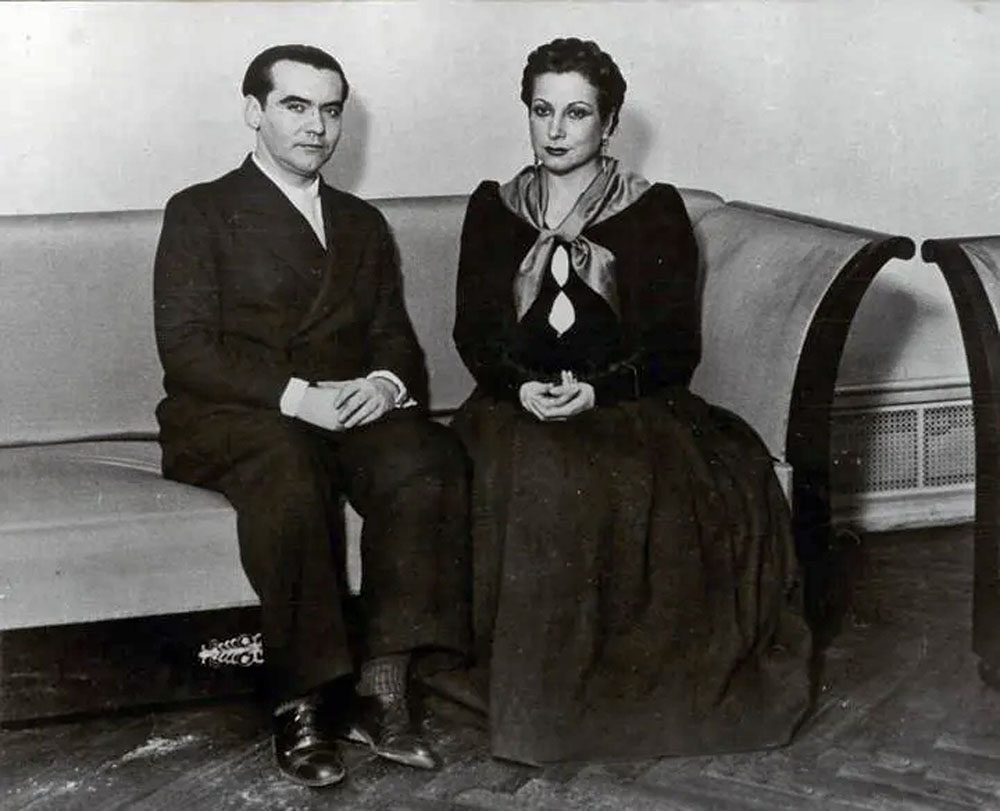
The opera is sung in Spanish (a first for me!) and includes flamenco vocals, guitar, drums, and dance in some sections. It is at times groovy and musically thrilling, while also managing to find moments of stark beauty and sadness. The cast is small and made up mostly of women (Lorca is a trouser role), with an all-female chorus and dancers. My part is that of José Tripaldi, a falangist guard who provides a moment of humanity before Lorca is disappeared. A highlight of the production is Spanish tenor Alfredo Tejada whose flamenco singing is something to behold.
BB: I was excited to see you’ll be taking on the role of Wotan in the Edmonton Opera Das Rheingold in May. Tell me about your preparations, how you’re finding the role so far.
Neil Craighead: Wotan is a dream come true, but also a daunting task to take on. I have been preparing slowly since I found out, starting with buying and preparing a score. For me that means underlining my text, translating it all myself, including everyone else’s lines (I use DeepL which if you haven’t tried it, puts google to shame), tabbing all my entries, along with all the usual music markings that get added to a score as reminders to wait, sing through, don’t go flat, be quiet, etc. So far, its going well, but the scale of the score is unlike anything I’ve done before. The scenes are endless and the text is long, which just means its more of everything to remember. I’m starting to see why prompters were a necessity for so long.
On the vocal side of things, Wotan is a gift. It just feels wonderful to sing. That’s not to say it’s easy, as it requires a level of engagement that goes beyond much of the standard repertoire, but it is written in a way that allows you to exist in comfortable registers for much of the role, with moments of intensity that require that extra gear. I’m really enjoying working on the role with my teacher Patrick Raftery who is no stranger to the demands of Wagner and joys of his music.
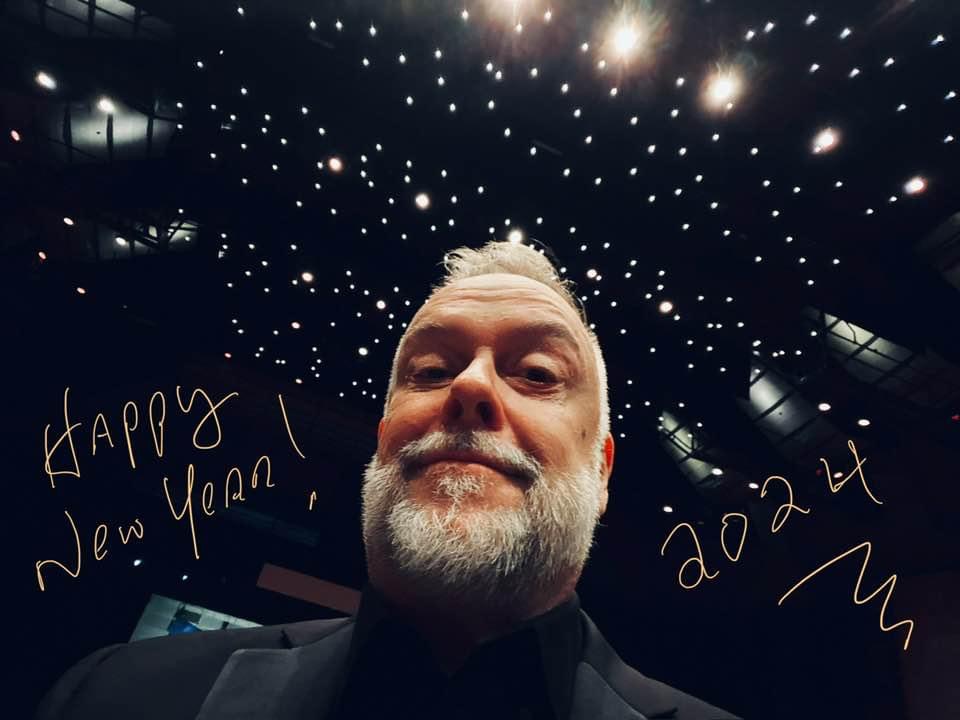
As far as being Wotan moving forward, I have no expectation that they will cast me in the next three operas, but I would definitely be open to the possibility. Having just turned 40, I really feel as though the next phase of my career is just beginning, and I would love to make Wagner’s music a major part of it. And of course, I have a wonderful relationship with the city of Edmonton through Joel Ivany and everyone at Edmonton Opera, and Kim Mattice-Wanat at Opera NUOVA, who has been a mentor and supporter of my career as a singer and pedagogue.
BB: You’re taking a graduate degree at the same time that you’re a practitioner onstage. What does the practical teach you about theory, and do you ever find your theoretical studies changing your approach to singing opera?
Neil Craighead: Returning to school as an adult student has been challenging and invigorating. I’m really loving the seminar classes that I’ve taken as part of my doctorate, and they are forcing me to flex brain muscles I haven’t used in some time. I think my practical experience only makes the theoretical more meaningful, as I can relate it to my time in the industry and on stage and evaluate different theoretical approaches through that lens. Where I’ve really enjoyed being challenged is in relation to positionality, hearing other perspectives and starting to notice my blind spots. Opera can be a polarizing art form for the modern consciousness, dealing with issues of violence against women, cultural appropriation, and insensitive programing are all conversations we must embrace rather than shy away from. I’ve learned a lot from my interdisciplinary professors and the readings I’ve absorbed and I’m grateful for their knowledge and perspectives.
I’m not sure that theory has altered my approach on stage, but it changes the way I think about my professional career and our industry when I’m off stage. I’m a singer, but I also have aspirations of producing opera or being involved in the running of a company or school at some point. I think its important to understand the landscape of modern academia and theoretical thinking and familiarizing myself with things like feminist theory or critical affect make me a better thinker. So much of being a performing artist or actor is an accumulation of life experience and knowledge that all contribute to your toolbox as an actor and your ability to think outside yourself. In that regard, everything I learn or experience makes me a better, more rounded artist.
BB: If you could tell the institutions how to train future artists for a career in opera, what would you change?
Neil Craighead: I think there needs to be a rethinking of the way we group singers in with other musicians in school training. The thing that separates us and forces us to be more than exclusively musicians, is text. It is impossible to separate the importance of text, namely poetry and scripts, from the job of singing the notes. I feel that the current system focuses more on music theory and history, and not nearly enough on poetry, text interpretation, languages, and acting. I would love to see more collaboration between music and theatre departments, training singing actors from the beginning rather than teaching singers to act once they have sufficient technique. I also feel like there needs to be a relaxing of the “classicalness” of the academy to permit more of the broad public who want to hear more musical theatre, jazz, pop, and modern vocals. If we can attract more singers from diverse backgrounds and introduce them to classical singing alongside their practice of “music for fun” we stand a better chance of finding the future stars of our artform.
BB: Does one have to be an extrovert or even an egotist, to be a good opera singer?
I believe that to be a great opera singer one needs a sense of self belief, that we have something to say and a voice worth listening to. I’m not sure that’s the same thing as being extroverted, at least not all of the time. Many of the best singers I’ve encountered on stage are mild mannered and quiet off the stage, while just as many are as loud in the pub as the rehearsal room. Many artists suffer from imposter syndrome and self doubt, so the battle is between that and the quiet voice that says “keep going”, and I have been fortunate to have a team of supporters and mentors that push me and encourage me to continue on the path in times of struggle.
BB: Toronto is insanely expensive. Do artists, singers need a dayjob nowadays?
Neil Craighead: Vancouver is no better, so frankly, yes! I reject the idea of starving for your art, and I believe the best art comes from a place of freedom to create, which requires stability. I have had all kinds of jobs since I began my singing career, from waiter, to carpenter, to singing teacher, they were all necessary at the time, and all taught me something I needed to know, adding to my ‘toolbox’. I’m trying to make singing my day job, hence the doctorate degree. I really enjoy teaching and I feel like I have a lot to give in that regard, so I’d like to have the stability of a university job, along with the benefits and pension which are unheard of for freelance singers. This also reflects the reprioritization in my life since my children entered the picture and the need for family stability, reduced travel, and a plan for the future.
BB: Singers come out of training programs, including the ensemble studio of the COC. And then what? Some people can make a living, some can’t. Stratford Festival and National Ballet function as places to employ almost 100% Canadian talent. Yet the fiction is out there that we need to bring in singers from abroad. Can you imagine Canadian opera with Canadian personnel?
Neil Craighead: One has to acknowledge the power dynamics in play here. As freelance artists we have no job security, no reliable paycheque beyond our next contract, and our relationships with producers are extremely important, thus some artists will be very careful in their answer to such a question.
I have said for some time that the current model of opera in Canada doesn’t serve artists at all. I have mentioned the challenges that we face as self-employed independent contractors, and I would really like to see the system change to provide a more livable experience for artists. I like seeing things like artists in residence programs that allow for stability and family life, and I think that idea could be expanded to see small fest-like core ensembles in major companies.
I have zero issue with flying in a major talent to sing a big role that makes the production possible, but I find it frustrating to see secondary and comprimario parts go to foreigners, when there are limited performance opportunities within the country and visa restrictions on singing internationally for Canadians. How is one expected to make the leap from an ensemble position to the working profession if we cannot cut our teeth on these intermediary roles. It limits opportunities for all except the early exceptional.
It also forces Canadian singers looking for stability to leave the country and seek it elsewhere, namely German speaking Europe, which on the one hand is an impressive export, but on the other, sends many of our most talented singers oversees and renders them invisible to the Canadian public.
BB: Do you have any influences or mentors you’d like to acknowledge?
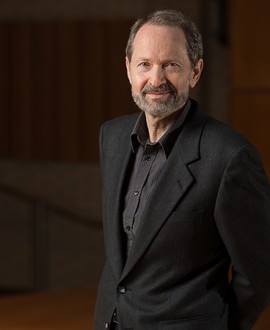
There have been so many influential people in my career it would be hard to acknowledge them all.
I’ve already mentioned a few, Gerald Wirth, Kim-Mattice Wanat, and J. Patrick Raftery, but I need to include Wendy Nielsen who has been a wonderful voice teacher and friend for many years and Liz Upchurch for her guidance and persistence during my time in the COC Ensemble.
Your own brother Peter Barcza was a formative influence during my undergraduate years at UBC, and Jason Howard was a catalyst for the latest phase of my career. Our exchange of renovations for voice lessons was one of the most productive times in my life and I miss our lessons in his kitchen (pity his neighbors, imagine two Wagnerians bellowing on the other side of a duplex).
BB: What’s coming up for you this year?
Neil Craighead:
February 21, 23, 25 & 27: Golijov – Ainadamar – Jose Tripaldi – Pacific Opera Victoria (POV)
Easter – Bach – St John’s Passion – Soloist, Jesus – Vancouver Bach Choir
April – Mozart – Cosi fan tutte – Don Alfonso – UBC
April – Mozart – Reqiuem – Kamloops Symphony
May – Wagner – Das Rheingold – Das Rheingold – Edmonton Opera
September – Doctoral recital (Likely rep: Glinka – Farewell to St. Petersburg, Wolf – Michelangelo Lieder, Vaughan Williams – Songs of Travel.
TBA Fall Mozart role
Winter 2025 – Dove – Flight – Minskman – Vancouver Opera

 barczablog