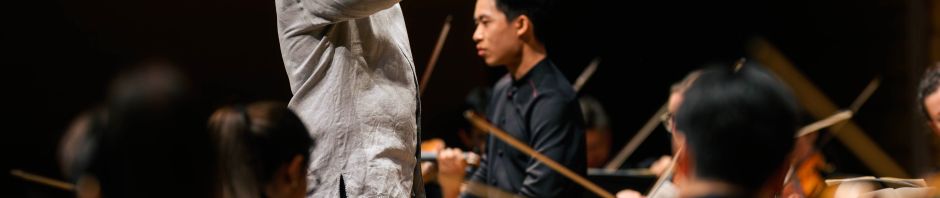
Last night’s final 2024 Toronto Summer Music Festival concert at Koerner Hall, titled Beethoven Unleashed, featured the violin concerto and the Eroica Symphony, a perfect snapshot of TSM at its best.
TSM combines the educational objectives of an academy and a showcase in a festival of concerts. Don’t let the “academy” part scare you off, the performances last night were as good as anything I’ve heard this year.
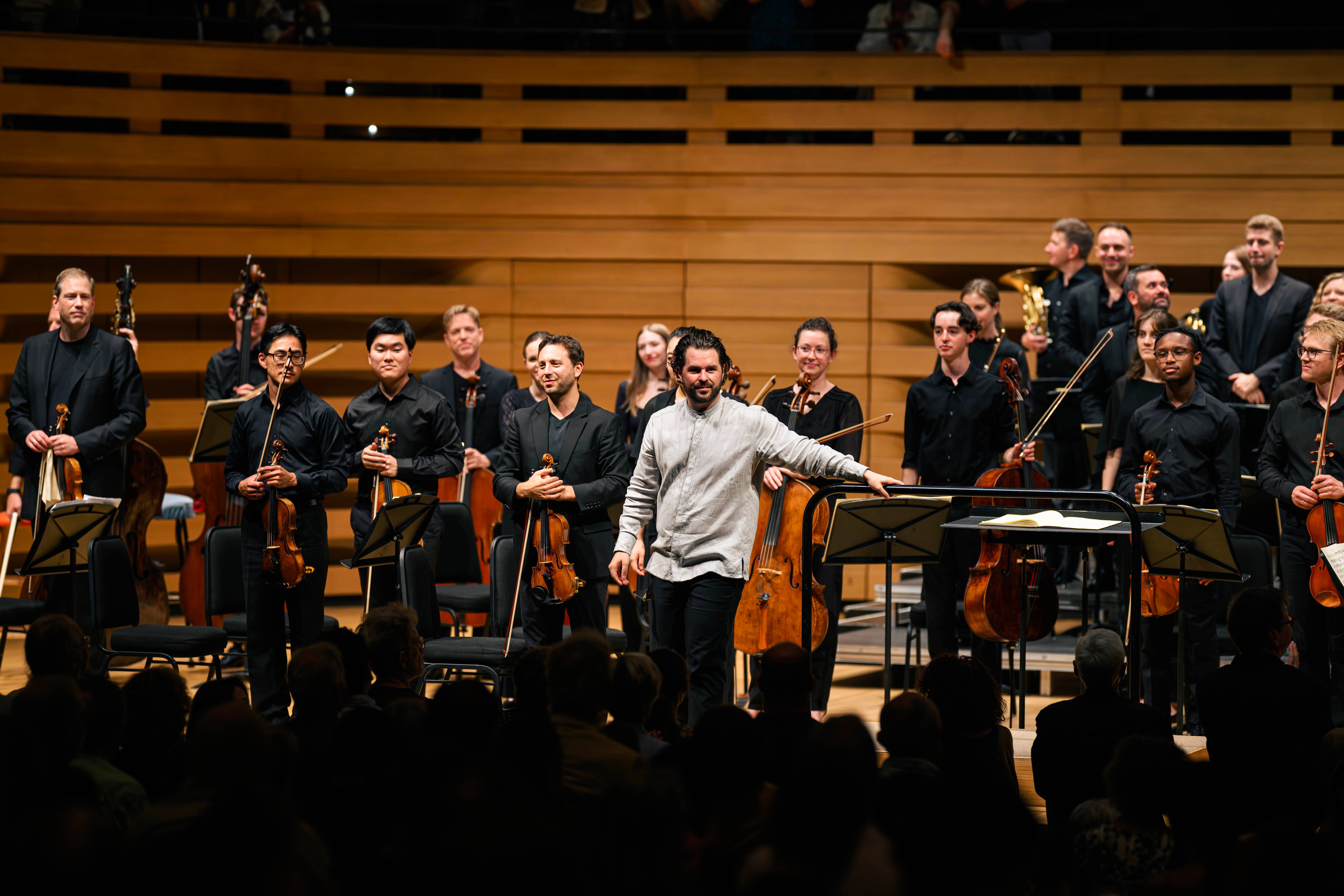
I was struck by a photo of so much youth, conductor Simon Rivard and the professionals from the Toronto Symphony such as cellist Joseph Johnson or violinist Jonathan Crow among them as equals. The warm informality we see throughout the festival is beautiful to see and to hear.
To begin it was the Violin Concerto, Op 61.
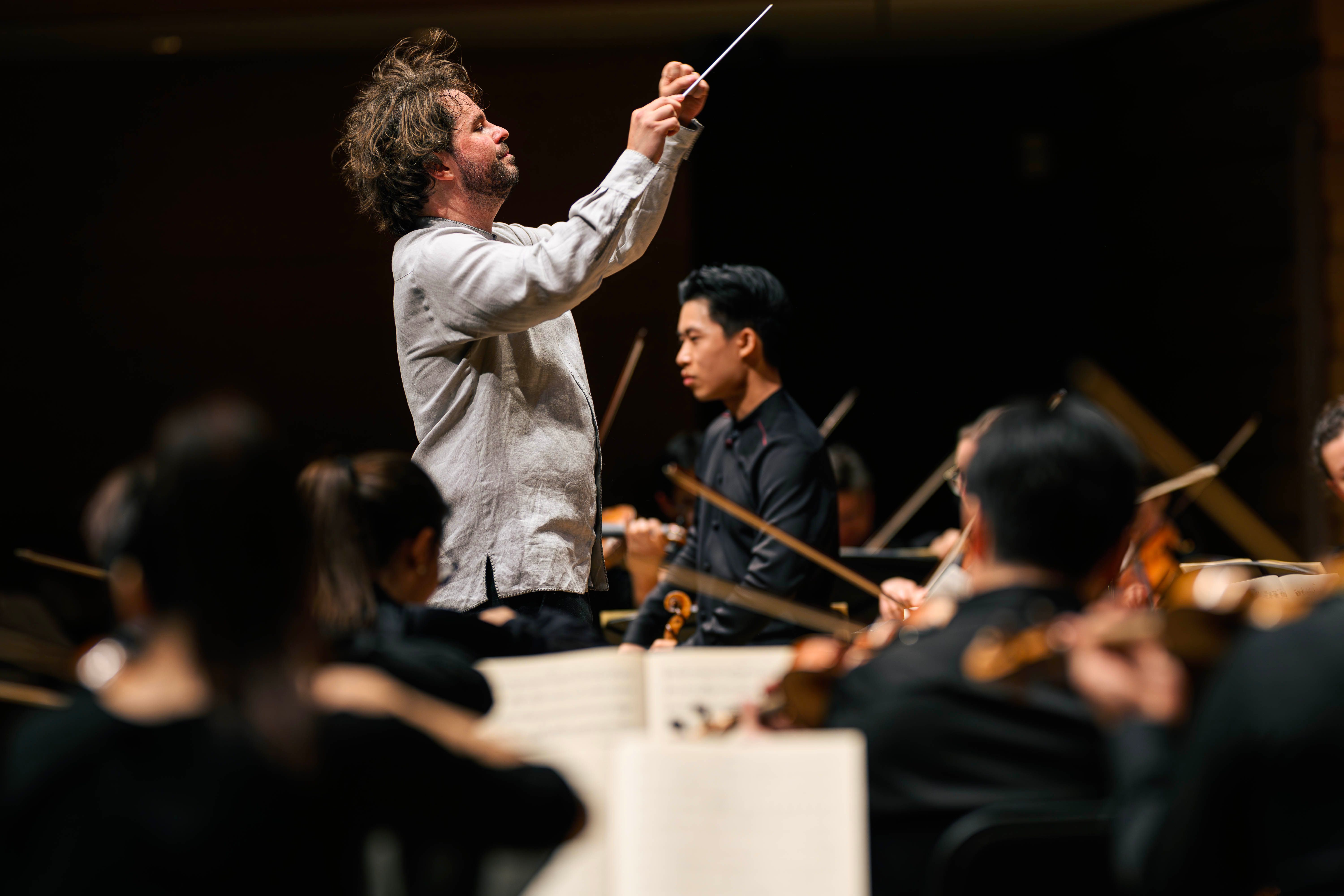
Kerson Leong was soloist, with Simon Rivard leading the TSM Festival Orchestra. When I first heard this work decades ago I found the first movement to be a kind of agony, its passionate struggle almost unbearable. Or maybe it is simply that without the flair and flamboyance of a soloist like Kerson Long the piece can become boring. At times there was a kind of rhetorical gesture as though to set up his entry, an effortless showmanship. Not only was his tone larger than life but he has a kind of presence on the stage. The cadenza for the first movement felt titanic, at times giving us multiple voices on different strings. Difficult as it looks and sounds, there was never a moment when I doubted his ability to surmount all challenges in the piece. It was a piece of theatre to watch them making magic together.
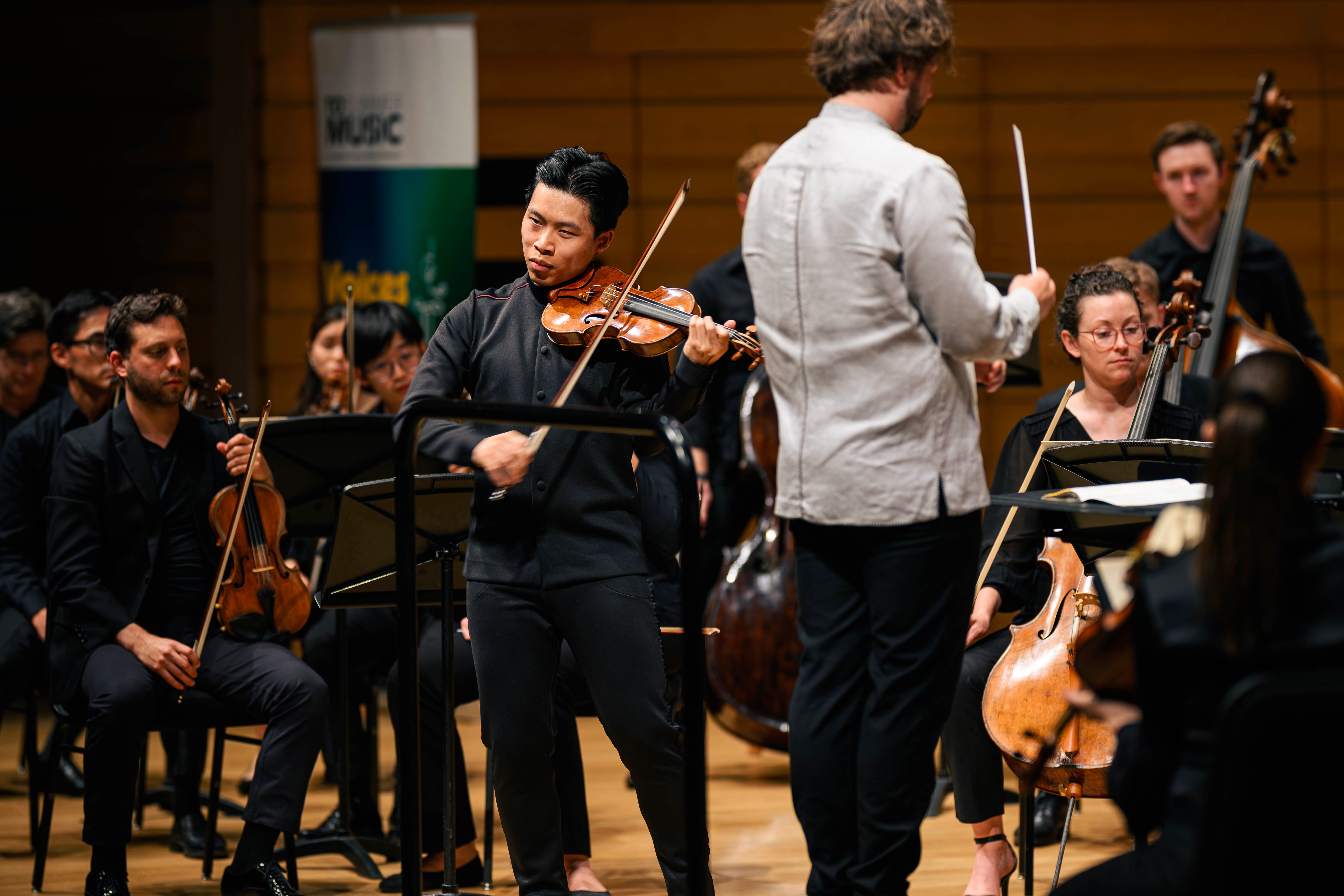
As an encore we were treated to a deliciously delicate reading of a slow movement from a Bach sonata.
After intermission we encountered another well-known work from the same middle-period of the composer, Beethoven’s symphony #3, known as the Eroica. I’m writing this next day after having tossed and turned through the night with music from the concerto and the symphony in my head, musing about the advantages of hearing music from the same decade and similar style of a composer’s output. I was reminded of Stewart Goodyear’s Beethoven marathons, when we would hear the sonatas played in order, as the experience invited us to notice similarities between adjacent creations, his new innovations jumping out for us seeming almost as revolutionary as they must have been in his time.
I pulled up the list of opus numbers to see the works coming up before and after the 3rd Symphony and the Violin Concerto. Notwithstanding the limits to the use of opus numbers given that music is being conceived before it is written down and possibly published later than it was really composed: the list is full of tantalizing hints. This little list that’s just a small part of Beethoven’s output takes my breath away just looking at it.
Op 53 –Waldstein piano sonata
Op 54 — piano sonata
Op 55 — Eroica symphony
Op 56 — Triple concerto
Op 57 — Appassionata sonata
Op 58 — Piano concerto #4
Op 59 — three Razumovsky string quartets
Op 60 — Symphony #4
Op 61 — Violin Concerto
The thing rattling in my head overnight was the way Beethoven seems to be thinking about sound and hearing, and in the process reinventing music almost by accident. Of course, he was gradually becoming deaf. The Waldstein’s opening notes may be music on the page but in some respects they’re like noise, repeated notes that can be percussive, although they’re soft at first, almost on the edge of our hearing. We get something like that to begin the violin concerto, a drum playing the same note to start. And we have something like that at the start of the scherzo of the symphony, a soft rustling in the orchestra that will get louder but to begin is almost imperceptible. Ditto to begin the last movement of the Eroica, as though the composer is playing a game of “can you hear the music?” The playfulness of these pieces is evident but also their refusal to play by the old rules. Indeed they’re daring precisely because they challenge all the old assumptions. Excuse me for going on like this (and there is so much more one could observe about similar sounding passages in those other works, for instance the soft opening notes of the 4th piano concerto), but it’s especially valuable that TSM were willing to program a concert this way, offering this opportunity to hear the music differently. I’m very grateful.
And conductor Simon Rivard extracted superb performances from his ensemble. Part of the joy is hearing a big work in the intimate acoustic of Koerner Hall, every player clearly heard, although that clarity is ideal when they play at this level. The horns in the trio of the scherzo were especially gorgeous, not just clear but with every phrase shaped to perfection, in a passage where players sometimes come to grief (I’ve heard a few fluffs in my time). I’ve never heard this segment played so well in my life. In fairness every section, every player was good, in a concert that was close to flawless in its execution and a fitting climax to a wonderful festival: the last concert at Koerner although there’s still more to come elsewhere.
For further information (about making a donation, to see names of Academy members or to read more about the festival that concludes on August 3rd) visit their website. The matching campaign ends this weekend.

 barczablog