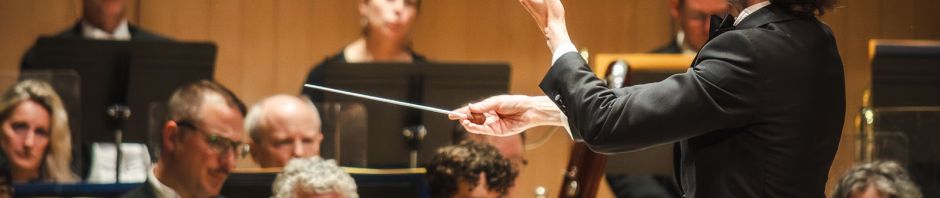
The search for fun can be a serious pursuit.
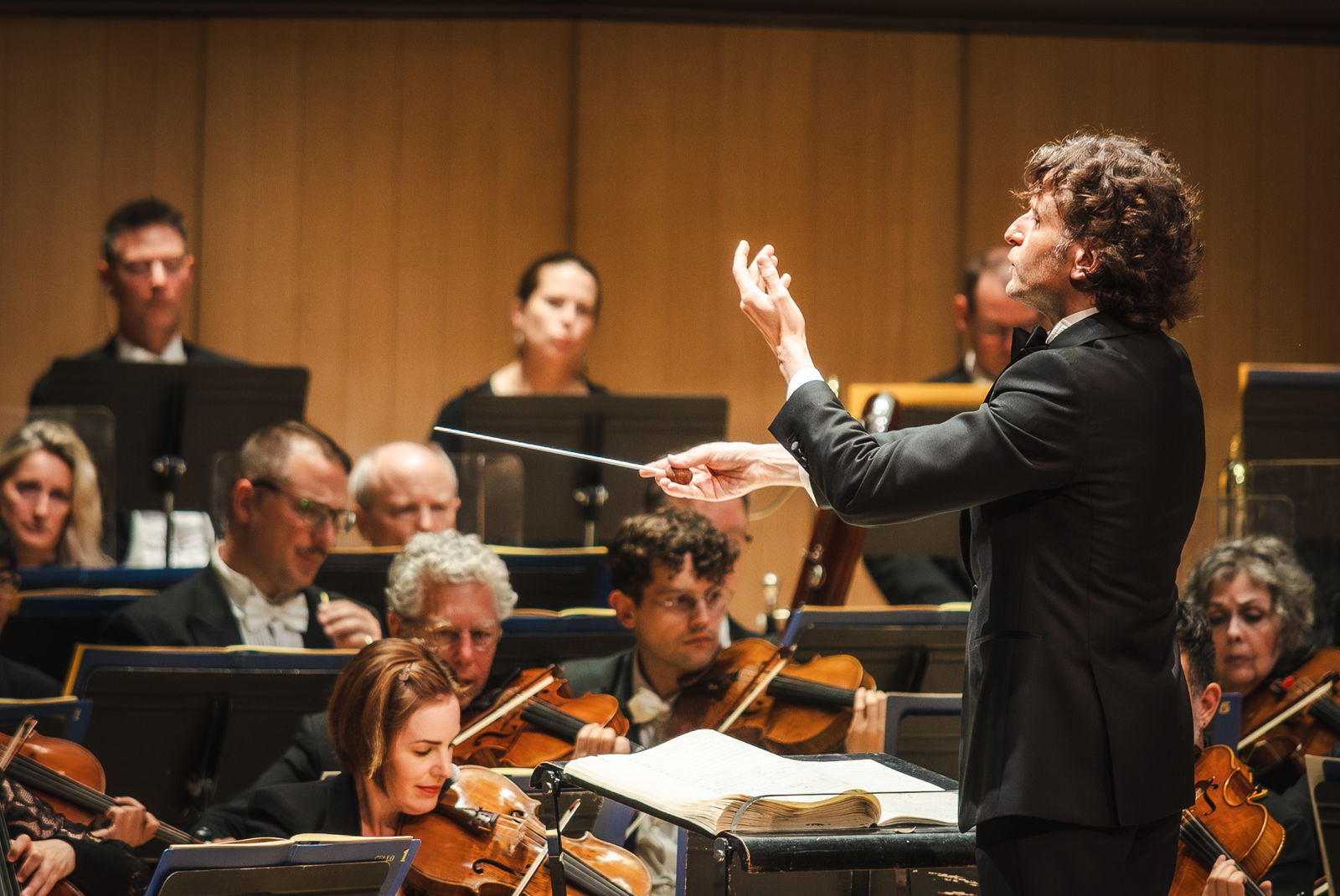
Play is the operative word for a Toronto Symphony program titled “Spirited Overtures:”
Gioachino Rossini–Overture to The Barber of Seville
Igor Stravinsky–Jeu de cartes (Card Game)
–intermission–
Wolfgang Amadeus Mozart–Violin Concerto No. 3 in G major
Johann Strauss II–Overture to Die Fledermaus
It was a theatrical event, overtures to opera or operetta to begin and end with a ballet score and a concerto in between.
TSO Music Director Gustavo Gimeno explained the rationale for the program. The core idea of this concert is Stravinsky’s 1936 ballet score Jeu de cartes, that quotes from Rossini and Ravel among others. It was remarkable to hear the Barber of Seville Overture and a few minutes later to be hearing a passage in the last section of the ballet that quotes at least one, maybe two themes from Rossini.
The orchestra offer a nerd’s exploration of comedy, drilling down on music-making that reminds us of humans as cartoons.
Yes of course that famous overture leads us to the famous Bugs Bunny cartoon.
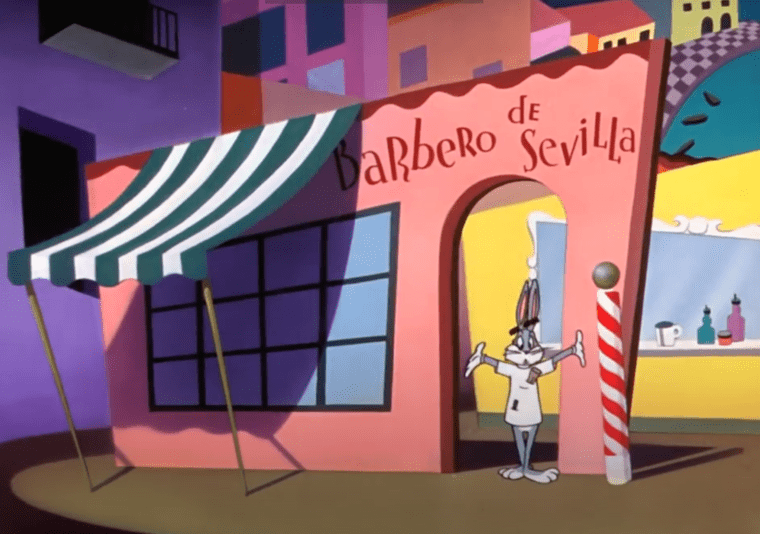
Let me shave your crop. ….Daintily, ….daintily…”
What Rossini (especially in his Barber of Seville overture) and Stravinsky (in Jeu de cartes) have in common is an approach to composition that brings out the comical.
Rossini famously makes humans like automatons or puppets or robots. The music resembles a cartoon because it’s often so quick it flashes by like an express train.
Stravinsky in Jeu de cartes, as in Petrouchka, gives us a ballet score that plays up angular little phrases, jagged chunks of music that don’t offer a lot of pathos but instead suggest, again, cartoons or puppets, somewhat similar to the images on playing cards. Remember too that cards in a deck challenge us with a kind of arbitrary randomness, and Stravinsky does that for us in the music, so we don’t get an orderly progression from say small to big or dark to light, but sudden abrupt shifts when the cards take us suddenly to a new face or idea. The phrases too are short little ideas, something like what we see on each card.
Stravinsky’s Jeu reminds me of Debussy’s Jeux (1913), another ballet score that Stravinsky surely encountered given that he was not just a young friend of Debussy, but busily premiering his own Sacre du printemps at the same time as Debussy’s score was premiered, and decisively emerging out of the older composer’s shadow. Both scores are often very laid back, taking us into a genuinely recreational sort of music, playful and relaxed. The question of the influence of the composers upon one another is a deep and complex one that I’m only hinting at, but Stravinsky offers us lots to think about in the way he plays with many sorts of musical influences, chopped up into tiny chunks in this score as if they’ve been run through a food processor. The chief structural element is a thematic figure that I understand to represent each of the three deals, like three hands of a game, to signify the one organizational principle around which everything else is built. We hear that music –suddenly making calm order out of the chaos– at the beginning, after five (to introduce the second deal) and fifteen minutes (to introduce the third deal) and again near the end of the 21 minutes piece.
After intermission we were presented with a stunning rendition of Mozart’s third violin concerto played by soloist Renaud Capuçon, the violinist on a Deutsche Grammophon recording with the Orchestre de Chambre de Lausanne.
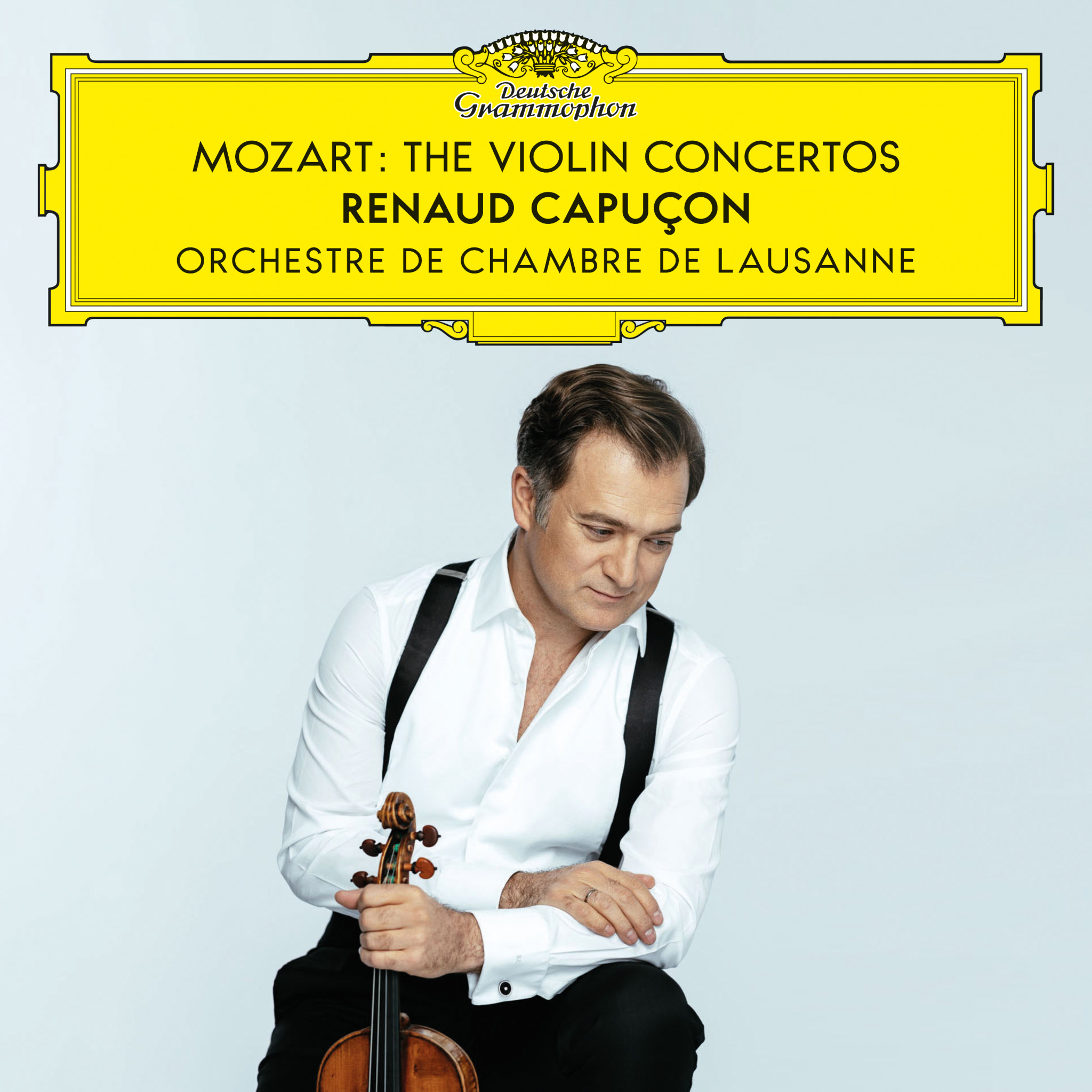
His performance with the TSO who play on modern instruments makes a brilliant complement to the Tafelmusik Mozart 2nd violin concerto I heard last week (when they played on original rather than modern instruments, with Rachel Podger as soloist). It’s an endless conversation at this point as to how far one goes in pursuit of authenticity, whether through original instruments or historically informed performance practices. I don’t think it makes sense to argue or insist on one over the other but rather to register gratitude and wonderment that we have the chance to hear both sorts of performance.
Capuçon offers a stunning sound, a wonderfully subtle delicacy to his tone in the middle movement and perfect intonation. The tasteful cadenzas especially in that theatrical last movement offer us another side to the playfulness in this program.
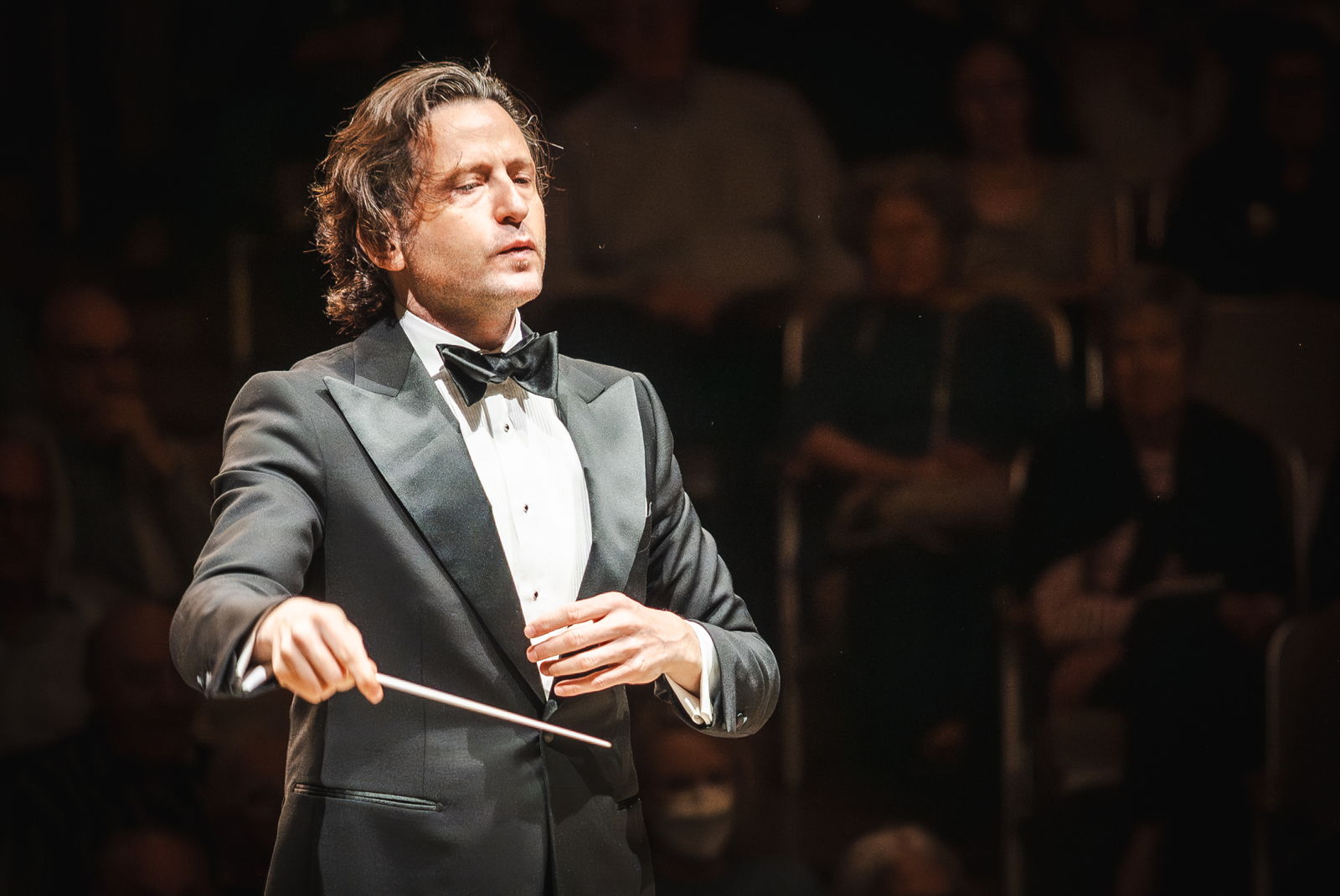
We concluded with more fun in a breath-taking reading of Johann Strauss Jr’s Die Fledermaus overture. I’m glad we had a chance to see a playful aspect of Gustavo tonight, the TSO responding eagerly to his lead.
And the TSO will be playing again Saturday night at Roy Thomson Hall (8:00 pm)and Sunday afternoon at George Weston Recital Hall (3:00 pm).
 barczablog