Tonight Music TORONTO presented Rachel Fenlon’s solo performance of Schubert’s Winterreise.
This isn’t the usual winter journey. One normally expects a singer and a pianist to undertake this romantic cycle of 24 songs. It’s less usual to have a female singer, unprecedented to have a self-accompanied Winterreise.
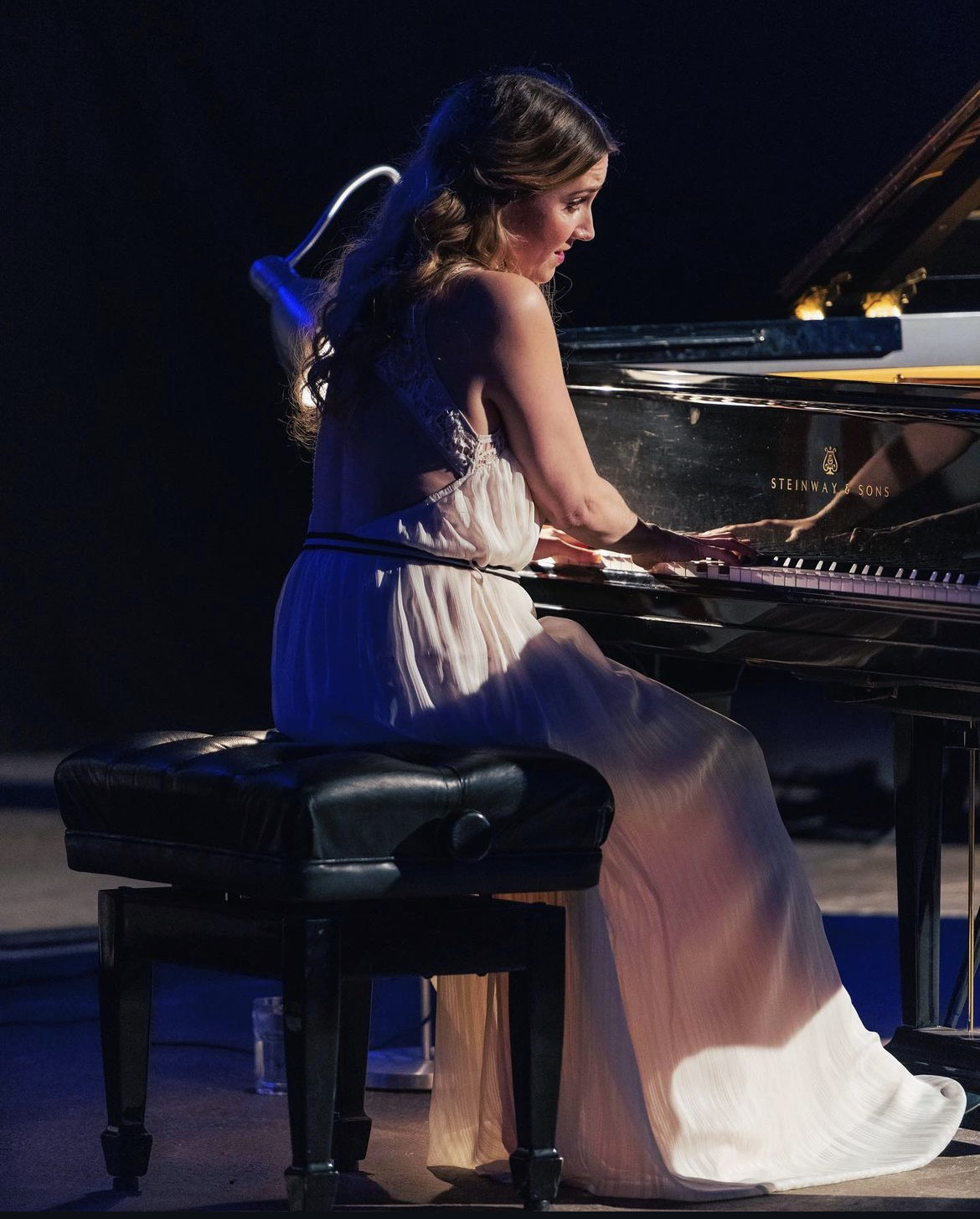
To be honest, my first thoughts as she came onto the stage for the concert was the simple fact of Rachel’s feat. I would compare it to watching Stewart Goodyear play all the Beethoven piano sonatas in a series of concerts in a single day. Perhaps artistry should have been my first consideration, but first I was simply struck by the magic of seeing something I’d never seen before, a singer accompanying herself in this cycle, playing almost note perfect. It felt a bit like a happening, an event. For anyone who sings or plays (and I saw a few artists in attendance) it’s a bit of a jaw-dropping experience to see and hear the cycle done this way.
I say that as a kind of preamble, before I admit that I did not expect Rachel’s reading of the cycle to be such a stunning achievement, not just an athletic feat but a genuine revelation showing me new ways of understanding the cycle.
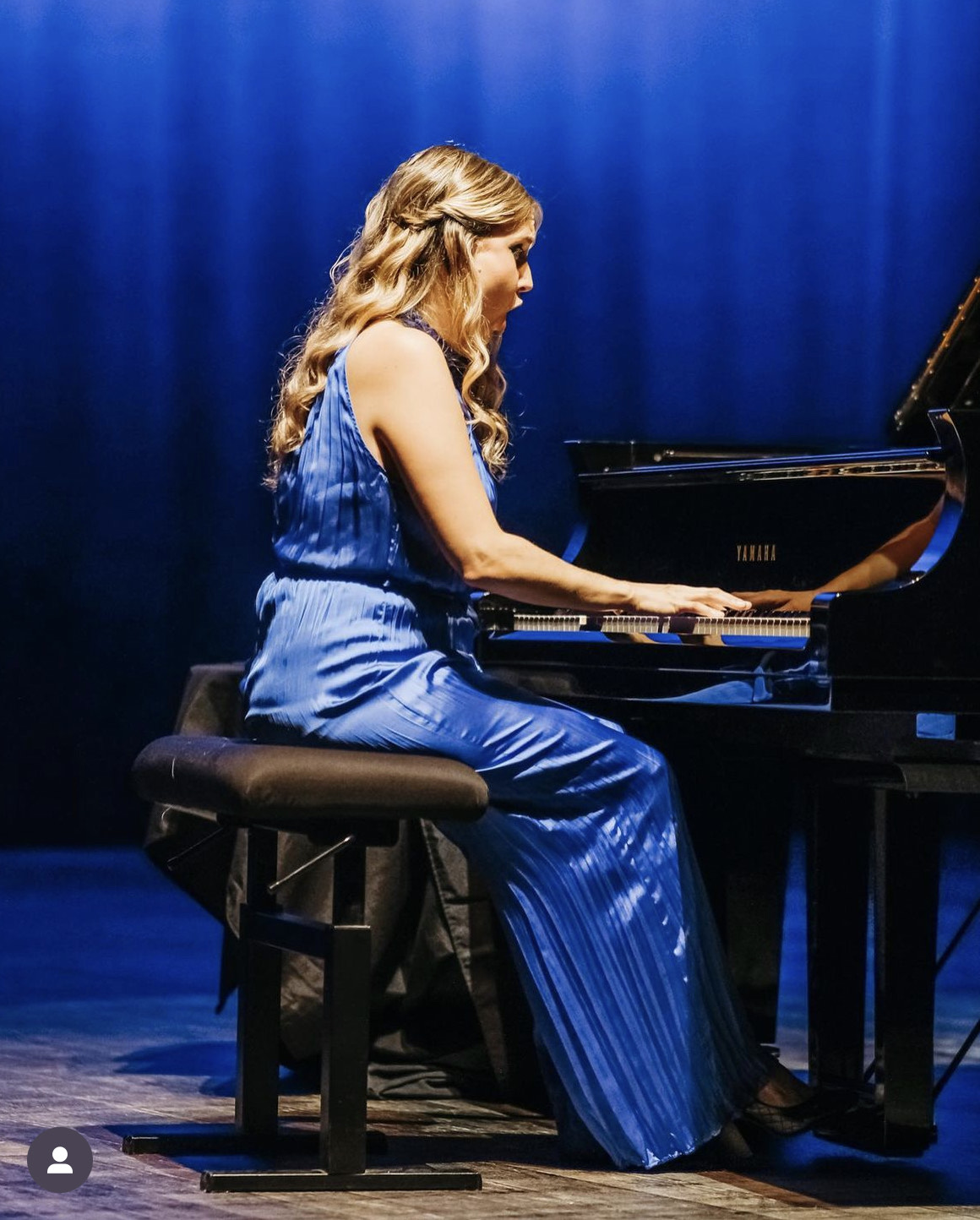
In the very first song I was amazed by what I was hearing, a remarkable approach to dynamics. I suppose a singer collaborating with a pianist could theoretically do the same thing, but it felt so tight. It’s so unique, that I was about to write the word “they”, thinking of the singer and the pianist working together: but wait this was just from one person. The range of intensity varied quite sharply, gradually a little louder, or a little softer, with a piano part precisely attuned to the voice.
The pianism took me by surprise. Yes I knew already that Rachel is truly a double threat, as impressive at the keys as she is with her singing: but the interpretation is highly original, as I watched her playing a unique version of Schubert. Letzte Hoffnung (last hope) for example, a song where the piano part stabs at you with its pointilistic agonies, doesn’t have to be a smooth pairing if the piano sound seems to erupt from inside of the poet, the irrationality of it wonderfully disturbing. As we watch Rachel the sounds bursting out of the piano almost seemed to surprise her. It was chilling.
At times it’s a huge task, that for some of these songs the artist playing and singing is up to their eye-balls coping with complexities. It’s an amazing feat, and yet I never felt that Rachel missed anything. She knew every note, every nuance, a one-woman show that she has rehearsed perfectly. It’s a stunning achievement.
My favourite songs didn’t disappoint.
I have always loved Die Post (the post-horn), a beautiful little drama with the hint of riding rhythms, about a possible letter, shifting back and forth between major and minor with the hope and despair of the protagonist. Perfect (but so were all of the songs).
The last two were like a unit, first Die Nebensonnen (the mock suns) and then Der Leiermann (the Hurdy-gurdy man) , Rachel almost vanishing into the keyboard as she seemed overwhelmed by what she was feeling, what she was revealing to us. For that final song it’s self-referential, a reminder that she is like the Hurdy-gurdy man, also making music.
Jane Mallett Theatre was ideal for this sort of presentation, an intimate venue allowing Rachel to sing and play a great deal of mezzo-piano and pianissimo, employing a stunning legato. More than once I found myself thinking about the range of voice advertised as “soprano” that ventured so easily to the lowest notes one might expect. But this wasn’t a soprano piece. It’s usually a tenor or a baritone.
I need to check out the recorded version that Rachel released in the fall. We experienced something very vivid in the live performance, a 24-part journey, that felt fresh and instantaneous. I wonder how she approached it on the recording.
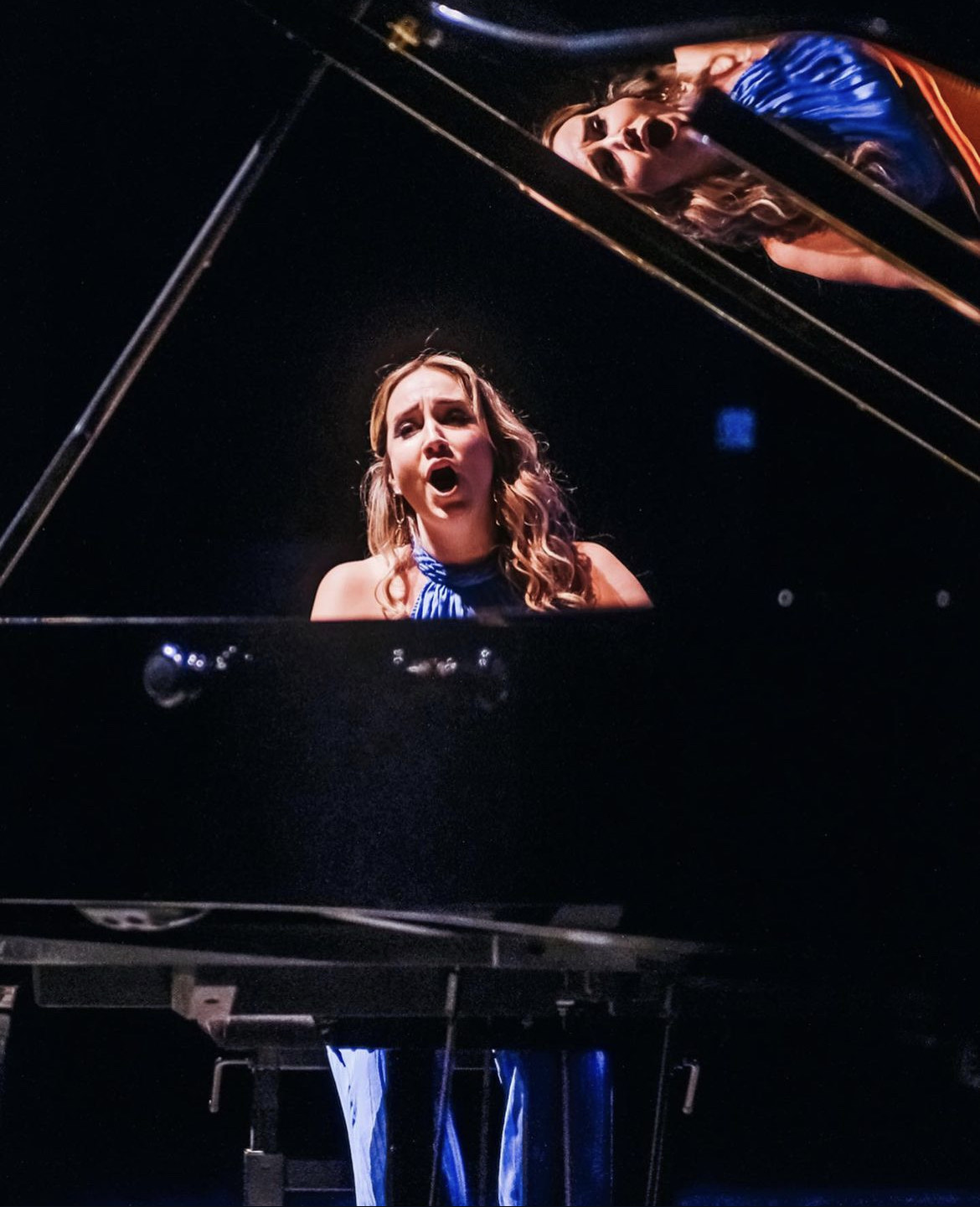
This is a morning-after addition. I meant to offer my appreciation for the titles, which were big and bold.
I asked Rachel if she participated in making them, or if they were created by Music TORONTO.
Rachel replied
“Yes! I made the files and wonderful Maíri [Demings] from music Toronto operated them.”
I felt they were very good, calling them the gold standard.
Rachel said
“I’m so glad we did them – it makes such a difference and I prefer it to paper… all that rustling drives me crazy!”
Agreed. I wish other organizations such as the TSO would take this to heart. It’s also worth noting that while the Canadian Opera Company pioneered surtitles, they could do better. For their co-production (co-produced with Opéra de Montréal) of La Reine-Garçon every word in French is given a title plus the translation into English. I compared that to Madama Butterfly last weekend, when there are times when we get a title, and then people sing verses and the surtitle space is blank. Perhaps somebody assumes that we remember what it all means, as in Pinkerton’s “Addio, fiorito asil”. Yes he’s repeating lines he has already sung. So is it assumed that because we saw the translation, that we will know what each line means and we don’t need titles? I would prefer to have the option to have the title there even if I know what the words mean. What was so exceptional with Rachel’s titles was not only their thoroughness, but their bold size. Some of us have trouble reading the small text. Why not use a bigger font?
 barczablog