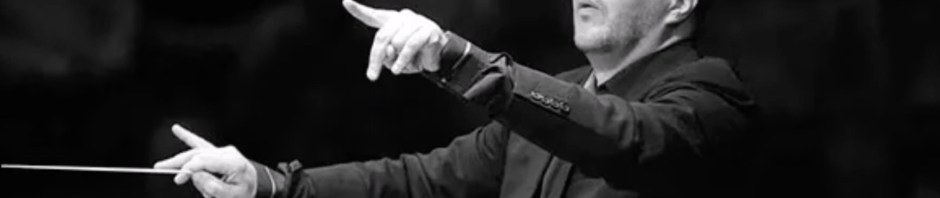
The program for tonight’s Toronto Symphony concert conducted by Thomas Adès was a fascinating mix. In a concert bearing the title “Holst’s The Planets”, for the well-known work that would conclude our evening, we heard two of Adès’s big recent works, including “Paradiso”(the third part of Adès’ ballet Dante): itself full of planetary references.
I was blown away by what I saw and heard. The first comparison that comes to mind is Pierre Boulez, the composer who also made a career as a highly original conductor. I wonder whether we will ever hear Adès conducting Beethoven or Stravinsky or Mahler. Someday I hope. Adès is a very special conductor.
Let me first speak of the work that most of the audience came to hear, the Holst suite. We’ve heard lots of interpretations. What I saw was some of the most precise & exquisite control of an ensemble that I’ve ever experienced. Every note seemed thought out. Every phrase was clear in ways I did not expect. The phrases that can jolt you in Mars had maximum jolt. The dissonant passages in the coda of Venus, where an orchestra can sound harsh, where the crescendo can be unpleasant, were shaped with sensitivity & delicacy. Mercury was quick and nimble. Jupiter was especially quick and boisterous. Saturn was slower & more profound than usual. Uranus had me wishing I could hear what Adès would make of the Scherzo in Mahler’s 9th, a gift for bringing out inner voices especially when they’re grotesquely accented. Neptune with an invisible Soundstreams Choir 21 was particularly magical, the audience spellbound & silent while Adès held his hands up for that mystical fadeout to conclude.
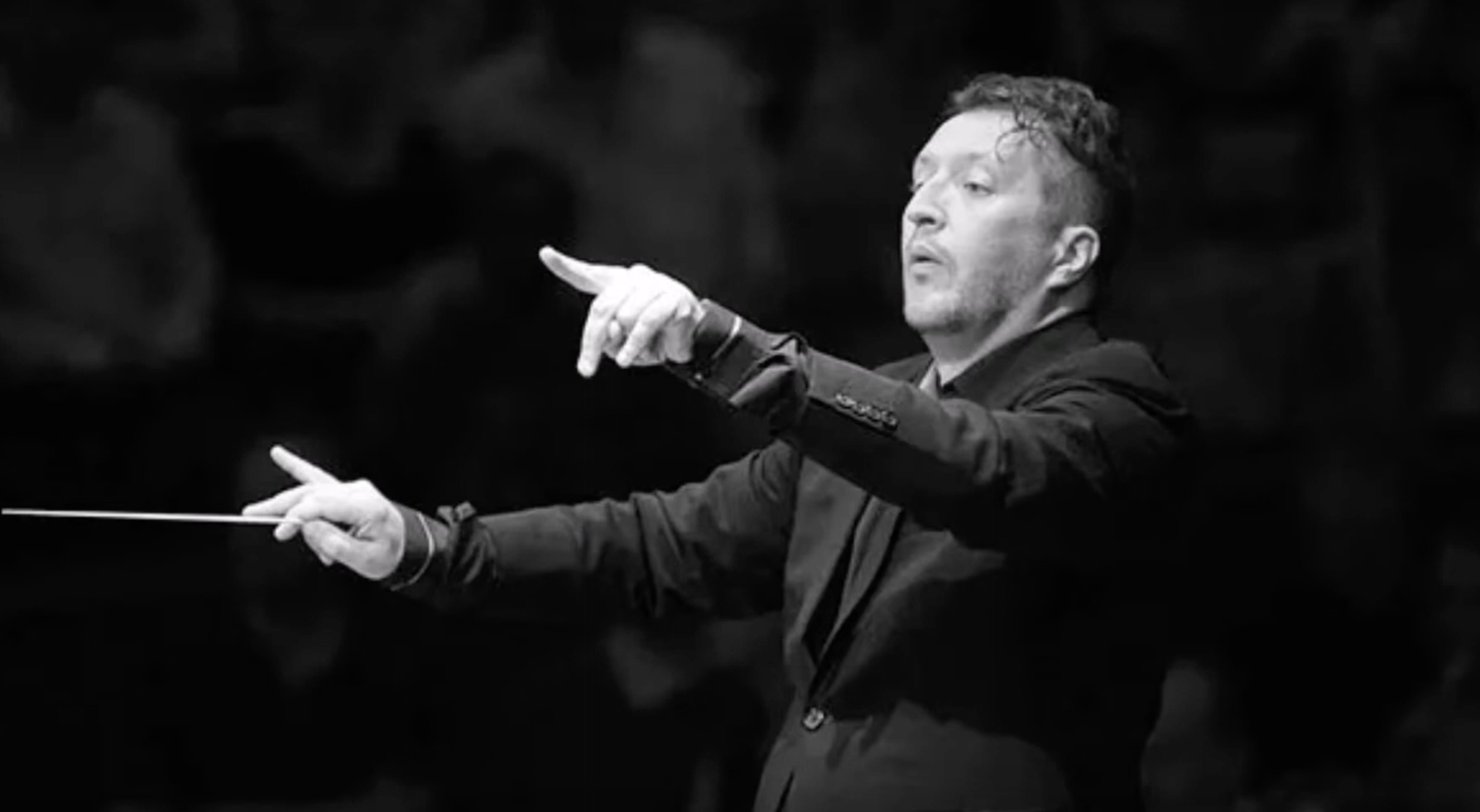
Adès is a superb conductor, with a clear beat and a tendency to throw himself into the performance. And the TSO responded. I hope the TSO invites him back, so that we get to hear him again someday. I can think of a hundred things I’d like to hear him undertake.
The first half of the concert was actually the reason I was there, perhaps in contrast to the Holst Planets junkies in the crowd. As an admirer of the composer I showed up with a basic curiosity as to whether the creator of The Tempest or The Exterminating Angel could conduct (and holy cow yes he can), but was there eager to hear these compositions. The brilliant conducting is like an unexpected bonus.
Those who might be fearful of the dissonant music of modern classical composers need to hear Adès, whose compositional voice is beautifully original, and with a stunning variety.
The stark difference between the two compositions from Adès is itself uncanny, because you wouldn’t expect the same composer to be responsible for two such contrasting works.
“Paradiso” is one relatively small portion of a larger work, Adès’ ballet Dante based on the Divine Comedy. I wish the National Ballet would listen to this music, because it deserves to be heard, deserves to be choreographed.
There are multiple connections to Holst’s Planets suite. Not only does Dante also write about planets, not only is Dante –like Holst– more concerned with a spiritual rather than an astronomical perspective, but both suites end with a wordless chorus of female voices. The parallel is a programmer’s dream, given that the voices get two chances to shine.
Adès writes music full of repetition, but although there may be patterns don’t think of it as minimalist or pattern music. The orchestration is glorious, a fabulous array of colours and timbres, building to a stunning conclusion. And as I suggested earlier, this is not music to be confused with the edgy sounds of modernism, music that is melodic and tonal rather than the dissonant box office poison some people expect when you say “new music”.
The work that followed couldn’t be more different, namely Adès’ piano concerto including the original soloist who premiered the 2018 commission, namely Kirill Gerstein. I have to wonder about the conversations between Adès and Gerstein, as I kept being reminded of Gershwin’s Concerto in F, a deliciously jazzy piece that begins with a decisive statement from the timpanist. We get something similar before too long. Adès offers a more thoughtful, more dissonant jazziness. The middle movement is profound, introspective and dark. The concluding movement is hyper-energetic. I wish I could get my hands on the score, to see how those sounds are created, and to get a sense of how difficult the piano part is. Gerstein made some great music at the piano, whether in the moody middle movement or the wild finale.
I’m doing something a bit different than usual to conclude, sharing a performance of the concerto that I found on YouTube. No it’s not the Toronto Symphony, but here’s the same soloist and conductor, to give some idea of what an amazing composition you might hear if you attend the concert, that repeats Thursday and Saturday at 8:00 pm.
 barczablog