I was completely blown away by the latest Tafelmusik concert I saw and heard tonight. It’s a reminder that, while we associate Tafelmusik Baroque Orchestra with music from long ago, that doesn’t mean they can’t surprise you with something new. Indeed what I heard tonight felt new and even revolutionary.
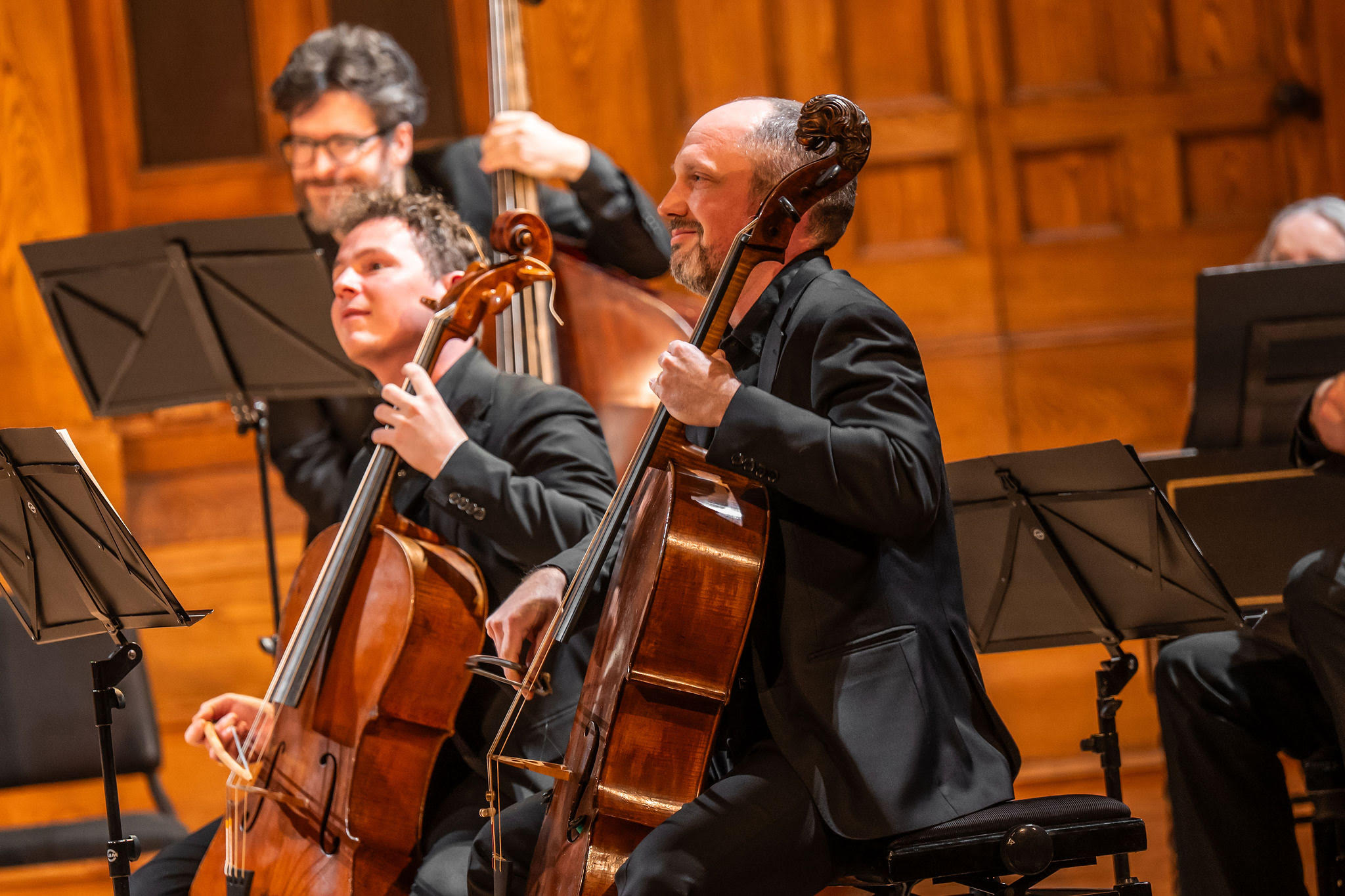
It wasn’t the first time I sat at a concert wondering: do we know what the baroque is supposed to sound like, and is this (what I am hearing) an accurate representation of that style? Baroque entails improvisation, elaboration and decoration, and of course one doesn’t necessarily find all the notes they play written on a page.
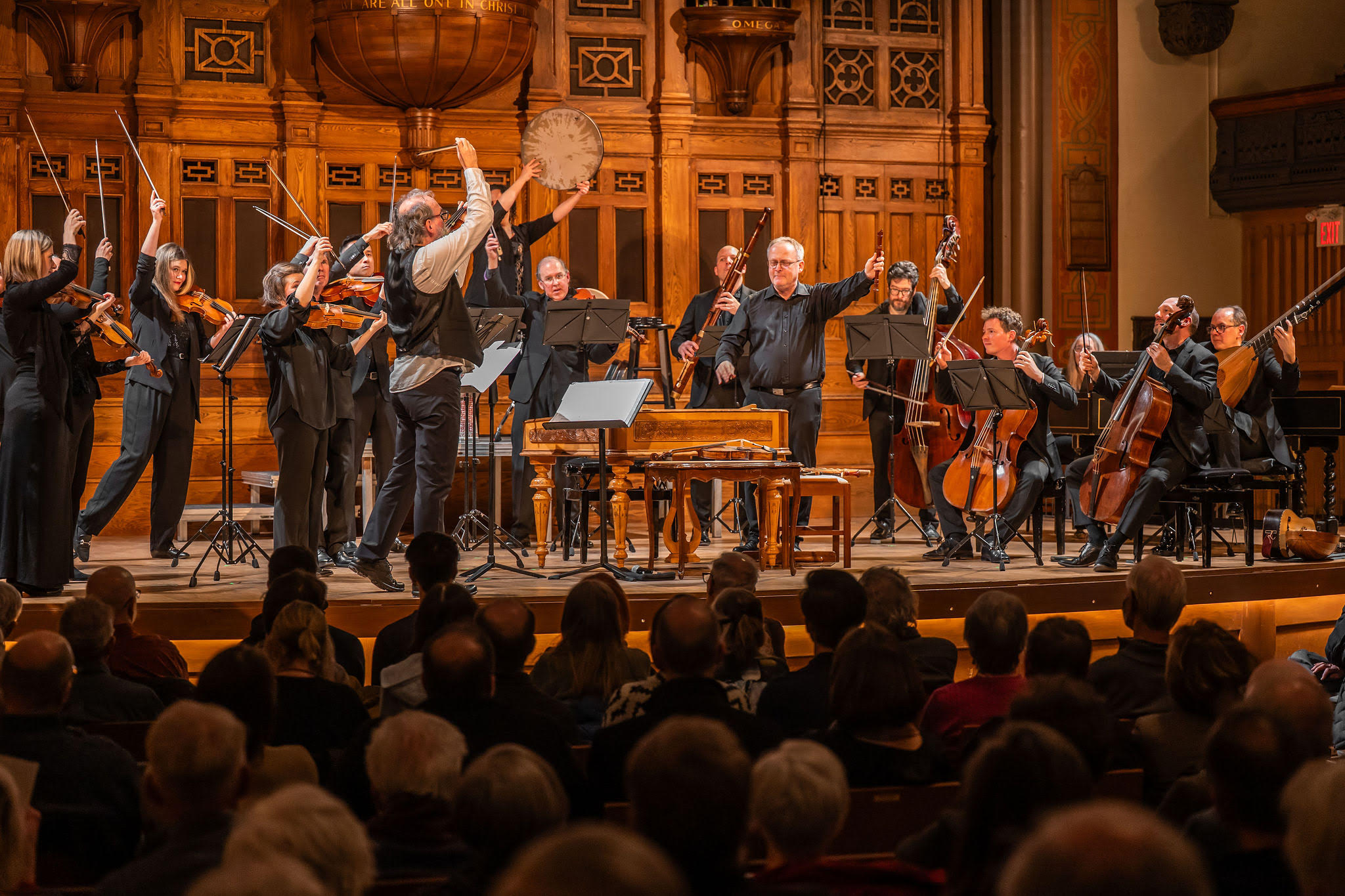
But I misrepresent this if my academic discussion makes it sound like a serious enterprise, given that we saw one of the most playful performances I’ve ever seen at a concert, the music seemingly spontaneous and alive in the moment.
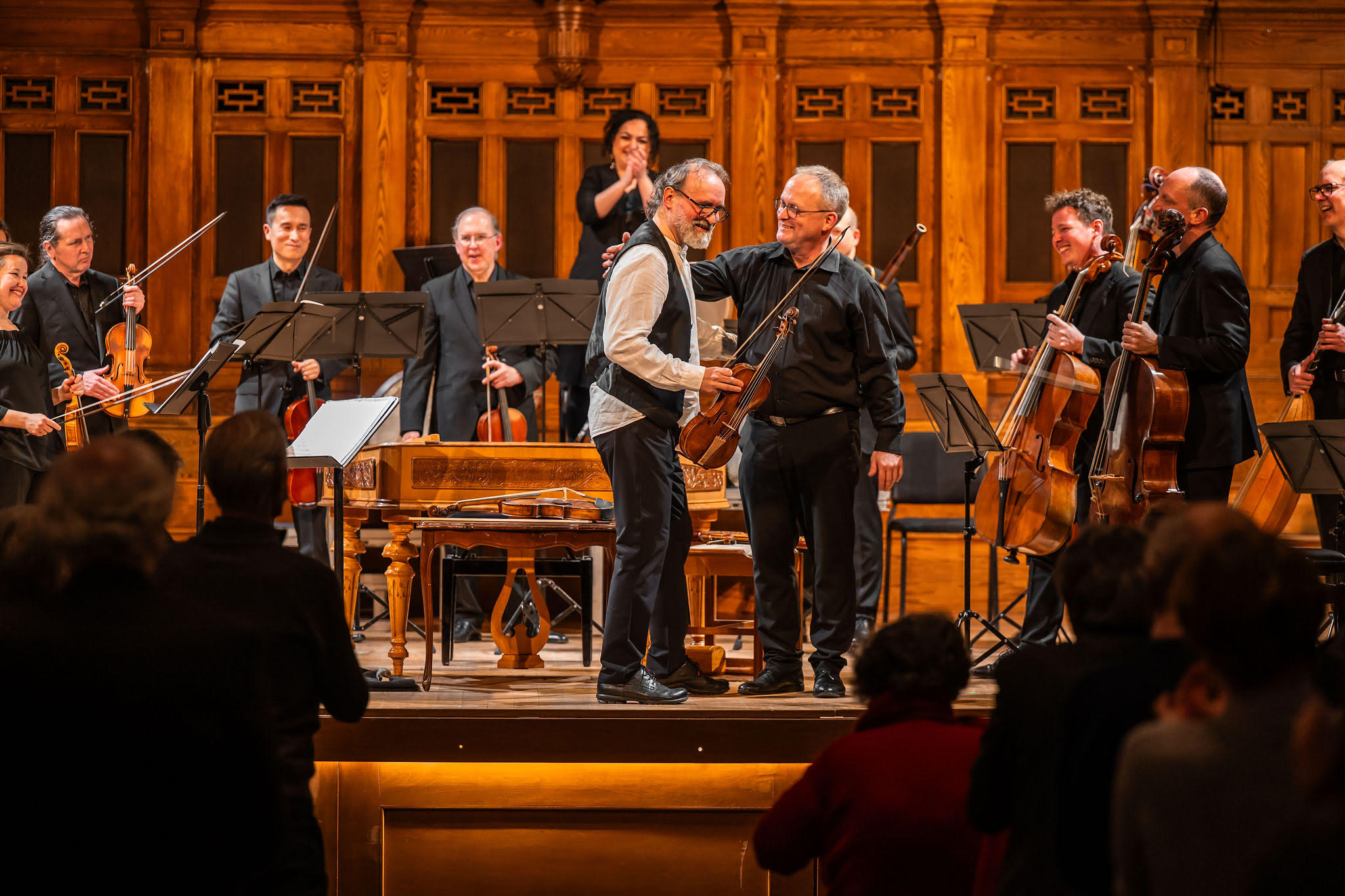
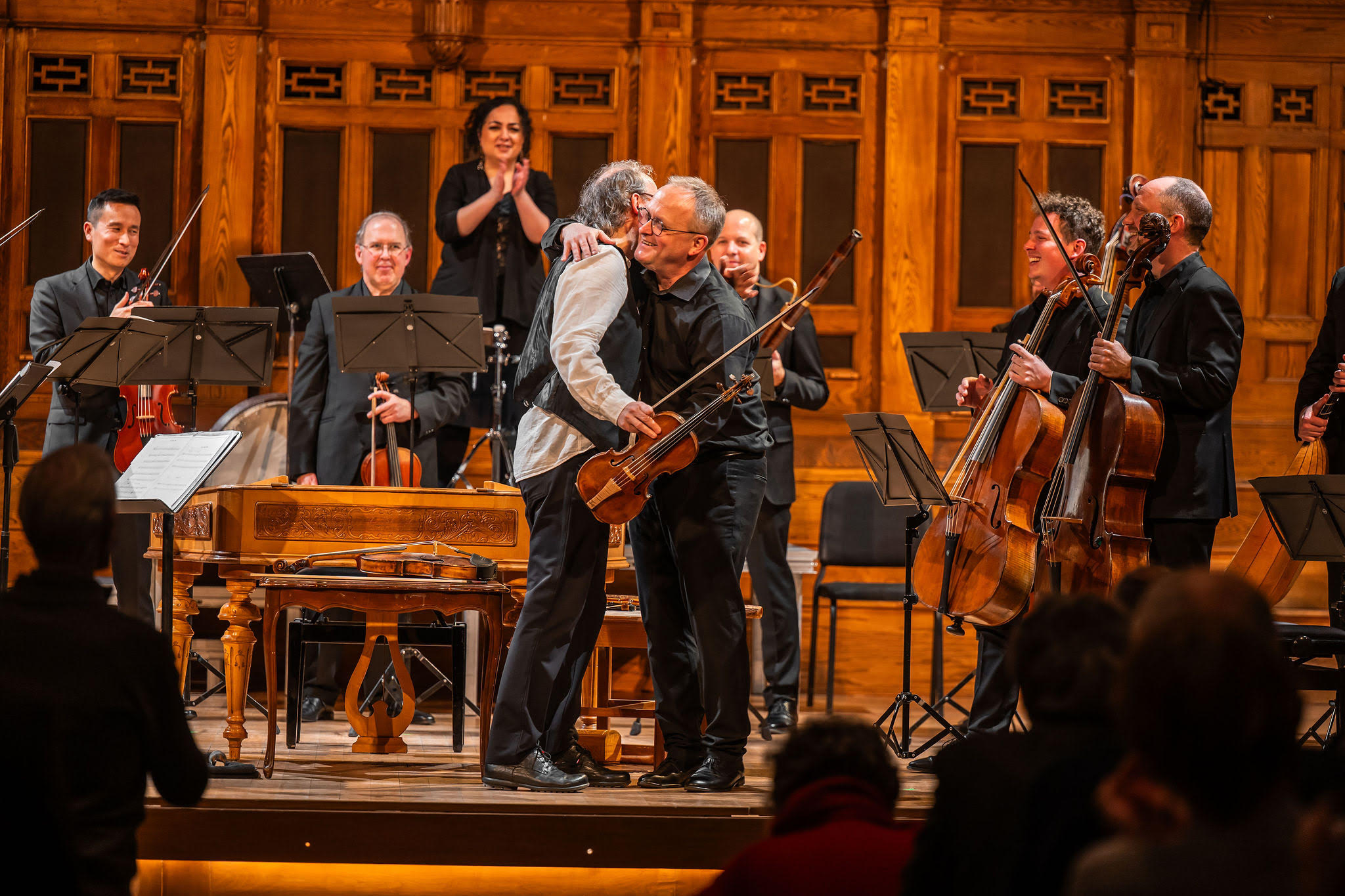
Miloš Valent was leader and one of the soloists tonight on violin, sometimes singing (although I couldn’t understand what he sang), sometimes wandering about in Jeanne Lamon Hall, sometimes reacting in ways to underline the theatricality of what was being made, seemingly invented before us.
The program is an exploration of the influence of folk music on the baroque. The freshness of what I heard astonished me. I feel certain that when classical music seems to be a dry process working from old texts they’re doing it wrong. Not this time. Everything seemed newborn, organic, alive.
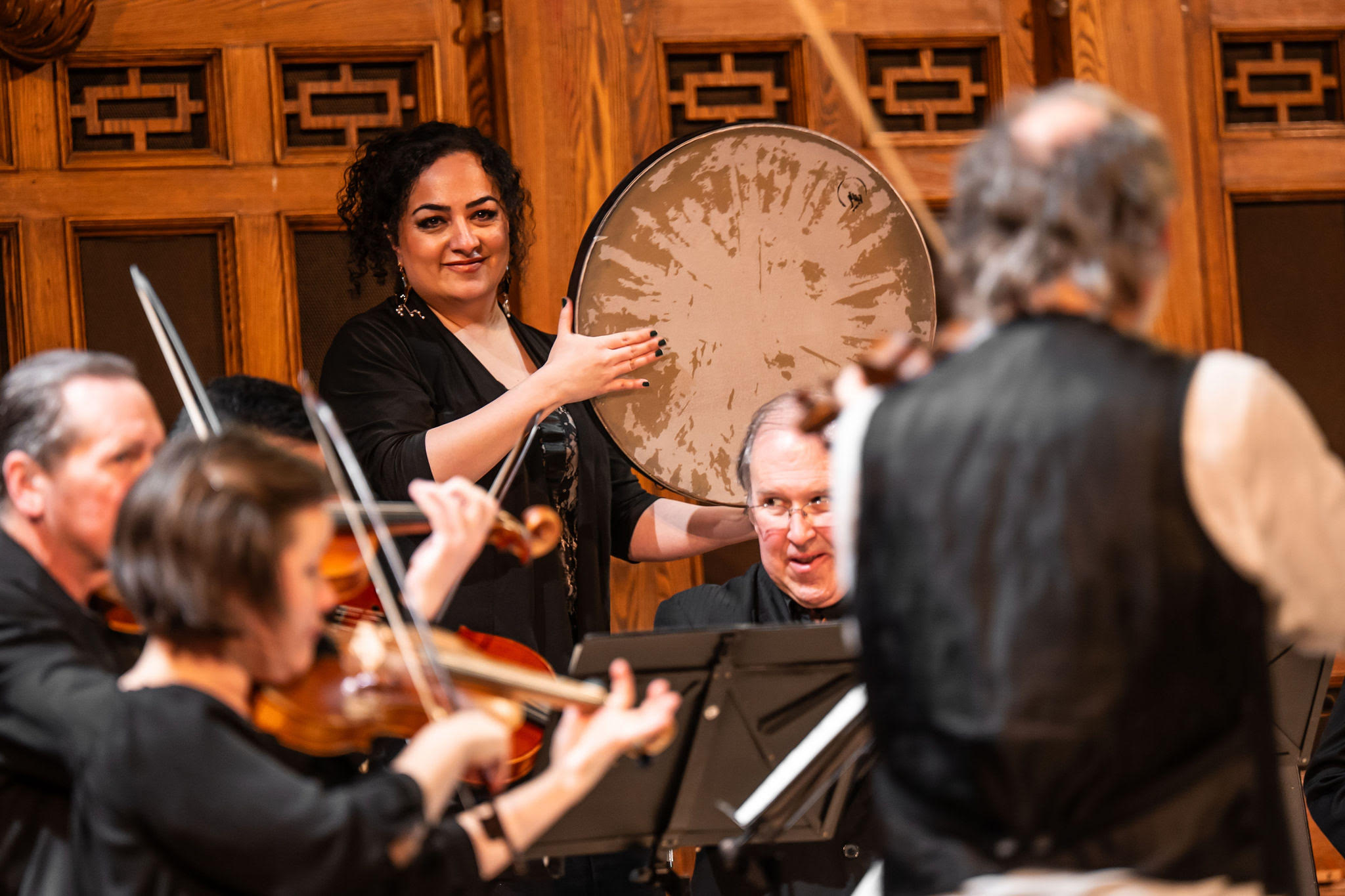
Don’t let the word “baroque” stop you from going to this concert. This feels very new, very spontaneous. Much of the music has strong dance rhythms, aided and abetted by percussionist Naghmeh Farahmand.
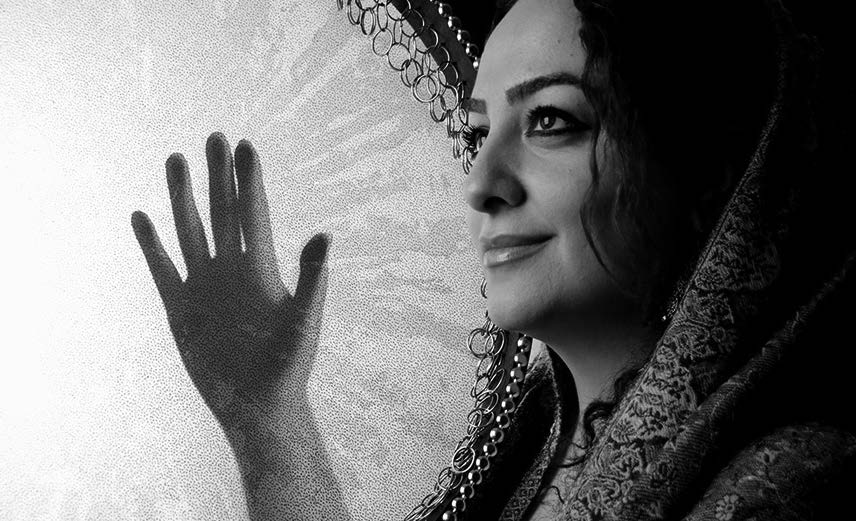
Naghmeh Farahmand previously appeared with Tafelmusik in 2018, a powerful contributor to Alison Mackay’s Safe Haven.
The program was deceptively simple on the surface, seeming to alternate between well-known composers (Telemann at least a dozen times, plus Purcell, Vivaldi, John Playford & Jacob van Eyck once each) and texts bearing the authorship label “Traditional”.
Just because music is from centuries ago doesn’t make it stodgy or conservative. It felt like a party.
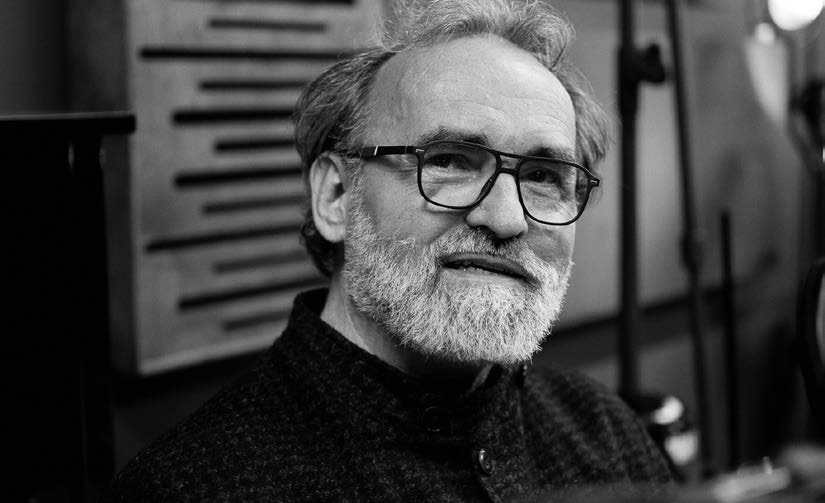
Jan Rokyta offered some electrifying solos on several instruments, a virtuoso of the cimbalom, duduk, clarinet & recorders. I found that his instruments completely changed the feeling of the music, especially when I felt he was pushing my magyar buttons with his magical cimbalom sonorities. Anyone with European ties (either by your heritage or the music that moves you) may find themself transported to another world listening to this program.
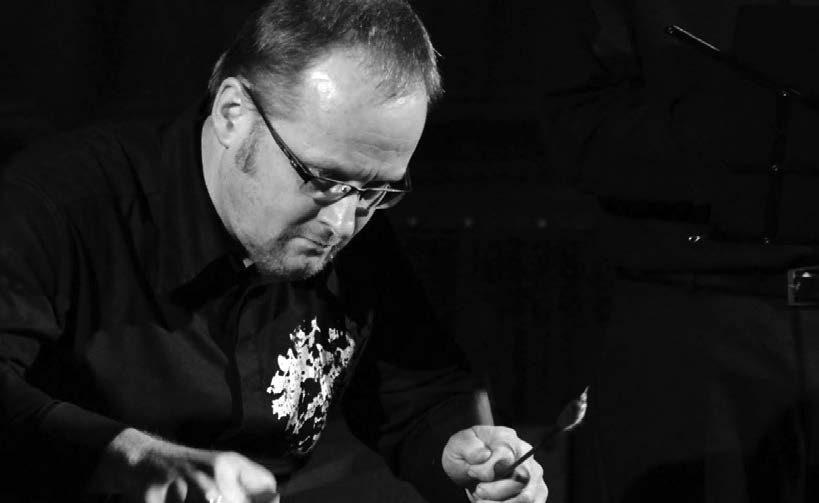
Miloš, Jan, Naghmeh and Tafelmusik will be back March 8th & 9th at Jeanne Lamon Hall.
Colour photos by Dahlia Katz.
 barczablog