
In 2021 the COVID pandemic disrupted the plans by Soundstreams to present their original production Garden of Vanished Pleasures, a music-theatre work about Derek Jarman, the gay activist, film-maker & poet who died of AIDS related complications in 1994, devised by director Tim Albery. Soundstreams gave us a virtual version online that I reviewed here.
This weekend Soundstreams premiered a live version meant to realize Albery’s original intentions at Canadian Stage’s Marilyn & Charles Baillie Theatre. There is a final Sunday matinee remaining
(for information).
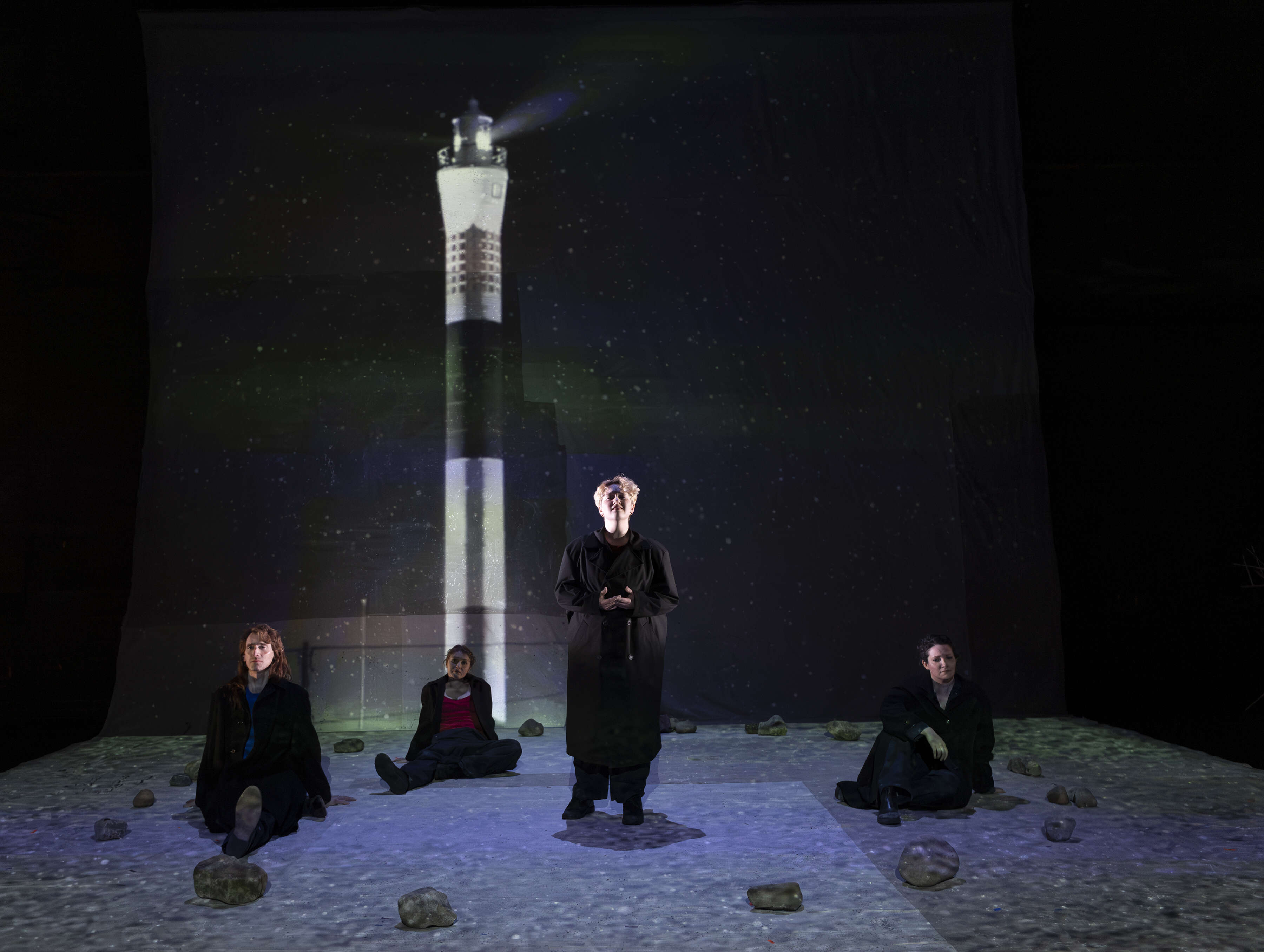
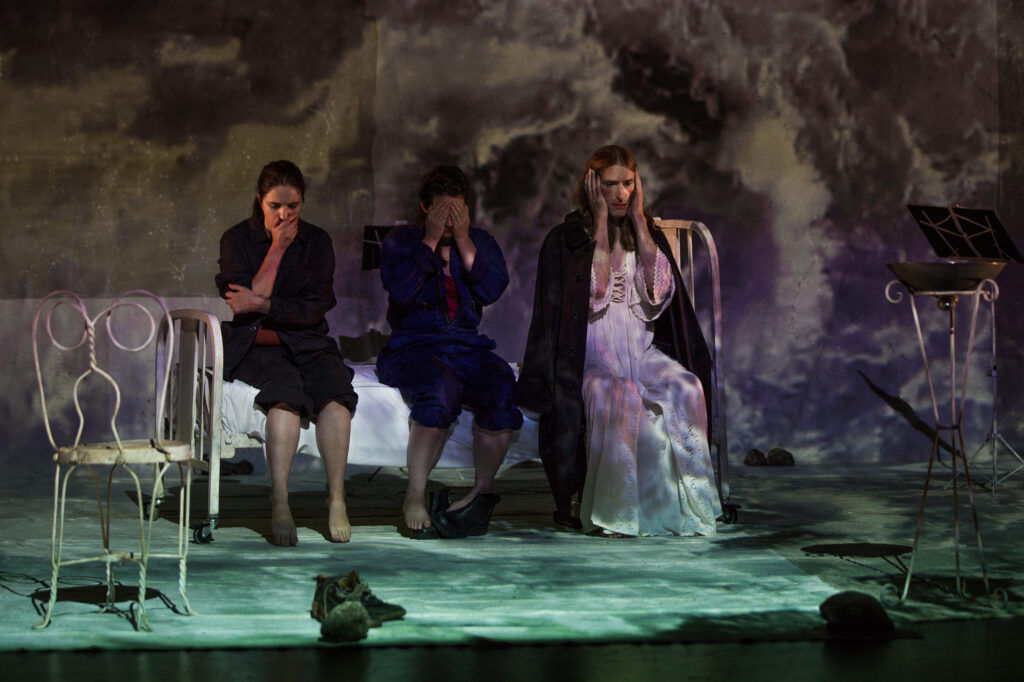
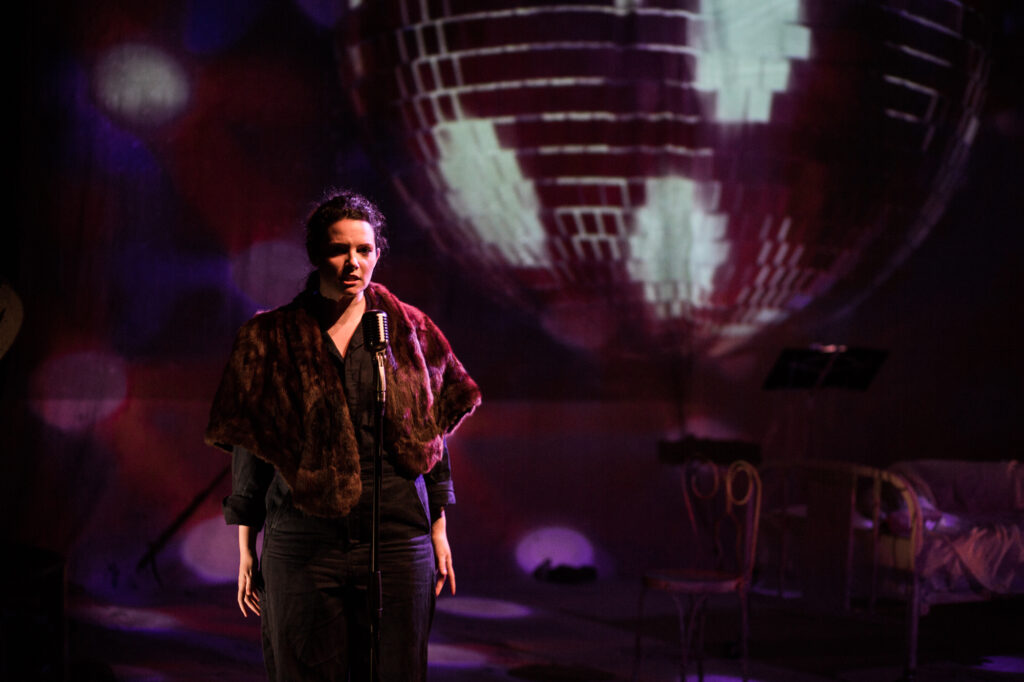
I expected more of a difference between the online work (which I loved) and its new live version, presented by four singers (Mireille Asselin, soprano, Danika Lorèn, soprano, Hillary Tufford, mezzo-soprano & Daniel Cabena, counter-tenor), three live musicians (Hyejin Kwon, music director & piano, Brenna Hardy-Kavanagh, viola, Amahl Arulanandam, cello) and a lot of CGI effects projected on the back wall of the Berkeley St Theatre. I thought I was watching exactly what I had seen in 2021, which was actually an exciting work.
To open my review back in 2021 I said “I wondered whether one needs to know Derek Jarman, as I watched Garden of Vanished Pleasures for the first time.” Today I feel even more certain that it is not necessarily an advantage to be a Derek Jarman fan, coming to something like this. I recall my frustrations encountering the poetry of Lord Byron, noting the discrepancy between the phenomenon of Byronism and his actual poems. Jarman is a similar larger than life phenomenon whose actual films & poems are largely unknown. But that doesn’t matter when you come to Albery’s music theatre piece. I call it Albery’s even though there are other creatives, including two composers and several poets, who contributed to the piece.
Sometimes I use questions of genre to try to get a sense of what I have seen and heard but I am hesitant in this case. The printed program gave us names for 22 segments. Let me show you and forgive me if this starts to seem reductive.
1 Sweet Wisdom Music: Donna McKevitt
2 What If Music: Donna McKevitt; Text: Derek Jarman
3 Silver Music: Cecilia Livingston; Text: Walter de la Mare
4 Translucense Music: Donna McKevitt; Text: Derek Jarman
5 Parting Music: Cecilia Livingston; Text: Janey Lew
6 Nature Music: Donna McKevitt; Text: Derek Jarman
7 Kalypso Music: Cecilia Livingston; Text: Duncan McFarlane
8 I sit here immobile Music: Donna McKevitt; Text: Derek Jarman
9 Two Dreams Music: Cecilia Livingston; Text: Cecilia Livingston
10 Prelude to Sebastiane Music: Donna McKevitt
11 Sebastiane Music: Donna McKevitt; Text: Derek Jarman
12 I am a mannish muff diving size queen Music: Donna McKevitt; Text: Derek Jarman
13 Adam & Eve & Punch-Me-Not Music: Donna McKevitt; Text: Derek Jarman
14 Impatient Youths Music: Donna McKevitt; Text: Derek Jarman
15 Mercy Music: Cecilia Livingston; Text: Duncan McFarlane
16 The System Music: Donna McKevitt; Text: Derek Jarman
17 No Dragons Music: Donna McKevitt; Text: Derek Jarman
18 Kiss Goodnight Music: Cecilia Livingston; Text: Cecilia Livingston
19 Snow Music: Cecilia Livingston; Text: Walter de la Mare
20 A Prelude Music: Donna McKevitt
21 I walk in this garden Music: Donna McKevitt; Text: Derek Jarman
22 February Music: Donna McKevitt
I have been hesitant to speak of authorship except to mention Albery. In the program note by David Jaeger, where I’ve read about Albery’s process assembling music from Donna McKevitt and Cecilia Livingston, it reminded me of a film scoring process, where the music feels subordinate to text & image. The presentation onstage reminded me of a song cycle, sometimes sung by a soloist, sometimes by several of the singers. I heard some people speak of this as opera. Maybe.
When I recall the seminal words of Richard Wagner in Opera and Drama, he summarized the history of opera as a medium meant to employ music for dramatic purposes (to make theatre), that usually used drama for musical purposes (to make music). And there’s nothing wrong with doing the usual operatic thing, to make music that gives us the chance to hear wonderful voices and musicians, whether we call it a song cycle or opera or music-theatre. I think that’s really what Garden of Vanished Pleasures does, showing off the four fabulous voices under the careful leadership of the conductor.
We’re in the last few days before a federal election causing varying degrees of derangement and stress. Friday night I escaped to a Toronto Symphony concert. You can’t trust reviews from someone who is going mad, which is why I want to frame my experience seeing Saturday’s matinee of Garden of Vanished Pleasures from Soundstreams.
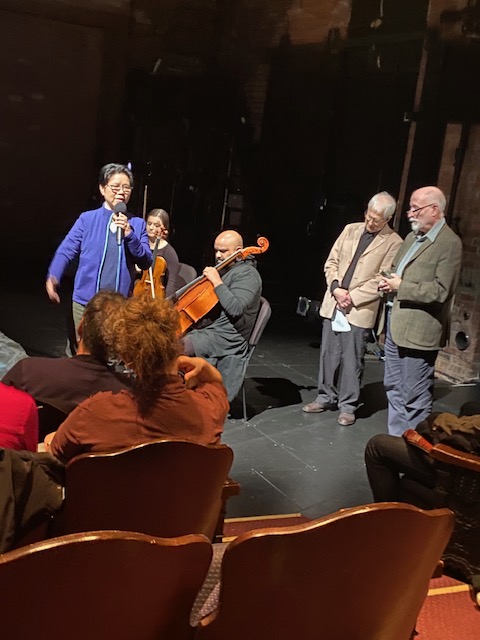
Before the show began we were reminded of how fortunate we are here in Toronto, in a little pre-show talk from MPP Kristin Wong-Tam. While there was no explicit mention of our neighbors to the south but yes, we are lucky and the election is Monday. “Woke culture” is still mentioned by one of the political parties seeking to run the country. While Jarman’s story may be a dark one it serves as genuine escapism, validating norms that some seek to challenge and even to erase.
That made Garden of Vanished Pleasures feel especially cathartic, accompanied by superb visuals, projections designed by Cameron Davis. All four singers sounded wonderful and intelligible too.
 barczablog