I dashed through Ardra Shephard’s memoir Fallosophy in a day, unable to put it down and laughing out loud regularly, the most entertaining book I have read in a long time. I am such a lucky guy that I get to write a review of something so wonderful, so inspiring, so full of laughter.
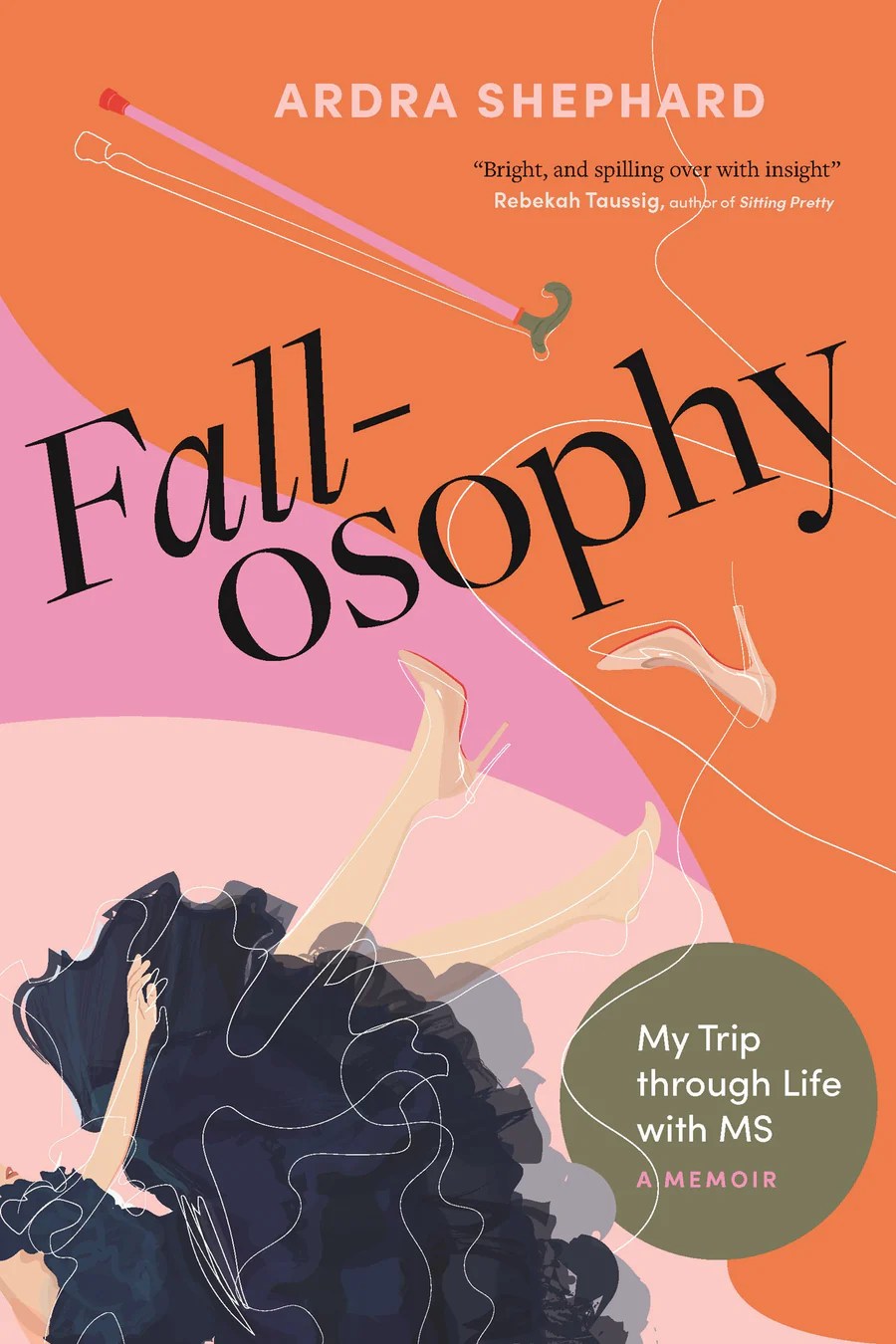
May is MS Awareness month. Author, former opera singer, podcaster, Ardra is also an MS activist, seeking to raise awareness.
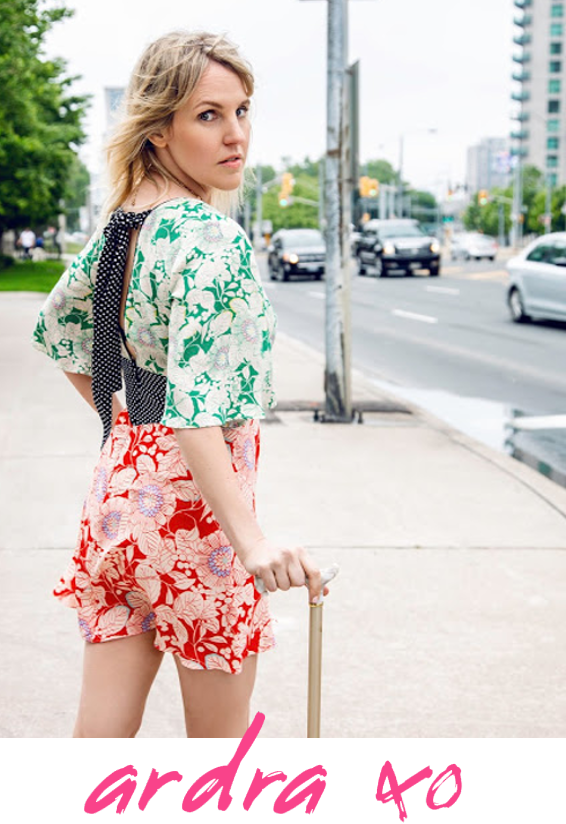
I cannot lie. I pride myself on vulnerability, sharing the moments when I am excited, moved, teary- eyed. From time to time I encounter an artist who impresses me so much I am unsure how to proceed. I may be star-struck, or intimidated. Of course the problem with being so impressed with someone? when I had the chance to interview Ardra I was a bit too cautious, tongue-tied, over-thinking.
Slow.
But the interview is about her, not me. My job is to get out of the way, hoping you get a better perspective on Ardra and her work.
Voila.
*******
Barczablog: Are you more like your father or mother?
Ardra Shephard: I have qualities in common with both but I’m probably more like my mom – I share her can-do attitude, love of fashion and gossip. I have my dad’s green eyes and sardonic sense of humour. We can both make my mom laugh but no one cuts her up the way my dad does.
BB: What is the best or worst thing about what you do?
Ardra Shephard: The best thing about the kind of work I do (writing, podcasting, consulting, speaking) is getting to be creative and self-expressive. I’m my own boss and have the luxury of only committing to projects that interest and excite me. I make my own hours which feels essential when trying to accommodate the whims of chronic illness. The worst part is probably the math. I have income from multiple sources that comes in unreliable dribs and drabs. Accounting is a drag. I hate doing taxes, keeping receipts and navigating Quickbooks. Every year I decide it might actually be nice to get audited just so that someone who knows what they’re doing could sort things out for me.
BB: Who do you like to listen to or watch?
Ardra Shephard: I love TV but I am not a fan of having TV on in the background. I can only focus on one thing at a time. I tend to prefer smart comedies like Arrested Development, The Mindy Project and Veep. I loved Derry Girls. I recently watched CBC’s Small Achievable Goals and it’s the kind of story telling I’m passionate about. The way the show uses humour to disarm the audience is an unexpected education. There’s some intersection with disability in this show which features peri-menopausal and menopausal characters who remind us of how absurd our bodies are and the lengths we go to to hide what we’re going through just to get through the day, whether professionally or socially.
Like everyone, I just finished bingeing White Lotus. I am about to enter a period of
mourning because Righteous Gemstones is ending.
In terms of YouTube, Bliss Foster’s fashion journalism channel has filled the Jeanne
Beker-sized hole in my heart.
As for music, I appreciate lots of genres. Choral music, opera and 90s alternative are
my nostalgia jams. But I like to have fun with my playlists. If we’re having Chinese
takeout I’ll look for Chinese pop music on Spotify. Once we were having pierogies and I
discovered a truly awful song about borscht. I’m often looking for something I’ve never
heard before.
BB: What ability or skill do you wish you had, that you don’t have?
Ardra Shephard: I feel like I’m supposed to say accounting, but I don’t want to waste a wish on something so boring. I really love languages. The French I learned growing up isn’t going anywhere, but as an adult I got fairly proficient in Italian and Spanish. Those languages are slipping away from me now from lack of practice, but I expect to work on them again when the timing is right.
Lots of people “wish” they could play the piano or paint or sing or whatever without having to put in the work. But I enjoy the learning process. I’m often taking some kind of class. That said, I don’t stick with things I suck at. I took all of one knitting lesson then quit because knitting somehow gave me back pain. That is how athletic I am.
BB: When you’re just relaxing and not working, what is your favourite thing to do?
Ardra Shephard: Reading, when I’m being my best self, online shopping if I’m being real. Also, gossip. I talk on the phone several times a week with a couple of besties and my mom. Snuggles with the dog can be applied to all of these activities.
BB: What do we get wrong about MS? and what do we get right?
Ardra Shephard:The belief that disability is a fate worse than death. I certainly thought all my best days were behind me when I was diagnosed. MS sucks. Zero stars. Do not recommend. But it was a surprise for me to learn that a difficult life doesn’t have to be a joyless one.
As Canadians, we’re proud of our efforts toward diversity and inclusion but we often forget that diversity includes disability. We have a high tolerance for lack of accessibility in this country, whether in housing, public spaces, workplace accommodations, transportation…the list goes on. We’re more ignorant about inaccessibility than we are properly outraged.
Attitudes that reinforce the narrative that people are only worth what they can contribute financially or physically tend to get me fired up. I bristle about our cultural understanding of concepts like dignity and independence, but maybe these are things to explore in another book.
In terms of what we get right? Change is slow but we are making progress.
BB: Can glib questions about MS possibly capture what it’s like?
Ardra Shephard: Selma Blair (who was diagnosed with MS a few years ago), said something like
“MS is easier that I thought it would be. It’s also way worse,”
and I think that’s the absolute truth about MS, and possibly life in general. I don’t think anyone can really know what MS is like unless you have it. And thank God. It would be exhausting if we all had first-hand experience of everyone else’s pain. Giving people the benefit of the doubt, providing people with what they tell us they need is, I think, a more reasonable goal.
Rolling my eyes is an essential communication skill that I am unwilling to abandon (John Fanning once called it my most distinctive characteristic). But I would hate for my bad attitude to make anyone feel intimidated or worried they might say the wrong thing. I am a reasonable person with plenty of grace for putting one’s foot in one’s mouth. I do it too! It’s almost always better to ask questions than to assume.
BB: Did your vocal training prepare you for your current life?
Ardra Shephard: I’m in the middle of recording the audiobook (which will be out in July) and from a technical standpoint my vocal training is definitely helping me cope with fatigue and the dysarthria (an MS symptom) that sometimes shows up in my voice.
BB: Our paths crossed long ago, as I reviewed concerts such as a Messiah conducted by Kevin Mallon more than 10 years ago. Talk about your identity as an artist, and how you’ve reconciled yourself to MS as a singer.
Ardra Shephard: Wow, time flies. Messiah feels like a lifetime ago. It is remarkable and wonderful that you’ve been reviewing Toronto’s arts scene for so long!
I don’t consider myself a singer anymore and I’m actually surprised at how I’ve been able to make peace with this fact. Singing had a time and a place in my life and I’m so grateful I got to do it in any capacity but that chapter ended when singing started to cause me more grief and frustration than joy.
I have an awful lot of scores and sheet music if anyone wants it.
BB: Hello! I’m somewhere between “collector” & “hoarder”, … Yes (we’ll discuss later!).
Ardra Shephard: I think I’ve grieved singing sufficiently so that it’s not painful to discuss, but I did get a bit sucky last Christmas when I struggled to sing the hymns at church. In a past life I would have been belting out the descants. Now I’m one of those curmudgeons who refuses to sing Happy Birthday. I can let myself feel sad from time to time, but it’s generally easier to focus on what I have and can do. Plus, I feel lucky to live in Toronto where there is so much opportunity to participate in the arts from the comfort of the audience. It helps a lot that I am a better writer than I ever was a singer.
BB: If I may editorialize for a moment, it’s challenging for an artist to connect to the people portrayed in opera, but you’re speaking your truth as a writer, and eloquently. We’re lucky you found writing.
And so, at the risk of making me & my readers cry, I want to ask: do you still sing? Maybe you don’t hit the same high notes or have the same stamina for holding notes, but is there a way to keep singing, adjusting for MS, by drifting away from opera and singing lighter / easier rep?
Ardra Shephard: I see your threat to cry and raise you this pop ballad I recorded for my husband’s 40th birthday. It’s called Through Your Eyes and it’s about, well, have a listen.
(My friend Mike, who we meet in the book, produced this and sings backup vocals.)
BB: (….. listening……)
Ardra Shephard: My ability to sing was first impacted by my reduced stamina. Singing is so physical and even early in my diagnosis I could get breathless pretty quickly, though I do think that for a number of years singing was excellent physiotherapy. Gradually my core strength and balance deteriorated. When I started to need a cane about ten years ago, that was kind of the beginning of the end of singing for me.
In 2020 I had an MS relapse that impacted the quality of my voice and caused dysarthria (think Marge Simpson meets RFK). I had to do speech therapy just to be able to communicate. It took a couple of years for things to settle down. The dysarthria still shows up if I’m really tired, and I was worried it might impact my ability to work (on my podcast and as a host of AMI-TV’s Fashion Dis), but rehab helped and I’ve mostly been able to work around it. Phew. My book is literally about my voice (in various capacities), so I would have been heartbroken if we’d needed to get a voice actor for the audiobook.
BB: Your book FALLOSOPHY made me laugh so much that at one point in the review I said you reminded me of a stand-up comic like Chelsea Handler or Joan Rivers. The book is full of laughs even if much of the laughter is of the painful sort. Did you always have this sense of humour or is this an adaptation to reality, your way of coping?
Ardra Shephard: I was never the class-clown. I’m not really silly and I was kind of a serious, if somewhat sarcastic kid, but laughter has always been part of my life. I was raised on Monty Python and Fawlty Towers. The comedy of my teen years was SNL, Norm McDonald, Kids in the Hall, The Simpsons at their peak. My friends and I used to write our own irreverent, Letterman-style Top Ten Lists and draw cartoons to make each other laugh during choir practice. I remember making up ridiculous unrepeatably inappropriate operas with my cousins.
BB: When I told my arthritis doctor in 1997 that I was planning to get my PhD she said bluntly “why”? Her implication was that I should surrender to disease & aging. I took it as a challenge to defy, wanting to show her. Have you had any such moments when people or events were telling you to quit, and you defied that, wanting to show them you weren’t going to be defeated?
Ardra Shephard: I’ve always been driven by my own determination to build a full life for myself, even before I was diagnosed with MS. My parents never needed to tell me to study or do my homework. Anyone who’s ever told me to quit or slow down might have led me to feel frustrated or misunderstood, or even occasionally like I have permission to rest and not put so much pressure on myself. But I don’t think I’ve ever set out to prove anything to anyone other than myself. My goals have always been self-imposed.
BB: Everyone has things to cope with. Some people seem to cope with their challenges better than others. Do you laugh when you’re numb or in pain? How does your comic sensibility reflect your inner experience of MS?
Ardra Shephard: Coping well with anything means allowing yourself to feel whatever you’re feeling. I never use humour to deny what I’m going through. I believe in laughter, but I also believe in freaking out as necessary. Grieve and get on with it is kind of my MO. A comic sensibility can help make sense of the absurd, it can help you process suffering. It doesn’t prevent suffering, though it may take the edge off.
BB: What kind of exercises do you do?
Ardra Shephard: My physiotherapy routine includes a tedious series of toe curls, tiny movements, stretching, light weights and 3 squats if there’s time. The goal is to preserve function and increase balance and strength. Realistically though, it’s about getting worse slower than I would without an exercise routine, which sometimes makes it hard to stay motivated.
Fortunately I am also a rider at Toronto’s CARD (Community Association For Riders With Disabilities). If you saw me walk you’d never believe I could ride a horse, but equine therapy is fantastic for people with all kinds of disabilities. A horse’s gait mimics a healthy human gait, so when I’m riding my hips think I’m walking the way nature intended. Riding supports posture, cognition and mood. I love interacting with the volunteers. CARD has what they call their “mini-royal” coming up on June 14th where you can see rider demonstrations and learn about the organization. I will also be there signing books!
My day generally includes some reading, writing, and journaling. I’m a fan of the New York Times games. MS has taught me that wellness is holistic and so if I’m feeling like my legs are letting me down I can focus on, and feel good about, the other ways I’m supporting my health. Martin Short’s memoir helped me figure this out. Social capital, decent sleep, lots of water and ‘little treat culture’ all contribute to my overall conviction that life is worth living. I firmly believe that an MS diagnosis should come with a prescription for a puppy. Travelling as much as possible nourishes my soul.
BB: Is cannabis found in your medicine cabinet and do you have any thoughts on recreational drugs, given that recreation isn’t just fun but a way to make yourself healthy & happy.
Ardra Shephard: I’m not a recreational drug user, unless you count alcohol, in which case I most certainly am. But as much as I like a glass of wine or a gin-based cocktail, MS means I’m almost always two drinks ahead. An ounce of tequila can tame the spasticity in my legs, but two ounces means my shaky balance and wobbly gait will be negatively impacted, so I don’t drink nearly as much as I’d like to.
Cannabis helps many people with MS but it is not the substance for me. I tried to manage pain with CBD oil and ended up flat on the floor. My baseline blood pressure is quite low and certain drugs and medications make me incredibly dizzy. Anything that puts me at risk of falls is not a good fit for me.
BB: Every artistic discipline is impacted by the normal changes of a person aging. Our ears and eyes don’t work as well, arms and legs lose flexibility. Please share some of your thoughts about how you adjust to changes in the skills available to you.
Ardra Shephard: If you’re only as old as you feel, then my early 100s are off to a great start (though the calendar says I’m still in my 40s). I lost vision in my 20s, mobility in my 30s. I joke that I’m aging in dog years because loss of function has been part of my entire adult life. I’ve gotten good at adapting. Disability forces me to be creative and resourceful. You learn to find different ways of participating. It’s important not to have an all-or-nothing mentality or you will end up missing out on life.
Aging also brings wisdom, and so it must come with a positive impact on how we consume and interpret art.
(I really appreciate Julia Louis Dreyfus’ brilliant podcast Wiser Than Me for reminding me of this.)
BB: The effortless humour and wit of your book Fall-osophy blew me away. I see the same on your podcasts.
Ardra Shephard: Thank you. I was nervous to do a podcast because writing gives you time to say exactly what you want and a podcast is so off the cuff.
BB: We live in a culture that values youth & beauty telling stories about beautiful young people, while not always including the rest of us. As a fat kid who later lost weight, I never forgot the way I was perceived.
Ardra Shephard: Even within the disability community where limited stories are told, there seems to be a hierarchy of whose stories are shared. I too feel the pressure of maintaining a degree of youth and beauty and ironically, even physical function. I recognize the privileges that have made it easier for me to have a voice. Change is slow and I believe that social media is helping to level the playing field. Pride in identity is critical to advocating for inclusion and rights, and social media is a place where communities are forming and this is happening.
BB: Those of us who are disabled seem invisible sometimes, given that often the goal is simply to avoid calling attention, and to fit in as “competent”. Talk about how it impacts questions of representation and inclusiveness in the arts especially onstage in theatre & opera.
Ardra Shephard: I have tended to think of invisible illness in terms of the frustration that comes with having non-apparent symptoms not taken seriously as well as the challenges in advocating for accessibility and accommodations for conditions that are poorly understood.
But you’re right, there are more layers here and often invisibility is self-imposed–a defense mechanism, or attempt to avoid othering and discrimination. I write in the book about my own experience “passing” for non-disabled during the years when my MS symptoms were non-apparent. And even now that I am using mobility aids and am obviously disabled there is implicit pressure to blend-in and be low maintenance.
Stigma is a factor. Disability is often perceived as deficient (as opposed to different), and in a world where there are not enough opportunities for the most talented among us, any perceived lack of competence can be catastrophic. Disabled artists (disabled people in any profession, really) learn to blend into environments where it might otherwise be beneficial to stand out. We mask pain, fatigue and other symptoms as a response to a culture and workplace that punish vulnerability. (Nevermind that vulnerability is an asset to artistry.)
We’re getting better at creating structurally accessible spaces, particularly for audiences (ramps, captions, designated seating etc), but inclusion isn’t just about presence, it’s also about perspective. Disabled stories are often portrayed by non-disabled actors who go on to win awards, reinforcing the narrative that disability is something to imitate, not embody.
The cost to the arts is steep and stagnating when we fail to consider who is telling the story? Is disability a prop or a point of view?
There’s safety in numbers and we must resist invisibility in order to affect meaningful change. It’s not easy and advocacy doesn’t come without risk. Especially in under-resourced institutions. But just like with other marginalized communities, when disabled artists take up space on stage and behind the scenes, we expand not only who gets to perform but what performance means. Disability challenges the form. It encourages novel thinking and creativity. Accommodations can become artistic choices and isn’t that exciting? Audiences get to participate in something more raw, human, and honest.
BB: What are we getting wrong that adds to your challenges? In other words, is there anything about my perceptions as an average adult communicating with a person with MS that makes your life harder? what should I do differently, or how should i think differently,..?
Ardra Shephard: You’re overthinking it. We are more the same than we are different. Just be normal.
BB: Do you have any influences / teachers you would like to acknowledge.
Ardra Shephard: I don’t want to leave anyone out. My book is a bit of a love-letter to the people in my life who’ve encouraged, inspired and supported me, and who continue to do so, artistically
or otherwise.
I will add that for anyone interested in learning more about the themes in my book, I
would encourage you to read Rebekah Taussig’s book, Sitting Pretty. Watch Crip Camp
on Netflix. Add disabled content creators to your social media feeds. Support work that
prioritizes authentic representation. This doesn’t have to feel like homework. There’s
some brilliant work being done.
BB: Are you doing a book tour? Where can readers find you?
Ardra Shephard: I’ll be signing books at Indigo (Yorkdale Mall, Toronto) on May 24th from 12-3.

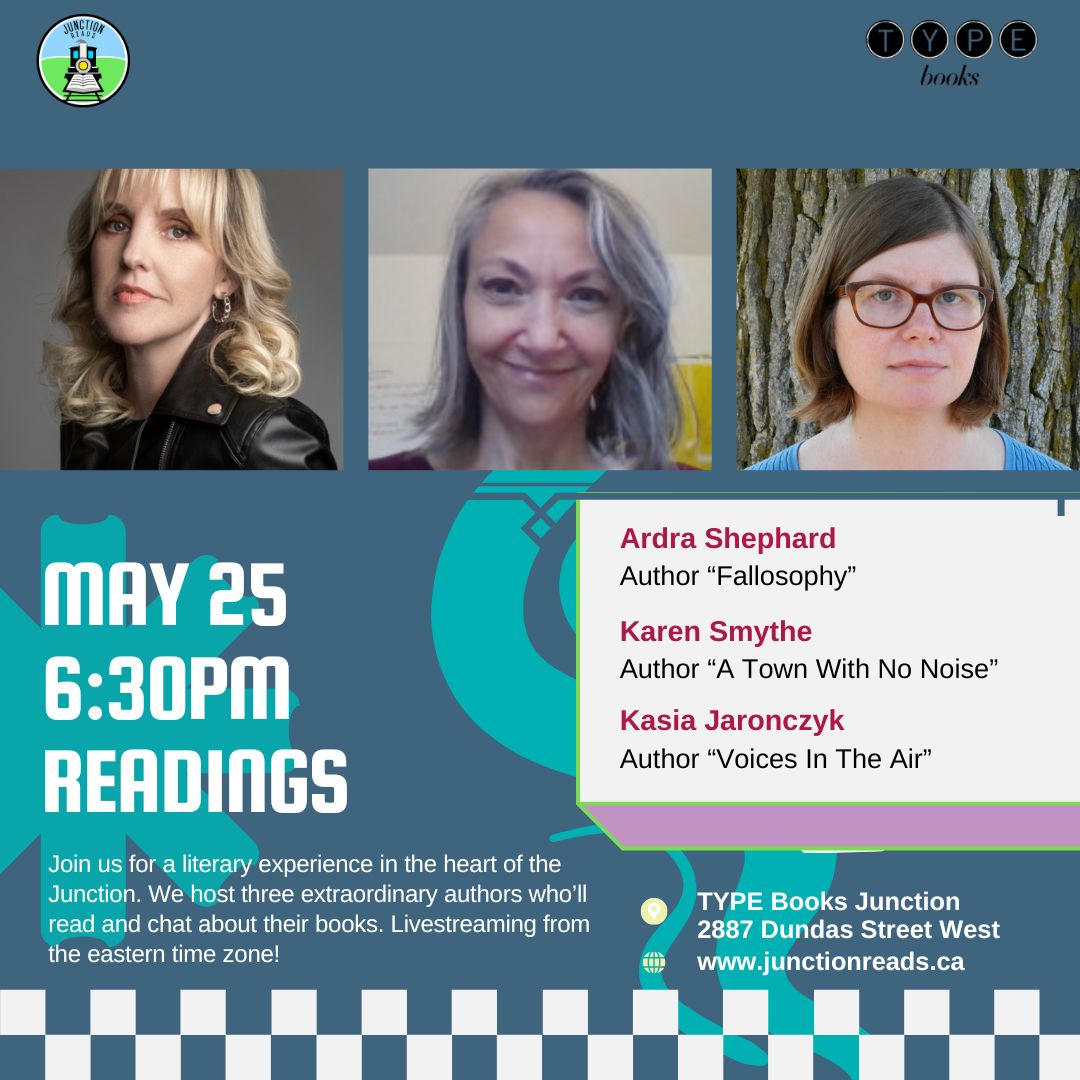
And doing a reading/signing/Q&A at TYPE Books Junction on May 25th at 6:30 as part of the
Junction Reads Festival. You can also attend this event virtually (register here).
I’ll be at the Saskatchewan Festival of Words in July, the Sunshine Coast festival in
August, in Whistler in October and I’ll be speaking for the Canadian Club of Halton in
November. You can follow me on Instagram for updates as events and appearances
are scheduled at @ms_trippingonair and on my website trippingonair.com.
The audiobook will be available in mid-July!
You can find my podcast on YouTube and stream Fashion Dis on AMI-plus.
 barczablog
❤️