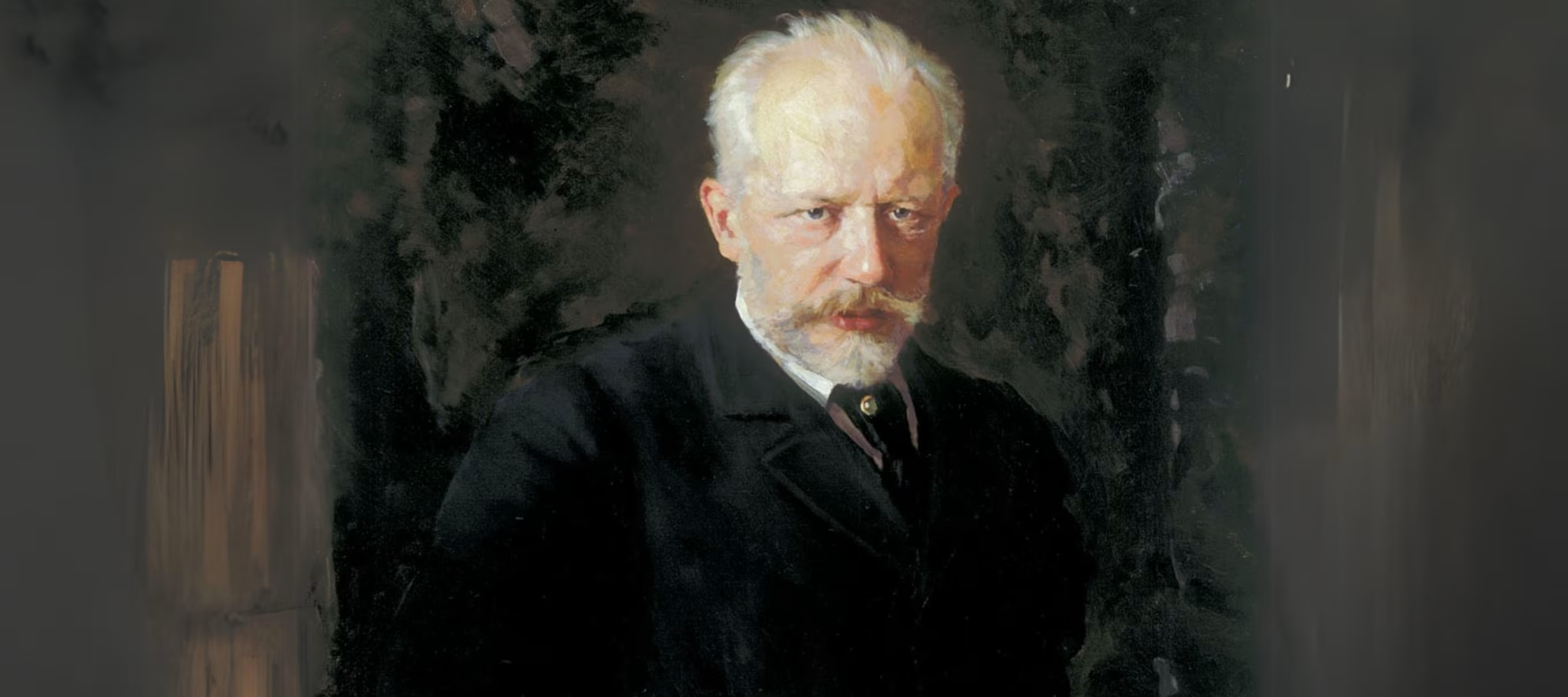
Tonight was entirely an orchestral night for the Toronto Symphony. No concerti, no soloists, just the virtuoso players of the TSO in two big works, one a world premiere.
As Gustavo Gimeno suggested in his program note, tonight’s pieces “examine what it means to be human.”
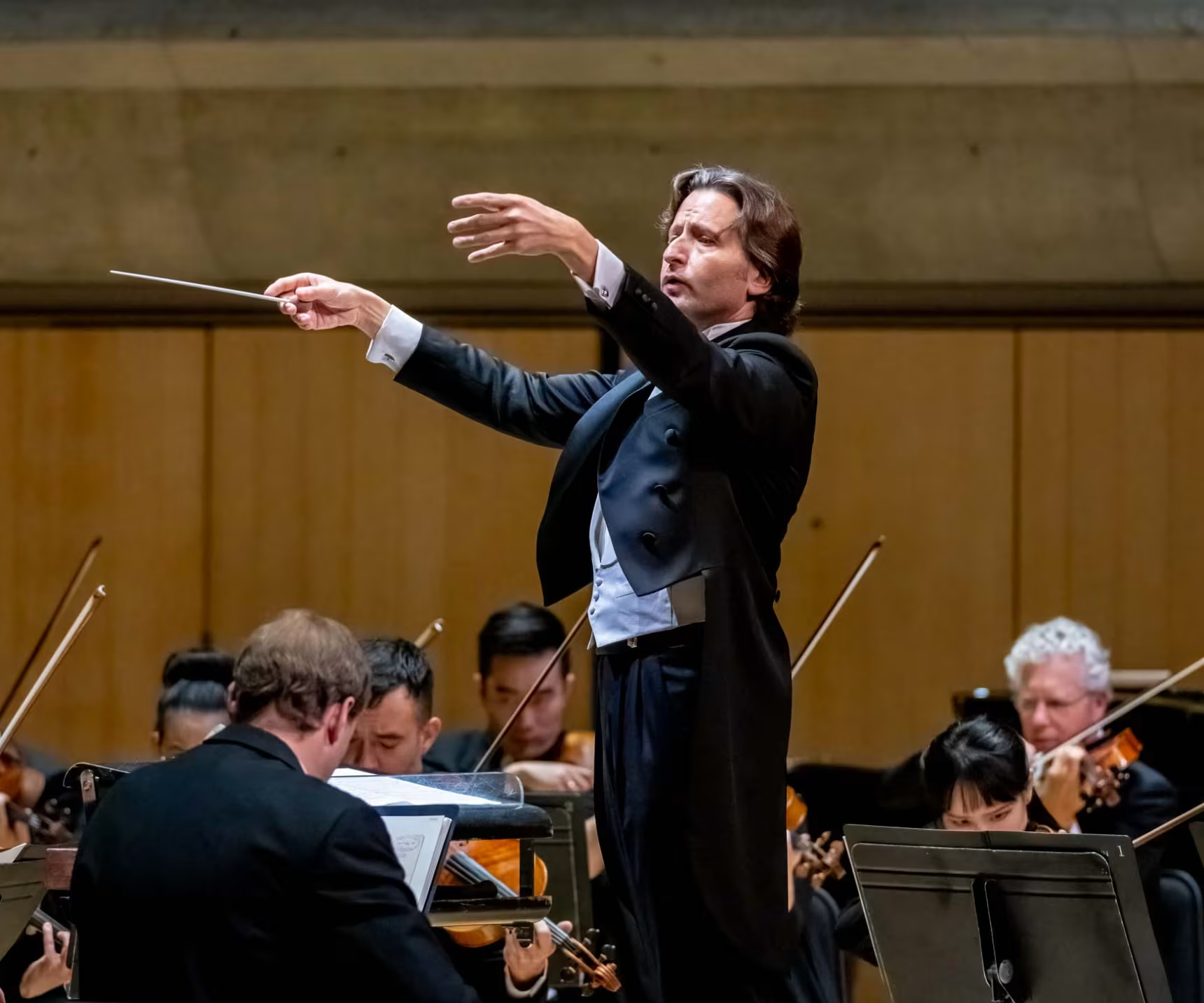
And while they both offer a chance to showcase the orchestra, they contrast one from the other.
It was a large audience at Roy Thomson Hall, receptive to the exuberant new work by Daníel Bjarnason and totally ecstatic in response to Tchaikovsky’s valedictory symphony.
The world premiere before intermission I Want to Be Alive is a Trilogy for Orchestra. I remember hearing the opening segment in June of 2023, but it made much more sense now in the full context with the other two parts.
1-Echo (Man needs man)
2-Narcissus (We need mirrors)
3-Pandora’s Box
The program notes explained that Bjarnason was inspired by Stanislav Lem’s book Solaris as far as the first two titles, although artificial intelligence is a big part of the subtext. That being said, I simply listened to the music played by the TSO. The first two are similar ideas although not in the music we heard. Bjarnason assembled a huge orchestra with a big percussion contingent, provocatively erupting from the rear of the ensemble in the first segment. The second was much more soulful, softer, lyrical in its introspection. I was intrigued that at a time when the pathology associated with Narcissus is so frequently discussed in social media, that what I heard was something more sympathetic than I might have expected.
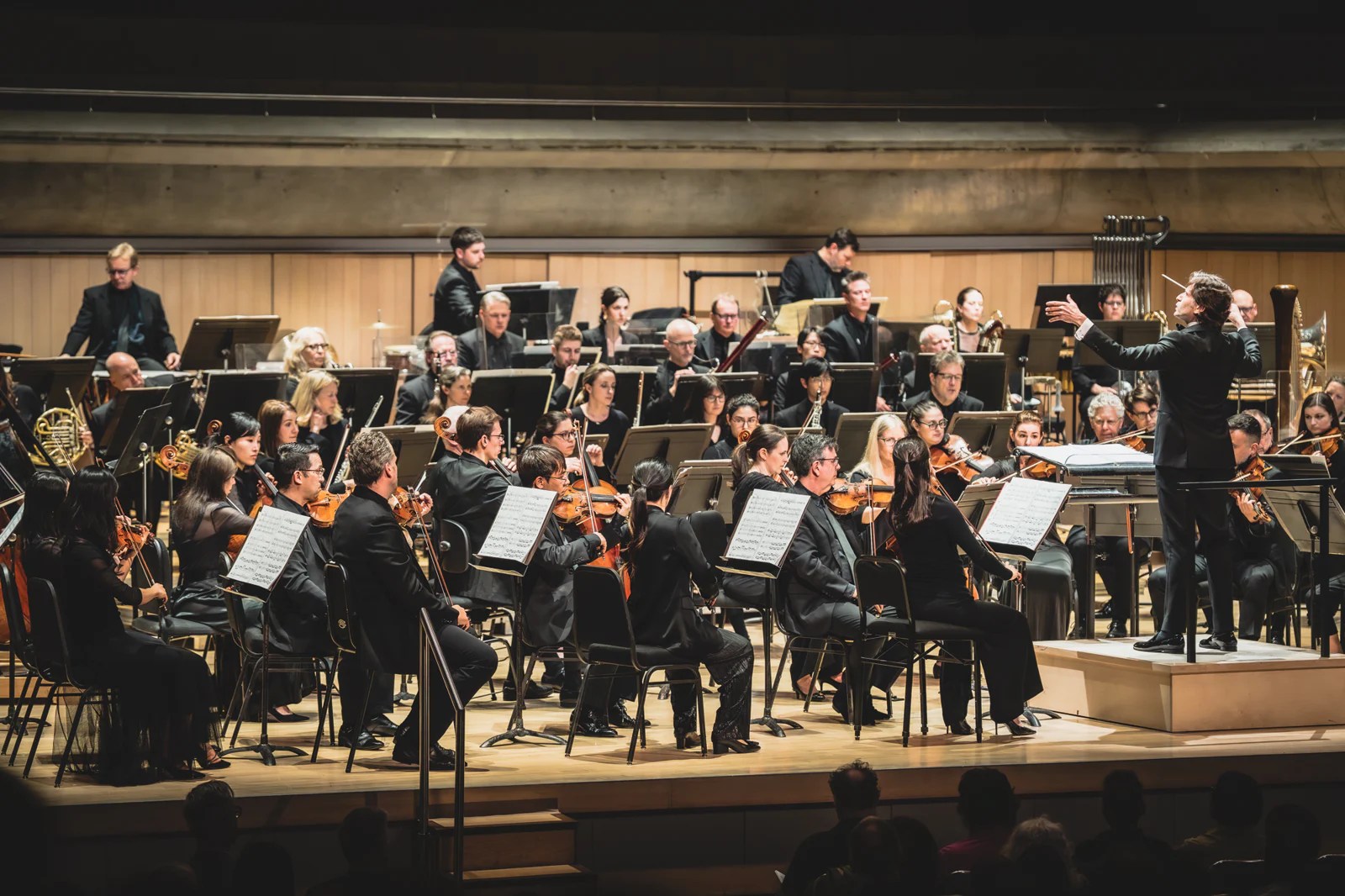
And then we came to the third impressive movement, very much what you’d expect from the title. Although Bjarnason tells us that the one thing left in the box is “hope”, for most of this movement he presents us with what we would expect. The first word that came to mind is “disorder”, or more accurately, complex rhythms to challenge the percussionists and the conductor. Pandora unleashes chaos on the world, and especially upon the conductor and his percussion section. I was reminded of Stravinsky’s Firebird, as the buildup to full orchestral tutti was polytonal, and remarkably flamboyant. Eventually things settle down, perhaps in the sense of the hope the composer sought to suggest, although in the wildest passages I was not afraid, but stimulated. It’s exciting stuff. Once again I wonder if Gustavo might someday record this with the TSO, showing off the excellent players.
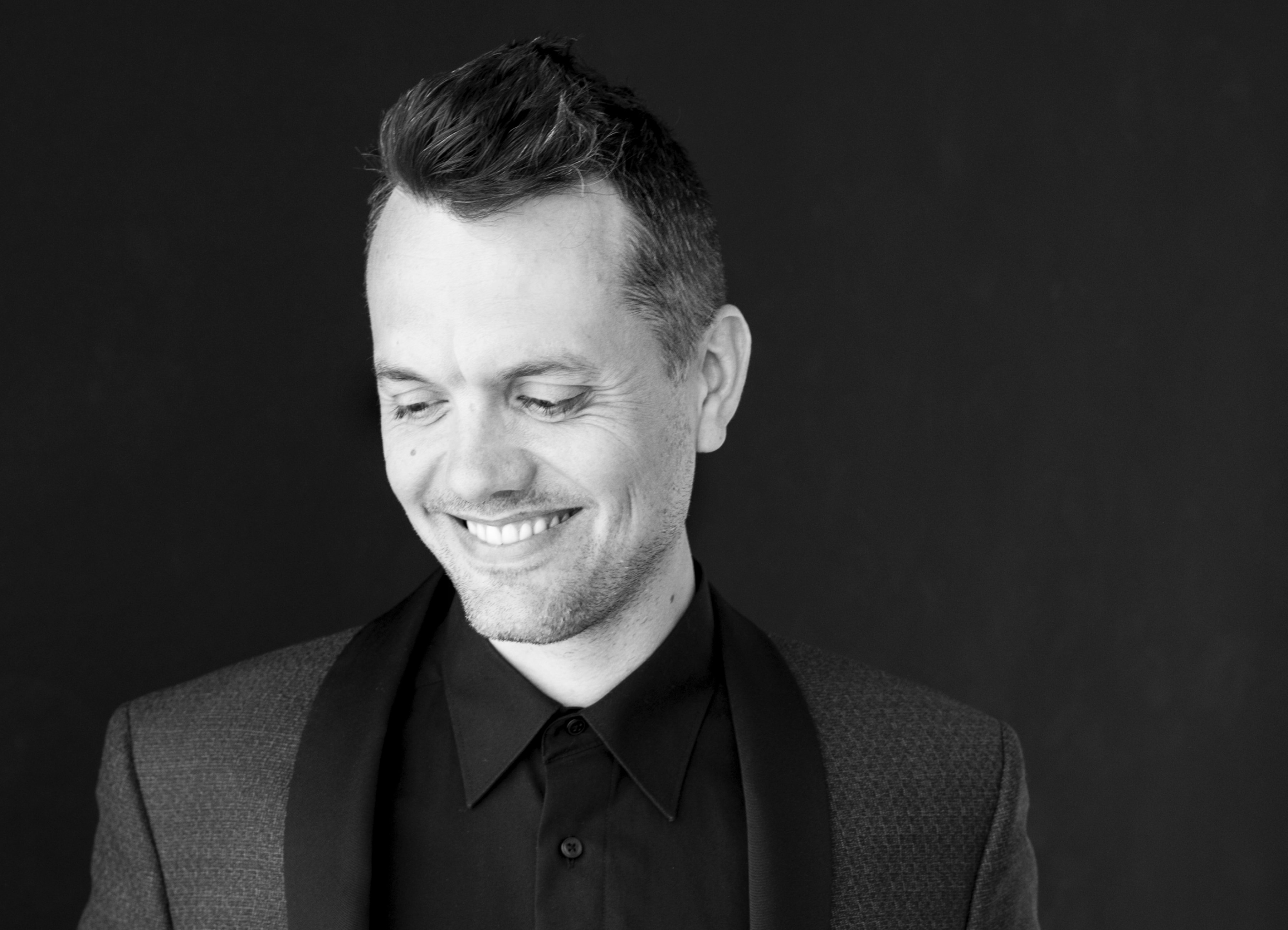
It was especially exciting to be able to applaud the composer on the occasion of the World Premiere.
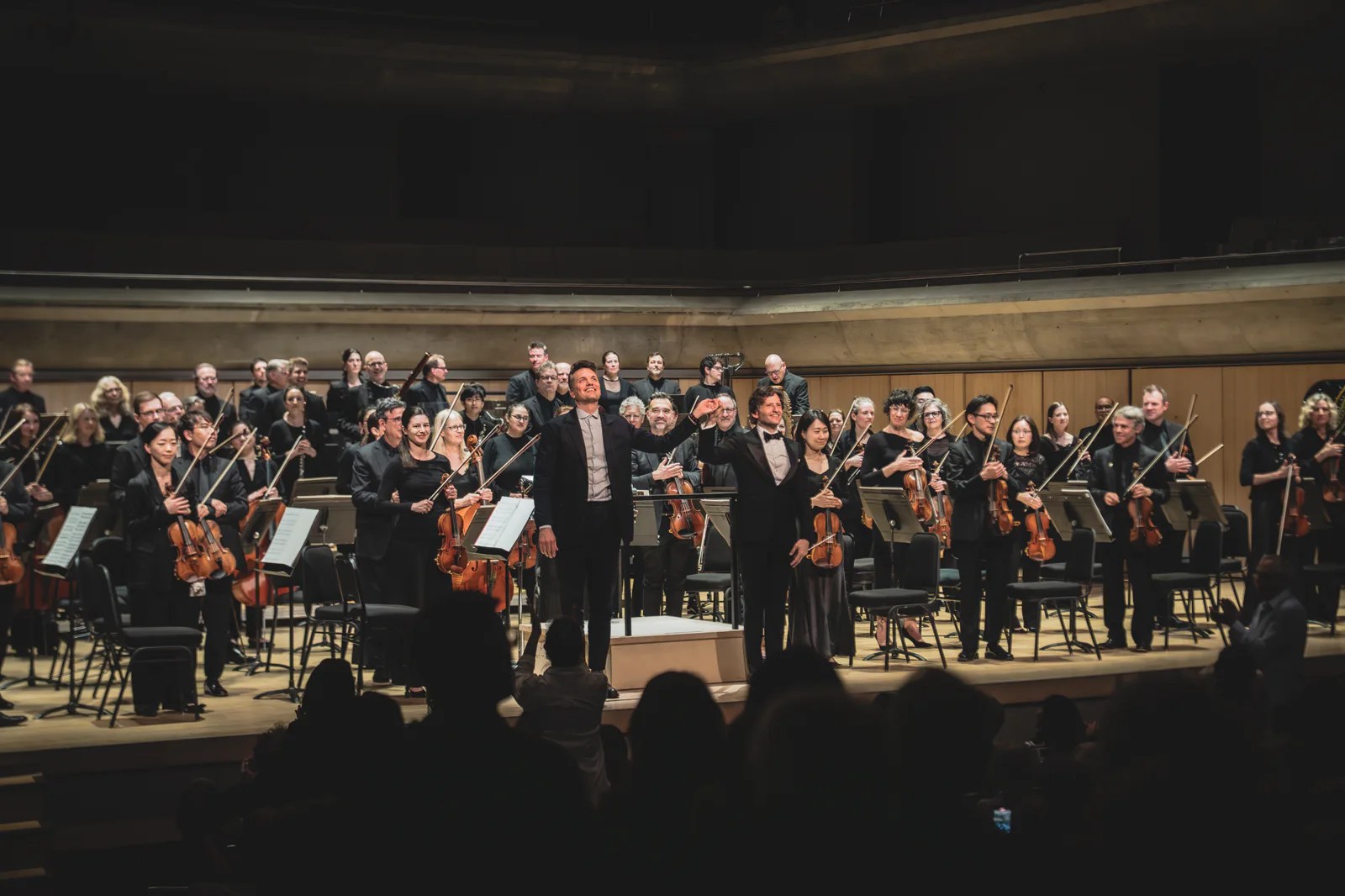
After intermission it was time for the Pathétique.
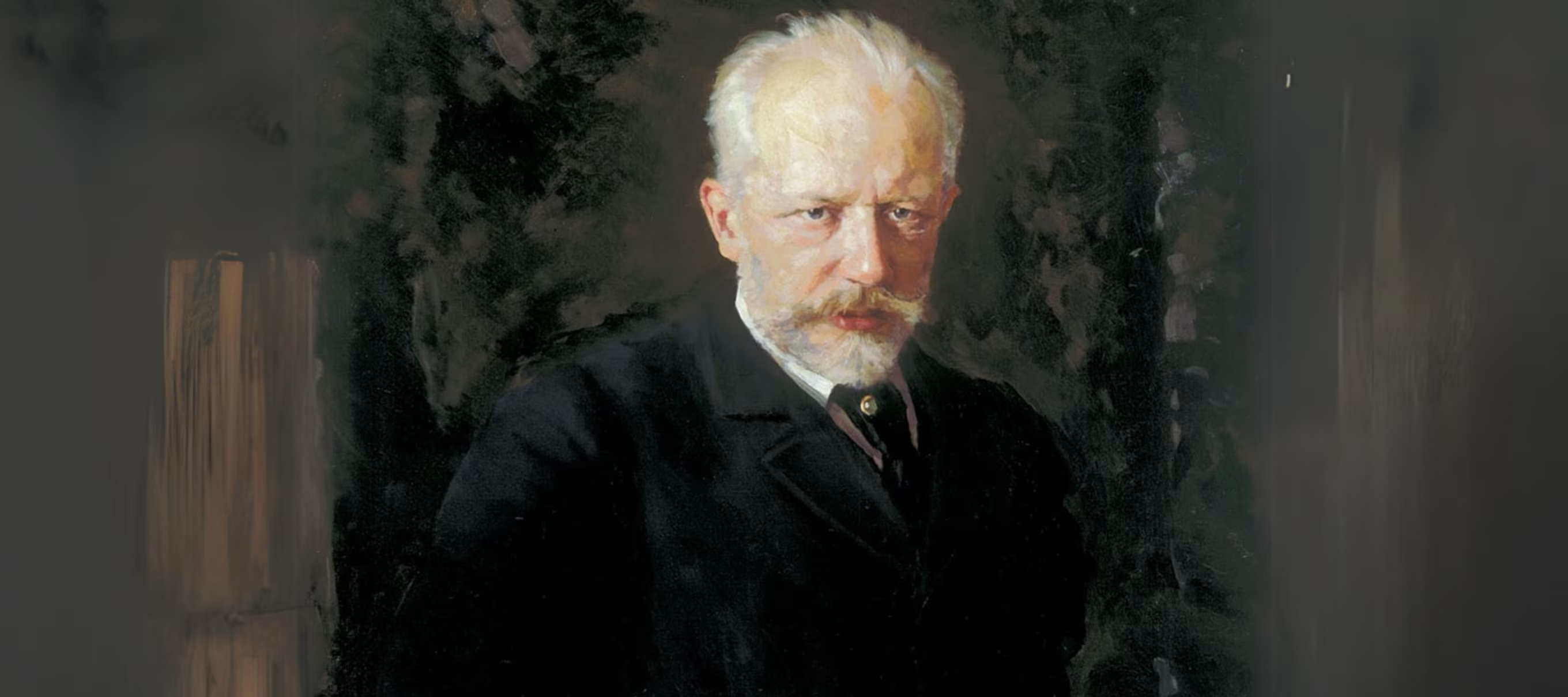
I can’t help thinking of the Canadian Opera Company’s Tchaikovsky, Eugene Onegin conducted by Speranza Scappucci that opened last weekend, taking tempi faster, making dramatic climaxes bigger than I have ever heard them.
Ditto Gustavo Gimeno. I bring this up, mindful of Gustav Mahler: who was largely misunderstood for decades but only figured out much later. I wonder if maybe we are only starting to really understand Tchaikovsky a century later, after so much time when critics condescended to a composer, disparaged for seemingly wearing his heart on his sleeve. If your goal as an interpreter is to play up the cantabile, exploiting the melodic schmaltz without pushing the orchestra to its limit? perhaps you miss the point, captive of an obsolete tradition.
Gustavo gave us the most dramatic reading of this work that I have ever encountered. For most of the first movement that meant softer phrases, mezzo-forte or softer, until the big climactic passages near the end of the movement. The 5-4 second movement was done with great subtlety, very fast and very understated until climactic passages when Gustavo encouraged the brass to open up a bit more. Yes maybe this is a pattern, and it’s one I like.
The Allegro molto vivace was true to its name, faster than I’ve ever heard it. When it’s done a bit slower, it’s easier to play, but Gustavo is never looking for the easy path. I’m surprised at how clearly they articulated the inner voices. While there’s a positive energy to the movement it is followed immediately by one of the saddest things Tchaikovsky ever wrote, especially when the conductor makes no pause but presses forward. We go from a kind of manic macho exultation to sighs of despair in the closing movement.
It was Tchaikovsky’s birthday last night (also Brahms). I think Gustavo and the TSO gave us a proper celebration honouring a composer who continues to inspire amazing performances. The concert program is to be repeated Saturday night.
“Photos by Allan Cabral/Courtesy of the Toronto Symphony Orchestra.”
 barczablog