
It seems like Tchaikovsky season in Toronto.
Yuja Wang played his 1st piano concerto with the Toronto Symphony a couple of weeks ago, and the TSO play his 6th Symphony later this week. This weekend the Canadian Opera Company have revived the production of Tchaikovsky’s opera Eugene Onegin seen here in 2018. Opening night was last Friday and I attended the second performance on Sunday afternoon.
Onegin is better in 2025, as my headline should suggest. Much better. In a show originally directed by Robert Carsen and designed by Michael Levine, with revival Director Peter McClintock, assisted by Marilyn Gronsdal, surely the most valuable participant is Speranza Scappucci, who conducted the COC orchestra and chorus.
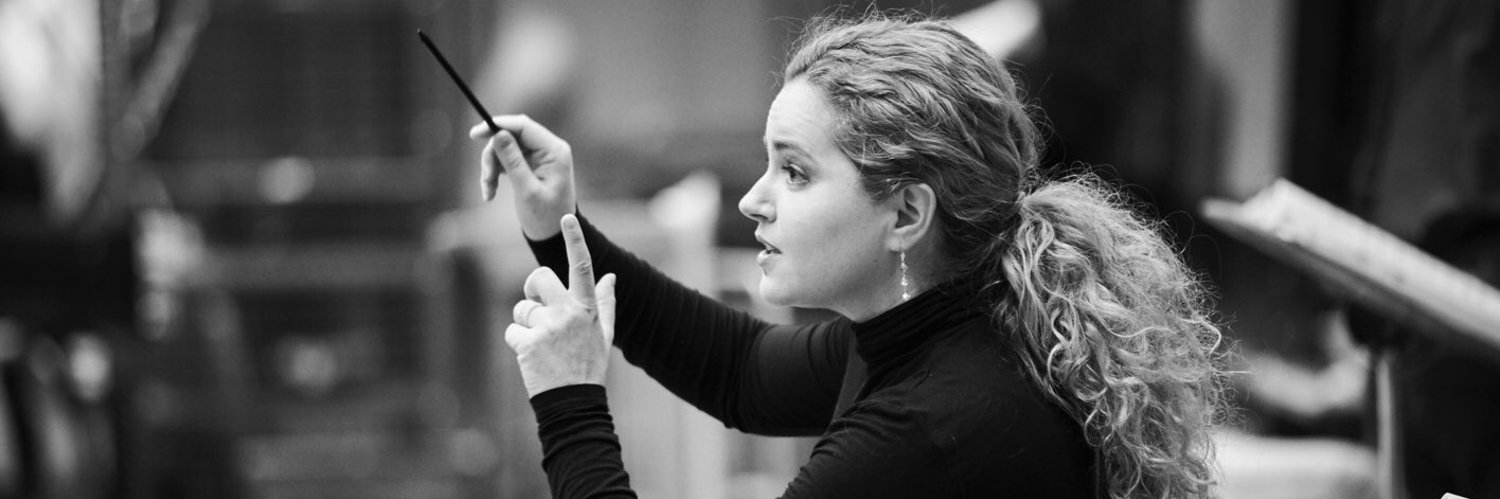
The COC orchestra could sound as soft as silk or build to a genuine ferocity when necessary. She found a level of passion in the Polonaise, the Cotillion or the Ecossaise, each a backdrop of the drama unfolding before us onstage.
At times Speranza dispensed with the baton, as in the aria that comes just before the duel between Lensky and Onegin, “kuda kuda”.
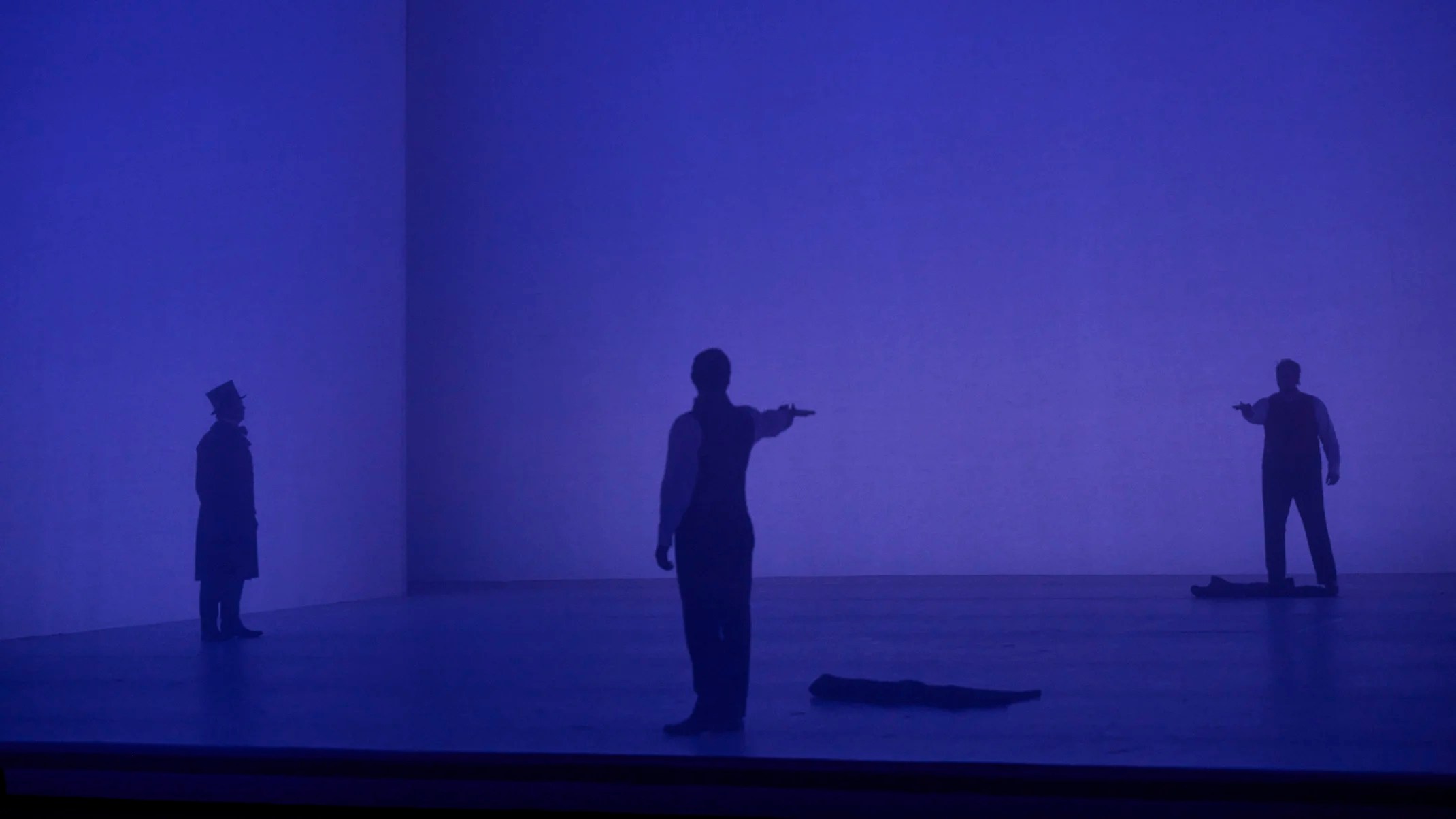
(Evan LeRoy Johnson; photo: Michael Cooper)
Speaking of kuda kuda, I was especially impressed with the singing of our Lensky this afternoon.
Evan LeRoy Johnson showed us a voice with remarkable capabilities that reminded me of the 20th century tenor Jussi Björling, with the ability to sing so gently that it verged on falsetto even as he properly supported the sound, or gradually making a crescendo to a big sound. He was very musical, wonderfully expressive.
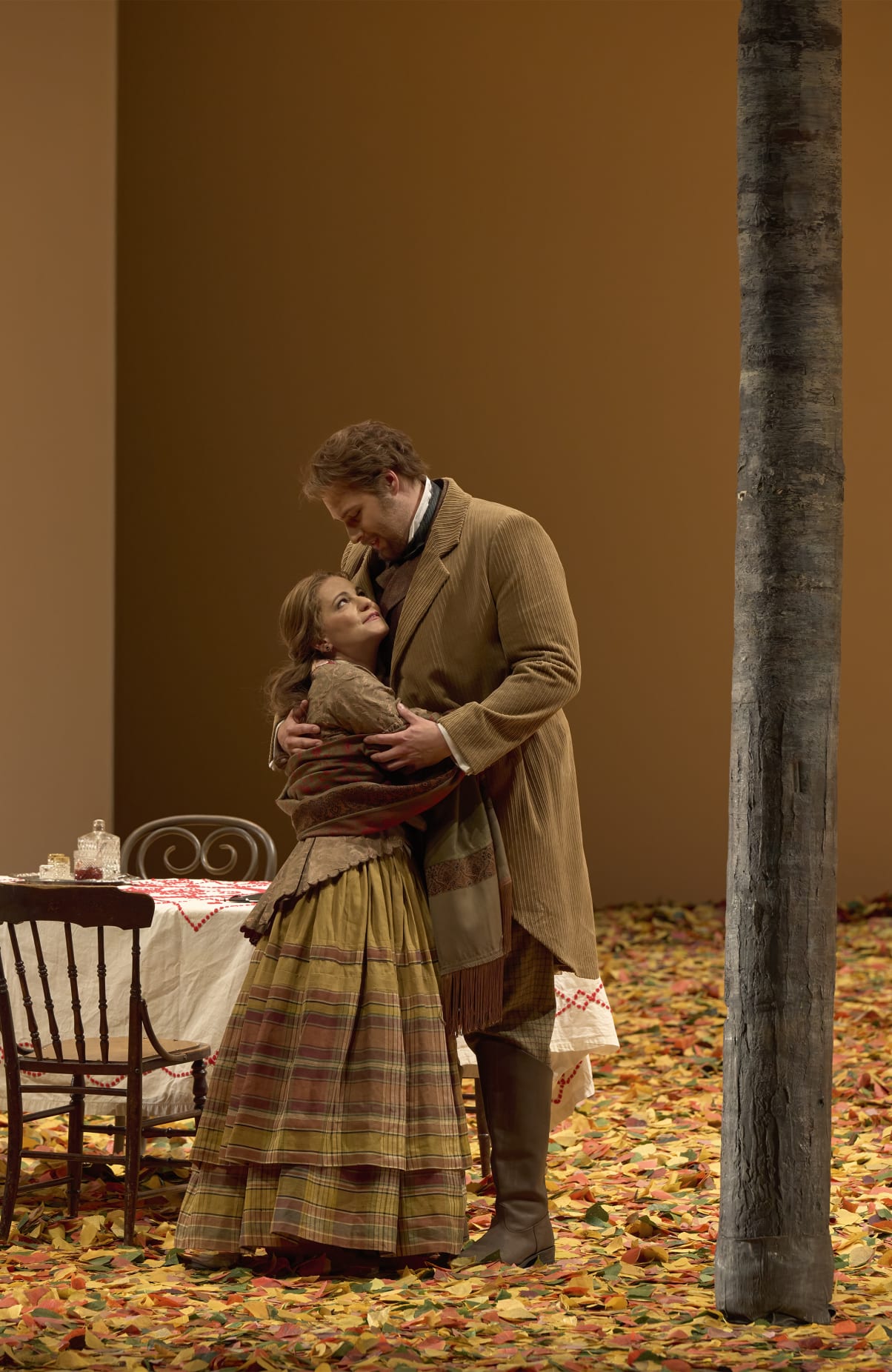
As I consider Jussi to be one of the greatest singers of all time, please assume that my comparison is meant as the highest praise.
Andrii Kymach in the title role had a very Russian sounding delivery, in the sense that I hear him making his voice darker than sounds entirely natural, even as he managed all the vocal challenges of the role. I wonder how the voice will sound in a decade as I worry that his darkening is not a choice conducive to longevity. Right now he sounds powerful. And his acting was a key to the success of the production.
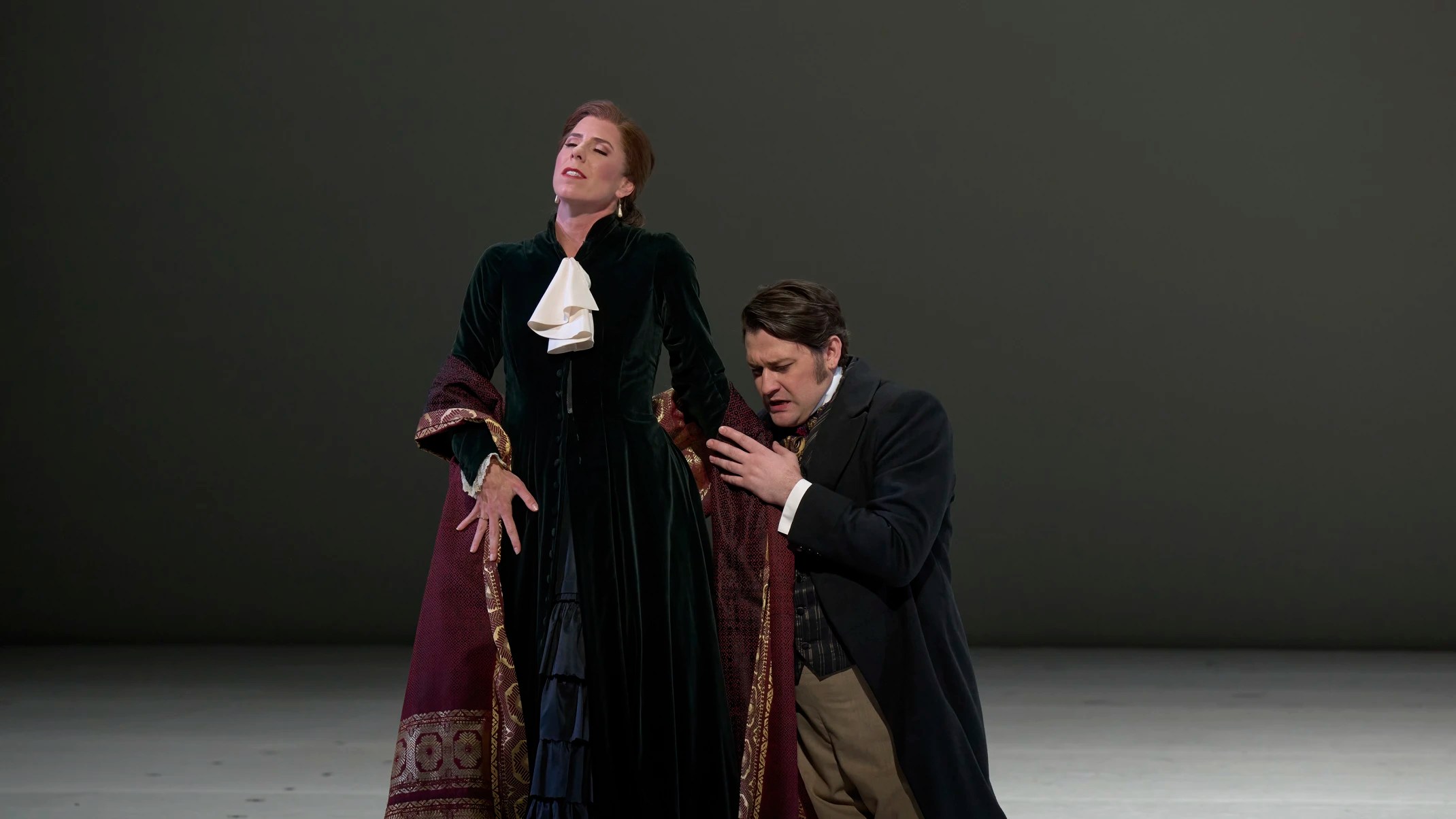
Lauren Fagan as Tatyana is so much at the centre of the opera at the beginning that one might question the title of the work. I think it’s normal though, indeed we come to the end of the opera named for the man, but the woman is the one with our sympathies, every time. Tatyana is one of those roles that should be “can’t miss”, should be the one we care about at the end, especially if we saw youthful vulnerability in the letter scene, alongside dignified maturity in the passions she gives us in the last scene. I think Lauren’s Tatyana is more sympathetic than most, even as we admit that in this opera we always will like or love Tatyana.
Carsen addressed it in his director’s note: “When we first began to work on our production, we noticed that sometimes Tatyana tends to dominate the narrative.“
The first three scenes are really all about Tatyana and her response to Onegin (1-meeting him, 2-writing the letter to him and 3-humiliated by his polite words of rejection).
Carsen continues:
“But ultimately it is Eugene Onegin’s story, so we thought it would be interesting to tell it as much as possible from his point of view. To that end we shaped the production as a memory piece, with the action of the opening musical prelude beginning at the end, at the very moment in which Tatyana rejects and leaves Onegin.“
And so the first scene before the opera begins and after intermission give us a brief glimpses of Onegin miserably alone: as we shall see him at the conclusion of the opera.
Onegin is the classic Byronic figure, bored by his surroundings and distant from everyone around him. In this version Onegin is more objectionable, more blatantly misanthropic in his behaviour. Whether it’s due to directorial input or the singer’s idea, Andrii played the role in such a way as to emphasize the insincere mind-games in the party scene that lead up to his duel with his best friend. I find this choice makes him and the ensuing catastrophe more completely believable even as Onegin is made far less sympathetic as a result. I remember in the 2018 version Lensky seemed to be over-reacting to Onegin and indeed that is usually how I perceive him. This time I was intrigued to find myself sympathizing more fully with Lensky because Onegin seemed to be that much more of a deliberate jerk. I think too this means we are even more torn at the end, the outcome hitting extra hard because Onegin’s fall seems so totally self-inflicted.
Or maybe it’s just that the conducting and musical performances overwhelmed me so totally. And the audience seemed more fully persuaded than any performance I saw either in 2018 or before when I saw this production on the High Definition broadcast from the Metropolitan Opera. The blatancy of Andrii’s portrayal shifts the balance for me. I have always felt Tchaikovsky loves Tatyana and Lensky, the two whose music seems the most convincing, but past productions often felt false, not fully getting me there. I think between Speranza’s committed conducting and the darker reading of Onegin, that we were won over fully.
I found myself asking questions after.
When Prince Gremin sang about the blessings of age, having found and married Tatyana, it seemed astonishingly apt that someone sitting just in front of me had their telephone go off, ringing at least four times, while the owner (a senior like myself) was too ashamed to admit it, too inept to shut it off. As a senior I’m compulsive about my smartphone, believing that if I ever get too old to silence my own phone I’ve resigned from the community of live performance, having violated the social contract.
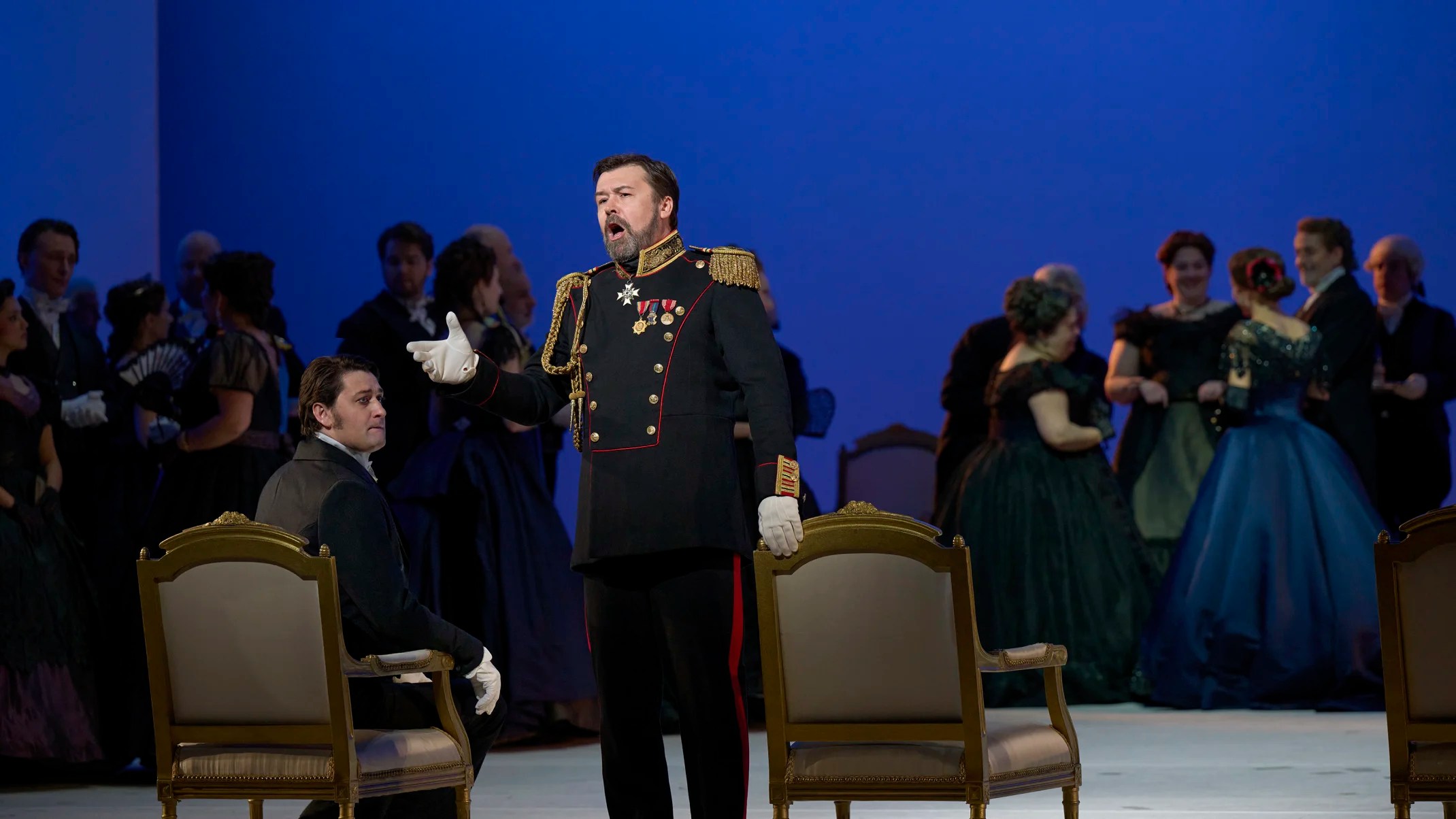
Michael Colvin showed us his remarkable range singing the role of Monsieur Triquet. I don’t mean range in the usual operatic sense of how high or low they can sing, so much as dramatic capabilities. Michael is also seen in a few electrifying moments as the Fool in Wozzeck, having previously blown me away with his brilliance as Thomas Scott in Louis Riel. It’s great to see him having a good time onstage.
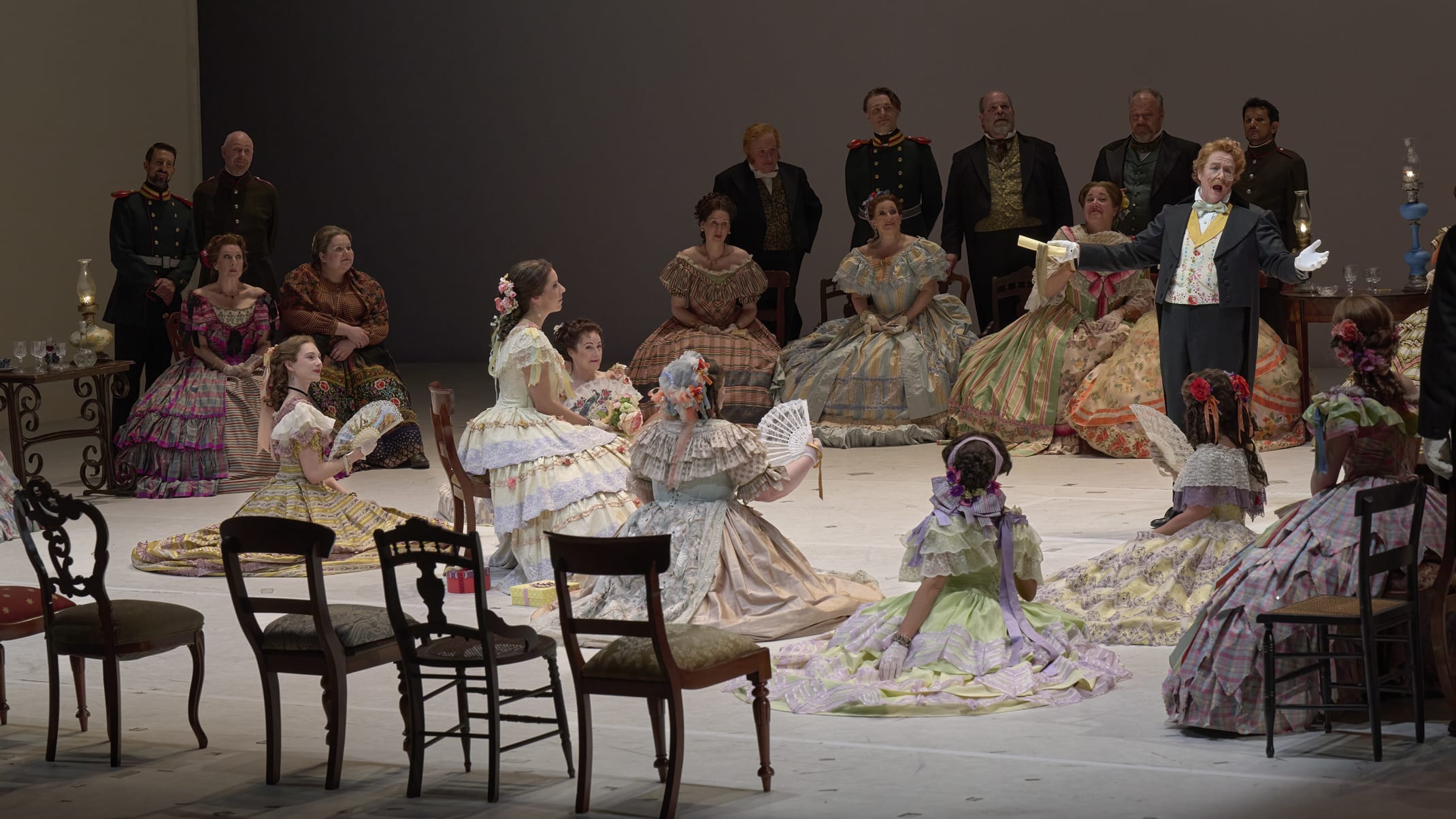
The choral set pieces were crisp and energetic, especially the delightful scene where a female chorus clear leaves from the centre of the stage.
What do the leaves signify? In the scene a few moments before Onegin comes to respond to Tatyana’s letter, the women sweep leaves to make a space on the stage. While these are surely dead they do suggest life. It’s a balletic scene that may not mean anything but is wonderful to watch.

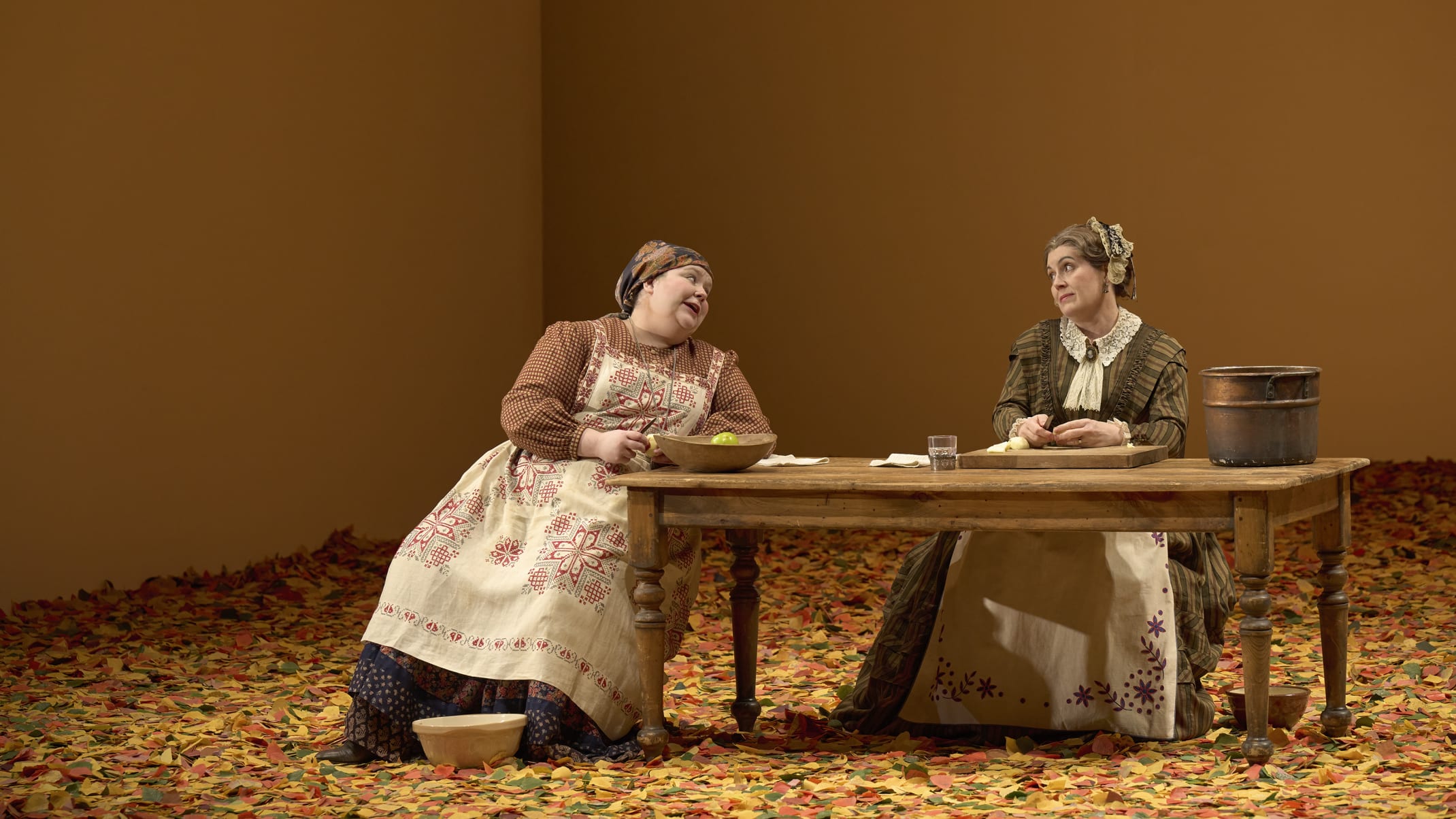
The opera does not carry the generic designation of “Literaturoper” as I mentioned in the Wozzeck review last week (a genre of literary text set to music without intervention of a librettist), but there are times when the absence of a real librettist is evident. As Carsen noticed, the opera seems to be about Tatyana at first, as the story only shifts focus to Onegin in the later scenes. Emily Treigle as Filipyevna and Krisztina Szabó as Madame Larina ground the opera in a calm normalcy, that sets up what’s to come. I love these opening scenes even if they’re not as fraught, not as Byronic, just pastoral and Russian. Olga (Megan Marino) is in the opening scenes, and comes to play a big part in the development of the conflict that leads to the opera’s catastrophe, although she is mostly on the sidelines once things get really serious.
Eugene Onegin continues with performances May 7, 9, 15, 17 & 24.


You write so well! Thanks for this.
LikeLike
Aw thank you for the kind words.
LikeLike