I would not dispute the title of tonight’s Toronto Symphony concert: “Gimeno Conducts the Best of Brahms”. Among the many wonderful pieces Johannes Brahms composed, his first piano concerto and fourth symphony are not just popular but arguably among his greatest creations.
And it was very exciting listening to how Gustavo Gimeno inspired his orchestra in their season finale with their Music Director.
This series of Brahms concerts also includes brief pieces by the NextGen composers, a trio of early-career composers. The TSO explains the NextGen series this way:
“As part of his commitment to supporting and developing Canadian talent, Gustavo Gimeno will work with TSO RBC Affiliate Composer Liam Ritz to mentor three early-career composers. Each will have a new work performed by the TSO within the season.“
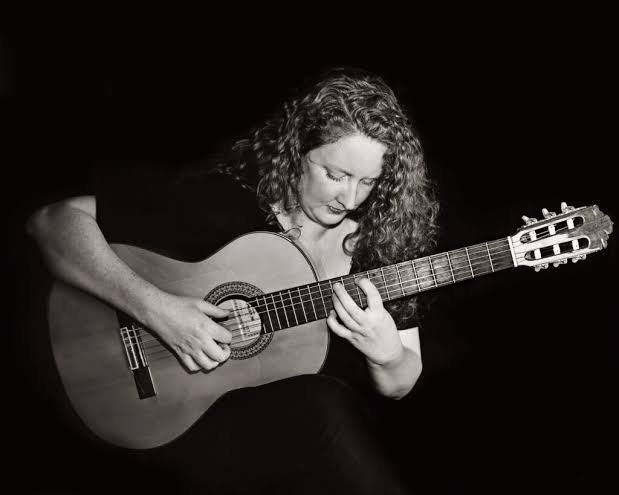
Tonight it was Amy Brandon’s qililliil, a world premiere/ TSO commission, while Saturday June 14 it’s Andrew James Clark’s Roy and Sunday June 15 it will be Sonny-Ray Day Rider’s Celestiaga, Daughter of the Cosmos.
While I have no idea what Roy or Celestiaga sound like, I was intrigued by Amy’s work, whose sound world made a really nice preparation for the opening of the Brahms concerto. You may recall that the first thing we hear in that Brahms concerto is the loud sound of the timpani with a low D in the brass, followed by a dramatic entry by the strings. Brahms will take us from something wildly passionate yet undefined and ambiguous to something softer, and ever more clearly articulated, especially once the piano comes in. Clark explains that qililliil is a god of the underworld. As with Brahms Clark took us from something indistinct, in the big sounds of brass and strings, as a backdrop within a few moments for a delicious cello line, and then a more restrained flute entry. It was all over in five minutes (and has me wishing to hear more from this young composer): but served to prepare the ear and whet the appetite for what was to follow.
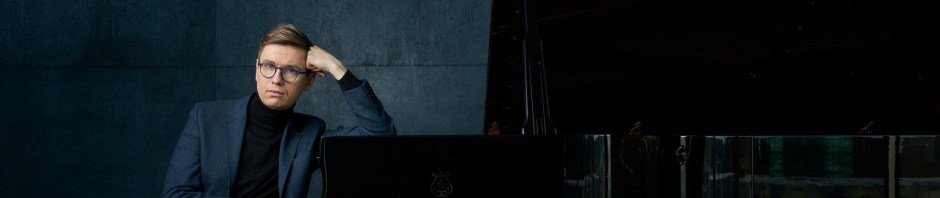
I recall hearing pianist Víkingur Ólafsson almost exactly two years ago, playing a Mozart concerto with the TSO.
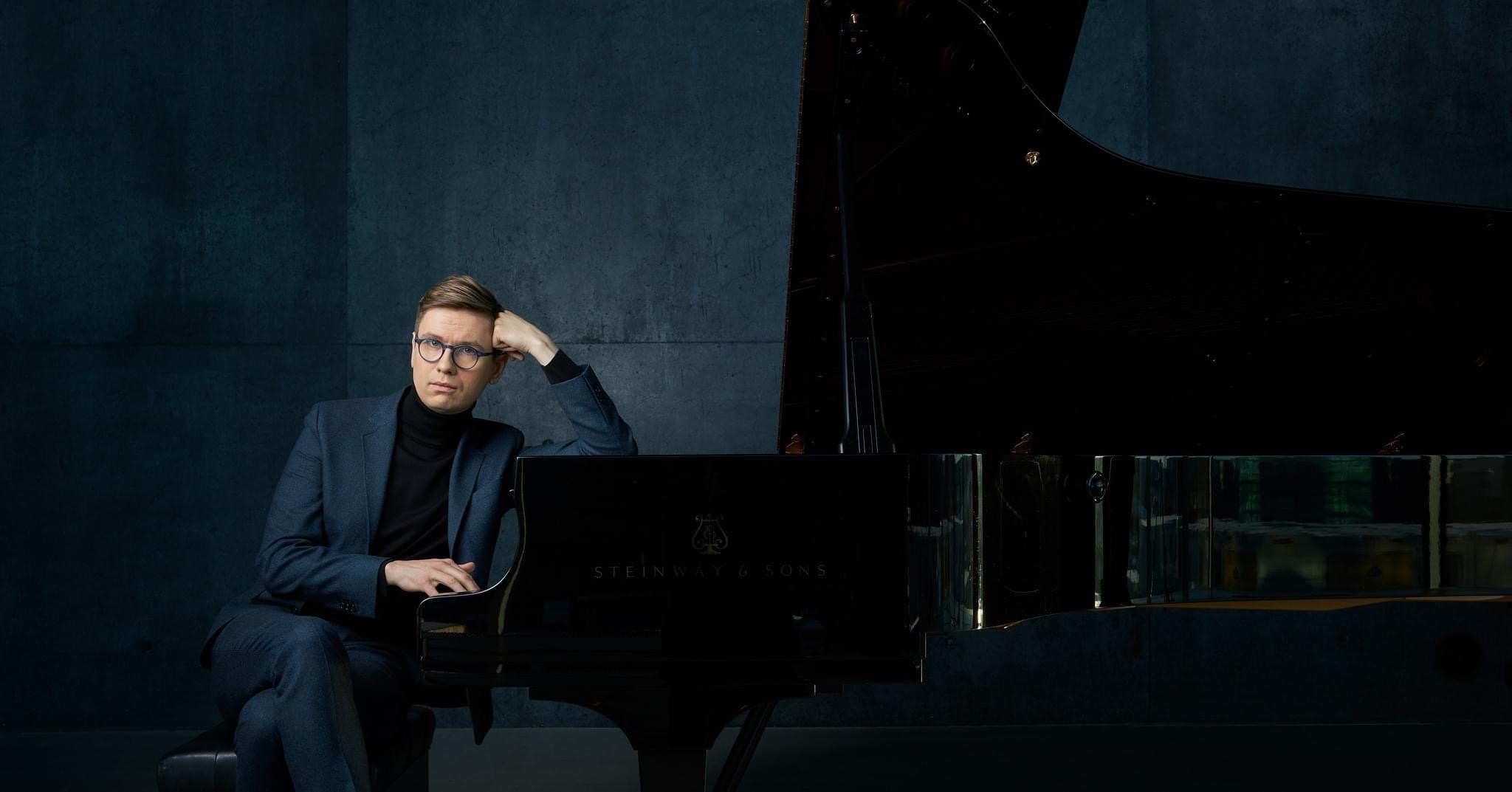
Víkingur gave us a romantic interpretation. By that I mean he was at times fast, at times slow, and responding passionately to the requirements of the concerto. So as Brahms begins the first movement with something rather mechanical, we heard it played softly, almost sounding like the Mozart I heard him play two years ago. When we came to the entry of the second subject, a stunning melody in F (first time) or D (in the recapitulation), it was played very thoughtfully, one of the slower readings of this passage that I recall hearing. Yet before too long we were flying along, particularly in the octave passages in the development. It was fearless Brahms, at times hair-raising in its intensity.
When the audience applauded the conclusion of the first movement, the soloist made an adorable acknowledgement of our faux pas (even if applause was once a normal audience behaviour, if you go back enough decades). While he wears the straight face of James Bond while he is playing, at this moment he cracked a big smile, before resuming his tranquil poker-face. Tranquility was the essential colour of the middle movement, whether in the softness of his opening, or in the waves of arpeggiated notes towards the end of the movement, this time undisturbed by any audience applause.
And he dove directly into that opening solo to begin the last movement, faster than I’ve ever heard it played and with terrific precision. Thank goodness Vikingur & Gustavo were on the same page, the orchestra flying along in hot pursuit. Víkingur seems to play with a wonderfully clean technique, which isn’t absolutely clear because he’s playing Brahms and the orchestra makes big sounds at the same time.
After our rapturous response to the concerto Víkingur smiled again, favouring us with a pair of encores, allowing us to hear that amazing technique unencumbered by orchestra (no offense Gustavo!), beginning with a piece that I believe was Rameau’s Le Rappel des Oiseaux. I found a YouTube example that sounds very much like what we heard, except hearing this in Roy Thomson Hall was even more magical.
I’m sorry I don’t know what the second encore was, except that I think I heard him say “contemporary”, likely meaning a contemporary of Rameau not Brahms, as the piece sounded somewhat baroque. This took us to intermission.
After intermission we heard a most unique reading of Brahms’ Fourth Symphony. I was mindful of the concert we heard back in May when Gustavo conducted a very fast Tchaikovsky 6th Symphony, and I was comparing it in my head to what Speranza Scapucci gave us in Eugene Onegin at the Canadian Opera Company. I mention these because I heard a couple of people complain that Scapucci went too fast, whereas I felt her tempi were a revelation: because to do this music too slowly might be wrong. I say “might be” seeking to be respectful of those who don’t like it that way. I feel certain that the composer would be interested to hear the music done this way, as an orchestra played with great virtuosity, the fast tempo requiring spectacular playing to work. As on that occasion, the playing from the TSO was breath-taking in its intensity, skilled beyond what I expected.
There’s a trade-off that happens when you go slower. There is the possibility of gravitas, of extra meaning if you go slow, while going faster heightens the contrasts, increasing the drama, provided that it is played correctly. Sometimes orchestras have no choice but to go slower. Gustavo and his TSO however go quickly while playing with precision and skill. I am especially a sucker for brass that plays so well, as with the horns (fluff-free both in their lovely solos in the piano concerto and again in their entry for the second movement of the 4th symphony) or the trombone choir felt so meaningful in the last movement, emerging with great dignity. The first movement began gently, not as fast as it would get, while the intensity built up relentlessly.
I return to the title of the concert, mindful of the “best of Brahms” that was truly heard tonight. If you’re a fan of Brahms you’d do well to get to this concert. If you don’t know the composer you would likely love it. The concerts this weekend offer you a last chance to hear Gustavo Gimeno leading the TSO.
 barczablog
Is Gimeno leaving the TSO?
No, sorry if I gave that impression (and sorry if I’ve scared you). This is merely the last concert of the season.
Phew. 🙂 Thanks.