
Friday night’s Toronto Summer Music concert at Walter Hall titled “Affairs of the Heart” lived up to its name.
Three chamber works in a diverse assortment of styles brought the sold out audience to its feet each time.
We started with Mozart’s Duo for Violin and Viola in B-flat Major, K. 424, representing something of a masquerade. I saw in the program note that Mozart composed the piece in a style of Michael Haydn to fulfill a commission for his gravely ill friend.
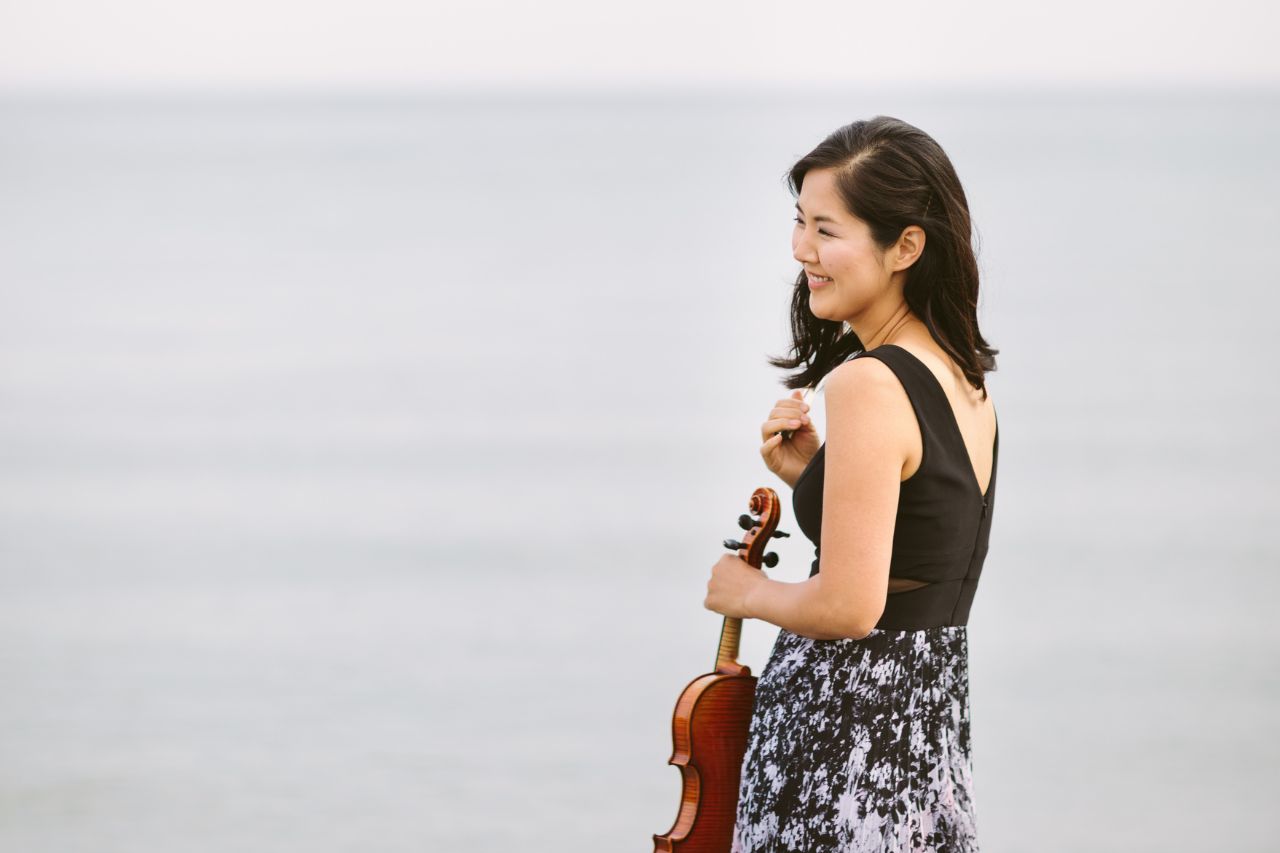
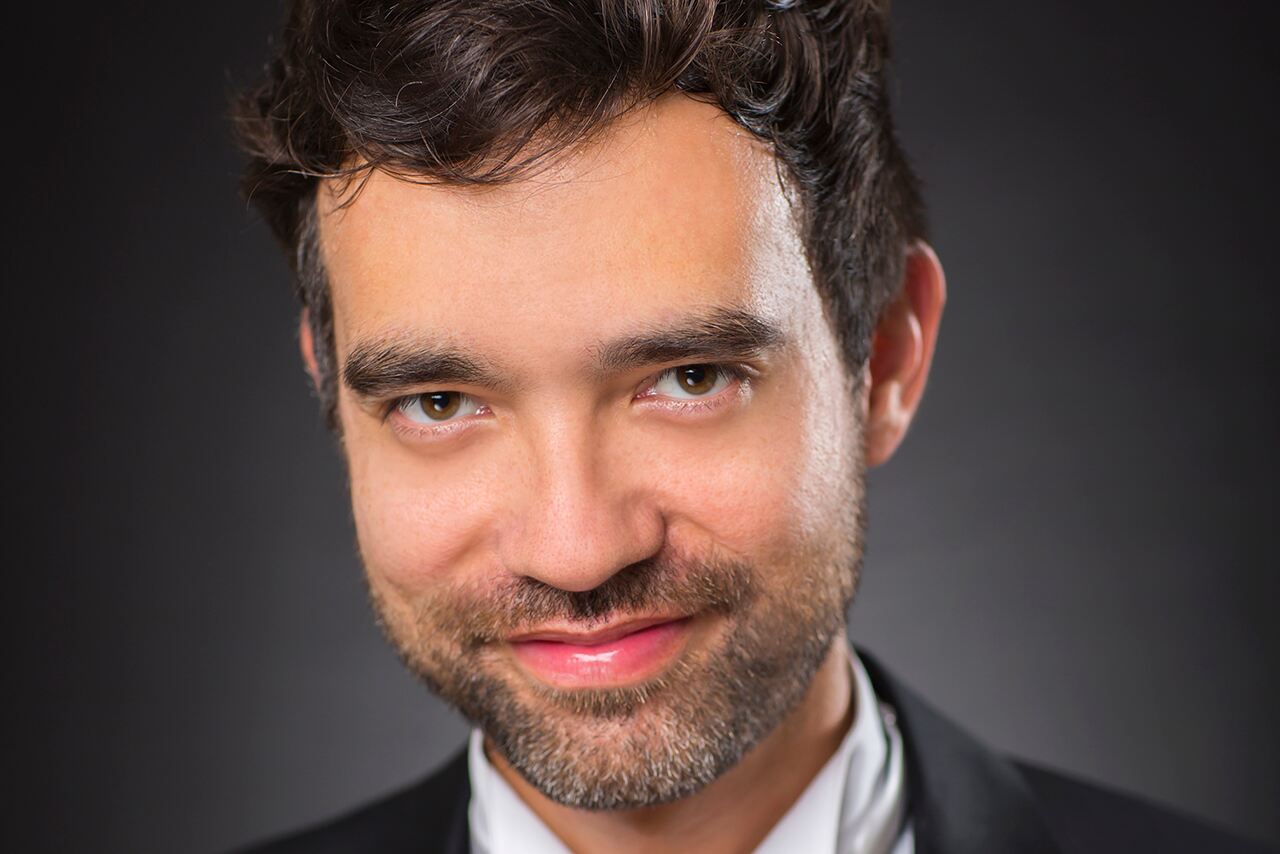
I don’t know the specifics well enough to understand if this represented a departure from what Mozart might have usually written, but the performance from Min-Jeong Koh, violin and Rémi Pelletier, viola, was played with theatrical flair. In the final passages the back and forth between the two instruments was offered complete with an over the top vaudevillian challenge played out between the two, as their charming comedy underlined what was already clear on the pages of the composition.
The revelation of the night came next, namely Shostakovich’s Cello Sonata in D minor, Op. 40. I heard others afterwards marvelling at a work that was as new to them as it was to me.
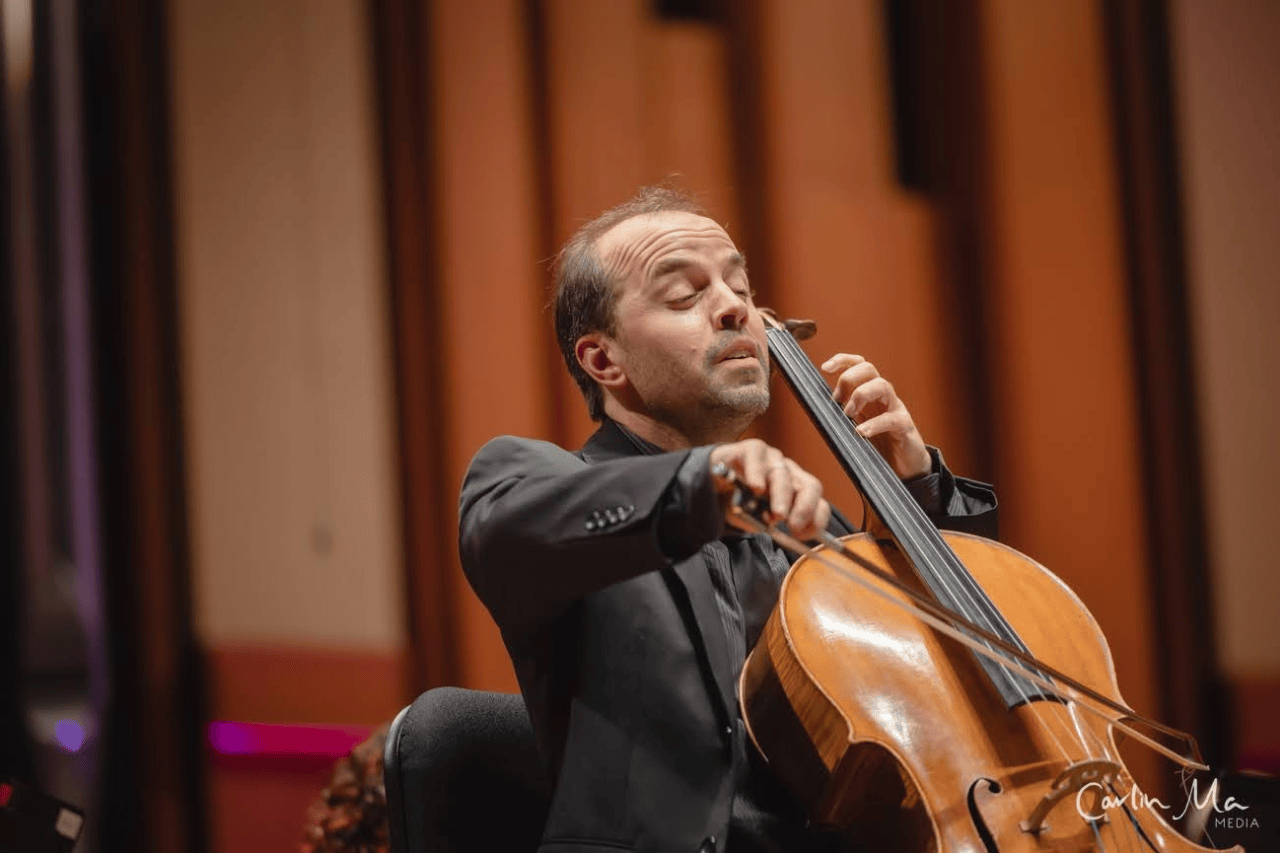
Efe Baltacıgil, cello and TSM regular Philip Chiu, piano, took us for a wild journey in four movements.

While the work was identified for us in the program as a sonata for cello, the work gives a great deal of work to both soloists. I will have to go get the score to see what the composer was doing. The first movement is sometimes tranquil, very lyrical, a kind of friendly conversation between two moody souls, collaborators who are mostly friends and definitely on the same page. While Baltacıgil’s cello was often a powerful sound filling Walter Hall with a rich tone, I was awed by the way Chiu held back so often, very quick yet soft. I was put in mind of a word we’re not supposed to use anymore, namely “accompaniment”, given that Chiu’s role is fully collaborative, the title of the sonata notwithstanding.
The second movement infected me with a need to tap my toes, making me worry i was bothering my neighbours in the hall, infectious rhythms in triple meter and mercurial, quicksilver emotions prompted out of nothing and then gone with the ending of the phrase. The repeated little phrases suggest dance although, hmm, whose tune are they dancing to? I have to wonder, as we ponder authoritarians lurking in the wings for our possible future, whether the one tiny consolation is to be found in the way oppression triggers brilliance in the artists responding to tyranny. Yes I may be reading too much into the surreal shifts of tone Shostakovich throws at his artists and the listeners. As I wonder whether the composer wants to tease us or scare us, at the very least this is challenging for the artists, who pull us all back to safety with something orderly in the simple solid cadence, like the ground under our feet (and hopefully we didn’t face-plant). The solemn & troubled largo that follows allowed Baltacıgil to show off his superb tone as though it were Shostakovich’s protagonist, Chiu’s underscoring like a softly menacing reminder that the world isn’t always as you think it to be.
After the internalized Largo, Shostakovich concludes with something more extroverted, dancing us out the door with a brief & energetic Allegro. The tune that begins on the piano & then taken up by the cello is a bit wacky, even morbid. It would work as a theme for the Addams Family franchise or a horror film, complete with the requisite humour that the genre often includes nowadays. We erupted in appreciation after a flamboyant but flawless reading from Baltacıgil & Chiu. I wish they would record this, as their chemistry together is quite beautiful.
It was intermission, as I was asking myself what I could properly remember, what I could record here. Memory and its absence haunts me, now a little over two weeks past the celebration of life for my mom, and the performance of Missing Thursday that I couldn’t help experiencing as a celebration of life for the missing girls & women. I remember how I spoke at a festival at the U of T in 2005, observing the bias our institutions lend towards print & books & buildings, while festivals celebrate people and happenings in the present. Jonathan Crow in his last year as Artistic Director of this festival is still a tall presence, a young – looking violinist we’ve been lucky to see with the Toronto Symphony and at the TSM Festival. He would perform in the last work tonight, and is back next week to play on Monday & Wednesday, as well as whatever other appearances he makes as a host & presenter speaking into the microphone. He has curated a superb & unforgettable festival, even as I write this, aware of how memory fades.
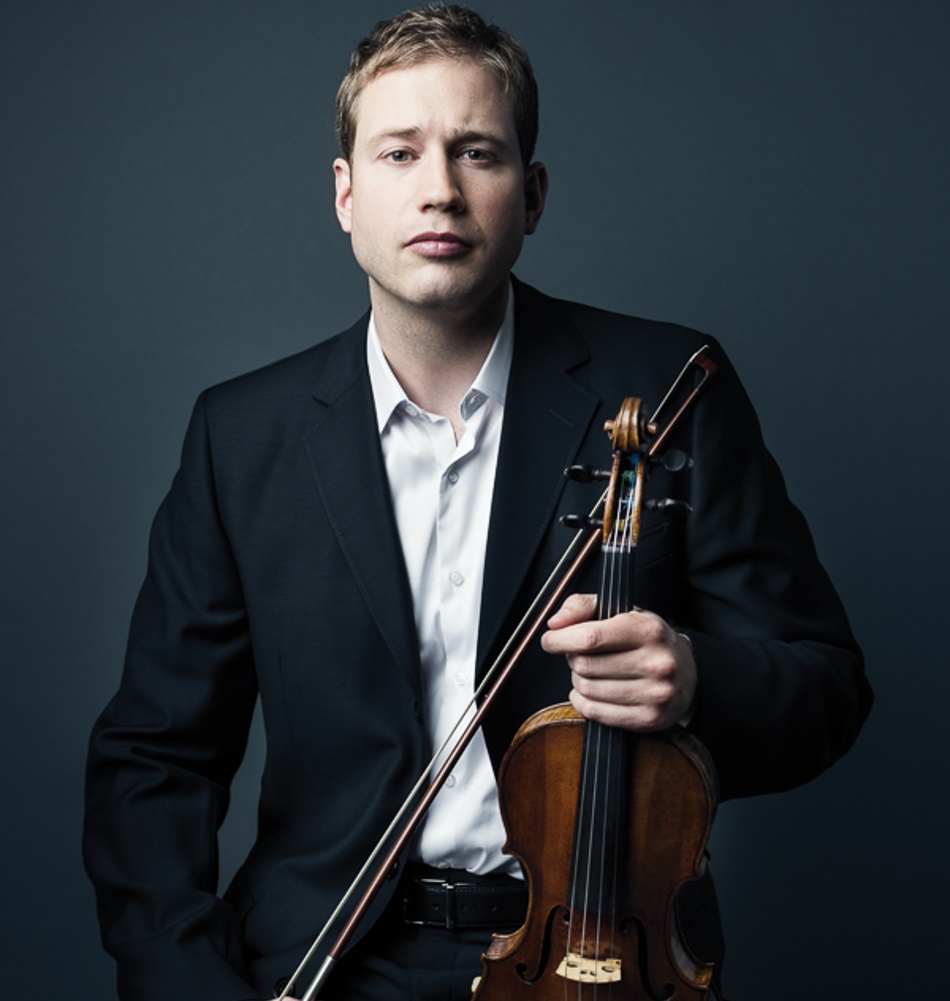
After intermission we went on another sort of journey with Brahms’ piano quartet #1 in G minor, four movements sometimes very gently musical, sometimes elaborately virtuosic in the demands made upon all four players, namely Crow, Pelletier, Baltacıgil, and Chiu. I was grateful for the programming, as the combination of pieces was suggestive, Shostakovich’s Slavic grotesquerie making a perfect preparation for Brahms’ flirtation with musics suggestive of ethnicities to the east such as the Roma or the Magyar, although Brahms makes art music with allusions.
Festivals may make for strange bed-fellows (speaking of “Affairs of the heart”). Baltacıgil is principal cellist in Seattle, Crow is concertmaster alongside Pelletier in the Toronto Symphony, and Crow has played a great deal alongside Chiu in recent TSM festivals. The cohesion between these players suggests a longer term connection, a lovely chemistry. Chiu regularly allowed the piece to breath, while all three string players stepped up for key solos but otherwise blended rather than sticking out. I wonder if they will ever get the chance to play together? There is a special magic in the encounter between musicians from different cities, coming together as teachers & mentors, sharing their gifts.
Speaking of gifts Toronto Summer Music Festival is a growing feature of our city and could use your support. I will quote from their website which asks “Why TSM?”
Support access to classical music for first-time concertgoers, young people, and students.
Support musical excellence through some of the world’s top classical musicians.
Support opportunities for emerging artists as they launch their careers.
Support new music and ensure the exciting future of the art form.
Support a thriving community of music-lovers brought together by shared enthusiasm.
Click here if you’re thinking of making a donation.

 barczablog