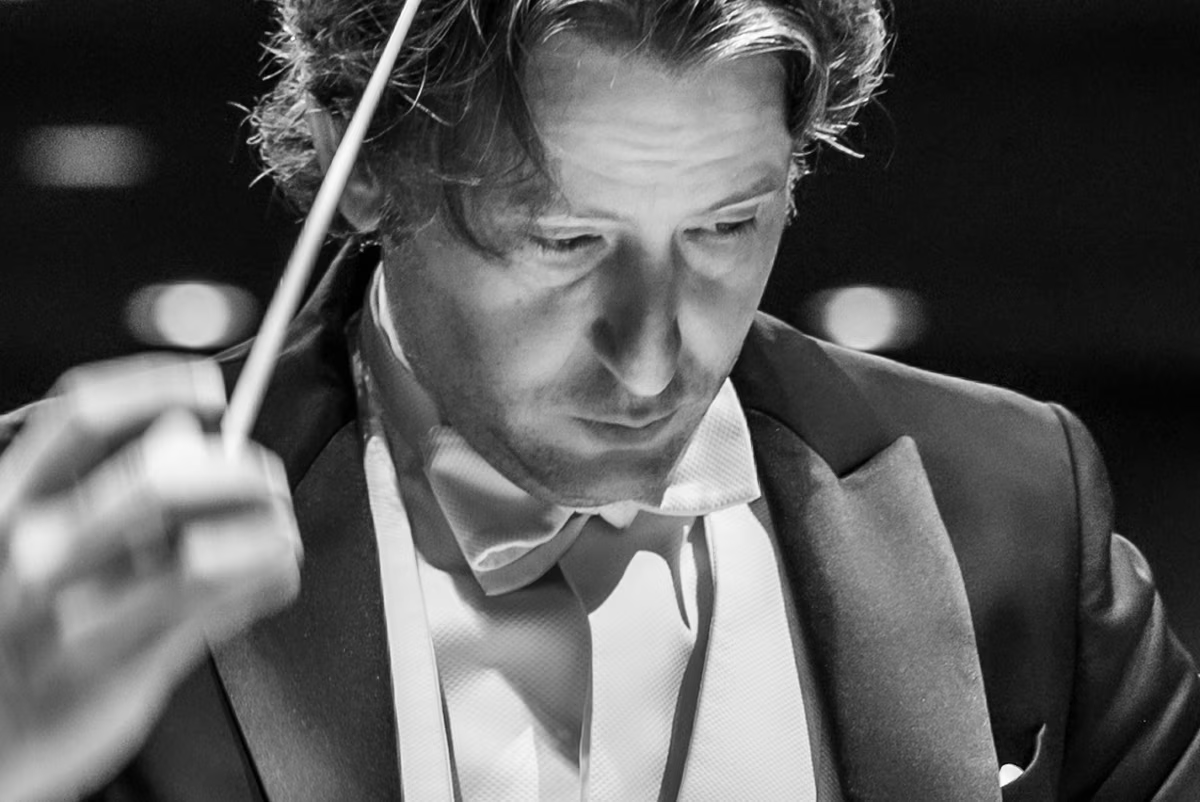
Forgive me that my headline sounds like a prayer to the Goddess Fortuna. But so far she seems to be smiling upon our fair city and our Toronto Symphony. I feel lucky to live in this city.
Toronto Symphony started the new season with a strong program that might be their formula for the coming season, a mix of a familiar piece with something new.
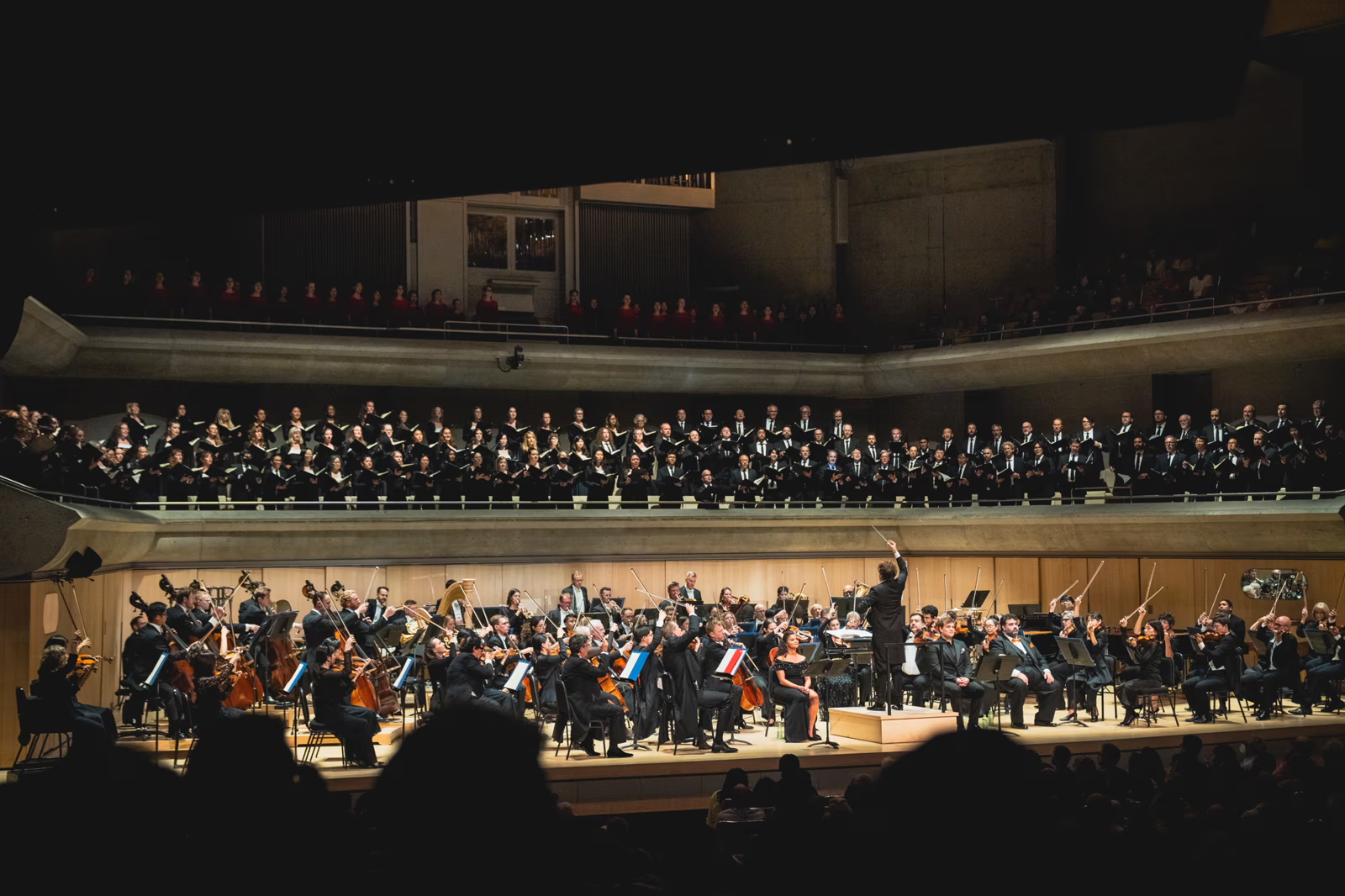
Roy Thomson Hall can sometimes seem like a big cavern, but occasionally the planets align (thank you Fortuna), as the combination of the work being presented and the massed forces make that big place seem intimate, even small. Between the full house and the full stage magic can happen.
First we heard the Canadian premiere of Wynton Marsalis’s Concerto for Orchestra, followed by Carl Orff’s Carmina Burana including soloists, the Toronto Mendelssohn Choir and the Toronto Children’s Chorus.
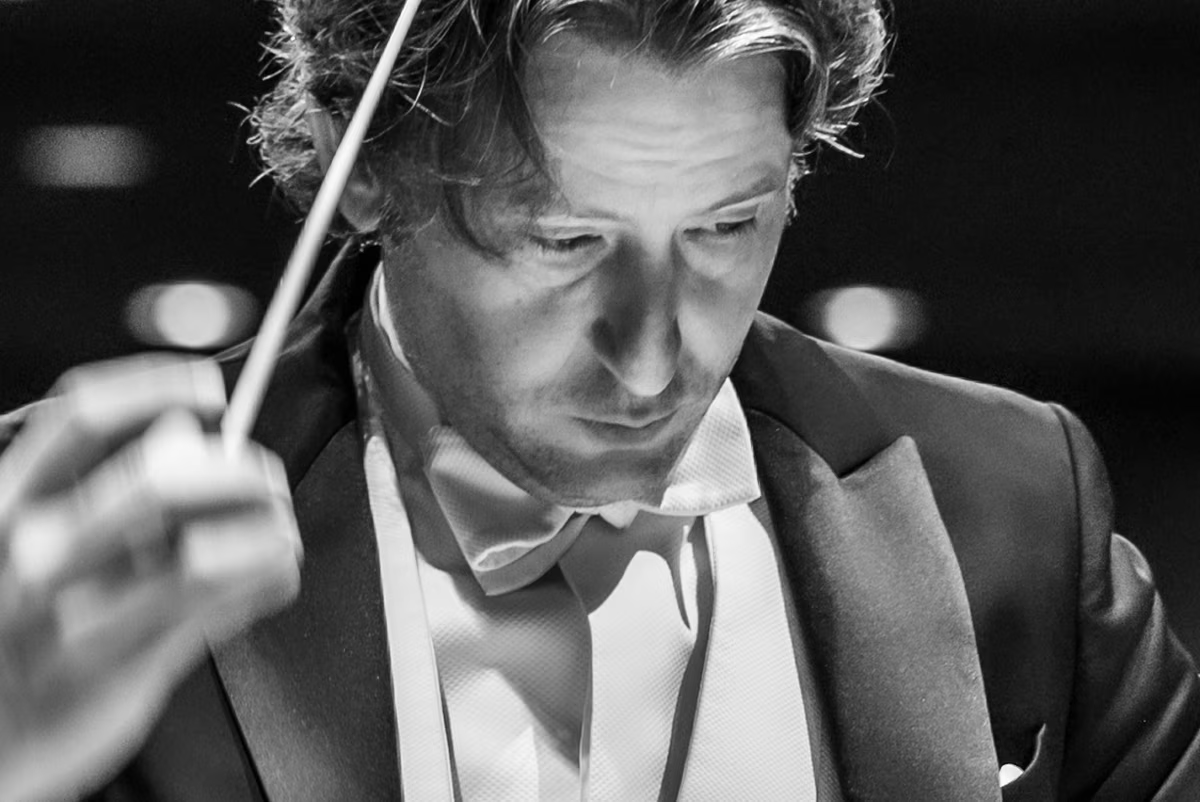
The two works hit me as a beautiful contrast, even though Music Director Gustavo Gimeno drew some interesting parallels between the two works in his pre-concert talk. At first glance the two pieces couldn’t be more different, so the opportunity to see similarities is exciting.
At one point while speaking of Marsalis’s Concerto Gimeno spoke of jazz. It’s perhaps unavoidable given Marsalis’ history as a great jazz player. He’s a genius with his trumpet.
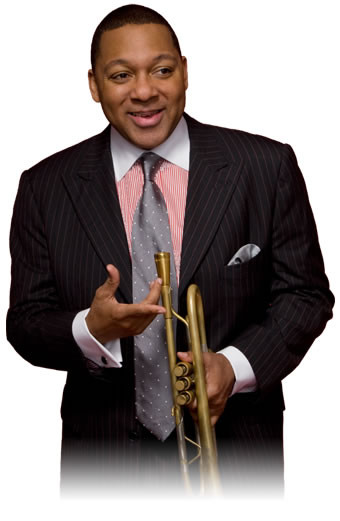
Let me add, that I remember the excitement when Marsalis first appeared on the scene back around 1980 or so. He was perhaps unique, unprecedented because he was both a jazz trumpeter and also as a classical trumpeter playing sparkling performances of concerti by Haydn and Hummel. I’m reminded of Leonard Bernstein, a similarly versatile artist, challenging us to figure him out. Is he popular or classical?
Maybe both.
So yes, Marsalis is a jazz musician & a composer. I wonder if the adjective “jazz” really fits, to label this composition in any way as “jazz”.
In fairness I want to remember that Gimeno’s goal was not musicology or analysis, but simply meant to make the music approachable, to describe the piece in a way to offer an entry point, to bring listeners in even if the work is a daring composition that is at times quite dissonant, with a driving pulsing beat such as you hear in Stravinsky’s Rite of Spring with just a hint of something jazzy. I think Gimeno sought to make the piece less daunting, less forbidding, more approachable. Given the way the audience ate it up, I would say he succeeded although full marks to the TSO for brilliant playing.
The music is fun, playful, astonishingly creative.
Marsalis gave us six movements in his Concerto, with a series of allusive titles to further bemuse us:
I: Who Struck John?
II: Group Speak
III: Testimonials
IV: It Comes in Waves
V: A Love Feeling
VI: Say What?
I wish I had had the titles available as I was listening to each piece. I’m not sure I understand the intention, but that’s why I need to listen again. As I try to unpack the Concerto the next morning especially for those who might consider attending one of the concerts in this series (Saturday at 7:30 & Sunday at 3:00 pm), I am going to share the YouTube I found of an earlier performance of this piece, that so far has only been performed in Los Angeles & Germany. Is it jazz? you be the judge.
I am reminded of the reception of Gustav Mahler in the 20th century, a composer who didn’t really become popular right away, at least not until people had the opportunity to hear his pieces multiple times, through the magic of recording technology. After experiencing a single performance of Marsalis’s concerto, a bit like a Mahler Symphony, I think it deserves multiple hearings, if we are to properly appreciate the depths of this music. I am in awe and insist that this is a superb piece of music.
I found myself obsessing a bit about that word jazz and its cousins in popular music, the harmonic language of blues, wondering if the idiom & the orchestral colours employed by Marsalis might be analogous to the use of a national folk music by a Dvorak or a Ralph Vaughan Williams. I think too Marsalis is aiming for a kind of sophistication, rather than something hummable, generations removed from the romantic composers I mentioned. Perhaps the dense textures of Marsalis’s writing can be understood as a kind of second or third generation elaboration upon his jazz- blues roots (perhaps with the earlier generations being Bernstein & Gershwin), the way Berg is a twist on Mahler or Stravinsky can be understood as the enlarged & distorted image first seen in earlier composers building on their slavic folk music roots.
I wonder if we should think of this as a sort of modernist or even post-modernist orchestral writing, building on certain tropes and regular figures that in isolation are recognizably “jazzy” but without necessarily being assembled into the usual structures that build to a conclusion, instead compiled as a series of fragments, a series of tiny segments without the simple goal you achieve in a Gershwin concerto. Yes there are lots of jazzy moments, melodic gestures: but rarely much of a melody, the foregrounded solos passed around through the orchestra. Similarly the chords we might have in a jazz piece are only hinted at, without letting the regular predictable structure of a jazz piece ever invade the much looser structures employed by Marsalis. For that it seems even more of an achievement for dodging the usual to build something more irregular, at times resembling a pointillist texture of momentary effects & timbres.
I have to listen again, and suggest you do so as well. I submit the YouTube performance for your consideration, to show what a brilliantly original work we heard tonight at Roy Thomson Hall, every solo by the TSO spectacular in its execution from brass, woodwinds, percussion, and even concertmaster Jonathan Crow & principal cello Joseph Johnson, in the foreground.
After intermission we heard Orff’s most famous composition, Carmina Burana.
I was swept up in reveries of long ago times, listening to this piece while getting stoned during my undergradaute years. I had forgotten that the powerful simplicity of Orff’s chorus & orchestra have a following across cultural boundaries, as beloved as Led Zeppelin or Pink Floyd as stoner music, and perhaps under the radar when we consider the composers such as Berlioz usually associated with hallucinations & drugs. Have you ever listened to Carmina Burana while stoned? Marijuana is legal now, so it’s not the forbidden idea that it was back in the 1970s, when I first encountered this music as we passed joints furtively. The TSO performance with the Mendelssohn Choir, Toronto Children’s Choir and soloists was a trip. Our choruses shoulder a huge load, enunciating with stunning clarity, often understated, building gradually to climaxes at least partially thanks to TMC Music Director Jean-Sébastien Vallée.

The interpretation is a team effort, between conductor Gimeno, TMC leader Vallée as well as Zemfira Poloz preparing the Children’s Choir.
Orff gives the lion’s share of the solos to the baritone, tonight sung by the remarkable Sean Michael Plumb.
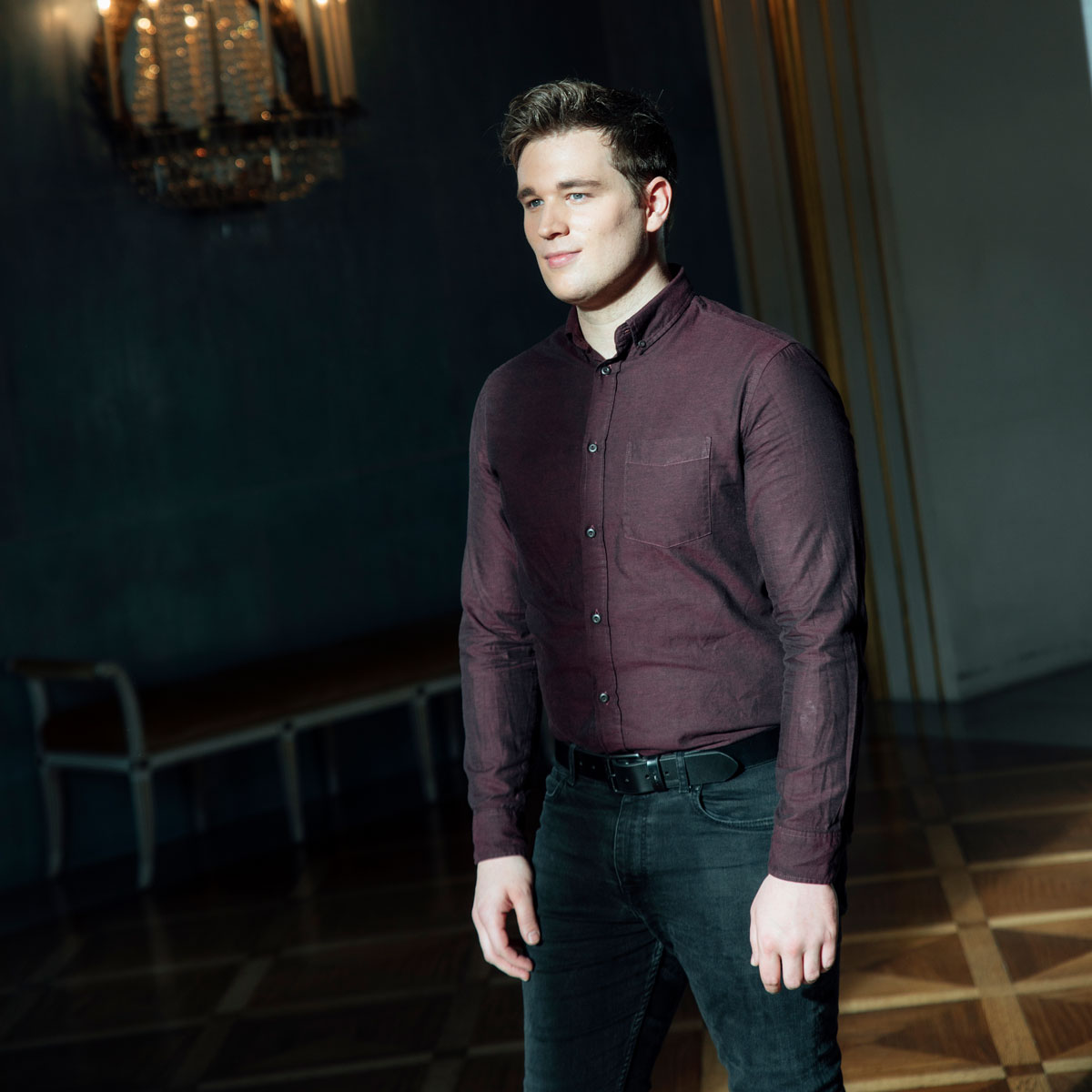
The timbre of the voice is immediately noticeable, such a pretty sound! His rich baritone has flexibility and thank goodness is always precisely in tune. Gimeno’s tempi, which were sometimes the fastest I have ever heard, challenged the soloists but nonetheless Plumb sparkled throughout.
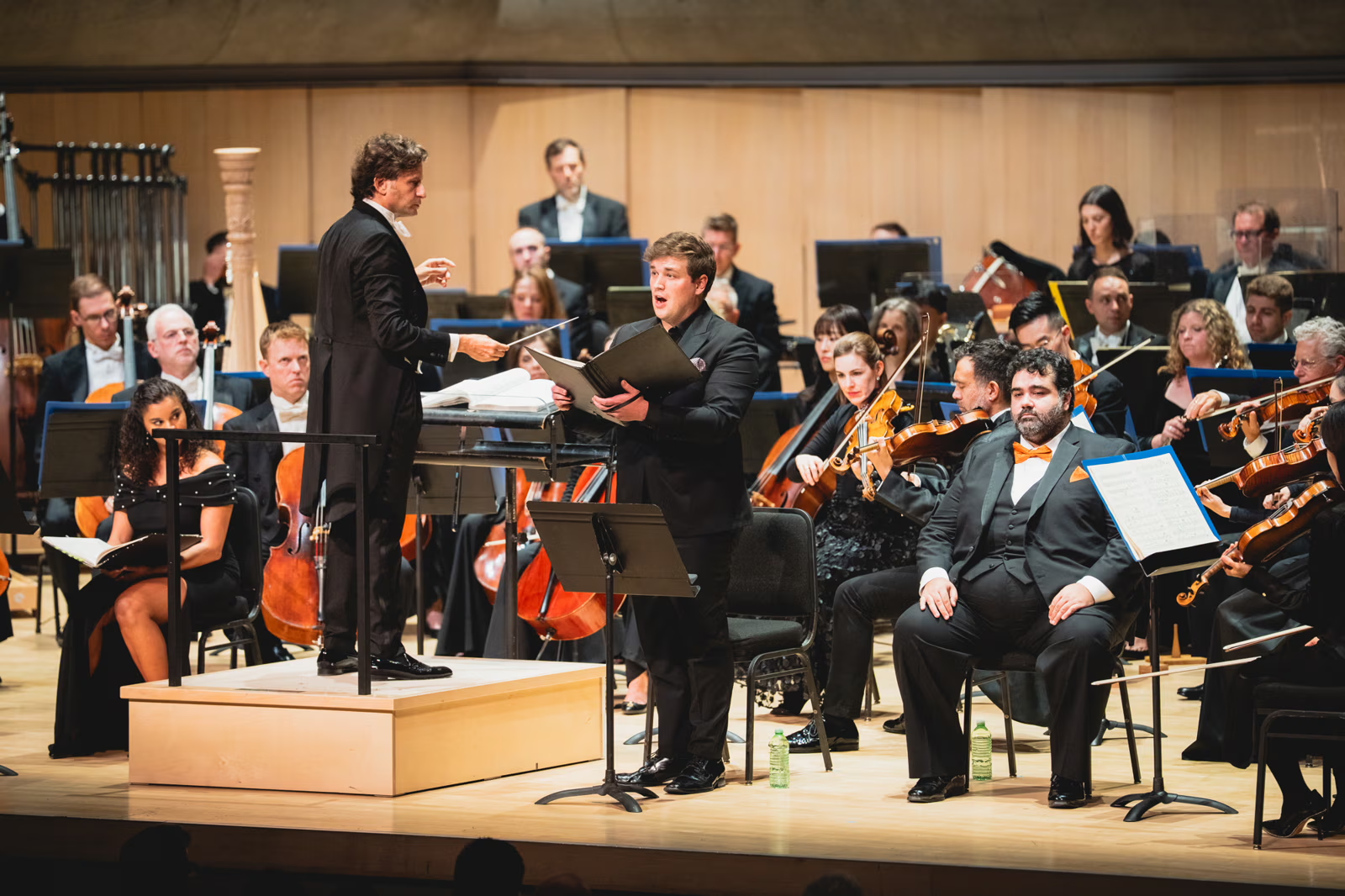
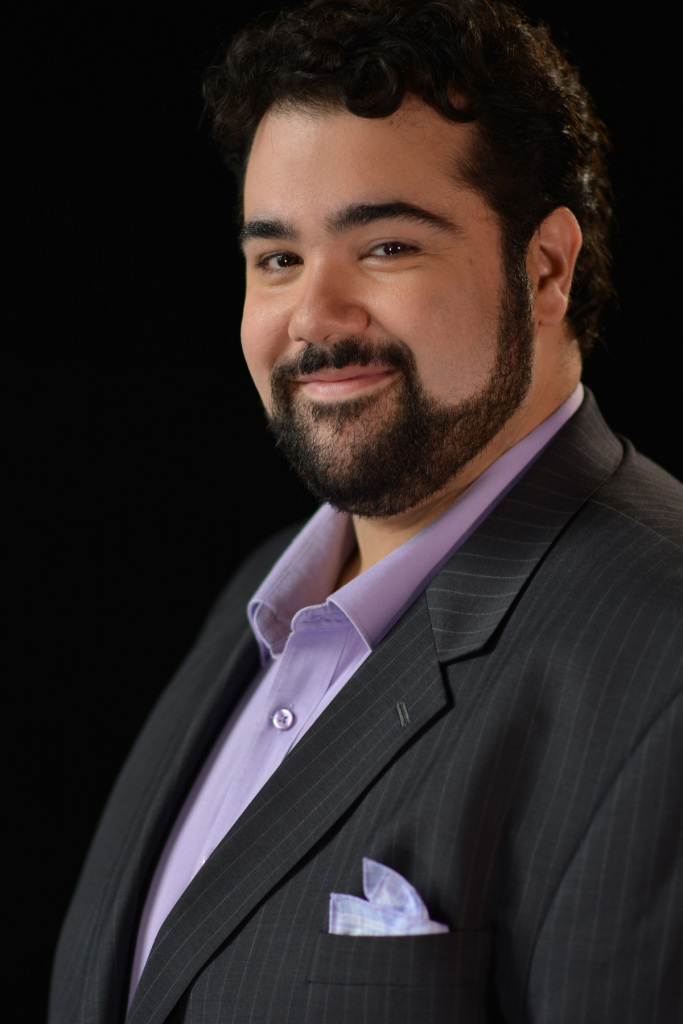
Soprano Julie Roset and tenor Andrew Haji both sounded great, Haji playing up the comedy of his song.
Gimeno had the choruses & soloists sailing through Orff’s big climaxes, a near perfect performance all round.
As perfect as the performances were, I watched the woman sitting beside me struggling repeatedly to see the text of the Carmina Burana in her program in the darkened hall. The exquisite drama Andrew acted out (the swan being roasted) would have been even better had his words been projected in translation. I feel we honour the performers when we project the text in translation, to fully grasp the meaning of what they are singing. In the old days this nerd prepared for operas & concerts by reading & memorizing the whole thing, to know what they were enacting & dramatizing. Maybe I’m spoiled now that titles are a normal feature of live performance. I think we would all have enjoyed the show that much more if we had been able to see the translation of the text projected. Friday night I will see La boheme at the tiny Redwood Theatre in a performance that will feature projected surtitles for a work I know really well. While it may be the same for the Orff, (that many of us in the audience know the text), I still believe the performance would be enhanced by the projection of the translation on a surface in Roy Thomson Hall, enhancing the experience for everyone. Excuse me that I keep making this observation whenever I see a concert with text at Roy Thomson Hall. But any piece of music with words being sung deserves to be properly understood. We don’t watch foreign films without subtitles, right? I think maybe that’s why I was suddenly having a flashback, remembering times from long ago, when I used to listen to Orff with my friends , the music washing over us as we were stoned on marijuana with little idea of what the Latin words meant: except maybe “O Fortuna”. But the memory is a good one, the music a stunning experience.
Thank you TSO, and thank you Fortuna, we are blessed indeed.
The concert will be repeated Saturday at 7:30 & Sunday at 3:00 pm.
 barczablog