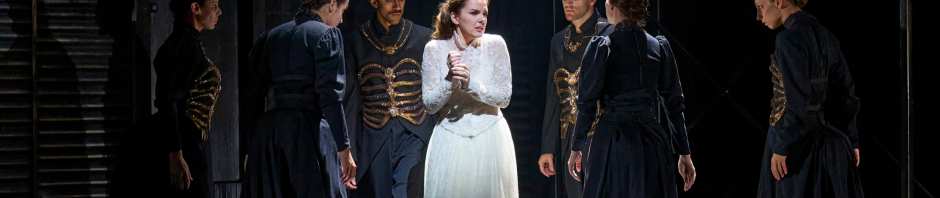
It might be the best-known of all Shakespeare stories, the star-crossed lovers, dying young for love. Romeo and Juliet becomes Roméo et Juliette when a French composer such as Charles Gounod (1867) is telling the story in music.
The rental production of Gounod’s opera from Malmo Opera being presented by the Canadian Opera Company, is directed by Amy Lane, who created the complex and edgy style seen in the production of Gounod’s Faust from the COC almost exactly a year ago.
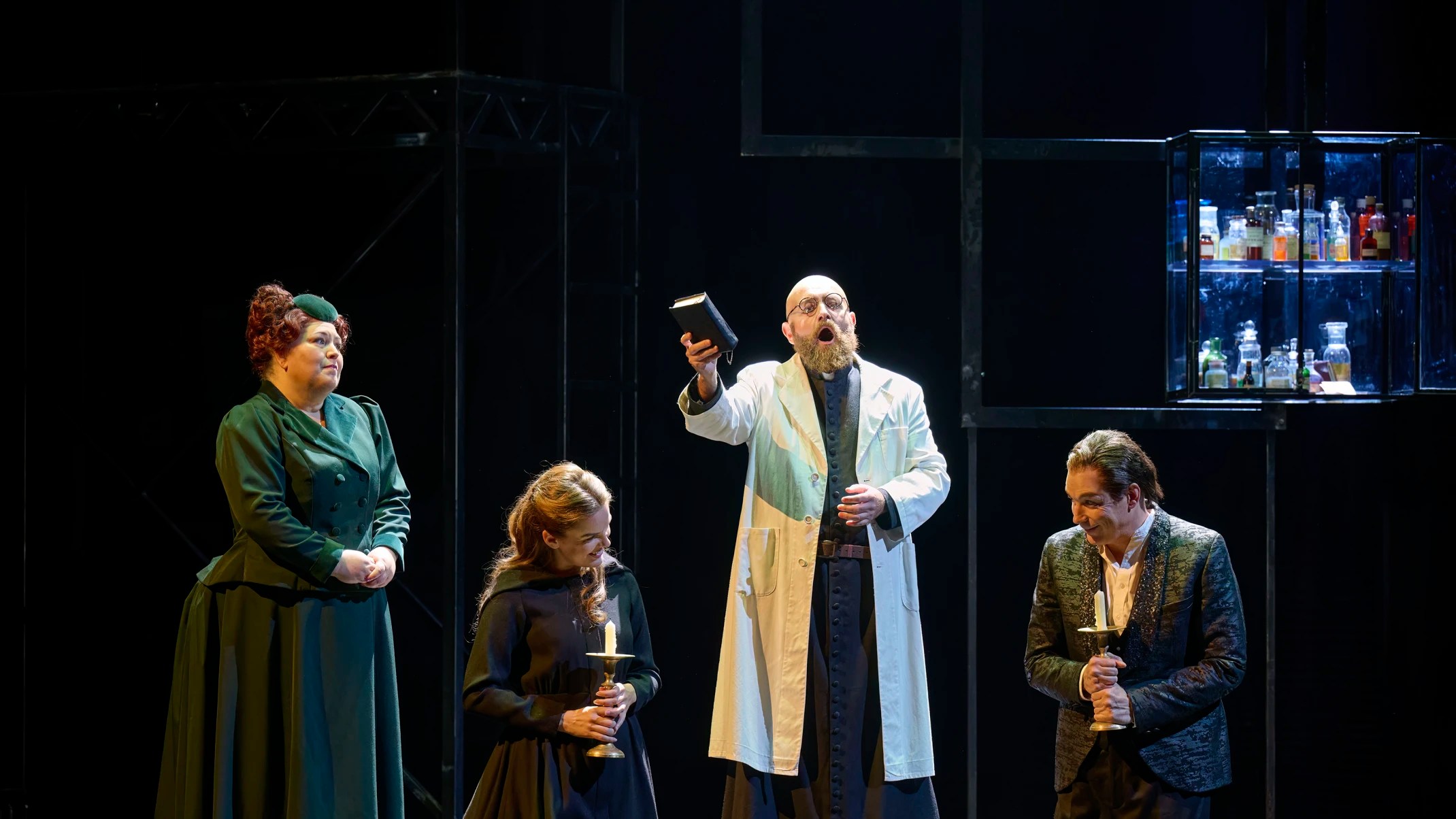
The musical side of this production comes from conductor Yves Abel and the COC’s Chorus Master Sandra Horst, between them creating a beautiful reading of Gounod’s opera.
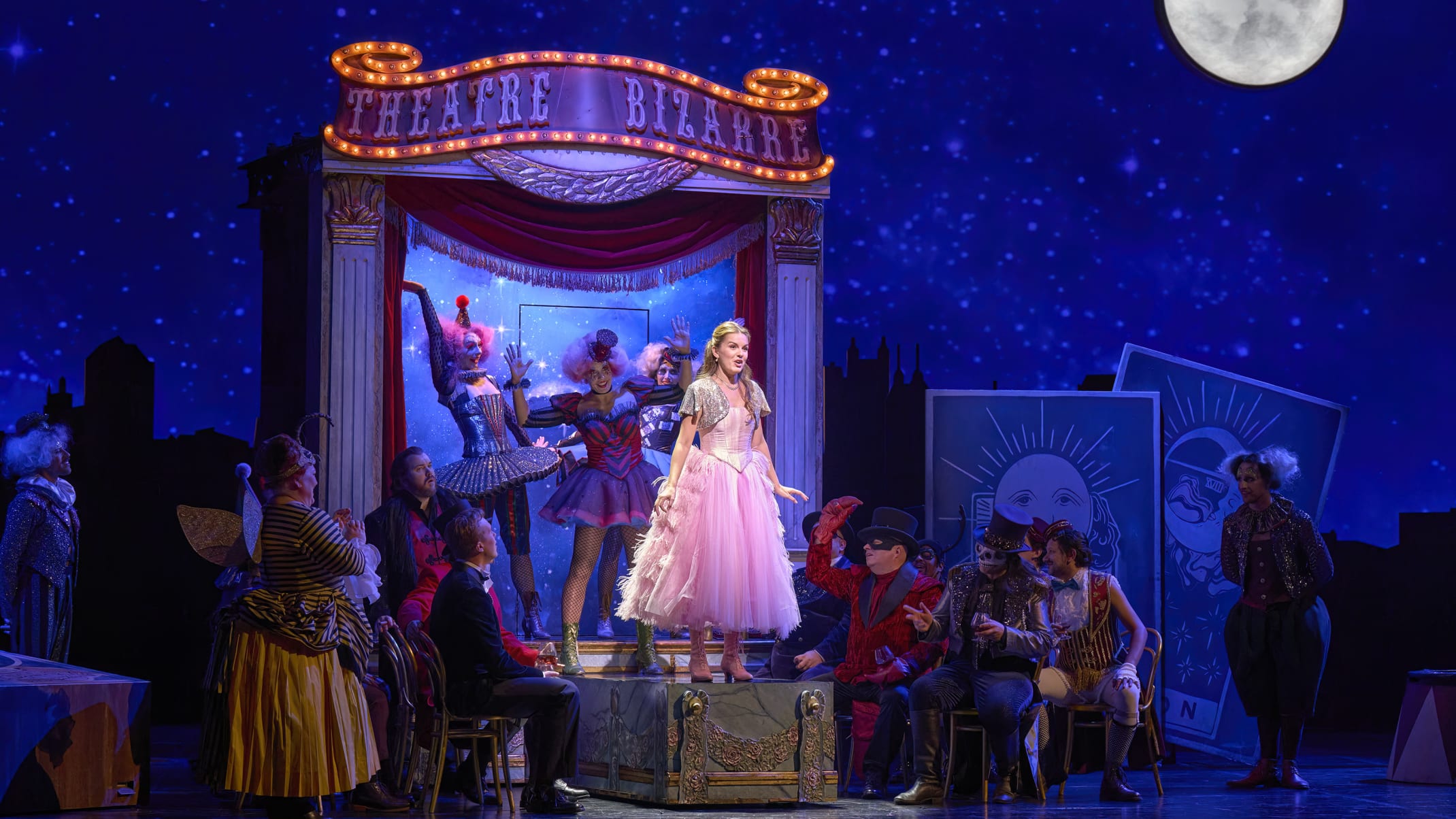
The singing is a strength of the show, led by Stephen Costello throughout, and Kseniia Proshina, who seemed to get stronger as the opera went on. It occurs to me (as i add this the morning after) that this maybe reflects the shape of the original play. Romeo is foregrounded at first with his Rosaline obsession, with his entourage (especially Mercutio), while the story shifts to focus more on Juliet with her “gallop apace you firey footed steeds” and her machinations to be married or escape marriage with Friar Laurence’s help. And with that shift, she is less the girl and more the woman, her feelings so much deeper at the end than what we see at the start, especially if we look at her through Gounod’s lens, aka her cheery aria, that the director seems to deconstruct (see photo below). I must have another look at this show as there may be something seriously feministic at work in her trajectory. I will see the opera again from up close.
Tybalt & Mercutio, antagonists who both end up dead on the stage, were especially well sung by Canadians Owen McCausland and Gordon Bintner, and who were in my opinion the dramatic standouts in the show, and vocally gorgeous to hear. Megan Latham was a pleasure to watch and to hear as Juliette’s nurse. Alex Hetherington made a superb appearance in her big scene singing a stunning rendition of her aria. Robert Pomakov portrayed a trusty Frère Laurent.
Lane has chosen to underline many moments of the opera with dance, even more so than what we saw in Faust.
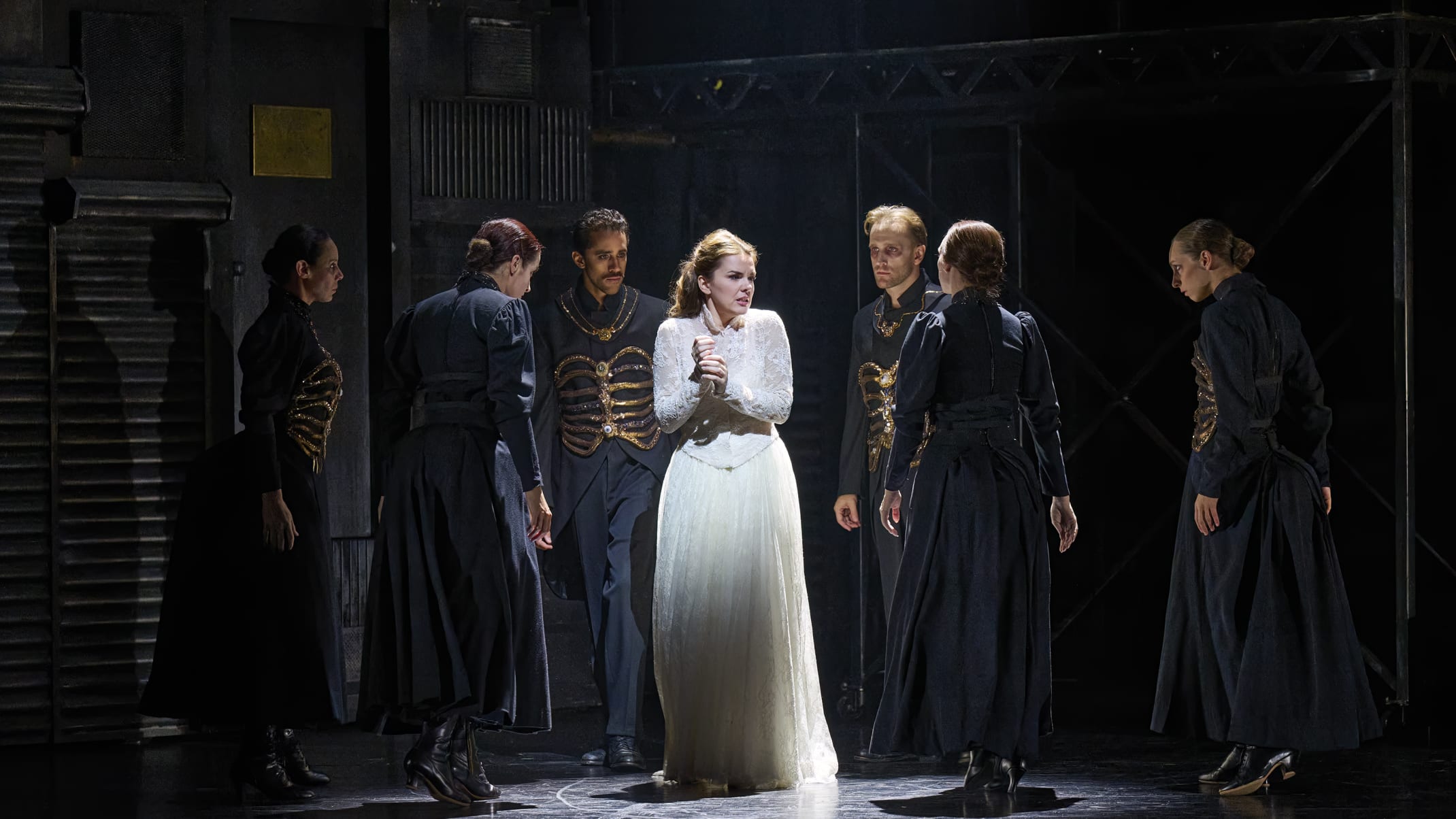
The dancers added something especially meaningful when it came time for Juliette to take her potion to simulate death, a fascinating bit of theatricality suggesting how difficult that experience must have been for Juliette. It’s completely simple, a highly original staging.
Lane has updated the story to New York City, on New Year’s Eve, 1889. Her program note explains some of her thinking. Before anyone objects to the updating, I want to repeat what I said about Robert Lepage’s MacBeth that I saw last month in Stratford, that it’s no more strange to hear Shakespeare’s iambic pentameter delivered by people in togas or kilts, than to watch men on motorbikes & wearing leather jackets speaking the poetry of the Scottish Play. The opening chorus number is a big waltz tune that sounds kind of Slavic actually, and doesn’t suggest Verona to me.
When we’re taking Shakespeare and having people sing opera it’s somewhat absurd to get all fundamentalist about what can or cannot be done in a director’s interpretation. So in other words taking the feuding families to a new place (NY City), when they’re also singing arias & choruses in French, surely is no big deal. We still see the lovers, the duels, the deaths. What matters is a chance to get a new perspective, to see the story in a new way. I enjoyed that. Mercutio, Tybalt & Roméo fight with knives rather than swords, but (spoiler alert) they all still die. The lovers still do what lovers do.
I was very moved.
I also came close to giggling aloud seeing the last line of the opera in the titles, as the lovers sing “Seigneur, Seigneur, pardonnez-nous !” (Lord Lord forgive us), recalling that suicide is a sin. Shakespeare didn’t have a problem with it but oh well that’s something the librettists (Jules Barbier and Michel Carré) likely felt they had to include for their bourgeois Catholic audience. I wonder, when they asked Gounod to set that as the last line of the opera, whether either of them thought to say a little parenthetical prayer to the spirit of Shakespeare, asking him to forgive them for what they did to his text. Oh well.
Speaking of text & libretto I wanted to call attention to the greater effort made by the COC in putting up surtitles in both French & English. It’s terrific until you come to the da capo repeat of an aria or a chorus, when for some reason the titles aren’t there. I would ask the people who created the titles: if you don’t need to translate the last lines of (say) “ah leve toi soleil” why translate the first part, indeed why have titles at all?
Yes the COC surtitles are a terrific step forward, invented in the 1980s and changing the world of opera. That doesn’t mean the innovation is already perfect anymore than Monteverdi’s dramaturgy represented an operatic ideal in 1600 that could not be improved. Perhaps things can be done better? But I don’t know that I have ever seen anyone discuss the titles. It was possible to look up at the text in French as sung and to see something beside it in English that was sometimes different from what the French text said. Should the translation represent a precise translation? Or should they aim for something poetic, Shakespearean? I am not proposing to answer the question, but to my knowledge this question has never been posed, at least not here in Toronto. I’d love to hear your thoughts.
The production of Roméo et Juliette continues at the Four Seasons Centre with performances October 8, 10, 14, 16 and 18.
 barczablog
I was intrigued with the surtitles in two languages as well. And like you I wondered, as I often have before, about what happens to the librettist’s original meaning when the lines are translated with an eye to the poetic rather than the literal. (Or translated with an eye to the literal, ignoring the poetic. Not that any translation can ever be truly literal because all languages have a cast to them that cannot be reproduced in another language.
I found them distracting as I kept trying to compare the actual lyrics as I was hearing them to the French lyrics and then to compare those to the English translation. I spent way too much time thinking about surtitles.
I got an email from you remarking on WordPress having some glitches when you tried to post a 3rd & 4th paragraph. You said the following:
“In the comments on your blog, I wrote four paragraphs about subtitles, and the platform kept deleting the last two. Over and over again I wrote them again, only to have them disappear. Three times, I think. I have given up.
In summary, my other two points were 1) I wonder what it is like for someone who is fluent in Italian as well as English, for example, to watch an Italian opera with English subtitles. You’d always be evaluating the translation, and 2) I wrote about how translation is an art in itself, one that I admire a lot. But a good translation is not the same at all as the original work in the original language. It has to convey subtle connotations as well as direct meaning and takes on a life of its own.”
Thanks Mary!