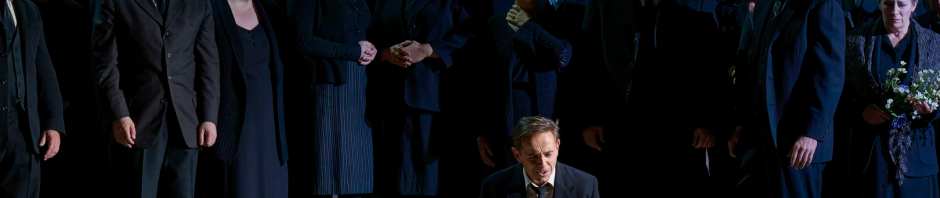
I was delighted by the Canadian Opera Company revival of Gluck’s Orfeo ed Euridice Saturday at the Four Seasons Centre. Although I thought I liked it well enough when I saw it in 2011 I never expected the gushing tears flooding down my face through much of Act II. Perhaps I understood it better this time.
Some of the credit belongs to counter-tenor Iestyn Davies in a superb note-perfect performance, a display of impeccable musicianship in a role requiring him to be onstage singing or reacting for almost the entire 90 minutes. His portrayal of the Thracian singer was remarkably understated, his facial expressions & physical movement as dignified & restrained as his singing.
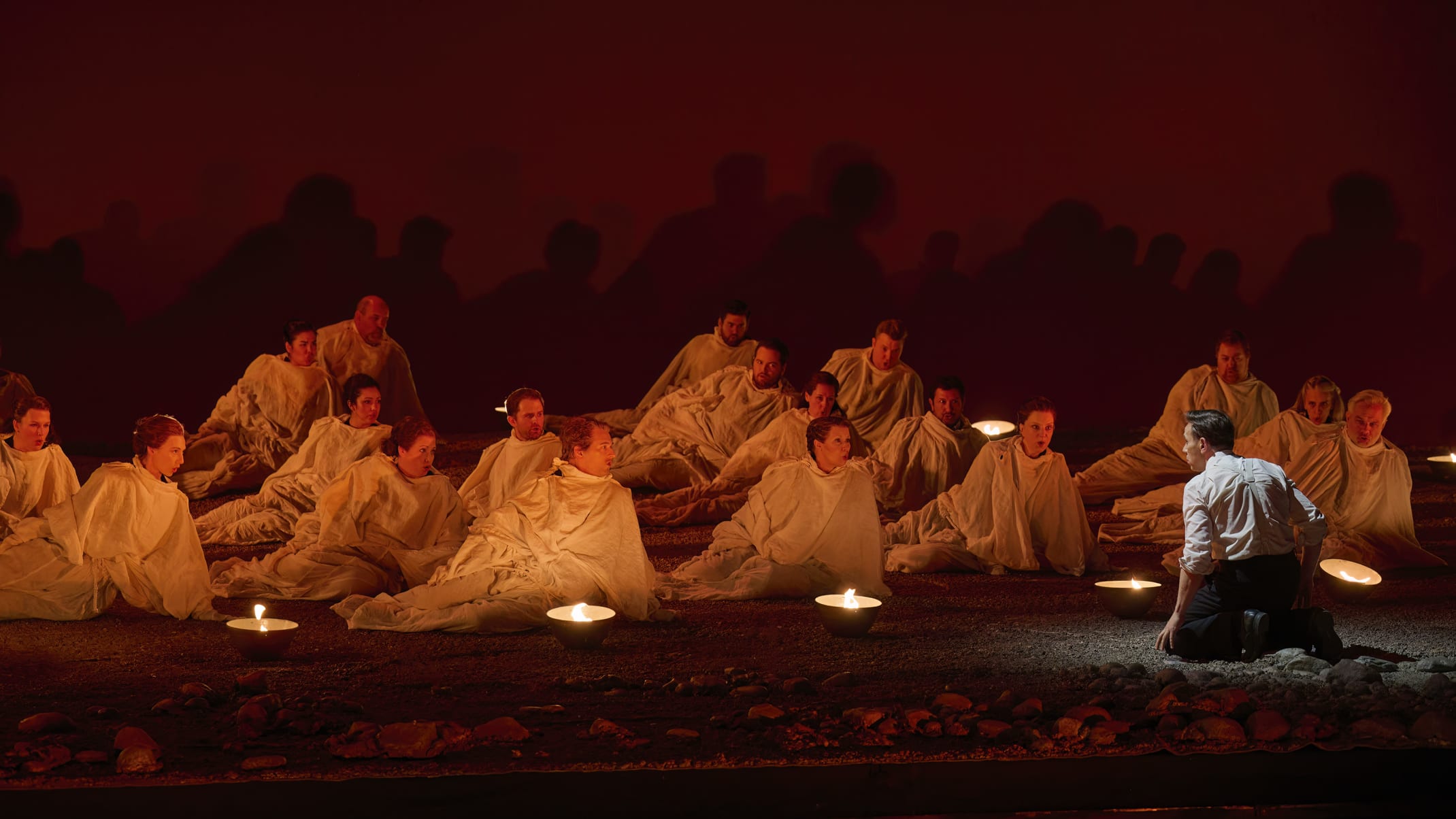
I must also thank conductor Bernard Labadie, making the COC orchestra sound like a totally new band, their modern strings as dry and clean as a period performance ensemble, tempi fast and urgent, the stage action and the music working together brilliantly. Between Labadie & chorus master Sandra Horst, the COC chorus were the most important contributors both musically & dramatically. On set & costume designer Tobias Hoheisel’s bare stage and in his understated costuming, the chorus repeatedly framed a context for Orfeo as though they were part of the set design.
Perhaps the difference is me, that the passing of my mother in the past year has softened me up, has changed my sensibility at least for awhile, perhaps permanently. Anyone who has lost a loved one in the past few years might feel the same way about Robert Carsen’s minimalist staging, watching a lover going to the underworld to bring back the one they’ve lost. The ambiguities of the way the chorus appear allow you to project, to hang whatever emotions you like upon these images, that might connote something vaguely spiritual. And they sound & look beautiful in each act. The minimalist stagecraft is purposeful, making the chorus a bit of a Rorschach inkblot with music, where you will see whatever your psychology chooses, especially in Act Two when we’re dealing with life after death in the story.
But to repeat: yes! It worked for me and may or may not work for other people. I was overwhelmed by what felt like a glimpse of spirits in the next world. I have been listening to this music for a very long time, and it has never moved me so much.
There are only three soloists, with the biggest share falling to Orfeo (Iestyn Davies) who’s onstage, singing or reacting for most of the opera, and engaging a great deal with the chorus throughout.
While Euridice (Anna-Sophie Neher) and Amore (Catherine St-Arnaud) are important figures in Orfeo’s conflicts, they are somewhat two dimensional in Calzabigi’s libretto, existing in the opera primarily for what they offer to illuminate in Orfeo’s story without much more than that. Given those limitations they both were remarkable singing actors. Indeed Orfeo too is very narrow in his focus, even given the length of the role, and that comes back to Calzabigi & Gluck in their reforms.
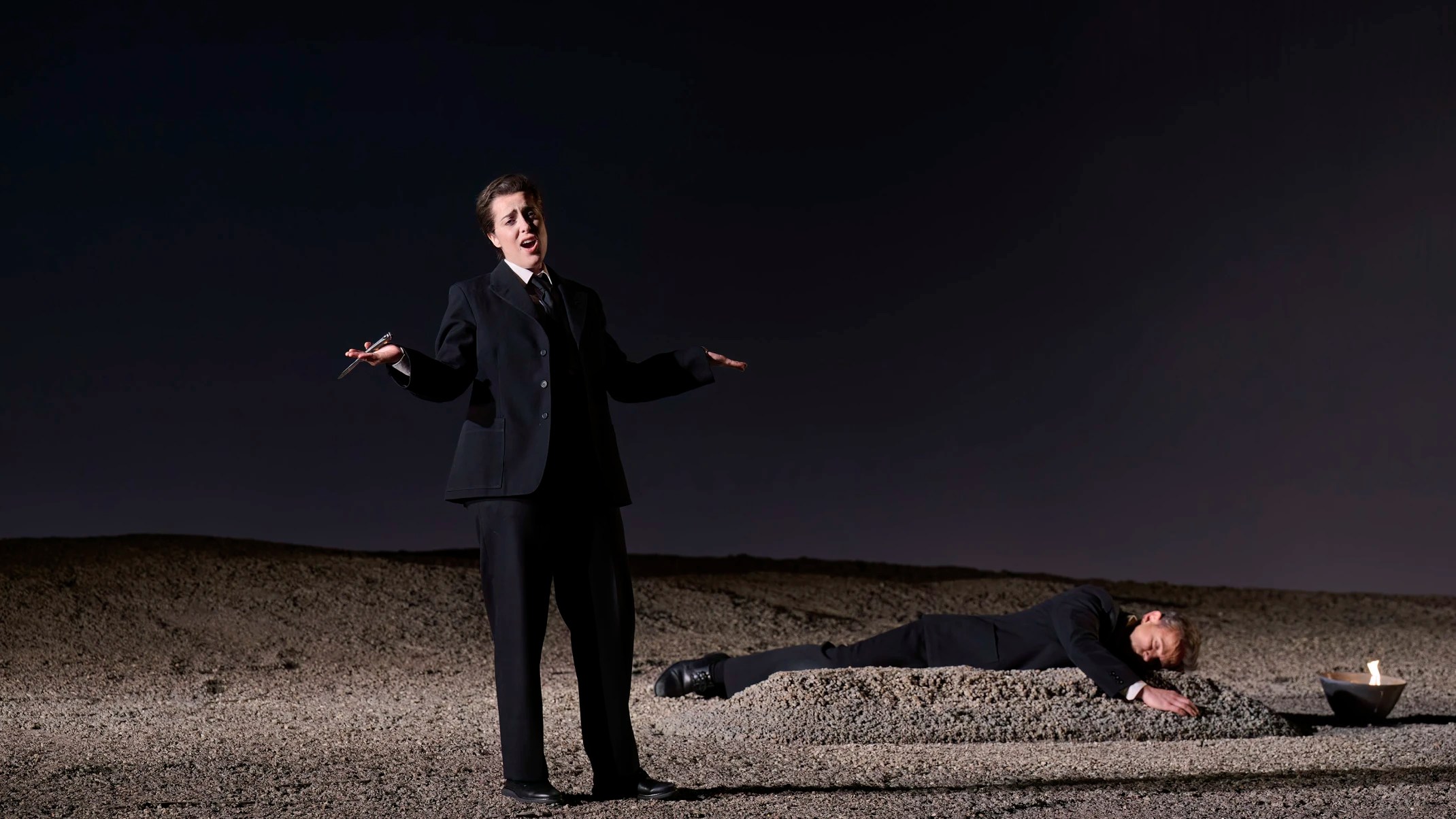
Amore engages with Orfeo’s grief both in the first and last acts, but otherwise we know nothing about his / her own feelings (phrased that way because Amore’s gender is ambiguous in Carsen’s reading). St-Arnaud brought positive energy to her portrayal, bringing each act to life when she appeared: very much as her role requires.
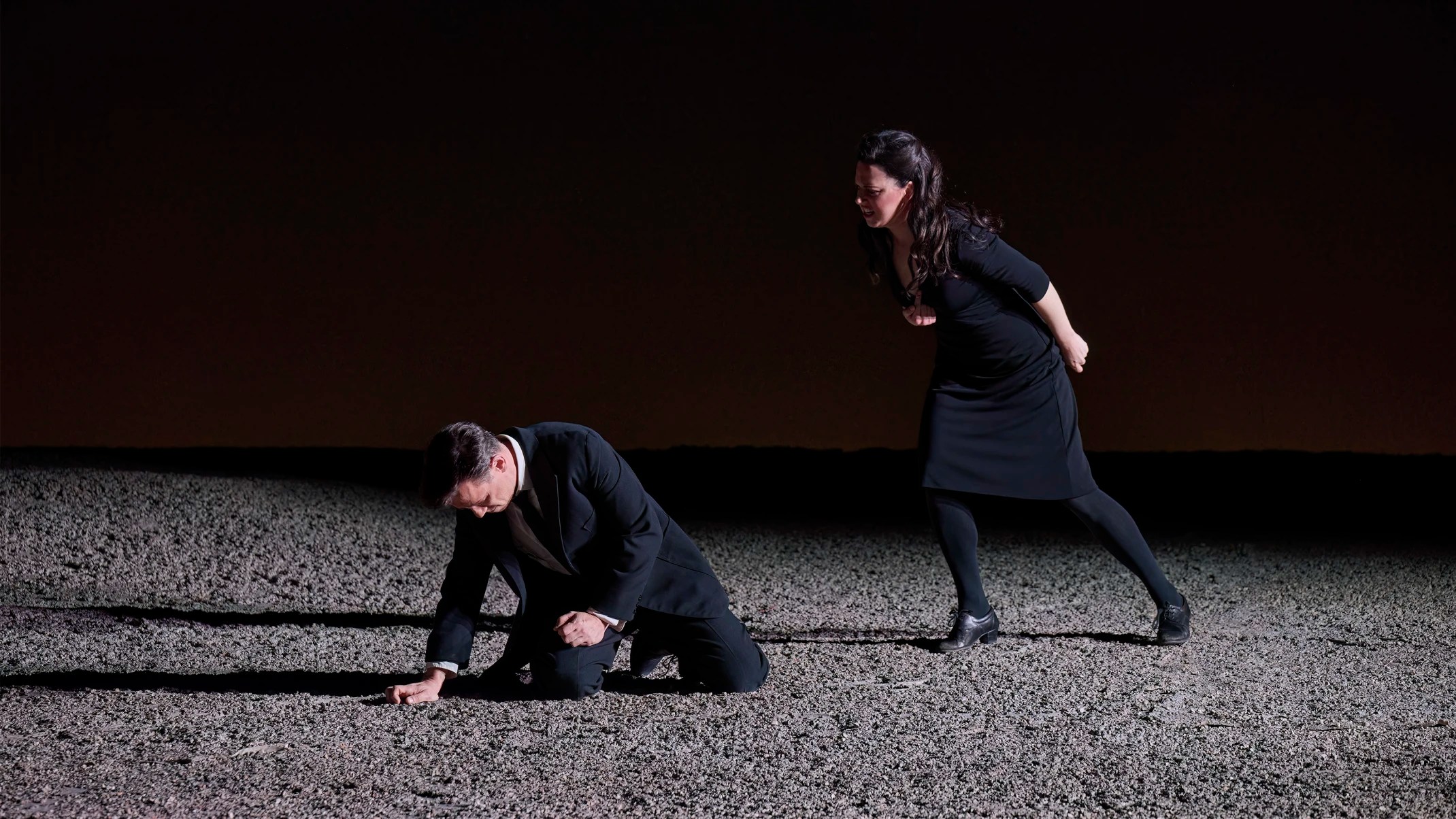
While we hear Euridice’s distress when Orfeo won’t look upon her, we only know her in her relationship to him, and in the drama as far as his choice to resist or finally to look back at her. The staging and Neher’s portrayal are poised on the edge between romantic comedy and something much darker. I’m grateful for the happy ending even if some purists might prefer the version of the story ending in Orfeo’s heartbreak without any rescue. Not me, especially alongside Romeo et Juliette, the other fall opera from the COC.
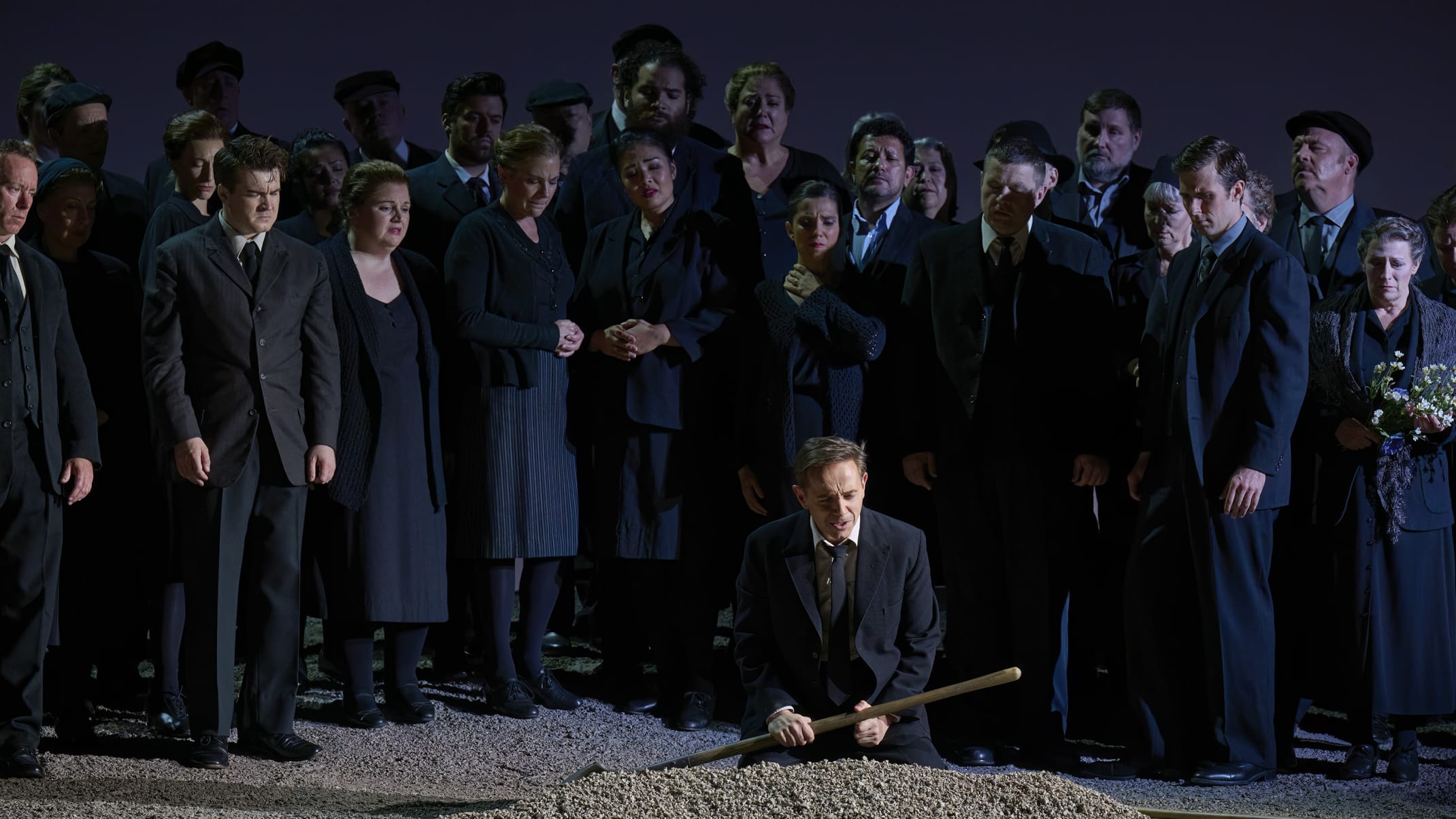
Act One is full of emotional reflection about love and loss, the exposition of the challenges Orfeo faces. He is despondent at having lost Euridice, whose body is covered in a shroud, and then is being buried by the chorus. Amore appears, telling Orfeo that Jupiter has pity for his grief, offering him an opportunity to find Euridice, provided he can calm the Furies with his music, and bring her back to the Earth. But of course Amore stipulates that he must not look upon her or he will lose her forever.
Act Two is a fascinating mix of action and lyricism, as Orfeo enters the underworld, singing his beautiful music in response to the Furies, who relent. He then encounters the Blessed Spirits, before being reunited with Euridice and beginning their return.
In the Third Act, when Orfeo tries to lead Euridice back to the surface while obeying the command not to look back, the tone is at times almost comical, even drawing laughter from the audience. Eventually he relents, looks back, and she dies. After the celebrated aria “che faro senza Euridice” and his further expressions of despair, Amore returns, declaring that Orfeo has proven his love and so he is reunited with Euridice, who is revived amid rejoicing & celebration to end the opera.
It was in Act Two that I had the strongest response, the act that I liked best when I only knew Gluck from sheet music or recordings, especially Orfeo’s encounters with Furies & the Blessed Spirits.
This isn’t the first time that it took me a couple of views to really understand what Carsen was doing, to properly appreciate the depths of his work, recalling his Dialogues des Carmelites & Eugene Onegin. Carsen’s minimalism is much more than a parallel to the reform dramaturgy of Gluck that stripped away baroque excesses of previous decades, simplifying the way his opera works. The chorus is foregrounded, performing key functions especially in the Second Act, in both the musical & dramatic realms. I want to affirm the value of multiple hearings & viewings, that there’s no shame in not getting something the first time.
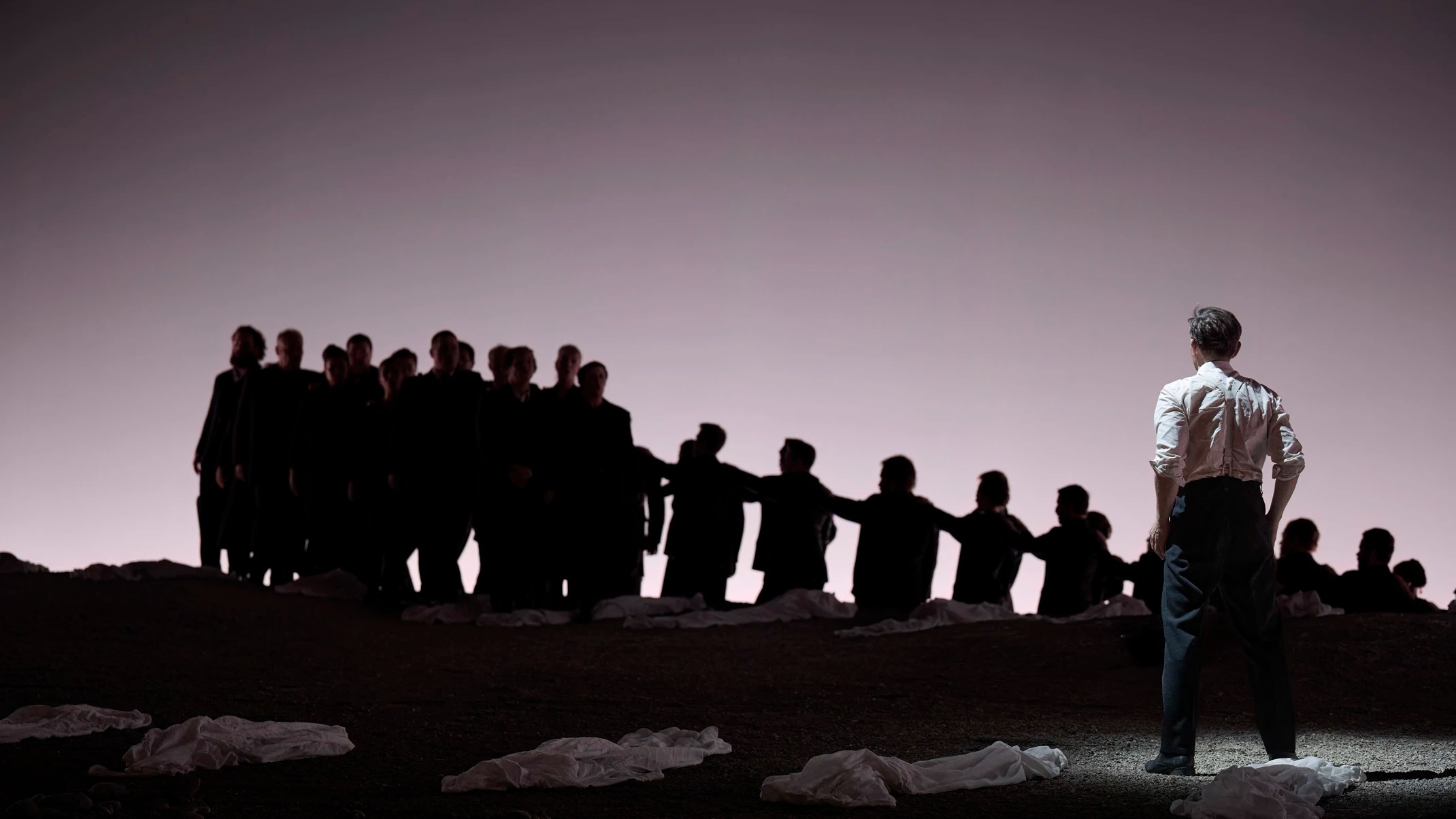
As I ponder my tearful response to a show I saw & admired back in 2011, I question whether the revival as directed by Christophe Gayra is substantially different from the original by Robert Carsen, or if the show is largely the same and it’s just me, that I am a different person, fourteen years later. Whatever the reasons, I have my ticket to see the show again, and recommend it. I feel the seasonal impulse of Thanksgiving, a rush of gratitude for a brilliant experience.
The COC revival is a co-production with Théâtre des Champs-Elysées, Fondazione Teatro dell’Opera di Roma, Opéra Royal Château de Versailles Spectacles, and Lyric Opera of Chicago last performed by the COC in 2011. Remaining performances of Orfeo ed Euridice are on October 15, 17, 19, 21, 25.
 barczablog