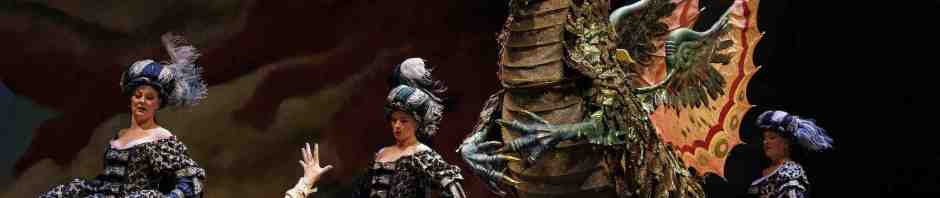
Opera Atelier are back with the Magic Flute for their fall season at the Elgin Theatre, doing what they do best, in the first of four performances at the Elgin Theatre Wednesday October 15th.
Accompanied by Tafelmusik Orchestra who play on period instruments, their historically informed brand of opera uses movement vocabularies aiming for period authenticity, while playing up the joyful comedy in Mozart’s late opera. They sang a modern English translation so clearly enunciated we didn’t need the surtitles, even though they had the courtesy to offer them.
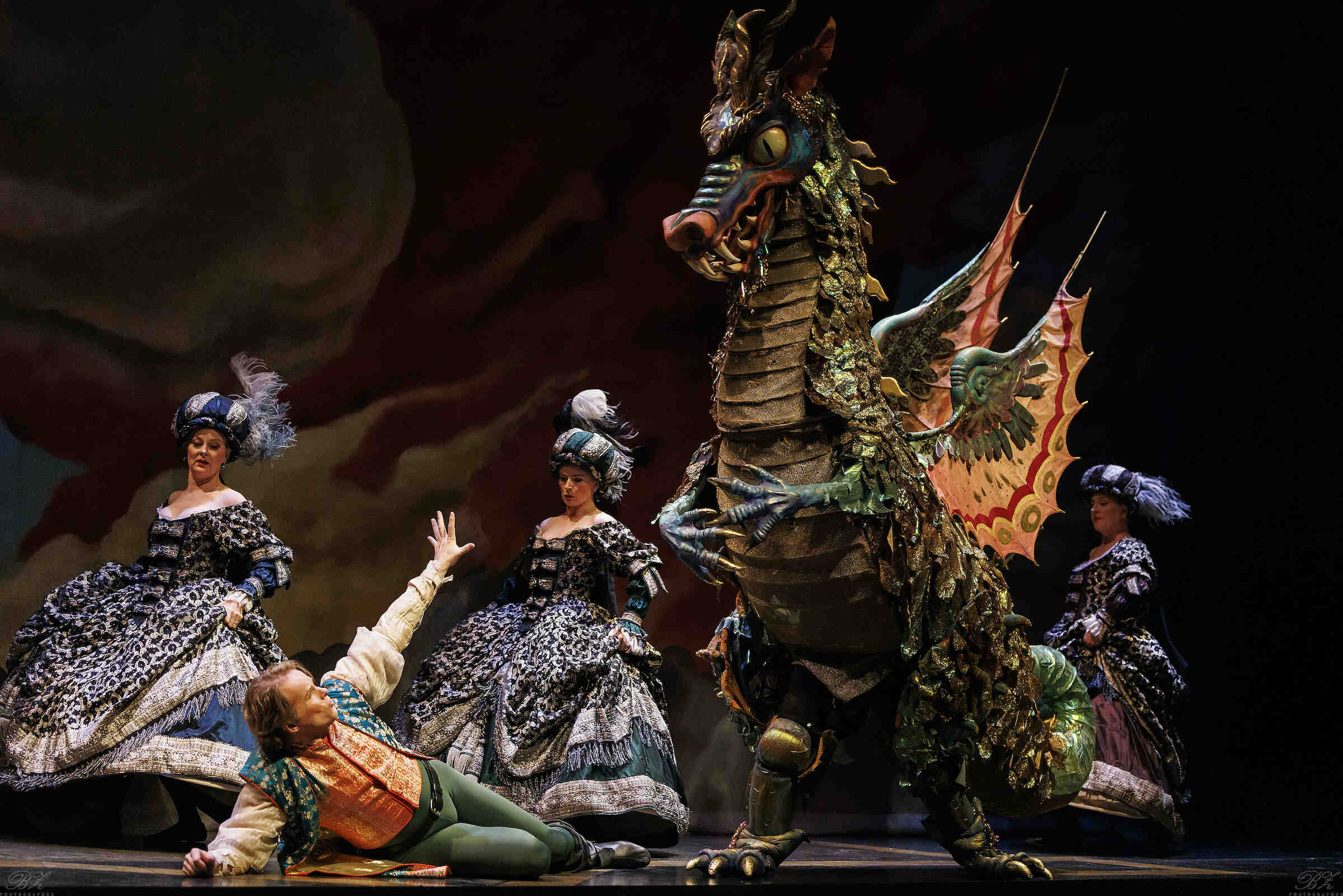
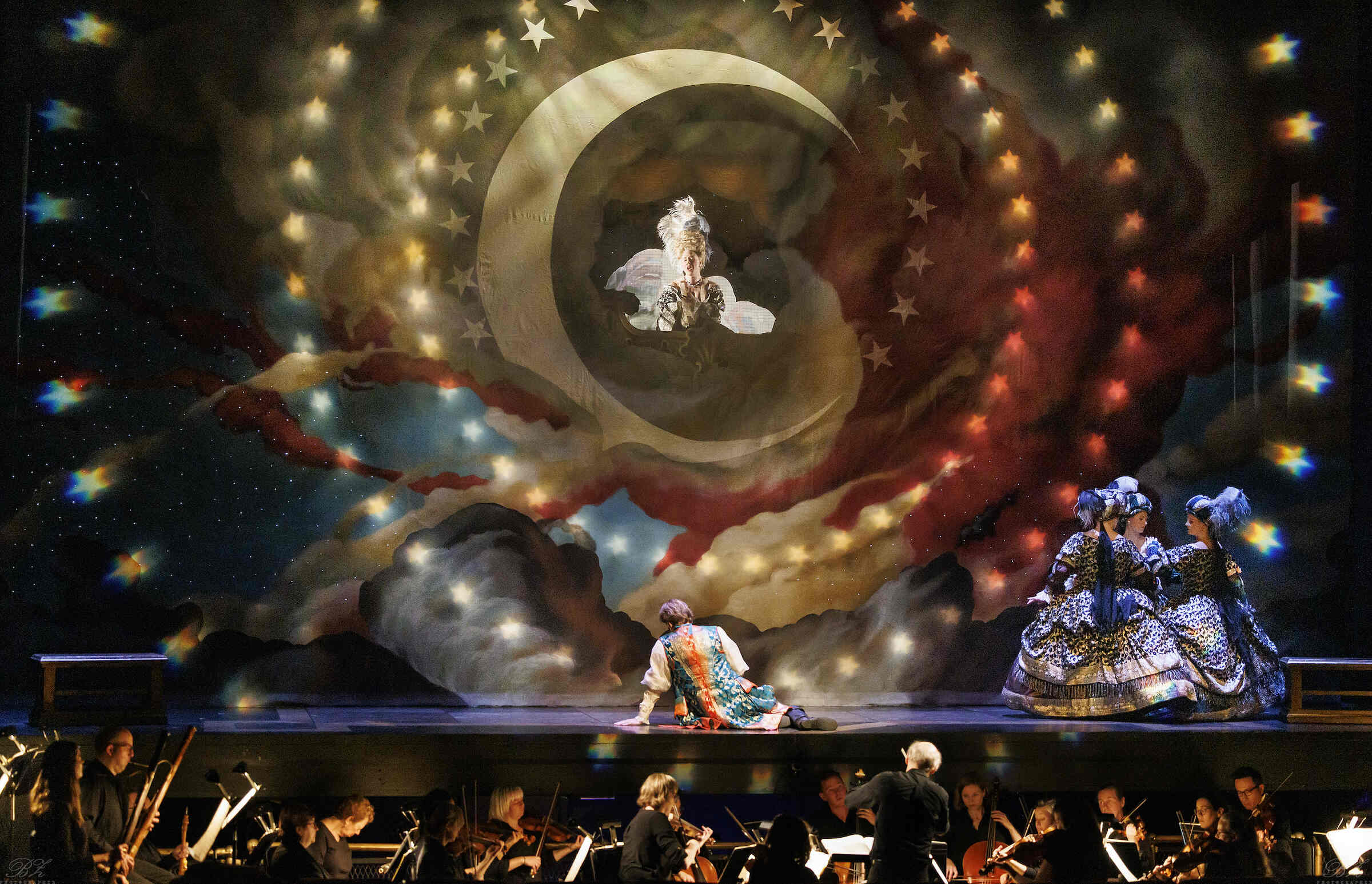
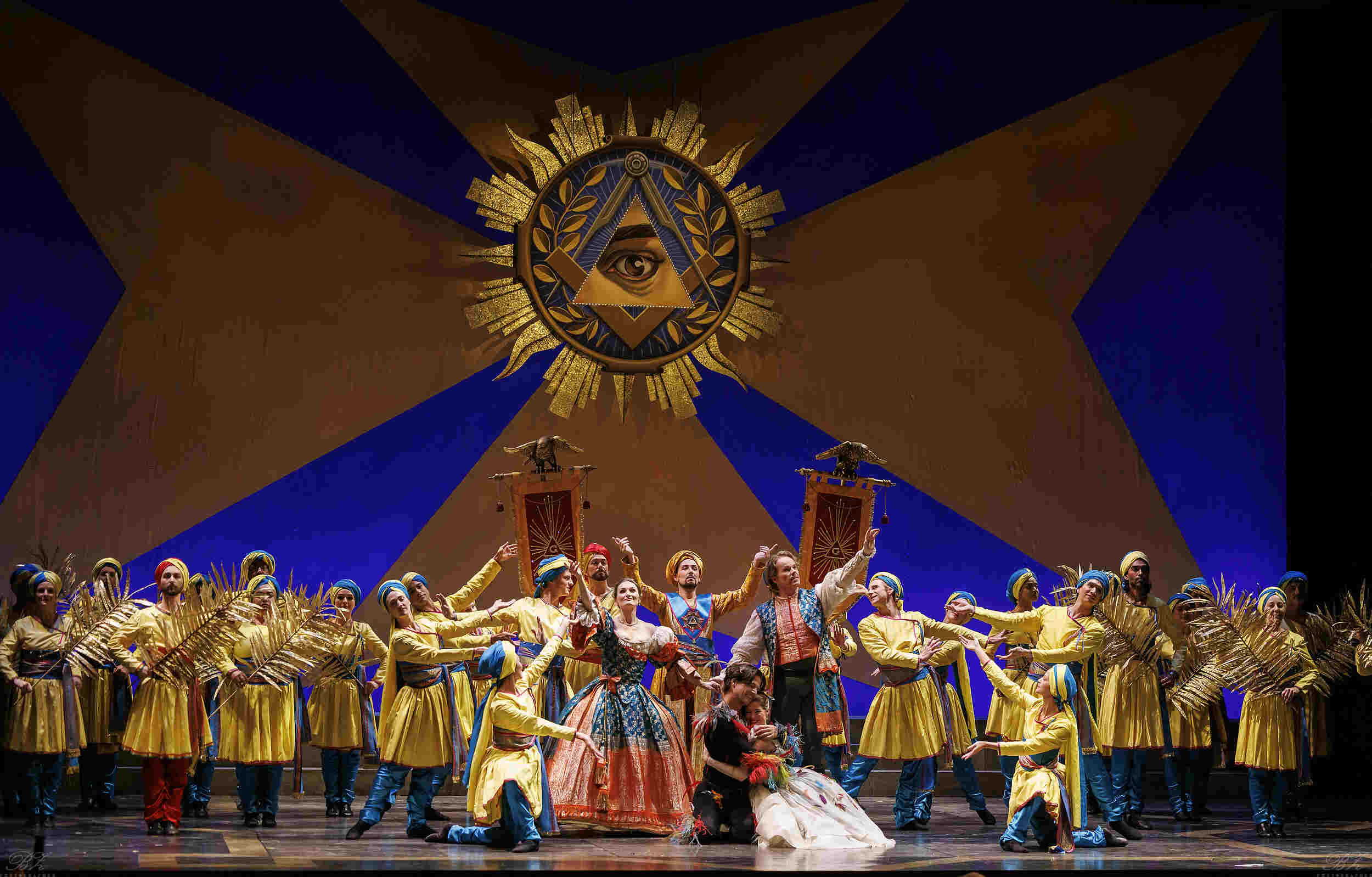
Although we sit in a theatre lit by modern lighting, Gerard Gauci’s set design encourages a period dramaturgy, employing an obviously retro stage-craft that is deliberately theatrical, where flowing fabrics simulate water & air, and where the singers never pretend that we are in a realistic space. At one point Tamino points at the dead monster speaking of its dead body lying “in the wings.” The arrival and departure of The Queen of the Night inspires awe even if the moment is completely artificial.
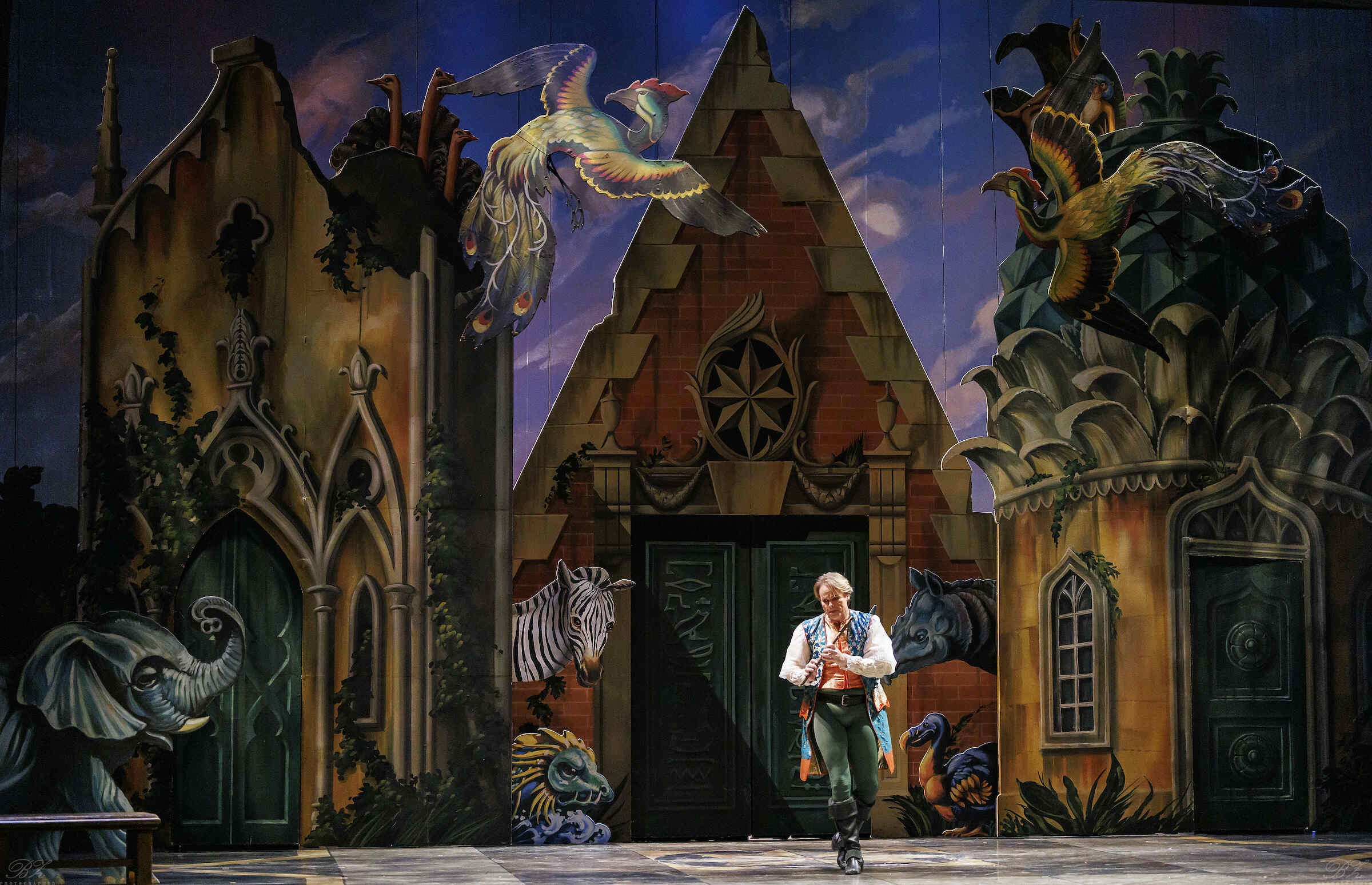
When Tamino observes the animals responding to his playing of the magic flute, they are cute two-dimensional cutouts, rather than modern CGI, even if the effect is every bit as magical.
That’s part of the fun.
This is a deliberately old-fashioned approach to an opera that often gets revised due to political considerations such as race or gender, as in the recent production from the Canadian Opera Company. The first act flew by flying on the wings of David Fallis’s swift tempi leading Tafelmusik. I found it completely delightful to lose myself in the flawless beauty of the singing, the broad comedy of the acting and the lush colours of Gauci’s set and the costumes from Dora Rust d’Eye & Michael Gianfresco.
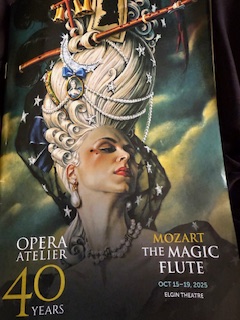
Most memorable as usual is that brief cameo appearance, the role that stays in your head because of the unique writing of the role, namely The Queen of the Night, here brilliantly sung by Rainelle Krause, including a stunning encore of part of her second aria featuring extra interpolated high notes, perhaps the most spectacular special effect of the night. No it’s not a long role, only two arias plus a tiny appearance during the finale, but it’s her image on the cover of the program, the one we always remember.
The cast features performances from Opera Atelier regulars, their voices sounding excellent in the clear acoustic of the Elgin Theatre. Colin Ainsworth continues to sing effortlessly, sounding like a young prince, with Douglas Williams as his comic side-kick, both of them completely human in their characterization, enunciating the text perfectly. Ainsworth’s Tamino is lighter-hearted than in previous incarnations, less of the pompous prince than usual. Meghan Lindsay’s Pamina is his perfect match, playing up the darker trajectories of the story, until the trials at the end.
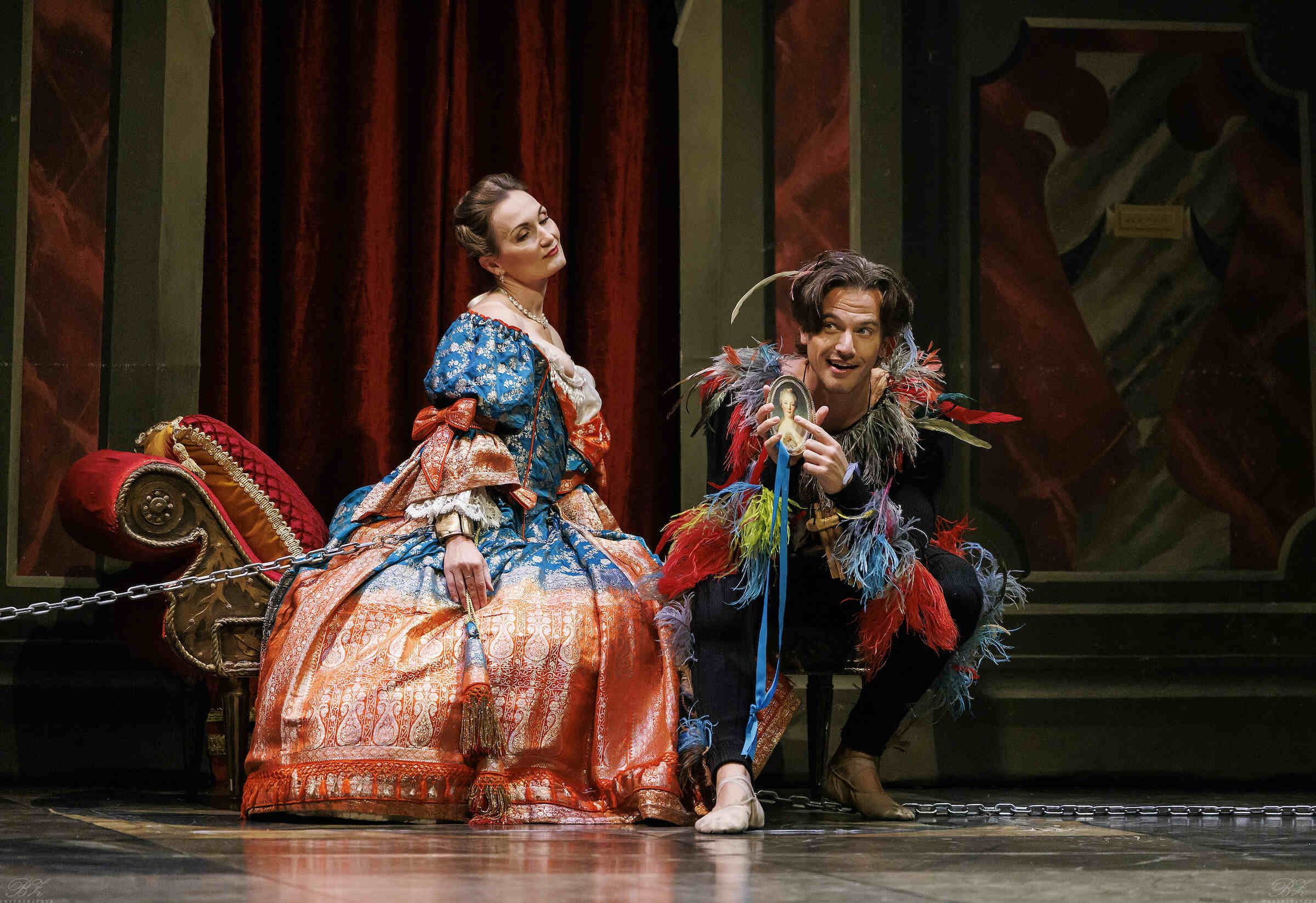
Papageno finds his Papagena in Karine White, making the most of their lovely moment towards the end of the opera.
Stephen Hegedus was the main counter-balance to the comedy, his voice supplying genuine gravitas in the role of Sarastro. The Nathaniel Dett Chorale sounded splendid especially in the big climactic choruses to conclude each act. As his henchmen, Olivier Laquerre & Alex Cappellazzo supported Sarastro’s attempt to convert the two initiates, Laquerre doubling as the Speaker who first welcomes & questions Tamino, while Alex channelling the comical side of the initiation as he plays off of Papageno.
The Three Ladies, who do so much in the first part of the opera before Mozart & librettist Schikaneder shift the direction of the story away from illusion towards something deeper & truer, were two longtime stalwarts, namely Carla Huhtanen & Laura Pudwell plus Danielle MacMillan, all three impeccably on pitch and hysterically funny. I have been listening to this opera since I was a little boy, a sucker for its farcical moments, which might be why I surrender to the silly stuff more than the allegory, as I loved Blaise Rantoanina’s frenetic take on Monostatos, stealing the show with his agile voice and physicality.
Opera Atelier began 40 years ago, as co-Artistic Director Marshall Pynkoski reminded us in his pre-show talk. At one time their focus was historicity, defending their choices in the face of critical skepticism as they established a recognizable brand. But whatever operatic works Marshall & his co-artistic director & choreographer Jeannette Lajeunesse Zingg undertake, there is a second unacknowledged side, namely their original ideas, that I don’t think receive sufficient credit. At times I think they’ve hidden their creativity behind the mask of historicity, given the originality we regularly encounter.
I’m curious to hear more about their spring production of Pelléas et Mélisande, coming to Koerner Hall in April 2026. Their website says “The groundbreaking production of Pelléas et Mélisande takes Opera Atelier and Tafelmusik Baroque Orchestra into the latest repertoire either company has ever produced, creating a whole new definition for period production.”
I can’t wait to see and hear that. But this week the Magic Flute continues with performances Thursday & Saturday nights plus a matinee Sunday.
 barczablog