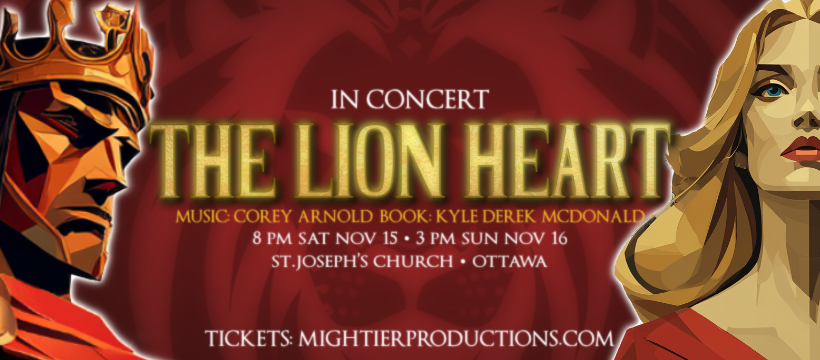
Kyle & Corey, as in Kyle Derek Mcdonald and Corey Arnold are the two creators of The Lion Heart, an opera being presented in concert in Ottawa November 15-16, one of several things they’re doing. I wanted to ask Kyle and Corey about their process and their future projects.
*******
Barczablog: Gentlemen, it’s great to get a chance to ask you a few questions.
Kyle and Corey: Hello, sir and dear readers! We’d like to begin by saying how thrilled we are to be chatting with you about this exciting new opera! And, before anything else, follow us on:
Kyle: Instagram | Facebook | LinkedIn | YouTube | Websites Mightier Productions | Kyle Derek
Corey: Instagram | Facebook | LinkedIn | Website
Barczablog: Is it a new opera or the same one we saw in Toronto a few years ago?
Kyle: Yes, our in concert performances this November in Ottawa are of the same opera from the winter of 2022, but with some lessons learned!
Corey: I saw some things I wanted to work on during our workshop in Toronto, so I enlisted the help of Montreal native, Samuel Andreyev, who now lives in Europe and works internationally as a composer and professor of composition.
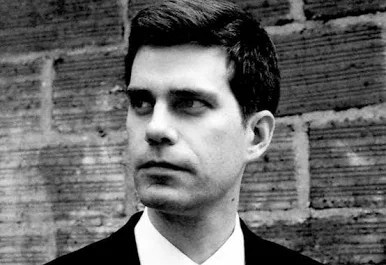
Corey: I wanted to make sure that this orchestration, which is significantly larger, would be a step higher in other domains such as balance, precision of colour, etc… So it’s the same show, but beefed up on my side.
Kyle: There have been a few changes to the text with a few lines that just never quite satisfied me – they’re too small to mention, really, but for those of us who are confronted with our own work, sometimes you just need to make the kink in your neck go away and make the changes.
BB: November 15-16 to be presented in concert. Who is participating (conductor, singers)?
Kyle: Yes! We’ve assembled Ottawa’s finest to share our little adventure with the people of the nation’s capital. First and foremost, of course, in the composer, Corey Arnold, who’s an Ottawa native!
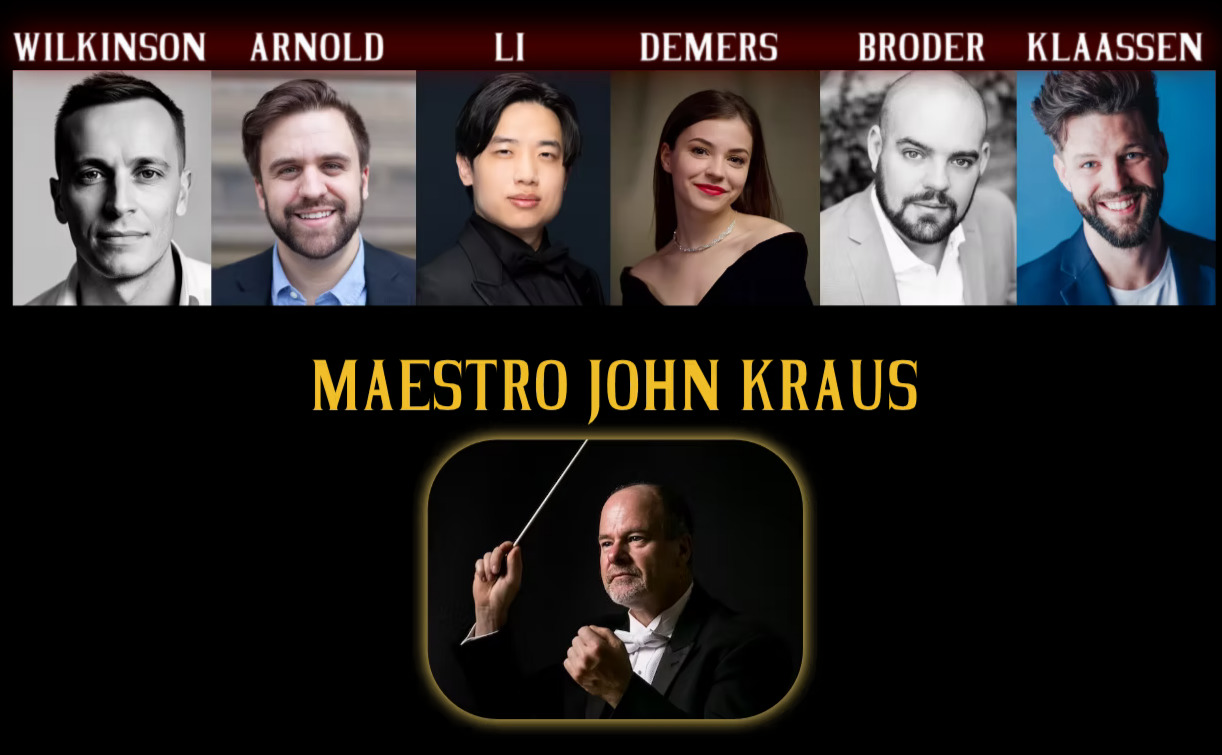
Young bass Matthew Li, who sings the title role, tenor Philip Klaassen (his loyal minstrel), and baritone Mark Wilkinson (captain of the guards) all have strong ties to Ottawa.
Coloratura Natacha Demers (Mirella), a Gatineau native currently based in Montreal, and baritone Michael Robert-Broder (her oafish brother Walo) hails from Toronto and a very exciting young cast of exceptional singers.
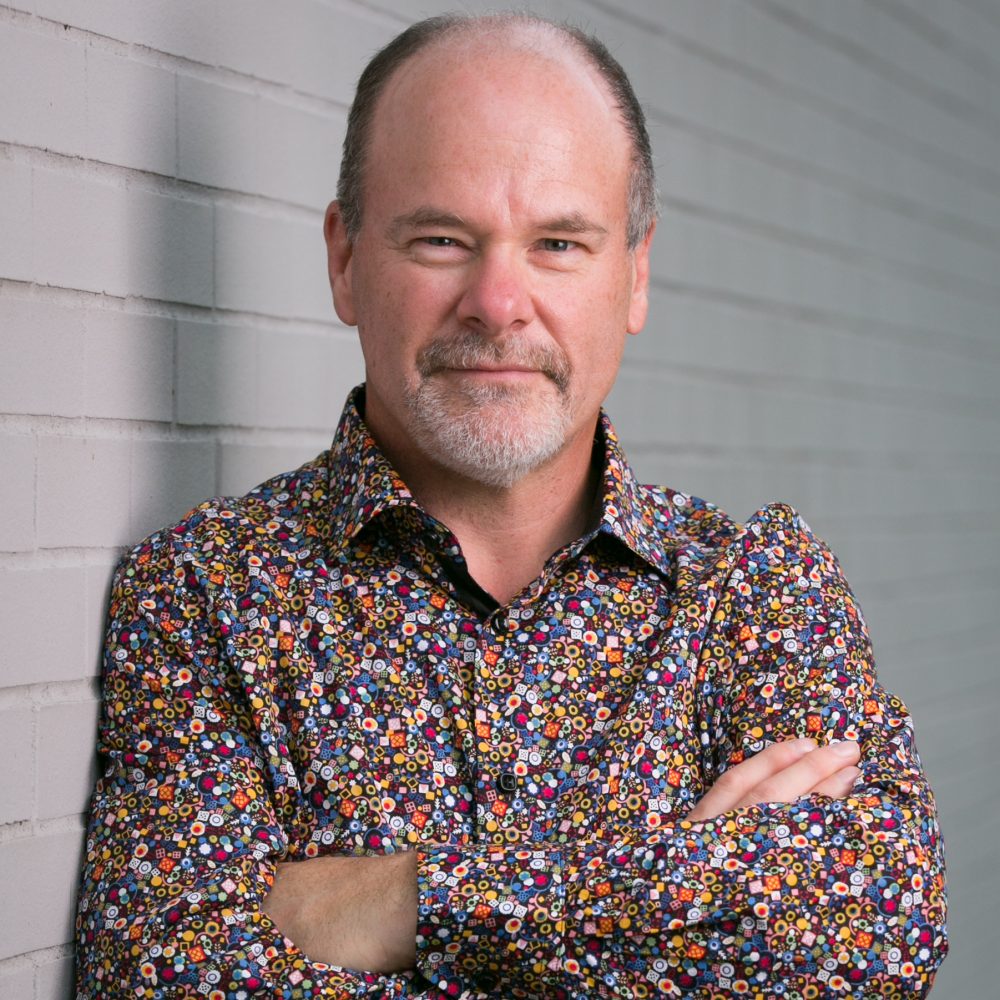
Corey: Maestro John Kraus, who conducted for the Northumberland Symphony Orchestra, now conducts both the Parkdale Orchestra and Kanata Symphony Orchestra in Ottawa. After Parkdale performed a few excerpts from our opera, he was the one who approached us about doing the full thing at this larger scale.
BB: Could you offer the rough synopsis of the story you started with and what it became in your Libretto (?), what you chose to skip or add?
Kyle: The libretto is shaped by an amalgamation of various hero-worship stories that grew up around Richard I, the Lion Heart, who was king of England from 1189 until his death in 1199. In 1191-92 he went to the Holy Land on Crusade and clashed against the forces of the great Sultan, Saladin. After the war, he was separated from his fleet by a storm, and this is where the legents begin (though his deeds on Crusade are themselves legendary, but are entirely true! Being verified by chroniclers on both sides of the conflict, some of which we touch upon in the opera).

Kyle: The first legend that I encountered that told me that there was an opera in it all was that when Richard didn’t return home to England after he was separated from his fleet during a storm, his loyal minstrel, Blondel de Nesles, went across Europe singing the songs they sang together in the Holy Land. What better hook? And what better fodder for an opera?
The next few inspirations were smatterings of various legends and fables about Richard’s deeds while in captivity (he was captured after he was separated from his fleet), imprisoned by Duke Leopold of Austria, and then later King Henry the Lion of Germany. I’m sure there’s another opera in the Lion Heart and the Lion getting on in their love of the hunt and mirth, but that’s for another day. The exchange of punches we see between Walo and Richard was from one legend; the affectionate young maiden – Mirella in our piece – is from another; the battle with the lion from yet another; I put them all under Leopold’s roof (though in some tellings the merging had already occurred) and unified the action so that it transpires in roughly 24 hours. I wanted to hew to Aristotle’s unities of Time, Place, and Action, but the story demanded a departure from Time (events that unfold in real time, like Oedipus Rex), and life goes on.
I wanted to give the audience a sense of Richard’s bravery, but I knew I couldn’t get bogged down in too many details that aren’t shown (opera is not the vehicle for this kind of story telling), so I found a fun way to work some of his most astonishing feats into the main number of Act II: the duet with the adventure-hungry Mirella, which evolves into the “moral of the story.” “Hope lives, so do not heed retreat. It’s fear who’ll suffer the defeat.” The swashbuckling, dare all drama of the duet is suddenly humbled into a pious reflection on the of the grace of heaven and the glory of hope.
My mission was to create a tight, fast-moving (but appropriately paced) book that would give my composer all the cues he needs to make a galloping score with all the right oases in about 90 minutes. And I believe we accomplished that!
BB: By coincidence your performances of your opera (Sat Nov 15, 8 pm & Sun Nov 16, 3 pm) get produced the same weekend Toronto’s Voicebox – Opera In Concert will do Gretry’s 18th century opera comique Richard Cœur-de-Lion (Saturday, November 15, at 3 PM). The Gretry opera is understood as a rescue opera. Is your opera also a rescue opera? Or a heroic romantic opera? Do you have a sense of what genre you’ve written: and does genre even matter anymore?
Kyle: Clearly Toronto wasn’t big enough for the both of us! I’m ultimately disappointed I won’t be able to see it! I was aware of Gretry’s opera when I first set down to write ours – the focus of Gretry is really Blondel, and is structured like a comic opera with a lot of complicated relationships and overlapping happenstances that can make for a very enjoyable evening. Ours is really an adventure story with larger-than-life but oh-so-recognizable characters whose antics ultimately bring about a tragedy that changes the course of everyone’s lives. The first two acts can ultimately be considered a comedy, but things take a devastating turn in act three and everyone is pushed to their limits as honour trembles and cruelty rages. However, not to spoil it, the opera resolves in triumph so I can send my audience home happy and humming.
Corey: Not much to add here, except that the music of these two operas very much reflect the music of their time. So, very different!
BB: When we look at operas such as Gretry’s or the various films of Robin Hood that show us glimpses of Richard, have we ever seen the truth? While I love this following piece of film I know that it’s completely untrue. (Forgive me for including it)
Place your adaptation in a scale for me, between truth and fiction. Are you more truthful than the others I mention?
Kyle: Richard’s catalogue of military deeds, which he shares in “Harken Maiden and Behold” the main duet of Act II, are all TRUE. His prowess on the battlefield is truly legendary and both Christian and Islamic chroniclers were utterly baffled by his daring and ability. It’s true that John, his brother, usurped the throne while he was in captivity; it’s true that he was held captive in Austria; it’s true that Jerusalem was won in a truce; it’s true that one of his chroniclers and drinking buddies was Blondel de Nesles. It’s true that England loved him so much that they essentially paid half their annual GDP to ransom him back. Robin Hood himself is a myth, so Richard’s involvement there is a testament to how well beloved he was.

After that, however, I yield me to the legends and seek to find the truth in the relationships and personas rather than in the chronicles.
BB: Alas the “truth” might be that Richard died far from home, cheated, forgotten. In opera do we seek the myth instead of nasty truth?
Kyle: My general reasoning is: if the true story is so extraordinary that it hits all the right spots for good storytelling, then have at it and change as little as possible. If not, then put the realities aside and be as creative and interesting as possible. The adage “never let the truth spoil a good story” has been a lesson I took a long time to ingest, but it’s now one I live by (artistically). In real life, I’m pathologically attached to the discovery and transmission of truth regardless of consensus or the fractures it may cause – it’s a tension I’ve experienced for my whole life and I’m still working through how to manage it.
BB: Do you write with at least some thought (peripheral vision?) that companies will produce your opera : and if so, what are the biggest challenges to making your opera something they would want to produce
Kyle: Yes, early in my stagewriting career I had pieces with casts in the dozens (one play I wrote about the first triumvirate was up to about 40, if I recall correctly), and, having been schooled in the real world of live performance, my personal challenge is now to tell the biggest stories with the least amount of resources and without sacrificing quality. When writing I always have an eye on feasibility and budget. You saw my Conan and the Stone of Kelior in 2022 where I was able stretch 14 performers to cover 21 characters and a full chorus. Creativity is always the answer, and it often yields more exciting figurative material which I think is what the theatre is really all about.
With opera specifically, there are many considerations: orchestra size, voice types, vocal stamina staging vs breath support, tailoring roles to singers rather than the other way around, duration, thematic appropriateness (is opera the best vehicle for rapid-fire philosophical exchanges or non-linear, abstract explorations?). The advantage to tech today is that projection is changing the game with regards to set building and cost. Lighting is also a kind of magic, so there’s much that can be done without enormous, elaborate sets or soaring expenses.
This biggest challenge to getting companies to produce our work is, to put it simply, ideological. All of the major pipelines across North America have turned an eye towards identity activism – a mold that seems to include neither Corey or myself. Canada is the worst for this because of the priority groups in the granting system. We actually wrote about this a few years ago and were speaking with Quillette about publishing it. Ultimately, we went with Counterweight magazine out of the UK, which has since closed down. If the readers are really keen, Corey and I can dig up the piece and publish exclusively through the Barczablog and stir the pot.
BB: We can maybe discuss that further another time.…
Kyle: Until leadership decides to serve the audience instead of the cause, sales will continue to dwindle, and new work will continue to unimpress. I think it’s worth noting that the Canada Council for the Arts has such confidence in our work, that they granted us the lion’s share of our budget despite the priority groups. I think this is good news, and I believe a change is coming. When it is, we’ll be there, ready to rock. Until then, we do it our way.
Corey: In the world of musical theatre, we have the flexibility to allow a performer to present a distinctive perspective on the character and we want to bring that flexibility to our own works. John Kirby’s work on Walo gave us a handful of new comedic moments for the character, and we adjusted the score to take advantage of them.
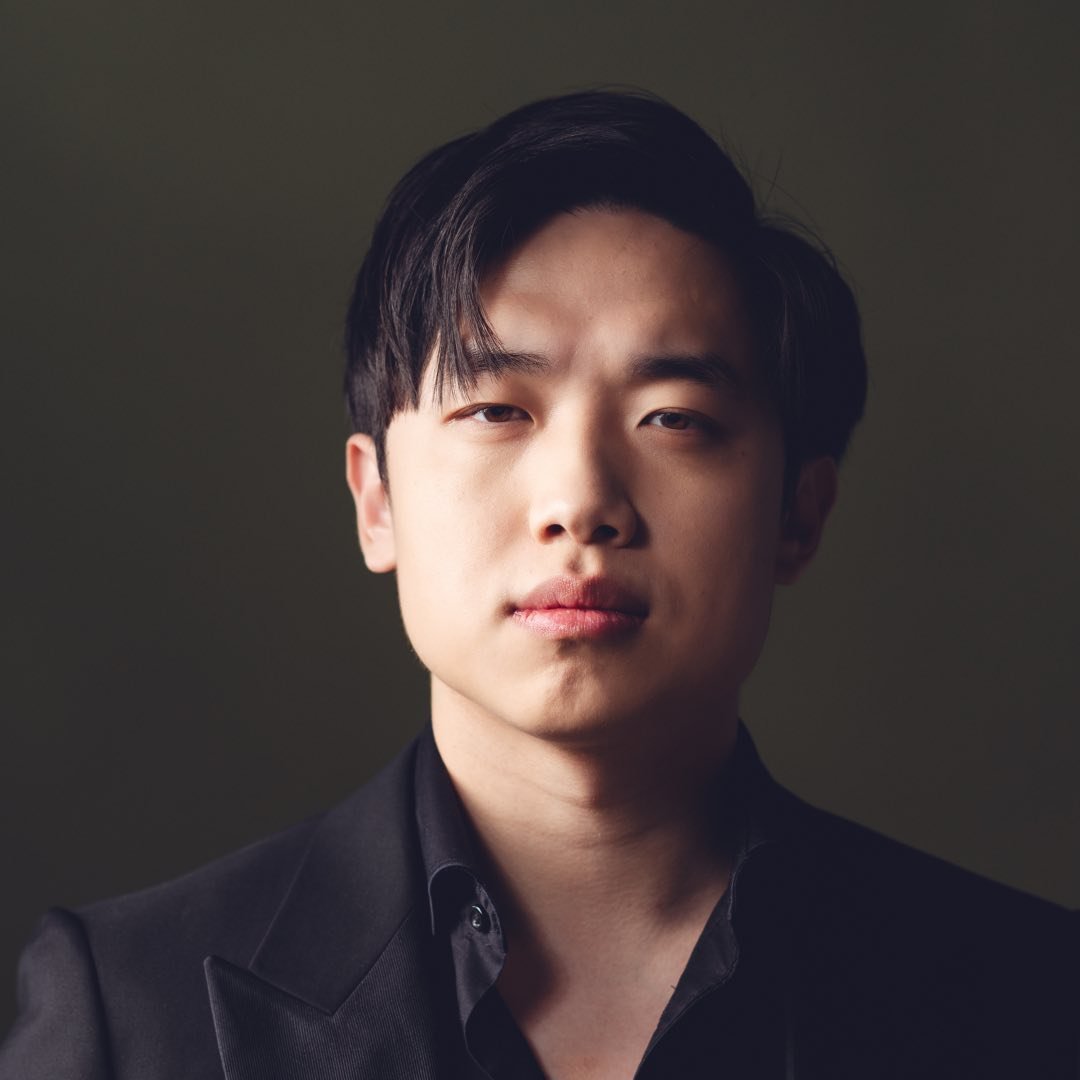
Our Richard for this production, Matthew Li, has a different voice and tessitura than Kyle does, so I rejigged the role a bit so that the dramatic moments properly create drama for his voice. This flexibility allows us to cater the show to different performers. Budget-wise, we make sure that every opera we produce has flexibility in orchestration. The Lion Heart has three versions now, Piano-Vocal, 16 piece, and 40-piece. Similarly, our second opera, The Bat & The Bells, has three versions: Piano-Vocal, Piano-Flute-Cello, and 10-piece. While the opera world mostly looks at this level of flexibility as belonging to the world of amateurs and regional companies, playing with scope and maximizing the impact at any level of scope (think of Bluebeard’s castle from Edmonton Opera) is an avenue the large opera companies have barely begun to explore, if at all, and I anticipate it will be one of the easiest ways to start improving the business model of opera companies, once they get their heads out of the way.
BB: Do you identify with any aspect of this opera ?
Kyle: Absolutely! Richard is the chivalric ideal – brave, fearsome, just, educated, witty, and convivial. While, like any of us, he has his faults, he’s still a grand example of someone (even in legend) to try to live up to.
I also identify with keeping hope foremost in one’s thoughts – times are tough, the world is changing rapidly, and many of us feel lost and betrayed. Richard fights a literal lion in the opera, but the lion is actually the figurative representation of despair. In order to overcome our lion, we have to believe it’s possible, and that’s hope.
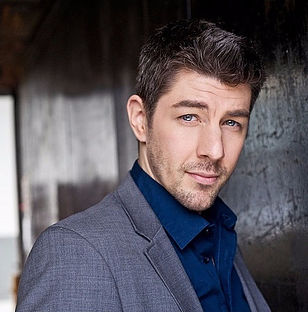
I identify with the powerful friendship between Richard and Blondel, and this in many ways mirrors my relationship with the composer, Maestro Arnold. He lives in Ottawa and I in Toronto, so our time together these days is sadly limited. But I saw him just this last weekend (end of October) and you know what we did? We pulled out the score and played and sang after a long spell apart. Then we talked about our next ambitious project: Possession. I imagine this is exactly what Richard and Blondel did over a few bottles of something aromatic and potent during those dark and dusty nights on the campaign.
And from Corey’s side of things (I don’t want to put words in his mouth but…) I remember when we first started working on the project that he was surprised by Richard’s confidence and assertiveness, and was worried he wouldn’t be able to adequately capture the dash. I can say that Corey has not only captured the dash, but is now displaying some of it in his own life as he’s developed into a bit of a swashbuckler himself: I couldn’t be more pleased!
Corey: Haha yes, Kyle’s right… I must say that this show has captured ideas that did echo some of my personal transformations. We often consume endless media showing horrible things happening to people as a form of entertainment (thrillers, horror, drama) or outrage (political content). But more and more, I’m interested in how the characters respond to this hardship: Do they dissolve into fear and despair, or do they resist the gnawing sensation to stay focused? Do they lose sight of their morality, clawing back peers and their fellow human to get ahead, or do they maintain their integrity? And when I watch, do I maintain the grace and clarity of mind that would be useful in times of hardship, or does cheap criticism come fast & furious? I’m looking for characters I can admire, who teach me about staying focused, being considerate, all while surmounting extraordinary challenges..
BB: Do you have any advice to offer librettists or composers?
Kyle: Know the best medium for your story. This applies mostly to the librettists, but composers too should know what stories music serves best. Have extended, and perhaps even heated, discussions over cocktails or wine about what you’re in it for, and the kind of impact you want to have. Debate character, instrumentation, structure, and sensibility regardless of whether you’re the composer or librettist, and then, when the time comes, trust your counterpart in his/her domain knowing that you’ve gone through it all together and have put all your ideas on the table. Then, do everything in your power to facilitate whatever your counterpart needs.
Corey: There’s a tremendous amount of complexity to an opera. Your instincts will do the bulk of the compositional labour in terms of melody and harmony, but you need to learn to zoom in and out constantly: Does this melody, orchestration and text combination create a moment with a distinctive aesthetic and feeling (Think of Wagner’s leitmotifs, or Howard Shore’s themes in The Lord of the Rings)? Should this moment in the story reflect the essence of something important to the story? If it should, how can I then use this melody/text/image brought back in part or in whole, to evoke a relationship to this “essence”, such as character growth, a melancholic recapitulation, a new perspective on a past occurrence, etc… The music will not just capture the “thing”, but will tell your audience how to feel about it every time it comes back. You have to think of structure on many levels and find alignment. Finally, try to listen to what the text is telling you first, not necessarily what you want the text to say. Once I think I know what it says, I talk about it with my collaborator, to get clearer. I’m lucky to have someone who has a lot of depth to their intention, so making sure I understand it all first is very important. Then, we can discuss modifications more clearly and carefully.
BB : Kyle, you work in so many media (film & television, voice-over, opera, as writer as performer and also as promoter), if you could exert influence over the powers that run opera, what could they learn from those other media – businesses? Should opera adapt and exploit modern media? And, If you had your way, what would the artform / business that we call “opera” do– either speaking of composers or of producers /companies– to make itself more attractive, more viable and more popular?
Kyle: Yes, I have many fingers in many pies (clearly it’s not only idle hands that are the devil’s workshop): theatre, music, audiobooks, digital media, film/television, events, and even a pair of startups – one in the AI space (to get it under control early) and the other in confectionary.
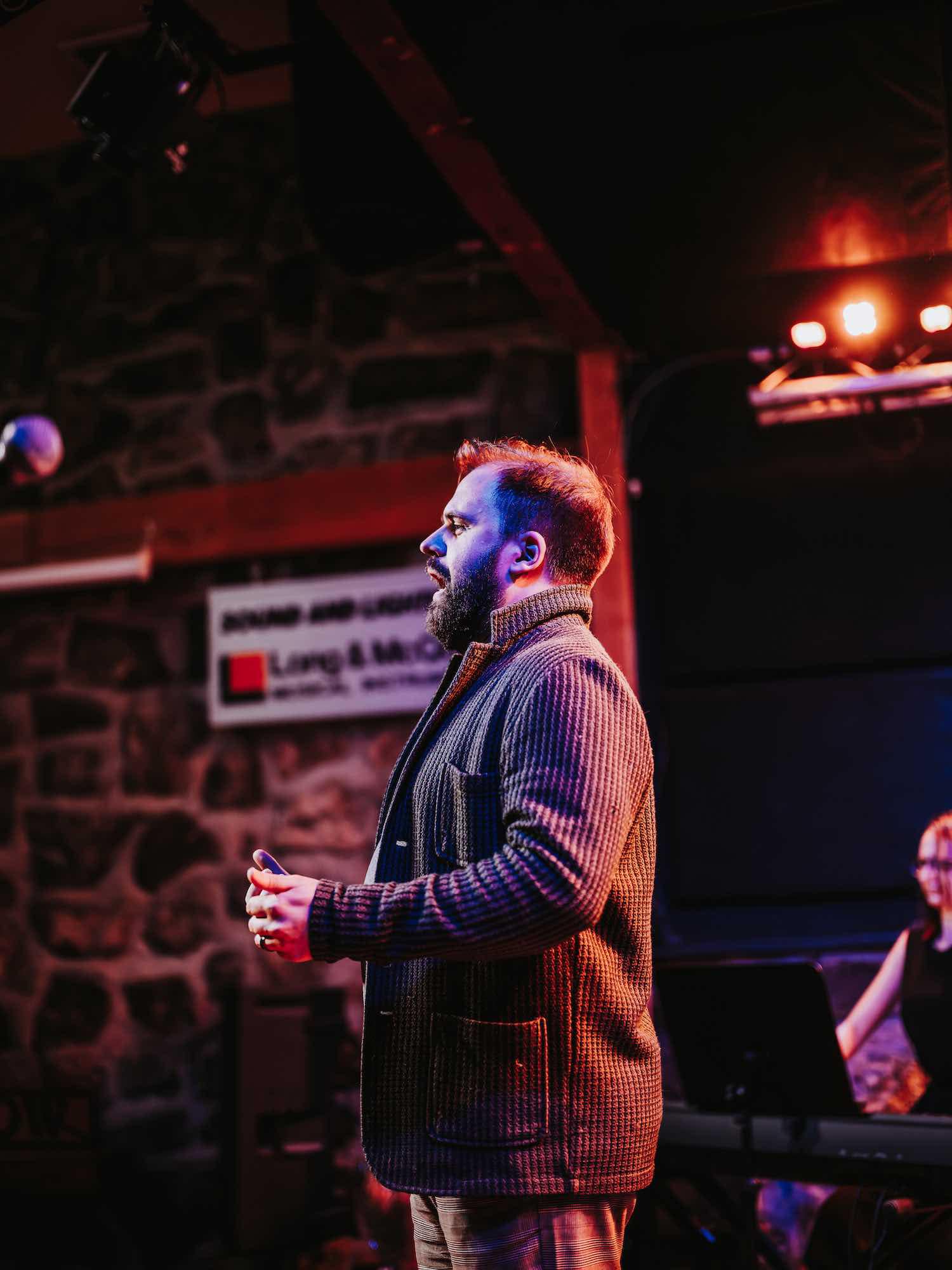
I’m still learning and developing in all of them, but opera has something of a unique problem (perhaps Ballet shares this, but I’m not familiar enough to comment with any authority) and that is: we’re still being treated to Mozart, Verdi, Puccini, Wagner, and all the other greats from decades to hundreds of years ago. Very stiff competition for contemporary creatives. I know you and your readership have listened to me rant about this before, but it bears repeating: it’s not just that it’s Mozart, it’s that it’s done in languages very few Anglos speak, with untenable run times (I’m eyeing you in particular, Wagner), and with production choices crafted in the main around technical considerations (orchestra, fach, cut) rather than performative and storytelling ones. In this concert, we’re using microphones and, if I have my way, every future performance of any one of my operas will involve the use of amplification for the singers – I want every one of my words to be heard and understood, and I want every singer to be able to craft a spellbinding performance with the level dynamic range found in the recording studio.
BB: I know your words likely sound radical to some, but I am certain, were Richard Wagner himself still alive, he would say the same thing. I look at the way he covered the pit at Bayreuth as evidence that he knew enough to make adaptations & changes before the era of microphones. It’s ironic when purists get upset at such ideas, given that Wagner in his day was no purist. He was a revolutionary.
Kyle: The other issue is marketing: because the current opera audience knows all the major shows, marketing typically involves putting forward the conductor and the singers. For those who’ll see Don Giovanni 15 times (I am not one of them), this works because the conductor and singers are literally the only point of difference, and are therefore the attraction. For the rest of us “normies” we just see a lot of people looking fancy, and have no idea what’s going on – especially since 90% of the titles of these operas are in languages that aren’t English. It’s a pretty high bar for involvement. However, I am happy to say that I’m seeing changes across the sector on this front as younger members of the industry have started to assert their influence, and I’m confident a lot of this is going to be almost entirely repaired before the next ten years are out. Just remember that Corey and I said it first! Ha!
Marketing. Companies need to focus on the story of the opera and – I’m going to say it again – do it in English (in the Anglosphere). They also need to show footage of the performance, which is always very difficult with live theatre. Stratford is doing an excellent job of this. Bigger companies have budgets and they can pull from past performances so there’s no excuses for them. If a clause needs to be added to artist contracts that material must be made available to the public, then so be it. The age of protectionism is over: if people can’t see it or hear it, they’re not going to care about it. Another thing companies can do is slot a few shoot days at the end of their season with the current company for promo material: the actors next season may not be the same, but there’s an allowance for that with some of these projects. Alternatively, if you have your ducks in a row early with casting, get the performers in to shoot the promo. The ultimate design of the show may change, but that’s not make or break.
In our case, because we don’t have any interesting looking footage for The Lion Heart, we’ve put together an animated trailer that lays out the story, aesthetic, and sound of our piece; we’ve been hearing that it’s really moving the needle for us, so I’m definitely happy about that.
I’ve been saying for years that opera will change you. As an impresario, it’s my duty to get as many obstacles out of the way as possible to facilitate that wondrous magic.
Corey: Only my closest friends know this, but during the pandemic, I was looking for work in other industries when I got hired for a small Canadian software company to assist their clients with using the software. Fast forward 4 years, and I now manage international accounts, travel to major international cities, and work as a developer for the same company. I also get to work alongside entrepreneurs with 20-30 years experience in developing and running companies, and soak up some of their experience. Working in this way was initially quite jarring: there is a tight relationship between my career advancement and my ability to produce value for their customers as mistakes and achievements often have direct financial consequences.
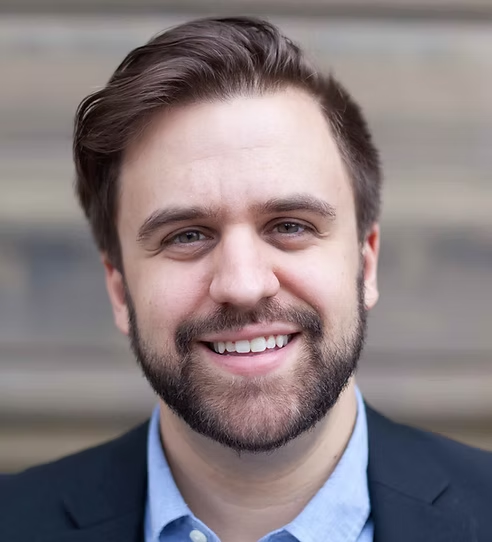
In opera, we’ve lost that tight connection. To some extent we lose it because of ideological indulgences, such as the idea that market concerns are the enemy of art, (as if every composer of the last 400 years was completely free from market demands…) and we end up propped up by grants alone. But some of it is just a lack of business knowledge. I recall one entrepreneur saying to me “an idea doesn’t necessarily make a product, and a product doesn’t necessarily create a business”. When you translate this to opera, a cool musical or narrative idea doesn’t mean you have a great opera. And just because you have a great opera, doesn’t mean you have something of value to anybody. We need to understand that music is rarely ever evaluated strictly on some scale of musical merit (which we often forget in academia…). Performers are paid if the audience is interested in paying, and the audience’s perceived value of the performance can be more about their relationship with the venue or a single performer, or the visual effect onstage, than some quantitative analysis of the quality of the music & text. Business thinking and market demands can’t be a bad word anymore in opera, as they will open our minds to what our audience values. And if we get good at business, we’re going to be much happier on the whole.
BB: What other projects have you been working on.
Kyle: Currently the quiver is filled with a lot of fun, unusual things! I’m narrating and engineering an audiobook called Ethandun for an American poet named William G. Carpenter, who’s written a delightful and moving epic poem about Alfred the Great converting the Danes to Christianity during the Danish invasion of England in the 9th century. We’re aiming for a December release. Want a copy of the book, or to hear the audiobook when it drops? Head to: https://williamgcarpenter.com/
Another project I’m working on (which is the complete opposite to Mr. Carpenter’s grave and reverential work) is a new play that I have the privilege of writing with Kids in the Hall star, Scott Thompson. We’re under strict NDA right now, so the details are limited, but I can share a few things: it’s called a Festive Special, and the logline is: Visionary theatre director Teddy Frisk loses his company after a controversial flop and makes a deal with the devil to get back on top.
Yes, it’s a comedy and yes, it’s a Christmas show. Fingers crossed we’ll be seeing this on stage in December 2026.
Corey and I have been collaborating on our third opera together, Possession (the second is a cute pocket opera called The Bat & The Bells). A seductive tale of horror and exorcism, Possession is a new opera in English that follows the Nagy family in 19th C Hungary who is possessed by the demonic spirit of the infamous Countess Bathory, known for bathing in the blood of her victims in pursuit of eternal youth!
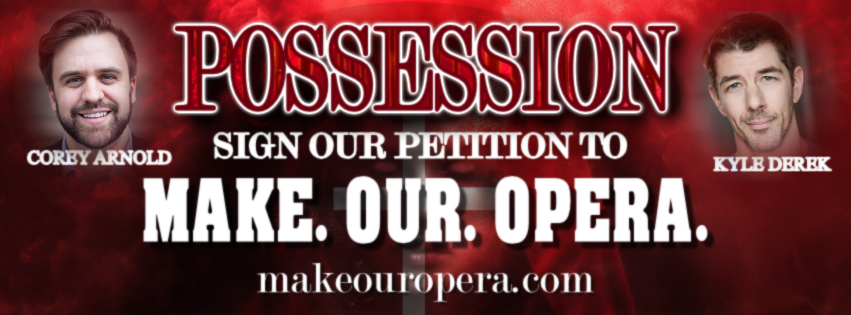
We’ve spoken to you about this before and ran a campaign to get signatures from audience members to bring to existing companies for a commission. If you, dear reader, want to add your name to the list and have your name immortalized in the first printed edition of the eventual score, go here.
This will also put you on our mailing list which we ONLY USE when promoting an upcoming performance, or when sending an update about the opera.
For everything else, my instagram and website are the best places to stay abreast.
Corey: I’ve been performing regularly around Toronto, Ottawa, Montreal, etc… but have also been working on better connections abroad, having done my first tour of China last fall. My wife, Nadia Boucher (a pianist), and I have lots of energy and interests, so we always have a variety of projects running at any given time.
Kyle and Corey: Thank you, Leslie, for your craft and patience; it’s always an honour!
Kyle Derek McDonald | Corey Arnold.
Follow them here:
Kyle: Instagram | Facebook | LinkedIn | YouTube | Websites Mightier Productions | Kyle Derek
Corey: Instagram | Facebook | LinkedIn | Website
 barczablog