“I am a lucky guy.” That’s my mantra as a person seeking to live a life of gratitude: and sometimes it has proven to be true.
My friends Gary & Bill left town for a family bris, giving me tickets to hear Tony Siqi Yun playing the piano at Koerner Hall, a concert that I had not intended to hear, Lucky me, thank you Gary & Bill.
You may not have heard of Tony Siqi Yun, a young Canadian pianist with formidable talent. I understand that although the Royal Conservatory of Music in Toronto is a pipeline for talent, this was the first time Tony had been to Koerner Hall. And I hope he will return.
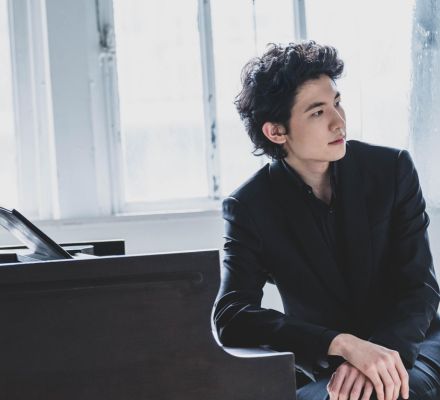
Here’s the program we heard Sunday afternoon:
JS Bach: Chaconne from Partita No. 2 for Violin in D Minor, BWV 1004/BV B24 (arr. Busoni)
Robert Schumann: Theme and Variations in E flat Major, WoO 24 (“Ghost Variations”)
Franz Liszt: “Après une lecture du Dante, fantasia quasi una sonata” from Années de pèlerinage II, S. 161
INTERMISSION
Luciano Berio: Wasserklavier
Johannes Brahms: Piano Sonata No. 3 in F Minor, op. 5
Today was also the Santa Claus Parade, playing havoc with those of us trying to drive downtown. I left home at 1:00 pm for a 3:00 concert, because I had been warned about the parade and had planned my trip knowing the parade’s route. Between the first and second item (Bach-Busoni and Schumann), the inevitable latecomers were seated in the hall, likely unaware that their lateness meant that they may have missed the best item on the program.
Busoni wrote & premiered his transcription in 1893 while he was living in the USA. I have listened to many versions, usually fascinated by the display of pure virtuosity, the ways in which Busoni seems to turn the pianist into a show-off. Tony’s reading is the first time I set that all aside, partly because he made it seem so easy, partly because of how well the piece was shaped in the interpretation, no longer a showoff exercise, not weighed down by the shadow of Bach but freed to be flamboyant Busoni. Tony played parts softer than I’ve ever heard them played. The dynamic range he shows us is, excuse me for contradicting myself, might seem to be showing off except that it’s very musical, working completely in the service of Busoni’s vision. It’s clean playing, a huge number of notes but totally well-articulated.
The Schumann that followed was perhaps the sanest Schumann, no evidence of the divided genius (that was how he spoke of his own personality), more logical and coherent than any piece I have ever heard, especially in Tony’s hands. We heard a gentle interlude, a piece that never seemed difficult or challenging.

The audience was so quiet at the end of the last variation (i prepared to applaud, but not wanting to disturb the silence): but Tony went on when we didn’t applaud. I’ve seen this from the Toronto Symphony a couple of times when they deliberately programmed pieces from different composers without a break, going from Ligeti to Wagner, while this time Tony took us from Schumann to Liszt.
The Liszt Tony played did what I dream of. I’ve been discussing this a lot with Erika, that when I play something like the Bach-Busoni, and she doesn’t enjoy it, that means I have failed. An interpreter is like a lawyer, advocating for the piece. If I can’t make Erika like the piece, I am letting the composer down. Of course I am no virtuoso, just ambitious verging on delusional in what I am undertaking. But what I am leading up to is the next piece, one that I have never really understood, until what I heard from Tony.
The way that this item is listed in the program is a tantalizing glimpse. It’s shown as ““Après une lecture du Dante, fantasia quasi una sonata” from Années de pèlerinage II, S. 161”. I wish we could encounter this piece in its place among the other short works that make up that second year of Liszt years of pilgrimage. Year two is very literary, including the three stunning Petrarch sonnet pieces. We are brought by Liszt to a remote place of contemplation when he throws this humongous stink-bomb of Dante at us, full of ruminations upon the battles between good and evil. I may be missing the point, but I feel Liszt wants us to experience this as a kind of melodrama, an episodic series of emotional twists & turns, that may leave us feeling dizzy. Perhaps too Liszt was not just struggling with the piano or Dante but with his faith, given that he would become a priest, putting himself into the conversation not at the keyboard but into priestly attire if not actually preaching. The piece is not as polite as a sermon, though, and more of a silent movie score unafraid to contrast the sweet angelic music with fearsome noise, fearful effects sudden abrupt shifts: especially as Tony dared to play it. I have never made sense of the piece before now. Tony is a thoughtful pianist, a genuine poet himself. We were listening not to feats of pianism but coups de theatre, big brash moments to suggest a battle between celestial forces. And while we’re at it, I’m not sure Liszt is properly appreciated, given that melodrama is no longer understood as a high form. But maybe it’s best seen alongside such modern melodramas as Howard Shore’s stunning score for The Two Towers or John Williams sweeping gestures in The Empire Strikes Back. No we didn’t get to hear the whole of the Années de pèlerinage II, but I see that music differently now.
I wonder if some Toronto venue could get Tony to play one of those complete years of pilgrimage.
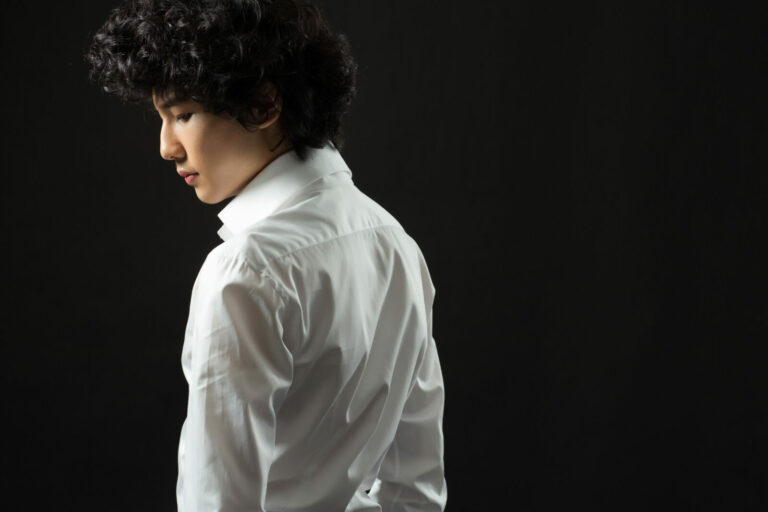
After intermission came Berio’s Wasserklavier, two minutes of tranquility. In Tony’s reading I was reminded of a barcarolle by Mendelssohn or Chopin, music you’d hear from a gondolier while you drift among gentle waves in a boat.
Again we were on to the next piece immediately because there was no applause after the brief Berio serenade, urgently taken up by the young Brahms. I also feel lucky about the serendipity of my opportunities to hear, again meeting a young brahmsian adventure comparable to his German Requiem that I heard recently. Later Brahms would orient himself according to forms we know well in his Symphonies & Concerti, but in his earlier works there is the sense of a wanderer, following his heart rather than a rule-book. At times we were in realms that were passionate, then dance rhythms suggesting a more extroverted side to the composer. Then we were taken into something softer & more mysterious. Tony honoured the changing directions and moods of the composer’s explorations, sometimes subtly internalized, sometimes brash and confident, subtly powerful inexorably building to a masterful conclusion. I am projecting of course, but I thought Tony identified with Brahms, the young composer finding his way, finding his voice.
The encore was more Brahms, a well-known waltz.
I wonder if the subtle poet I thought I observed in Tony, is perhaps still discovering how to be a virtuoso. Twice in the concert he played on, rather than giving a signal for applause. No he is no egomaniac, that is certain. Instead of showing us that it’s time for us to applaud he went on. I find that remarkable, even if it may signal a certain introspection, a nerdy focus on his art. But in a world of slick hair & fashion choices, I prefer this artist’s devotion to art.
I want to share what I found when I went to YouTube for more. First and foremost, here’s a performance of the Bach-Busoni, that might show why I am so enthusiastic.
Yes he can get his fingers to play the notes, but what’s more important is the way he organizes those notes, building from softness to stunning climaxes. My mind is boggled by how accurately and how cleanly he plays, how well I can discern what he is doing, and how this video reminds me so well of what I heard Sunday in Toronto, so many years after the video performance. There is more variety between variations, but they’re coherent, when he suddenly goes into a different gear at a totally different tempo. I am very much in awe.
There are other pieces on YouTube that I wish we had heard. I hope to see and hear him playing live again. Enjoy! And in the spirit of Thanksgiving (the American one is this week) I am grateful for the many excellent pieces Tony has shared.
Thank you Tony! And thank you Gary & Bill for the chance to hear Tony. I am a lucky guy.
 barczablog