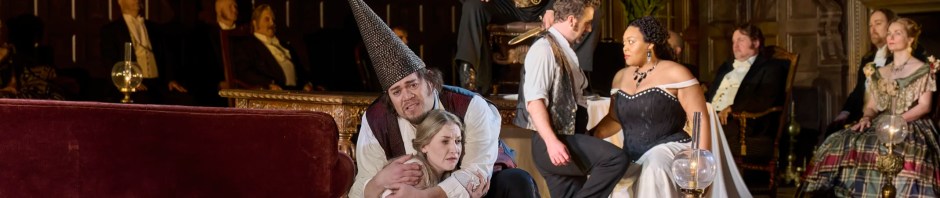
The Canadian Opera Company are reviving the Christopher Alden Rigoletto, last seen in 2018 and first seen here in 2011. I have always been conflicted about it, a production that in some ways shows the real story that composer Giuseppe Verdi & librettist Francesco Maria Piave couldn’t give us.
Rigoletto is jester to the Duke of Mantua, a total beast of a seducer, who screws every woman in sight and then has the nerve to sing “la donna è mobile”, suggesting that women are fickle. He’s a man whore, and (in case you can’t tell) someone I dislike with a passion. Rigoletto may be a father but he shows no sympathy for Monterone, another father whose daughter becomes one of the Duke’s conquests, leading Monterone to curse the Duke and his Jester.
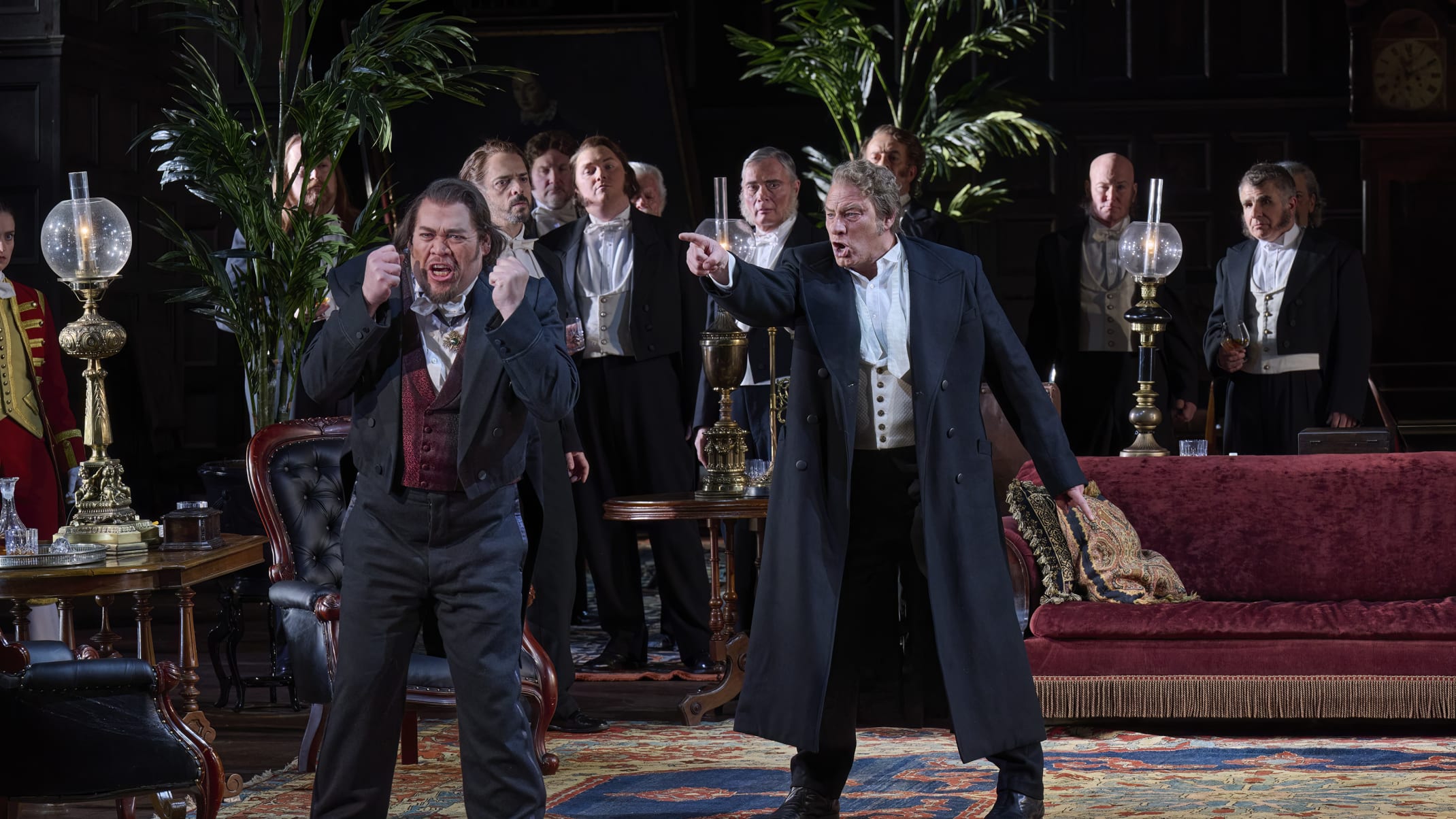
When the Duke goes on to seduce Rigoletto’s daughter Gilda, the jester pays a hit-man to kill his boss, but Gilda is so in love with the beast she substitutes herself as the victim of the hit.
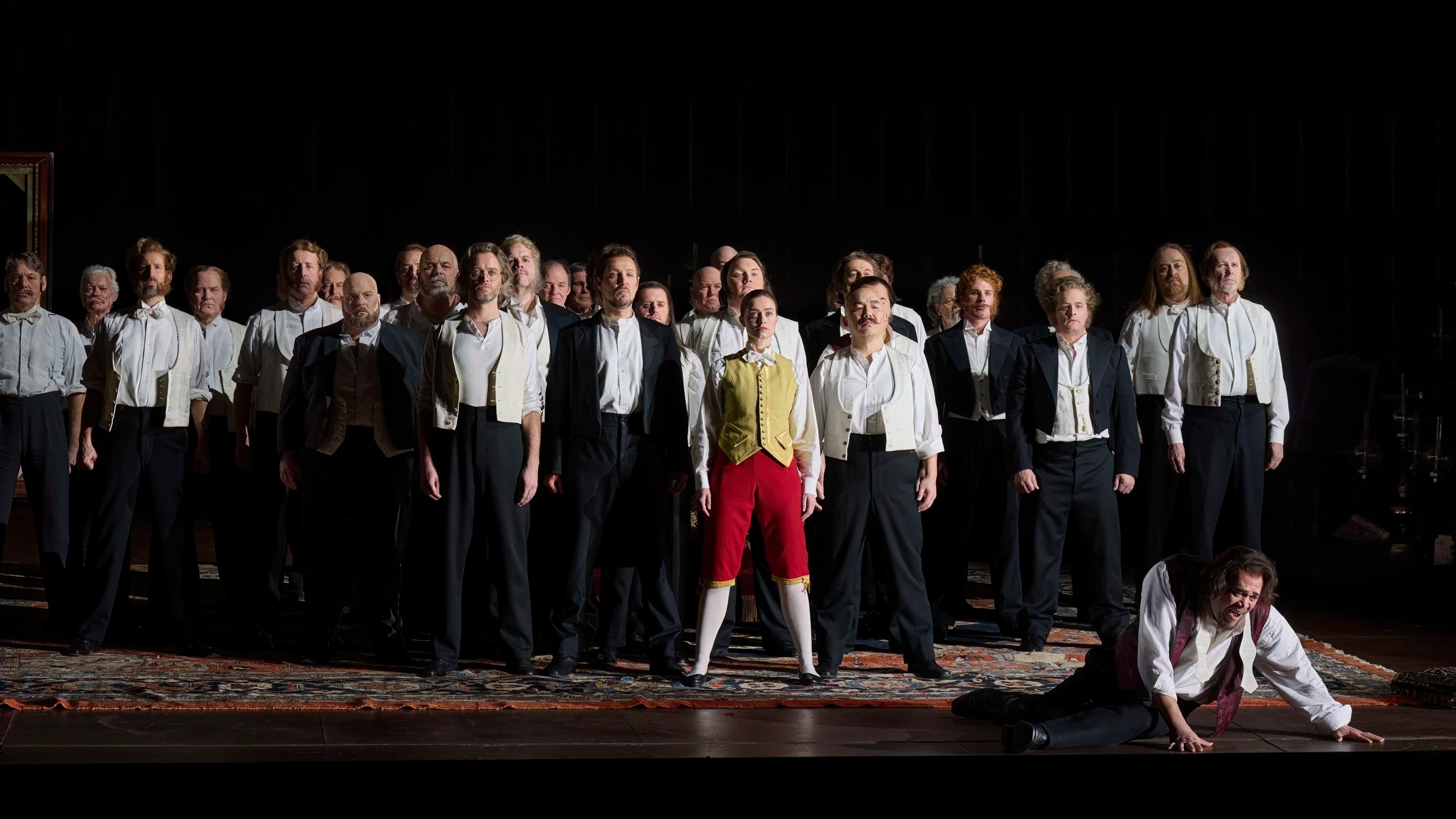
In places Verdi & Piave held back a bit, likely due to concerns about censorship, the morality of the audience in the 1850s, so that the courtiers surrounding this whorish Duke sing in a chorus that’s jocular but relatively clean in how they express themselves, and what we actually see.
Alden’s Rigoletto is as blunt as a Housewives of Tulsa episode: as it was in 2011 & 2018. The music isn’t changed, but the visuals are crystal clear, so much so that there’s no mistaking this nasty story for a happy romance.
What is so different this time, leading me to call it a Rigoletto for our time? Our time. In 2026 I’m finally ready for this production. Maybe it took awhile for me to learn how to see it correctly or maybe the thing that trained me was watching current events.
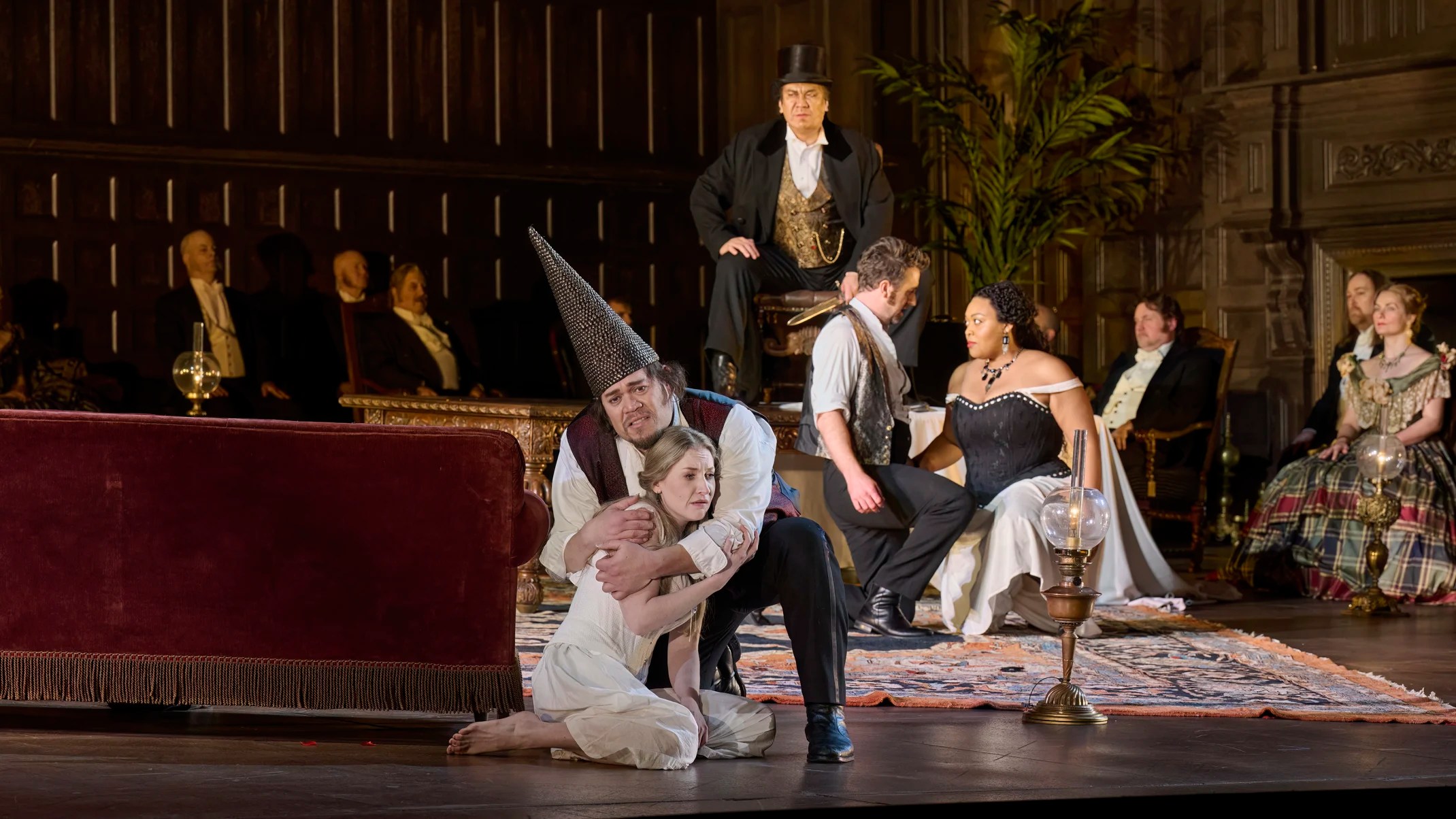
Tonight Gilda was played by Sarah Dufresne, who for once gave us a Gilda who looks as young as the character is written to be. When the Duke (Ben Bliss) pushes his Gilda onto the couch in her underwear, looking like a 15 year-old, it could be right out of the headlines. The Duke is like Epstein or one of his pedophile cronies. Perhaps Giovanna (sung by Simona Genga) is like Ghislaine, as the role is far beyond the usual house-keeper of the original, an enabler and another lover of the Duke (at least in her own mind).
Sparafucile (the hired killer, sung by Peixin Chen) argues with his sister Maddalena (sung by Zoie Reams, so impressive a couple of years ago in Medea), who has also fallen in love with the Duke. When she suggests that Sparafucile can kill the Jester instead, and take his money, Sparafucile replies that he is no bandit, a grotesque moment that made me laugh out loud.
I’ve seen a lot of productions of this opera. It feels so jarringly real, a community of sycophants & enablers trying to please the powerful pervs, just as we see in the news. When I first saw this production it seemed like a revelation even though there were moments that rubbed me the wrong way, but I think the world has worn down my resistance, as the news is now nastier than this story, that actually felt like escapism tonight.
Let me add, that the singing and the musicianship is superb led by conductor Johannes Debus.
Quinn Kelsey’s voice in the title role seems to be in a groove, the sound lighter and more truly bel canto than previous times I have heard him, as though he were rejuvenated. The high notes are all there, the voice opens cleanly and precisely on pitch, the soft passages float while the big moments hit hard. I’m glad I will hear him again. He is very believable as the Jester who is cursed, and is sounding especially good this year.
Sarah Dufresne sang well as Gilda. There were a couple of places where I thought she was being rushed by the pace coming from the podium, where a more sympathetic slower tempo could have helped. Gilda has some of the prettiest music that Verdi ever wrote, but is also pressed into a melodrama in the last part of the opera. I don’t think the role is written to give a singer the chance to really seem like a teenager, given the sophisticated situations & moral complexity in which she’s caught, but Sarah looked very much the part, doing as much with the role as possible, especially the frenetic action Alden asks of her.
All three of the main principals sang on pitch, although I think the most impressive for me was Ben Bliss as the Duke, in a role that’s not just difficult to sing but can be unbelievable to watch. Or maybe it’s just that the production, showing us in a kind of creepy men’s club, with courtiers seemingly helping the Duke in his horny pursuits, helps the opera to click perfectly for me.
Conductor Johannes Debus took us swiftly through Verdi’s tuneful world, keeping everyone tightly together, the men of COC Chorus having some great moments especially in the first act. Rigoletto continues at the Four Seasons Centre, with five more performances between now and February 14.
 barczablog