Your tickets to the opera really are a case of “location location location”.
When I saw the Canadian Opera Company’s Barber of Seville two weeks ago seated in the middle of the downstairs at the Four Seasons Centre, yes I liked the music, writing a review fit for a grumpy-puss, not fully surrendering to the comedy until the second act.
Today I laughed my ass off from the first note, as I watched the closing performance from my subscription seat in the second row. That’s why I want to talk location. The reason I have this ticket is because when seen from up close opera is completely different, especially a comedy.
There are trade offs, to be sure. As the person sitting beside me observed, the singers are harder to hear because the orchestra is so loud from up close. I loved the pace and the tightness of the ensemble led by Daniela Candillari. And yes I love the immersive experience of the orchestra even if it’s true that the singers fare better if you sit further back.
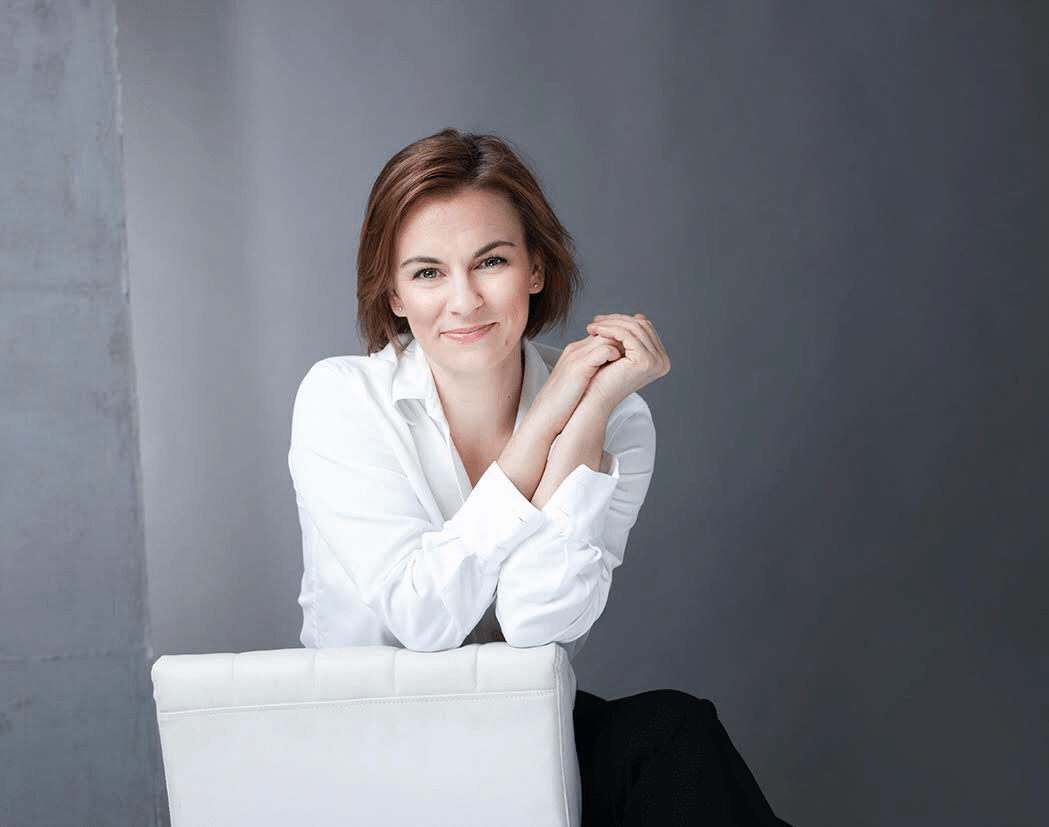
I felt I should properly admit how much I laughed at a production that I was seeing for the seventh time (three times in 2015, twice in 2020 and two weeks ago with a different tenor in the lead role). So in other words even though I know the jokes and the sight-gags by heart at this point, yet I laughed harder this time than any time since the first time I saw it.
Credit where credit’s due. Mezzo-soprano Deepa Johnny is very sympathetic, totally relatable as Rosina. Up close the subtleties of her facial expressions were hysterical to watch, even as she again sang a superb performance.
She matched up well with tenor Pietro Adaini, the Count Almaviva in today’s show, a slight difference from Dave Monaco who I saw the first time. They were both excellent, although I found Pietro funnier: perhaps because I was sitting closer this time. I can’t be objective. His voice had a lot of squillo even if I’m not sure that’s what we expect in bel canto. Pietro sang a lot of beautiful high notes, perhaps three high Cs in the first act alone: although that’s probably not as important as the way he played comedy. His eye contact with Deepa and his servants Fiorello & Figaro, set up wonderful comic bits.
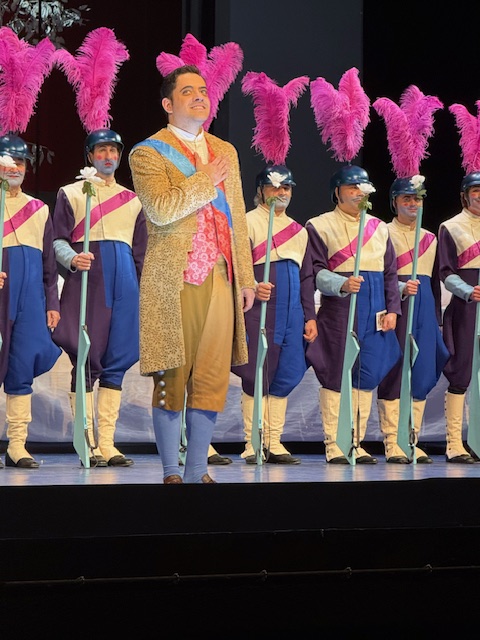
Or maybe it’s just that sitting close I was able to see subtleties that are lost when you sit further back.
Speaking of the servants, that means Nathan Keoughan as Fiorello and Luke Sutliff as Figaro. I’ve wondered about Fiorello, a character who makes an impression in the first scene, and then is more or less shoved aside when a pushier, more charismatic servant arrives: namely Figaro. Sorry Nathan, you were great but unfortunately Rossini erases you with the arrival of the title role.
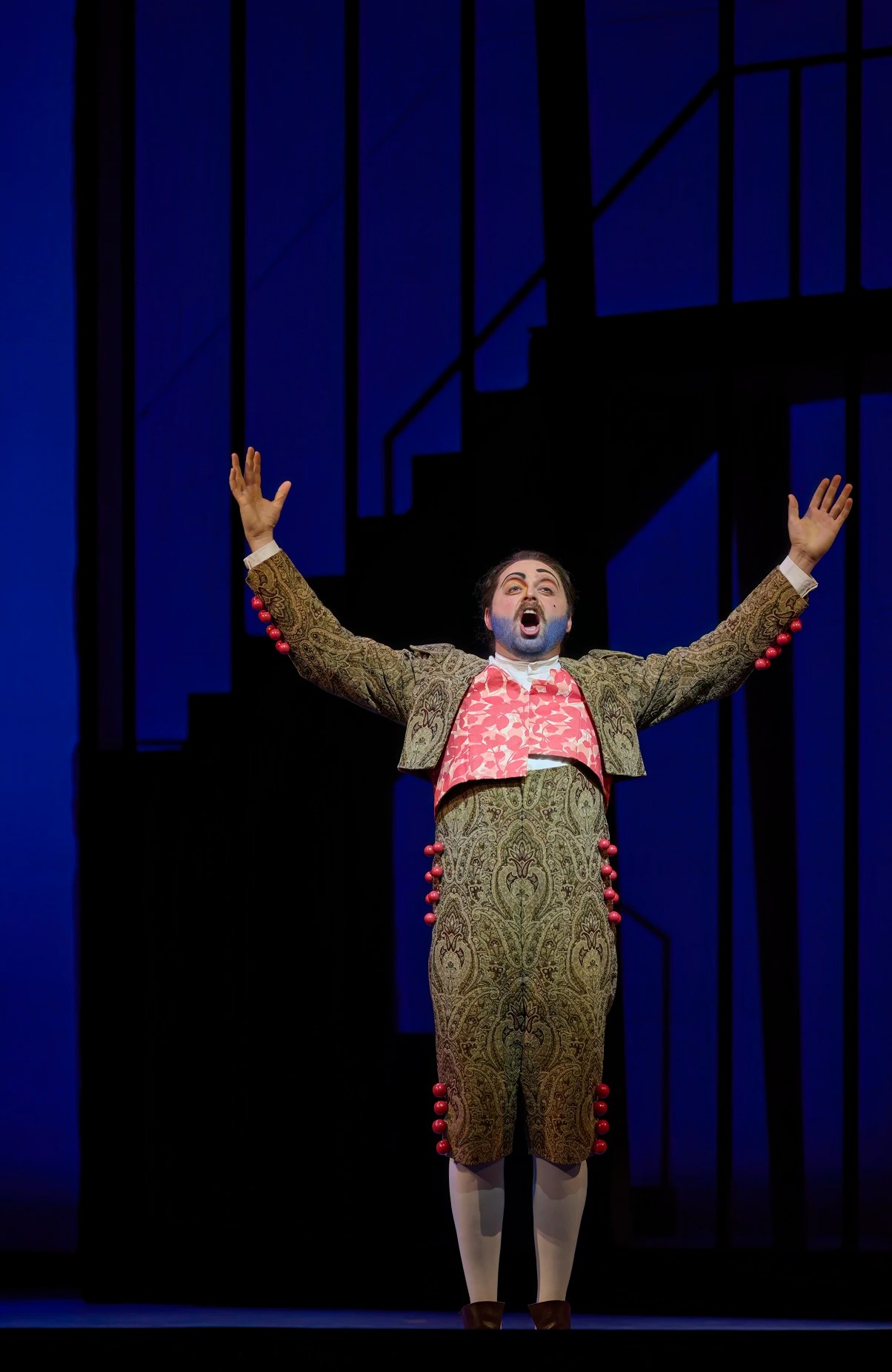
I was again taken by the work of Luke, impressive in his big aria at the beginning of the show, and very much a take charge comedian, unlike the three previous Figaros I’ve seen in this production. In some respects Luke is more of a conventional Figaro who doesn’t need the extra theatricality of this production to make us love him & his shenanigans, as he’s doing it with his voice and his acting ability, aka the usual toolkit of an opera singer.
Joan Font’s direction is very vivid, putting actors on stage to unpack key moments in case you’re not able to figure things out for yourself. Don’t get me wrong, I love directors’ theatre when it illuminates, and that is certainly the case with this interpretation. For that opening aria I spoke of, Figaro’s Largo al factotum, not only does the baritone tell us of the many things he does, we get them enacted for us. Similarly when Berta sings an aria (gorgeous singing by Ariana Maubach) that in effect speaks of the opera’s core story-line, of the older man competing with the younger for a beautiful young woman, we see that acted out upstage. When Don Basilio sings of slander, we see a man effectively trapped in a kind of web, that leaves him half-naked at the end, as though he were slandered. While I may have complained previously about directors who seem unready to challenge their audience’s intelligence, I don’t want that charge directed at Font, whose imaginative theatre games invite us to engage with the illusion, thinking harder. Font gets a lot of mileage out of the flamboyant set & costume designs from Joan Guillen.
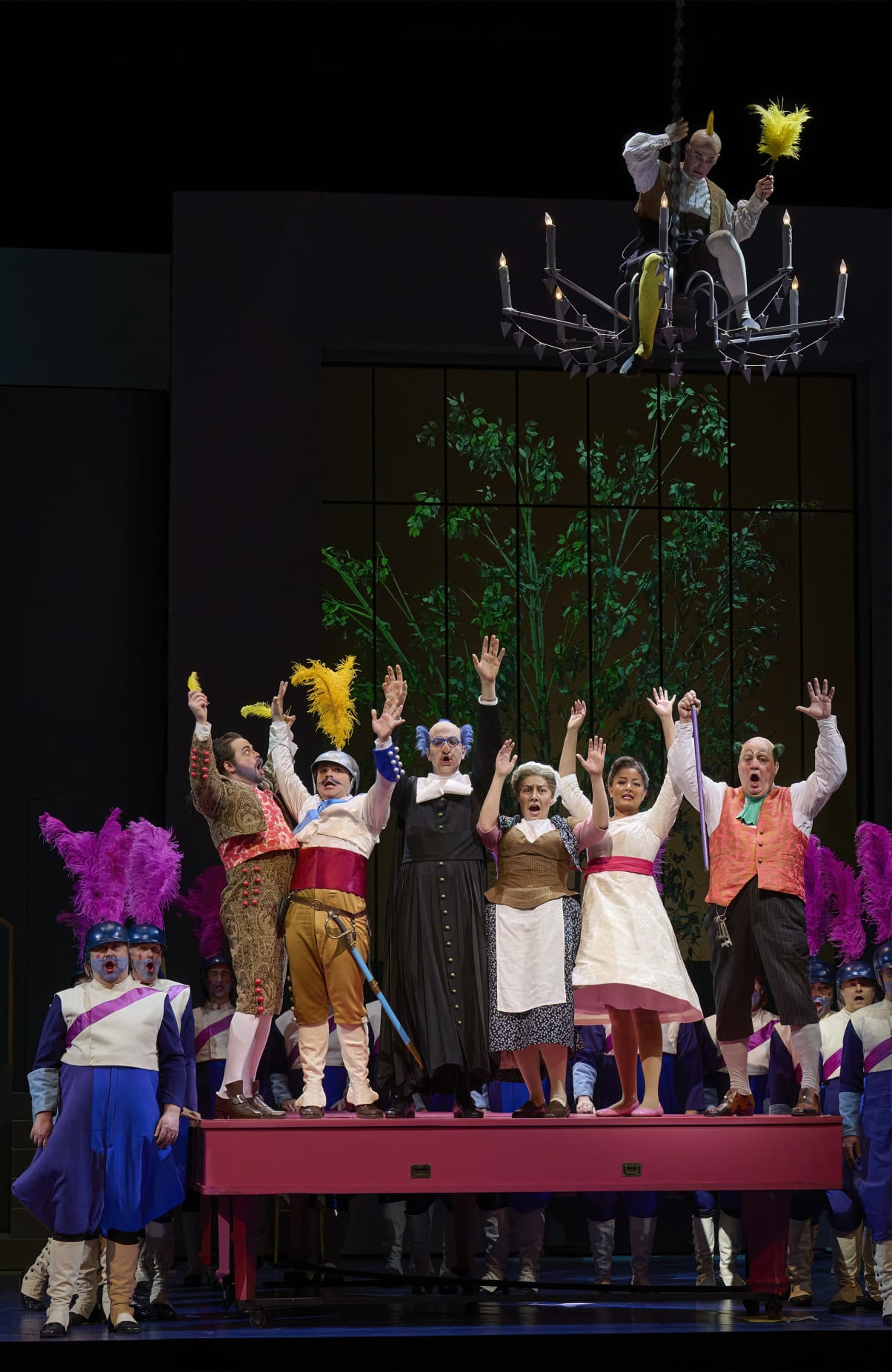
Up close I was especially taken with Luca Pisaroni as Don Basilio, and by that I am less concerned with his singing –which was good–than his comic chops, which were remarkable. At least three times I guffawed like a drunk, surprised by a physical move or a bit of mugging from Luca. This is the same guy I saw two weeks ago, who I didn’t mention because from afar it may have gone over my head, not so easy to see. And up close I was again fascinated by Renato Girolami as Dr Bartolo, a portrayal that felt a bit two-dimensional from the second row. But of course when I sat far away his character played really well, the big effects visible from a distance. Luca and Deepa and Pietro were acting in ways that seem almost cinematic, ready for their close-ups, while Luke & Renato played in a more conventionally operatic style that can fill a big space and works well from a distance. I feel fortunate that I got to see it multiple times, to observe the different approaches, which each have their advantages.
We are at the end of the COC’s winter season, just days after they announced the operas for next season. While I may have felt a bit perturbed that the choices for this season included four revivals for the six programs, I still renewed. But whatever misgiving I had, at least those careful & conservatives choices kept the COC in business in a year that has seen the Metropolitan Opera (for an obvious comparison) laying off staff. And so, in addition to the new Romeo et Juliette last fall and the upcoming Werther, we were to be content with productions seen multiple times, namely Rigoletto & the Barber, Orfeo revived last autumn and the Erwartung-BlueBeard double bill coming back in April (although the latter from Robert Lepage is a perennial favourite).
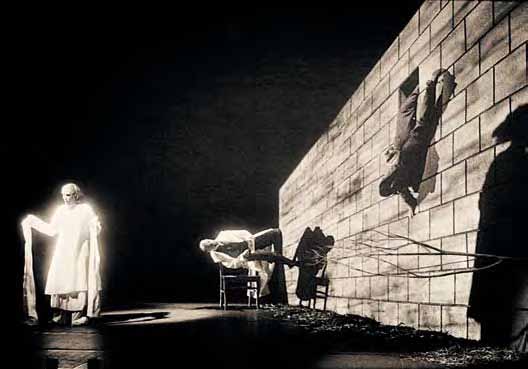
When I look at the upcoming season it’s easy to be enthusiastic, with no hesitation about renewing for next year. There are three revivals, namely La Traviata, Cosi fan tutte, and Elixir of Love, with three exciting new productions, namely a new production of Ariadne auf Naxos last seen in 2011, Britten’s Turn of the Screw, which has never been staged by the COC plus the world premiere of Empire of Wild by the team of composer Ian Cusson & librettist Cherie Dimaline.

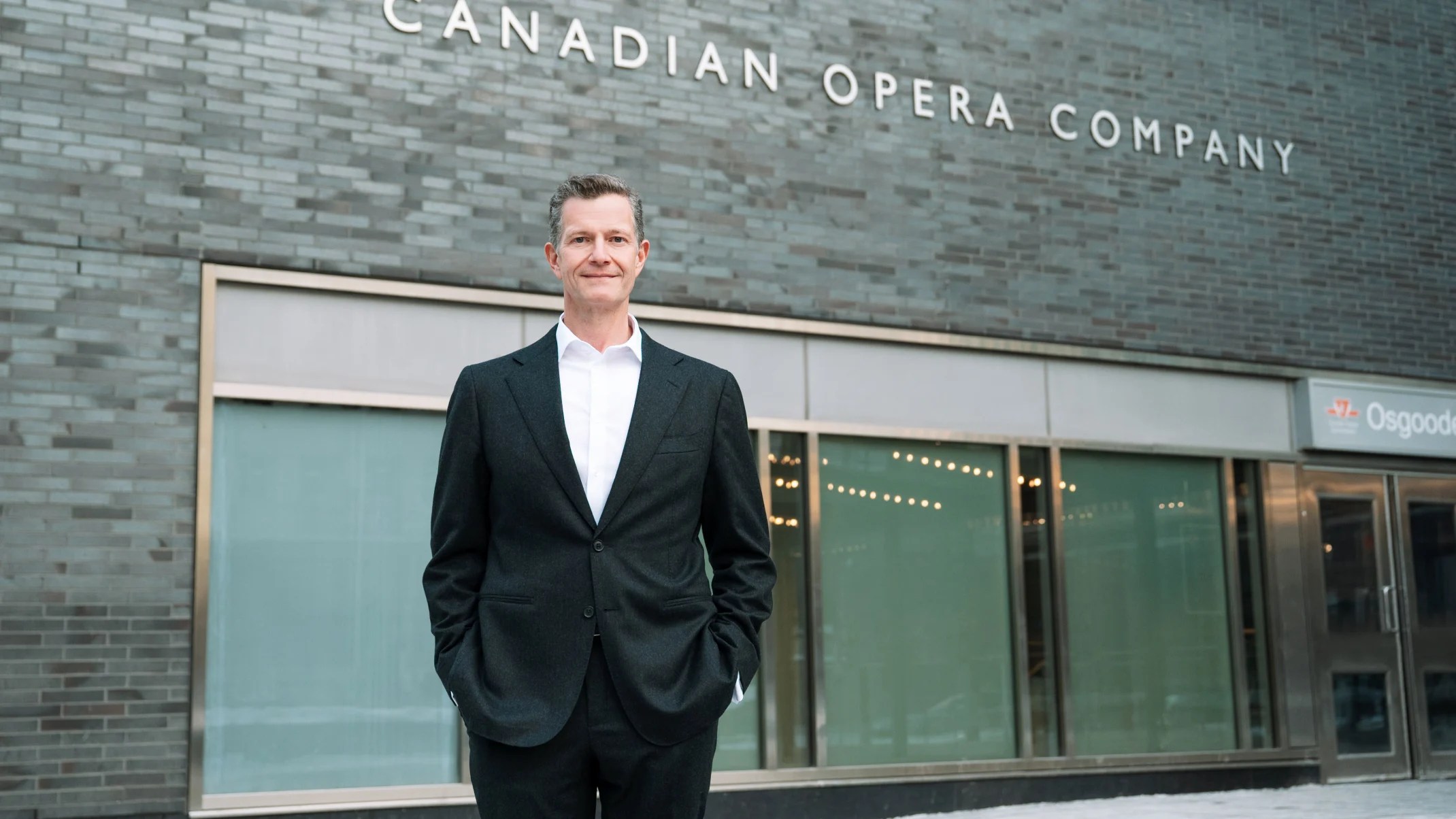
As I mentioned in what I wrote last week, COC General Director David Ferguson has been interim General Director since 2024, after the abrupt departure of Perryn Leech, and continues in his role until July, when the new General Director Ian Derrer takes over.
 barczablog