Here I am posting something that at first glance will look like gossip. Norman Lebrecht thrives on gossip in Slipped Disc but karma seems to be slapping him right in his lumbar region.
Speaking of which I have a bone to pick (if you can excuse the choice of words) with Lebrecht & those of his ilk, but I need a bit of a preamble first.
Katherine Needleman today said that
“The Guardian reports that BBC Radio 3 will no longer be working with “writer, critic, and Radio 3 presenter” Norman Lebrecht after Yuja Wang published an email he sent her.”
The accusation of “misogynistic bullying” appears to be the concern. I wonder if a white male pianist would face the same treatment. But I don’t want to be a gossip. You can find more if you need to easily enough.
I have gushed about my admiration for Yuja often in this space. Here’s a cartoon I posted a few years ago accompanying one of her performances.

By a funny coincidence I recently quoted Lebrecht’s book The Maestro Myth.
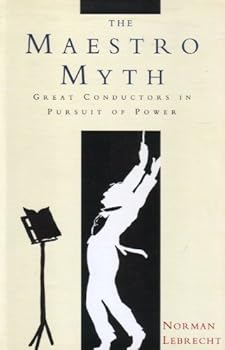
It’s funny that I am about to use his words as a segue, to talk about my own beliefs. In my recent interview with Mandle Cheung, I quoted from Lebrecht’s book about conductors, when he quotes Carl Flesch, who says
“There is no profession which an imposter could enter more easily.”
I disagree. Never mind conductors.
You want a profession full of imposters? Criticism, and critics. I recall my outrage for example at the recent COC production of Fidelio where the tenor sang his entire first aria a semitone sharp, yet was treated by critics as the second coming of Jon Vickers. Excuse me that’s just one example, there are others I could mention. The funny thing is, nobody really cares. Critics may or may not know what they are talking about. But we are in a vicarious position, hardly a profession at all, observing from the sidelines trying not to be ignored. Ha!
But pardon me I want to change the subject slightly. George Bernard Shaw famously said that he never laid an egg but was a better judge of omelette than any chicken, a clever little axiom to illustrate his critical brilliance. You see the logic? While Shaw may not have known how to sing the role of Siegfried or Brunnhilde (the equivalents to the chicken in the analogy) Shaw wrote a great deal about opera, singers & musician. Yes I have long admired his essay The Perfect Wagnerite.
But I have a problem with criticism that aims to put the critic on a higher level than those engaging in the art-form. Shaw was a brilliant man of the theatre, to be sure, but he trucks out that analogy because he also used to complain about musicians and singers, aka artists with skill-sets he lacked.
No I will never play the Rachmaninoff 3rd piano concerto properly, although I have tried, but recognize that Yuja is far beyond me. I’m not saying a critic needs to be able to play the thing or do the thing they critique. Far from it,
But my idea of criticism comes from mentors such as Ron Bryden or Lise Marker (and excuse me if my name-dropping seems lame). This book by AM Nagler, that I recall from the Theatre History course, was a great starting point.

Theatre history is written by witnesses. Judgment is less important than careful observation, testimony. A performance is a process. To describe how something works is a challenge especially when you’re watching and/or hearing something new. Judgment gets in the way, the language of dismissal is particularly unhelpful.
As you will have noticed long ago, I do not like to dismiss or judge, I prefer to be positive, to testify. That can be challenging, for instance when listening to an artist everyone admires such as Yuja Wang, trying to identify what she does that is different.
Mean words, class distinctions, judgment, dismissal? they can all work the same as clickbait, valorizing a harsh tongue & cruelty.
We can do better. We must do better.
 barczablog