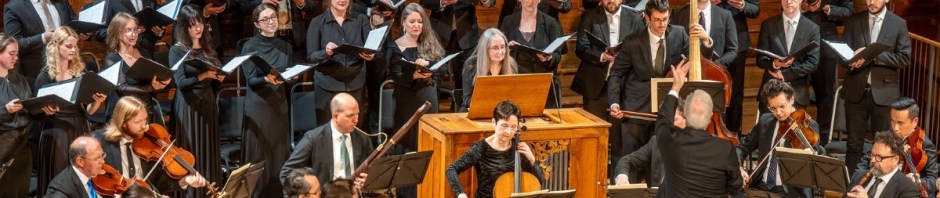
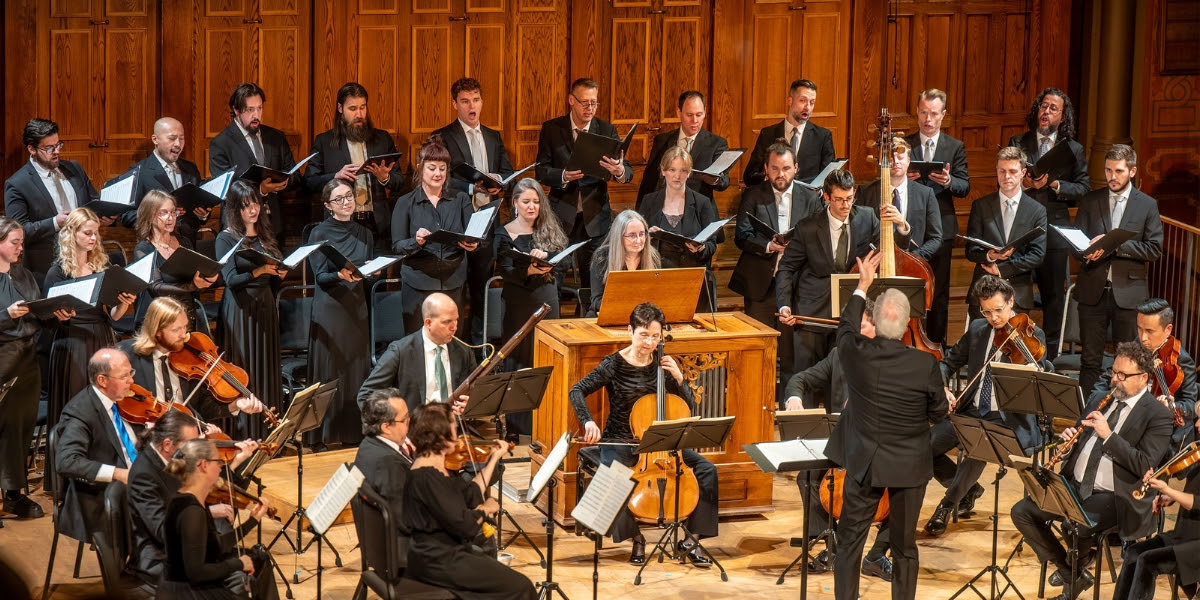
Thursday night was the first performance by Tafelmusik of A Bach Celebration at Jeanne Lamon Hall. The explanation was that this is an attempt to present a curated series of works that less well-known, instead of the usual canonical pieces, venturing off the beaten track of the popular works we might think of as the greatest hits of Johann Sebastian Bach.
Our curator was Ivars Taurins, the Chamber Choir’s Director & conductor, whose program note framed the experience for me even before he gave the first downbeat to the choir & orchestra.
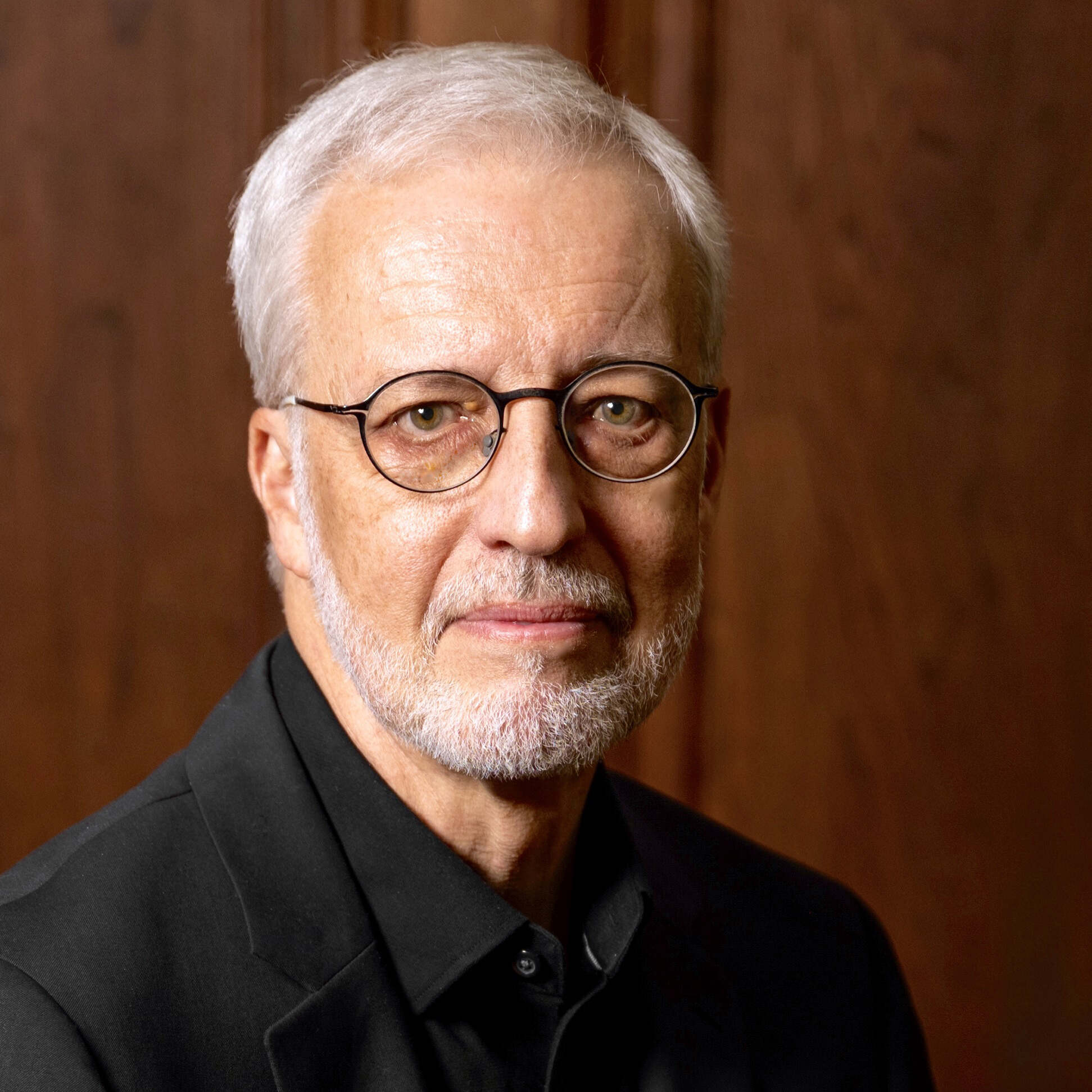
Bach wrote over 200 cantatas in a 40 year period. Ivars proposes that we approach Bach the way we might look at an artist’s lifetime of work assembled in a gallery, that shows us not just their two best pieces, but several to help us see the artist’s development & their variety of compositional styles.
Serendipity is always a factor, if you are open to noticing. In the morning I was at the opening of an exhibit of the works of Nathan Sawaya, contemplating the meaning of that word “art” in a gallery, confronted with original works and popular images redone in LEGO. And as usual, I was intrigued by the psychology of reception experience, the variety of ways people are excited, the pieces that drew the most attention vs the ones that were not as popular. I go to concerts all the time but it was especially fortunate that I went to a concert curated by a conductor thinking of it as a gallery experience, when that’s what I saw earlier the same day.
Having asked us before the concert to hold applause until the end of each half of the concert, Ivars assembled a program that flowed smoothly. Before I get analytical, I don’t want to miss a simple fact, that Bach wrote a huge volume of really good music. As I sat listening to the first piece on the program, a boisterous chorus from Cantata #11, I was overwhelmed by the beauty of the sounds from this remarkable orchestra and chorus filling the air around us in the Trinity -St Paul’s Centre space. Their goal is always to aim for authenticity and to embrace history in their performance practice.
As Jean-Sébastien Vallée reminded us in his choral workshop last week, Bach had disappeared until Felix Mendelssohn revived him in the 19th century.
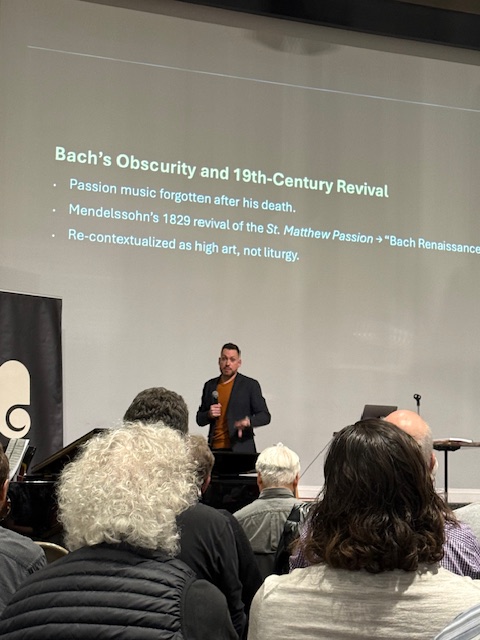
But the music went from being part of a church service to inhabiting the concert hall, having become art music. (ah there’s that word again) I wonder if we can possibly process Bach in the way that his congregations experienced him? his enormous output in his practical role in a church as part of a Lutheran community of worship, not merely a creator of art.
When we listen to Bach played in a church space, the organ pipes and the hymn books reminding us of another possible function for the concert hall, we are at least reminded of another way of experiencing & understanding the composer. His enormous output cannot be separated from Christianity even if we listen without belief. Perhaps I’m showing a bias, but I think that embracing the religion that is front & centre in the music opens your heart to the beauty of this music.
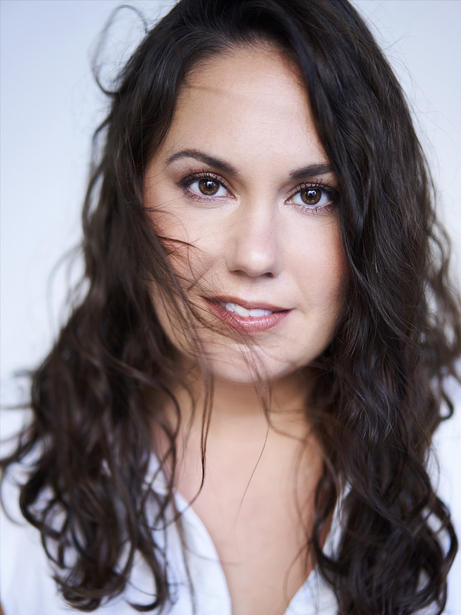
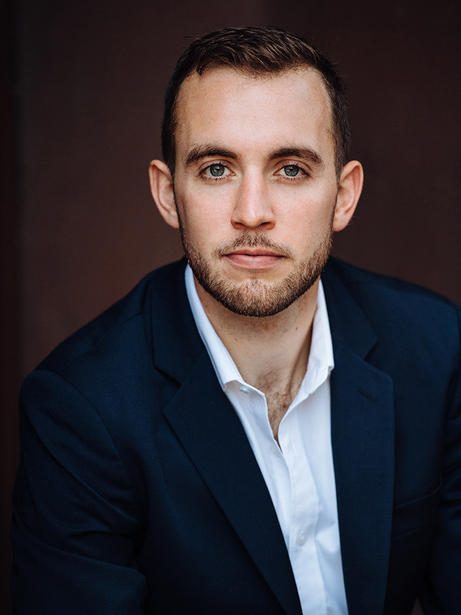
We had the benefit of a brilliant pair of soloists, soprano Myriam Leblanc and tenor James Reese.
Yes the playing and the singing were exquisite. But I was noticing how different and new this sample of JS Bach was to my ear, partly because of the way Ivars assembled the works, partly because, as promised, he was hoping to show us the variety of compositional styles.
I mentioned the powerful opening “Lobet Gott in seinen Reichen” from Cantata 11, big boisterous energy with brass flourishes. I was immediately disoriented by something I had never encountered before from Cantata 94, seemingly flipping the usual expectation upside down, bringing us a couple of lines of aria then nine lines of quick recitative, a bit like a sermon. The back and forth continued, a little ornate singing of poetry then a more pointed message. Do we even understand what recitative is, when it can be shown in a “new” function, that likely links to something old, possibly connected to a purpose connected to ministry? I was reminded of the uses of rap, to quickly tell us a story or hit us with political slogans. The flexibility of Reese’s delivery had me wondering too if we need to think of soloists as ministers given their role.
The following chorus seemed to preach as well, language I recognize from one of the Gospels telling us love the Lord thy God & to love thy neighbour as thyself. In the preachier moments the music pulls back, less overpowering as though hmm maybe we need to hear the words and ensure they are clearly stated, the choir charged with persuasion & intelligibility rather than virtuosity & musical expression.
And then it was soprano Leblanc’s turn, her intonation and tone taking my breath away, OMG what a beautiful voice, in a kind of duet with the oboe, in an aria from Cantata #127. Lovely as the music was, again we were being pushed to contemplate darker matters, the soprano’s text proclaiming
“Ah call me soon, you death knell
I am unafraid of death,
because my Jesus will awaken me again”.
I wonder how it was in the 18th century, when child mortality was so much higher, when life expectancy was so much shorter, when attendance in church was almost universal in Bach’s community. We sometimes think of death as a comfort, but it must have been especially so for those living shorter lives, looking inward or upward, to ask why some of us are taken sooner than others. Our understanding of the soprano’s text is surely different than those in a community of faith, regularly confronted with their mortality.
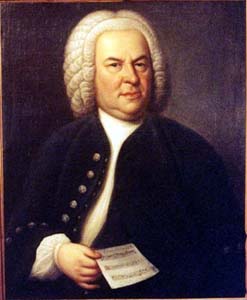
There are so many more examples one could point to, fabulous playing especially the solos from the oboe and the flute, and this amazing choir comprised of virtuoso singers. But the main thing I have to observe is how stunning every piece was, Ivars giving us brief glimpses at different aspects of Bach’s superb output. Bach wrote so much, and as far as I can tell it’s all excellent. Next week we will come to the day usually given to celebrating his 341st birthday (even if haha it’s not really his birthday), on the cusp of the year, March 21st.
The second half of the concert after intermission was especially introspective, thoughtful, truly Lenten in its contemplation. We then came to a celebratory finale to remind us that we were in a realm of art not a church, as we are supposed to refrain in church from extroverted celebration in Lent. The Glorias, including a duet between soprano & tenor, lifted us up for a powerful conclusion.
A Bach Celebration will be repeated Friday and Saturday at 8:00 pm, and also Sunday at 3:00 pm.
 barczablog