
Influencers is the anachronistic title for Tafelmusik’s concert program this week at Jeanne Lamon Hall.
I’m reminded of the way Richard Strauss put Viennese waltzes into Der Rosenkavalier, a modern dance-form that didn’t really fit the time of the story, or Baz Luhrmann’s use of pop songs in his Moulin Rouge, set a century earlier.
To describe CPE Bach or JC Bach using the contemporary term influencers is outside the usual purview of Tafelmusik.
I like the idea for at least a couple of reasons. The choice of language invites engagement with a younger audience, and in fact I saw quite a few youthful audience members.
More importantly though is the way the concert was assembled, another bit of experimental programming from Tafelmusik. We were invited to notice the connections between composers associated with different generations & styles.
We heard these works, to be repeated Saturday night & Sunday afternoon at Jeanne Lamon Hall:
Johann Christian Bach (1735–1782) Sinfonia in G Minor, op. 6, no. 6
Wolfgang Amadeus Mozart (1756–1791) Violin Concerto no. 3 in G Major, KV 216
Rachel Podger, violin soloist
INTERMISSION
Carl Philipp Emmanuel Bach (1714–1788) Cello Concerto in A Major, Wq.172
Keiran Campbell, cello soloist
Joseph Haydn (1732–1809) Symphony no. 52 in C Minor
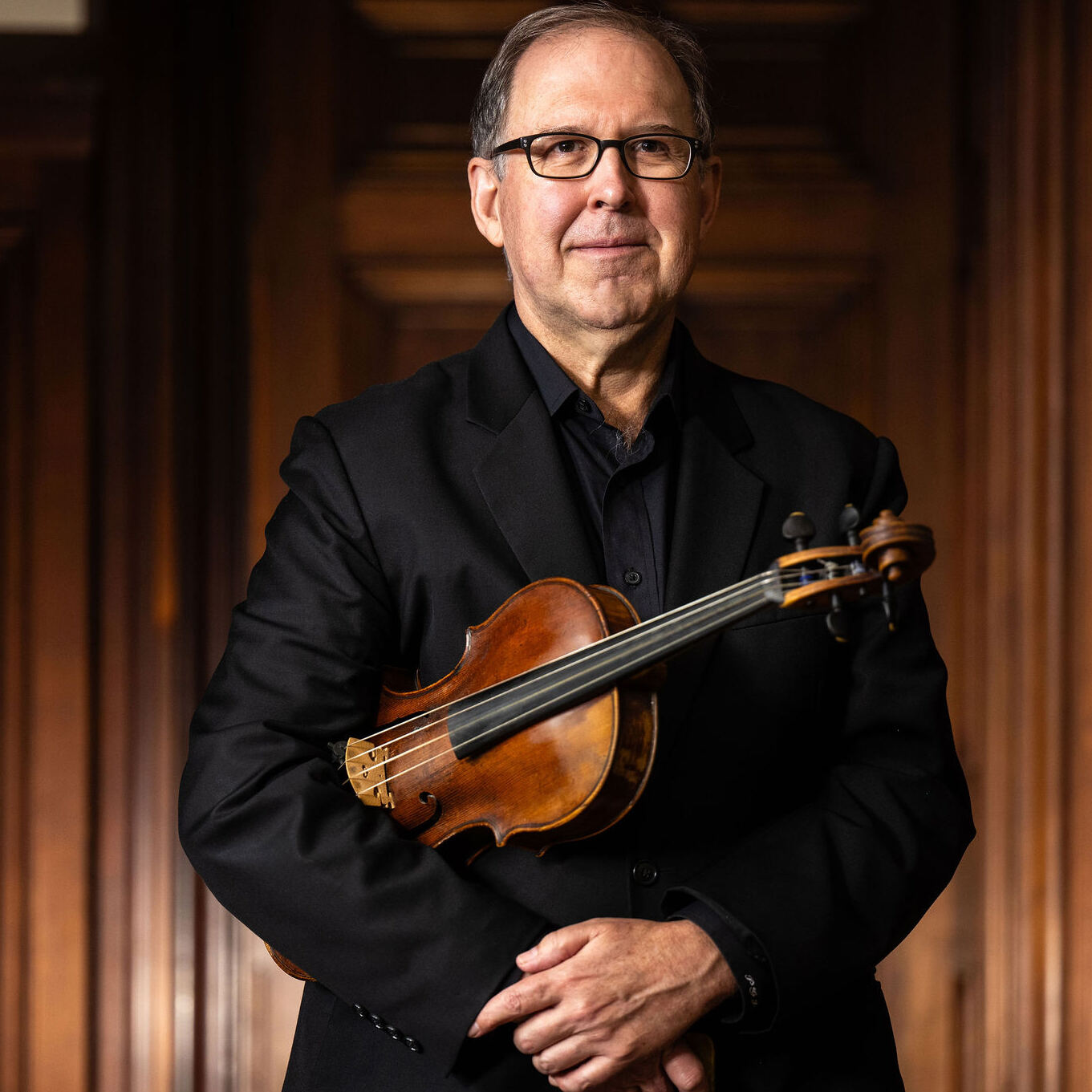
I was largely guided by Tafelmusik violist Patrick Jordan who said the following in his insightful program note:
“Europe in the middle of the 18th century was enjoying one of its most peaceful periods ever, and with that peace came liberalization and openness. Whether in the field of philosophy, social theory, governance, or the arts, there was a remarkable air of experimentation. For art music, there is an incredibly diverse and fertile grey zone (c. 1720-1780) that straddles what we generally refer to as the baroque (1600-1750) and classical (1750-1820) styles.
Years ago, while preparing a work of J.C. Bach (one of our featured composers for this concert) the director of that program told me, “You have to decide whether to put him on the baroque or the classical stool. ” As time has passed and I have become considerably more familiar with the vast constellation of composers and music of the “grey zone” I couldn’t disagree more! In fact I believe we’re far better served by listening to these voices for their own sense of expression and creativity, rather than trying to shoehorn them into a history that was written decades or centuries later.“
[my boldface emphasis added]
I love that phrasing from Patrick, as musicology has often seemed to be working with multiple shoehorns, preoccupied with classifications & categories. The concert seemed designed to challenge our assumptions while, above all, aiming to make the music enjoyable.
I’m overdue mentioning the phenomenal Rachel Podger, who is like an avatar of joy onstage and in the creation of the music. Her September 2024 concert playing a Mozart violin concerto & leading a Mozart symphony performance had already challenged many of my assumptions about how to approach this music, as you can see in this excerpt:
I had the pleasure of crossing paths with her before the concert, almost colliding in the hallway (en route to the washroom) muttering “ah Rachel Podger” and she turned around with a big smile. But I said “sorry just a fan saying hello” as it’s really bad form to invade the space of an artist before they go on. The point I’m making is that the smiles we get onstage aren’t merely a performance but appear to be the most genuine enjoyment of her visits to Toronto, collaborating with the remarkable artists of Tafelmusik.
And she seems like a truly nice person even when a starstruck fan can’t keep his mouth shut. You might well say “she had me at hello.”
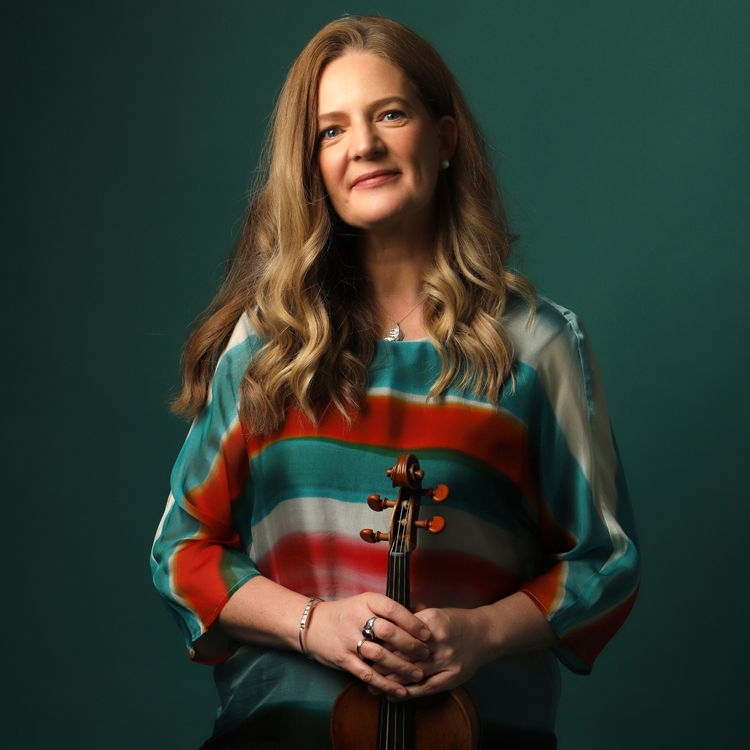
What I saw last time was taken to the next level. Whether in a concerto or leading a symphony, there is a readiness to engage with the underlying drama in the score, a genuine discourse, a conversation between the voices.
When JC Bach writes music that does any sort of call & answer, the eye contact she employs plays this up for us as the most genuine drama, the suspense and release of tension between one section and another.
When the cadenzas in the Mozart concerto no. 3 place the drama completely in her hands, we are played with in the most delightful way, taking the gamesmanship to a new level from last time. It doesn’t matter whether this would be how Mozart would do it, so much as to observe that this has always been an option within the music. In the second movement her brief cadenza was a model of restraint & taste. The rondeau, which offers us a series of episodes, felt genuinely like role-play. When we ventured off into a new tune partway through, it was as though Rachel’s body language showed us a new persona to match that new mood. It’s a latter day visit to the realm of Mozart, making his dramaturgy transparent, her portrayal of the parts helping us to understand the piece.
The second half of the concert was a little more serious, between a cello concerto played by Keiran Campbell & another Haydn symphony. Another one? I was remembering Rachel’s Haydn symphony recording with Tafelmusik, already a strong signal of her leadership and insights into Haydn.
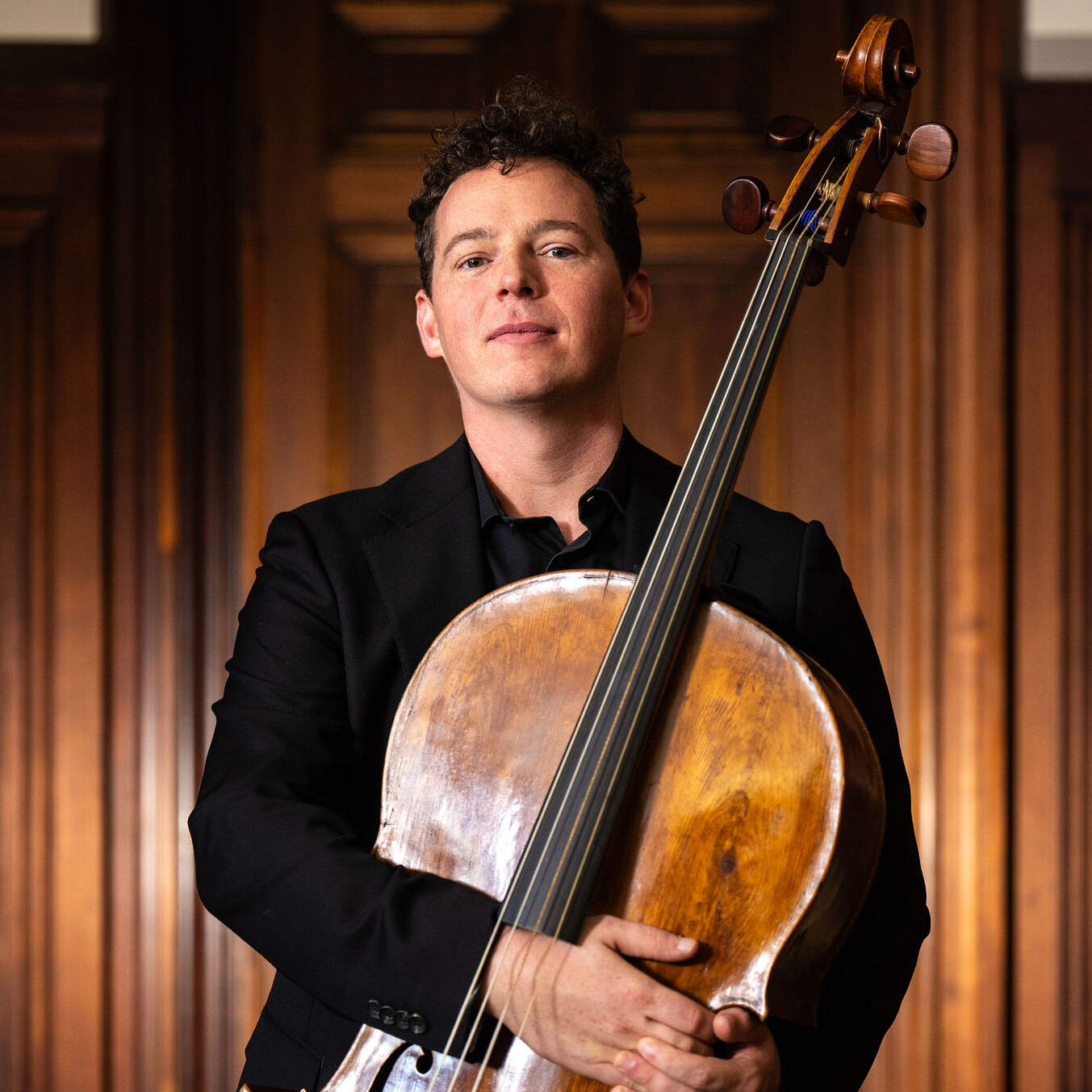
But first we heard CPE Bach’s A Major Cello concerto and Keiran’s intricate work as soloist. The first movement OMG so many notes, as I watched Tafelmusik string players grinning in admiration. The slow movement brought out a lovely tone that might be suitable for a romantic concerto, not something written by a guy named “Bach”. But I was eager to jettison old assumptions and to embrace the beauty of what we were hearing without the limitation of pigeon holes. Our finale was a subtler version of what Rachel did, the back and forth between voices implying some metadrama onstage, but Keiran wasn’t quite so comical about it. But of course as a cellist he’s seated, and not able to dance around the way a violinist can.
Then we came to Haydn, a deep and endless treasure-trove. Is he perhaps the most under-rated composer of all? Bach and Mozart and Beethoven get so much credit, while somehow we pay less attention to Haydn. Of course he was successful in his prosperous life with the Esterhazy court, perhaps less influential but prolific & brilliant.
The outer movements were perhaps the closest to the epithet “sturm und drang”, but recalling Patrick’s words, I’m hesitant about epithets & labels. The drama seems to sometimes come out of nowhere, the classical form we’ve inherited in books & from Leonard Bernstein lectures on tv: not just limited but yes limiting. The Andante was deep, at times reminding me of a romantic: another problematic label. The Menuetto & Trio had boisterous energy and seemed to be full of neurotic tension. Haydn wrote so many symphonies, not always a happy camper in his music. Is it simply the dramas staged in the Esterhaza theatre, leading to sturm und drang, or did he have other reasons? I wonder how Haydn’s patrons liked this remarkable quirky music. But all was released or burst free in the explosive finale, even as it too seemed to suggest extreme emotion, perhaps pent up passions released, catharsis in letting the dogs or horses run freely, the brass suggesting hunting or even a cavalry gallop. Perhaps in April 2026 I’m over-sensitive.
Afterwards I was reverberating with the sense of influences, if not actual influencers. One noticed echoes throughout, times when Mozart sounded like JC Bach, or Haydn emulated some of the effects heard in the musics of CPE and JC Bach. And I wanted to forget all about what I’d been told about periods & forms & styles. It’s refreshing to hear something without preconceptions, sounding brand new. And this flamboyant performance style really does seem to invent the score from first principles.
In future I’m hoping Rachel will come back to delve deeper into Haydn and anyone else she might want to explore for that matter.
Tafelmusik will be back:
April 30-May 3 for “Hearing her voice” with soprano Amanda Forsythe;
May 15 Abendmusik exploring Buxtehude’s influence on JS Bach conducted by Ivars Taurins;
May 29-31 Beethoven Eroica & Bologne: The Winds of Change, featuring violinist Shunske Sato
 barczablog