Gustavo Gimeno wasn’t conducting the Toronto Symphony this time, but I could feel his influence in a program note speaking of Underdogs & Paragons.
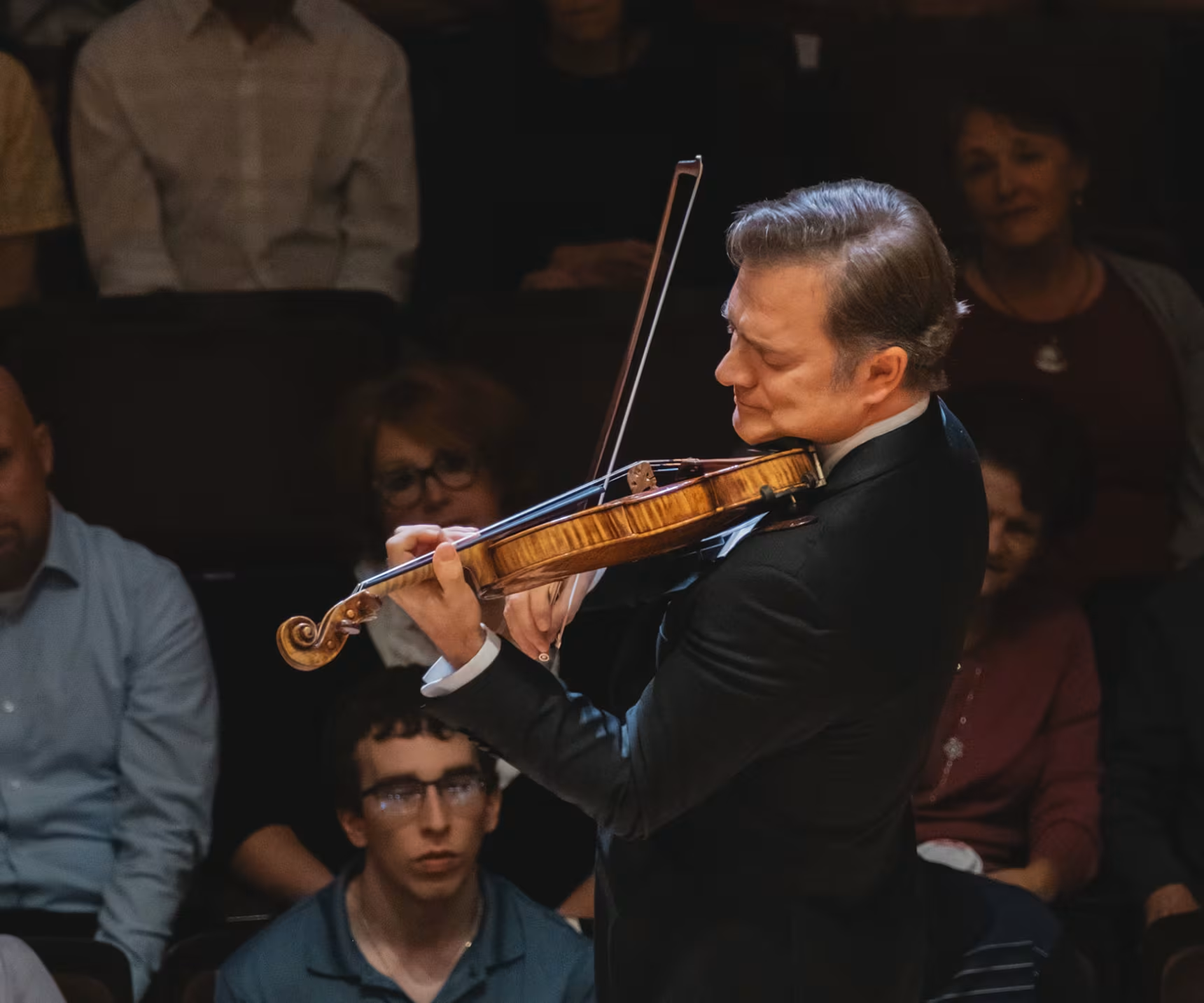
Mendelssohn’s Scottish Symphony was the paragon, conducted by Renaud Capuçon Friday night at Roy Thomson Hall, played alongside these “underdogs”:
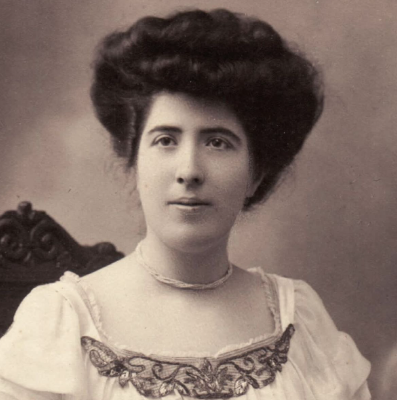
Charlotte Sohy — Thème varié, Op. 15
Robert Schumann — Violin Concerto in D Minor
–Intermission–
Felix Mendelsssohn — Symphony No. 3 in A minor op 56 “Scottish”
I love an accidental discovery, epiphany, unexpected insight. Is that what Felix Mendelssohn felt on his grand tour, taking him to different places in Europe? His sensibility was fed & enlarged in the exposure to new places & peoples. We can have an itinerary or a playlist but still be surprised by unexpected insights.
We may not notice the way context impacts our experience. I included a YouTube link to the psychiatrist scene in the film Psycho for my review of Thursday night’s opera, pondering Lizzie Borden’s psychology as set up by Michael Albano’s libretto. I was thinking of the same things on Friday listening to that underdog composition, tainted by allegations of Schumann’s mental illness.
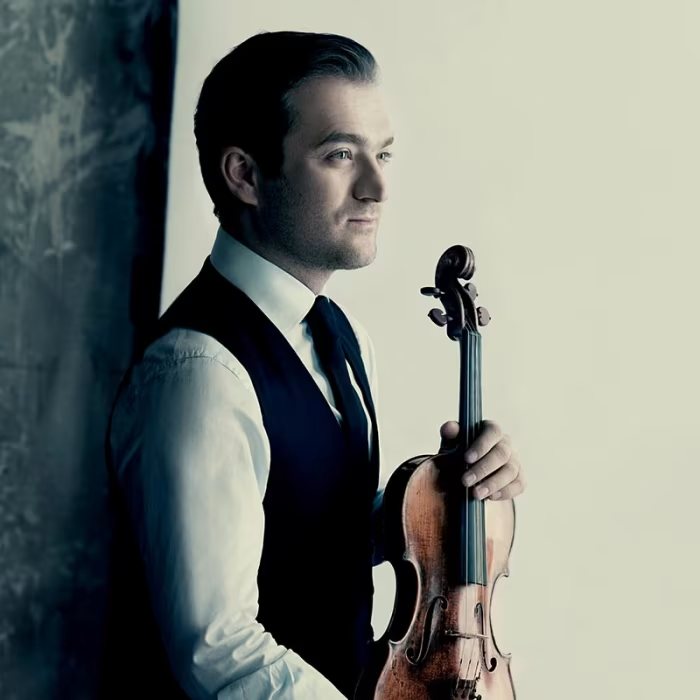
First came Charlotte Sohy’s charming rarity, her Thème varié including a delightful use of the harp & varied colours in the winds. Renaud Capuçon was leading the orchestra while playing his violin, displaying an especially rich tone that seemed to float over the small orchestra. I was primed and ready for what was to follow.
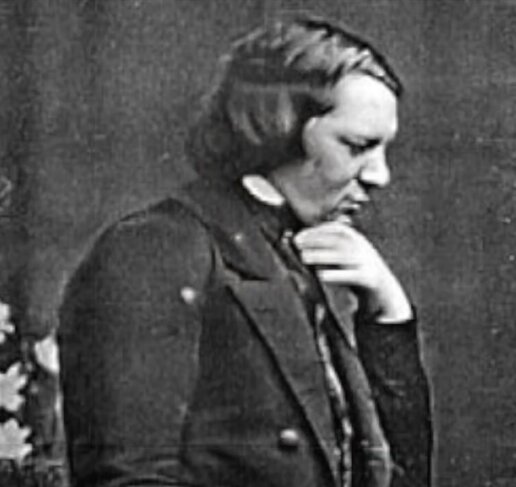
Robert Schumann himself (not just his composition) is the true underdog in this formulation, when placed alongside Felix Mendelssohn and his symphony. I listened to the Schumann concerto earlier this week, recognizing that omg I had never heard it before, blushing as someone who used to answer the question “who’s your favourite composer” with “Robert Schumann”. In my defence I point to my focus on his songs & his piano music, even if that’s a feeble excuse.
When I read the press release for the concert I was intrigued to discover that Schumann’s concerto had been suppressed, hidden for decades, a story that troubles me. I recall the way some artists may destroy their own works in fits of depression or self-doubt. Hugo is one of my favourite films, Martin Scorsese showing us Georges Méliès destroying his films and sets in a fit of self-loathing. The idea that someone would presume to hide or suppress music upsets me. It fits with other tales I’ve heard, conductors altering the orchestration on the assumption that they knew better, coupled with the oft-repeated claim that Schumann was a poor orchestrator. By that logic Vincent Van Gogh was a poor painter, because of course he did new things that classical painters didn’t do. I recall the first encounters I had with the opera Boris Godunov in Rimsky-Korsakov’s alterations, especially to the 3rd act, and the shock when I first heard what the composer had created. To Rimsky’s ear the softer subtler writing may have seemed wrong & needing correction, just as Tchaikovsky’s 1st piano concerto seemed wrong to Nikolai Rubenstein. What’s new & original may seem wrong-headed.
I am reminded of a Schopenhauer quote that I first encountered via Stewart Goodyear (speaking in response to criticism of his own daring choices):
“All truth passes through three stages.
First, it is ridiculed.
Second, it is violently opposed.
Third, it is accepted as being self-evident.
— Arthur Schopenhauer”
Schumann’s concerto is problematic if one expects a violin concerto to offer the soloist opportunities to display virtuosity, especially in solo cadenzas. I am reminded of Paganini’s perplexed response to Berlioz’s Harold in Italy, ostensibly a viola concerto that doesn’t do any of the usual things concerti do. Paganini rejected it: but that doesn’t mean it’s no good. My point in invoking Berlioz is simply to suggest that our criteria for concerti is sometimes narrow, especially if a soloist meant to use the work to show their virtuosity. But that virtuoso dynamic has been encountering rethinking verging on deconstruction for the last two centuries, sometimes enlarged or reinvented by daring composers from Liszt to Rachmaninoff, Debussy, Gershwin, Prokofiev, Ligeti, Adès… As I listened to the last movement, wondering if a younger Schumann would have written it the same way, wondering if a violinist –doing a well-intended version of the Rimsky-Korsakov thing–would shorten or add. But hell’s bells, Philip Glass is full of repetition, that some might wish to edit or change, presuming to call that repetition mistaken. If we listen to Schumann’s concerto with an open mind we hear something truly new, at times perhaps more of a meditation than a spectacular vehicle for display.
Capuçon’s interpretation took the drama built into the piece, letting the violin sing, letting the orchestra punctuate that drama. It’s a romantic piece like so many of Schumann’s works, overflowing with easy melodic phrases without necessarily challenging the violinist. Is that okay? I think so especially when the composition is full of beauty. The last movement has a lively polonaise rhythm that is delightful, the violin sweetly complementing the orchestra. The winds offer playful responses to the busy violin, indeed there are passages reminding me of bunnies & kittens frolicking. Yes Capuçon was busy, but while he’s playing a lot of notes it’s fun, full of charm & sparkle, light & wit. It may be the most beautiful concerto I’ve ever heard, and so what if it’s not like the others.
I realize upon thinking a bit more, that we heard Capuçon back in 2024 in a lovely program with the TSO conducted by Gustavo Gimeno, who happily handed the baton to a brilliant colleague.
The sanity question reminds me a bit of Robin Williams. With hindsight we know he was in some pain, a depressed person using his comedy to keep on top of things, until he finally did himself in. Knowing the outcome, do we stop listening to his comedy or watching his brilliant performances? surely not. Similarly I listen to the lovely finale of this concerto, hearing a man seeking peace and likely finding his greatest joy in his music. It’s no accident that Freud arrives at this point in history, as romantic artists explored their imaginations in their art. Freud may point back at the pathology of artists, but that’s after artists & writers such as ETA Hoffmann, Richard Wagner, and Feodor Dostoevsky paved the way for psychology & psychiatry with their insights in the decades before.
After the intermission came the Mendelssohn Symphony #3 in A Minor, Op 56 “Scottish”, as our soloist set aside his violin for the conductor’s baton. At times like this I’m as fascinated with the way the orchestra responds to their guest conductor as I am by the resulting performance. This symphony is one of my absolute favourite pieces, taken by Capuçon into a brilliant interpretation. We began the moody opening passages slowly, clearly, before building to the first in a series of stunning climaxes. I grew up listening to Klemperer’s slower tempi, that allowed the melodies & counter-melodies to all be clearly articulated. When you go faster, that’s more challenging. Ah but that didn’t stop Capuçon, nor did it stop the TSO. The first part of the first movement had been slow, but the second part tore along at a fair clip with big bold climaxes. The second movement with its long woodwind lines was no reason to slow down either, as the TSO was up to the challenge. While there was no moment when I thought anyone was unable to meet the challenge, i felt a bit frustrated that Roy Thomson Hall was eating some of the sound, from where I sat, the big answering passages of the main melody in the explosive passages near the end of the movement (before it quiets down) weren’t fully heard. I wondered if perhaps the brass need some open floor between them and the strings to give us a chance to hear them. But then again there are other places where one can hear better.
I was delighted that Capuçon slowed us down in the Adagio, truly letting the inner voices speak, especially in the repeated segments towards the end. That set up the vibrant Allegros to follow. I say plural allegros because there’s the first one in A minor, Capuçon living up to the tempo marked “vivacissimo” bringing the orchestra fully to life for this. The second allegro after the brief transition into A major, went quicker than I really like it, to be honest, but perfectly executed. I like it a bit slower than this because I think the melodies can be sung and need to be more carefully shaped than what was allowed at this pace. But I am a hungry animal wanting more romantic music from the TSO or Tafelmusik, grateful even if half a minute of it is a tiny bit faster than my ideal. Meanwhile, they played brilliantly.
This unique program is to be repeated Saturday and again Sunday afternoon at the George Weston Recital Hall. I’d go if I were you.


