You may remember Tunisian-Canadian mezzo-soprano Rihab Chaieb for her appearances with the Canadian Opera Company, most recently in the 2024 Nabucco.
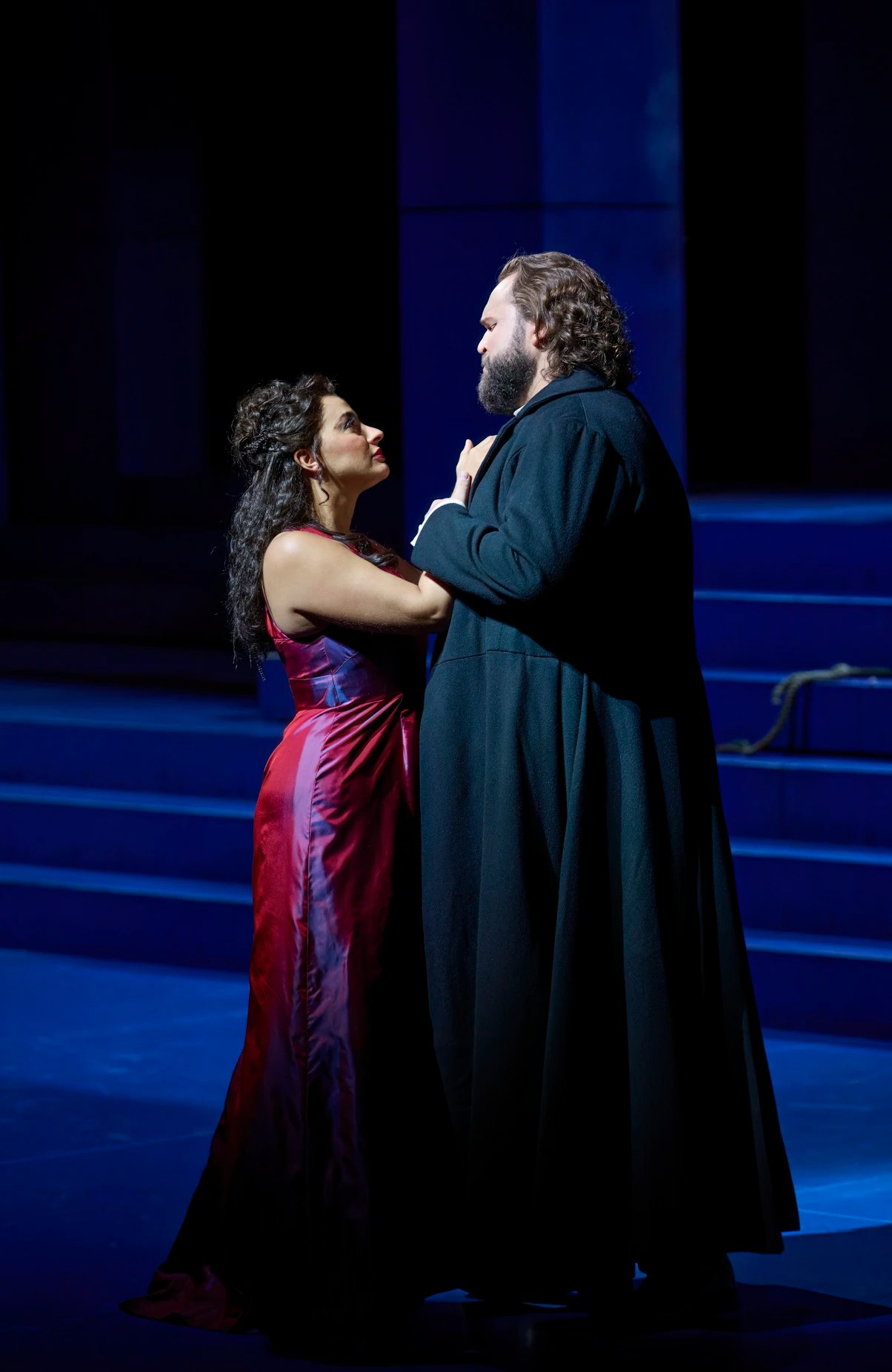
(photo: Michael Cooper)
I was completely blown away by her 2019 Song of the Earth at Toronto Summer Music (as I said in my review at the time).
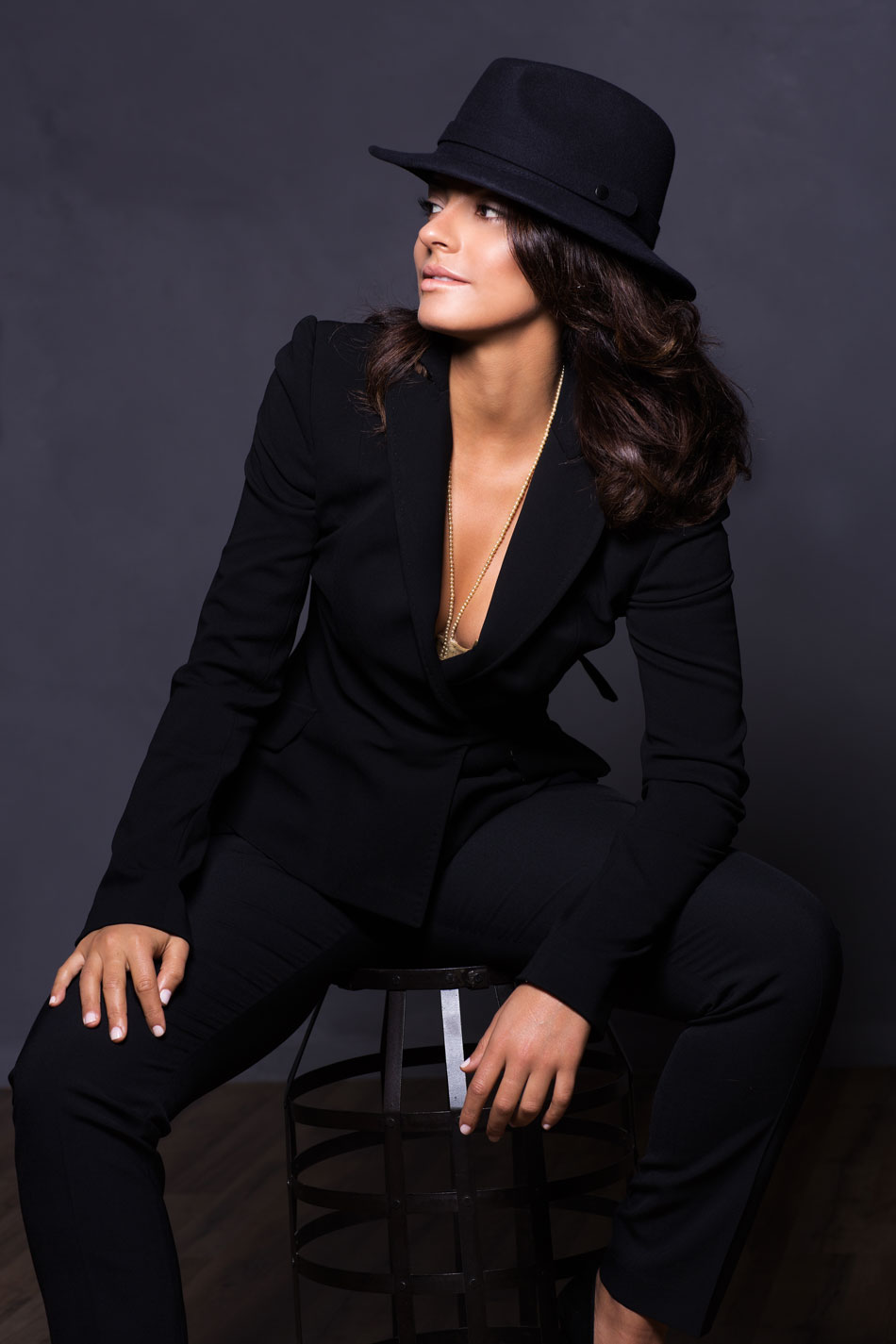
And now Rihab and Israeli pianist Ammiel Bushakevitz will be heard in a program blending French repertoire with Tunisian lullabies in a concert Sunday, November 15th at 3:00 pm in Koerner Hall. I wanted to ask her a few questions.
*****
Barczablog – Are you more like your father or your mother?
Rihab Chaieb: I’d say neither… we are so different my parents and I. The only thing we do have in common is perhaps I can have my dad’s stubbornness (we are both capricorns!) and my mother’s face. But I’ve had a particular relationship with my parents who thought that pursuing a career in music isn’t decent. You know, first generation immigrant problem! I love my parents but they’re from a different generation and culture and I did not end up being who they wanted me to be. Which makes my current life and choices all the more ME than I could’ve imagined. I’m becoming someone who doesn’t do things because society demands it, or family demands it. I’m becoming a woman who march to the beat of her own drum. I couldn’t care less what other people think-unlike my parents. They cared deeply what society, others, and family would think of this and that. I, on the other hand, do not give a s*^#.
BB – What is the best or worst thing about what you do?
Rihab Chaieb: It’s a much more difficult life that I’ve imagined. The long months away, on the road, alone… they don’t train you for that. It’s also difficult because when most people don’t feel 100%, their livelihood isn’t affected. If I don’t feel 100%, it affects my performance, my stress level, I can have a chance to lose my livelihood, and this is so much more stressful than the glamour I thought I was signing up for  People see the fame, the reviews, the beautiful photos, the applause, what they don’t see is the tears, the sweat, the panic attacks at 3am. I wake up daily thinking “is this what I really want to do?” But then when I take 2-3 weeks off I’m like “I’m bored! I want to sing again! I want to be on stage again!” It’s weird, it’s like… a drug and I’m definitely hooked! I meet wonderful people on this job. Some of them go on to become my chosen family. My community. But they’re scattered on all corners of the planet. That is also difficult. Since I’ve been doing this, I don’t feel a feeling of belonging to no place in particular. It is such a strange feeling. But I am still not willing to give it away just for now. I still have things to discover with music, opera, live performance, and myself.
BB – What ability or skill do you wish you had, that you don’t have?
Rihab Chaieb: It is not real, but I can’t believe it hasn’t been invented yet: teleportation. It would make my life so much easier, as I am writing this from an airplane that’s polluting the planet and takes me an entire day to get to where I’m supposed to be. Can we just get on that instead of trying to find a way to live on Mars?
BB –When you’re just relaxing and not working, what is your favourite thing to do?
Rihab Chaieb: I go visit my family in Tunisia, go to the beach, scuba dive, play padel, try to surf, I like hiking in the mountains, visit friends, and travel for fun instead of for work!
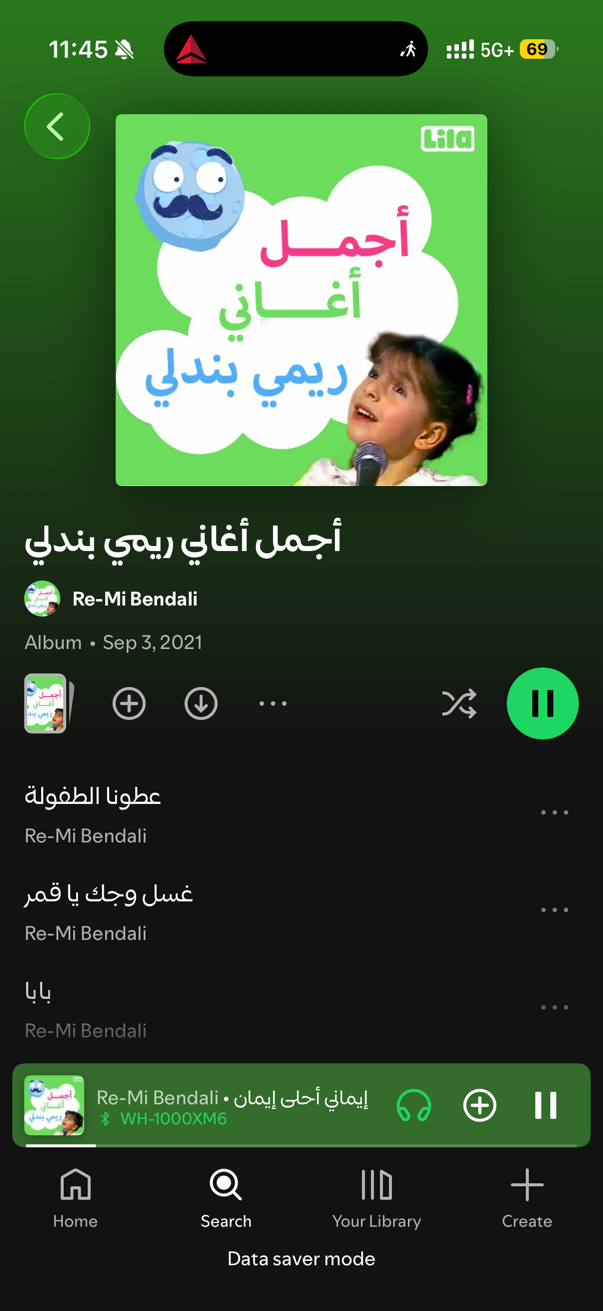
BB: What was your first melody that you remember?
Rihab Chaieb: Classical would be “Schwesterlein” by Brahms, and non classical would be:
أجمل أغاني ريمي بندلي
By Re-Mi Bendali (the whole album)
BB: Dogs or cats?
Rihab Chaieb: dogs! DUH 
BB: Paper scores or digital?
Rihab Chaieb: Digital on the travel, paper for study.
BB: Theatre as experimental lab or sacred temple?
Rihab Chaieb: There is space for both.
BB: Do you have a favourite song or aria?
Rihab Chaieb: It is cruel to ask a singer this.
BB: As you think back to your time with the Canadian Opera Company ensemble studio, what lessons were the most impactful as far as your career & professional practice as of 2026?
Rihab Chaieb: I am grateful for the many stage roles I was offered as a young artist. There is so much you can learn in a practice room. The real life practice comes on stage! When the nerves kick in, your memory falter, others come into the equation, maybe a colleague doesn’t do their staging, you forget theirs, you’re not with the orchestra and conductor… having had so many roles, from small to big at the COC, made me the comfortable person I am on stage. I think deep down I was always a stage animal, but my time at the COC gave me the playground to experiment my stage craft.

BB: Please describe Nomad[e] by Matthew Ricketts & Royce Vavrek, receiving its world premiere at your Nov 15th Koerner Hall recital.
Rihab Chaieb: It’s a piece of collaborative waves between three people coming together: my ancestors were nomads from North Africa, we are all nomads being artists travelling the world creating music and meeting people. It’s a little sliver of my life on the road and in my heart.
BB: Your program includes Saint-Saëns: Désirs d’orient & Selections from Mélodies persanes (from a composer who died in 1921), or Louis Aubert’s 6 poèmes arabes (premiered in 1917), French works from over 100 years ago, exotic flavours sung originally by French singers from Europe, rather than someone like yourself who (quoting from your wikipedia entry)
“grew up in an Arab household was exposed to and developed a deep appreciation for Arabic music from an early age”. What does it feel like undertaking such repertoire?
Rihab Chaieb: I always approach this music with curiosity instead of rigidity to depict these songs writing over a hundred years ago. Don’t forget, Saint-Saëns wrote most of them high on opium I wanted to bridge the gap between what “orientalism” was, and what Arabic music can be today in a classical setting. Of course there’s always a little something singing the way the Arab and North African world was to a white European man, but again, these songs were written a long time ago. I’d like to think that if he was alive today, he would’ve wrote something like “Nomad”.
BB: What can you tell us about “Lamma Bada Yatathanna”
Rihab Chaieb: It is a song that’s famous across the Arab world, from North African to west Asia. It’s anonymous but was written during the Arab rule of Andalusia. Which were not Arab, but the North African “Berbers” (like myself) not fun fact: we hate the word Berber as it is pejorative. The real name of the native North Africans is AMAZIGH.
So Andalusia was actually Arab speaking Amazigh (like modern day Morocco, Algeria and Tunisia) so it’s a song that sounds Arabic and sung in Arabic but could definitely been written by a southern Spanish composer.
BB: When I look up Emel Mathlouthi I see her identified as a Tunisian singer of protest songs. “Kelmti Horra” What can you tell us about her, your connection to her if any, what it means to sing this for us at the conclusion of your concert?
Rihab Chaieb: I needed to finish the concert strong. And female. And she is a modern day activist, artist, and disruptor who inspired me a lot. There aren’t many Tunisian artists women, and when I discovered her, I needed to add an arrangement of her song. My family suffered deeply from the Arab spring that originated in Tunisia, and the ongoing political imbalance of the region. I had family members thrown in prison and tortured for their activism and their political views, from both the revolution and more recently their involvement in the global Sumud flotilla to Palestine. These are the songs of our future. The songs and artists that speak up, that aren’t afraid. Because whether or not you like it, art IS political.
BB: What’s coming up for you this season?
Rihab Chaieb: Two very important role debuts: Adalgisa (Norma) in Madrid and Dalila (Samson & Dalila) in Zurich.
BB: Wowzers…Is there a teacher or an influence you’d care to name that you especially admire or wish to thank?
Rihab Chaieb: Of course, I have my Toronto family, they know who they are! I also have my oldest friend and supporter Joanne Fraser who continues to push me and to support me on the daily basis. Of course my current team of voice teacher and coaches (Darrell Babidge and Kamal Kahn) as well as my agents Tash and Iago. I also want to thank spiritually every teacher, coach, agent, director, casting, conductor I’ve met. An artist’s career isn’t linear and isn’t just ascending. It ebbs and flows and I’m just lucky to have had a plethora of people who simply cared to share their knowledge with me. Most are still with us. Some have left us for a better life. And I will never forget any of them 
*****
Rihab Chaieb and Israeli pianist Ammiel Bushakevitz will be heard in a program blending French repertoire with Tunisian lullabies in a concert Sunday, November 15th at 3:00 pm in Koerner Hall.