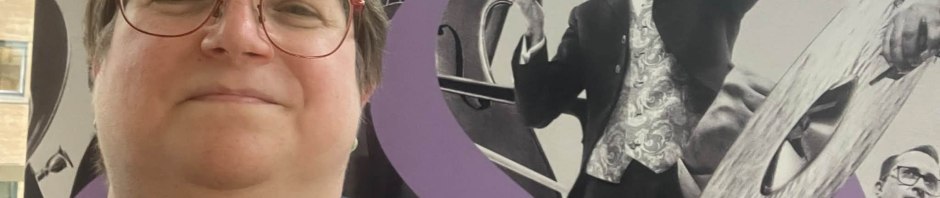
Everybody says they’re busy right? It’s usually a way of explaining or apologizing when they’re saying no, that they are too busy to do something. And then there’s Diane Kolin.
Although Diane is very busy she said “yes”, willing to answer my questions about her life and her role as an artist and as an activist for persons with disabilities.
Diane sang with Amadeus Choir on Friday (she’s a singer).
She’s got another event tomorrow, although when I asked her in the interview what’s upcoming (a question I always ask), she didn’t even mention what she is doing tomorrow, Tuesday November 24th, something I saw by accident on her Facebook page.
I’ll quote Diane’s words because they make a better introduction than what I could write:
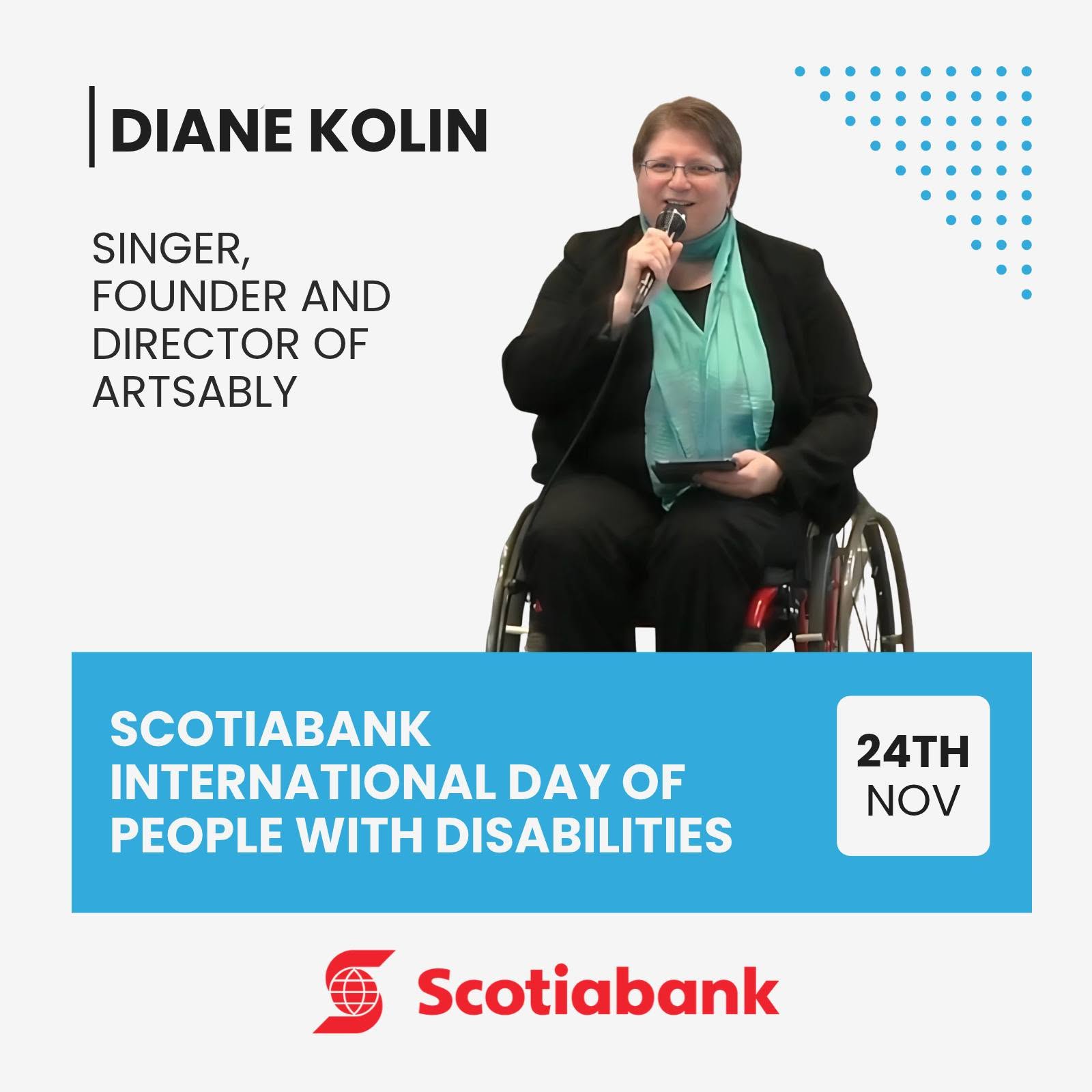
“Tomorrow, November 24, I am delighted to be performing at Scotiabank’s celebration of the International Day of Persons with Disabilities with its employees. Although the International Day is officially observed on December 3, Scotiabank is celebrating early, and I will have the pleasure of opening the event with a mini-concert featuring jazz music and personal storytelling.
Through music and my own story, I look forward to sharing reflections on disability, accessibility, identity, and the importance of creating spaces where everyone can participate, contribute, and perform.
Because inclusion is also about listening to different voices and making room for different stories. Looking forward to sharing this moment with the Scotiabank community!“
And speaking of listening and sharing, here’s my interview with Diane Kolin.
*****
Barczablog: What is the best or worst thing about what you do?
Diane Kolin: This is a great question because I wear many hats. I believe the best thing about what I do is the diversity of my activities. I think I am what can be called a true multitasker, and consequently my journey is completely unconventional. I am a singer, singing jazz and classical for many years, currently enjoying my time as a choral singer within the Amadeus Choir of Greater Toronto, proposing a repertoire as diverse as my activities, but I am also giving jazz concert and singing French chansons. I am a Doctor in Musicology specialized in the history of musicians with disabilities, and in 19th century music (particularly Ludwig van Beethoven and Franz Liszt), but currently working on contemporary classical music projects. I am a voice teacher, teaching children from 9 to 18 years old in the Regent Park branch of Community Music Schools of Toronto. I am a keynote speaker talking about accessibility in the corporate world and bridging the gap between communication and performance, with my many years of experience as a senior project manager in IT specialized in public transportation systems. I am a not-for-profit founder and director; my company, ArtsAbly, collaborates with venues, festivals, choirs, musical ensembles and more, to enhance accessibility in the performing world through workshops and professional developments and to promote the work of musicians with disabilities through a podcast called ArtsAbly in Conversation, available on all streaming platforms.
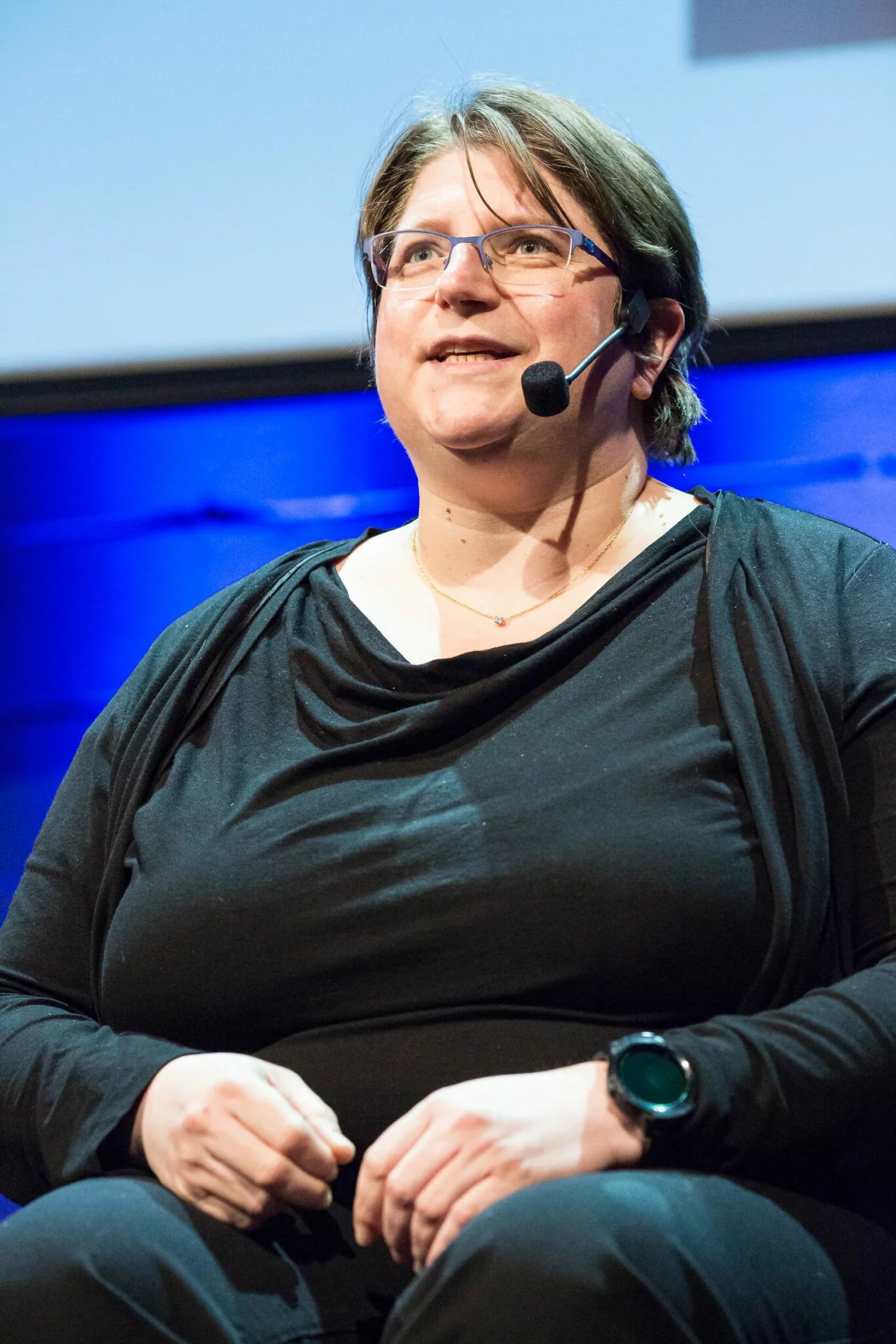
I am also the author of multiple articles and book chapters about music history and music education, and the editor in chief of the French Beethoven Society Journal. All these activities open many doors and allow multiple musical discussions. It is always a joy to talk about different aspects of music. Also, I am a manual wheelchair user. In the past I used to swim competitively at an international level. Between my artistic, professional and sports activities, I am used to traveling all the time, so I became an expert in traveling with mobility aid devices by train, plane, boat or car. I built my own loading system for my wheelchair in my car.
BB – What ability or skill do you wish you had, that you don’t have?
Diane Kolin: I would dream to play the cello. I am interested in instruments that produce vibrations, and how musicians can feel them and use them in their practice. I use several techniques based on vibration in my workshops about voice and accessibility.
I am thinking of two of my professional experiences which were real game changers in my career, both involving vibrations.
The first one was in Ghent in Belgium in August 2021, with Prof. Tom Beghin at the Orpheus Institute. As a Beethoven specialist, I was always fascinated by the different instruments the composer played while he was losing his hearing. Prof. Beghin is an expert in historical pianos and fortepianos. He has been building copies of Beethoven’s instruments for several years to study their particularities. His team also re-built a device known as the “hearing machine” (Gehörmaschine in German) which is a sound-amplifying device Beethoven used to redirect the sound towards him when he was playing, which had the advantage of increasing the vibration of his piano. The time I spent at the Orpheus Institute exploring it inspired some of my activities about accessibility in music. I wrote an article about the experience entitled “Le résonateur de piano de Beethoven, une autre expérience du piano Broadwood” (in English: “Beethoven’s hearing machine, another experience of the Broadwood piano,” in Beethoven, revue de l’Association Beethoven France et Francophonie No. 23, March 2023). I also dedicated a section of my doctoral dissertation to this experience and how it changed my own perception of music and vibration.
The second one is my involvement in the project of a particularly powerful surround organ with pipes on four walls of a protestant church in Switzerland called St. Laurenzen in St. Gallen, one of the first of its kind, built by Goll Orgel. I was lucky to be the musicologist-in-residence of their organ festival for the inauguration of the instrument in September 2023, and again the following year in September 2024, interviewing the principal organist of the church, the musicians who played during the festival, and the organ builder. This instrument is particularly vibrating at a certain point of the church, and I spent numerous hours feeling the music instead of only listening to it. The project was so fascinating that we co-wrote a book about it with the involved team members, which was published in April 2024, called Von allen Seiten umgibst du mich: Eine neue Orgel für die Stadtkirche St. Laurenzen St. Gallen (in English: You surround me on all sides: A new organ for St. Laurenzen City Church in St. Gallen, April 2024, VGS Verlagsgenossenschaft, St. Gallen, Switzerland). My task was to write book chapters in German, English and French about the history of the different St. Laurenzen organs, from the original instrument to the surround one, and the inauguration of the new organ in 2023.
BB –When you’re just relaxing and not working, what is your favourite thing to do?
Diane Kolin: People who know me well will tell you that I am rarely just relaxing. I have always something to do, to plan or to perform. I like to combine my work travels and take holidays periods to visit friends and family. Home is Toronto for 12 years now, but I come from France. My family lives in Paris and I used to work and live in Marseilles. I come back every summer. I also visit my friends in St. Gallen, which is not only the city of the festival I was mentioning, but also a place where I spent eight months writing my doctoral dissertation. I usually take advantage of fast trains in Europe which allow me to work comfortably while travelling.
BB: What was your first performance that you remember?
Diane Kolin: People around me always heard me sing, from as far as I can remember. My mother listened to Ella Fitzgerald a lot when she was pregnant, so we always joke saying that the jazz part in me comes from this time. My first public performance was when I was four years old. It was in Amsterdam where I grew up and spent a few years of my childhood (we were already traveling as a family due to my father’s work). It was in a Dutch musical for kids created by a famous children’s choir called Kinderen voor Kinderen (in English, Children for Children), in its 1984 version. It changes every year and is based on societal trends viewed from children’s perspectives. I played a small role in it, but it always left a strong impression on me. I still remember the experience to this day.
BB: You completed a PhD in Musicology, with a dissertation about professional musicians and composers with disabilities. Could you talk about your journey, as an artist out in the world confronting obstacles & restrictions, and what brought you to this point.
Diane Kolin: I have a progressive neurological disease which started late in my childhood. I grew up standing so my musical education, including my voice studies, was a traditional conservatory training. When I started using crutches, I began to face the inaccessibility of venues, from my study places in high school and universities to rehearsal spaces and stages. Of course, it became even more complicated when I started using a wheelchair. Since my first mobility aid device, accessibility, and particularly access, became the most important fight of my life, but it wasn’t really a conversation trigger at the time of my studies, so I didn’t have help from teachers, and my family had a hard time facing this strange progressive disease with me. After completing my undergraduate studies in Music in Strasbourg, I went to Paris to study theatre and musicology at the Sorbonne University and had to stop before completion since nothing was accessible. Old buildings, old amphitheaters, reduced room for a wheelchair. It was complicated to study and even more complicated to perform, so I quit. In Paris, I completed my theatre performance degree at the Cours Simon, a prominent drama school which allowed to me integrate music in most of my activities: I led a choir, gave private music lessons to students, played the saxophone in one of the shows we toured, designed the sound tracks with my professor for short play excerpts that were performed in our monthly public showcases, but once again, I had a hard time keeping up with my studies since it was in an old building that was not wheelchair accessible. For a while I did something completely different: I studied computer programming, which later led me to become an IT project manager. In parallel, I was still performing, but I missed the bubbly artistic and creative world that wasn’t necessarily present in amateur groups, with all the respect I had for these groups, doing their best to have fun with their passion. I never found any professional groups willing to work with a disabled artist.
After my IT studies, I was hired by an IT company in France specialized in public transportation systems. I am bilingual, and at this time it was rare to have English speaking project managers in France, so I was included in all the international projects.
My company won a contract in Toronto with Metrolinx (the Ontario provincial Crown agency created in 2006 to coordinate, plan, build, and operate public transportation across the Greater Toronto and Hamilton Area (GTHA)). The conract was big enough to have a dedicated team onsite. I was sent in Toronto as a project manager in August 2014. The project was to create the first trip planner which included all transit providers of the GTHA, and to launch it for the PanAm and ParapanAm Games which happened in 2015, and then to make it evolve to beome the official trip planner of the region. It was before all the tools we have today, such as Google Maps, Transit, etc. It was a very successful project. I stayed in Metrolinx from 2014 to 2020.
As soon as I arrived in Canada, I saw what accessibility means in North America. In France, we had an accessibility law voted in 2005, but it was never implemented. The law imposed to venues receiving visitors to make their buildings accessible to people with disabilities before 2015. At this time, even the definition of disability was vague, so nobody did anything. In 2014, the law was amended and pushed until 2024. The year of the Olympic and Paralympic Games in Paris. Again, nobody did anything, just hoping that the law would be pushed again. The Paralympic Games happened, some level of accessibility was implemented (for instance we now have more wheelchair accessible taxis), but after the games, most of it disappeared (except for the taxis). Now let’s go back to my arrival to Toronto. In Ontario, the accessibility law was also voted in 2005, it is called the Accessibility for Ontarians with Disabilities Act (AODA). When I arrived, the law already voted for 9 years. I discovered push buttons, automatic doors, wheelchair accessible washrooms in public places, and I could take the subway!! All the things I could not do or see in France. I thought to myself: If I could successfully move in the city, I could also go back to music. And I did. I auditioned for a choir, which is one of the easiest ways to create a network in music for a singer who doesn’t know anybody in the field yet. I integrated Pax Christi Chorale under the direction of Stephanie Martin, and that started my journey as a singer in Toronto.
I have to pause my story for a moment to state that, if accessibility is way better in Toronto than in France, it doesn’t mean that everything is accessible in the city. I was lucky to find a choir which auditioned in an accessible venue, had an accessible rehearsal space, and made efforts to find accessible stages, which did not always happen. Since I was actively involved in lot of sports, I took the habit of getting out of my wheelchair, climbing stairs on my bottom, and climbing back on my wheelchair, after someone carries it upstairs. This is also how I work with archives in old buildings when I travel to Europe. First of all, not every wheelchair user can do that. Second, with age, I find it more and more difficult, and one day I know I won’t be able to do it anymore. Third, I should not be forced to climb stairs on my bottom to access a building or a stage. Instead, I should advocate for more accessibility. So today, this is my battle horse. Let’s make buildings and stages more accessible to all kinds of disabilities, not only wheelchair users. This only functions in collaborative contexts, with people who are willing to work together as a group, as a community, as open-minded folks, to make it happen. It is only thanks to all the people who listened, acted, and accompanied me in my crazy ideas that I am here today, continuously discussing accessibility with my peers in the arts.
When I started performing more and more with a diversity of groups in Toronto, I had interesting conversations about accessibility, but I wanted to bring this topic to another level. One of the singers was also a Critical Disability Studies (CDS) lecturer at York University. Her name is Madeline Burghardt who is now Assistant Professor of Critical Disability Studies at the University of Manitoba.
Thanks to her, I discovered this discipline of CDS, an interdisciplinary field that examines disability as a social, cultural, political, and historical phenomenon rather than solely a medical problem. This field doesn’t exist in France. At the same period, I had another discussion with Stephanie Martin who was an Associate Professor in the music department of York University. She encouraged me to get my old records from La Sorbonne and apply for a MA in Musicology. I did, I got in, and I finished it in one year, since all my ideas from 20 years in the past at La Sorbonne were still fresh.
I applied in the music department, but I did my MA dissertation (my Major Research Paper) between two departments: Music and CDS. I started in September 2020 and graduated in July 2021.
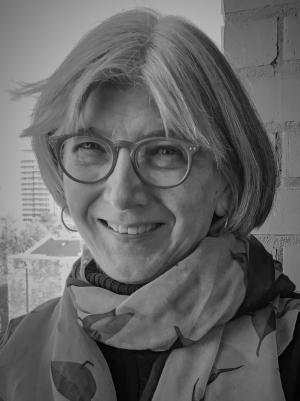
My supervisor was the ethnomusicologist Louise Wrazen (who unfortunately died in 2023), and my second reader Madeline Burghardt. The title of my dissertation was: Music and Disability: Perceptions, Assumptions, Inventions and Activism. I analyzed how professional musicians with disabilities progressed and their career.
While completing my MA, I applied for a PhD in Musicology and got admitted, once again in the music department but with a foot (“a wheel”) in CDS. During my MA, I could still work full-time at Metrolinx, but with the PhD I was offered a Teaching Assistant position which was also full-time, so I had to make a choice. I quit my IT job and became a full-time music professional, singer and teacher. I came back to the world I started in, and I never regretted it, even if the road is sometimes bumpy. I taught music theory and music history to undergraduate students while doing my doctoral research. I really enjoyed teaching, and if I have the opportunity one day, I would love to take an academic teaching position. During my PhD years at York, I first studied disability in music history, then music and CDS (music is still rarely explored in CDS), and finally music education (I created a series of workshops about accessibility in music which have since been given in several music classes).
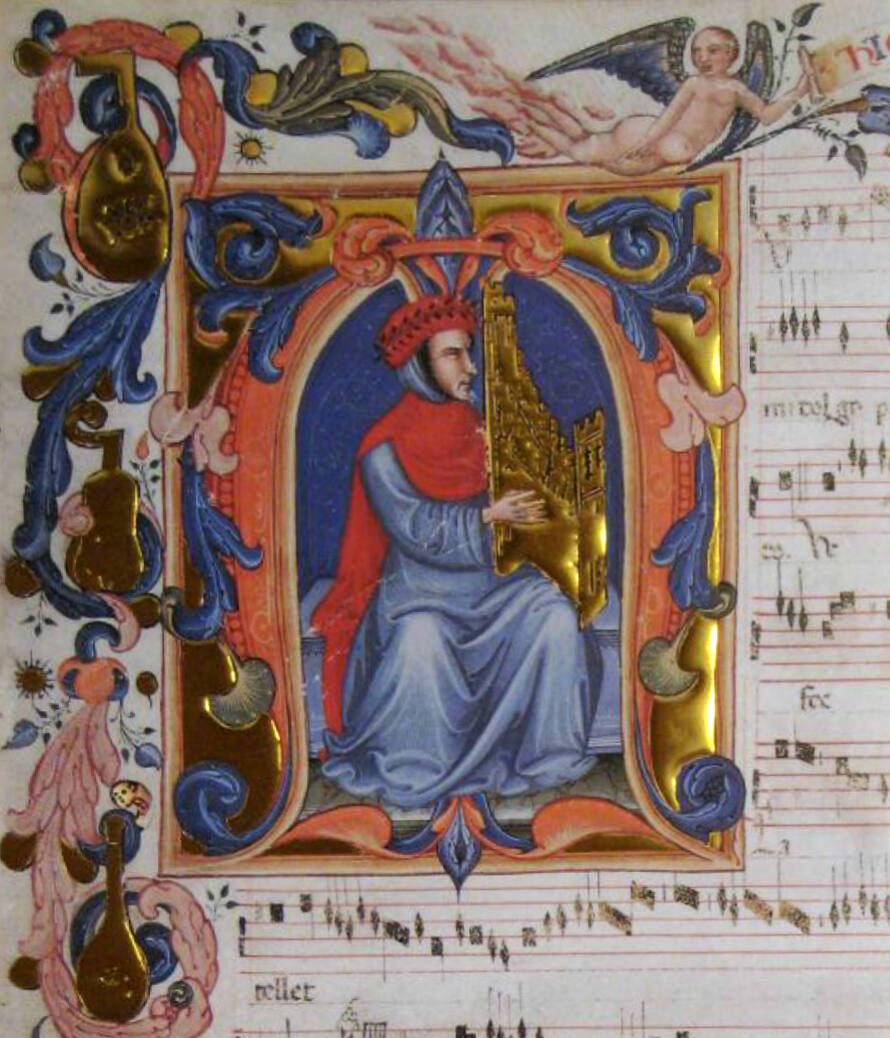
The first documented musician with disability I found was Francseco Landini, an Italian organist from the fourteenth century who was blind.
Not surprisingly, my supervisor was Stephanie Martin, who really followed my full academic adventure; my second reader was the violinist and Associate Professor of Community Music Amy Hillis; and my third reader was Rachel da Silveira Gorman, Graduate Program Director of the Graduate Program in Critical Disability Studies, and also a dancer. My dissertation is entitled Music and Disability: History, Sociology, Education. I defended my thesis in January 2026 and officially graduated in March 2026.
I met so many interesting people during my time at York. I cannot name them all, but here are a few. I sang with Lisette Canton, the Associate Professor and Head of Choral Music, and the founder and director of the Ottawa Bach Choir.
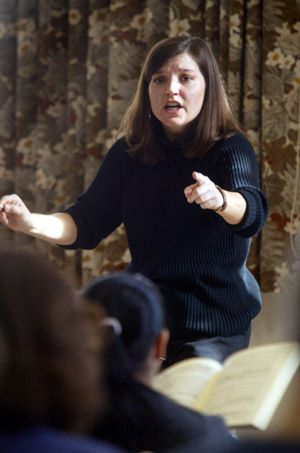
I have warm memories of our time working together. I was one of the members of the York U Chamber Choir for a few years, she even brought us to Carnegie Hall in May 2025, which happened to be a great performance but a disastrous experience in terms of accessibility.
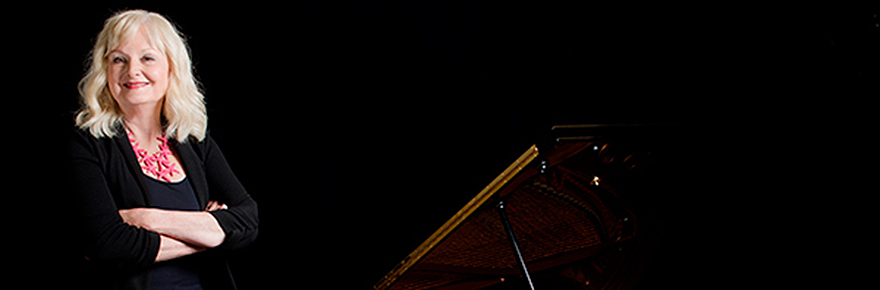
Christina Petrowska Quilico, at the time Piano Performance and Musicology Professor, was the course director of one of my independent studies about Beethoven, and we shared a passion for Liszt, both of which led to many discussions, interviews, and diverse musical moments. Judith Cohen, an ethnomusicologist, medievalist, singer, and multi-instrumentalist, was teaching a class about music in the city at York, for which I was a teaching assistant; we became friends after discovering a mutual passion for medieval music and French chansons. I am also thinking of my PhD cohort, with whom I had long and interesting conversations.
BB: I understand that your dissertation concerns professional musicians and composers with disabilities. Could you share a little bit at least in the most elementary language?
Diane Kolin: Certainly. As I mentioned earlier, I looked at two aspects of professional musicians with disabilities: historical, and contemporary. I believe that we all learn from the past to improve the present and the future. For the historical part, I visited archives to find documented sources of disabled musicians in Europe, such as Landini in Italy, but I also explored archives in Germany, Switzerland, France, Spain, the Netherlands, and other European countries. My aim was to have the most complete biographical and musical elements for each artist to create an encyclopedia of musicians with disabilities. This work will be published one day, and my dissertation contains examples of my findings. For the contemporary aspect, I interviewed musicians with disabilities in Europe and North America to ask about their lived experience, from their early music discoveries to their music education and their life as a performer. Our conversations about music education made me want to create my own sets of workshops to introduce the notion of disability in music to teachers and students. This became my case study for improved and accessible music education. In my dissertation, I showed how historical figures influenced contemporary musicians, and how changes in music education can leave more open doors for future professional musicians with disabilities.
BB: Your Facebook profile says you are Founder of ArtsAbly. Please tell us more.
Diane Kolin: I mentioned it earlier, but I can give more details here. After the interviews I made for doctoral research, I suddenly realized that these would be stuck forever in my doctoral dissertation, read by academic circles, but would not really reach the mainstream world. I wanted to find ways to serve my community and to educate people about disability in the arts. I launched my non-profit organization ArtsAbly in February 2024 to show the fantastic work that artists with disabilities do, not only in music but also dance, theatre, movies, and multidisciplinary arts. My company delivers workshops and professional developments about accessibility and disability in the arts, accessibility assessments, access guides for events and festivals, and free resources such as guides to help improve digital accessibility or to find grants in Canada. To address my frustration of interviewing artists for my doctoral research but not publicly, I launched the podcast ArtsAbly in Conversation in March 2024, in which I interview artists with disabilities in North America and in Europe. There are currently 57 episodes, in audio and video formats, with closed captions and transcripts. Now that my doctoral research is over, I gradually release the interviews I made between 2020 and 2023 as archival episodes of the podcast, with the consent of the artists.
If you want to know more about ArtsAbly, you can visit the website at https://www.artsably.com/ .
BB: “RAMPD” is short for Recording Artists & Music professionals with Disabilities. Please talk about RAMPD and your experiences with the organization.
Diane Kolin: I have been a RAMPD artists almost since the launch of the organization. I interviewed the cofounders, the pianist and singer Lachi and the violinist and singer Gaelynn Lea, for my dissertation in 2020 and 2021 respectively. RAMPD was created after a conversation between a group of musicians with disabilities and the Recording Academy (Grammy Awards) which triggered the need to form a coalition of disabled musicians in the United States, very much missing until this point. In January 2022, RAMPD was officially launched, and I became a Pro RAMPD member in April 2022. Since then, professional musicians from other countries joined. Aside from being a singer, I was the first musicologist in RAMPD. The organization is the official accessibility provider of the Grammy Awards, from ASL interpreters to tactile guides for blind people and wheelchair access. The group regularly proposes collaborations in the United States, with multiple chapters like the Grammys, and hold monthly digital meetings and special events for the pro members. I interviewed a lot of RAMPD musicians for ArtsAbly’s podcast. You can find more information about RAMPD on their website https://rampd.org/ .
BB: What is the correct language to use, when speaking of persons who have disabilities? I noticed the organization “RAMPD (short for Recording Artists & Music professionals with Disabilities) uses the D word. Is that because in USA they are less careful about offending people?
Diane Kolin: Excellent question! USA is not different from other countries; this debate can be found everywhere. It is called identity first label versus person first label. Person first defenders state that they are first a person before being disabled, so they call themselves a person with disability (or disabilities when there are several). Identity first defenders argue that there is nothing wrong with the term disability and it is a full part of their identity, so they call themselves disabled people. There is no right and wrong, it comes to the preference of each individual. In case of doubt, just ask the person: do you prefer to use disabled person or person with disability? I don’t mind, I find positivity in both, but I tend to prefer “disabled musician.” I agree that disability is an important part of my identity.
BB: What do we get wrong when we speak of persons with a disability?
Diane Kolin: Frequently, what we get wrong is what we assume is true, without asking the person. For instance, someone non-verbal can still talk with adapted tools such as text-to-speech devices; someone deaf can play music; someone using a wheelchair can drive with hand controls, etc. Do you remember the wheelchair loading system in my car I was mentioning earlier? I built it with simple strings and pulleys, and I love it when someone stops and asks questions about it, and about my car. Non-disabled people are usually afraid to ask questions to disabled people because they think it will be inappropriate. On the contrary, most of us in the disability community love to talk about our lived experience. Speaking about talking, I was recently in a conversation with someone who is deaf and uses ASL (American Sign Language, which is used in the USA and in Canada, in anglophone areas; in francophone parts of Canada, LSQ or Langue des signes Québécoise is used). The preconceived idea for people who know nothing about sign language is that it is not a language, but it is. Deaf people “speak” sign language, except that they use their hands. Anybody can learn sign language, like any other language, but unfortunately, sign language is not proposed as widely as other languages.
BB: The questions of accessibility are challenging enough when we’re talking about an audience. You’re a performer, preparing and rehearsing, and making your way into performance spaces. Please talk about what it’s like as artists getting into the performance spaces.
Diane Kolin: I see a performance as a journey. The aim is to sing a concert like every other performer onstage. This is what the audience sees at the end. What is not seen is the energy it takes to get there. A few months ago, I wrote a full article in Anacrusis , the journal of Choral Canada , about recent experiences that have been particularly complicated for me as a singer. I frequently feel isolated when things are not planned in advance and agreed for before a show. After this article, many colleagues contacted me to tell me they had no idea I was facing all these obstacles.
I sang with Pax Christi Chorale between 2014 and 2020, first under the baton of Stephanie Martin, and then with David Bowser. Our main performance venue was Grace Church on-the-Hill. Technically, it is accessible. There is an accessible parking spot behind the building, there are automatic doors to access the church from the back, there is a ramp to access the stage, there is an accessible washroom, and there is an elevating platform to go from the main hall to the green rooms which are up a dozen of stairs. Now, how do we deal with 100 singers and 60 musicians when using a wheelchair, a walker, crutches, or even if you just need a chair for the concert? Without discussions with the direction and a strategical plan to get everyone onstage, it wouldn’t be possible.
These are my pieces of advice to any conductor or musical director leading a choir or a group of musicians. Let’s start with the rehearsal. Singers with reduced mobility need more time or more space to get to the stage. We don’t necessarily use the green room during a rehearsal, so I will keep this part for the concert, but we still need to navigate the ramp and find our spot onstage. Thus, we need to go first, and in an order which is discussed and decided with the direction. Then, when we are placed, other choristers can join in the regular defined order. And of course, the same applies for the intermission and the exit at the end. This is more for the dress rehearsal, but it is an important element of inclusion.
Before the concert, make sure you know where the key to the elevating platform is (you need a key to deploy or unlock the platform and to activate the controllers). Plan things ahead, since you won’t have the time to run behind the person the day of the rehearsal, dress, or concert. Some venues (such as Metropolitan United Church for example) have a lift shaft with a door that needs to be unlocked so someone needs to meet the person at this door to manipulate the lift or give the key. Other venues (such as Grace Church on-the-Hill have an elevating platform going over the stairs, which means that every time the platform is open, nobody can use the stairs. This is also something to plan before a concert: what is the right moment to open the platform so that anybody who needs it can get down to the hall level without impeding the line-up? When I was performing there, I needed to go when singers were still warming up together, which left enough time for the platform to be unfolded, used, re-folded, and then I was waiting behind the door at the bottom of the stairs, while people were lining up at the top of the stairs. At the signal, me and a few other choristers with mobility issues were heading to the stage, followed by the rest of the group a few seconds later.
Of course, there are the unplanned, unexpected events messing everything up. Don’t thing that, because it is accessible on the paper, everything will always run smoothly. For example, I was once stuck on the open platform in the middle of the staircase, blocking everybody else. I let you imagine the increasing stress level. Sometimes the platform was not working at all and I had to use my favourite technique of climbing on my bottom. I let you imagine the impact on breathing correctly after that, which is close to the feeling of running a race.
These are just a few examples. Today I sing with Amadeus Choir of Greater Toronto, under the artistic direction of Kathleen Allan, and we change venue almost for each concert. What I suggest, and this is what I do today, is to plan a visit of the venue a few days before the performance, fully dedicated to access. Where is the accessible washroom? Do I need a key to unlock the elevator? Do I need the contact information of a person onsite who could assist? Are the performance space and the green room at the same level? Are both accessible? How long does it take to go from one room to the other? Does the planned seating work for this concert? How do I include singers or musicians with reduced mobility to the overall plan, including dress, stage enters, intermissions, exists, and access to green rooms?
I lead workshops to help people in their plans, so if anyone reading these lines needs help, don’t hesitate to contact me.
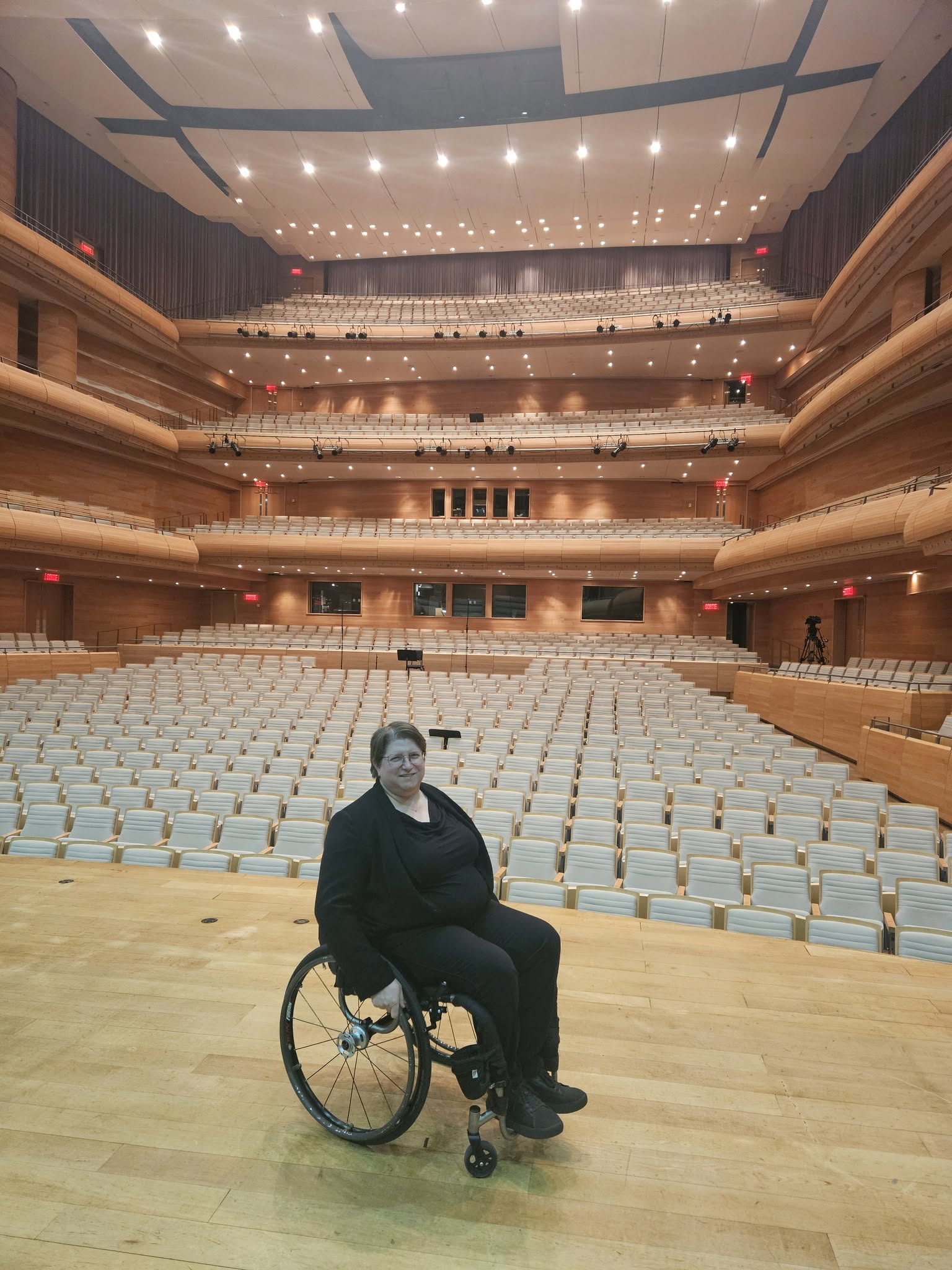
BB: What are the best spaces in Toronto for performers to access with minimal effort? And are there any you’d care to mention that are problematic, to be avoided by artists with challenges.
Diane Kolin: One space that was really problematic and is now fully accessible is Hugh’s Room. For years, and it started when they were still in their previous building, there has been discussions around the lack of accessibility for audience members with disabilities. When they moved to their new building in 2023, we, as a community of performers with access needs, were really hopeful that they would consider this aspect, but for multiple reasons, they didn’t. However, they started a fundraiser campaign in December 2025 to make the building entirely accessible, for both audience members and performers. They also received a Canada Cultural Spaces Fund grant. In September 2025, they finally made it. The building is now accessible. I am happy because I love their programming.
My favourite venue in the city, especially for classical and jazz concerts, is Koerner Hall. As an audience member, tickets are a bit more expansive, but the hall itself is fantastic, and the acoustic is incredible. As a performer, the main stage is accessible. Their problem is the choir loft. Once we reach the level, there are a few steps to climb down before reaching the wheelchair lift. Interesting, isn’t it? I hope one day they will make the effort of redesigning this space. Right now, with this configuration, singers with mobility issues are mostly excluded from the group, unless you can climb the stairs up and down like I do.
Speaking of choir loft, I must mention a recent achievement at Roy Thompson Hall. The building is technically accessible, and was “approved” by Itzhak Perlman in 1982, but today, the building accessibility code has changed. The ramps are now too steep, and the areas for audience members are reduced. Also, until a few months ago, their choir loft was not accessible to singers using mobility aid devices. I sang several concerts over there, climbing down the few steps with my usual technique. One day, I had a conversation with the administration, and we gave ourselves until the next concert to work together and fins a solution. It took us eight months of testing and discussions. Today, the choir loft is accessible through a ramp, which was first installed in June 2026. First time in 44 years of concerts that the choir loft is accessible. You can read more about the Roy Thompson Hall ramp on this link .
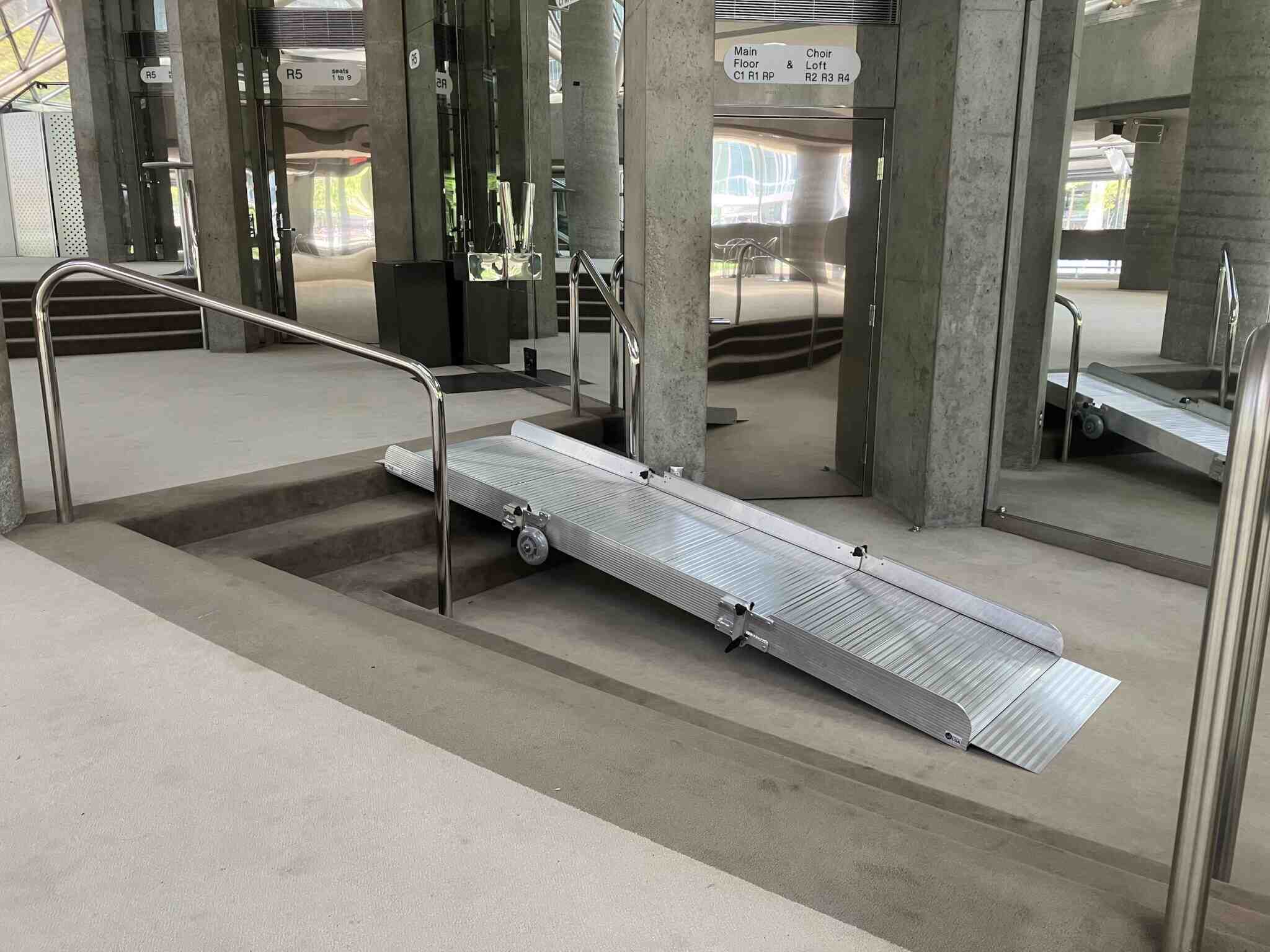
It feels like winning a battle. It makes me very happy. Here is a message for those who think that accessibility is too expansive: if Roy Thompson can do it with a simple ramp, maybe you can do it too?
BB: With our aging population that exacerbates concerns about accessibility, given the overlap between disability studies & gerontology. As we age many of our functions (sight, hearing, cognition) and physical abilities deteriorate to the point that the most aged among us must use the accessibility services, the ramps, elevators, enhanced tools for communication and more. You’re helping all of us as we age. Do you ever feel like the canary in the mine?
Diane Kolin: Thank you, I appreciate your comment and your question. If it helps, I am happy to be the canary in the mine. You are completely right about the intersectional paths of aging and disability. As we age, we become disabled. When I am negotiating accessibility and taking about access needs to the stage for singers and musicians, I include everybody who needs access (or at least everybody I am aware of when I am holding these conversations), whether it is short-term, long-term or permanent: someone broke their leg and need to walk with crutches, someone has backpain and needs to sit on a chair, someone walks with a walker to ensure stability, all scenarios count. I am a disability rights activist, meaning that I am always trying to be the voice of the group.
BB: Dogs or cats?
Diane Kolin: Definitely cats. Unfortunately, I travel too much to share my apartment with an animal, so I enjoy dogs and cats at my friends’ places.
BB: Bach or Handel?
Diane Kolin: Bach. My favourite cantata (to sing and to listen to) is Weinen, Klagen, Sorgen, Zagen (BWV 12). Speaking of Bach, shout out to Lisette Canton and the Ottawa Bach Choir!
Your question is interesting because both Bach and Handel had the same disability at the end of their life: they both became blind. Did you know that? In a way, they can both join the list of professional musicians who had a disability at some part of their life.
BB: sheet music or digital?
Diane Kolin: For a long time, I preferred sheet music since I love the contact with paper, but as a traveler, I got used to my tablet. It is easier to carry in a bag, especially when you sing a lot of different repertoires. It is also easier to sort and find music quickly.
BB: On social media you said “Travel looks a little different for me.“
Diane Kolin: When I travel, this is how I carry my luggage: one large four-wheels suitcase attached to the front of my wheelchair. Sometimes I add another smaller suitcase resting on my knees. It may not be the conventional way to get through airports, train stations, or conference venues, but it is the system that works for me.
BB: Could you elaborate?
Diane Kolin: I am a very independent person in my daily tasks, and the same applies to my travels. I don’t want to depend on someone to travel by car, by train, by plane or by boat. What I related on social media is the way I carry my luggage because people always wonder what I do with my suitcase. I published a picture to show the installation. The system is very simple: I attach a rolling suitcase to the frame of my wheelchair, and then both my wheelchair and my suitcase roll together.
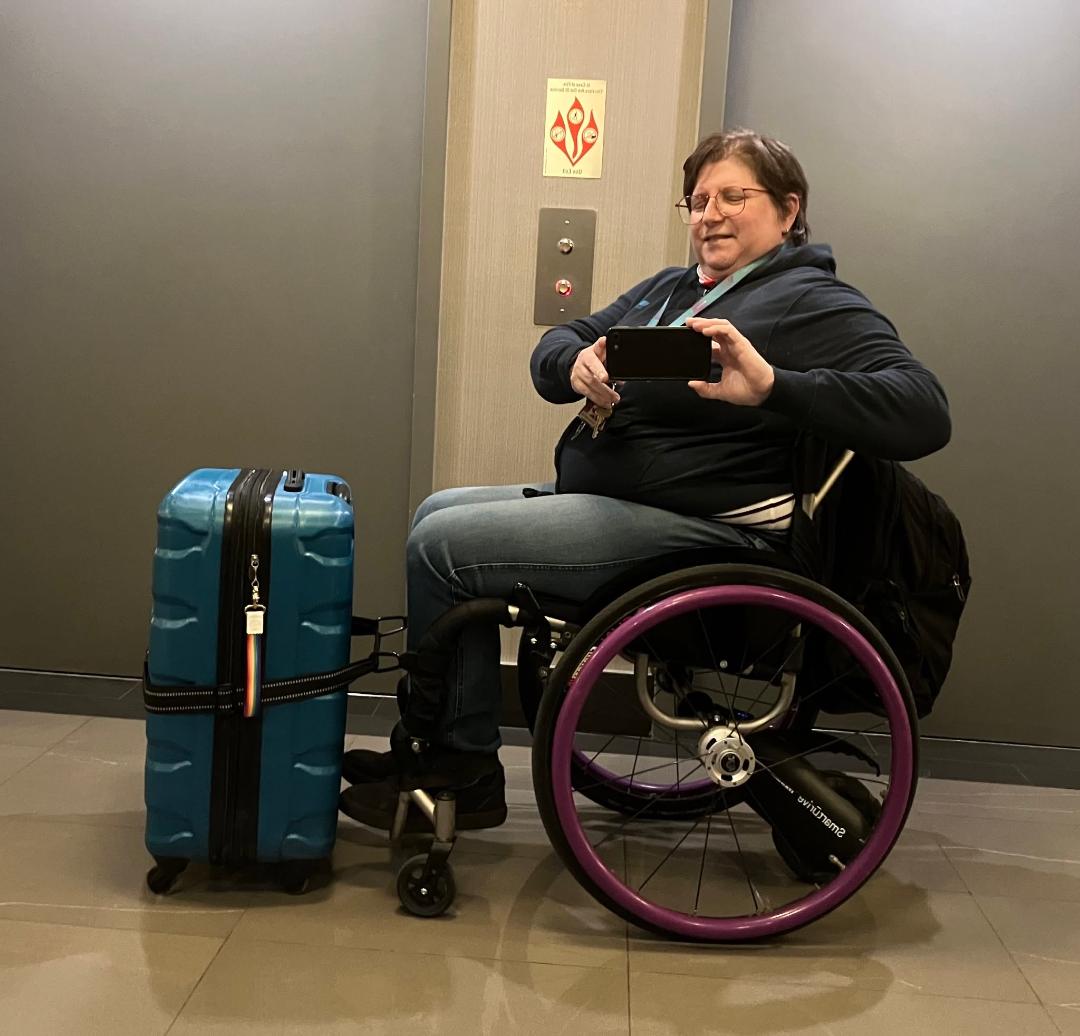
If I found an easy way to deal with my luggage, I have to recognize that traveling with a wheelchair is complex. We need to be patient and deal with long waits. All travelers with disabilities need to be present a lot earlier than other passengers (up to 4 hours for international air trips) because we will be carried to our seat in advance. For trains, we need to board with an elevating platform; for planes we need to transfer on what is called an aisle chair, since wheelchairs are too large to circulate in airplane aisles; for boats we need to find an accessible spot or the accessible cabin, and sometimes need assistance to go there, and sometimes we have to go through hidden doors which are only open for passengers with disabilities (sometimes, it is the kitchen).
I learned a few tricks with my experience, especially at the airport. There is an assistance service available to all passengers with disabilities in all airports in the world. If you can, ask for the assistance only at the gate, and roll yourself to the gate independently, otherwise you are stuck in the waiting room until they “take care of you.” In the rare occasions I asked for help, I almost missed my plane, or I felt like a box that was being moved from one place to the other. Very frustrating and dehumanizing. So now, I don’t ask for help anymore to go the gate, I have the time to take a coffee, look at the duty-free section, go to the lounge, in short do whatever I like before joining the gate and waiting for the aisle chair, so that I can board first.
This is not always working, sometimes the person in charge of the aisle chair is late or nobody assigned, and in that case, I have to board last. Recently, it happened to me, which delayed the departure; the pilot waited until I was seated to make an announcement stating that he was sorry about the delay, and that it was because of the passenger using a wheelchair. Suddenly, faces turn your direction as you become the reason why someone will miss their connection or will arrive home late. Being called like that brings a feeling of shame: you are guilty of the crimes you did not commit.
That being said, most of the time, I don’t have any issue, and have great discussions with the staff onboard, especially when I need to be rolled to the washroom using another aisle chair. With the number of travels at my mileage, I have learned when it is the most convenient for a washroom trip: after food is served, and the drink and food trolleys are out of the way.
I am happy to share my experience if it can be helpful to anyone who reads this.
BB: What’s the state of the art as far as accessibility is concerned? Is there a country that’s leading the way, a pathfinder either in a city or a particular small institution that you especially admire, to learn from?
Diane Kolin: I don’t think any country is leading the way. Some countries in Europe such as Sweden, Norway and Denmark, are known for the good design of their social welfare for people with disabilities. The Netherlands has good accessibility in public infrastructure because of the number of bikes. Some countries have strong legal policies for disability rights, including the United States with the ADA (Americans with Disabilities Act) and Canada with the ACA (Accessible Canada Act). These elements don’t necessarily make the countries more accessible, each have their strengths and weaknesses, but taken together, it gives Europe and North America a good overall grade for their accessibility.
BB: Can you talk about AODA and how things are progressing over the past 20 years or so, in buildings & media?
Diane Kolin: The Accessibility for Ontarians with Disabilities Act (AODA) was voted in 2005, with the aim to make the entire province accessible by the end of 2025. We reached the deadline without completing the project.
BB: That reminds me of the Action Plan of the Truth & Reconciliation Commission, a well-intended set of goals that have not been implemented as of yet.
Diane Kolin: For instance, for physical accessibility, in Toronto, we were supposed to have all subway extensions and streetcar (LRT) lines open way before the end of 2025 and have all the subway stations of lines 1 and 2 accessible. For the latter, the elevator and escalator at College Station just opened a few days ago (we are in November 2026), and we are still waiting for elevators and escalators at King, Museum, and Spadina on Line 1, which are promised before the end of 2026. As for the LRT, it gradually happens: Line 6 Finch West opened at the beginning of December 2025, and Line 5 Eglinton Crosstown opened in February 2026. However, accessibility seems to have been poorly considered in the LRT stations. First of all, shortly after the launch of Line 5, elevators stopped working on a section of the line for an extended amount of time, so mobility aid device users could not travel at all. After they fixed the issues, more accessibility fails were detected, as shown by David Lepofsky, the chair of the AODA Alliance, who is blind, and who toured an LRT station with a CBC News reporter to show accessibility gaps in the design. You can read the full CBC News article and watch the video of the visit on this page . In short, there is still some work to do. Nevertheless, I think that the fact to have an AODA deadline really pushed some institutions to complete the accessibility work as soon as possible, even if it means being late in the schedule. I am confident that it can only become better in the future, especially with the work of activist like Lepofsky, but the journey will still be long.
As for digital accessibility, we are not very good. Basic actions such as systematically adding an alt text (alternative textual description) to an image, or easily generating an accessible PDF, or making sure a web page can be read by a screen reader, or navigated with a joystick, or can fit the content to the window whenever the page is zoomed in and out, are not in the habits of website designers or content creators. For a while, content management system (CMS) platforms such as WordPress, Squarespace or Wix, provided responsive design templates, which resized elements to fit the screen, or accessible content templates which checked colour contrast and allowed users to change parameters to fit their needs. These templates slowly disappear now that it becomes easier to create and manage a basic website with today’s AI tools or platforms which are not designed for accessibility, unless it is intentionally built as accessible. Yet, a few days ago, the Toronto-based non-profit Access to Success organized the first Canadian Disability Tech Summit. It was sold out, and it presented major Canadian and international companies improving accessibility through new technologies.
We really live in a fascinating and frightening era: everything moves fast, but we don’t take the time to absorb and learn from new tools.
BB: I had an epiphany performing Urlicht in church. The singer was physically challenged, singing her Offertory solo from the choir loft, while the collection was made. My mind boggled that we seemed to re-enact the drama of the text, the mezzo telling the officious angel blocking the path that they will not be kept away from God. Do you have any pieces of music that speak to you about the experience of accessibility?
Diane Kolin: That is such an interesting experience, thank you for sharing! I don’t think of any music in the classical choral repertoire, but in instrumental music, there is of course the Piano Concerto for the Left Hand (Concerto pour la main gauche) composed by Maurice Ravel in 1930, commissioned by the one-handed pianist Paul Wittgenstein who was a star at the time. In popular music at large, there are a few interesting examples too. There is Jeff Moyer’s ADA Anthem ( full text available here ), that was composed in 1977 during the movements for equal rights for people with disabilities in the United States (for more information, you can watch the documentary Crip Camp on Netflix which tells the entire story, or the recent movie Being Heumann which opened the 2026 TIFF festival and is now available on Apple TV). I am also thinking of the rock song Spasticus Autisticus, composed by Ian Dury, a singer with polio, in 1981. The song became famous when it was performed during the London 2012 Paralympic Games Opening Ceremony; these games were the first ever which treated paralympic athletes the same way as olympics athletes, with the same amount of stream time for the entire events. Until then, paralympic games were almost not covered, and definitely not televised. Both the opening and closing ceremonies of the 2012 Paralympic Games featured a variety of British artists with and without disabilities playing together, showing that performers with disabilities have their place onstage too. It started the conversation, it is now up to us, the worldwide community of artists with disabilities, to continue the work.
BB: What’s coming up for you?
Diane Kolin: I am getting ready for busy December in terms of singing, with two collaborative performances between Amadeus Choir and other ensembles: we will take part of the traditional Handel’s Messiah with the Elmer Iseler Singers and VIVA Chamber singers, conducted by Lydia Adams, on Friday, December 11, 2026 at 7:30 pm at Yorkminster Park Baptist Church; then we will sing An Indigo Christmas with the Nathaniel Dett Chorale on Saturday, December 19, at 3:30pm and 7:30pm at Grace Church on-the-Hill. Then we will be back onstage in January. I also have a few private jazz performances planned.
In terms of ArtsAbly activities, I am currently completing an accessibility assessment report of Sankofa Square (formerly Dundas Square). The city intends to rebuild the square in the future and wants to make it entirely accessible, including the stage.
In terms of voice teaching, I continue to give voice lessons to my students at Community Music Schools of Toronto and Region Park. Some of them have an upcoming recital in February, and I am also preparing a student for his Voice Level 6 RCM exam.
And other fun adventures, planned and unplanned.
BB: Is there a teacher or an influence you’d care to name that you especially admire or wish to thank?
Diane Kolin: I am often thinking of my high school music teacher in the Lycée Fustel de Coulanges in Strasbourg, Catherine Weber, who had such a positive influence on all her students, whether she was teaching us music theory, music history, leading our choir, taking us to trips in Germany and Switzerland to meet other choirs. We were completely absorbed by her knowledge and the variety of her musical tastes. When I was teaching to undergraduate students at York, I had her in my mind, and I hope students learned interesting things.
I also think of my grandmother, Geneviève Capy. It is thanks to her and the many hours spent together as a child listening to classical music, especially to Beethoven’s music, that I became a musicologist. It is also at her place that I put my hands on a piano keyboard for the first time. She is long gone today, but she is still with me every time I travel to the Beethoven-Haus in Bonn or give a talk about Beethoven anywhere in the world.
*****
I am going to include Diane’s two web addresses for those who want to get in touch with her that I got from her email signature. She signs her name as follows:
Diane Kolin, PhD
Founder and Director of ArtsAbly
https://www.artsably.com/
Musicologist, Singer, Disability Rights Activist
https://www.dianekolin.com/

