Christophe Coin’s Eloquent Cello

An intermission conversation at a concert–Christophe Coin playing “The Eloquent Cello”– made a natural lead-in to Thanksgiving weekend, a reminder of the things I love about Tafelmusik baroque orchestra, for which I should be grateful.   We were discussing things of which we weren’t sure, politely exchanging opinions on everything from the church, their repertoire choices to the instruments themselves.

It’s no contradiction that Tafelmusik regularly manage to show us something new even while delving deeper and deeper into the past, always addressing an audience who politely listen to things of which we aren’t sure, exploring the unfamiliar more often than more standard choices. At times as I listen to the conversations in the lobby it’s less like an orchestra and its public than a kind of ongoing colloquium, where the mutual support emboldens the band to experiment. That’s the Tafelmusik she knows and loves in the warmth of their home, a beautiful church. I whined a bit about my preference, that Tafelmusik should finally lay claim to the romantic period (Schubert, Mendelssohn, Schumann, Berlioz); while we have just seen the completion of their Beethoven cycle, there are still so many others still to explore. My friend’s admonitions –that the band stick to baroque rather than those popular composers Mozart & Beethoven—came on the right weekend, when we count our blessings, especially as some orchestras on either side of the border struggle to stay afloat. Tafelmusik don’t just survive, they prosper, and it’s because they clearly know themselves & their limits. And more importantly, they understand their audience, who are not just their community but dare I say it, family.

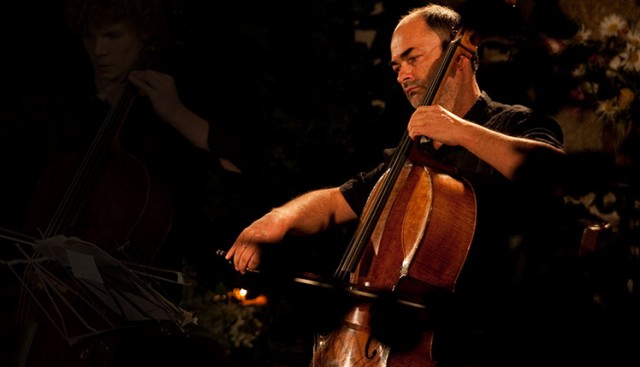
Last night’s concert was an apt time to ponder the instruments themselves, as we watched and listened to Christophe Coin playing baroque cello.
1617-eloquent-cello-updated-jean-de-la-tour

Christophe Coin (photo: Jean De La Tour), the photo alas cut-off, so you can’t see the way the cello floats in the air, without an endpin to touch the stage.

Yes I am again speaking of things of which we aren’t sure: something that I don’t fully understand. I saw that Coin plays without the characteristic endpin we usually expect, instead holding his instrument between his knees.  The sound coming out of his instrument was remarkable. I wonder – after briefly consulting a page about the baroque cello  found via the oracle according to google—whether this is a true “baroque cello” we’re hearing played? It’s hard to tell from a front-on view, and of course I only realized what I should be looking for long after the fact.

Listening to the way Coin plays, I have to wonder if it’s fair to compare, given the differences:

  • Metal strings vs gut
  • More vibrato vs a more direct attack

The tone is surprising, deep and soulful, to fully justify that “eloquent cello” slogan Tafelmusik used to promote this concert. I can’t help thinking that the way the modern cello is played, with much vibrato, is a way to compensate for what’s missing, to make the instrument seem more accurate than it really is. I wondered too whether the endpin actually deadens the sound, given the remarkable resonance coming from Coin’s cello. If you imagine the instrument resonating, then picture it touching the stage (through the endpin) that this might kill some of the overtones that are otherwise coming out.
Coin has a glorious flood of tone at his disposal when he wanted to seize the moment. Speaking of eloquent cello, what words can capture his celloquence? Perhaps if you imagine the contours of a wave of caramel or single malt scotch gushing from a big barrel? Words fail. At times Coin vanished into the ensemble sound, as though incognito. Each half of the concert asked him to take those dual roles, first as leader from the cello section, then as soloist. The first half gave us von Dittersdorf’s Symphony after Ovid’s Metamorphoses, a colourful piece, even if I felt no real connection to Ovid; we then heard Boccherini’s D Major cello concerto. The second half compositions – a symphony from CPE Bach and Haydn’s C major cello concerto were a bit of a love-fest, both from a rapturous audience, and onstage, between the artists. Half the fun of a concert like this is watching the eye-contact, the nods of heads (particularly in the big exchanges between sections in the Bach, including wonderful unison moments when the band played as though they were all of one mind), and that dreamy look from the players during Coin’s inspiring cadenzas. There were times that the music making swept me away so totally that I did wonder if maybe Tafelmusik might want Coin as their leader.

Ah but election fever from south of the border is influencing the way I watch concerts lately. I can’t deny I am already looking at Peter Oundjian, wondering about the TSO’s future, and recently it was Elisa Citterio as a possible candidate to lead Tafelmusik. I see echoes of the election in the selection, the politics and larger than life personalities. Whether Coin is a candidate or not, the concert was as much a study in leadership as it was an opportunity to enjoy those being led. As agile and nuanced as Coin was as a soloist, maybe it’s just that Tafelmusik manage to inspire every soloist who visits. I suspect Coin sounds better and plays better in the presence of a wonderful ensemble like this one.

I’m sorry I couldn’t write this sooner (car trouble last night meant I went to bed without publishing this), as this likely will be published too late to promote Christophe Coin’s baroque/classical cello masterclass from 1-3 pm today. As I type this, it’s less than an hour from now. The concert repeats tonight @ 8 and tomorrow at 3:30, Jeanne Lamon Hall in Trinity St Paul’s Centre.

Posted in Music and musicology, Reviews | 3 Comments

YUGE!

There’s nothing like an election to make you feel helpless, unless it’s an election in a foreign country where you don’t even get to vote.

Looking back I’m feeling relief, having  survived Harper & Ford, endured Dubya, and the insults hurled at Obama, surely the finest President I’ve ever seen (even if you wouldn’t know it from the way the Houses obstructed him).

At one time I’d engage with an election via literature.  There were the Making of the President books for 1960, ‘64 and ’68 (I think there were more but those were the only ones I looked at).   There was Miami and the Siege of Chicago and  Fear and Loathing on the Campaign Trail ’72.      

At one time I invested a lot of time in trying to figure out what had happened, both in the USA and here in Canada; at this point in my young life  I relied on Peter C Newman for the PMs of our recent past (Diefenbaker, Pearson, Trudeau) and Pierre Berton for history (wars and railroads, plus glimpses of John A Macdonald).

Times have changed.  I don’t read the same sorts of books anymore, possibly because I don’t feel the same way about the process, certainly not since 2000 when the results broke my heart. In this millennium I have accepted the fact that it’s all beyond my ability to understand.

And this election, we’re in the midst of something surreal, and surely something we anticipated here in Toronto with the Mayoralty of Rob Ford.  The similarities between Ford and Trump –and the rationale we hear from their supporters—never cease to amaze me, precisely because they sound so unshakeable.  Never mind facts, when you’re part of a crusade you’re not working from empirical evidence so much as from something verging on the Biblical.

It’s funny because, oh my, I realize that I regressed a bit not so long ago, turning to a book for solace and meaning at a time of madness.  Robyn Doolittle’s Crazy Town: The Rob Ford Story was like a plumb line to help me find equilibrium when the news made me dizzy, confused, upset.

yuge_minicover-6ad9c83845c05633eb209047c2f0de41And I’ve instinctively done something similar in the latest book I bought, namely Gary Trudeau’s YUGE!  While this is a collection of cartoons—that is, 30 years of the Doonesbury cartoons with Trump featured—and not a non-fiction book like all the others I mentioned, there is the same sense of a keen eye bearing witness, and thereby showing us which way is really up.
In prose accounts of elections that’s already a big deal, considering the mass of information that needs to be boiled down into something concentrated & concise.  Yes the books I mention are hundreds of pages long, but they don’t feel long if they’re telling the right story.  It’s insane really, that Trudeau’s book is out at this time (or feels insane, a book of cartoons eerily echoing those prose accounts of elections), except for one silly little fact: that the artist is so uncanny in his ability to capture the essence of Trump.

I used to read Doonesbury all the time, as I used to buy newspapers all the time.  Doonesbury was a strip I knew and loved, not least because I like its politics and its keen eye for satire & American manners.

Fast forward to 2016, and my reunion with an old friend, or friends if I include Duke, BD, Zonker, Boopsie et al.  But what’s uncanny is reading those old strips, with what I know now, aka the benefit of hindsight.

Reading the Donald Trump in Doonesbury having seen him explode into public consciousness through this election cycle and in his ongoing dissection in social media, I feel I know him and his tendencies very well. It’s amazing to see him skewered so accurately on Trudeau’s rapier-like pen.  If he didn’t actually say the things attributed to him (that is, put in his mouth in the comic strip), I would surely expect him to say such things.

But let’s be clear.  Trudeau’s Trump, especially in the early days is actually quite innocent, quite benign compared to what we see him doing in prime time in 2016.   I am guessing that, as a left-leaning liberal, Trudeau would prefer to let him off the hook, or at least that’s how he portrayed him in the early days.  The deeper you get into the book –and the closer to the present day—the more accurate it feels, and the darker the portrayal.

Each cartoon has its date of publication underneath, lending it additional authenticity.  The back cover has an additional layer, being the most ironic endorsement you can imagine, namely a series of quotes from the real Trump, concerning Trudeau:

Doonesbury, Doonesbury! Everybody’s asking me to respond to Doonesbury! People tell me I should be flattered”.

I hope Trudeau sells a lot of these books.  In this reality TV show of a campaign, who better to chronicle the drama than a cartoonist?

Posted in Books & Literature, Politics, Reviews | Leave a comment

Toronto Symphony flex their muscles

There are weeks when the ensembles in town confuse and confound us with their crossover efforts, doing things we might not expect.  This is supposedly a good thing, when historically informed players with their lovely old instruments venture into a more recent century, or when the modern instruments play sometimes older than usual. This week, though, everyone seemed intent on staying close to home while offering up performances that almost declare their identity. Last night I was marveling at Tafelmusik’s mastery of Bach, Rameau and Handel: core baroque repertoire.

Tonight it was the Toronto Symphony’s turn, playing works from the past hundred years or so (give or take a decade). While the TSO can probably play just about anything, there are some works that won’t be performed by any other professional band in this town. I like Roy Thomson Hall best when the music we’re hearing is big and bold, filling the space with sound. Today and tomorrow, the TSO programmed works perfectly suited to the space and their talents, a signature offering that I would recommend without reservation, music that likely will only improve in its second performance as the orchestra gets even more comfortable with these challenging pieces:

  • Randolph Peters’ Butterfly Wings and Tropical Storms
  • Jean Sibelius’ Violin Concerto, with a colossal bonus, in violinist Henning Kraggerud’s five minute “Variation Suite for cello & violin, played by Kraggerud & cellist Joseph Johnson (make sure you clap though! it’s an encore)
  • Sergei Rachmaninoff’s 2nd Symphony

Let me repeat, if you’re not busy tomorrow, go get a ticket to hear this concert. The hall was not completely full, possibly because people wanted to watch the Blue Jays beat up on the Yankees. While the empty seats are unfortunate for a concert of such excellence, they probably helped the acoustic, and bode well for anyone seeking a last minute ticket.

While the official beginning to the TSO season was Wednesday night’s Renée Fleming concert (that I missed because I was teaching) for me this is the real beginning. Yes Fleming has shown herself to be a virtuoso in some repertoire, but her Wednesday concert verged on pops with its Broadway numbers sung with a microphone, for which the orchestra was more of a glorified accompanist to a famous diva. But tonight? the orchestra had a chance to show us what they can do, flexing their muscles. That all three pieces show off the orchestra’s own virtuosi in thrilling solos made this a really wonderful opportunity to get the season off to a good start.

You may recall Peters as the composer of The Golden Ass¸ an opera with libretto by Robertson Davies that the Canadian Opera Company staged in the late 1990s. The score we heard tonight might be called impressionistic for its vivid colours, sometimes solidly grounded above square tonal chords that sound as though Peters composed at the piano (with more than a hint of the blues), before venturing into layers of busy textures frothing and bubbling.

The Sibelius Concerto again demonstrates for me that Peter Oundjian is perhaps best when leading the orchestra in a concerto, especially a violin concerto.

henning-kraggerud_tso-2-jag-photography

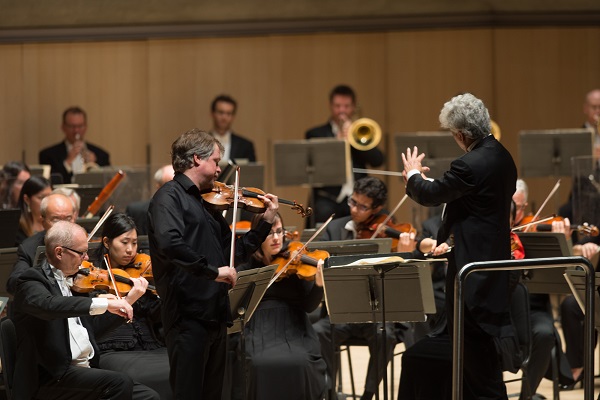
Violinist Henning Kraggerud with the Toronto Symphony Orchestra led by Peter Oundjian (Jag Photography)

I’ve seen this concerto done before, and it can be daunting because it’s so unique, with cadenzas and solos in unexpected places, big moments for soloist and orchestra but not matching the template we see from most other composers. In this case the composer’s originality isn’t bad, but can trip up the best of them. I heard something that felt fresh from Oundjian, who kept the big orchestra at bay throughout so that I could easily hear Kraggerud, whose brusque attacks and angular interpretation made Sibelius sound especially fresh as if newly conceived. While we heard plenty of the lyrical, this was a reading that was unafraid of the darkness in this work, that didn’t overdo the saccharine or the artificial sweetness that some violinists offer up.

As an encore Kraggerud and cellist Joseph Johnson gave a delicious performance of the violinist’s own “Variation Suite” for cello & violin. If you listen to this youtube performance, imagine it now played to perfection in the clever rhetoric of a witty give and take before us, Johnson standing tall (or more accurately sitting tall) in this unheralded moment of great beauty.

And then we came to the place where the headline really makes sense, the 2nd Symphony of Rachmaninoff. I find Oundjian especially comfortable with Russian repertoire, as some of my fondest memories of him with the TSO revolve around Russian composers, including Rimsky-Korsakov in Florida and on their CD, Tchaikovsky’s 6th for the Maestro’s birthday celebration last year, and now this spectacular kickoff to the new season.

I believe Rachmaninoff languishes under the weight of the same disrespect accorded to Puccini & Richard Strauss, to name two early 20th century composers known for their beautiful melodies and financial success. Can you say “popular”? It’s a troubling phenomenon, that music of great beauty is denigrated for the very thing many of us want most from music.  This piece should be better known, programmed more often. Starving artists are valorized even when their music is less attractive. But Rachmaninoff isn’t some conservative clinging to the past. His sonorities in this symphony anticipate what we’d hear from the film-scores of later decades, whether in their lush melodies or the swash-buckling energy of the brassy last movement. There are a ton of wonderful solos, including Jonathan Crow’s violin, Neil Deland’s horn, and stunning playing from the brass choir that offers up a motto in each movement. The brass in this symphony crushes you in the gut like guitars at a heavy metal concert, a visceral sensation bordering on the sexual, and in case you can’t tell, yes I liked it a lot. OMFG

They’re back with the same program Saturday night. Catch it if you can.

Posted in Music and musicology, Reviews | Leave a comment

Elisa Citterio inspiring Tafelmusik

As I sat in the balcony an allegorical tableau seemed to be enacted before me. To my right sat Marshall Pynkoski and Jeannette Lajeunesse Zingg, co-artistic directors of Opera Atelier. To my left sat Topher Mokrzewski and Joel Ivany, the founders and key players for Against the Grain Theatre. While the more radical and new seemed to assemble to my left, and the proponents of the historically informed on the right, they all leaned forward in their seats, to take in the first concert from Tafelmusik Baroque Orchestra, as though this were the very fountainhead of their inspiration. AtG have twice offered a very radical reading of Messiah. And of course Tafelmusik are OA’s orchestra.

There was no mistaking the electricity of the occasion, generated by Elisa Citterio violin and –at least for tonight—the leader of the orchestra. In the wake of Jeanne Lamon’s departure, there’s a vacuum at the top. Concerts like this one are opportunities for Tafelmusik to try out a new leader; I almost said “try on”, because in a real sense it’s a question of whether there’s a good fit.

We saw an ensemble looking genuinely excited, committed, at times grinning broadly while playing. We heard a tight ensemble playing better than I’ve heard them play in awhile. But the biggest difference was interpretative. Tafelmusik sounded genuinely newin their approach, a distinctive and consistent difference discernible in all three of the segments of the concert:

  • JS Bach’s Orchestra Suite #4
  • A suite of dances from Rameau’s Les Indes galantes
  • A comprehensive presentation of Handel’s Water Music
elisa-citterio-violin-and-guest-director

Elisa Citterio Violin and guest director

Of course we’d have to attribute this to Citterio. Last year she led Tafelmusik but I didn’t notice anything quite so radical, possibly because there wasn’t as much rehearsal, possibly because she may have presented her ideas more clearly this time. Who can say?
The orchestra executed this interpretation with wonderful unity, an approach of great simplicity, calling for clear attacks, distinct pauses and rests, well-shaped phrases, and manifest architecture, allowing us to experience the structure of the piece. Energy was very high, tempi were on the verge of risky, especially in the opening Bach suite, where I wondered if the orchestra could handle the fast pace.

I looked especially down at Marshall & Jeannette during the Rameau, wondering if Opera Atelier might undertake one of his unjustly neglected masterpieces sometime soon. Clearly there’s no reason to worry about the orchestra’s readiness.

Citterio led both with her playing but also with her physicality, gesturing and even stamping her feet in some of the dance-oriented movements of the Water Music. Her body-language was contagious, as I saw several players emulating her physical eloquence, as though they were also squeezing something extra out of the instruments. At one point she made a brief announcement, complete with a wonderful accent. I think she’d be very welcome in this city, were Tafelmusik to decide to offer her a permanent spot. The players seemed totally smitten with her, both in their wonderful playing and in the smiles I saw on their faces. The chemistry I saw & heard and felt is surely something Tafelmusik will want to experience again.

Before the concert my mind wandered to Donald Arthur, the writer & voice-over artist who passed away in Munich September 21st. As I sat in Koerner Hall I heard his resonant voice in my head, as I recalled our conversation. On the way to the airport he asked me to drive him to a Maltese bakery to sample their pastizzi: because Arthur (who used to winter in Malta), had heard our Maltese bakers praised from abroad.  But he had also resisted my fascination and delight (with a shudder) in original instrument ensembles, likely due to his experience of recordings from the early days (the 1970s and before). If only he could have heard the virtuosity on display tonight, so much crispness & clarity.  I’m sorry he missed it, as he wouldn’t have believed it possible to play this way on those instruments.

The program repeats at Koerner Hall until the 25th, and at George Weston Recital Hall on the 27th.

1617-tafelmusik-baroque-orchestra-bysianrichards_50

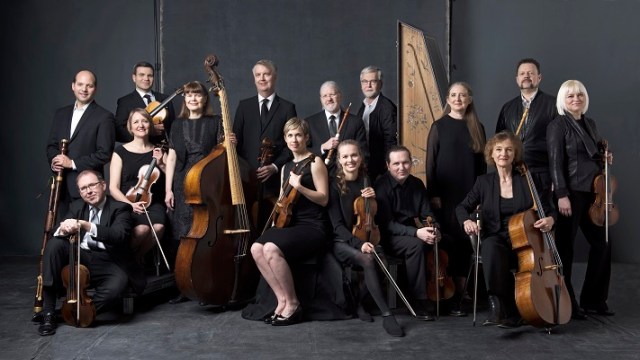
Tafelmusik Baroque Orchestra (photo by Sian Richards)

Posted in Music and musicology, Opera, Reviews | 1 Comment

Nutty professors

A friend of mine who teaches at a Canadian university asked me to suggest a good text to explain Leitmotifs.

I was stopped short, because it’s a tricky subject.  While Wagner’s mature operas are regularly spoken of using the word in one spelling or another (such as “Leitmotiv”), the concept bandied about as though it were central to the composer’s thinking: in fact it was not his word.  He was aware of the word but had other words that he used, such as Grundthema or Hauptmotiv; they never caught on among musicologists.  We’ll leave aside the  parenthetical observation that this anomaly might be a signal that critical thinking is off track.

And so, accepting this notion of the Leitmotif or Leitmotiv, something that can’t really be found explicated anywhere in Wagner’s voluminous writings (yes he wrote a lot! And there’s been an astonishing amount written about him since), how does one teach it?

I suggested satirist Anna Russell in her famous introduction to the Ring Cycle.  No I wasn’t trying to be difficult although I think my friend may have wondered if I was entirely serious.  But I opined that her famous talk –a send-up of the more pretentious and scholarly talks that people sometimes encounter in the vicinity of opera and classical music—represented the ideal entry into the topic.

Before telling him this I re-listened to it, and was surprised at just how much it seemed to spark. This is the classic one that I recall from my own childhood, a live performance from the 1950s.  I realize now, hearing it again, that it’s had a huge influence on my thinking.

By coincidence I’ve just started teaching “The Most Popular Operas” again, with a first class that begins with none other than Bugs Bunny in his “Rabbit of Seville” cartoon.

Where Russell is gently parodying the studious introduction of a scholar, Bugs –that is Chuck Jones et al—is performing a kind of parody.  In fact the cartoon was a useful illustration of a point we came to in class, when we talked about Handel and his biggest rival in London, namely ballad opera beginning with Gay’s The Beggar’s Opera.  Just as Gay took pre-existing music (for instance, the popular song “Greensleeves”) and then put new words to the tune, parodying opera, so too with Bugs Bunny and Elmer Fudd, singing new words to the tune of Rossini’s overture to The Barber of Seville.

I’ll set aside all the things one can study in a parody (and I am not pretending we studied them). Bugs Bunny and Anna Russell are perhaps the two key influences on my teaching philosophy.  They’re unpretentious, they interrogate the worst tendencies of opera & classical music, and above all, they seek to entertain.  They make fun of the big words that some people insist on, and put you at ease with your misgivings about high culture.

Maybe I need to revise my published statement of teaching philosophy, to acknowledge my two most important influences & mentors.  And while there are lots of other influences out there, I can’t help thinking, whenever I observe current producers & directors of opera seeming to throw off the burden of all that heaviness while embracing something newer & edgier, that maybe I’m not the only one.

Posted in Opera, University life | 2 Comments

Kubo, because I promised

I feel very much at cross purposes, having promised I would complain about something in a film that I loved.

The film is Kubo and the Two Strings.

Let me get the complaint out of the way, as it’s from the perspective of a child. I would ask you first to watch the trailer.

Now having watched it, you might be surprised to discover that this film terrified some of the children in the theatre. Yes the film is “PG” rather than “Family”, so in fact it’s correctly labeled to alert parental figures. I am not sure that the trailer accurately reflects the level of violence & suspense one experiences in this film, but naturally that’s a different question for a child than for an adult. I found the film roughly as scary as Wizard of Oz, a movie with many of the same features:

  • A good witch
  • A couple of bad witches who are sisters
  • Supernatural forces beyond the control of the protagonist
  • Scary storms

And in fact I invoke L Frank Baum’s masterpiece because this is also a wonderfully deep story, with all sorts of Freudian overtones. Aside from the one caution I offer – that you think twice about taking small children with you—it’s highly recommended.

I would strongly suggest that you avoid reading about this film – and please note I aim to be spoiler-free disliking the hints about storylines and meanings that one can encounter in reviews—in order to be fully overpowered by it. The visual effects are magnificent, but the metaphysical overtones are especially exciting if you don’t have someone tell you what they think it all means, first.

But maybe it’s just a story about storytelling & memory. Either way, you get to decide.

This theatre was full of young children, some rampaging up and down the aisles, some asking their mom to explain as they cried out in fear (this happened at least three times I could hear, from different kids). Clearly I wasn’t the only one who underestimated the film’s power. You might want to aim for the last show of the day, to hopefully find yourself in a theatre audience that can handle the film.

Me? I was having a quasi-religious experience, tearful in places, yet I felt I was being forced to watch Parsifal in a daycare centre.  In other words, i was somewhat distracted.

If you’re a fan of animation, particularly animated films that appeal to adults (thinking of Inside Out or Zootopia,  recent titles that transcend the family-orientation sometimes imposed on the genre) I strongly recommend that you go see Kubo and the Two Strings.

Posted in Cinema, video & DVDs, Personal ruminations & essays, Reviews | 1 Comment

Back to where it all began: Against the Grain Theatre announce seventh season

Against the Grain Theatre goes back to its roots for seventh season in 2016/2017

A classic remount and a residency with the Canadian Opera Company bring AtG back to where it all began

TORONTO — Against the Grain Theatre (AtG) celebrates its seventh season this year by returning to its roots, offering a fully staged remount of its popular La bohème in a bar, a daring chamber concert of song, a new series of operatic pub nights, and a residency at the Canadian Opera Company, where AtG’s founding members got their start in the business.

After presenting Argentinian composer Osvaldo Golijov’s Ayre this past summer at the Banff Centre for Arts and Creativity and taking it on the road to the Ottawa International Chamber Festival, AtG brings this haunting song cycle of Arabic, Ladino, Sardinian and Spanish texts home to Toronto audiences in November. It won some kudos along the way, with Musical Toronto commenting that “along with the quality and verve that we have come to expect from AtG, this music is fertile ground for a clever, young company on the rise.” Soprano and AtG Founding Member Miriam Khalil sings this technically challenging and deeply moving song cycle with accompaniment by an 11-member chamber orchestra. The performance is staged by AtG founder and artistic director Joel Ivany, and an evocative setting praised by audiences and critics alike is lit by AtG resident lighting designer Jason Hand. 

Ayre takes place at Toronto’s breathtaking Ismaili Centre, 49 Wynford Drive, on Nov. 10, 11 and 12, 2016. Doors open at 7:30 p.m. with performances of additional works by Golijov offered by students of the Royal Conservatory of Music commencing the program at 8 p.m. For tickets, which range from $40-$70, please visit www.againstthegraintheatre.com. Ayre is presented in partnership with the Aga Khan Council for Canada and the Glenn Gould School of the Royal Conservatory of Music.

A special preview of Ayre will be offered on Nov. 10, 2016 at 12 p.m. as part of the Free Concert Series in the Richard Bradshaw Amphitheatre, presented by the Canadian Opera Company (COC) at the Four Seasons Centre for the Performing Arts. Details about the series may be found at www.coc.ca.

The season continues with a return to AtG’s roots: a fully staged production of Puccini’s La bohème, performed out of the Tranzac Club in Toronto’s Annex district. This remount hearkens back to AtG’s first season, when its Tranzac Club production of the beloved classic (with its new English libretto by Joel Ivany) put the company on the map. Joel Ivany directs, and Topher Mokrzewski music directs. Dates, casting and ticketing information will be released at a later date.

As part of its mandate to keep opera fresh, fun and accessible, AtG launches a new initiative this fall: Opera Pub. Launching on Oct. 13, 2016 at the Amsterdam Bicycle Club at 54 The Esplanade, Opera Pub nights are relaxed, casual nights out that offer up your favourite beer on tap with a side of operatic arias and ensembles, performed by both established and emerging opera talent. The festivities begin at 9 p.m. and will continue on the first Thursday of every month.

“This season highlights what AtG does best,” says AtG Founder and Artistic Director Joel Ivany. “We push the envelope, tackle relevant themes within our community and strive for artistic excellence. Being able to present the music of Golijov is an honour, as he’s one of world’s leading dramatic composers. You won’t hear Ayre performed this way ever again.  La bohème hasn’t been performed by us since our inaugural season and this feels like the perfect time to bring it back.  We look ahead to the future by initiating new endeavours and continue building on our growing relationships.”

In some of the most exciting news of AtG’s season, the company will be participating in a new residency program offered by the COC. Designed as a pilot project, the COC will act as an incubator for AtG during a two-year residency at the COC’s administrative offices at 227 Front St. E. in Toronto.

The COC’s pilot company-in-residence program is designed to support an individual opera company during the critical transition from its initial formation to growing into a more established organization with a viable infrastructure. The residency program is specifically aimed at opera companies that have been in existence for five years or less and offers, in addition to dedicated administrative space and resources, mentorship involving different departments and opportunities for job shadowing, as well as invitations to observe and/or participate in company meetings and events.

“This residency program is a formalization of a long-time mentorship that has existed between the COC and Against the Grain Theatre. Partnering with AtG during the program’s pilot stage gives the COC an opportunity to lend support to an emerging company while also receiving valuable feedback on how this kind of residency works and if it’s a viable structure we can build upon,” says COC General Director Alexander Neef. “It’s an exciting time for opera right now with so many independent opera companies establishing themselves within the arts community. Our hope with this residency program is to put a system in place that helps nurture those companies as they grow and seek to establish a sustainable future.”

“Building a company is tough in any industry, but especially in opera,” says AtG General Manager Joanna Barrotta.  “The COC’s leadership in mentoring young companies like ours gives us a stable platform to continue our growth, and allows us to make a meaningful contribution to the opera ecosystem.”

ABOUT AtG
In December of 2010, Toronto’s opera scene received a jolt of energy with the formation of Against the Grain Theatre (AtG). With a goal to reinvigorate the operatic art form by presenting an eclectic array of musical works in unconventional spaces and innovative ways, AtG staged its first performance to a sold-out audience of 50 people, and with that the company was off and running. Since that first season, AtG has packed every single one of its productions with standing room-only crowds, winning a consistent level of critical and public acclaim, and picking up two Dora Mavor Moore Awards along the way. The arts community has embraced the AtG, as has a much wider, more diverse audience of people who may have never considered attending an opera. Founded by an adventurous collective of friends and artists, the company’s mission is to preserve the company’s unique ability to be serious in intent and execution, yet fun and irreverent in spirit.

For more information, please visit AtG online at www.againstthegraintheatre.com, on Twitter @AtGTheatre and on Facebook at facebook.com/AtGTheatre.

*******

“Press releases and announcements” are presented verbatim without comment.

Posted in Opera, Press Releases and Announcements | Leave a comment

THE SECRET GARDEN in concert

secret_garden

Podium Concert Productions presents
THE SECRET GARDEN
New Company to focus on Musical Theatre ‘in Concert’ Presentations
Inaugural Production set for January 2017
Podium Concert Productions (Peter da Costa and Mark Camilleri) proudly presents the Tony Award®-winning musical THE SECRET GARDEN, in concert for three performances only at the newly renovated and acoustically enhanced Trinity-St. Paul Centre/Jeanne Lamon Hall, January 13–15, 2017, with a world-class orchestra, hand-picked and led by Mark Camilleri, on stage with Canada’s brightest stars of stage and musical theatre.
THE SECRET GARDEN is Grammy–winning composer Lucy Simon’s and Pulitzer Prize–winning playwright Marsha Norman’s (‘Night Mother) reimagining of Frances Hodgson Burnett’s classic children’s novel into an enchanting musical tale of forgiveness and renewal. Orphaned in India, 11 year–old Mary Lennox returns to Yorkshire to live with her embittered, reclusive uncle Archibald and his sickly son Colin. “Dreamers” — spirits from Mary’s past — guide her through her new life as she discovers the estate’s many wonders, including a magical garden that beckons the children with haunting melodies.
Rarely produced due the size and scope of the production, THE SECRET GARDEN is the perfect show to launch Podium Concert Productions, dedicated to creating exciting and exhilarating performances that combine the symphony experience with musical theatre.
The cast and creative team includes Director Steve Ross (Sunday in the Park with George/Talk is Free Theatre) and Musical Director/Conductor MarkCamilleri; Adam Brazier (Artistic Director Confederation Centre for the Arts, The Woman in White) as Archibald Craven and soprano Erin Fisher (ViVA Trio, Cosi fan tutte & Idomeneo/COC,) as Lily Craven; with Louise Camilleri, Gabi Esptein, Kevin Forestell, Kyle Golemba, Matthew Nethersole,Denise Oucharek, Steve Ross, Kate Suhr and Shawn Wright.
•• This weekend Podium Concert Productions will hold an open call audition for the young roles of Mary Lennox and Colin Craven.  Auditions will be held Sunday, September 18 from 2-6pm at the Randolph Academy for the Arts, Annex Theatre, 736 Bathurst Street (1 block south of Bloor). Sign-up begins at 1pm. Audition Sides can be found  here.  For more information please contact info@podiumconcerts.com
Podium Concert Productions
Shows that Deserve to be Heard
 presents
THE SECRET GARDEN in Concert
Trinity-St. Paul Centre, 427 Bloor Street West (at Spadina Avenue)
January 13-15, 2017
Friday and Saturday at 7:30pm, Sunday at 6:30pm
Tickets start at $39
For more info, and to purchase tickets, visit podiumconcerts.com/
For Groups discounts contact info@podiumconcerts.com
Media Contact: media@flip-publicity.com
 
About Podium Concert Productions: Led by award-winning producer Peter da Costa and veteran music director Mark Camilleri, Podium Concert Productions aims to produce a series of Broadway musicals in concert featuring Canada’s brightest stars of stage and musical theatre sharing the spotlight with an orchestra of world-class musicians.
The founder of da Costa Talent Management and co-founder of Show Choir Canada, Peter da Costa has built his career on creating opportunities, seeking new ventures that capitalize on his extensive industry experience. With offices in Toronto and Vancouver, da Costa Talent Management today enjoys a cross-country presence that benefits the agency’s roster of award-winning triple threat talent. Podium Concert Productions is one of several productions in development, including a TV series and an original live theatrical show.
A music director, pianist, composer, arranger, accompanist, engineer, producer, conductor, and recording studio owner of Imagine Sound Studio, Mark Camilleri’s credits include music directing The Toxic Avenger (Dancap Productions); Cinderella (Ross Petty Productions); Disney’s High School Musical (Drayton Entertainment), Funny Girl in Concert; A Rhapsody in Gershwin; The Very Very Best of Broadway, with Marvin Hamlisch, Martin Short and Audra McDonald; Back The Mack, with Matt Dusk, Sophie Milman, Jim Cuddy, Measha Brueggergosman and Johnny Reid; the Canadian Screen Awards; associate music directingMamma Mia, Dirty Dancing (Mirvish Productions); and conducting major symphony orchestras across Canada.

*******

“Press releases and announcements” are presented verbatim without comment.

Posted in Personal ruminations & essays | Leave a comment

Together We’re Unlimited: A benefit concert

Merle Garbe & Jeff Gilburd present
TOGETHER WE’RE UNLIMITED
A Benefit Concert in Support of Thyroid Cancer Research

 Toronto, August, 2016TOGETHER WE’RE UNLIMITED is a benefit concert in   celebration of Hope and Possibilities, with all proceeds designated to the Canadian Cancer Society in support of Thyroid Cancer Research.

Co-producer Jeff Gilburd, a long-time usher at the Toronto Centre for the Arts and Harbourfront Centre, was recently diagnosed with Thyroid Cancer. He has come together with friends and members of Toronto’s arts community to put on a night of musical theatre to raise money to help eradicate this often-overlooked type of cancer.

The Concert will showcase twelve of Toronto’s and Canada’s leading musical theatre performers, who have appeared on stages around the world, including Stratford and Shaw Festivals, Mirvish, Dancap, and Broadway — Louise Pitre, Jeff Madden, Mark Cassius, Thom Allison, Ma-Anne Dionisio, Graham Scott Fleming, Vanessa Sears, Gabi Epstein, Kelly Holiff, Joe Matheson, Shawn Wright.  The show will be hosted by George Masswohl, and musical direction is by Jeannie Wyse.

According to Co-Producer Merle Garbe, “We are so delighted that these amazing performers have all donated their time and talents to help this great cause.  This benefit was Jeff Gilburd’s idea, and it is a real tribute to him and his huge heart that so many artists care about him and wish to honour him by appearing in this show. It is a labour of love for all of us.”

This event in the exceptional acoustically-excellent George Weston Recital Hall, has been made possible through the generous sponsorship of the Toronto Centre for the Arts and Dancap Productions. The evening will also include a Silent Auction. We are now counting on the support of the community at large.

Tickets can be purchased in person at the Toronto Centre Box Office, online at http://www.encoreshows.com, or by phone at 1-855-985-2787.  A service charge will apply on phone orders. VIP seats ($65 each) include entrance to a post-show reception with the cast members.

WHAT: Together We’re Unlimited: A Benefit Concert In Support Of Thyroid Cancer Research
WHERE: Toronto Centre for the Arts (George Weston Recital Hall) – 5040 Yonge Street
WHEN: Monday, September 19 at 7:30 p.m.
COST: $20-$65
CONTACT: Merle Garbe – Tel: 416-804-2722 | merlegarbe8@gmail.com

*******

“Press releases and announcements” are presented verbatim without comment.


Posted in Press Releases and Announcements | Leave a comment

Encounter with Hilary Kilbourn

I posted a press release earlier this week, concerning someone who passed through my life briefly. One paragraph in particular caught my eye:

About The Hilary Kilbourn Memorial Fund

Hilary continues to cast her spell over the Island through good works funded by the Hilary Kilbourn Memorial Fund. This fund was initiated by her family upon Hilary’s death in 2006. Contributions from the Fund have been made to Shadowland Theatre to support programming for Island youth. The Fund enables wonderful concerts to be offered at the church.

I was saddened to hear of her death: a decade ago.

I looked up her obituary.

Our paths crossed long ago. I saw her audition for a play in 1977, without ever speaking to her.

At the time I was one of the musicians working on a production of a work by Auden & Isherwood called The Dog Beneath the Skin, Michael Sidnell’s first show as director of the Graduate Centre for Study of Drama. It was done in a style that Brecht and Weill would have liked, with lots of outsized props and artifice, including songs in a popular style.

There was already quite a wonderful band creating songs for the show, so they shouldn’t have needed me: except for one puzzling little segment of the play. The text explicitly calling for something resembling Wagner opera, and so I was brought in to attempt the reconstruction. And that’s a whole other story, a really fun story I might tell another time.

But my small part in this show was the reason I was present for a magical moment during an audition. It was someone who was not eventually cast. Of course I mean Hilary Kilbourn.

If I recall correctly there was some reading but also a kind of an improvisation, reacting to an empty picture frame hung upstage. The actor was asked to walk by and then their response should help us to see what was there, to feel their responses.

Hilary Kilbourn made me believe she saw something divine in that blank frame. She walked by, then turned, and saw something profound. Afterwards she would explain to us what she’d seen, a kind of allegorical glimpse of the miraculous that she enacted for us as though she were Joan of Arc in the midst of a visitation from above.

I was young, perhaps easy to impress (still am I think). All I know is that if, at that moment, she had asked – no commanded—me to take up arms against the English I would have done so readily.

I felt drunk watching her perform.

And when she didn’t get cast I challenged the director, surprised.

But I realize that he was sensitive to her. Hilary had bipolar disorder, although i only understand this now, reading the obituary.

I had shouted at the director, asking why Hilary wasn’t cast, asking whether Hilary was too good to be cast.

He shouted “no of course not” right back at me.

I was young and foolish (as in the song). I think the purpose of the exercises in the audition was to see how well they would take direction. Gifted though she was, this was an ensemble production, and I believe he could feel her estrangement, as she wandered the stage as if in a beautiful trance.

Years later, everyone has gone on to other things, some of that wonderful team have passed away. It’s curious that I can’t help recalling that brief encounter with Hilary as a sign of a future even though she’s gone.She had some very special talents.

I can’t help feeling we will meet again.

Posted in Dance, theatre & musicals, Personal ruminations & essays, Spirituality & Religion | 2 Comments