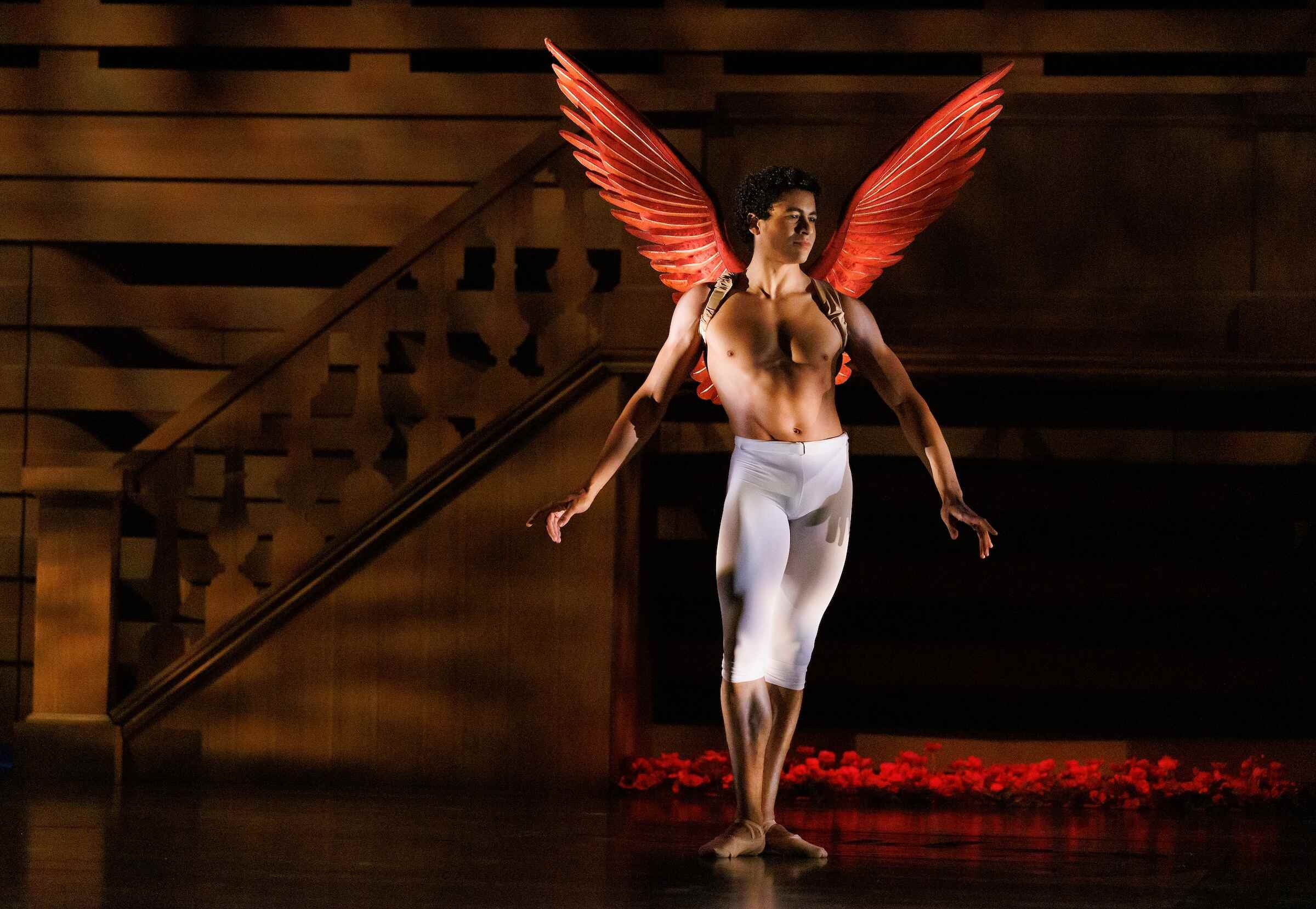
Wednesday night saw the premiere of Pelléas et Mélisande in a new orchestration by Christopher Bagan, conducted by David Fallis at Koerner Hall. Opera Atelier commissioned Bagan to reduce the scope of Debussy’s opera from a post-Wagnerian orchestra (70 + players including 22 specific wind parts in addition to the strings & percussion) to a chamber ensemble of just 14 remarkable soloists.
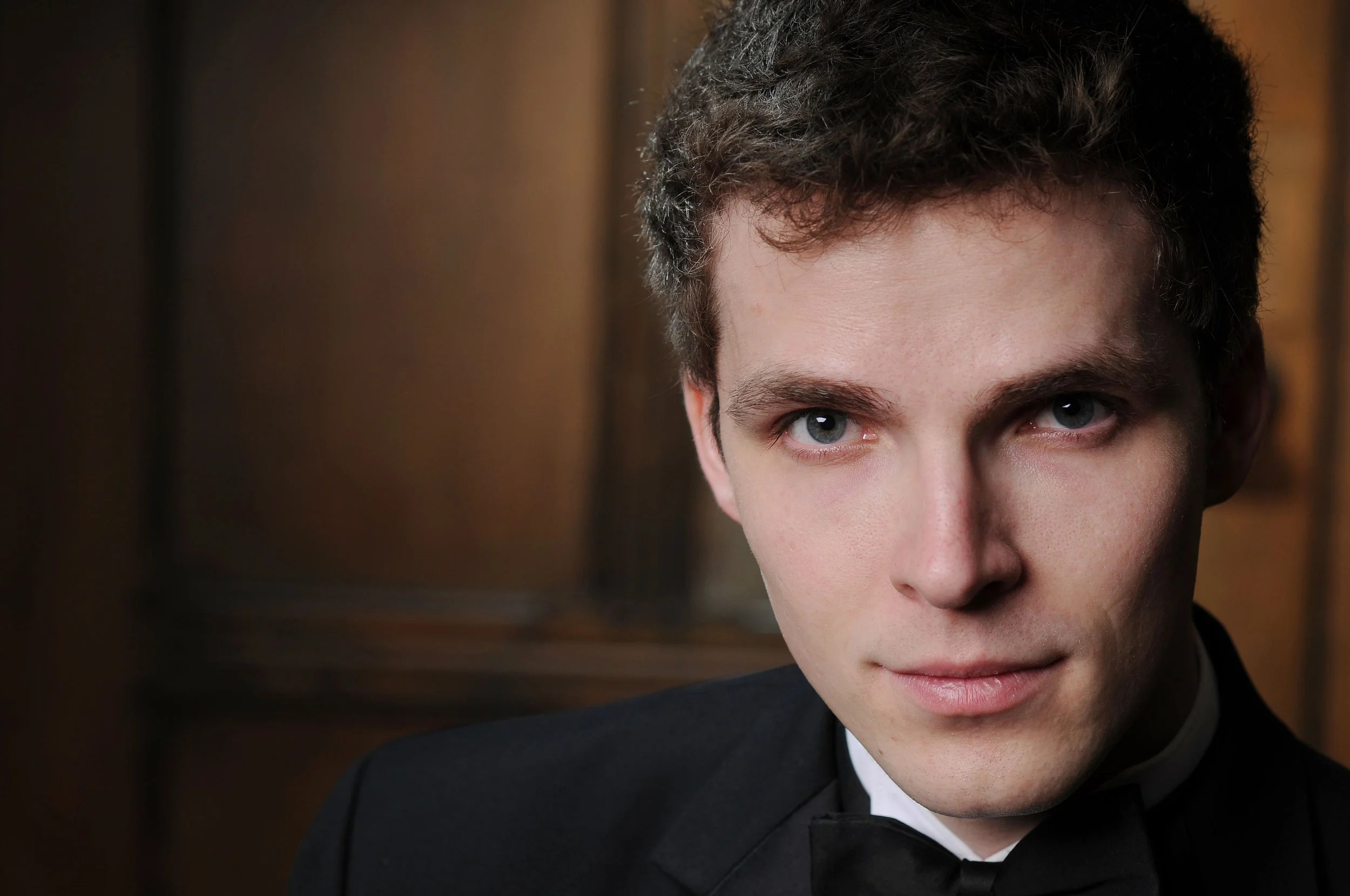
As I discussed the production at intermission with friends, it was clearly another test case of the idea of director’s theatre, where a well-known work is done in a new way. Those who insist that the text must be done as written resist, where those who don’t know the work or who don’t care about departures, digressions & deletions will be delighted.
For the most part I liked it, impressed by most of the creative choices from director Marshall Pynkoski & choreographer Jeannette Lajeunesse Zingg.
Bagan said in his interview that the smaller orchestration “opens the door to “lyric” singers who have incredible artistry but might not have the sheer physical volume to compete with an 80-piece orchestra. It makes the art form more mobile and accessible.” I can’t help thinking that Debussy himself had this objection to grand opera, especially Wagnerian music drama, and its requirement of big loud virtuoso voices with high notes, limiting the dramatic possibilities: given that the opera he wrote is already a bit like Wagner 2.0. The singers aren’t pushed nearly as far by Debussy as they are by Wagner or Verdi even with the larger orchestra. Bagan’s work makes it easier still, more accessible.
Bagan also said that his orchestration “restores the “recitative” nature of the work,” and that a “14-player chamber ensemble, however, can move as deftly as a Baroque continuo section, responding moment-to-moment to the emotional nuances of the singers on stage.” We saw this at times from conductor David Fallis, the pace very flexible and sometimes very quick. I’m not sure I’d call it “recitative”, but that’s just terminology. The point is, the new adaptation works.
What I didn’t expect were the cuts to the opera, and for the neophyte those won’t matter. I didn’t mind them either although they do change the work somewhat. Debussy’s scene changes function much like the ones in Berg’s Wozzeck or indeed in Wagner’s Ring cycle music-dramas (albeit on a smaller scale), as a kind of reflective breathing space, where the audience has a moment to ponder what they’ve seen.
Marshall & Jeannette chose to add dance. I’m not sure what I think of it, as I think in places it’s redundant and not really adding anything no matter how beautiful. The dance releases tension, which is not always a good thing when the opera has built up dramatic tension. As I say, I’m not sure what I think. The main thing to observe is that Marshall & Chris have not just reduced the orchestra’s size but changed the story somewhat. In opera, directors do that. I argued with people about the changes in the Met Opera’s Tristan und Isolde a few weeks ago, and have defended directors for much bigger changes to a score that were made at the COC.
Marshall is usually faithful to the text. The one thing that I feel needs to be said is simply that this is original and new. And there’s nothing wrong with that. It’s not historically informed Pelléas, which would be to show us the opera as it might have been done sometime between 1895 (when the piano score was finished) and 1902 (when the work premiered in its fully orchestrated incarnation) or a little thereafter. While you can make the case that the reduced orchestration is in the spirit of Debussy’s creations at the time, that goes out the window when you insert dance numbers with baroque music (before Acts 1 & 2 and again after the intermission, in the midst of Act III). I’m not objecting to those changes, just wanting the interpretation to be understood as new rather than true to 1902, which it is not. But that’s a trivial nerdy question, given that overall the production is successful, beautiful to look at and wonderful to hear.
For those who know the opera it may be odd that some things they knew and loved are gone, such as the subterranean scene between the brothers, the subsequent scene on the surface, the commentary from Arkel after Golaud pulls Mélisande’s hair, including the line of the opera that is possibly its most famous, or the moment in the last act when the servants (having mysteriously appeared) drop to their knees to announce Mélisande’s death. I don’t believe in arguing with a director, if that’s what Marshall wants to do, by all means: but it struck me as an odd thing to omit. I usually cry at the end of this opera, and while I was very moved in places, I was not sure what to think, left cold by the way Marshall chose to end the work. I’m not saying it’s bad. I’m saying I don’t get it, I do not understand.
You might love it.
I wonder if Chris re-orchestrated all of the opera, and then Marshall made cuts. It’s a long evening after all, so that might have been necessary. I did not expect to see Yniold’s scene in the 4th act, my favourite scene of the opera, and one that Against the Grain also cut from their Pelléas.
I was pleasantly surprised by the talk Marshall gave to introduce the performance. No mention this time of “impressionist”, a word that I don’t think should be used about Debussy even though yes, Leonard Bernstein does use it, speaking of Debussy’s piano music. Marshall spoke of the opera in context with the reaction against naturalism / realism in the theatre, which is great to hear, the Symbolist movement in the Parisian theatre as a very brief reaction, a sort of counter-discourse.
So let me be clear, I’ve said before that Marshall is very creative, sometimes brilliant. In places those adjectives apply to his Pelléas et Mélisande. But this is an original new creation, not a historically informed interpretation. While Debussy might have embraced the reduced orchestration and while Mallarmé and his circle saw dance as a kind of poetic ideal, that doesn’t mean he would have quietly nodded in approval to all the dance added to this opera, especially considering that several scenes were cut to allow time for the dance interludes, lovely as they may have been. And indeed I’m not saying it’s bad.
I’m saying it’s new. It’s Marshall & Jeannette changing Debussy, and that’s fine. But let’s not pretend this is a faithful representation of what Debussy wrote. It’s not, even if in places it’s brilliant, often very beautiful, very moving.
Douglas Williams was a powerful Golaud, scary at times, sympathetic always, the voice beautiful, the physical presence, awe-inspiring. In the company of this chamber ensemble & David Fallis’s sensitive leadership, he was fluid, sensitive and totally heart-breaking. Douglas continues to be a tower of strength for Opera Atelier.
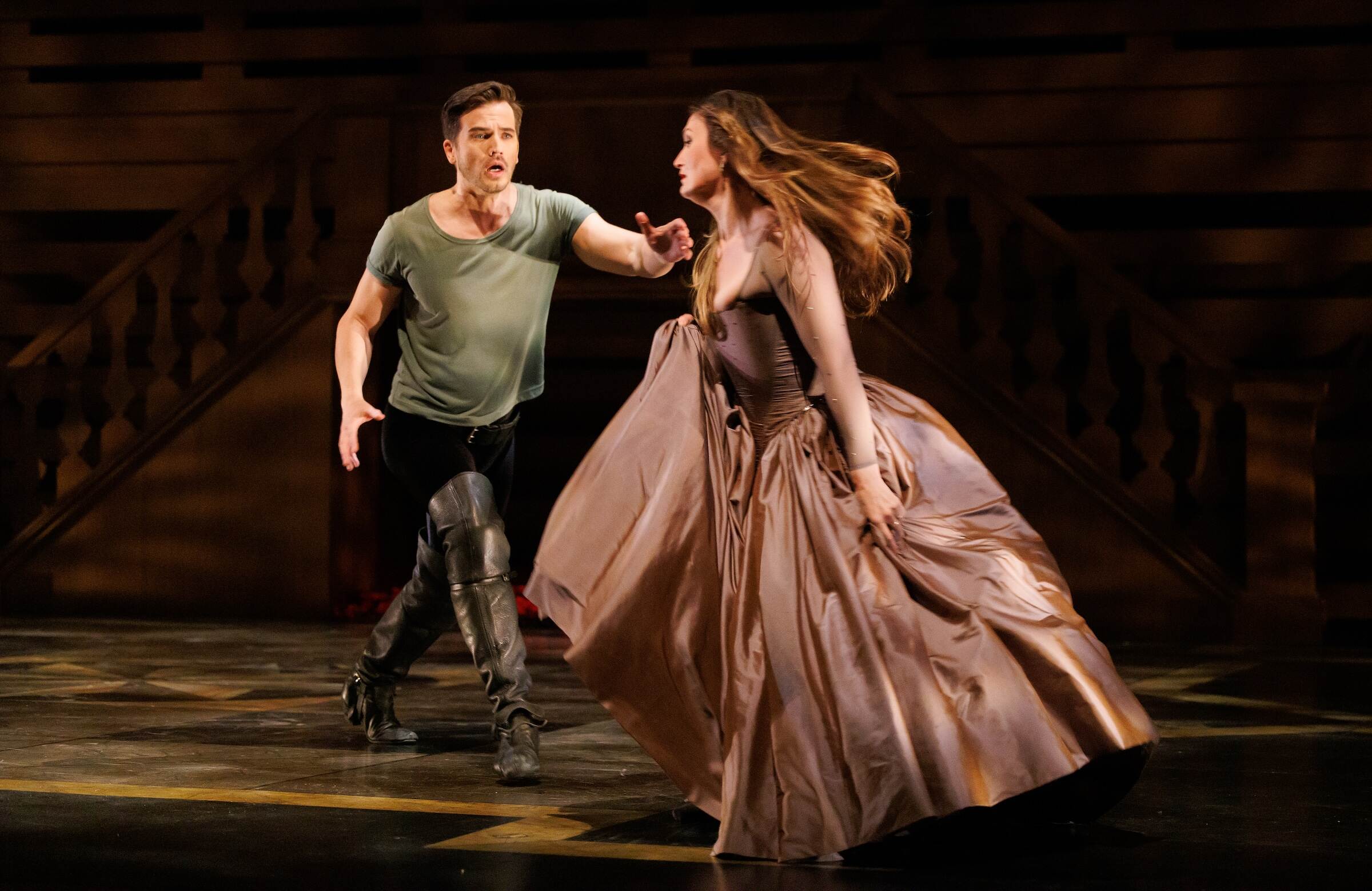
Meghan Lindsay was the enigma at the centre of the production, intriguing from the first moment that we saw her lost in the forest. I continue to be amazed at her flexibility, recalling her Agathe in Der Freischütz more than a decade ago, yet still a radiant young presence who can play the ingenue or the femme fatale, Mélisande being a bit of both. Antonin Rondepierre as Pelléas was a terrific match for her, as he underplayed until his final scene.
I was thrilled to hear the gorgeous voice of Philippe Sly as Arkel, his first appearance being one of Marshall’s strokes of genius. Arkel is understood to be an old blind patriarch, who was played by a young man wearing a blindfold and tormented by dancers onstage: which might be the most creative way I’ve seen the character portrayed. I found his first scene very moving. I’m sorry that the production chose to cut some of his part, although that’s also true of all the other principals except Geneviève, sung by Measha Brueggergosman-Lee. The first time we see her in the second scene, reading from a letter, she made more of this than usual, as I’ve found this is usually done slowly, whereas she gave it terrific energy, which made a great contrast when old rumbling Arkel replied to her.
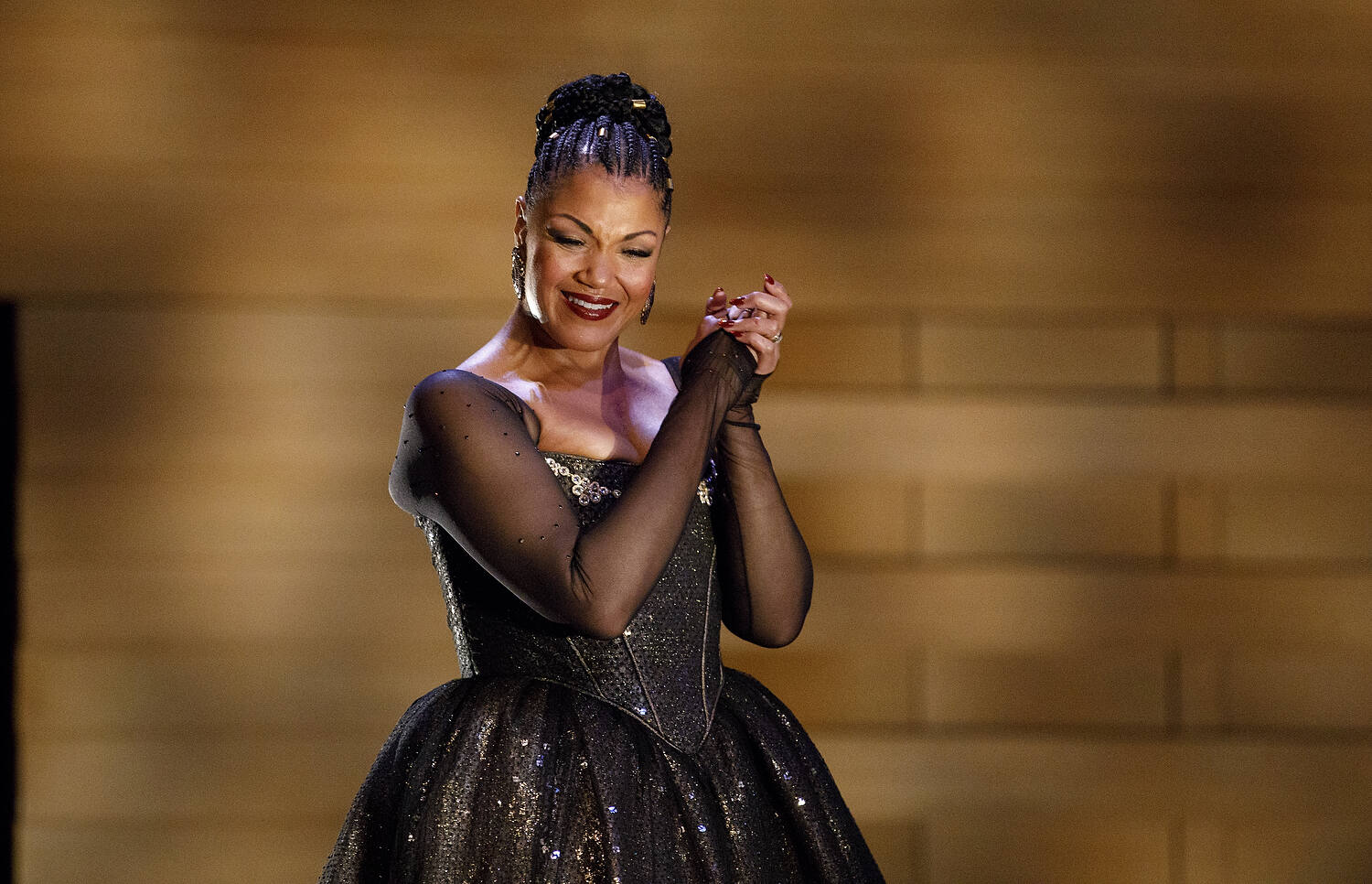
And the family dynamics peer between the lines of that exchange, as we see that everyone is a bit afraid of Arkel (Golaud speaks of the possibility that Arkel will be angry with him,), who is a slower older version of temperamental young Golaud. That later scene that’s cut with Yniold (Cynthia Akemi-Smithers) also features a bit of a tantrum, the men in the family seemingly having anger issues. But Cynthia’s one big scene with Douglas was one of the highlights, his heavy-handed & abusive nature hard to watch. I was impressed with the way Marshall had her peer into the bedroom with the help of dancers.
Pelléas et Mélisande continues at Koerner Hall April 16, 18 & 19. Click for tickets & further information.