Fresh Rosmersholm at Crow’s Theatre

You sometimes hear people tell you that a play from another century seems to speak directly to our own time.

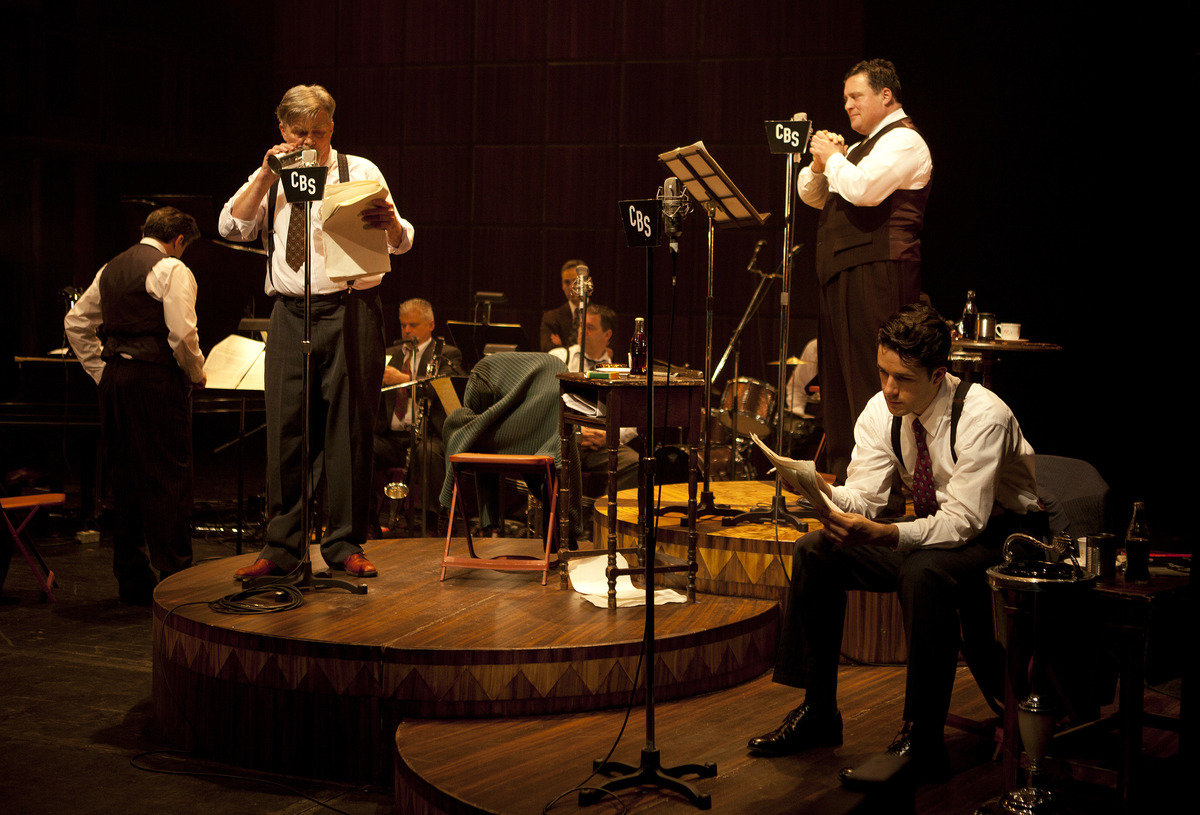
(l-r): Ben Carlson (Governor Andreas Kroll), Jonathon Young (Pastor John Rosmer), Virgilia Griffith (Miss Rebecca West) (photo: Dahlia Katz)

Last night watching Duncan Macmillan’s new adaptation of Henrik Ibsen’s Rosmersholm at Crow’s Theatre directed by Chris Abraham was the perfect segue from the Trump-Harris debate the previous night.

The progression from idealism to cynicism, the transparent use of media to mislead or lie, class struggle and the rights of women in society are all front and centre.

Abraham has assembled a dream cast who will only get stronger as the run goes on.

(l-r) Virgilia Griffith (Miss Rebecca West), Jonathon Young (Pastor John Rosmer), Diego Matamoros (Mr. Ulrik Brendel) (photo: Dahlia Katz)

For most of the play we watch Ibsen probing the past, not so much a CSI as an enquiry into the meaning of life, as we observe the different responses of each character to a conservative society’s demands and norms. The stage picture of our immersive set in Guloien Theatre presents the action in the round, allowing the audience the pleasures of watching responses from across the space, while every actor is fully exposed. Rosmersholm is a place, a concept of society itself, and practically a character in the play. The very first moments of Abraham’s reading that may seem like a throwaway bit of action (characters crossing innocently) sets us up for the organic flow on the stage pulling us towards the exit off to one side and the inevitability of the conclusion, further aided by a powerful sound design sometimes at the edge of audibility sometimes emerging into the foreground by Thomas Ryder Payne.

Ben Carlson as the conservative Governor Andreas Kroll is the catalyst for the first part of the play, his rage and grief tightly repressed as befits his standing in society. Diego Matamoros as Ulrik Brendel seems to conjure magic every time he appears, shifting the tone and the pace like a trickster, a complete contrast to the Governor’s oppressive language & politics in his refusal to be fettered by social mores.

Beau Dixon as Peter Mortensgaard is another catalyst, his brief appearance volcanic but tightly controlled by Chris Abraham as far as what he was permitted to do onstage given that his real actions are in print rather than through anything he would permit himself to do onstage. Kate Hennig as Mrs. Helseth is the servant who has seen everything unfold in the household, seen through a close-minded Christian lens, so well-trained in her subservience as to be a true fixture in the house.

That resounding space full of repressed emotions is where we meet two people that seem much more modern in their outlook, even as we see them unpack layers and discover deeper aspects of themselves over the course of the play. Virgilia Griffith as Miss Rebecca West is one of Ibsen’s breath-takingly modernist creations, someone you may think is almost too good to be true: except as we get to know her she’s not exactly as she seemed at first. The process of tearing away the surface is one of the delights and horrors of the play, a brave display as she enacts her own fearless implosion before our eyes.

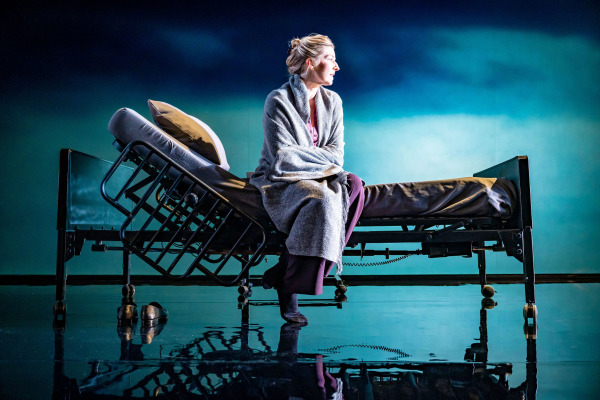
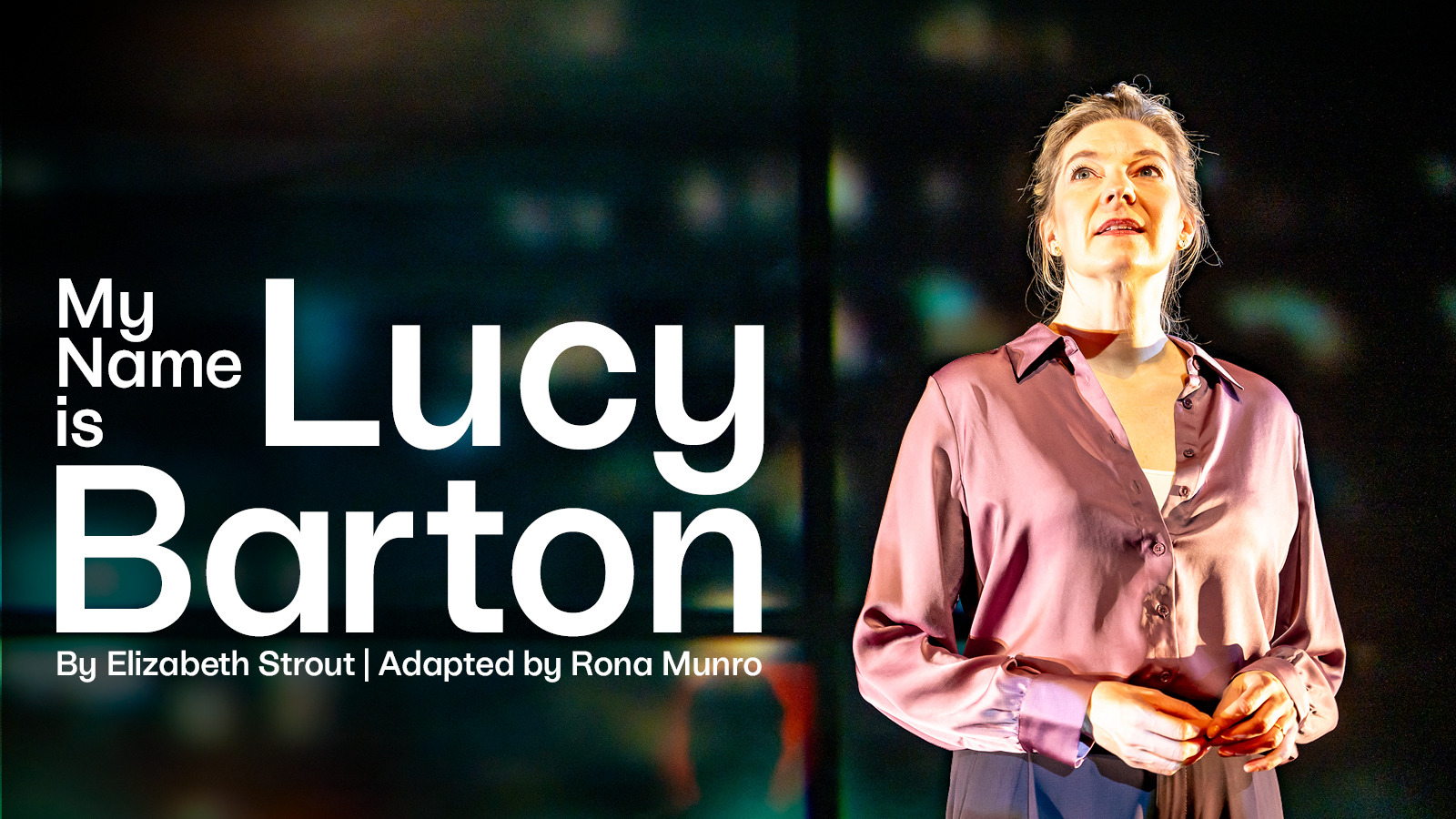
Jonathon Young is Pastor John Rosmer. You see a remarkable blank effect in both of these photos, uncanny in its stillness even though it must be the result of discipline and skill. For the first half hour Young is like a becalmed boat on a lake, waiting for wind to give it some movement. His tranquil calmness is frankly breath-taking, indeed behaving the way I wish pastors would behave, as he listens and reacts with empathy rather than performing and preaching. His responses tend towards a naive idealism but even so he’s listening to those around him. As he starts to respond and tell us of what he really believes it is as though the wind has found him and he begins to move and respond, a startling and organic transformation.

As the run continues I think it will be enjoyable to watch Young & Griffith, as well as Matamoros, Dixon, Hennig and Carlson particularly given that the theatre affords one the opportunity to see them again from the opposite side.

Rosmersholm has just opened, running to at least October 6th. See it if you can.

Photo by Tomohide Ikeya
Posted in Books & Literature, Dance, theatre & musicals, Reviews | Tagged , , , , , , , , , , , , , | Leave a comment

Mercury & La Passione: Rachel Podger leads Tafelmusik in Haydn Symphonies

There’s a new recording of two Symphonies by Joseph Haydn scheduled to come out in October from Tafelmusik.

The performances feature violinist Rachel Podger, who debuts in her new role as Principal Guest Director later this month when Tafelmusik begin their fall season with an all-Mozart program at Koerner Hall September 27, 28 and 29.

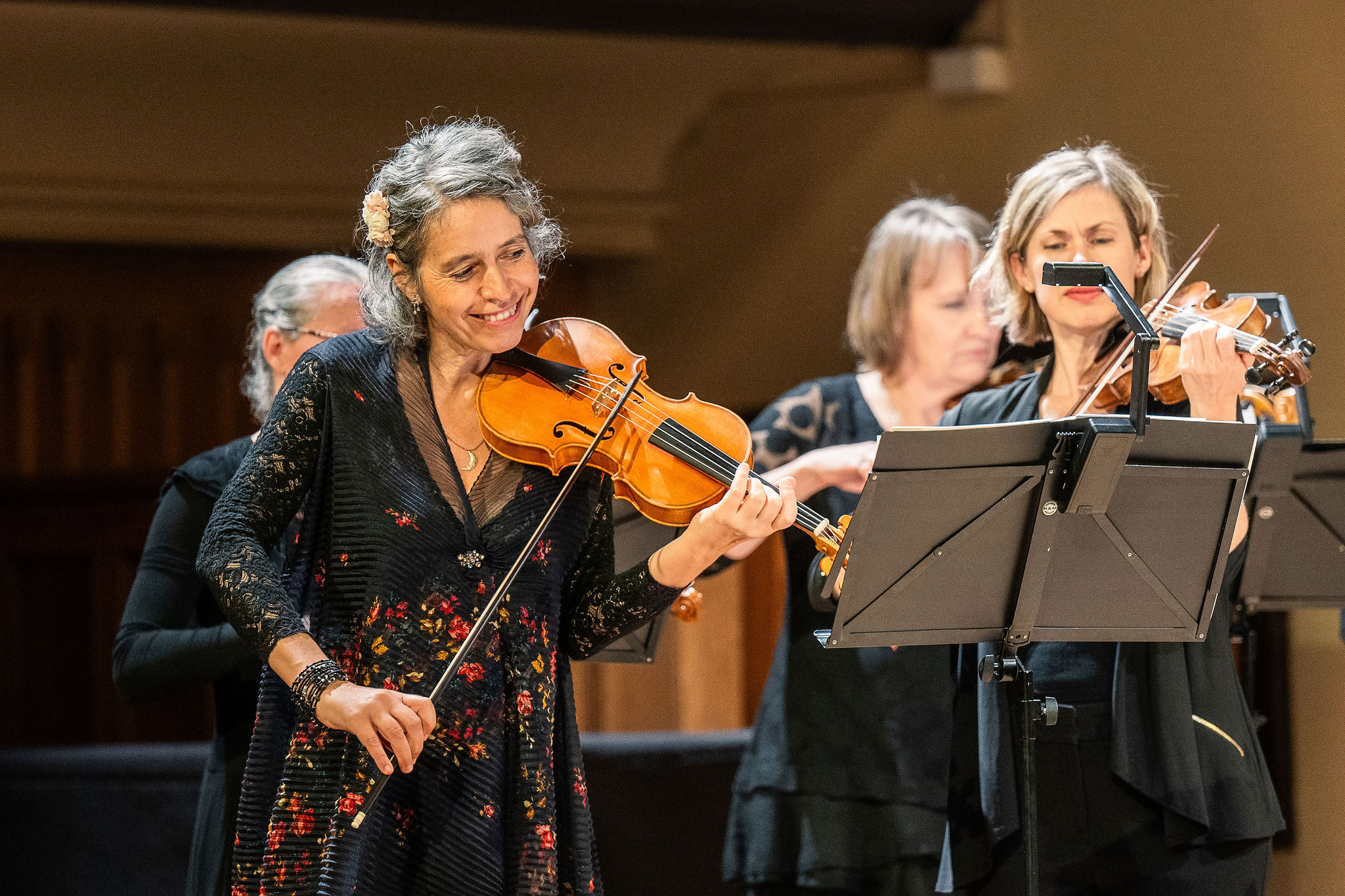
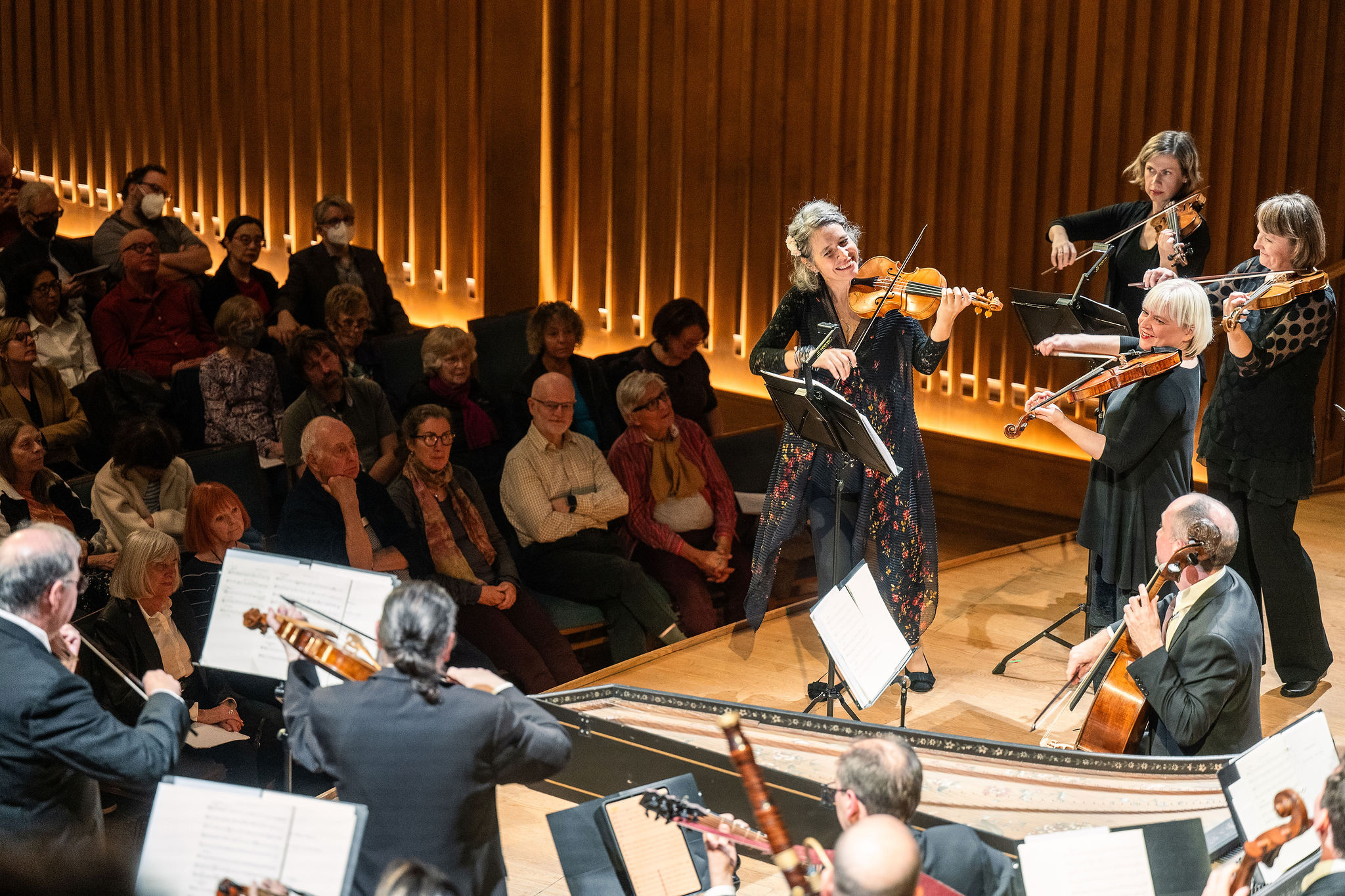
Violinist and Tafelmusik Principal Guest Director Rachel Podger (photo: Broadway Studios)

The new recording offers Haydn’s symphonies #43 and #49, a contrasting pair of works. Haydn was a prolific composer who lived from 1732 to 1809, composing 104 symphonies, over 20 operas as well as many works for smaller ensembles or soloists.

We’re told in Charlotte Nediger’s excellent and enjoyable program notes that Symphony #43 dates from 1771, and that the nickname “Mercury” for #43 likely comes from the quick Finale, applied years later. The first movement after a sedate beginning suddenly doubles its effective speed (same tempo but feels twice as fast), building in intensity until a gentle second subject comes in, truly Mercurial in its alternation between vibrant and gentler moods, experienced once more as we repeat the opening exposition. The development similarly vacillates back and forth, the horns adding to the drama yet still grounded and astonishingly economical in its swift handling of the materials. If brevity is the soul of wit Haydn makes a persuasive case here and in the subsequent movements of this symphony.

Don’t get me wrong. The next movement Adagio is much longer, and more deliberate in its treatment of a theme and its elaboration. Where the first movement sounded like a big powerful statement mostly from the whole orchestra, much of the slower movement features gentler textures from parts of the ensemble dialoguing back and forth in a gentler sort of back and forth, a bit like a call & response.

The boisterous Menuetto & Trio is just over two and a half minutes long.

And the aforementioned Finale is just over six minutes of Allegro, beginning softly then erupting into something employing the whole crew. We are again alternating between softer passages and bigger stronger statements, the contrasts delightfully sudden. Is this why someone invoked Mercury? Nobody knows, but there’s certainly mercurial quality to the outer movements.

Let’s pretend there’s an intermission between the contrasting symphonies, an intermission of sorts when I will interrupt commentary on Haydn to remark on the superb performances of Tafelmusik on period instruments and violinist Rachel Podger as a team. I feel that we’re in a different place in 2024.

There’s been a transition, perhaps best understood as a sort of culture change, an evolution. I recall the first times I heard historically informed performances. There was a Handel disc on vinyl while I was working at the classical record shop in Yorkville around 1980. I wanted to like it..? There was also the Posthorn Serenade performance from the CJRT Orchestra around this time, the unfortunate soloist unable to handle the painful posthorn solo.The period instruments had a special sound but were occasionally so challenging to play that we would hear mistakes during performances or on records. In the next decades I sought and collected new recordings, although I regularly encountered people who refused to even listen to this sort of thing. Over time the skills of the players gradually caught up to those challenges.

And Tafelmusik themselves were gradually upgrading their skills over the years. They’re now at a place where their live or recorded performances have the colour, heft and weight of the older instruments but delivered without any of the fluffs one used to encounter in the previous generation. The rapport between Tafelmusik and Podger, herself not just a conductor but a performer leading from the violin, is palpable, infectious.

Symphony #49 in F Minor is a very different sort of piece from the work that opens the recording. Don’t let the higher number on the work fool you, as it actually dates from from the 1760s, three years before. Not only does it begin with a darker colour, but its emotional depths are starkly different from the upbeat work sharing the recording. The minor key is a relative rarity, one of eleven in the 104 Symphonies Haydn composed. All four movements begin in the same minor key. The nickname of “Le Passione” (again a later addition rather than one created at the time of composition) connects the work to Holy Week and possible performance on Good Friday, likely when secular music was prohibited. Elaine Sisman’s article “Haydn’s Theater symphonies” suggests a theatrical origin as she hypothesizes that Haydn’s symphonies served as theater music. Given the question-marks I welcome the chance to hear the music, given that performances are opportunities to explore such questions, if not answering them.

Reading about Haydn one sees the descriptive epithet “Sturm und Drang“, or storm and stress, a phrase that sometimes functions as more of a tease than a description. Yes composers and writers of the time were seeking to arouse emotion in the listener, to scare you, stir you up or upset you, long before we reached the romantics or gothic novels, although Walpole’s Castle of Otranto (1764) is in fact from before this symphony. Such things are relative of course. What scares or upsets someone in 2024, a time when we’re accustomed to school shootings, lying politicians and pictures of deaths caused by bombings of civilians, is surely far removed from what was undertaken by a writer or composer in the 1760s, when Haydn’s first known opera was composed (and there’s at least one more from before that’s been lost). While these are still far removed from what Haydn or Mozart would accomplish in subsequent decades, they’re still exciting and dramatic.

There are again four movements, reversing our usual expectation in placing a slow movement at the beginning and faster ones as the second and fourth.

While the complete CD is exactly 52 minutes long, it feels enormous in some ways for the density of the materials, the concentration of ideas. Yes Haydn’s movements are sometimes short but they are fleet-footed and intense. I’m listening to the recordings over and over, stunned by their economy and clarity.

Now that Podger and Tafelmusik have taken us on such a delightful tour of Sturm und Drang Haydn, I’m ready for their “Mozart Jupiter” program at the end of September.

For further information and tickets click here.

Posted in Music and musicology | Tagged , , , , , , | Leave a comment

Thinking about Richard Strauss’s death in 1949

On September 8, 1949 composer and conductor Richard Strauss died after a long productive life. I think of him as a romantic composer carrying on the stylistic traditions of Richard Wagner. In Salome and Elektra he was the modernist pushing expression and tonality to the limits of propriety taste and dissonance, before turning back from the precipice where he and the art were teetering, returning as a neo-classicist & late romantic to the warm melodic possibilities one could create in a tonal sound-world. Somehow one wouldn’t expect a man born in 1864 to have been alive so recently.

As regular readers may have noticed, I am sometimes a bit compulsive about dates and anniversaries. I’m thinking about the anniversary of Strauss’s death on September 8 2024, the 75th anniversary of his passing. I haven’t heard anyone mention this, possibly because there are usually other commemorations (for instance the Year of Czech Music or the centennial of Cunning Little Vixen) that get more attention. I guess this one is meaningful to me because Strauss has made an impression on me over and over throughout my life.

When I’m asked who I’d call my favourite composer I’ve never said Richard Strauss, even though maybe he’s always been there inside my head. That’s what I’m thinking about in this little summary.

In 1968 I didn’t wait long to see 2001: A Space Odyssey. I saw it twice in its first year, and bought the soundtrack album, featuring pieces by Ligeti and Johann Strauss Jr alongside the brief signature piece that opens the film. People refer to it as “The 2001 Theme”, that opening fragment from Also Sprach Zarathustra.

While that music has become ubiquitous, quoted in films and tv commercials, and the film itself has entered the conversation as the greatest film ever made, at least partially thanks to that revolutionary soundtrack, in 1968 its impact was still in the future. At this point in my life I was also listening to the Beatles while sometimes playing the piano accompaniment for my brother’s songs or arias. It would be years before I would get a recording of the complete tone poem Also Sprach Zarathustra, or read the poetic Nietzsche work underlying Strauss’s composition.

In 1969 one of the first really exciting operas I saw was presented at the University of Toronto Opera School (as it was then known) at the MacMillan Theatre, a production of Ariadne auf Naxos directed by Hermann Geiger-Torel and conducted by Ernesto Barbini. They called it “Ariadne on Naxos” because they presented it in English translation.

University of Toronto Music Library. Music Library collection of faculty events, Ariadne on Naxos : [program],  OTUFM 51-CS68/69-OD-PR 1969 09.

Was it staged to commemorate the 30th anniversary of Strauss’s passing? If they did there’s no mention of it in the program.

Even so it was the most exciting thing I had ever seen live on a stage. I didn’t expect to love it so much.

It’s been a bit breath-taking to peruse the program, to see familiar names on the cast list. I will have more to share as I look more closely at the files in the EJB Library archives. I went to see it mostly because my brother Peter Barcza was just 19 years old in the Opera School, singing the small role of the Wigmaker.

But this opera with its strange mixture of mythological characters (Ariadne, Bacchus, three nymphs) and Commedia dell’arte figures (Arlequino, Zerbinetta, Truffaldino, Brighella, and Scaramuccio) blew me away. To this day it’s one of my favourite operas. I realize this is also where I first encountered Commedia dell’arte, another life-long preoccupation.

In my teens I started an addiction that persists to this day, collecting and listening to recordings of music. At first it was on vinyl, later on CDs and DVDs. In addition to the operas I became intrigued by the tone poems of Richard Strauss, including that aforementioned Zarathustra. I was particularly impressed by the recordings of the Dresden State Orchestra conducted by Rudolf Kempe, who seemed to have a special instinct for this music. Their Ariadne auf Naxos recording is still my favourite version of the opera, featuring James King, Gundula Janowitz, Sylvia Geszty, Theo Adam, Teresa Zylis-Gara, Peter Schreier, Hermann Prey and a transparent clarity in the recording of this radiant score.

It’s such a thrill to pull it up on YouTube to have a brief listen.

I remember when one had to struggle to find and obtain such recordings: costly for a kid, welcome gifts from a generous & supportive family. And now they’re available online for free. Is it a golden age? Or the ground-rules of our economy have changed, offering us so many free treasures, while devastating the livelihoods of the artists.

But I digress, I was speaking of a childhood getting acquainted with music through recordings and occasional live encounters in performance.

A few years later, when I was at University of Toronto doing my undergrad, I met a few remarkable people who participated in the shows I would get to do with the Trinity College Drama Society, a magical period that infected me like a disease with the theatre bug. We had a woodwind quartet with me on David Neelands’ harpsichord for a production of Beggar’s Opera, when David was the College Registrar, an extraordinarily generous individual fostering our creativity. The horn player (whose name I’ve forgotten! a divinity student) showed me his score for the Strauss horn concertos. The first one was much easier for both of us: although he seemed able to play both almost effortlessly. I didn’t appreciate how spectacular and rare he was until later. The last movement of each concerto is a bit of a thrill-ride for the pianist.

And there it was, another bit of Strauss embedded in my head. Of course I bought Peter Damm’s recording of the two concerti conducted by Rudolf Kempe with the Dresden State Orchestra.

Around the same time I would start writing at the Varsity. My first interview was with Bill Shookhoff, whom I met through my brother. I remember that he told me Salome was the toughest opera score. So of course I had to start playing that, always astounded at how it sounds on the piano while maybe also a bit intimidated by the thought that people like Bill could play this daunting piano score.

It may be a bit of madness on my part that I don’t approach one of these piano scores (Strauss Wagner or Verdi as well) as piano music, but rather always hear them as orchestral music, wanting to sound orchestral. Delusional? Perhaps.

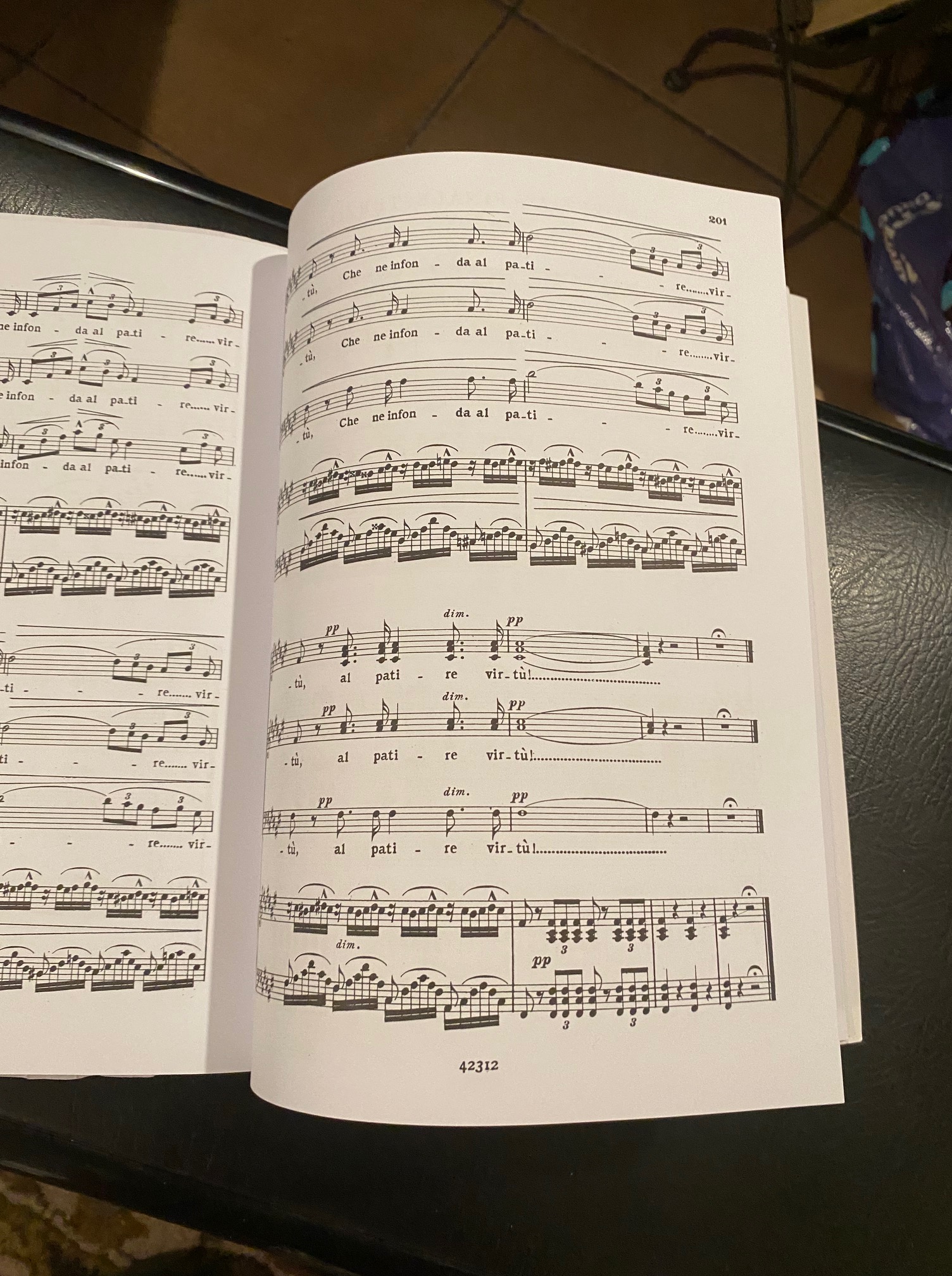
I don’t just collect CDs. Piano vocal opera scores are an amazing resource. I bought this beautiful score of Salome for $12 at a used book store. Yes I have a weakness for used books, particularly when they sell musical scores.

The sequence where Jochanaan emerges out of his captivity under the stage is intoxicating, music that is so much fun to play even if the piano is a pale imitation of the orchestra. It’s fun to imitate an orchestra at the piano, especially in the transitional passages or the Dance of Seven Veils when there’s no singing anyway, written in the overpowering tradition of Wagner.

Notice (if you look closely) where the score naturally falls open. Yes this is the sequence I mention above. On the previous page Narraboth commands the guards to bring Jochanaan up, Salome says “ah”, and the orchestra (or piano) takes over for a few pages. The next vocal line is Jochanaan singing “wo ist er” on the page at right.

When I went to graduate school I was living an even more divided life, sometimes studying in class, sometimes enacting practical theatre on stage, and meanwhile also holding down a full-time job.

In 1999 during my PhD I realized it was 50 years since Strauss had died. I don’t know if anyone anywhere commemorated this date, but I did, via a mid-day mosaic concert at Hart House Music Room. I had recently composed an operatic adaptation of Venus in Furs that was presented at the Drama Centre during their festival of original theatre in the spring of 1999. I called upon Counter-tenor Mathieu Marcil who had sung in the opera in May to reprise some of what he’d done in the autumn.

My own music was an afterthought in my own mind. The program I conceived was meant to bridge Strauss’s life, asking Mathieu to sing songs from Strauss’s childhood before the age of 12 in a counter-tenor voice to begin the concert, imagining a young boy’s voice such as the composer might have had at the time when he composed the songs. And the other end of the composer’s life was represented by me concluding the concert with the Four Last Songs. In between Mathieu and I sang from my opera and Mathieu sang the prayer from Akhnaten by Philip Glass.

There are layers to this act of self-indulgence, from the self-promotional aspect of any artist promoting their own music, plus the petulant desire to push back against strictures prohibiting certain sorts of performance, thinking of how the Four Last Songs are usually sung by a woman. For me it’s not a gender thing so much as a musical thing. In 2024 I no longer have the high B natural needed for the first song, and as I’m not singing much lately, it’s an academic question.

But please note, in my research into Debussy and the fin de siecle Wagnerians in Paris of that time it was very different from now, as no one had ever heard Wagner, and so a pianist might sit down and perform all the parts of an opera for a group of eager listeners. Before that period the piano was even more central to creative life, as for instance in the efforts of Franz Liszt earlier in the 19th century to popularize works that were otherwise unknown through the magic of transcription. Later 20th century virtuosi such as Rachmaninoff or Percy Grainger thrilled audiences with fanciful rewrites of music. You can still recognize the original.

The pendulum of taste seems to have swung to the other extreme, in an insistence on authenticity rather than imaginative paraphrasing. But it doesn’t have to stop us from enjoying some of the wonderment found in a piano reduction. Currently on the 75th anniversary –again thanks to the University of Toronto’s Music Library– I feel fortunate to have found piano transcriptions of some of the tone poems, bringing me full circle. While they don’t always work that well at the piano, and sometimes are very difficult to play, they still serve to stimulate the imagination, especially if we hear the orchestral version in our heads.

And they’re still a lot of fun.

Posted in Cinema, video & DVDs, Music and musicology, Opera, Personal ruminations & essays | Tagged , , , , , , , , , , , , , | Leave a comment

Poet and Peasant: a picture and an overture

In 1967 Joseph Budai was working on a renovation of a Chinese restaurant in Peterborough.

An old lithograph picture was left inside the walls that he was renovating. At the time it was still inside an old ornate frame that was broken and very dirty. Of course it was, they’d stuffed it inside the walls, where it lay forgotten for many years.

Joe retrieved it, took it home, and held onto it for a long time….

Close-up view of Joe’s picture

1967 was also the year I became a student at University of Toronto Schools, aka UTS. I know I must have been a huge pain in the butt to our music teacher Mr Fitzgerald. Perhaps my whole class was a challenge. I recall that Mr Fitzgerald had a whistle that he would sometimes blow in attempts to get us to be quiet. We were sometimes a rowdy group in grade seven and the years that followed.

I don’t deny that I was a smart-ass, proud younger brother of a great singer, trying to reconcile myself to a UTS music program oriented towards the cadet corps and marching band music rather than orchestral music or opera. While I’d played the cello in grade six I would play euphonium in grade seven.

Mr Fitzgerald, to his credit, had a few great ideas. Decades later and after having worked from the other side of the music, as a music director and teacher, I am abashed recalling how hard we made the poor guy work, trying to impress an impossible group of little boys.

One day Mr Fitzgerald brought us a new piece. The pages of music we placed onto our music stands were pristine, untouched until we opened them: the Poet and Peasant Overture by Franz von Suppé (1819 –1895).

And our leader was new too, as Mr Fitzgerald gave the conducting assignment that first day to an older student. It’s amazing how much better we behaved, no longer acting out against an authority figure, now that we were being led by the cool kid from grade 12, who came in politely, holding his baton with a kind of reverent care. He addressed us with respect, full of a high-minded seriousness before we had even begun to play the piece. Everything that day felt brand new, at least because we had a new leader and new music before us. His attitude was contagious.

I remember that we approached the Poet and Peasant Overture as though we were playing Beethoven’s Ninth Symphony.  

I remember classmate Ron Walker playing the melody of the first section on trumpet, sitting in a row in front of me, and clearly having a great time with the piece. I haven’t seen Ron in half a century. I hope he’s still alive. I was on euphonium in the back row beside George Stock on trombone.

The opening phrases are big and bold. Then the softer answering phrase I think was coming from another grouping, perhaps clarinets and other woodwinds, to create a contrast. I don’t know if we ever made it through the whole piece, as it took us awhile to get past the first page. But it was exciting all the same.

Mr Fitzgerald seemed to know what he was doing, putting me on the euphonium. While I wanted to play french horn Mr Fitzgerald claimed my lips were wrong for the instrument. Perhaps he was right? My older sister had played principal french horn at Cedarbrae and later Lawrence Park Collegiate, seemingly coping with the same full lips we inherited from our parents, that didn’t prevent her from skillfully playing the horn solo in the Tchaikovsky 5th symphony.

Or maybe Mr Fitzgerald had his eye on the future of the UTS Band, so that my ambitions were irrelevant. In time I was encouraged to switch from euphonium to tuba, which is very similar in fingerings but hitting lower notes. In fact I loved it even if I didn’t enjoy being called “Tubby the Tuba,” (a reflection of my physique). Clearly Mr Fitzgerald was planning the succession, as older students’ graduation changed the needs of the UTS band. In short order I was the tuba player and offered a bargain-priced trip to Ottawa, at $40 including bus fare and two nights at the Lord Elgin in 1970 or so. I recall an inspection in uniform as member of the cadet corps, where the inspecting officer arrived beside me, commenting something along the lines of “that instrument is bigger than you!”

And I politely replied “yes sir!”

You will recall that Joe Budai found that lithograph back in 1967, when I was 12 years old and his daughter Erika was 15.

Erika and I would meet roughly twenty years later, and were married in 1989.

Joe told Erika that the lithograph in its gold frame, still stashed away in storage somewhere, reminded him of me and Erika. I found the idea not just romantic but flattering, an endearing image. The title at the bottom of the picture says “The Poet and The Peasant”.

This detail of the picture shows the title (seen more clearly by human eyes than via my smartphone)

Erika was as much or perhaps more of an artist than I. She went to Ontario College of Art (or OCA, as it was then known) now Ontario College of Art and Design University (or OCADU). I remember wondering whether I should think of her as poet (artist) and myself as the peasant in her father’s mind.

I have written about Joe Budai before. Joe was married to Irene. In April 2009 Irene passed away. Joe was still alive but afflicted with Alzheimers. In February 2010 Joe would finally pass away.

A couple of years ago we took the remnant of the lithograph in its old golden frame to be restored, cleaned up and given a new frame. It hung for awhile above our bed.

Currently the picture hangs in the front hallway of our home.

The lithograph is actually a copy of a painting by a British painter Henry John Yeend King (1855–1924). The original can be seen online, a full-colour oil on canvas 109 cm by 160 cm. I wonder whether the painter knew the operetta, or merely used the title as his inspiration.

But I was wondering about that image in the lithograph. When I looked around online it led me back to the piece I had heard at UTS decades before. When I googled I saw the connection of the name –between the picture and the overture–even if I can’t find the story original. It seems that the work titled Dichter und Bauer (Poet and Peasant) was composed in 1900 after Franz von Suppé had died. He had composed incidental music plus the overture for a play back in 1846, while the operetta was assembled in 1900 using his music. 

I’ve recently been exploring the riches of the Edward Johnson Building’s music library, especially piano reductions of orchestral pieces. When I looked in the library catalogue I was delighted to see that the EJB Library had a copy of the Poet and Peasant overture in a piano arrangement, one of several items donated by Professor Carl Morey. While it is not permitted to circulate, one can have a look and copy.

I requested the score of the piano transcription, took pictures and then printed a copy at home that I have played through.  

As with most piano transcriptions the music has to be reduced from a large ensemble to be played at the piano by a soloist.

Here’s the cover page.

Playing it on the piano was a bit of a nostalgia trip… It opens with a solemn melody that we took very seriously back in the day even if it’s kind of silly in a Bugs Bunny cutting Elmer Fudd’s hair sort of way. Sometimes the piece is sweetly lyrical, sometimes desperately melodramatic, jumping from one mood to the other. Music for the theatre of the time was created in hopes of capturing and inspiring powerful emotions. The transitions in the music were unsubtle, even abrupt, but that just made them more exciting.

There’s a passage where the melody sounds a lot like “I’ve been working on the railroad”. The intense drama in the middle when it gets all passionate reminds me of Rossini’s overture to William Tell, alternating between pastoral lyricism and the powerless desperation of a silent film.

The heroine is tied to the railway tracks. And a train is coming!

Von Suppé’s command of a melody is as sure as any bel canto composer: even if it might be a mistake to use such a label for his music. I wish I knew the original context better, as the piece has been divorced from the original text that inspired the work. All I have so far is a title.

I hope to find out more, but in the meantime I can enjoy hearing and playing the overture.

Posted in Art, Architecture & Design, Music and musicology | Tagged , , , , , , , , | 2 Comments

A Faustian legend in miniature: Orville Doodles and his Terrible Imagination

Today it’s the full moon, when people seem to go mad.

Fester howls at the moon

I have just watched Scott McClelland’s Orville Doodles and his Terrible Imagination: a retelling of the Faust legend at the Red Sandcastle Theatre.

No, there was no transformation into a werewolf.

But we did witness an encounter between a normal person and the powers of darkness threatening damnation, a devil & demons, a dog and even a few things that don’t begin with the letter “D”.

The original Faust may as well be Fester screaming at the moon, wishing for a better life. In various versions of the tale the hero sells his soul to the devil in exchange for something he lacks such as youth, love or excitement.

Orville does not look happy.

After seeing the show I understand that the cryptic title has multiple meanings.

Orville lives a life that seems unbearably boring, a daily routine that is stupefying. No wonder, because Orville has no imagination.

When the devil offers him an imagination in exchange for his soul, I wonder: would someone with an imagination foresee what this might mean, what consequences he might trigger? We might ask:
1-is his imagination terrible when it encounters the horror?
or
2- is his imagination terrible when it fails to anticipate the consequences of his choices?

Orville takes us along on his voyage of discovery, as though we too will learn about the world, learn how to imagine.

We see a fairy get devoured by a devil-dog.

We see ghosts & demons.

We see Orville’s body change.

As Scott manipulates puppets and works magic, creating an illusion, we are invited to use our own imaginations. We may ask about the hazards, the danger for Orville and our own danger. Is the ability to imagine a blessing or a curse? If the performer succeeds in creating imaginative engagement with the audience it means we are moved, sucked into the story, rather than indifferent.

The story hints at the hazards of an imaginative sensibility.

The transformation of Orville’s life from boring routine into something magical parallels what we watch. Scott the magical practitioner strips layers off of the surface of reality, as Orville takes risks.

Is this the path to redemption or damnation? You’d have to see the show to find out, as I’d rather not spoil it. But it’s entirely kid-friendly, suitable for children ten years of age and up.

I had a chance to meet Scott.

You’ll notice how flamboyant and friendly he seems while I was stunned from the heat before the matinee.

Thank goodness for the air conditioning at Red Sandcastle Theatre.

Posted in Dance, theatre & musicals | Tagged , , , , , , | 2 Comments

Orville Doodles and the terrible imagination of Scott McClelland

Forgive me. The name of the show may be Orville Doodles and his Terrible Imagination but I couldn’t help thinking (as I ponder questions that I will pose to Orville’s creator), that Orville comes from the brain of Scott McClelland.

So of course here are my questions for Scott to probe that terrible imagination of his.

Scott McClelland, photobombed by a grotesque merry -go-round, which seems appropriate.

*******

Barczablog: Are you more like your father or your mother?

Scott McClelland: An interesting question.

Strangely, I am an anomaly. I am more like my Mother’s Father (my Grandfather) than anyone else.

When it comes to temperament, I am more like my Father. Wound up a bit too tightly at times. But, my Dad also enjoys a good story… and THAT is something that is very important to me. In many ways I look more like my Mother, skin wise, thick dark hair and even build. My Father is 5’6 and thin, my Mother is built a bit more sturdy (in a good way) I have my Mother’s olive skin from the Slavic side of my family. I wish I had my Mother’s calm temperament, but alas, I am a bit more anxious and suffer from depression, like my Father.

Needless to say, the Anxiety and Depression do play an important part in how I create and strangely, that is a good thing. Having an understanding of the darker side of the human psyche is important to much of my work… and I do not think I would be as successful if I did not live with the Black Dog in my life.

But my talent and inspiration comes from my Grandfather, Prof. N.P. Lewchuk, Inventor, Artist, Carnival owner, Performer and Mage. I am like him on so many levels, but I do not feel that I could ever accomplish as much as he had in a lifetime.

Old Nick, my Grandfather, was a man driven by passion and a need to create dreams.

I love this picture.

Scott McClelland: He invented some of the most important things on the carnival… as a young man he saw a Merry Go Round in 1917 and noted that horses would just travel in a circle with no motion, but being that he was an equestrian rider, he wondered if children would not prefer that could feel the horse gallop beneath them… and so he invented the step mechanism that makes the horses go up and down, which is the advent of the Bobbing Horse Merry-Go-Round. He also created the prototype for the Teacup Ride at Disneyland. And created the very first collapsible Ferris Wheel that was moved on a trailer base, bringing on the advent of trailer based carnival rides.

Over and above all of this, he wrote books, was a botanist, chemist, had his own record company and publishing company. They called him “The Brain from the Ukraine”. And for good reason.

My Grandfather performed Magic on stage, but performed it in a mystical and sometimes sinister fashion.

My Mom has said, when she was little, she hated watching Grampa’s Show because every performance, he would kill my Grandmother on stage, sometimes with a Guillotine or a Sword Cabinet, and it was done in the style of Grande Guignol. (Grande Guignol is a world-famous style of theatre that blends Horror and Comedy, often in shocking ways) My Grandfather would also perform Seances on stage with apparitions appearing and things going bump in the night. THIS is why I am who I am today. So much of what my Grandfather did, whether it was Vaudeville, Magic, and Sideshow… I have been doing the same. Keeping the candle burning and producing shows that are based in the strange and macabre.

BB: I’m inserting this self-portrait I found on your Facebook profile. It seems to be the perfect follow-up to what you just said.

Scott McClelland: self-portrait

Scott McClelland: I started my career performing as a Vaudeville and Medicine Show practitioner. My first production was called Prof. Crookshank’s Travelling Medicine Show, which ran from 1977 to 1991.

Then I created Carnival Diablo, Canada’s largest Circus Sideshow in 1992 to 2019. And now I run a mysterious Dinner Theatre called The Diablo Manor, a venue that encapsulates all of my talents from Attraction Building, Sideshow and Magic, with a healthy side of Horror.

BB: What is the best or worst thing about what you do?

Scott McClelland: I cannot say that there is anything that I hate about my work. Ultimately, I have become famous for my large production and attractions and so for many I guess setting up these large extravaganzas would be hard… but I love the process. So building a world, where one did not exist, and then tearing it down when I am through is actually exciting. I live my life much like Walt Disney did, he said “Every detail is important”. And I am meticulous about creating opulent sets and props that are otherworldly and phantasmagorical.

I enjoy creating worlds that audiences can fall into and forget the mundane for a few moments.

BB: Who do you like to listen to or watch?

Scott McClelland: When it comes to musical inspiration, I am tickled by people like Tom Waits and the Tiger Lillies. But I am also a hopeless romantic and enjoy Kate Bush, David Bowie, Classical music and then the whimsical like, David Byrne, The Crash Test Dummies and yes, The Monster Mash.

When it comes to what I watch for inspiration, anything by Terry Gilliam, Wes Anderson, John Carpenter… and then it veers off into things like The Brothers Quay and Godzilla movies, with a dash of The Munsters, The Addams Family and The Hilarious House of Frightenstein. Oh! And anything by Sid and Marty Krofft.

And it was Sid and Marty Krofft and early Jim Henson productions that really got me interested in puppeteering at an early age.

I also loved, Chitty Chitty Bang Bang, A Christmas Carol and How the Grinch stole Christmas (the original)

I began making puppets at 10 years of age, and by the time I was 13, I was building large full-bodied puppets much like Sweetums in Jim Henson’s Frog Prince. I loved the ugliness of Sid and Marty Krofft’s puppets because they were never cute, but more grotesque, like something out of a Grimms Faerytale.

BB: What makes you cryWhat makes you laugh?

Scott McClelland: I am a softy. I cry at dramatic films and sometimes cry from utter joy of knowing that this life is a gift.

On the other hand, I have a rather macabre sense of humour, so I laugh at some of the most sinister things. Which I think helps me write and create absurd and sometimes horrifying tales.

BB Do you have a guilty pleasure?

Scott McClelland: Yes, FOOD.

I love exotic foods from different countries, East Indian, Thai, Sushi, Mexican, African, Vietnamese barbecue and anything else that is spicy and not North American.

I seriously see gourmet cooking as an art form for my tummy. And when my tummy is happy… so am I.

BB: What ability or skill do you wish you had, that you don’t have?

Scott McClelland: I cannot play a musical instrument, and there are so many reasons for me to want to have that talent! I wish I could play the accordion and the violin… because I would actually play those instruments during my Show.

I have never had the ability to play an instrument at all. My parents put me through 7 years of guitar and I could only play ONE rudimentary song. And even then I sucked. But what I cannot do musically, I make up in all the other Arts. (Thank the Gods)
BB: When you’re just relaxing and not working, what is your favourite thing to do

Scott McClelland: Smoking my pipe and sketching ideas for new things to make and do. (I actually don’t see that as work, because I have a burning desire daily to put my thoughts on paper)

And then I eat.  YUM

BB: What was your first experience of puppets ?

Scott McClelland: I think at around 4 years of age, I started making imaginary friends out of cloth and played with them in a puppet style… but, I think I was really turned on to puppetry by Sid and Marty Krofft in the late 1960’s and early 70’s. I was fascinated with H.R. Puffin’Stuff.

Wayland Flowers and Madame

But I also liked watching Laugh In and seeing Rod Hull and his Fabulous Emu or Wayland and Madame on Carol Burnett.

Rod Hull and Emu

I consider myself very lucky, because in the late 1960’s and early 70’s there seemed to be a surge of campy Horror based entertainment on TV. I gobbled it up and created as much as I could with my little hands at the time.

I remember back in 1977 creating a Castle Puppet Theatre that was 6 feet high out of cardboard, that I would do shows out of for my friends. Creating little Monster hand puppets and even playing with paper mache to make masks that would turn me into Merlin the Wizard.

BB: What is your favourite popular puppet character?

Scott McClelland: I have a few.

Oscar the Grouch, because he lived in a trashcan, and I could imagine a whole subterranean world inside the depths of his tin home.

Oscar peering out of his trashcan. Scott speaks of the subterranean world inside the depths of Oscar’s tin home, a concept which blows my mind.

Sweetums, because he was over 7 feet tall and AMAZING.

Grammar Slammer Bammer from Hilarious House of Frightenstein, because he was Huge also and I have a strong affinity to Trolls.

And Madame of Wayland and Madame… because she was so flamboyant and outrageous!

BB: Describe your pathway into being a puppetry practitioner. 

Scott McClelland: After the age of 18, when I moved away from home, I moved away from puppets, because I wanted to make a career as an entertainer, performing Vaudeville and Magic. And it was not until 10 years ago that I started to reform a strong interest in puppetry. In 2015 I started working on a TV Pilot idea I had been toying with for 30 odd years called The Doctor Rigormorto Show, a throwback to the Munsters and Addam’s Family and of course The Hilarious House of Frightenstein. This was a dream show, an amalgamation of live actors, puppetry and animation. I built a couple of puppet creatures for the show and got the bug to create more puppets over time. My fascination with every form of puppetry plays out in the new production I am now doing. Shadow Puppetry. Marionettes, Hand and Rod Puppets, Kinetic Sculpture Puppets and Mechanical Puppets… my need to create otherworldly characters is huge and this show, Orville Doodles and his Terrible Imagination is my Magnus Opus.

BB: Toronto is insanely expensive. Do actors, singers and performing artists need a day-job nowadays?

Scott McClelland: Funny you should ask.

I lived in Toronto for 28 years because I thought that the Big T-Dot was the place to be for professional Arts and Entertainment… BUT, after white knuckling it on the Gardiner and putting up with the smug attitude of the city, I remembered something. I TOUR for a living. Why the HELL do I have to live in this HUGE Arkham styled city, when I could live out in the country in a 156-year-old Victorian Manor?

Welllll….. Look at me go!

I left Toronto and never looked back. I now tour without the high anxiety and blood pressure issues that came with high rents, traffic jams, and that need to feel like you have to always be busy, busy, busy.

I was once a part of the Toronto Arts and Entertainment Scene and flourished doing it… but I was not happy. I think I was more of an old curmudgeon and cranky pants in Toronto than anywhere else I had ever lived. But now… I am living the good life in the country, in a home that Edward Gorey would LOVE.

BB : Is there a work you’d like to adapt, that you someday might dream of adapting and staging?

Scott McClelland: Yes, there are two works…

 20,000 Leagues Under the Sea and Alice in Wonderland.

BB: Are your puppets meant for children? Or perhaps for adults with older kids? 

Scott McClelland: They are meant for people 9 to 99, I created them to be grotesque and intriguing… not cute and cuddly.

They are Dangerous and creepy.

Orville Doodles and his Terrible Imagination has been created for young adults still trying to find their way in the world and older adults that may have lost that Spark that was so prevalent when they were young. More than anything I want to inspire people to become creative with their lives again. Not follow ALL of the rules and enjoy playing, like a child. Because we truly are remarkably imaginative animals.

BB: What do you have coming up?

Scott McClelland: Orville Doodles and his Terrible Imagination is on Tour this Summer and Fall.
My past year has been spent building and creating the puppets for this Extravaganza.

And now, I proudly present it at The Red Sandcastle Theatre and many other venues across Ontario.

You can book tickets at~ https://www.ticketscene.ca/list.php?q=orville+doodles

BB: that link is for performances on
Sat Aug 17 — two shows in Merrickville
Sun Aug 18 — three shows in Toronto– Red Sandcastle Theatre
Sat Aug 24 — two shows in Smiths Falls
Sun Aug 25 — two shows in Spencerville

I also run a Victorian Dinner Theatre called The Diablo Manor in Spencerville Ontario, which houses my family’s estate of FREAKS and ANOMOLIES and is the perfect date nite with great food and a 75 minute performance of 19th Century Magick ending in a Seance.

You can learn more about the Diablo Manor by going to www.diablomanor.com

BB: Do you have any influences or mentors you’d like to acknowledge?

Scott McClelland: As always, my shows are dedicated to the memory of my Grandfather Prof. N.P. Lewchuk and also my mentor the late Micky Hades.

Image from Saskatchewan Archives, linked to “Professor N.P. Lewchuk’s Traveling Midway” including biographical information

BB: I am realizing there is a huge backstory: the amazing life and works of NP Lewchuk.

Wow.

Nicholas Paul Lewchuk April 30, 1896 – July 26 1989

To book tickets: https://www.ticketscene.ca/list.php?q=orville+doodles

Diablo Manor: www.diablomanor.com

Posted in Dance, theatre & musicals, Interviews | Tagged , , , , , , , , , , | Leave a comment

Edwin Huizinga: Songs and Serenades at Sweetwater Music Festival

Edwin Huizinga is one of those people doing many things in different places. I first encountered him as part of Tafelmusik.

Violinist & composer Edwin Huizinga beside dancer and choreographer Tyler Gledhill (photo: Bruce Zinger)

I heard Edwin’s original composition in Opera Atelier’s The Angel Speaks in 2019, when he played his baroque violin.

Tyler Gledhill (dancing) with Edwin Huizinga (violin) in Inception (photo: Bruce Zinger)

Edwin is a composer, a violinist, a professor of violin, and also the artistic director of the Sweetwater Music Festival that runs September 10th to 15th, a unique annual event in Grey Bruce Ontario.

I was delighted to ask him a few questions.

*******

Barczablog: Are you more like your father or mother?

Edwin Huizinga: It is because of my loving mother Mieke, that I play the violin today. I am so grateful. There is not a day that goes by since October 21st, 2007 when she passed away that I do not think of her, and send the love I have for her out into the world. My mother’s love for her family and music was so infectious, that I feel like I connected the music with that love. To this day, playing the violin is such a joy for me. Playing with others, sharing music with audiences around the world. It brings me so much joy. I also remember, as a child, getting up in front of an audience for a local Kiwanis music festival in Guelph, Ontario, Canada, putting the violin under my chin, and then running back into the audience into my mother’s arms. Playing in public was going to take many years for me to really understand how to enjoy. However, now, having been performing professionally for over half of my life, when I take the stage I feel like it is a chance to share a bit of who I am, who I want to be, my dreams, my fears, all of it. It gives me a chance to tell a story. Communication through music is such a magical thing – because you don’t even have to find the right words for what you want to say. 
My father, Jan, is also a big influence on me. He has been a professor at McMaster University for the last 30 plus years, and loves his work so much. My fathers work ethic, and passion has often been a driving force for me. As a professor now myself, at my alma mater, Oberlin Conservatory of Music, I feel that same work ethic as I begin this next chapter of my life in academia. I often think about the unknowns of studying the violin as a first year undergraduate student in 2024. However, many things in life are unknown, and one thing that I always like to tell my students is to enjoy every minute of it. You can always change your mind, or pivot to other fields, but being involved and learning about something you love and working hard in it, is the best thing you can do as a young student.

I also love nature, and being outdoors. Growing up on a farm I was lost in the woods for countless hours a day with my dog Robin, and my sister Linden. We had an amazing magical kingdom behind the house. I made forts, and bike paths, and fortresses, and witch cauldrons with blackberries, and stick houses, and you name it. A young boy with many acres to explore and a pretty big imagination. I often spend time in nature, when I compose, or for downtime from touring or teaching. Nature is one of the ultimate ways for me to feel the presence of peace. Hiking is also a passion of mine, and I always look for new trails wherever I go.  In another life, perhaps I would spend it as a park warden working in Big Sur, California. One of my favourite little corners of the world. 

BB: What is the best or worst thing about what you do?

Edwin Huizinga: One of the best things about my life as an artist is dreaming up ideas, and finding ways to bring musicians and friends together. Those things just make my heart leap for joy. Now, as a teacher as well, I have to add getting students excited about music they have never heard of  and getting them over a hurdle or hump in their learning. Dreaming up ideas is just the most amazing thing. I mean, there are times now, in my life, that I get paid to think of interesting things to program, compose, and make happen. WHAT!?!? I mean, that is just mind blowing. One thing comes to mind of being part of a CBC Gem’s series with my dear friend Measha and putting together a hip hop symphony with the NAC Orchestra, Measha, Jay Vernon, and Aaron Davis. How did that happen? I said YES to an amazing idea. Or putting together my folk and barolk duo called Fire & Grace. My friend William and I  just decided we were having so much fun on a gig we should start a duo. Now ten years later, we have three albums out and have toured and performed all over together.

Measha Bruegergosman-Lee and Edwin Huizinga

Another question that you asked is what is the worst thing about what I do? Hmmmm. I guess I would say, every now and then the administration aspect of being a director and conductor and doer gets to be overwhelming. Also being in Academia now has its juggling act with understanding the bureaucratic world around the Conservatory and College. However, I know it needs to get done, and I always find some joy in it. Even if the joy is simply in getting it done. Once in a while I also miss something, and having someone think I forgot about them, or didn’t want to reply to something that they asked about, that feels awful. However, as I grow and learn how to manage my time more efficiently that does not often happen! 

BB: Who do you like to listen to or watch?

Edwin Huizinga: I love to listen to my friends make music. I love listening to them play, perform or just share what they are passionate about.  And, I love to listen to my colleagues that I am working with, or other musicians I admire and just have bigtime musical crushes on.  Let me give you some examples. The last year has been a year of Brian Finnegan tunes for me. Just last month, in July 2024, my duo Fire & Grace invited him to the Carmel Bach Festival to perform on the main stage together and put on an amazing show of folk and barolk music. Yes, I am spelling baroque like that on purpose. I think it’s fun 🙂 If you’re interested, look up Brian Finnegan and his tune Joy on any streaming platform and have a listen. It is so beautiful. Also, this summer I finally got to work with Maeve Gilchrist, and went down a rabbit hole of her incredible music. Another group of friends are in a band called Hawktail, and I think my dear friend Trent and I have almost punched holes in the roof of both of our cars, sending our fists into the air during their amazing tunes. I am also super fortunate to be planning a lot of programs in my life, whether it be for an orchestra that I’m conducting and directing, or providing advice for a friend, or future festivals. This means I just end up listening to a ton of music that I may or may not play and program for those reasons. And, I always try to look for recordings with friends on them, because that just warms my heart.  As for watching things, I do love movies, especially ones with a true story element. It’s nice to turn off my brain sometimes at the end of the day, because otherwise I often just end up working and practicing late into the night. 

BB: What ability or skill do you wish you had, that you don’t have?

Edwin Huizinga: A skill I wish I had… A skill I wish I had is perhaps learning to invest? Work fluently with spreadsheets? Figure out legal jargon? I mean, these are all things I know I could learn. But the older I get, the more I realize that time is finite, so there is simply not enough time to learn everything, or do everything. I mean, I would love to be better at the piano, and be a wizard at Sibelius, instead of pretty slow going… but also, I do get it done!!! And being a music engineer… I would love to get in front of a mixing board and really know what I am doing. I mean thank goodness for all my years playing the indie folk band the Wooden Sky. I learned a ton about recording, but still, so much of it is a mystery to me. I do also love working with people that are masters in their craft and soaking in the knowledge that they have dedicated their lives to. I mean what an awesome feeling, walking into a room with so many different people with different skills and being on the same team. That is always a fun moment when it comes to board meetings, artistic planning meetings, and conferences! 

BB: When you’re just relaxing and not working, what is your favourite thing to do?

Edwin Huizinga: I love going out for the best possible cortado I can find, with friends, or even on my own. I love hiking and getting lost among the trees, or sitting by the ocean. This past summer in Carmel, I often went down to the ocean late in the evening, after the concerts, and after the receptions, and just marvelled at the beauty of the ocean. I also find it so interesting that it is so beautiful at night under a new moon, or a full moon, and yet there is almost never a soul on the beach at that hour. Probably because most of the other people in the town are getting a reasonable night’s sleep and preparing for their next early morning of work or rehearsal. (Not a bad idea) However, for me it always takes me a while to come down from concerts, and being next to the ocean, or in the trees has an incredible calming effect and feels very nurturing to me. I also love cycling and having a musical jam session with friends. It has also been said I make a mean veggie lasagna, and I really enjoy spending time in the kitchen. 

BB: Are you more of a dog person or cat person?

Edwin Huizinga: Well, I started the interview off by talking about my dog Robin, who was a golden retriever we had when I was a child. So I am definitely a dog person. I love snuggling, and cats are great snugglers too. We had a few cats growing up too. Indoor and outdoor cats. I also lived with a cute cat chicha for several years with my ex Jennifer. I have often thought about how I would need to shift my career to have a dog at this point in my life. We shall see where that idea goes. If anyone needs a dog sitter, please let me know.

BB: What was your first experience of music ?

Edwin Huizinga: What was my first experience with music? I am not sure if I have any idea. I bet it was my sister, Linden playing piano and also the classical music we listened to in the house. My sister is five years older than me and would have been playing piano before I even knew how to walk. And for a few years, we had the same piano teacher, Sylvia Hunter, who would tell us stories about her studio mate Glenn Gould way before I really understood the magnitude of how cool those stories really were.  We also listened to Tchaikovsky, Bach, and all the great oldies of classical music on CBC radio.  I think my initial experiences of music all come from at home and around my family, until I started heading to Guelph every week to study Suzuki violin.  

BB: What is your favorite melody / piece of music?

Edwin Huizinga: My favorite melody, that question makes me smile, because to any of my friends that spend a lot of time around me, they would probably just sing one of the many noodles I play on the violin constantly, and daily,  and have been for years and years. I just love to noodle or fiddle around with notes and tunes. And so many people ask what it is that I am playing, and I just have no idea, I just love putting notes in fun places and trying intervals that I love, and making people smile. A favorite tune of mine for a while has been Unless, by Hawktail which I recorded on a trio album a few years ago.

BB: When did you start studying violin? 

Edwin Huizinga: I started playing the tiniest of violins when I was five. I say tiny, because many people when they see me for the first time, they are surprised. I’m tall, and I don’t slouch, and stand at 6 feet and five inches, and I have a big presence. Sometimes it is difficult for people to understand that I started when I was small, short, and skinny. I was a late bloomer as they sometimes say. Just on the street, I sometimes get a, “Oh wow, are you a linebacker?” In all honesty, I’m not entirely sure what position that is, but no, I have never played football. Only the European kind growing up, as both of my parents are Dutch, and I do love soccer. Anyways, I mention my size now vs my size then because it is funny to recall how many people have asked why I don’t play bass. I will say, this never really comes up once I start playing the violin. I think this is because the violin is an extension of me, and a very treasured compliment from others is always when someone mentions that the violin sounds and looks and feels like an extension of who I am when I play. Thank you to all of you that have told me something of the sort over the years. I appreciate you all so much. One funny story that comes to mind is when I was in Malaysia with the Tafelmusik Baroque Orchestra on tour, one of my favorite bands in the world. I was backstage warming up under those huge Patronus towers, and several people came up to me very excitedly, squealing, excited, and asked for my autograph. I was super surprised, especially with all of my other amazing colleagues around me, and then after further discovery, I realized that they thought I was the “undertaker”. Now at the time, I had no idea who that was, but after some research I realized this person was part of the wrestling world, the WWF I believe. However the only WWF I ever knew growing up, was the one with the logo of a panda on it, so I was just very confused. Anyways, to their dismay, I was only a baroque violinist, traveling all the way from Toronto, Ontario, Canada, to play Galileo, a memorized program that Jeanne personally invited me to be part of. A huge moment in my life, performing that project with Tafelmusik.

Alison Mackay, bassist & visionary programmer

Also big kudos to Alison Mackay for dreaming it up! All this to say, I started when I was small, on a little farm in Puslinch, Ontario, with a 30-minute lesson per week with Linda Drennan, one of the most wonderful violin teachers. AND, if I may, a big shout out to Bruce Skelton, and Daphne Hughes. Two other extremely influential teachers in my very young musical life. Then, I started learning my dance moves from Mark Fewer, a teacher and friend who is still a big influence and someone I really enjoy playing with whenever I get a chance. Thank you Mark! 

BB: Do you ever feel conflicted, reconciling the business side and the art?

Edwin Huizinga: Wow, I would like to take another moment to thank you Leslie for these questions. They are very well thought out, personal, and deep. Thank you.

BB: I am asking perhaps because it’s something I struggle with myself, and seems to be pertinent to a country where so many artists are struggling. I think it’s especially important to hear from someone like you: who seems to be coping so well, reconciling the different aspects masterfully.

Edwin Huizinga: Do I ever feel conflicted, reconciling the business side and the art? That is a profound question. And one that I will likely have a very different answer to every decade of my life. In my early career, I basically just said yes to everything. I wasn’t thinking of the business side at all. I sometimes printed business cards, but would always forget to give them out, and the times someone would ask me for one, I would never have them with me. In fact, I have thought about where my life would be if I would have networked more as a younger person. Who knows. My early career involved baroque, classical, contemporary, rock, improvisation, folk, you name it. I was all in for learning about and experiencing all the genres. Now, I’m in my fourth decade on the planet, and I have a position at the Oberlin Conservatory. This, and some positions in the Artistic Director role keeps me very busy. However, I’m not yet entirely answering the question of feeling conflicted. And I do not think I do feel that way. Ever since I started performing, I always enjoyed inviting people to my shows. Music is magic to me, and I want everyone to come to the magic show. So, whether it was me giving tickets away to all the baristas while on tour with The Wooden Sky, or whether it was me starting a small series in Toronto called Stereo Live at the Campbell House Museum with Keith Hamm, and recalling that every show we ever did was SOLD OUT, that was important to me. I wanted to share what my colleagues and I worked so hard on. Performing is a drug. It’s a wonderful drug, and it’s also addictive, and you need to learn to navigate it like any other drug. For example, you should probably not drink a million coffees a day, for example. The business end of it always feels and has felt for me important, and part of the conversation.

As the Artistic Director of Sweetwater Music Festival many of my conversations with Natasha Bood (our GM) are about business, and I love those conversations. Setting ticket prices, free concerts, engaging.

Natasha Bood, Sweetwater Music Festival General Manager (photo: Joseph Fuda)

These things are all crucial. Now, it’s true that as an individual artist, you really can’t do it all. Especially if the projects start taking off. I’m very grateful for my management now. They do incredible work, on multiple fronts. That helps a lot. At some point in your life, the emails and work will overwhelm you. If this is happening to any of you reading this, you are not alone. Oh my goodness, you are not alone, and it’s okay. No one can do everything. And, you can always ask for help – from me included!!!

BB: Tell us about the highlights of the upcoming summer festival 

Edwin Huizinga: Oh wow. The juicy bit. I get to talk about the upcoming Sweetwater Music Festival! I’ve been dreaming about festivals and programs and music since I started playing violin, so this wonderful world of Artistic Direction is pretty fun. One of the most beautiful sandboxes to play in. This year is no exception. We are coming off of a serious high from last year, our 20th anniversary where I invited the inimitable Mark Fewer back to perform with a stellar group of artists from around the world – heavily Canadian of course. This year one of my goals was also to bring back Canadians from their international careers to come back to their homeland, or one of their homelands. One of the formidable players that exemplifies this is Karen Ouzounian. A terrific artist that plays cello, composes, sings, and shares from her heart. I had the great fortune of growing up with her at YAPA, the old version of the Taylor Academy at the Royal Conservatory of Music in Toronto.

This year is also about Serenades and Songs. That’s our theme. I am so excited to be bringing the Canadian Chamber Choir. This choir represents so many wonderful things about Canada, and the arts, and I get to share it with the Owen Sound community. That just feels AWESOME. Measha Brueggergosman Lee is also headlining the festival. She has over the years become a dear friend, and also just a force of nature that I greatly admire. We are both dreamers, and we also both get things done, and her coming to this festival feels incredible. It will be her second time since my tenure as AD, so the audience is prepped. I’m also inviting some new faces, and some of my dearest Sweetwater regulars. This is also important to me. Our audiences are fiercely loyal, and relationships are the be all and end all for, well, just about anything I do. Having the audience build friendships with these musicians is a big part of the festival, and then also surprising them with some new faces. That feels like a wonderful potion to keep the magic flowing in Owen Sound.

Local musicians are invited to play along with featured SweetWater musicians led by Artistic Director Edwin Huizinga Saturday, September 14, 2:30pm.  Anyone who plays a string instrument, no matter your level of expertise, is welcome to be a part of this fun, community-building experience in a comfortable, welcoming environment!

One of my favorite pieces on earth is the Tchaikovsky Serenade, so we will be performing that on the closing day of our festival. On the same program, we will be featuring a world premiere from our composer in residence Matthias McIntire. We are going to be weaving in and out of old and new throughout the festival. Sherryl Sewepagaham is coming as a headliner, thanks to the CCC and Julia Davids. This incredible singer is going to share some powerful pieces and stories with our audiences, and I simply cannot wait to welcome her with huge open arms to Owen Sound.

BB: An artistic director is a curator, a leader & manager.  What is the part you enjoy the most, what part is hardest ?

Edwin Huizinga: One of the most difficult things for me about being an AD is managing everyone’s time properly leading up to, and during the festival. Knowing exactly how much rehearsal time is needed for each piece and each person, and each ensemble is difficult. I don’t program easy repertoire, so things take time. One thing I have noticed in the world of juggling artists is that everyone has a different sense of timing, and of course if you are working on a piece that is important to you, you want to have all the time in the world. Navigating those moments is never that difficult however, because the artists involved are so intuitive, and  the vibe, and atmosphere is fantastic. Everyone understands the need for time management, and most are just glad not to be the ones worrying about that part. I also love hospitality… I mean I can’t do it alone, and thank goodness I have a wonderful volunteer force at Sweetwater with incredibly thoughtful members of the board and beyond. We have great breaks and lunches, and after parties. That part matters! Sitting down to a wonderful meal after rehearsing all day with your friends is absolutely a necessary part of the festival. I love being part of that, and helping make it happen. I hope to see some of you this September at Sweetwater!  

BB: You are a composer and a performer, a busy artist. Talk about how you approach promoting your different disciplines.  How do you do it?

Edwin Huizinga: For the first time in my life, I am working with a professional person on a new website. I have always made them in house, and by in house, I mean, first my dad, then me, and then my sister also helped me a lot. Then all of us, it seems, just got too busy. My priorities keep shifting, as they do, and a website, as important as it is, has been low on the list for a little while. I’m still working with a friend of a friend of course, because connections are important to me. I also really enjoy knowing the person who is helping me personally, and having interactions with them. Anything to do with art is personal I think, and so even a website that is being developed by someone else, I think they need to get your vibe. I am currently having trouble figuring out what to promote in my life. I mean, I LOVE to teach, and Oberlin definitely wants me recruiting, although thankfully they have a wonderful name, and a big beautiful recruiting machine to help. I also love playing violin, composing, and conducting!!! I mean how do you gracefully promote all of these things on one website? Sometimes I think it might make me look like an artistic chameleon. That doesn’t even sound like a bad thing to me, but it is difficult for presenters and bookers to understand what they are getting. My two biggest touring acts right now are ACRONYM, my baroque band, and Fire & Grace, my folk and barolk duo. Luckily, they have their own websites, and people helping with the promotion machine. My philosophy in my life, and being an artist, is definitely old school. And I mean way old school. Back in the baroque era an  artist was busy doing all kinds of things. There was no distinction between a composer and a performer, because that didn’t exist, to the best of my knowledge. Everyone wrote a bit, played a bit, directed a bit. I mean, I recently conducted Beethoven’s sixth symphony with the Guelph Symphony and did a ton of reading about it. Beethoven had to hustle pretty hard to get people to come to that premiere. So he was not only a performer, and a composer, but a conductor, and a promoter. I love exploring the folk world more and more, and its similarities to the baroque world, and beyond that. This is part of who I have become as an artist, and also how I teach. I have been developing a new class at Oberlin Conservatory with my colleague Mark Edwards called Historical Improvisation. Improvisation to me is part of being an artist. This course takes old historical techniques to bridge the gap for young musicians to begin the exploration of improvisation. I have also started a fiddle ensemble at Oberlin to give conservatory students a chance to play tunes with each other, and just JAM!!! The feeling of jamming on a sixteen-bar tune with your friends with all your heart and soul, I believe, needs to be part of your musical education on every level. 

BB: electronic or paper? as a composer and as a performer, do you prefer to work with a pencil and scores, or electronic notation?

Edwin Huizinga: I always start writing with my violin and bow, I noodle around, then I grab a piece of paper and write some ideas down, and then I get to the computer and open Sibelius. I will take this moment to give huge props to Chris Bagan, who to this point in my career has been a magnificent help and source of inspiration and mentorship with all things related to composing, arranging, and orchestrating.

Christopher Bagan

Chris, if you ever read this, you are the man.

Another question is my method. My method is so irregular. It has everything to do with my mood, and the project, and the people involved. Then I just try and let go. Let the ego go, let the worries go, and just be me. 

BB: do you have any ideas about reforming / modernizing classical music culture to better align with modern audiences

Edwin Huizinga: I’m on a story kick these days as far as speaking about the concept of modernizing classical music culture goes. Modern audiences, to the best of my knowledge and experience, just want connection. And connection comes through relationship and story. I love what Bill Barclay is doing with Concert Theatre, and I also always try to speak to my audiences, and think about the emotional journey, and all the things you want to consider if you’re really trying to grab someone’s attention and interest! I also feel like people really want to know who you are as a person. I know that is vulnerable, and of course you have to have boundaries for yourself and your colleagues, but a little taste of who you are goes a long way. I see it every day when I’m producing things, or bringing ideas forward at a meeting, or anything. Connection, relationships, and story. That’s the answer in my opinion.

BB: Reflect on the difference when you take music out of the city to a Summer Festival

Edwin Huizinga: I love the idea of bringing music to various places, and  getting into the festival spirit. I think it gives you a lot of freedom. I think you can often dream bigger, and take more risks, and also, chances are, your audience is curious, trusts you, and is all in for different experiences. I have brought some very different things to Owen Sound already. Not to say I haven’t heard about it (!!), with some raised eyebrows but I have also heard many positive things. This year we will have premieres, as well as lots of group singing, and amateur jam sessions, and a lot of community events. I’m also excited to bring some multimedia production to the festival this year, as well as events like lectures, artist chats, and times to socialize with each other. For me the key is thinking about what makes a wonderful community event, and what kind of music will inspire and excite the soul. 

BB: If you could tell the institutions how to train future artists, what would you change?

Edwin Huizinga: If I could tell the institutions how to train future artists, I would say, don’t forget, at any cost, to  mentor the individual human being that you have the opportunity to help along their own path. That is the biggest thing for me.  My path starting with the Suzuki String School of Guelph, and then coming to the Royal Conservatory of Music in Toronto, and then to Oberlin Conservatory, and then the San Francisco Conservatory, and then the University of California Santa Cruz, and then the school of life, those opportunities helped me so so so much. AND, there is nothing like the school of just doing it. Just saying yes to things, and taking a gig, and working with new people, and making things happen, especially making your own dreams happen. That’s HUGE. Sitting next to Elizabeth Wallfisch at the Carmel Bach Festival was a life lesson.

Conductor Bruno Weil

Having the opportunity to have a conducting lesson from Tito Muñoz, working with Simon Rattle, asking Bruno Weil about Beethoven, being invited to play with Tafelmusik by Jeanne Lamon, these things were just the most special. Almost every single thing I have ever done in my career is because of an incredibly wonderful, personal connection with someone I admire and respect. That is the magic of the world of music. Playing with A Far Cry, The Knights, Apollo’s Fire, Brandywine Baroque, and sharing time with Anner Byslma, there are so many moments. Guy Braunstein telling me I better get my act together as I spent a week listening to the Berlin Philharmonic rehearse and taking lessons. So many life lessons. Take it in, process them, learn from them, and then be you! What would I change? I mean hindsight is 20/20. I would be a little more disciplined maybe? Although the stories you make with your friends and family is so much of who you are. So I don’t think I would change much of anything. So far, it’s been a really beautiful journey. I do have a million more people I would thank though, but instead maybe I would just say, I hope I have given all of you a huge hug for all the help I have received along the way. I am literally the artist I am today because of all the love that has been offered and shared with me. Thank you. 

BB: What’s coming up next? Sweetwater Music Festival of course

Edwin Huizinga: Oh wow, and things that are coming up? There are so many wonderful things. I cannot wait for the Sweetwater Music Festival! I cannot wait to welcome a new undergraduate class to my studio at Oberlin. I cannot wait to perform with my band ACRONYM and Fire & Grace. I cannot wait to find time to write more tunes and pieces, and dream up my next big projects with the Carmel Bach Festival. I also cannot wait to plan my next hike in the mountains, my next swim in the ocean, and my next moment with friends around an outdoor firepit. 

Thank you for this opportunity Leslie, and thank you all for reading.

*******

And thank you Edwin, as you continue this busy exciting life, likely returning to teaching in the fall, but first: Sweetwater Music Festival September 10-15. For further information click here.

Posted in Interviews, Music and musicology, Press Releases and Announcements | Tagged , , , , , , , , , , , , | Leave a comment

Recovering Romantic by Briane Nasimok

The concept of Recovering Romantic is simple.

Whether or not we’re drinkers, we have all seen Alcoholics Anonymous in films and tv, that organization that gives addicts a place to find support on their journey back from rock bottom. AA is now part of our mythology. In theory one goes because one seeks to recover, to stop being ruled by the addiction even if that’s easier said than done.

No wonder AA is such a perfect template for exploring relationships, via the idea that we’re recovering from our addiction to romance. I think we all have had the romantic dream, even if it sometimes seems more like a nightmare. Whether we have found a happy relationship or given up, the dream is completely relatable.

Recovering Romantic is Briane Nasimok’s creation, shown in Toronto as a preview tonight before it opens at the Halifax Fringe Festival next month.

We were welcomed into Red Sandcastle Theatre by Lesley Ballantyne, who gave us name tags as though we too had all come there as fellow recovering romantics, and she were the facilitator of our meeting. Lesley ran the show from behind us in the booth, which makes sense because she also directed the play. She spoke in a kind unconditionally supportive voice as though she were a psychotherapist, leading us all over a microphone as though it were an AA meeting meant for recovering romantics. But that’s not wrong. Romantic dreams seem to be the norm in our world.

And she handed us a page with our affirmations that we were to say as prompted. The organization’s name as we see on the sheet is “Romantics Anonymous”.

I know Briane Nasimok from a few places, including opera, stand up comedy, and Confessions of an Operatic Mute: his Fringe show from roughly a decade ago.

Briane Nasimok, aka the Operatic Mute

Briane is a natural story-teller who reminds me of a cross between Woody Allen and Groucho. He’s Jewish of course. I found myself recalling Portnoy’s Complaint in Briane’s storytelling, possibly because Portnoy was also Jewish, or maybe because Portnoy is such an adolescent. Men in our culture often begin by looking at women this way, and struggle to break out of that. Hm, I suppose it’s a lot like the addiction that Briane is exploring. So there’s some deep truth underlying the story.

Recovering Romantic is a confessional monologue. True love isn’t funny. Ah but what about romantic disaster? that’s pure gold.

Briane’s delivery is as smooth as ever. And amazingly he looks younger now than he did in the operatic mute show a decade ago. Standing before audiences telling stories seems to agree with him.

Briane Shelly Nasimok

For now it’s a Fringe show, but I suspect the idea is bigger than what we saw, that there could be more to this concept, going as far as Briane is willing to go. As the show is repeated Briane will flesh it out further. Maybe he could actually invite a couple of us to come up onto the stage to tell our horror stories, our confessions? We’ve all had them. Or Briane could plant a couple of actors in the audience as fake audience members with scripted dating disaster stories. I could even see this as a tv show, or perhaps a reality TV show. I think Briane has hit on something universal. It’s as big as he wants to make it.

With a theatre full of fellow Recovering Romantics Briane is speaking to all of us. I have no doubt that he will have a sympathetic audience of fellow sufferers & recovering addicts in Halifax.

Posted in Dance, theatre & musicals, Press Releases and Announcements | Tagged , , , , , , | Leave a comment

Beethoven Unleashed by TSM

Last night’s final 2024 Toronto Summer Music Festival concert at Koerner Hall, titled Beethoven Unleashed, featured the violin concerto and the Eroica Symphony, a perfect snapshot of TSM at its best.  

TSM combines the educational objectives of an academy and a showcase in a festival of concerts. Don’t let the “academy” part scare you off, the performances last night were as good as anything I’ve heard this year.

Conductor Simon Rivard accepting rapturous applause with the Toronto Summer Music Orchestra including Jonathan Crow & cellist Joseph Johnson (photo: Lucky Tang)

I was struck by a photo of so much youth, conductor Simon Rivard and the professionals from the Toronto Symphony such as cellist Joseph Johnson or violinist Jonathan Crow among them as equals. The warm informality we see throughout the festival is beautiful to see and to hear.

To begin it was the Violin Concerto, Op 61.

Conductor Simon Rivard, TSM Festival Orchestra, soloist Kerson Leong awaiting his next entry (photo: Lucky Tang)

Kerson Leong was soloist, with Simon Rivard leading the TSM Festival Orchestra. When I first heard this work decades ago I found the first movement to be a kind of agony, its passionate struggle almost unbearable. Or maybe it is simply that without the flair and flamboyance of a soloist like Kerson Long the piece can become boring. At times there was a kind of rhetorical gesture as though to set up his entry, an effortless showmanship. Not only was his tone larger than life but he has a kind of presence on the stage. The cadenza for the first movement felt titanic, at times giving us multiple voices on different strings. Difficult as it looks and sounds, there was never a moment when I doubted his ability to surmount all challenges in the piece. It was a piece of theatre to watch them making magic together.

Violinist Kerson Leong, conductor Simon Rivard, TSM Festival Orchestra (photo: Lucky Tang)

As an encore we were treated to a deliciously delicate reading of a slow movement from a Bach sonata.

After intermission we encountered another well-known work from the same middle-period of the composer, Beethoven’s symphony #3, known as the Eroica. I’m writing this next day after having tossed and turned through the night with music from the concerto and the symphony in my head, musing about the advantages of hearing music from the same decade and similar style of a composer’s output. I was reminded of Stewart Goodyear’s Beethoven marathons, when we would hear the sonatas played in order, as the experience invited us to notice similarities between adjacent creations, his new innovations jumping out for us seeming almost as revolutionary as they must have been in his time.

I pulled up the list of opus numbers to see the works coming up before and after the 3rd Symphony and the Violin Concerto. Notwithstanding the limits to the use of opus numbers given that music is being conceived before it is written down and possibly published later than it was really composed: the list is full of tantalizing hints. This little list that’s just a small part of Beethoven’s output takes my breath away just looking at it.

Op 53 –Waldstein piano sonata
Op 54 — piano sonata
Op 55 — Eroica symphony
Op 56 — Triple concerto
Op 57 — Appassionata sonata
Op 58 — Piano concerto #4
Op 59 — three Razumovsky string quartets
Op 60 — Symphony #4
Op 61 — Violin Concerto

The thing rattling in my head overnight was the way Beethoven seems to be thinking about sound and hearing, and in the process reinventing music almost by accident. Of course, he was gradually becoming deaf. The Waldstein’s opening notes may be music on the page but in some respects they’re like noise, repeated notes that can be percussive, although they’re soft at first, almost on the edge of our hearing. We get something like that to begin the violin concerto, a drum playing the same note to start. And we have something like that at the start of the scherzo of the symphony, a soft rustling in the orchestra that will get louder but to begin is almost imperceptible. Ditto to begin the last movement of the Eroica, as though the composer is playing a game of “can you hear the music?” The playfulness of these pieces is evident but also their refusal to play by the old rules. Indeed they’re daring precisely because they challenge all the old assumptions. Excuse me for going on like this (and there is so much more one could observe about similar sounding passages in those other works, for instance the soft opening notes of the 4th piano concerto), but it’s especially valuable that TSM were willing to program a concert this way, offering this opportunity to hear the music differently. I’m very grateful.

And conductor Simon Rivard extracted superb performances from his ensemble. Part of the joy is hearing a big work in the intimate acoustic of Koerner Hall, every player clearly heard, although that clarity is ideal when they play at this level. The horns in the trio of the scherzo were especially gorgeous, not just clear but with every phrase shaped to perfection, in a passage where players sometimes come to grief (I’ve heard a few fluffs in my time). I’ve never heard this segment played so well in my life. In fairness every section, every player was good, in a concert that was close to flawless in its execution and a fitting climax to a wonderful festival: the last concert at Koerner although there’s still more to come elsewhere.

For further information (about making a donation, to see names of Academy members or to read more about the festival that concludes on August 3rd) visit their website. The matching campaign ends this weekend.

Posted in Music and musicology, Reviews | Tagged , , , , , , , , | Leave a comment

Dreams and Shadows at TSM

A good pre-concert introduction from the artist can make a big impact.

Last night’s Toronto Summer Music Concert by pianist Philip Chiu with violinist & TSM artistic director Jonathan Crow at Walter Hall was sold out.

Titled “Dreams and Shadows” here’s the program (timings in brackets from performances on YouTube):

Elizabeth Raum — Les Ombres (9 minutes)
Kaija Saariaho — Tocar (7 minutes)
Johannes Brahms — Sonata No 3 in D minor Op 108 (29 mninutes)
–intermission–
Jules Massenet — Meditation from Thais (6 minutes)
Sergei Prokofiev — Sonata No. 1 in F minor, Op. 80 (26 minutes)

Philip gave a light talk at the beginning to introduce the pieces by Brahms, Saariaho and Raum, reminding us that he is now a TSM festival regular. Yes indeed and thank goodness. It’s a reason why I found & then reviewed his wonderful CD that won a Juno last year. His collaborations with Jonathan have been a highlight of recent summers at TSM, thinking especially of 2021 and a belated celebration of Beethoven (that should have happened in 2020, when no concerts were permitted), as we tentatively came back from the pandemic in distanced venues. Their music-making banished all our cares.

Philip Chiu and Jonathan Crow at the 2021 Toronto Summer Music Festival

Philip’s joking told us a great deal about the security of their relationship: as artists and as friends. He finished by drilling down on Tegan Niziol’s program note to the Raum piece, reading it as the audience giggled:

Raum describes the work as a “true duo”, with each part afforded an equal level of prominence. In her notes to the score, Raum indicates that the interaction of two main structural elements –repeating short musical figures known as ostinati, and melodic lines shared between the violin and piano– define the work’s overall form. She ascribes a sensual quality to the interactions between the two instrument as they form a flirtatious relationship.” According to Raum shadows (the English translation of Les Ombres) are evoked by imitative voices within the composition“. (Tegan Niziol)

The two halves of the concert couldn’t be more different, one from the other, especially as introduced by the artists.

I was put in mind of the design on the page, something we think of when looking at the scores of Debussy (for example) who spoke of arabesques both in his own work and in the baroque, patterns on the page. A shadow is if nothing else, the trace or effect of light being blocked by another. I’m looking at the shadow of the top of my laptop as I type this. A shadow is a kind of image of something else, not unlike what we encounter in counterpoint, but also not as rigorous as counterpoint. Shadows are capricious, sometimes they aren’t visible. MAYBE I am overthinking the name and the implications of the title, certainly less fun than what Philip made from the program note.

Les Ombres dates from the 1980s, and contrasts in interesting ways with Tocar, Saariaho’s piece that dates from 2010. Raum makes each instrument work rather than making the piano subservient or somehow an accompanist. The patterns that we hear articulated across the imagined stafflines, like musical gestures drawn in the air, are emulated, rather than echoed. It’s as though we’re observing a kind of encounter between the violin and piano, who do not speak the same language either in their sound or their physical – gestural vocabulary. We’re sometimes seeing them synthesize into something harmonious, sometimes watching one trigger something in reply. At times it’s a dialectic, a response in a new direction. When we’re getting towards the end –and you can tell when the ending is coming– there is something like a stretto, a concentration of the materials into a unified expression of the closing ideas.

Saariaho is doing something different in Tocar (a word meaning “touch”). It’s intriguing that both pieces employ a word in another language that in some respects characterizes the music via a kind of metaphor. I think it’s very helpful that Philip’s language encouraged a playful engagement with these pieces. My understanding of the word “tocar” doesn’t focus on what I saw in the program note, which spoke chiefly of the interaction between the two instruments. When I hear this piece the first thing that catches my ear is the curious way each instrument is sounded, which brings us back to the physical process of playing each instrument. Philip touches the piano, Jonathan touches the violin, and the notes diverge. The obvious contrast is made a few times, when Saariaho gets the violin to venture between tones, something you can’t do on a piano. There is a wonderful variety to this short piece, including segments of tremendous rhythmic vitality: that Philip & Jonathan exploited with effortless acceleration. The dynamic variety they displayed reminded us of their rapport, playing as if the two of them operate with one mind. The tentative exploratory quality of the beginning –when we watch each one make music on their instrument as if from first principles–returns at the end. Everyone in the audience leans forward, fascinated by this piece…

I’ll insert a tiny anecdote. One time I was picking up a family member at the Toronto airport I saw Saariaho. I approached her, introduced myself as a fan and spoke briefly of her opera Love from Afar. She was very patient with my starstruck tongue-tied manner, smiled and then I let her go on her way. Unfortunately she died last year, a composer who I thought still had lots to offer us.

We then listened to the Brahms sonata for violin & piano op 80. Of the three Brahms sonatas it’s the hardest, a quantum leap in difficulty both for each player and in how they articulate and make something from what’s going on in the relationship between the two instruments, who often work together for a joint effect. To make that come off one has to be pristine in one’s command, absolutely solid and clean, otherwise it just sounds busy or cluttered and won’t really work. I say this having experienced such a failure, but now having a better idea listening to the stunning playing by Philip and Jonathan. Especially in the second movement I was struck by how Jonathan Crow is seemingly at the peak of his game, a big full sound full of expression pouring out of him without any struggle, anytime he wants to call it forth.

And it seems to get harder, the further we go. While the piano was more of a conventional accompanist earlier (the melodies & phrases & rhythms perhaps reminding you of what we hear from Brahms in his piano concerti) for the last two movement Brahms takes us into something suggestive of a Hungarian or Roma influence, dance rhythms and a huge amount of energy. In the last movement it’s intensely demanding of the piano and violin, quick passages of many notes, cleanly articulated yet often understated to illustrate the maxim “less is more”. Then when we get to the big climactic passages we get genuine drama in the dynamic contrasts. Their subtlety in holding back at first pays off, so much of the sonata played more quietly than one might expect yet at such a high energy level and quick flow of notes.

It was magnificent, and the audience exploded with applause in appreciation.

After the intermission it was time to hear from Jonathan, the artistic director of the festival and likely the one who selected this program of music for violin and piano. He spoke briefly of the Massenet which was played to honour someone’s passing (sorry I didn’t catch the name), and much more passionately about the Prokofiev. This was more of a cautionary exercise to warn us of the loud edgy piece that we were about to hear, almost an apology: but in defence of its quirks. I’m hugely grateful that what Jonathan was pointing to was the context for the work’s creation in the crazy times of the composer. Where Philip was drawing our attention to the light that we should hear in the works to begin the concert, Jonathan encouraged us to embrace and even celebrate the dark.

I repeat, Jonathan seemed to be apologizing, admitting that when the work was new the first interpreters were told to make the piano part even heavier regardless of whether it drowned out the violin. We were reminded of how the composer described a passage where the violin ascends rapidly up and down, as “wind passing through a graveyard.” The place where we hear that in the first movement, the piano’s chords reminded me of church-bells, an eerily beautiful evocation, something we hear again (but differently) towards the end of the piece. In between we get extremes of dynamics that remind me more of Shostakovich or Mahler than Prokofiev, the heartbreak of the human comedy.

I hope Philip and Jonathan record this piece, indeed everything we heard deserves to be captured for all time, as this pair are at the peak of their powers.

Toronto Summer Music continues until next weekend. I should also mention that among Philip’s light-hearted commentary at the beginning were reminders about fund-raising for the Festival, which offers a matching program for a few more days (sorry I’m not sure when it ends).

For further information (about making a donation or to see/hear one of the concerts in the final few days of the festival that concludes on August 3rd) visit their website.

Posted in Music and musicology, Reviews | Tagged , , , , , , , , , , , | Leave a comment