I played the organ at Hillcrest Church Sunday, substituting for David Warrack. It was Mother’s Day, the first Mother’s Day since my mom passed away.
I played one of her favourite melodies as the Offertory. Ack Värmeland du sköna is a song we heard Jussi Björling sing, and a tune she sang the last time I saw her (she sang the melody, not the Swedish lyrics).
My version was simply an instrumental played on the organ. I remember being impressed that she heard the resemblance between this folk tune and the melody of Smetana’s tone poem about the Moldau.
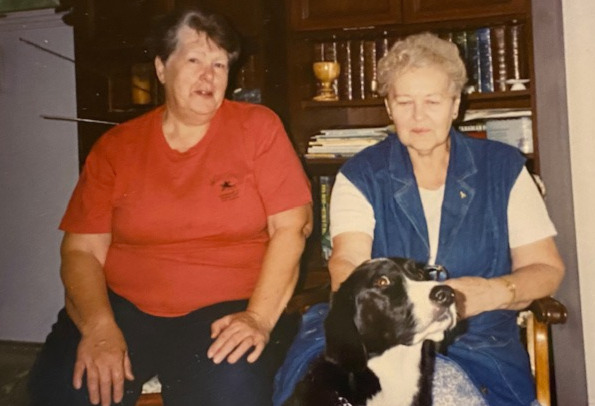
I’ve been looking at old photos and books. I found an album with pictures from the 1990s reminding me of trips Zoe and I took to Ottawa, taking my mother along to visit her old friend Norma Freitag in Eganville Ontario (no wait…I realize it was at a cottage on Mink Lake, not actually in Eganville).
Norma Freitag, my mother Katherine Barcza and a dog whose name I’ve forgotten
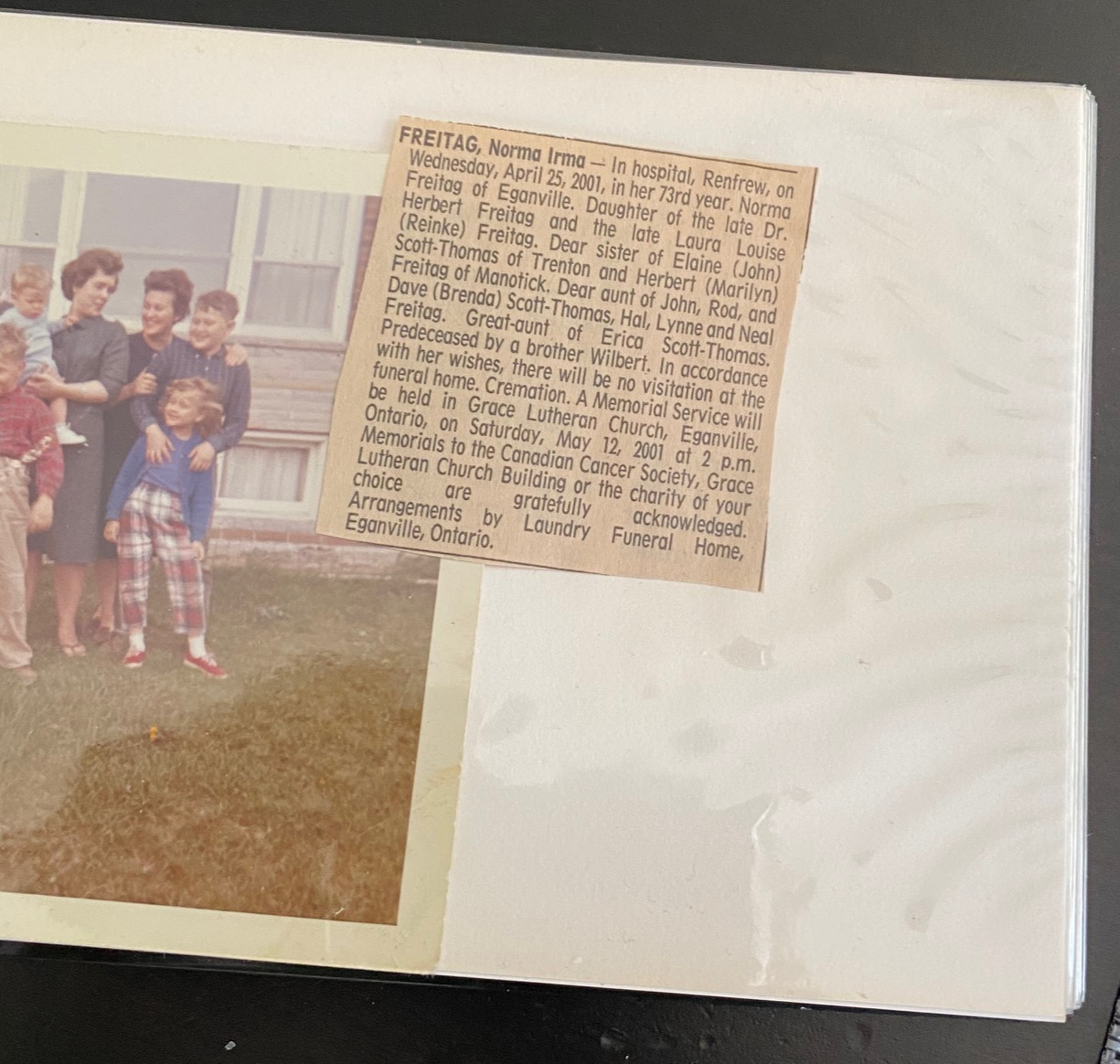
Norma had helped my mom in the difficult period after my dad passed away in 1960, a fellow member of the Lutheran congregation in Toronto. The album of printed snapshots that my mom assembled includes Norma’s obituary from 2001.
I realize now that motherhood takes many forms. My mother was a single mom in 1960 with four children. Thank goodness for the help she received from people like Norma. This picture from the 1990s is long after the fact (I’m grown up with my own daughter), and my mom is the one taking most of the pictures, from a time when we printed pictures and kept them in albums.
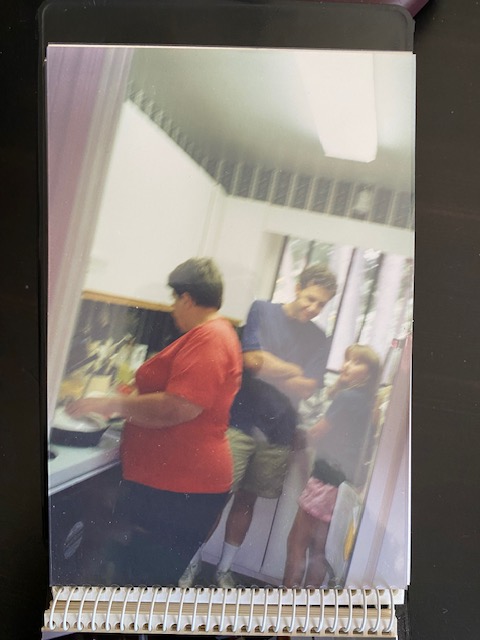
Norma, me and Zoe at 9 or 10 years of age.
It all feels so remote from the present day.
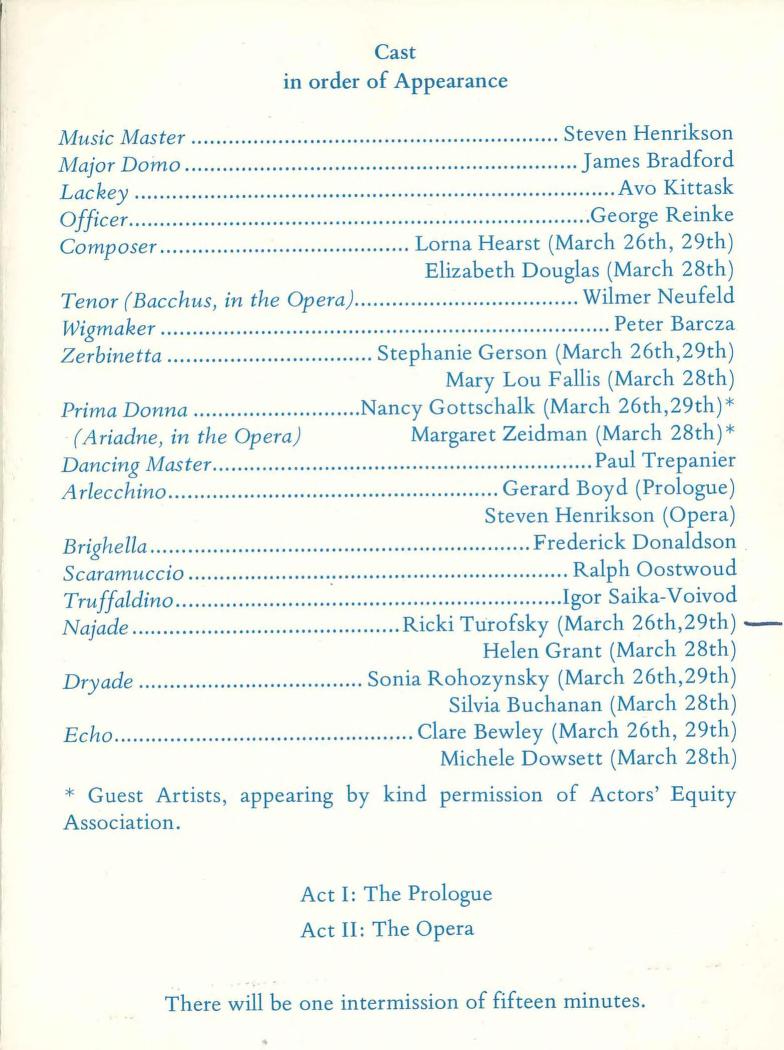
Norma had a nephew (I think) who was at the opera school at the same time as Peter. George Reinke was in that same Ariadne that I wrote about a few months ago. I think his part (Officer) may have been as tiny as my brother’s (wig-maker), but please note I’m digging into my memory, fascinated by how little I can remember.
George Reinke was in the tv broadcast of Louis Riel. He’s one of the soldiers we see at the very beginning. If I recall correctly he gets the second or third line of the opera, as the soldiers encounter the fortifications of the rebels. He says/sings “it’s laced with wire”, and I think it was delivered in the same sprechstimme –a mix of speech and singing– that we encounter in the current COC production of Wozzeck that I saw again on Saturday. While I have lost touch with George (and can’t find him anywhere online) it’s very cool to think he has immortality in the CBC broadcast of Harry Somers’ centennial year opera.
I am going to quote something my friend Carol said a few days ago that rang true (I almost said “wrung true”, but that gives the sentence and the metaphor a different direction). Carol said “Emmett’s kids aren’t going to know me.” Emmett is her grandson.
Lately my mind boggles as I contemplate history and the passage of time. My father died in 1960, and I have almost zero memory of him. I vaguely recall his voice from one thing he said, a very kind statement. Over the past five years I spent a lot of time with my mom, as a caregiver taking meals to her, transcribing her rhymes, watching films & tv with her, listening to her thoughts. And I feel already that she’s slipping away from me, even though she only passed away in December 2024.
It is in that spirit that I try to recall those visits to Norma in Eganville, peering at the pictures. Norma made us a dinner one night with deer that was road-kill. I recall her giggling about it, something about the Lord providing. And I remember she made the venison taste quite wonderful.
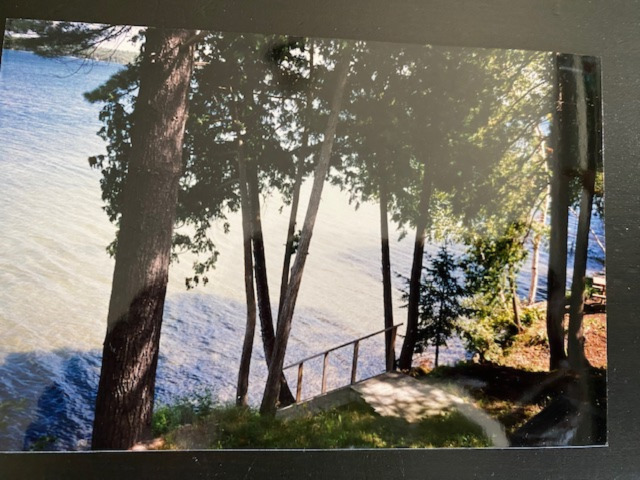
My mom’s photo of the view of Mink Lake from the cottage
The drives up to Eganville were a fun time with Zoe, when she and I drove my mom to visit Norma. We’re both so much older. I think it was roughly 30 years ago.
I looked at the photos, seeing my mom, Zoe, myself, Norma and her sister Elaine. I am humbled by the remoteness of the memories, so much more recent than what I recall of my father 65 years ago. I was reminded of my mom’s sports-car, a Datsun 240Z (or was it a 260?) by my friend David Wright in a recent email exchange. David was in the boys chorus in The Luck of Ginger Coffey, an opera presented in 1967. It was the other opera that nobody every talks about from Centennial Year, given that Louis Riel (that I mentioned) was revived for the Sesquicentennial, in 2017, while Ginger Coffee seems to have been forgotten. I vaguely recall the sound of Mignon Dunn singing the name “Ginger” to her operatic husband Harry Theyard in the opera. That’s all I recall. I remember even at the age of 12 thinking that Mignon Dunn was stunningly beautiful in the way a 12 year old boy notices such things. I think I also saw her sing Carmen. But while I recall that voice, until David mentioned the sports-car, I had forgotten about it. Music seems to stay with us, thinking of my mom’s Swedish tune, George Reinke’s or Mignon Dunn’s voices in my head.
How much else have I forgotten?
This morning as I was preparing for the church service I had an impulse, a kind of inspiration. I couldn’t figure out what to play for the postlude, and then thought of the song “Let it be”. It was 8:30 am, when I searched for the lyrics, printed them, practiced them. I went with the key of A major so it wouldn’t be too high for me to sing. The congregation seemed to enjoy it. My own private experience is irrelevant, I suppose, given that the song speaks to motherhood and reconciliation, universal themes appropriate for Mother’s Day. I feel so lucky to connect with the Hillcrest community.
I write these little blogs to help my memory. Whether it’s Speranza Scappucci or Yuja Wang or the COC, taking the time to analyze the experience and then to write about it makes it a deeper experience for me. My mom had a different relationship with each of her kids, as each of us brought out something different in her, so each of us has slightly different memories.
Erika and I had dinner today with Peter & Connie, including lots of conversation about opera and song cycles, and then we went downstairs where I coaxed Peter to sing a bit, including some of the Pagliacci Prologue and some of Siegmund from Act I of Die Walkuere. Peter wasn’t feeling great, perhaps getting over some sort of throat infection, but ha the piano lured him into singing, hitting the high A as Siegmund and the A-flat as Tonio. While he was a superb Silvio (a higher lyric baritone) in his day with the COC he’s much older now, with a sound that would work as Tonio: although I don’t think he’s planning to sing the role.
Too bad. He sounded really good.
And funnily enough while I have been harping on things we forget, Peter remembered the Italian & German lines and the notes really well, while I scrambled around at the piano. Fun.
I wondered if the reason I had the idea to sing Let it be was inspiration from my mom, whose presence I feel a lot lately. And I wondered too if Tonio was also her idea. What in heavens name led me to start playing those C-major chords that begin the Pagliacci prologue? But I feel my mother’s presence.
It was a really good day, and we were glad to have the visitors.
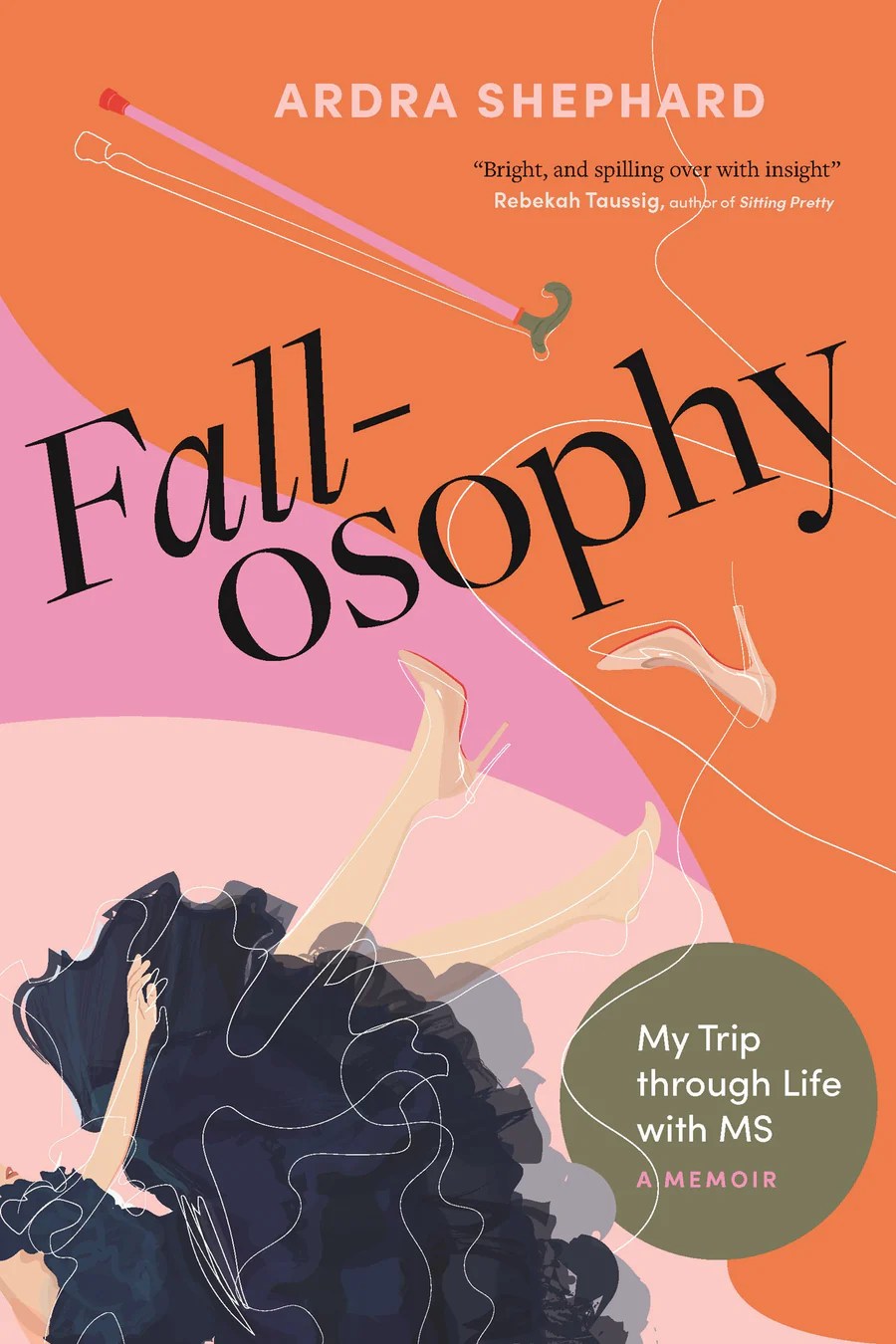
I dashed through Ardra Shephard’s memoir Fallosophy in a day, unable to put it down and laughing out loud regularly, the most entertaining book I have read in a long time. I am such a lucky guy that I get to write a review of something so wonderful, so inspiring, so full of laughter.
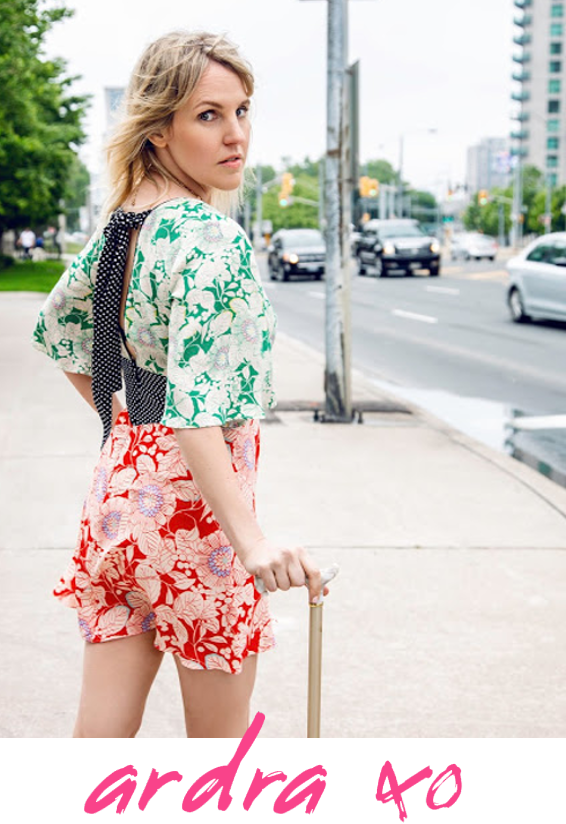
May is MS Awareness month. Author, former opera singer, podcaster, Ardra is also an MS activist, seeking to raise awareness.
I cannot lie. I pride myself on vulnerability, sharing the moments when I am excited, moved, teary- eyed. From time to time I encounter an artist who impresses me so much I am unsure how to proceed. I may be star-struck, or intimidated. Of course the problem with being so impressed with someone? when I had the chance to interview Ardra I was a bit too cautious, tongue-tied, over-thinking.
Slow.
But the interview is about her, not me. My job is to get out of the way, hoping you get a better perspective on Ardra and her work.
Voila.
*******
Barczablog: Are you more like your father or mother?
Ardra Shephard: I have qualities in common with both but I’m probably more like my mom – I share her can-do attitude, love of fashion and gossip. I have my dad’s green eyes and sardonic sense of humour. We can both make my mom laugh but no one cuts her up the way my dad does.
BB: What is the best or worst thing about what you do?
Ardra Shephard: The best thing about the kind of work I do (writing, podcasting, consulting, speaking) is getting to be creative and self-expressive. I’m my own boss and have the luxury of only committing to projects that interest and excite me. I make my own hours which feels essential when trying to accommodate the whims of chronic illness. The worst part is probably the math. I have income from multiple sources that comes in unreliable dribs and drabs. Accounting is a drag. I hate doing taxes, keeping receipts and navigating Quickbooks. Every year I decide it might actually be nice to get audited just so that someone who knows what they’re doing could sort things out for me.
BB: Who do you like to listen to or watch?
Ardra Shephard: I love TV but I am not a fan of having TV on in the background. I can only focus on one thing at a time. I tend to prefer smart comedies like Arrested Development, The Mindy Project and Veep. I loved Derry Girls. I recently watched CBC’s Small Achievable Goals and it’s the kind of story telling I’m passionate about. The way the show uses humour to disarm the audience is an unexpected education. There’s some intersection with disability in this show which features peri-menopausal and menopausal characters who remind us of how absurd our bodies are and the lengths we go to to hide what we’re going through just to get through the day, whether professionally or socially.
Like everyone, I just finished bingeing White Lotus. I am about to enter a period of mourning because Righteous Gemstones is ending.
In terms of YouTube, Bliss Foster’s fashion journalism channel has filled the Jeanne Beker-sized hole in my heart.
As for music, I appreciate lots of genres. Choral music, opera and 90s alternative are my nostalgia jams. But I like to have fun with my playlists. If we’re having Chinese takeout I’ll look for Chinese pop music on Spotify. Once we were having pierogies and I discovered a truly awful song about borscht. I’m often looking for something I’ve never heard before.
BB: What ability or skill do you wish you had, that you don’t have?
Ardra Shephard: I feel like I’m supposed to say accounting, but I don’t want to waste a wish on something so boring. I really love languages. The French I learned growing up isn’t going anywhere, but as an adult I got fairly proficient in Italian and Spanish. Those languages are slipping away from me now from lack of practice, but I expect to work on them again when the timing is right.
Lots of people “wish” they could play the piano or paint or sing or whatever without having to put in the work. But I enjoy the learning process. I’m often taking some kind of class. That said, I don’t stick with things I suck at. I took all of one knitting lesson then quit because knitting somehow gave me back pain. That is how athletic I am.
BB: When you’re just relaxing and not working, what is your favourite thing to do?
Ardra Shephard: Reading, when I’m being my best self, online shopping if I’m being real. Also, gossip. I talk on the phone several times a week with a couple of besties and my mom. Snuggles with the dog can be applied to all of these activities.
BB: What do we get wrong about MS? and what do we get right?
Ardra Shephard:The belief that disability is a fate worse than death. I certainly thought all my best days were behind me when I was diagnosed. MS sucks. Zero stars. Do not recommend. But it was a surprise for me to learn that a difficult life doesn’t have to be a joyless one.
As Canadians, we’re proud of our efforts toward diversity and inclusion but we often forget that diversity includes disability. We have a high tolerance for lack of accessibility in this country, whether in housing, public spaces, workplace accommodations, transportation…the list goes on. We’re more ignorant about inaccessibility than we are properly outraged.
Attitudes that reinforce the narrative that people are only worth what they can contribute financially or physically tend to get me fired up. I bristle about our cultural understanding of concepts like dignity and independence, but maybe these are things to explore in another book.
In terms of what we get right? Change is slow but we are making progress.
BB: Can glib questions about MS possibly capture what it’s like?
Ardra Shephard: Selma Blair (who was diagnosed with MS a few years ago), said something like “MS is easier that I thought it would be. It’s also way worse,” and I think that’s the absolute truth about MS, and possibly life in general. I don’t think anyone can really know what MS is like unless you have it. And thank God. It would be exhausting if we all had first-hand experience of everyone else’s pain. Giving people the benefit of the doubt, providing people with what they tell us they need is, I think, a more reasonable goal.
Rolling my eyes is an essential communication skill that I am unwilling to abandon (John Fanning once called it my most distinctive characteristic). But I would hate for my bad attitude to make anyone feel intimidated or worried they might say the wrong thing. I am a reasonable person with plenty of grace for putting one’s foot in one’s mouth. I do it too! It’s almost always better to ask questions than to assume.
BB: Did your vocal training prepare you for your current life?
Ardra Shephard: I’m in the middle of recording the audiobook (which will be out in July) and from a technical standpoint my vocal training is definitely helping me cope with fatigue and the dysarthria (an MS symptom) that sometimes shows up in my voice.
BB: Our paths crossed long ago, as I reviewed concerts such as a Messiah conducted by Kevin Mallon more than 10 years ago. Talk about your identity as an artist, and how you’ve reconciled yourself to MS as a singer.
Ardra Shephard: Wow, time flies. Messiah feels like a lifetime ago. It is remarkable and wonderful that you’ve been reviewing Toronto’s arts scene for so long!
I don’t consider myself a singer anymore and I’m actually surprised at how I’ve been able to make peace with this fact. Singing had a time and a place in my life and I’m so grateful I got to do it in any capacity but that chapter ended when singing started to cause me more grief and frustration than joy.
I have an awful lot of scores and sheet music if anyone wants it.
Ardra Shephard: I think I’ve grieved singing sufficiently so that it’s not painful to discuss, but I did get a bit sucky last Christmas when I struggled to sing the hymns at church. In a past life I would have been belting out the descants. Now I’m one of those curmudgeons who refuses to sing Happy Birthday. I can let myself feel sad from time to time, but it’s generally easier to focus on what I have and can do. Plus, I feel lucky to live in Toronto where there is so much opportunity to participate in the arts from the comfort of the audience. It helps a lot that I am a better writer than I ever was a singer.
BB: If I may editorialize for a moment, it’s challenging for an artist to connect to the people portrayed in opera, but you’re speaking your truth as a writer, and eloquently. We’re lucky you found writing.
And so, at the risk of making me & my readers cry, I want to ask: do you still sing? Maybe you don’t hit the same high notes or have the same stamina for holding notes, but is there a way to keep singing, adjusting for MS, by drifting away from opera and singing lighter / easier rep?
Ardra Shephard: I see your threat to cry and raise you this pop ballad I recorded for my husband’s 40th birthday. It’s called Through Your Eyes and it’s about, well, have a listen. (My friend Mike, who we meet in the book, produced this and sings backup vocals.)
BB: (….. listening……)
Ardra Shephard: My ability to sing was first impacted by my reduced stamina. Singing is so physical and even early in my diagnosis I could get breathless pretty quickly, though I do think that for a number of years singing was excellent physiotherapy. Gradually my core strength and balance deteriorated. When I started to need a cane about ten years ago, that was kind of the beginning of the end of singing for me.
In 2020 I had an MS relapse that impacted the quality of my voice and caused dysarthria (think Marge Simpson meets RFK). I had to do speech therapy just to be able to communicate. It took a couple of years for things to settle down. The dysarthria still shows up if I’m really tired, and I was worried it might impact my ability to work (on my podcast and as a host of AMI-TV’s Fashion Dis), but rehab helped and I’ve mostly been able to work around it. Phew. My book is literally about my voice (in various capacities), so I would have been heartbroken if we’d needed to get a voice actor for the audiobook.
BB: Your book FALLOSOPHY made me laugh so much that at one point in the review I said you reminded me of a stand-up comic like Chelsea Handler or Joan Rivers. The book is full of laughs even if much of the laughter is of the painful sort. Did you always have this sense of humour or is this an adaptation to reality, your way of coping?
Ardra Shephard: I was never the class-clown. I’m not really silly and I was kind of a serious, if somewhat sarcastic kid, but laughter has always been part of my life. I was raised on Monty Python and Fawlty Towers. The comedy of my teen years was SNL, Norm McDonald, Kids in the Hall, The Simpsons at their peak. My friends and I used to write our own irreverent, Letterman-style Top Ten Lists and draw cartoons to make each other laugh during choir practice. I remember making up ridiculous unrepeatably inappropriate operas with my cousins.
BB: When I told my arthritis doctor in 1997 that I was planning to get my PhD she said bluntly “why”? Her implication was that I should surrender to disease & aging. I took it as a challenge to defy, wanting to show her. Have you had any such moments when people or events were telling you to quit, and you defied that, wanting to show them you weren’t going to be defeated?
Ardra Shephard: I’ve always been driven by my own determination to build a full life for myself, even before I was diagnosed with MS. My parents never needed to tell me to study or do my homework. Anyone who’s ever told me to quit or slow down might have led me to feel frustrated or misunderstood, or even occasionally like I have permission to rest and not put so much pressure on myself. But I don’t think I’ve ever set out to prove anything to anyone other than myself. My goals have always been self-imposed.
BB: Everyone has things to cope with. Some people seem to cope with their challenges better than others. Do you laugh when you’re numb or in pain? How does your comic sensibility reflect your inner experience of MS?
Ardra Shephard: Coping well with anything means allowing yourself to feel whatever you’re feeling. I never use humour to deny what I’m going through. I believe in laughter, but I also believe in freaking out as necessary. Grieve and get on with it is kind of my MO. A comic sensibility can help make sense of the absurd, it can help you process suffering. It doesn’t prevent suffering, though it may take the edge off.
BB: What kind of exercises do you do?
Ardra Shephard: My physiotherapy routine includes a tedious series of toe curls, tiny movements, stretching, light weights and 3 squats if there’s time. The goal is to preserve function and increase balance and strength. Realistically though, it’s about getting worse slower than I would without an exercise routine, which sometimes makes it hard to stay motivated.
Fortunately I am also a rider at Toronto’s CARD (Community Association For Riders With Disabilities). If you saw me walk you’d never believe I could ride a horse, but equine therapy is fantastic for people with all kinds of disabilities. A horse’s gait mimics a healthy human gait, so when I’m riding my hips think I’m walking the way nature intended. Riding supports posture, cognition and mood. I love interacting with the volunteers. CARD has what they call their “mini-royal” coming up on June 14th where you can see rider demonstrations and learn about the organization. I will also be there signing books!
My day generally includes some reading, writing, and journaling. I’m a fan of the New York Times games. MS has taught me that wellness is holistic and so if I’m feeling like my legs are letting me down I can focus on, and feel good about, the other ways I’m supporting my health. Martin Short’s memoir helped me figure this out. Social capital, decent sleep, lots of water and ‘little treat culture’ all contribute to my overall conviction that life is worth living. I firmly believe that an MS diagnosis should come with a prescription for a puppy. Travelling as much as possible nourishes my soul.
BB: Is cannabis found in your medicine cabinet and do you have any thoughts on recreational drugs, given that recreation isn’t just fun but a way to make yourself healthy & happy.
Ardra Shephard: I’m not a recreational drug user, unless you count alcohol, in which case I most certainly am. But as much as I like a glass of wine or a gin-based cocktail, MS means I’m almost always two drinks ahead. An ounce of tequila can tame the spasticity in my legs, but two ounces means my shaky balance and wobbly gait will be negatively impacted, so I don’t drink nearly as much as I’d like to.
Cannabis helps many people with MS but it is not the substance for me. I tried to manage pain with CBD oil and ended up flat on the floor. My baseline blood pressure is quite low and certain drugs and medications make me incredibly dizzy. Anything that puts me at risk of falls is not a good fit for me.
BB: Every artistic discipline is impacted by the normal changes of a person aging. Our ears and eyes don’t work as well, arms and legs lose flexibility. Please share some of your thoughts about how you adjust to changes in the skills available to you.
Ardra Shephard: If you’re only as old as you feel, then my early 100s are off to a great start (though the calendar says I’m still in my 40s). I lost vision in my 20s, mobility in my 30s. I joke that I’m aging in dog years because loss of function has been part of my entire adult life. I’ve gotten good at adapting. Disability forces me to be creative and resourceful. You learn to find different ways of participating. It’s important not to have an all-or-nothing mentality or you will end up missing out on life.
Aging also brings wisdom, and so it must come with a positive impact on how we consume and interpret art. (I really appreciate Julia Louis Dreyfus’ brilliant podcast Wiser Than Me for reminding me of this.)
BB: The effortless humour and wit of your book Fall-osophy blew me away. I see the same on your podcasts.
Ardra Shephard: Thank you. I was nervous to do a podcast because writing gives you time to say exactly what you want and a podcast is so off the cuff.
BB: We live in a culture that values youth & beauty telling stories about beautiful young people, while not always including the rest of us. As a fat kid who later lost weight, I never forgot the way I was perceived.
Ardra Shephard: Even within the disability community where limited stories are told, there seems to be a hierarchy of whose stories are shared. I too feel the pressure of maintaining a degree of youth and beauty and ironically, even physical function. I recognize the privileges that have made it easier for me to have a voice. Change is slow and I believe that social media is helping to level the playing field. Pride in identity is critical to advocating for inclusion and rights, and social media is a place where communities are forming and this is happening.
BB: Those of us who are disabled seem invisible sometimes, given that often the goal is simply to avoid calling attention, and to fit in as “competent”. Talk about how it impacts questions of representation and inclusiveness in the arts especially onstage in theatre & opera.
Ardra Shephard: I have tended to think of invisible illness in terms of the frustration that comes with having non-apparent symptoms not taken seriously as well as the challenges in advocating for accessibility and accommodations for conditions that are poorly understood.
But you’re right, there are more layers here and often invisibility is self-imposed–a defense mechanism, or attempt to avoid othering and discrimination. I write in the book about my own experience “passing” for non-disabled during the years when my MS symptoms were non-apparent. And even now that I am using mobility aids and am obviously disabled there is implicit pressure to blend-in and be low maintenance.
Stigma is a factor. Disability is often perceived as deficient (as opposed to different), and in a world where there are not enough opportunities for the most talented among us, any perceived lack of competence can be catastrophic. Disabled artists (disabled people in any profession, really) learn to blend into environments where it might otherwise be beneficial to stand out. We mask pain, fatigue and other symptoms as a response to a culture and workplace that punish vulnerability. (Nevermind that vulnerability is an asset to artistry.)
We’re getting better at creating structurally accessible spaces, particularly for audiences (ramps, captions, designated seating etc), but inclusion isn’t just about presence, it’s also about perspective. Disabled stories are often portrayed by non-disabled actors who go on to win awards, reinforcing the narrative that disability is something to imitate, not embody.
The cost to the arts is steep and stagnating when we fail to consider who is telling the story? Is disability a prop or a point of view?
There’s safety in numbers and we must resist invisibility in order to affect meaningful change. It’s not easy and advocacy doesn’t come without risk. Especially in under-resourced institutions. But just like with other marginalized communities, when disabled artists take up space on stage and behind the scenes, we expand not only who gets to perform but what performance means. Disability challenges the form. It encourages novel thinking and creativity. Accommodations can become artistic choices and isn’t that exciting? Audiences get to participate in something more raw, human, and honest.
BB: What are we getting wrong that adds to your challenges? In other words, is there anything about my perceptions as an average adult communicating with a person with MS that makes your life harder? what should I do differently, or how should i think differently,..?
Ardra Shephard: You’re overthinking it. We are more the same than we are different. Just be normal.
BB: Do you have any influences / teachers you would like to acknowledge.
Ardra Shephard: I don’t want to leave anyone out. My book is a bit of a love-letter to the people in my life who’ve encouraged, inspired and supported me, and who continue to do so, artistically or otherwise.
I will add that for anyone interested in learning more about the themes in my book, I would encourage you to read Rebekah Taussig’s book, Sitting Pretty. Watch Crip Camp on Netflix. Add disabled content creators to your social media feeds. Support work that prioritizes authentic representation. This doesn’t have to feel like homework. There’s some brilliant work being done.
BB: Are you doing a book tour? Where can readers find you?
Ardra Shephard: I’ll be signing books at Indigo (Yorkdale Mall, Toronto) on May 24th from 12-3.
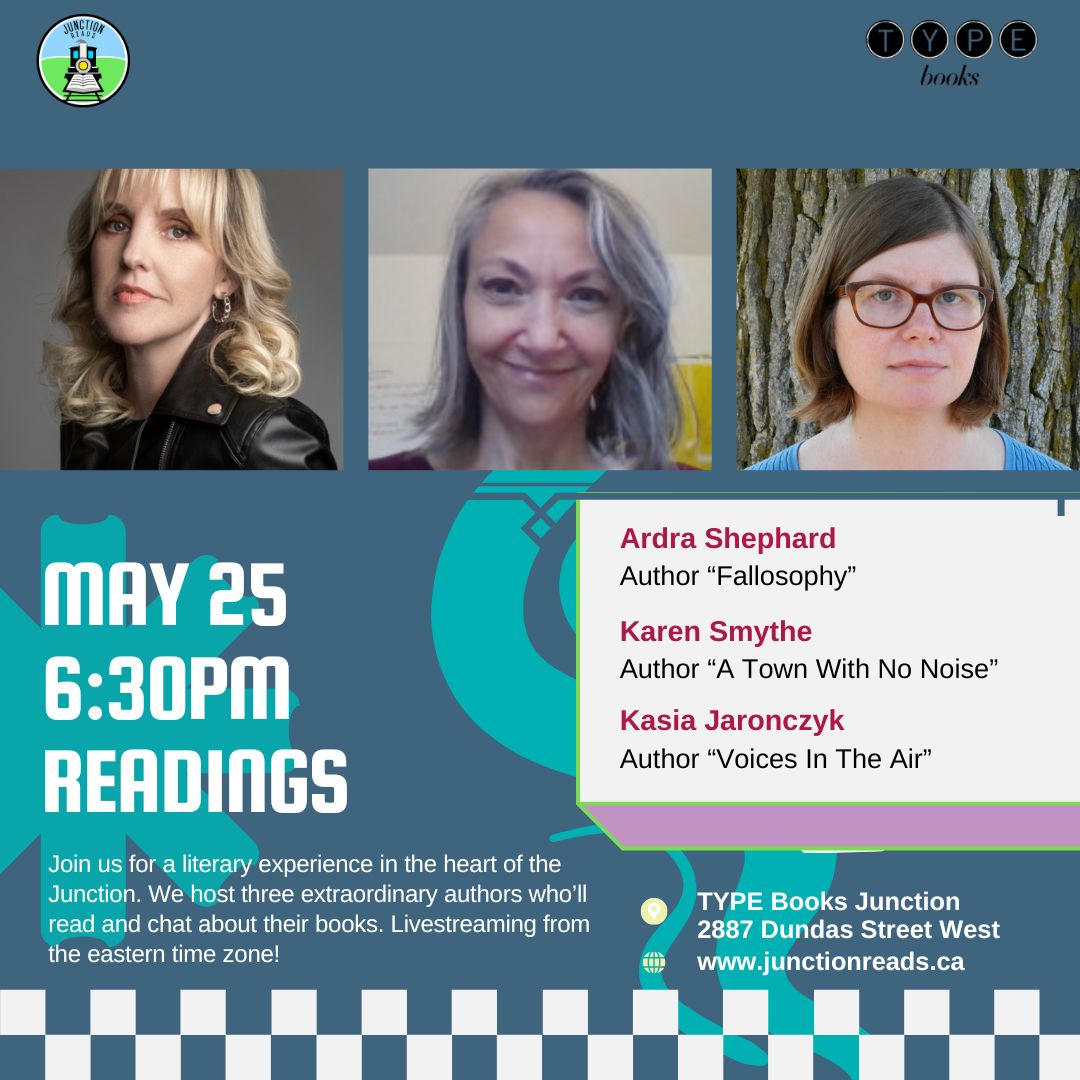
And doing a reading/signing/Q&A at TYPE Books Junction on May 25th at 6:30 as part of the Junction Reads Festival. You can also attend this event virtually (register here).
Tonight was entirely an orchestral night for the Toronto Symphony. No concerti, no soloists, just the virtuoso players of the TSO in two big works, one a world premiere.
As Gustavo Gimeno suggested in his program note, tonight’s pieces “examine what it means to be human.”
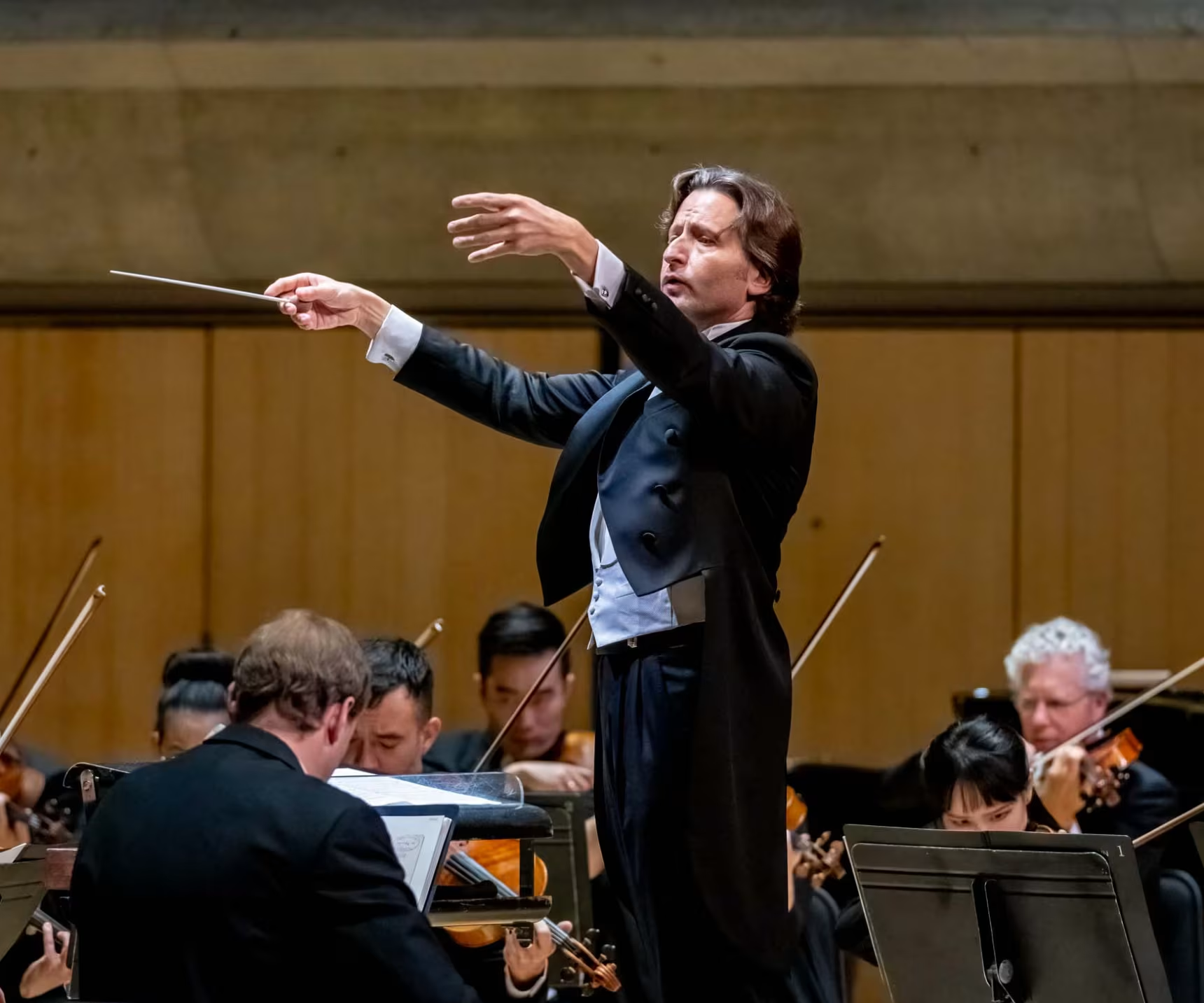
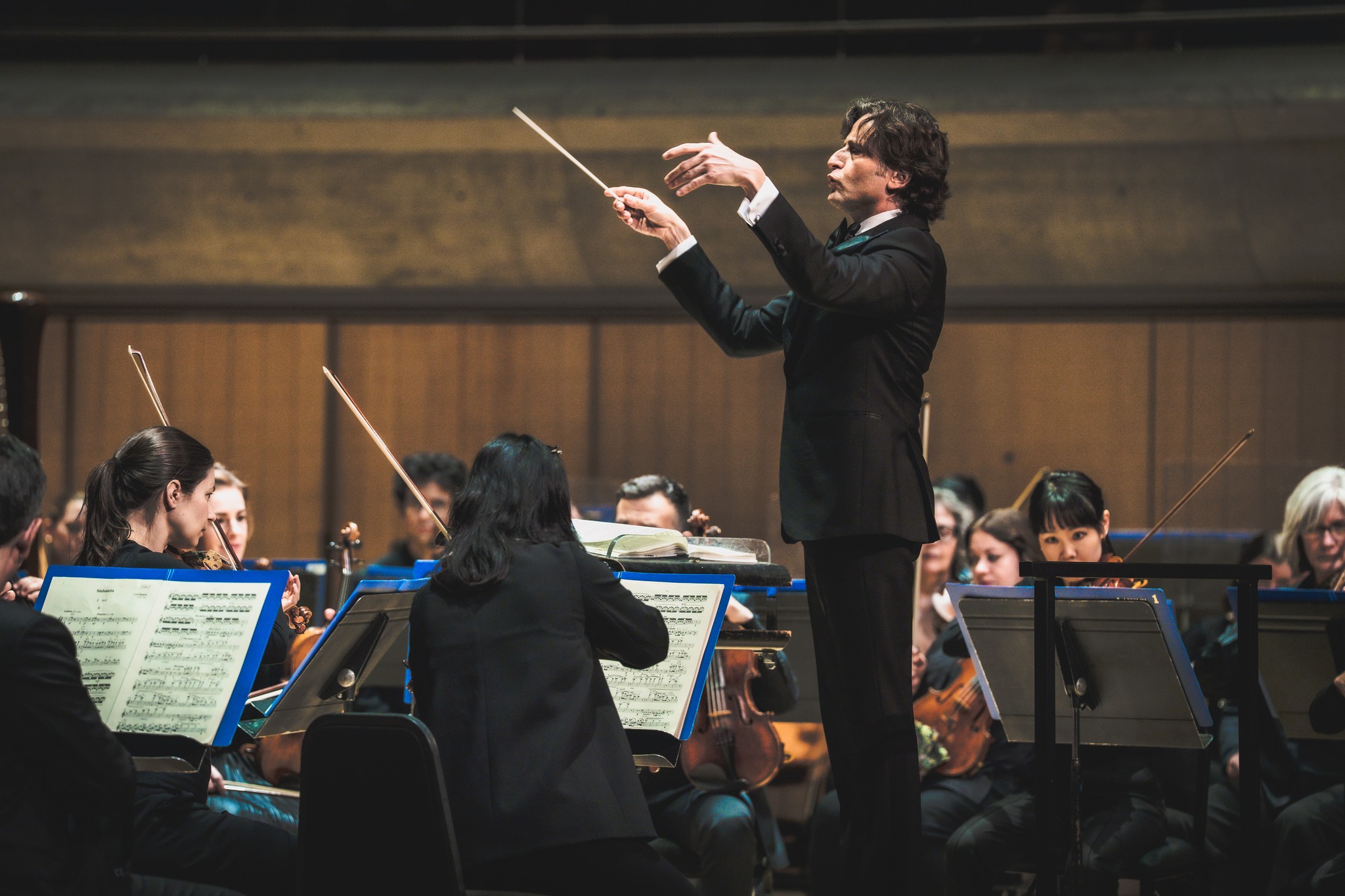
Gastavo Gimeno leading the Toronto Symphony
And while they both offer a chance to showcase the orchestra, they contrast one from the other.
It was a large audience at Roy Thomson Hall, receptive to the exuberant new work by Daníel Bjarnason and totally ecstatic in response to Tchaikovsky’s valedictory symphony.
The world premiere before intermission I Want to Be Alive is a Trilogy for Orchestra. I remember hearing the opening segment in June of 2023, but it made much more sense now in the full context with the other two parts.
1-Echo (Man needs man) 2-Narcissus (We need mirrors) 3-Pandora’s Box
The program notes explained that Bjarnason was inspired by Stanislav Lem’s book Solaris as far as the first two titles, although artificial intelligence is a big part of the subtext. That being said, I simply listened to the music played by the TSO. The first two are similar ideas although not in the music we heard. Bjarnason assembled a huge orchestra with a big percussion contingent, provocatively erupting from the rear of the ensemble in the first segment. The second was much more soulful, softer, lyrical in its introspection. I was intrigued that at a time when the pathology associated with Narcissus is so frequently discussed in social media, that what I heard was something more sympathetic than I might have expected.
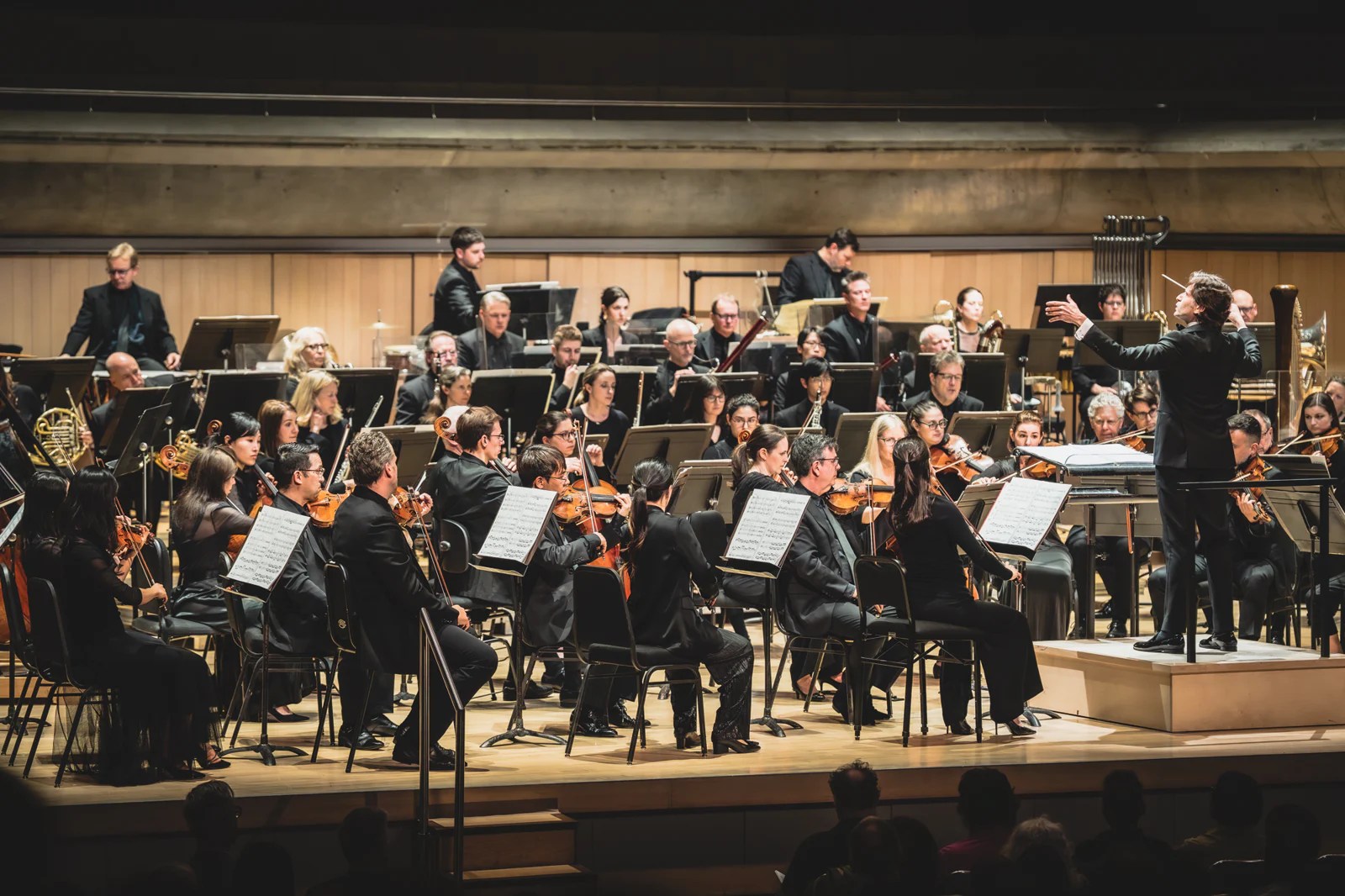
Gustavo with his eyes on the percussionists at the back of the TSO (Photo: Allan Cabral)
And then we came to the third impressive movement, very much what you’d expect from the title. Although Bjarnason tells us that the one thing left in the box is “hope”, for most of this movement he presents us with what we would expect. The first word that came to mind is “disorder”, or more accurately, complex rhythms to challenge the percussionists and the conductor. Pandora unleashes chaos on the world, and especially upon the conductor and his percussion section. I was reminded of Stravinsky’s Firebird, as the buildup to full orchestral tutti was polytonal, and remarkably flamboyant. Eventually things settle down, perhaps in the sense of the hope the composer sought to suggest, although in the wildest passages I was not afraid, but stimulated. It’s exciting stuff. Once again I wonder if Gustavo might someday record this with the TSO, showing off the excellent players.
It was especially exciting to be able to applaud the composer on the occasion of the World Premiere.
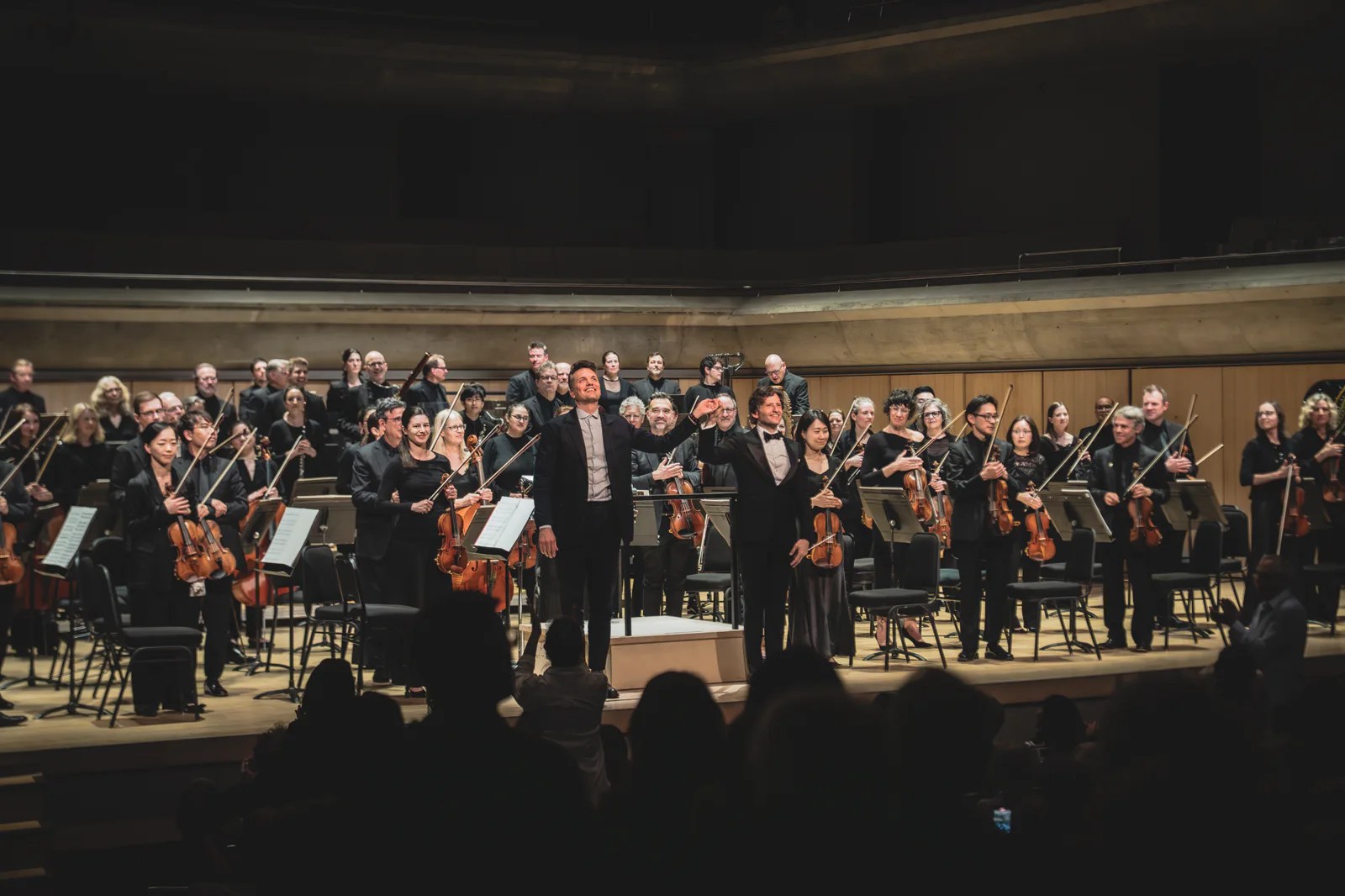
Daniel Bjarnason and Gustavo Gimeno, before the Toronto Symphony (Photo: Allan Cabral)
After intermission it was time for the Pathétique.
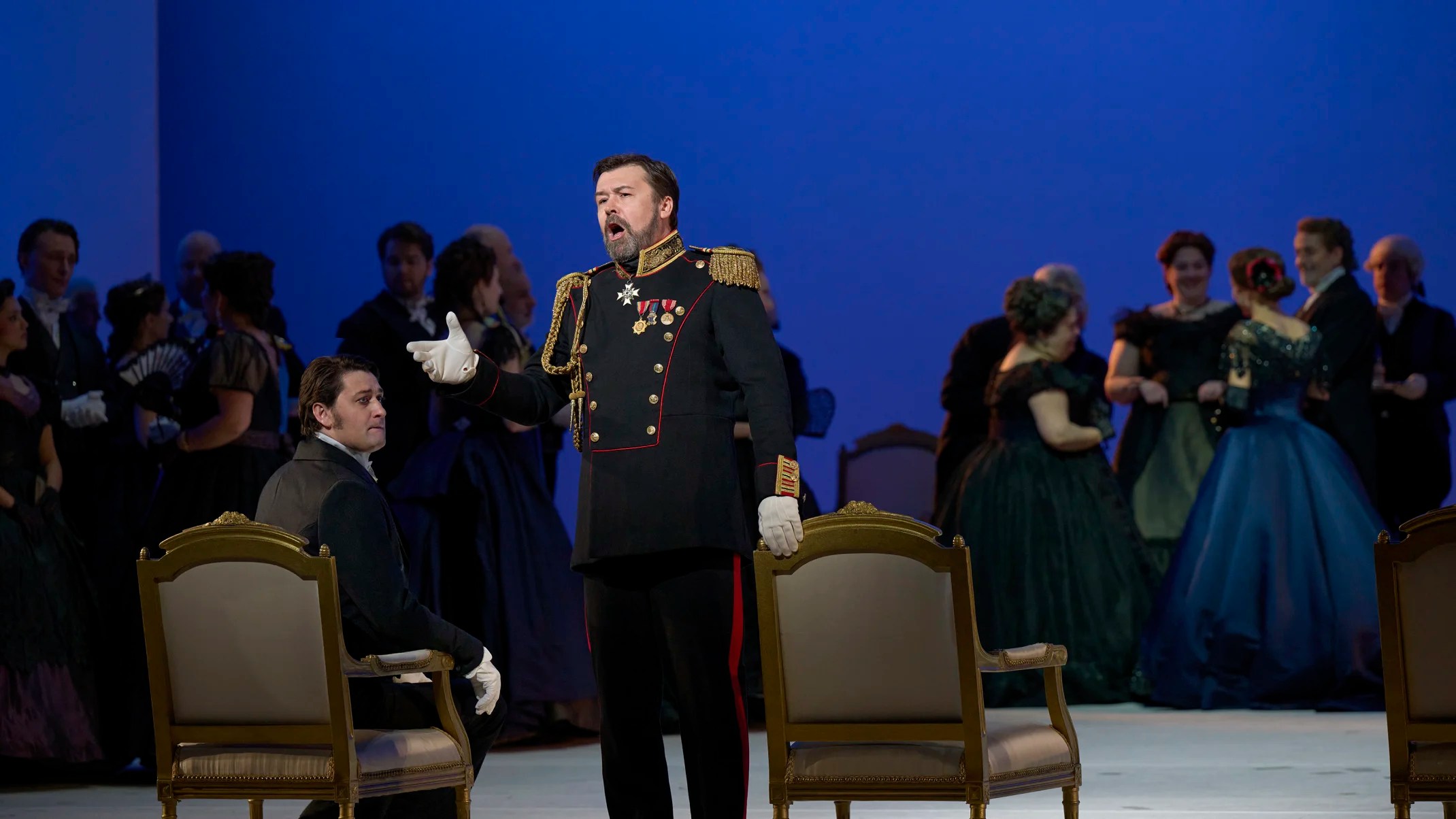
I can’t help thinking of the Canadian Opera Company’s Tchaikovsky, Eugene Onegin conducted by Speranza Scappucci that opened last weekend, taking tempi faster, making dramatic climaxes bigger than I have ever heard them.
Ditto Gustavo Gimeno. I bring this up, mindful of Gustav Mahler: who was largely misunderstood for decades but only figured out much later. I wonder if maybe we are only starting to really understand Tchaikovsky a century later, after so much time when critics condescended to a composer, disparaged for seemingly wearing his heart on his sleeve. If your goal as an interpreter is to play up the cantabile, exploiting the melodic schmaltz without pushing the orchestra to its limit? perhaps you miss the point, captive of an obsolete tradition.
Gustavo gave us the most dramatic reading of this work that I have ever encountered. For most of the first movement that meant softer phrases, mezzo-forte or softer, until the big climactic passages near the end of the movement. The 5-4 second movement was done with great subtlety, very fast and very understated until climactic passages when Gustavo encouraged the brass to open up a bit more. Yes maybe this is a pattern, and it’s one I like.
The Allegro molto vivace was true to its name, faster than I’ve ever heard it. When it’s done a bit slower, it’s easier to play, but Gustavo is never looking for the easy path. I’m surprised at how clearly they articulated the inner voices. While there’s a positive energy to the movement it is followed immediately by one of the saddest things Tchaikovsky ever wrote, especially when the conductor makes no pause but presses forward. We go from a kind of manic macho exultation to sighs of despair in the closing movement.
It was Tchaikovsky’s birthday last night (also Brahms). I think Gustavo and the TSO gave us a proper celebration honouring a composer who continues to inspire amazing performances. The concert program is to be repeated Saturday night.
“Photos by Allan Cabral/Courtesy of the Toronto Symphony Orchestra.”
Yuja Wang played his 1st piano concerto with the Toronto Symphony a couple of weeks ago, and the TSO play his 6th Symphony later this week. This weekend the Canadian Opera Company have revived the production of Tchaikovsky’s opera Eugene Onegin seen here in 2018. Opening night was last Friday and I attended the second performance on Sunday afternoon.
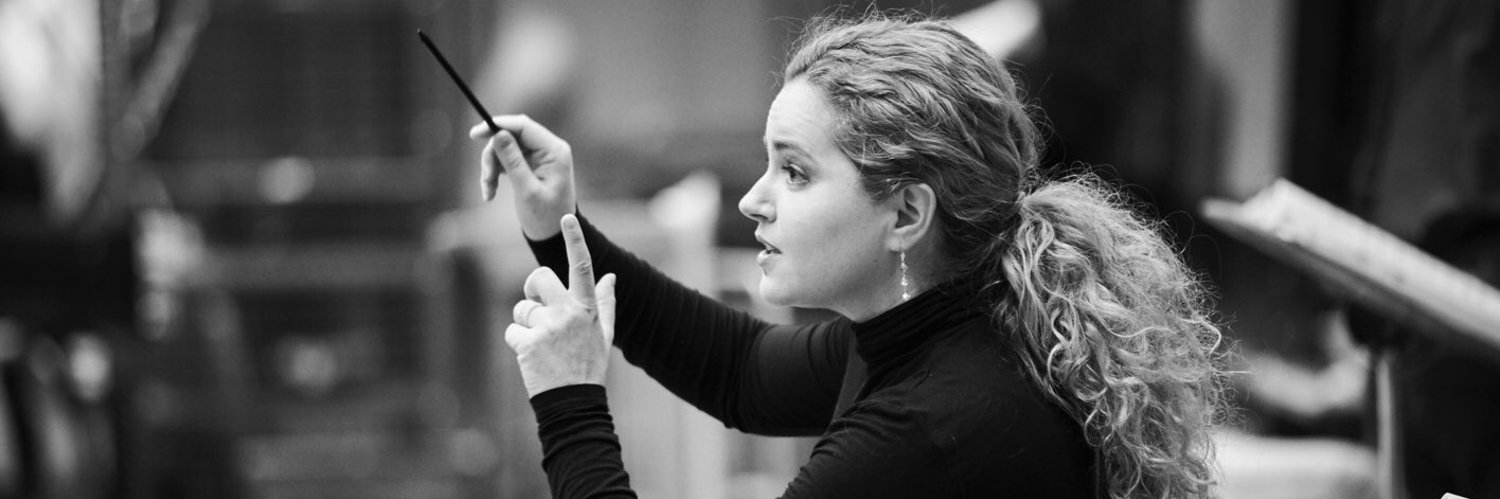
Onegin is better in 2025, as my headline should suggest. Much better. In a show originally directed by Robert Carsen and designed by Michael Levine, with revival Director Peter McClintock, assisted by Marilyn Gronsdal, surely the most valuable participant is Speranza Scappucci, who conducted the COC orchestra and chorus.
Conductor Speranza Scappucci
The COC orchestra could sound as soft as silk or build to a genuine ferocity when necessary. She found a level of passion in the Polonaise, the Cotillion or the Ecossaise, each a backdrop of the drama unfolding before us onstage.
At times Speranza dispensed with the baton, as in the aria that comes just before the duel between Lensky and Onegin, “kuda kuda”.
Speaking of kuda kuda, I was especially impressed with the singing of our Lensky this afternoon.
Evan LeRoy Johnson showed us a voice with remarkable capabilities that reminded me of the 20th century tenor Jussi Björling, with the ability to sing so gently that it verged on falsetto even as he properly supported the sound, or gradually making a crescendo to a big sound. He was very musical, wonderfully expressive.
Olga (Megan Marino), Lensky (Evan LeRoy Johnson; photo: Michael Cooper)
As I consider Jussi to be one of the greatest singers of all time, please assume that my comparison is meant as the highest praise.
Andrii Kymach in the title role had a very Russian sounding delivery, in the sense that I hear him making his voice darker than sounds entirely natural, even as he managed all the vocal challenges of the role. I wonder how the voice will sound in a decade as I worry that his darkening is not a choice conducive to longevity. Right now he sounds powerful. And his acting was a key to the success of the production.
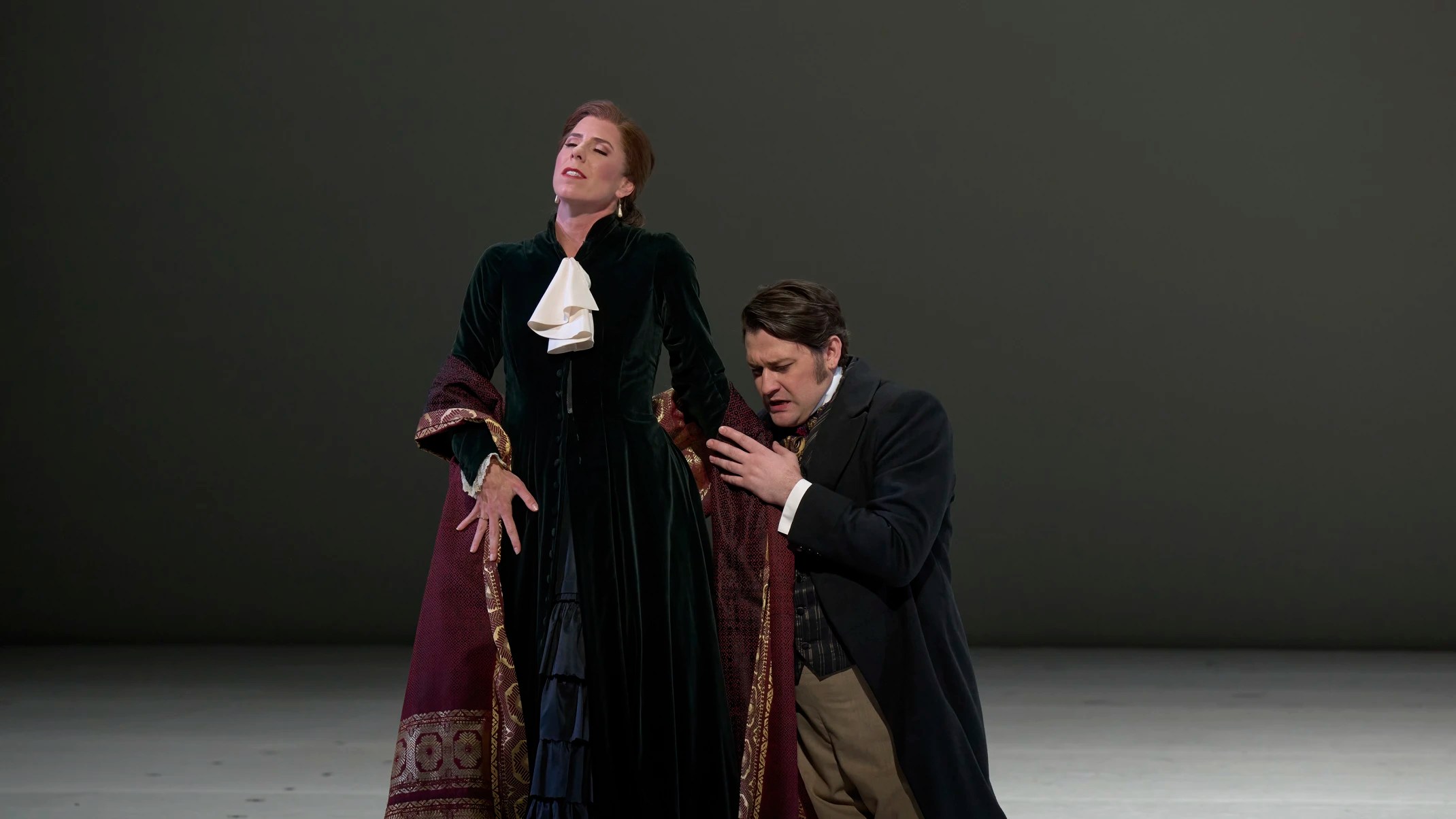
Lauren Fagan as Tatyana is so much at the centre of the opera at the beginning that one might question the title of the work. I think it’s normal though, indeed we come to the end of the opera named for the man, but the woman is the one with our sympathies, every time. Tatyana is one of those roles that should be “can’t miss”, should be the one we care about at the end, especially if we saw youthful vulnerability in the letter scene, alongside dignified maturity in the passions she gives us in the last scene. I think Lauren’s Tatyana is more sympathetic than most, even as we admit that in this opera we always will like or love Tatyana.
Carsen addressed it in his director’s note: “When we first began to work on our production, we noticed that sometimes Tatyana tends to dominate the narrative.“
The first three scenes are really all about Tatyana and her response to Onegin (1-meeting him, 2-writing the letter to him and 3-humiliated by his polite words of rejection).
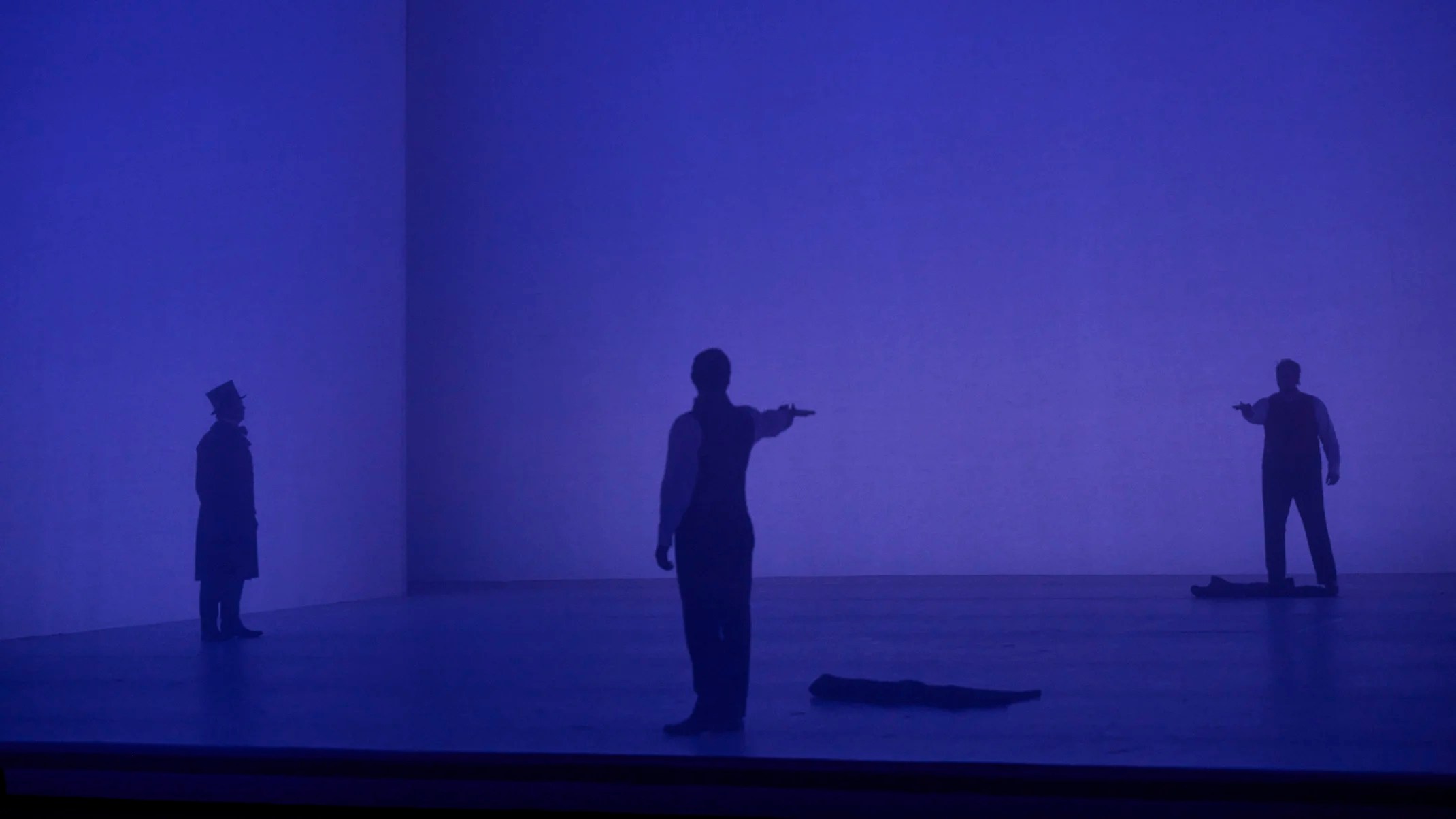
Carsen continues: “But ultimately it is Eugene Onegin’s story, so we thought it would be interesting to tell it as much as possible from his point of view. To that end we shaped the production as a memory piece, with the action of the opening musical prelude beginning at the end, at the very moment in which Tatyana rejects and leaves Onegin.“
And so the first scene before the opera begins and after intermission give us a brief glimpses of Onegin miserably alone: as we shall see him at the conclusion of the opera.
Onegin is the classic Byronic figure, bored by his surroundings and distant from everyone around him. In this version Onegin is more objectionable, more blatantly misanthropic in his behaviour. Whether it’s due to directorial input or the singer’s idea, Andrii played the role in such a way as to emphasize the insincere mind-games in the party scene that lead up to his duel with his best friend. I find this choice makes him and the ensuing catastrophe more completely believable even as Onegin is made far less sympathetic as a result. I remember in the 2018 version Lensky seemed to be over-reacting to Onegin and indeed that is usually how I perceive him. This time I was intrigued to find myself sympathizing more fully with Lensky because Onegin seemed to be that much more of a deliberate jerk. I think too this means we are even more torn at the end, the outcome hitting extra hard because Onegin’s fall seems so totally self-inflicted.
Or maybe it’s just that the conducting and musical performances overwhelmed me so totally. And the audience seemed more fully persuaded than any performance I saw either in 2018 or before when I saw this production on the High Definition broadcast from the Metropolitan Opera. The blatancy of Andrii’s portrayal shifts the balance for me. I have always felt Tchaikovsky loves Tatyana and Lensky, the two whose music seems the most convincing, but past productions often felt false, not fully getting me there. I think between Speranza’s committed conducting and the darker reading of Onegin, that we were won over fully.
I found myself asking questions after.
When Prince Gremin sang about the blessings of age, having found and married Tatyana, it seemed astonishingly apt that someone sitting just in front of me had their telephone go off, ringing at least four times, while the owner (a senior like myself) was too ashamed to admit it, too inept to shut it off. As a senior I’m compulsive about my smartphone, believing that if I ever get too old to silence my own phone I’ve resigned from the community of live performance, having violated the social contract.
Eugene Onegin (Andrii Kymach) Prince Gremin (Dimitry Ivashchenko, photo: Michael Cooper)
Michael Colvin showed us his remarkable range singing the role of Monsieur Triquet. I don’t mean range in the usual operatic sense of how high or low they can sing, so much as dramatic capabilities. Michael is also seen in a few electrifying moments as the Fool in Wozzeck, having previously blown me away with his brilliance as Thomas Scott in Louis Riel. It’s great to see him having a good time onstage.
Monsieur Triquet (Michael Colvin; photo: Michael Cooper)
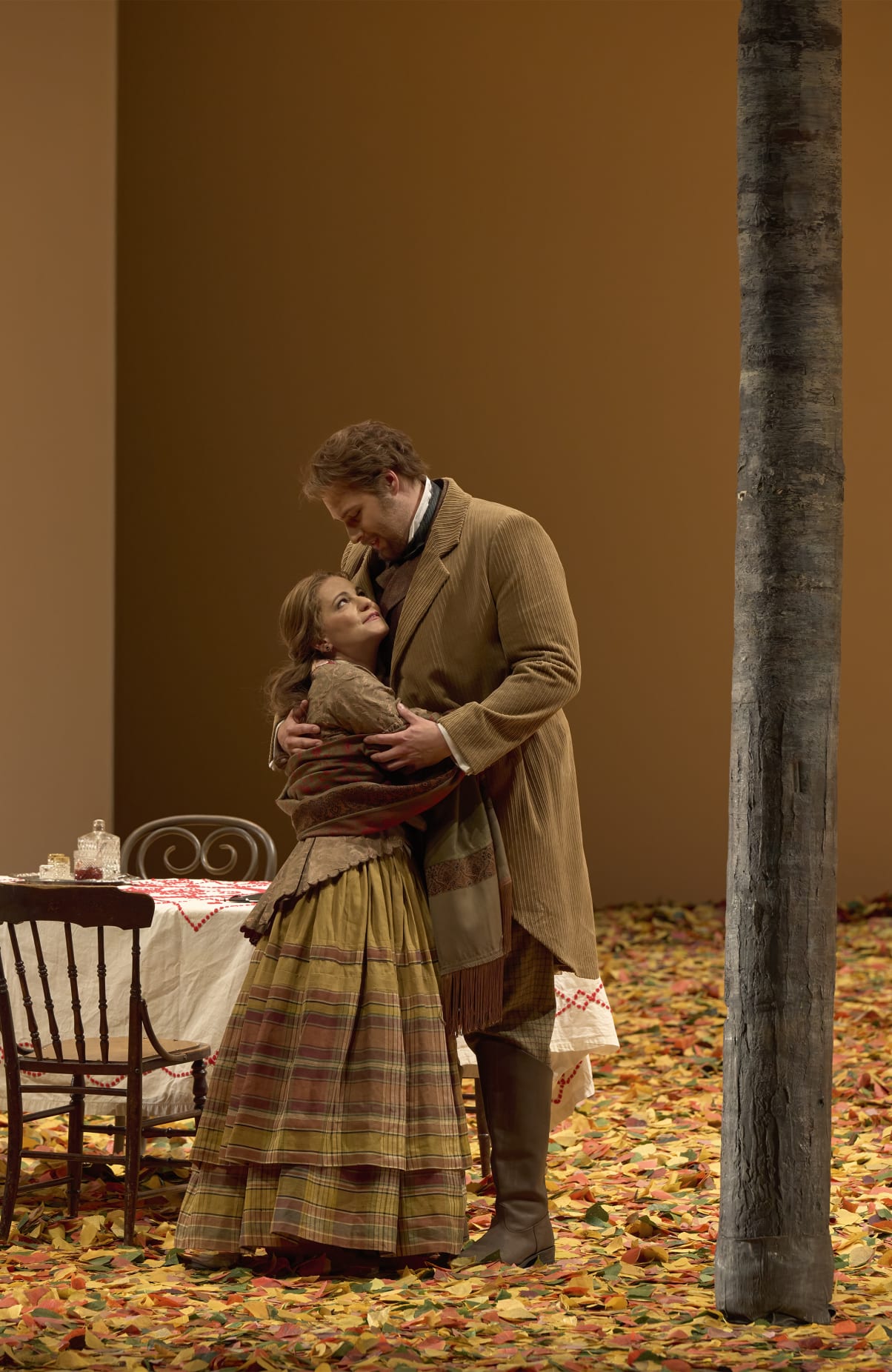
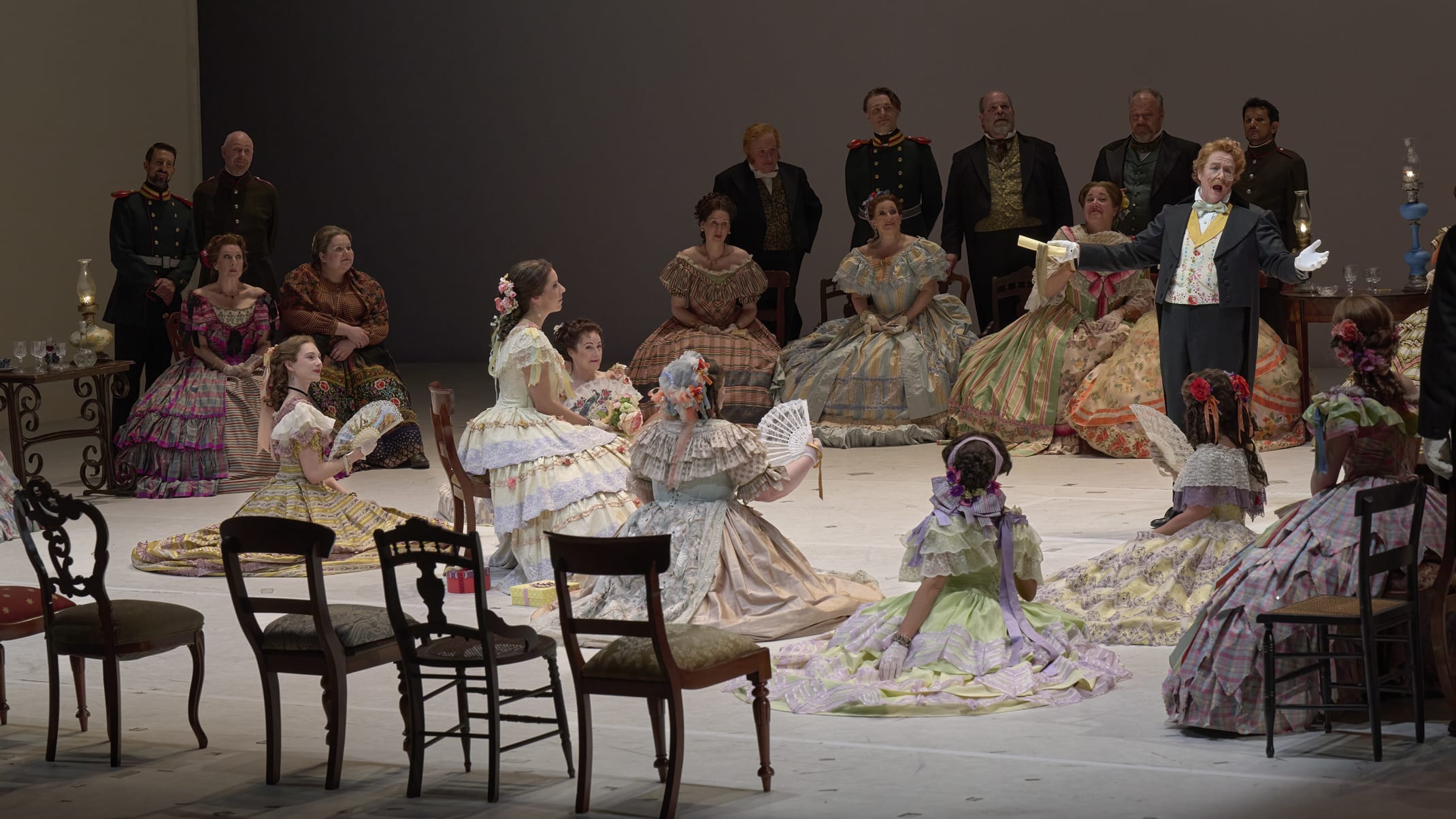
The choral set pieces were crisp and energetic, especially the delightful scene where a female chorus clear leaves from the centre of the stage.
What do the leaves signify? In the scene a few moments before Onegin comes to respond to Tatyana’s letter, the women sweep leaves to make a space on the stage. While these are surely dead they do suggest life. It’s a balletic scene that may not mean anything but is wonderful to watch.
COC Chorus (photo: Michael Cooper)
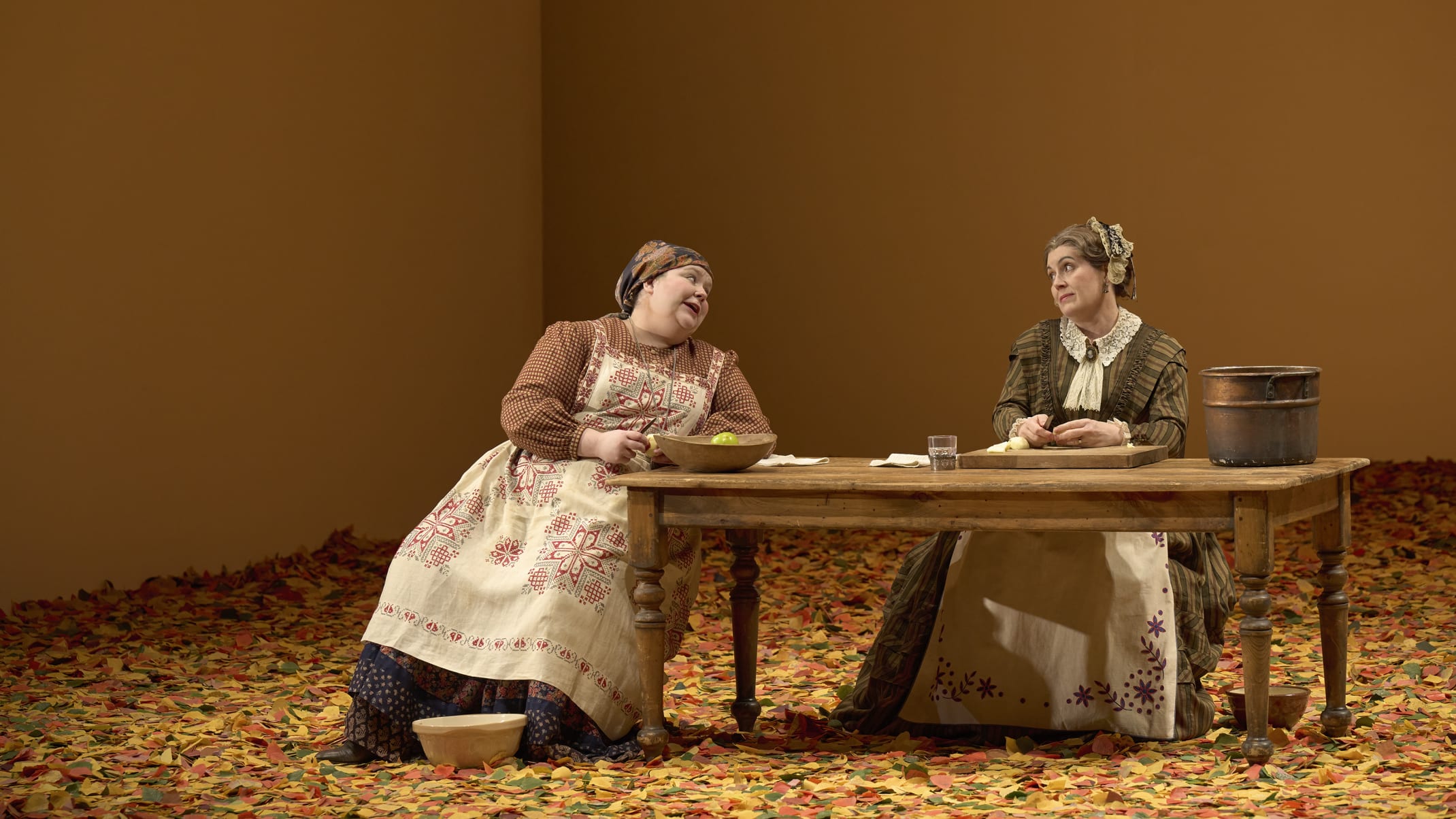
The opera does not carry the generic designation of “Literaturoper” as I mentioned in the Wozzeck review last week (a genre of literary text set to music without intervention of a librettist), but there are times when the absence of a real librettist is evident. As Carsen noticed, the opera seems to be about Tatyana at first, as the story only shifts focus to Onegin in the later scenes. Emily Treigle as Filipyevna and Krisztina Szabó as Madame Larina ground the opera in a calm normalcy, that sets up what’s to come. I love these opening scenes even if they’re not as fraught, not as Byronic, just pastoral and Russian. Olga (Megan Marino) is in the opening scenes, and comes to play a big part in the development of the conflict that leads to the opera’s catastrophe, although she is mostly on the sidelines once things get really serious.
Filipyevna (Emily Treigle) Madame Larina (Krisztina Szabó; photo: Michael Cooper)
Eugene Onegin continues with performances May 7, 9, 15, 17 & 24.
Tonight’s concluding concert of Scarborough Philharmonic Orchestra’s 2024-25 season is like a perfect mirror, as I reflect on questions of nationalism, artistic leadership and approaches to programming.
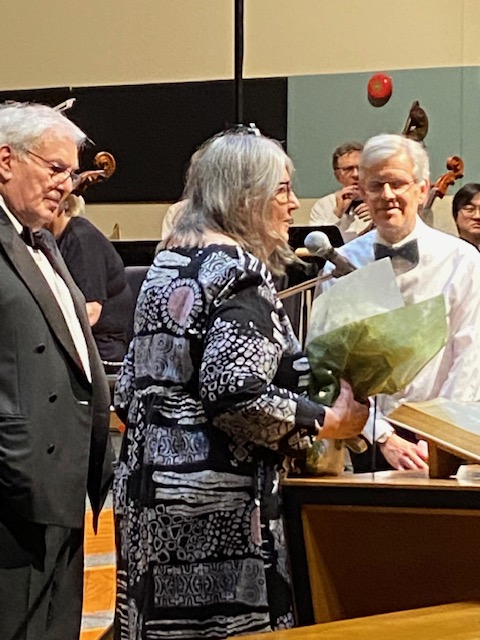
This concert was the concluding evening of Linda Rogers’ tenure as the Executive Director, a period of remarkable success for the SPO. She joked that “I think this is the 4th time I have retired,” a reflection of how indispensable she has been.
Dr. Paul Tichauer (SPO Chair & cellist), Linda Rogers, and Conductor Ron Royer
This time perhaps it will be different as Linda’s successor Helen Nestor has been officially announced.
Helen Nestor
The concert demonstrated again how brilliant Linda can be. Although Danielle MacMillan’s beautiful picture graced the cover of the program she was unwell, unable to perform tonight. And so Linda got on the phone to find a replacement at the last minute. Mezzo-soprano Hillary Tufford was called sometime between 11:00 am and noon, agreeing to undertake Mahler’s Songs of a Wayfarer with very little rehearsal on the day of the concert!
Mezzo-soprano Hillary Tufford
Yes Hillary was excellent, the SPO wonderfully attentive as conductor Ron Royer led a careful interpretation that was the highlight of the evening. Everyone seemed to be listening to one other. The cycle can sometimes sound a bit savage in places if an orchestra gets carried away: but Ron kept them in check.
But I wanted to just frame this around the evidence of organization and culture. We even had a visit from David Smith, the MPP for this Scarborough riding, a reminder of the superb support the SPO receives from multiple levels of government.
David Smith, MPP for Scarborough Centre
That’s Linda again, because she’s been the one filling out and sending in the grant applications.
As I think back on the concert we heard tonight, rebuilt slightly due to Danielle’s unfortunate illness, it’s clear that the SPO are superbly well-organized.
After we sang Oh Canada and heard from the MPP, we saw the short film originally meant for the second half of the evening, namely All Things Serve the Earth. I discovered that AI isn’t just plagiarism software but can sometimes do amazing creative things. In the film Brueghel’s paintings come to life, accompanied by the music of Bruno Degazio. Bruno’s music and the film were but the first original composition of the night.
The unfortunate casualty in the program was a performance of “Walk with me” from the Songs of Hope project, composed by Shreya Jha. Here’s a video showing what we lost.
So while we didn’t get to hear Danielle’s live performance of “Walk with me awhile”, we heard a bit of her singing in the video of Bruno’s song.
Before Hillary sang the Mahler cycle, we heard from the SPO playing the first of Ravel’s Valses nobles et sentimentales, and after they gave us the world premiere of Rachel MacFarlane’s La Danza Nocturna, an SPO commission. Rachel composed a fun piece reminding me of Rossini in its strong dramatic statements, its energy and melodic invention, larger than life in its playfulness.
After the intermission we heard Borodin’s 2nd Symphony, featuring a great many impressive solos from the wind players, particularly horn, oboe, flute & clarinet in the Andante movement.
I was thinking about Sol Hurok, a man who influenced the way entertainment was promoted in the 20th Century. I remember hearing from an architect that the big halls built around North America were meant for star attractions, based on assumptions and business models that may be now out of date. Bigger is not necessarily better. A small local venue such as the Salvation Army Scarborough Citadel might be ideal for some things, as we saw tonight. I am again bathed in the intense sounds of this orchestra, a richness of sound I can’t get in a bigger hall, able to see facial expressions and the emotions of the artists. The community of Scarborough is a big part of the experience.
We are hearing a lot about buying Canadian. Especially at a time like this one it’s good to feel that our tax dollars are truly supporting Canadian culture.
This spring season of the Canadian Opera Company feels a bit like the second coming of Alexander Neef, their former General Director. Next week we’ll be seeing the revival of Robert Carsen’s Eugene Onegin, a production that Neef brought to Toronto in 2018. But this week it’s Wozzeck, a show I saw in the Metropolitan Opera’s High Definition series in 2020, announced this way:
“A co-production of the Metropolitan Opera; Salzburg Festival; the Canadian Opera Company, Toronto; and Opera Australia.”
More than five years later, the co-pro has finally come to Toronto, long after Neef left Toronto and even his successor Perryn Leech left the COC.
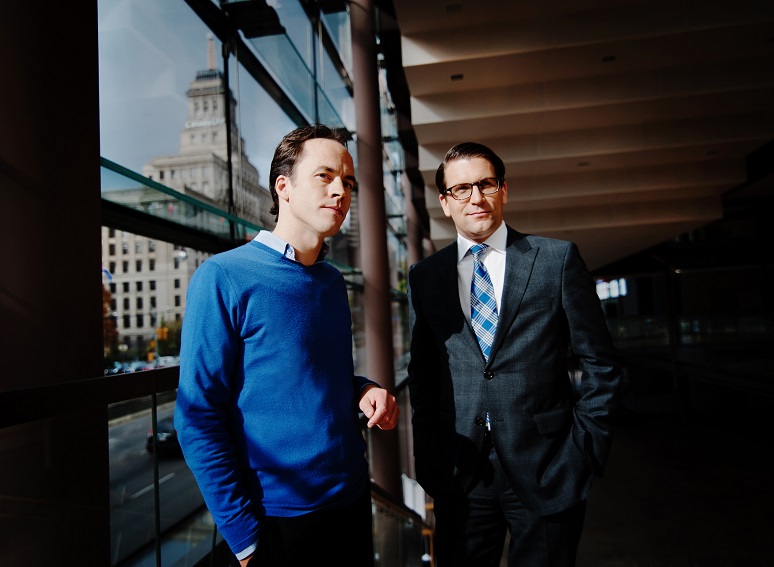
The other fellow in the picture is even more important.
COC Music Director Johannes Debus and COC General Director Alexander Neef. (Photo: bohuang.ca)
Johannes Debus and the COC Orchestra met all the challenges of Alban Berg’s score, except perhaps one. In the scene when the Drum Major comes into the barracks, to boast about his conquest of Marie, the whistles weren’t easily audible. Except for that tiny silly detail, the orchestra and the chorus were absolutely perfect! I had to mention the whistle to underline my appreciation for what Debus and company accomplished. The lyrical last moments for each of Marie and Wozzeck were truly breath-taking, gorgeous and beautiful even if they were also eerie and grotesque.
Wozzeck is the pinnacle of 20th Century modernism, the top of a mountain first discerned by Liszt, shaped and climbed by Wagner, Strauss and Mahler. While there’s dissonance in the score, it’s not atonal, but the music is difficult.
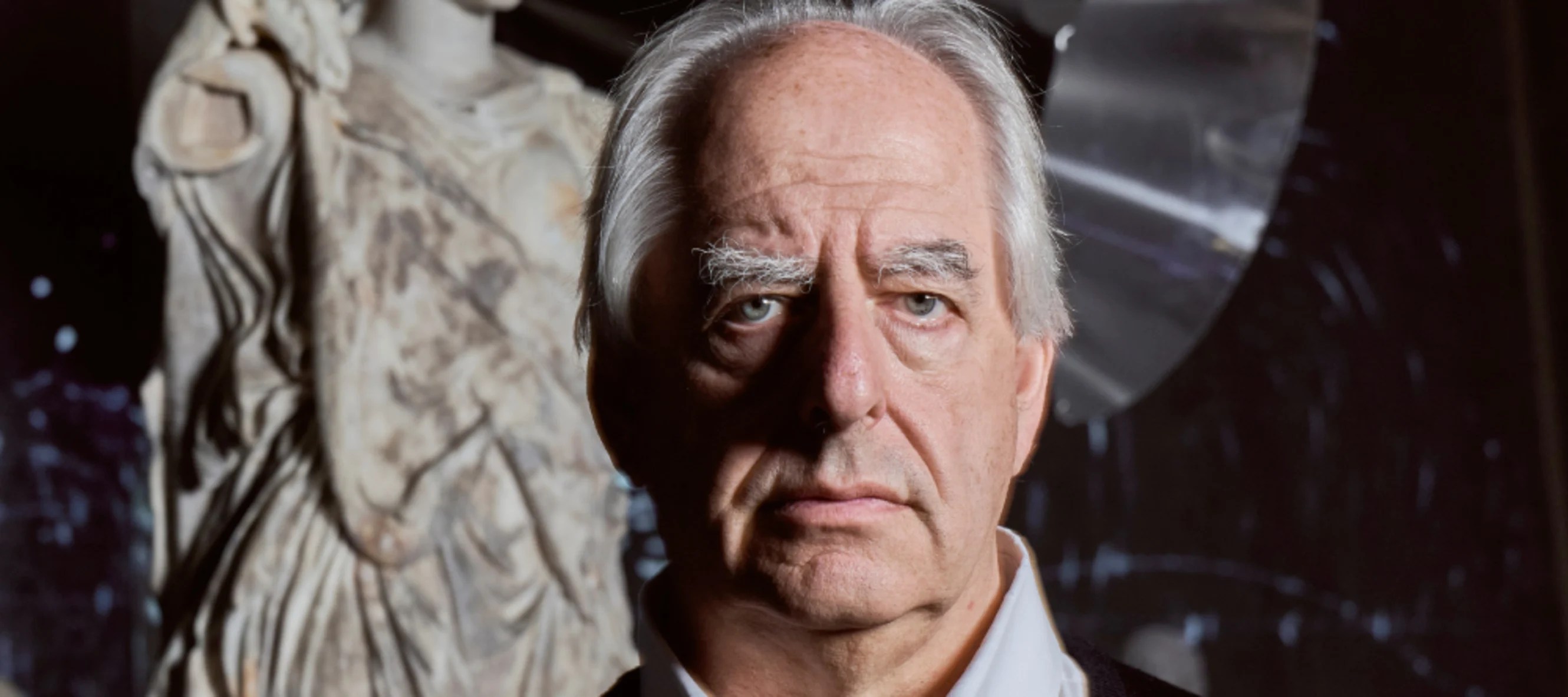
But if you have seen this Wozzeck you’re probably ready to label me a music nerd, given that I am omitting the real key figure in this production, one of the most remarkable stagings I’ve ever seen on a COC stage, namely the director William Kentridge.
William Kentridge (photo: Norbert Miguletz)
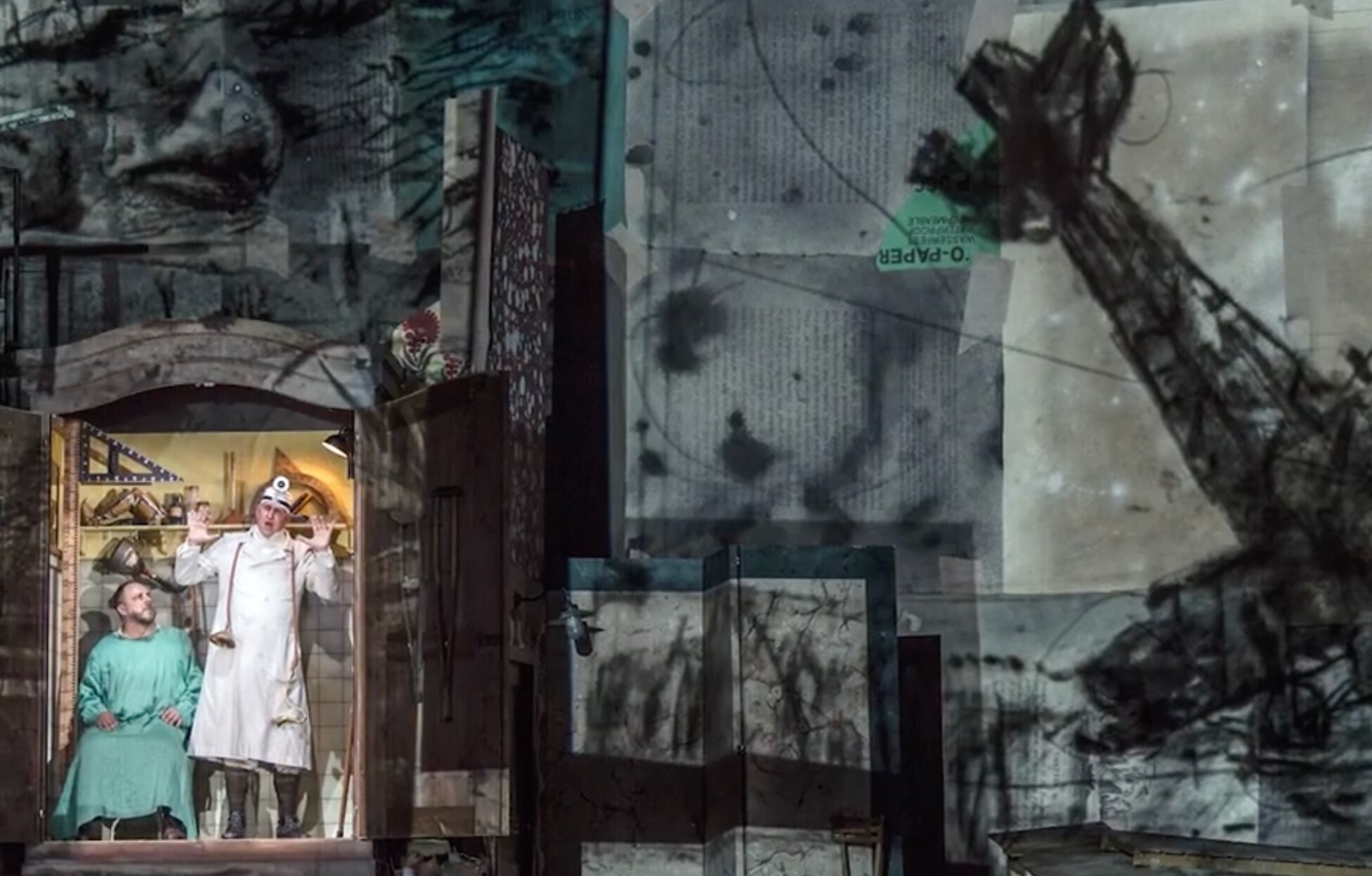
Kentridge has a fascinating vision of the opera. We see a design that seems to relocate the story to the period of the First World War. Okay, that’s what I assumed: until I heard him explain on Youtube that what we’re seeing is “a premonition of the First World War”.
Wozzeck meets the Doctor in Act I, image from the Salzburg production
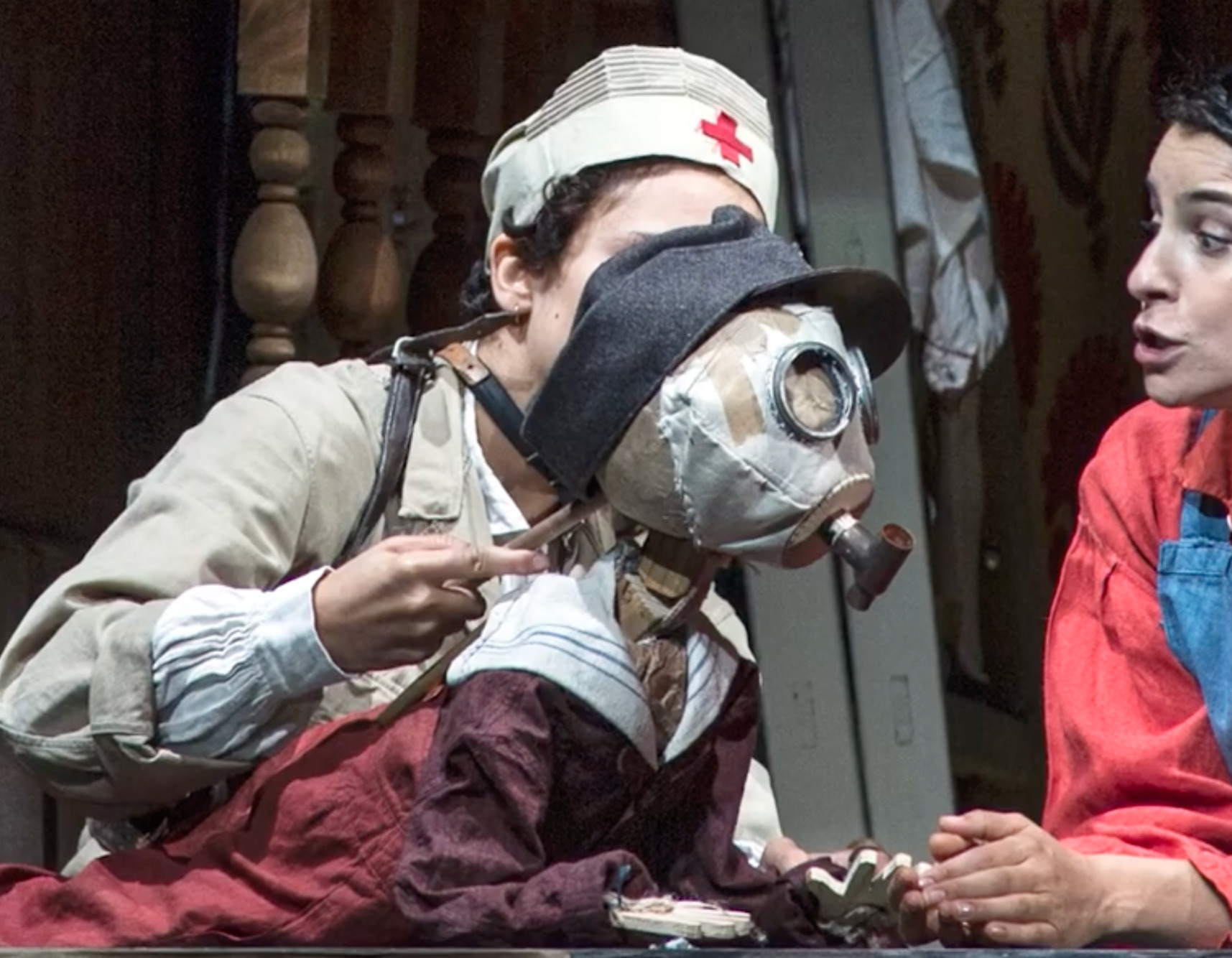
So the puppet child wears a gas mask.
Image from Salzburg production showing puppet wearing gas mask
Kentridge leads a brilliant team, presenting something different for the Toronto version of Wozzeck, including Co-Director Luc De Wit, Set Designer Sabine Theunissen, Costume Designer Greta Goiris, Original Lighting Designer Urs Schönebaum, Revival Lighting Designer Mikael Kangas, Projection Designer Catherine Meyburgh and Video Control Kim Gunning. Yes Wozzeck is played by the COC Orchestra and sung by a remarkable cast of singers, but first and foremost you will be immersed in the flamboyant images of Kentridge’s vision for Wozzeck.
Ambur Braid as Marie continues her winning streak at the COC, inevitably the most sympathetic person onstage regardless of the composer or the style she’s required to play. I never doubted her for a moment as the mother of a puppet-child, indeed she will move you to tears. I think Michael Kupfer-Radecky is a more believable Wozzeck than the Met’s star Peter Mattei, a singer whose ambition to be an artist got in the way of the credibility of his portrayal of this sad everyman in the High Def broadcast (which gives us extreme closeups).
Peter Mattei in Wozzeck at the Met. (Photo: Paola Kudacki/Met Opera)
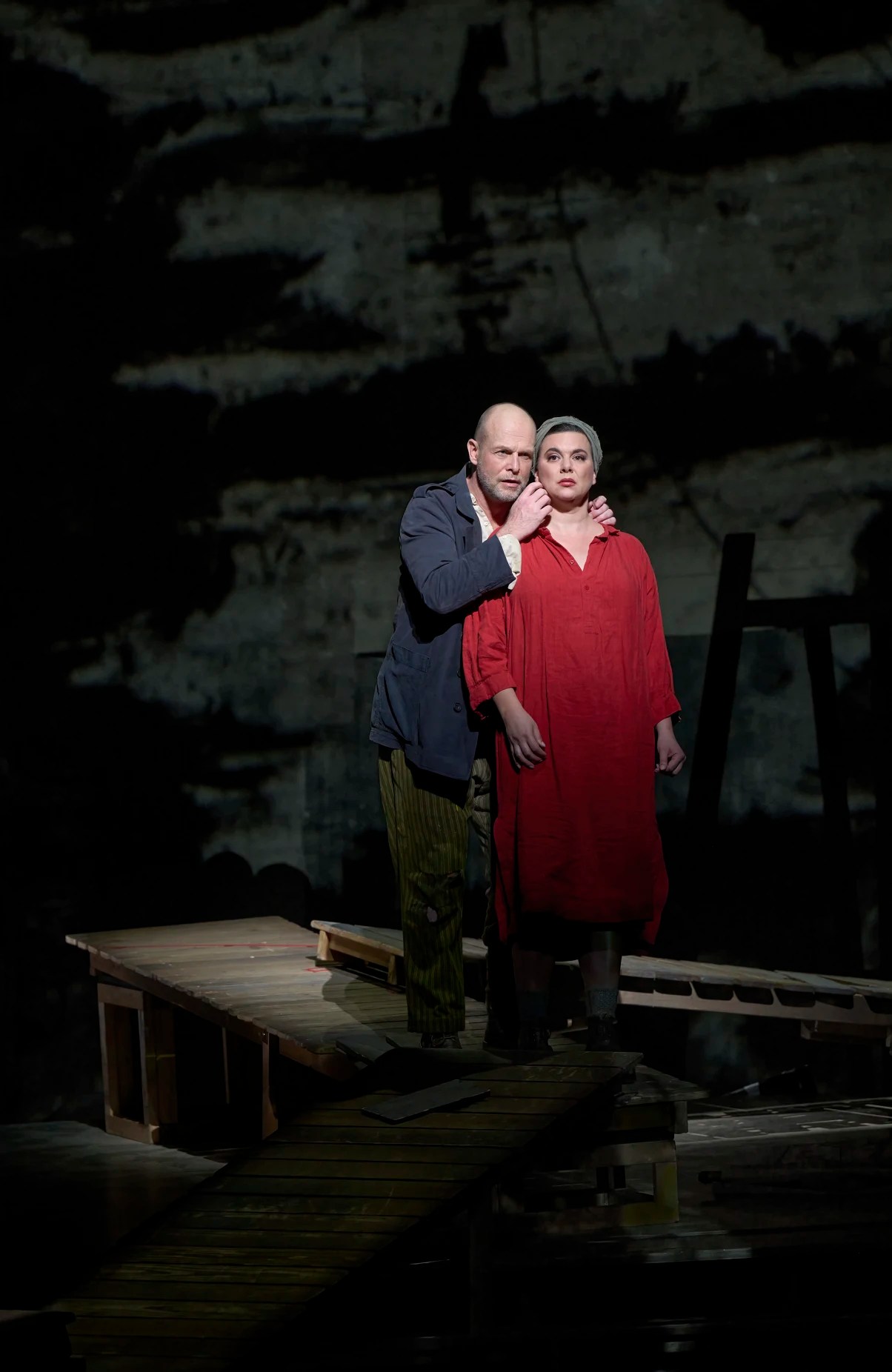
Michael felt so much more direct, and wonderfully musical. I’m not sure whether I was crying in the scene between him & Marie in Act II where he gives her some money because of Ambur’s response or the way he sang his lines, before his exit. OMG, so gorgeous. I guess it helps Ambur to be hearing that exquisite unaffected delivery. I’m envious, they get to hear each other every show.
Michael Kupfer-Radecky as Wozzeck and Ambur Braid as Marie (photo: Michael Cooper)
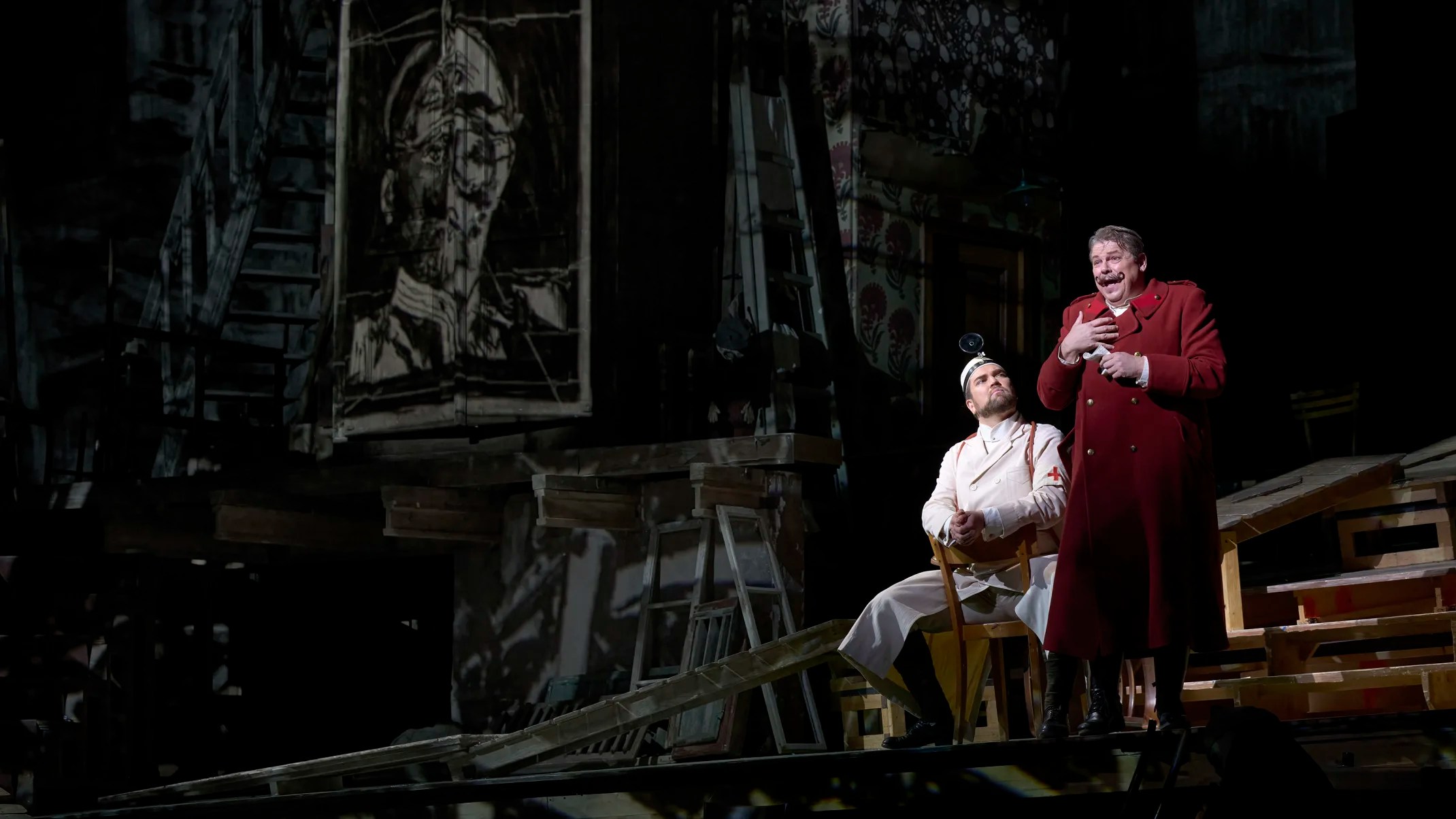
The first voice we hear is Michael Schade as the Captain, berating Wozzeck in the opening scene. We’ve seen so many superb portrayals from Michael, it’s no surprise he gives us such a fascinating Captain. In Kentridge’s theatrical world it’s a caricature such as we might find in Commedia dell’Arte, a self-consistent wooden stock figure that bounces back and forth between quirky and grotesque. There are other comic stock figures who torment Wozzeck. Anthony Robin Schneider is the Doctor, whose experiments will lead to immortality and possibly kill his subject.
Anthony Robin Schneider as the Doctor and Michael Schade as The Captain (photo: Michael Cooper)
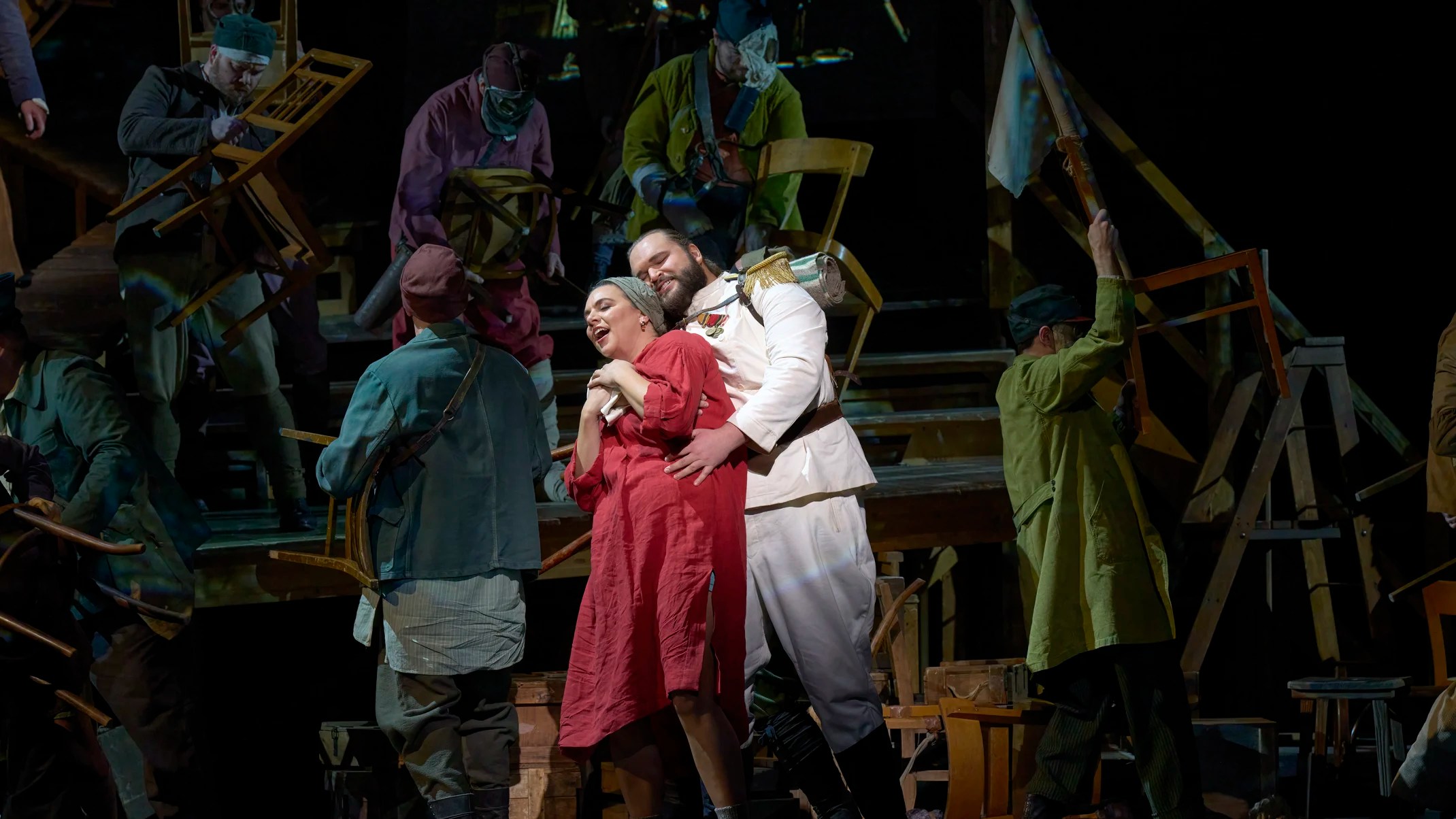
And the other tormentor is a Miles Gloriosus, the bullying Drum Major of Matthew Cairns.
Ambur Braid as Marie and Matthew Cairns as The Drum Major (photo: Michael Cooper)
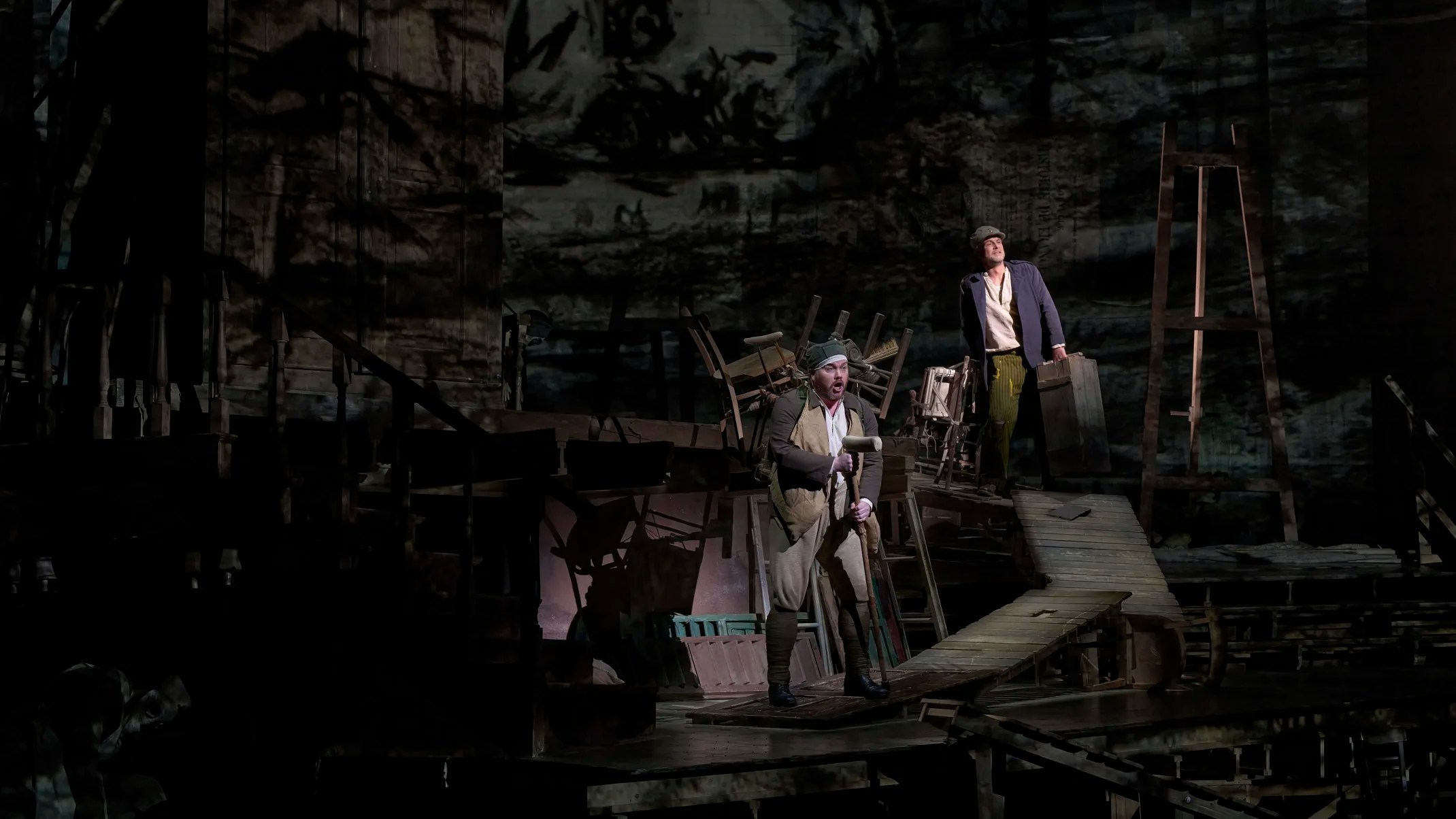
Wozzeck also has a friend named Andres although the scene where we might see Andres as upbeat, in contrast to the torment Wozzeck is getting in the other scenes, is rather dark in Kentridge’s interpretation. Owen McCausland handled all its challenges including the high C in the tavern scene, effortlessly.
Owen McCausland as Andres and Michael Kupfer-Radecky as Wozzeck (photo: Michael Cooper)
In the conversation after seeing this new Wozzeck we were somewhat perplexed. Alas the theatre was not full, even though what we saw is a powerfully cinematic experience, an overwhelming combination of images and performances. My friend Alexander Cappellazzo thought it was the mostcompletely relatable combination of story, action and music that you will find on an operatic stage.
Alexander Cappellazzo
He compared it to Taxi Driver, suggesting that maybe it shouldn’t be promoted as a conventional opera: because of course that’s not what it is. We wonder: how do we get this across to the potential audience? What should the COC do differently to promote this absolute jewel of a production? I feel sad, seeing the best opera performance today that I’ve seen in a long time in a half-empty theatre. I’m reminded of the conversations I’ve been having about popularity, a tricky concept. I believe Wozzeck could be sold out if the audience knew what they were getting. Maybe we need to see Kentridge’s edgy designs, the overpowering stage picture, rather than the usual operatic sales-job with its focus on the singers. It’s more like a movie than an opera, and it sweeps you away.
Okay a bit more nerdy stuff, then I’m done. Wozzeck is an example of a genre called “literaturoper”, a genre that isn’t terribly well-known. If the opera is an adaptation from a play or work of literature one could make the case that it’s a literaturoper. Salome and Elektra by Richard Strauss, Pelléas et Mélisande by Debussy take a play and adapt it without the intervening step of a libretto, such as you’d find with La boheme or Traviata or Carmen. Wozzeck is a fascinating case given that the original is a framentary play reassembled by Karl Emil Franzos, who has a dubious claim to fame. He’s responsible for mistaking the title of Georg Büchner’s fragmentary play Woyzeck as Wozzeck instead. I am not surprised, speaking as someone whose handwriting used to be pretty terrible in the days before I started using laptops & smartphones instead. And while I have never seen Eugene Onegin mentioned for inclusion in the list of literaturopern, maybe it also belongs there given that Tchaikovsky adapted the work from Pushkin’s poem. Or maybe the designation doesn’t mean much of anything.
I’m looking forward to seeing Onegin next week, as we come up on the renewal deadline for COC subscriptions mid-week. Yes I will renew my subscription. I’m looking forward to seeing Wozzeck again later in the run, but this time sitting up close. Kentridge’s production makes this opera fabulous to watch from any distance, exciting from any seat in the house.
Wozzeck continues with performances May 3, 8, 10, 14, 16.
In 2021 the COVID pandemic disrupted the plans by Soundstreams to present their original production Garden of Vanished Pleasures, a music-theatre work about Derek Jarman, the gay activist, film-maker & poet who died of AIDS related complications in 1994, devised by director Tim Albery. Soundstreams gave us a virtual version online that I reviewed here.
This weekend Soundstreams premiered a live version meant to realize Albery’s original intentions at Canadian Stage’s Marilyn & Charles Baillie Theatre. There is a final Sunday matinee remaining (for information).
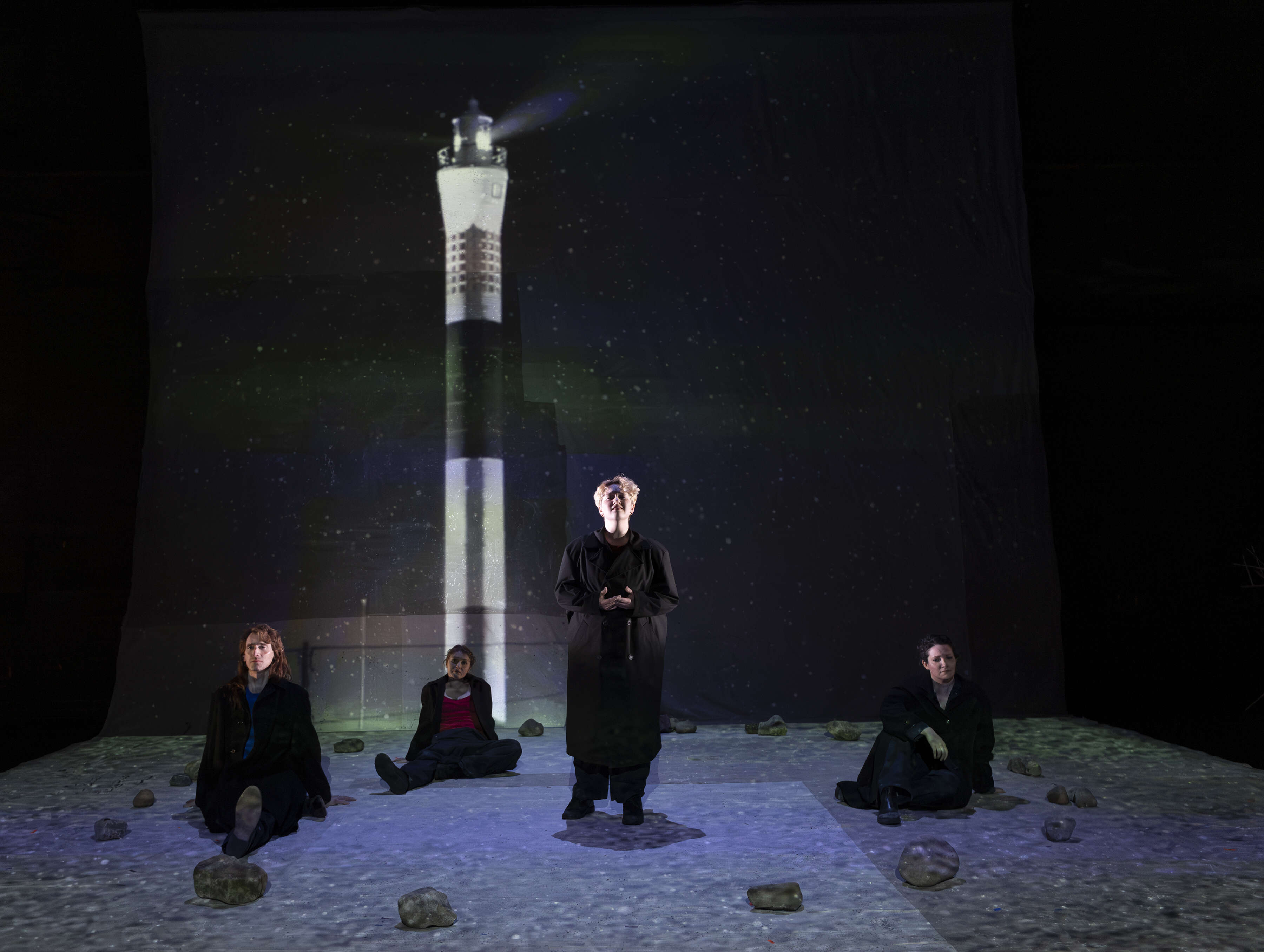
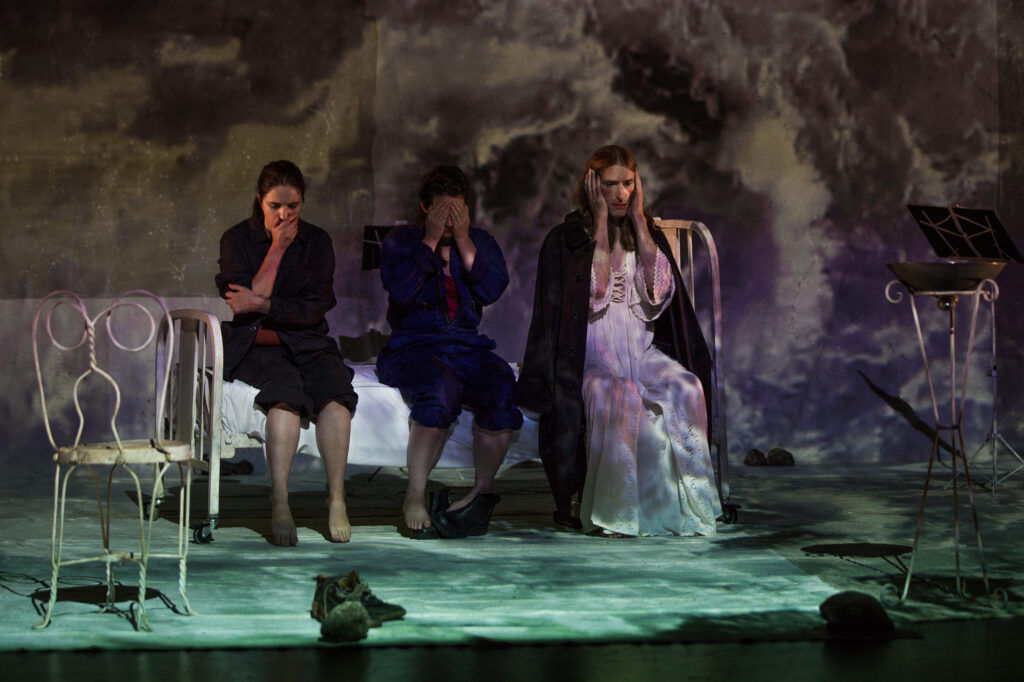
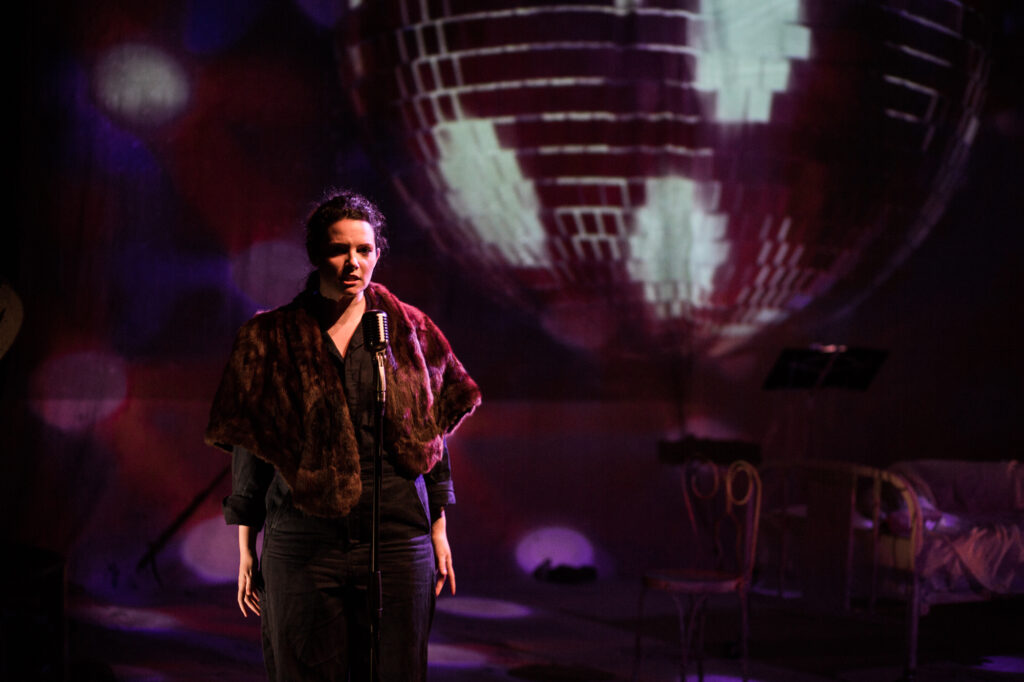
I expected more of a difference between the online work (which I loved) and its new live version, presented by four singers (Mireille Asselin, soprano, Danika Lorèn, soprano, Hillary Tufford, mezzo-soprano & Daniel Cabena, counter-tenor), three live musicians (Hyejin Kwon, music director & piano, Brenna Hardy-Kavanagh, viola, Amahl Arulanandam, cello) and a lot of CGI effects projected on the back wall of the Berkeley St Theatre. I thought I was watching exactly what I had seen in 2021, which was actually an exciting work.
To open my review back in 2021 I said “I wondered whether one needs to know Derek Jarman, as I watched Garden of Vanished Pleasures for the first time.” Today I feel even more certain that it is not necessarily an advantage to be a Derek Jarman fan, coming to something like this. I recall my frustrations encountering the poetry of Lord Byron, noting the discrepancy between the phenomenon of Byronism and his actual poems. Jarman is a similar larger than life phenomenon whose actual films & poems are largely unknown. But that doesn’t matter when you come to Albery’s music theatre piece. I call it Albery’s even though there are other creatives, including two composers and several poets, who contributed to the piece.
Composer Cecilia Livingston
Composer Donna McKevitt
Sometimes I use questions of genre to try to get a sense of what I have seen and heard but I am hesitant in this case. The printed program gave us names for 22 segments. Let me show you and forgive me if this starts to seem reductive.
1 Sweet Wisdom Music: Donna McKevitt 2 What If Music: Donna McKevitt; Text: Derek Jarman 3 Silver Music: Cecilia Livingston; Text: Walter de la Mare 4 Translucense Music: Donna McKevitt; Text: Derek Jarman 5 Parting Music: Cecilia Livingston; Text: Janey Lew 6 Nature Music: Donna McKevitt; Text: Derek Jarman 7 Kalypso Music: Cecilia Livingston; Text: Duncan McFarlane 8 I sit here immobile Music: Donna McKevitt; Text: Derek Jarman 9 Two Dreams Music: Cecilia Livingston; Text: Cecilia Livingston 10 Prelude to Sebastiane Music: Donna McKevitt 11 Sebastiane Music: Donna McKevitt; Text: Derek Jarman 12 I am a mannish muff diving size queen Music: Donna McKevitt; Text: Derek Jarman 13 Adam & Eve & Punch-Me-Not Music: Donna McKevitt; Text: Derek Jarman 14 Impatient Youths Music: Donna McKevitt; Text: Derek Jarman 15 Mercy Music: Cecilia Livingston; Text: Duncan McFarlane 16 The System Music: Donna McKevitt; Text: Derek Jarman 17 No Dragons Music: Donna McKevitt; Text: Derek Jarman 18 Kiss Goodnight Music: Cecilia Livingston; Text: Cecilia Livingston 19 Snow Music: Cecilia Livingston; Text: Walter de la Mare 20 A Prelude Music: Donna McKevitt 21 I walk in this garden Music: Donna McKevitt; Text: Derek Jarman 22 February Music: Donna McKevitt
I have been hesitant to speak of authorship except to mention Albery. In the program note by David Jaeger, where I’ve read about Albery’s process assembling music from Donna McKevitt and Cecilia Livingston, it reminded me of a film scoring process, where the music feels subordinate to text & image. The presentation onstage reminded me of a song cycle, sometimes sung by a soloist, sometimes by several of the singers. I heard some people speak of this as opera. Maybe.
When I recall the seminal words of Richard Wagner in Opera and Drama, he summarized the history of opera as a medium meant to employ music for dramatic purposes (to make theatre), that usually used drama for musical purposes (to make music). And there’s nothing wrong with doing the usual operatic thing, to make music that gives us the chance to hear wonderful voices and musicians, whether we call it a song cycle or opera or music-theatre. I think that’s really what Garden of Vanished Pleasures does, showing off the four fabulous voices under the careful leadership of the conductor.
Hyejin Kwon, music director & pianist (photo: Cylla von Tiedemann)
We’re in the last few days before a federal election causing varying degrees of derangement and stress. Friday night I escaped to a Toronto Symphony concert. You can’t trust reviews from someone who is going mad, which is why I want to frame my experience seeing Saturday’s matinee of Garden of Vanished Pleasures from Soundstreams.
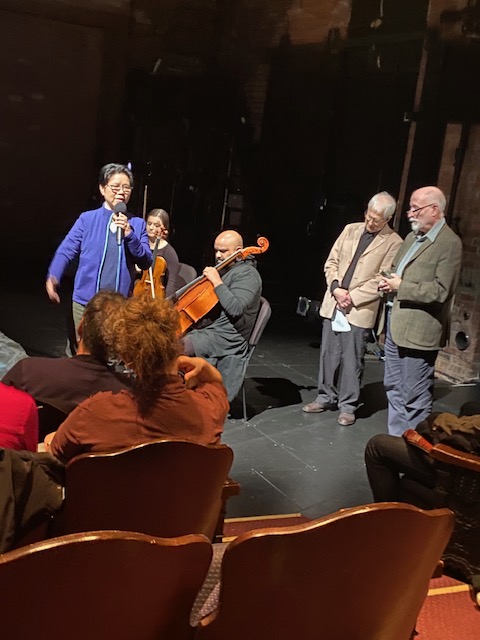
MPP Kristin Wong-Tam, violist Brenna Hardy-Kavanagh, cellist Amahl Arulanandam, Soundstreams Artistic Director Lawrence Cherney, David Parsons Ontario Arts Council.
Before the show began we were reminded of how fortunate we are here in Toronto, in a little pre-show talk from MPP Kristin Wong-Tam. While there was no explicit mention of our neighbors to the south but yes, we are lucky and the election is Monday. “Woke culture” is still mentioned by one of the political parties seeking to run the country. While Jarman’s story may be a dark one it serves as genuine escapism, validating norms that some seek to challenge and even to erase.
That made Garden of Vanished Pleasures feel especially cathartic, accompanied by superb visuals, projections designed by Cameron Davis. All four singers sounded wonderful and intelligible too.
Daniel Cabena, Mireille Asselin, Danika Lorèn, Hillary Tufford (photo: Cylla von Tiedemann)
Mireille Asselin, Hillary Tufford, Daniel Cabena (photo: Cylla von Tiedemann)
Tonight is the first of three voyages into the heart of the hispanic as imagined in music, guided by Toronto Symphony Music Director Gustavo Gimeno, a program to be repeated Saturday and Sunday that feels like a genuine celebration.
Gustavo Gimeno conducting the Toronto Symphony
While Roy Thomson Hall was completely sold out last week for concerts featuring guest soloist Yuja Wang, tonight there were still tickets available but then again we can’t expect Yuja every night. Last week is was the glory of Slavic composers Janacek & Tchaikovsky, but I am especially happy to trust Gustavo showing us his Hispanic roots. as he did tonight.
Yet there were no weak spots in the pieces curated for our pleasure tonight:
Perú Negro by Jimmy López The Four Seasons of Buenos Aires by Astor Piazzolla (arranged by Leonid Desyatnikov) –intermission– Dance Scenes from the Living Room by Liam Ritz Suites No. 1 & 2 from Carmen by Georges Bizet (arranged by Fritz Hoffmann)
The Four Seasons of Buenos Aires resembles a baroque violin concerto at first glance, played by soloist Karen Gomyo, with a small string orchestra backing her. That is until you hear the work, the strings sometimes powerfully rhythmic in their attacks, sometimes making sounds as if they had concealed percussion among them, taking us into something much more fun. The musical idiom dances on the edge of something classical and something like a popular dance both in its energetic vitality and the variety of ways the instruments were used, especially Karen’s solo part.
Violinist Karen Gomyo
But of course this is not Vivaldi’s familiar old Four Seasons even if each of the four movements offers a witty quotation from the baroque violin concerti. Although we giggled aloud when we recognized the familiar music it was subtly done.
Karen followed with a superb encore, Tango etude #3 by Piazzolla.
And unlike Yuja last week, she told us what she was playing which is a big help.
The evening’s title was Bizet’s Carmen Suites, as we closed with a pair of suites running roughly half an hour. For me the biggest tragedy of Carmen is that Bizet died without any inkling of the success the opera would find. The premiere and the composer’s death happened 150 years ago. In that half hour we didn’t exhaust the melodic riches of the score. Gustavo has such a superb rapport with the TSO that we were spellbound. I heard no phones going off, a silent audience enraptured by what we were hearing.
Jimmy Lopez’s Perú Negro started our evening with another flavour of music that, while recognizably hispanic in its rhythms, took us into a much more modernist idiom than what was to follow.
After the intermission came a piece that I thought of as the highlight of the night, as it was a great pleasure to applaud the young composer himself on the occasion of the world premiere, namely Liam Ritz’s Dance Scenes from the Living Room, a TSO commission. I saw when I googled that he was born 1996, in other words he’s not yet 30 years old.
Liam Ritz
It is refreshing to read a program note about a modern composition that is accurately described and evoked. I only wish I could hear it again to delve deeper. (And I quote) The piece “reimagines the freedom of dancing in one’s living room, lost within the music, carefree, and without inhibitions. It’s not just a celebration of that inner child, but an invitation to rediscover that same joy and freedom as an adult”.
Gustavo turned the TSO loose for eight minutes of flamboyant fun. Arguably every composer wants to show us who they are, to win us over with their music, right? Well consider me won.
The TSO will be back with the same gorgeous pieces Saturday and Sunday.
I have never seen Roy Thomson Hall as full as it was tonight, Wednesday April 16th. They had a cop directing the cars out of the underground parking garage: because so many people came to see Yuja Wang play the piano with the Toronto Symphony conducted by Gustavo Gimeno.
No wonder. Is she more or less acknowledged as the best piano player in the world right now? Forgive me, it’s absurd to try to compare as though there were a competition.
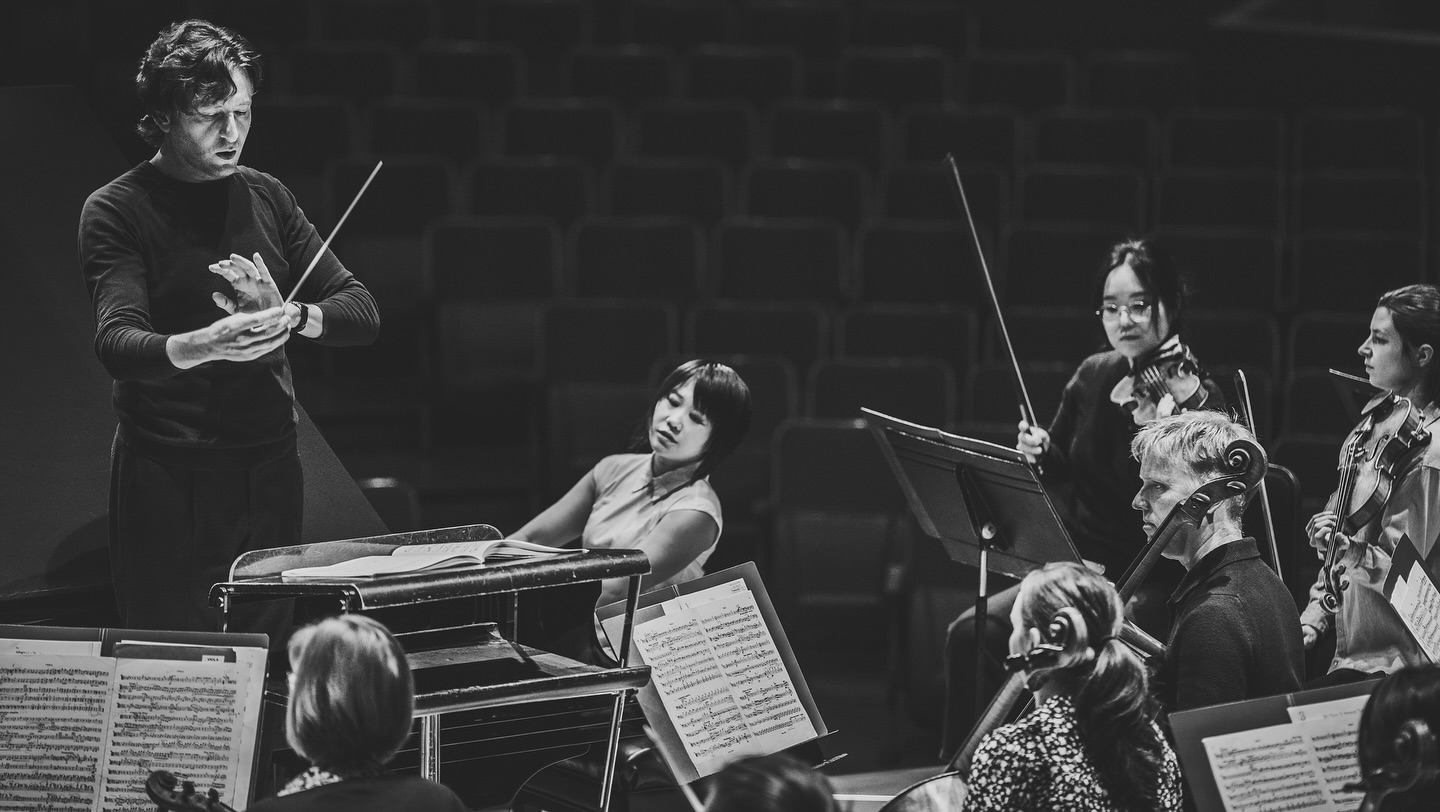
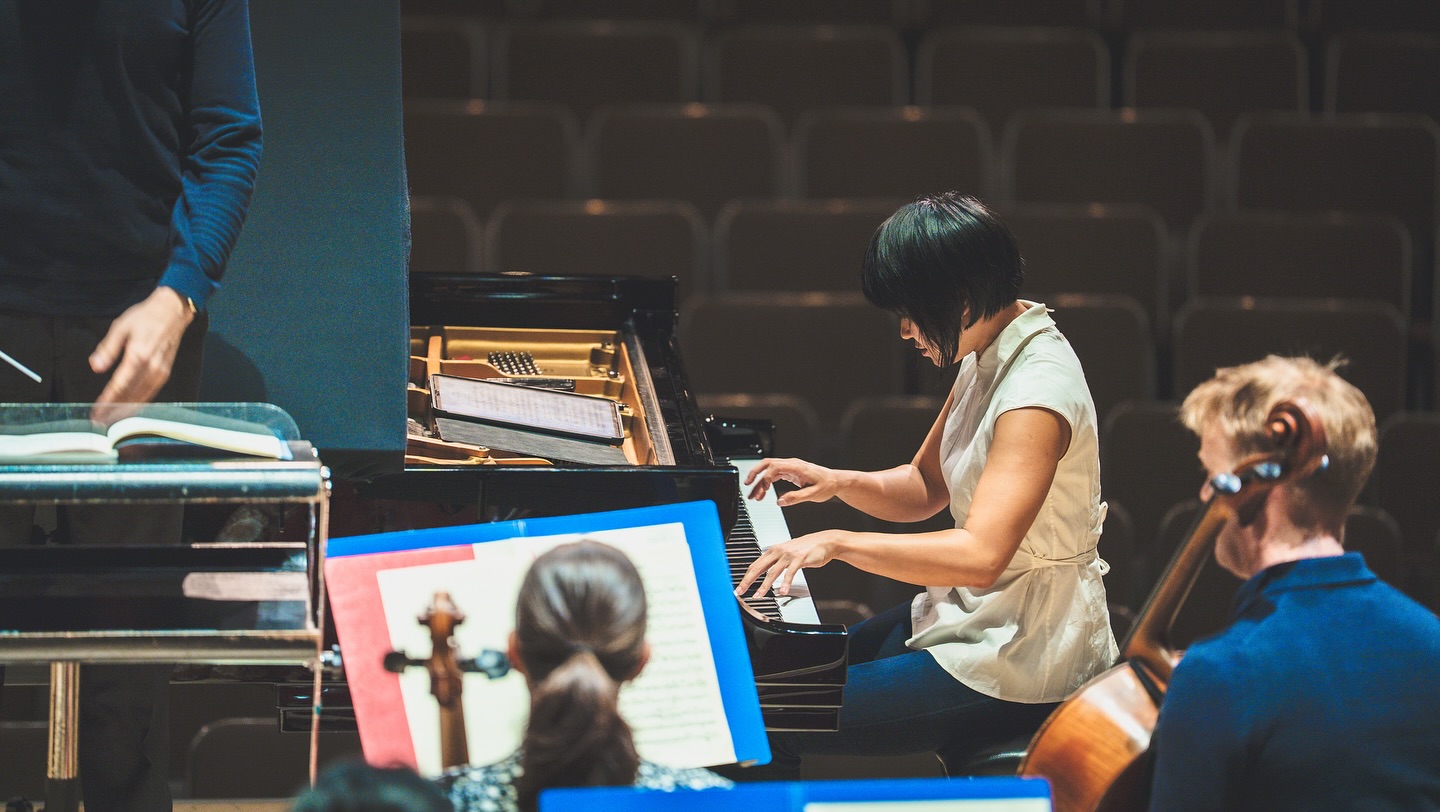
Yuja Wang rehearsing with Gustavo Gimeno and the TSO
Speaking of competitions, tensions were thawed when Van Cliburn won the Tchaikovsky Competition in Moscow at the height of the Cold War in 1958 playing Tchaikovsky’s First Piano Concerto. Hard hearts accomplish nothing, let us open our hearts to beauty, whatever its nationality.
But I saw on social media that Yuja’s teacher Gary Graffman doesn’t allow his students to enter competitions, doesn’t believe in them. In a post I saw on Slipped Disc, Graffman said “‘I was totally against competitions,’ he says. ‘I didn’t allow Lang Lang or Yuja Wang to compete.’“
And they’re fine without competitions. She is simply the best.
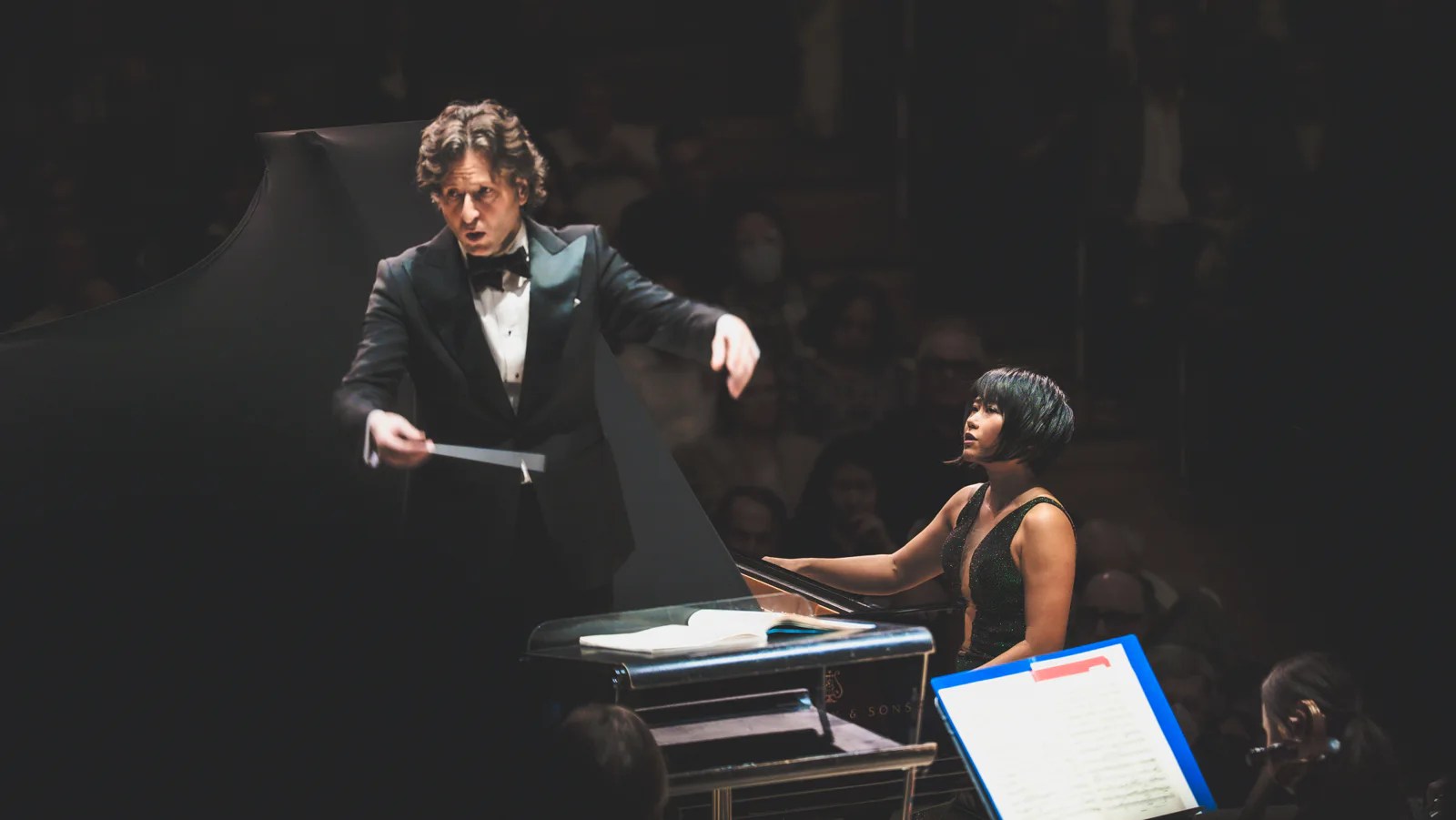
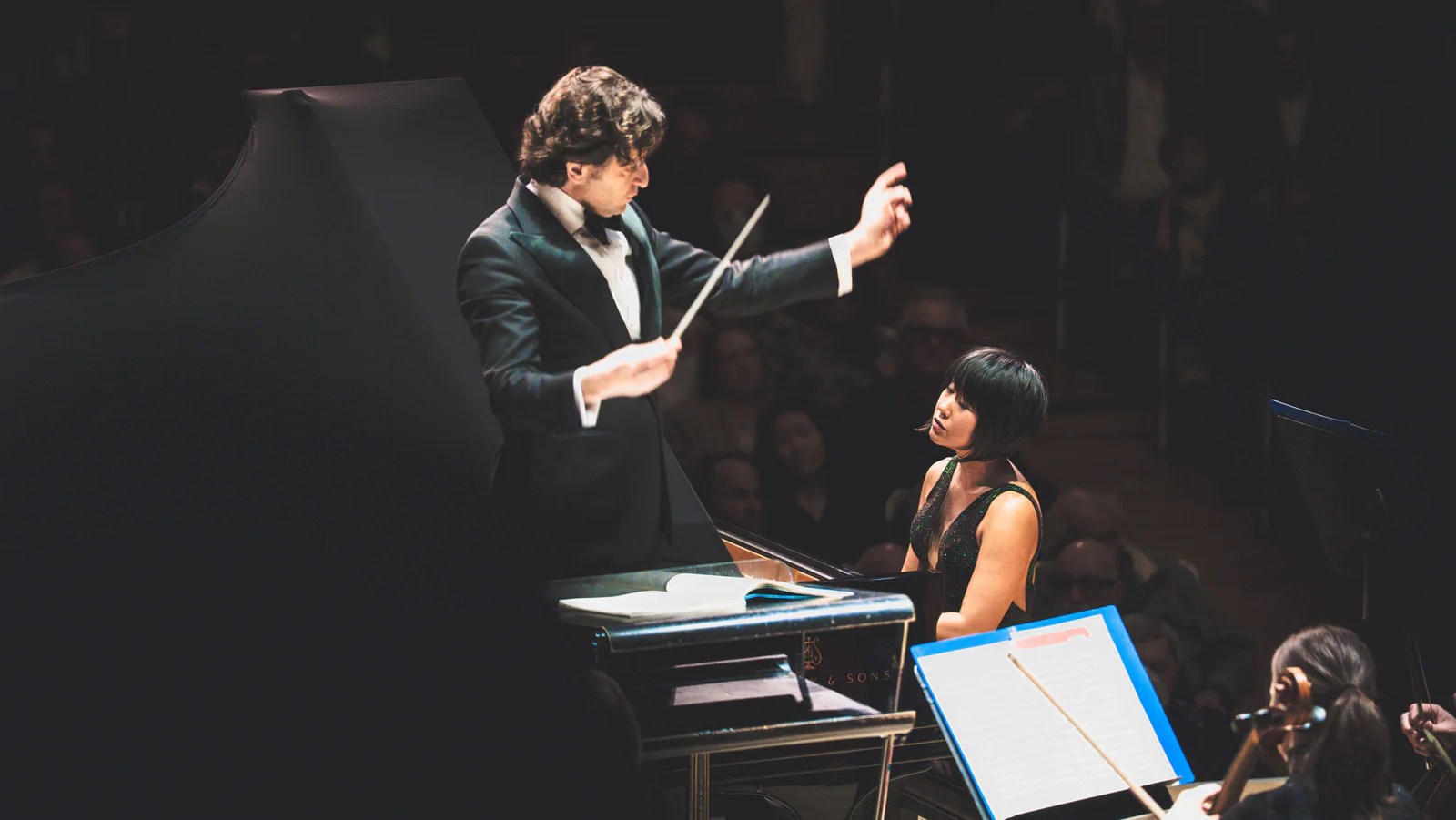
Gustavo Gimeno, Yuja Wang (photo: Allan Cabral)
We’re having a bit of a Tchaikovsky Festival in Toronto. The Canadian Opera Company will be presenting Eugene Onegin next month, and the TSO and Gustavo will be giving us Tchaikovsky’s Pathetique Symphony (aka #6) in a couple of weeks. That’s on top of the ballet season built around his Nutcracker, Tchaikovsky’s annual gift to their bottom line.
Tonight though it was a concert featuring Yuja Wang playing Tchaikovsky’s 1st Piano Concerto in a sold-out hall. As the program note observed, Tchaikovsky has often been met by condescension: perhaps because he’s popular, wearing his heart on his sleeve. The academics will someday catch up to the public who know beauty when they hear it.
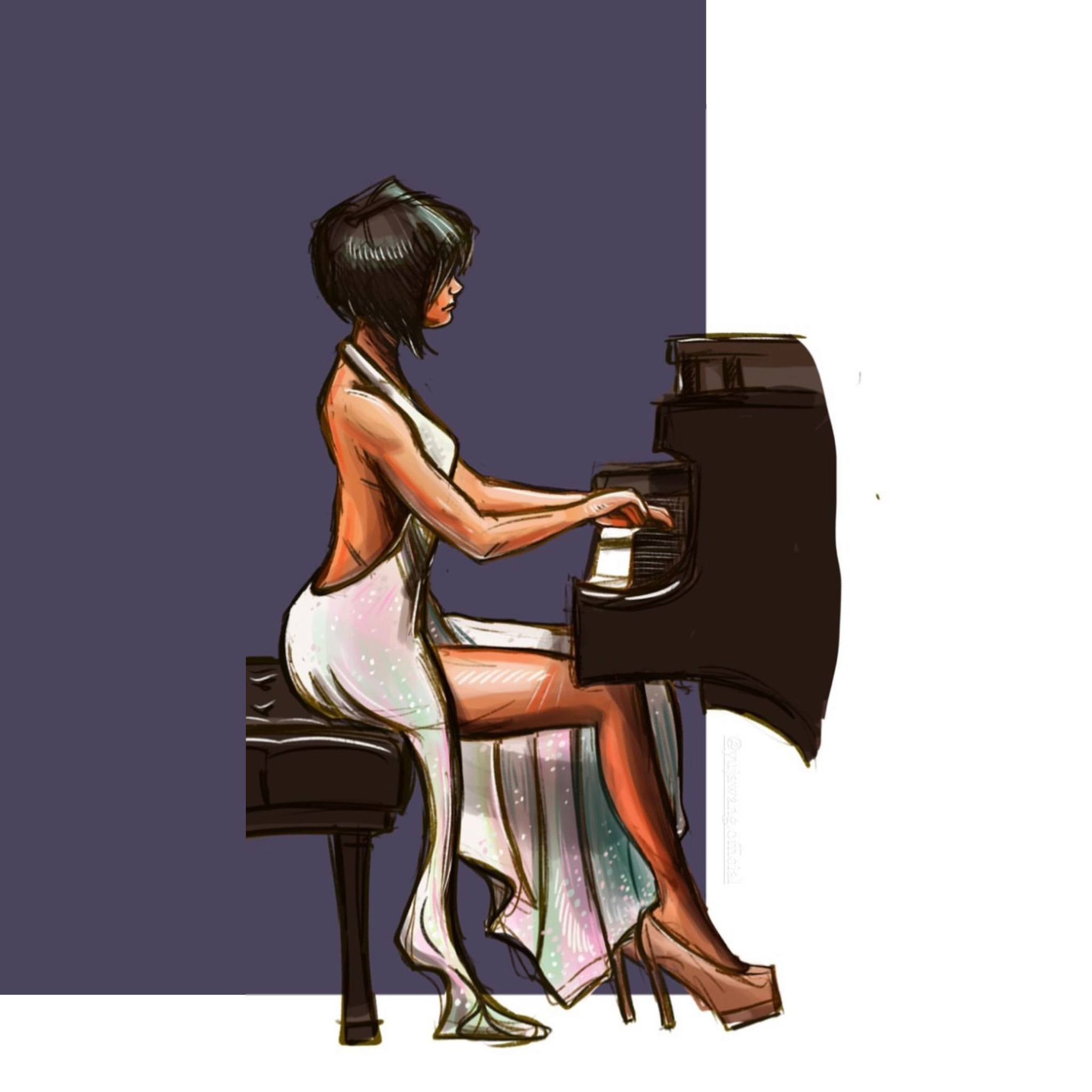
Cartoon by Jessica Mariko @caffeinatedkeyboardist
Yuja’s Tchaikovsky is unique. The soft passages are shaped so beautifully, so clearly articulated, sometimes so soft you lean forward to hear them, for instance in the cadenza to the first movement, the piano sounding like a singer’s meditation, sometimes arriving with great power. Don’t let her size fool you, she has an athlete’s stamina and reserves of power. The TSO responded under Gustavo’s baton, held in reserve until the climactic passages ending the first and last movement,
Yuja Wang and the TSO in rehearsal
There was an explosion of applause and in response Yuja gave us three wonderful encores.
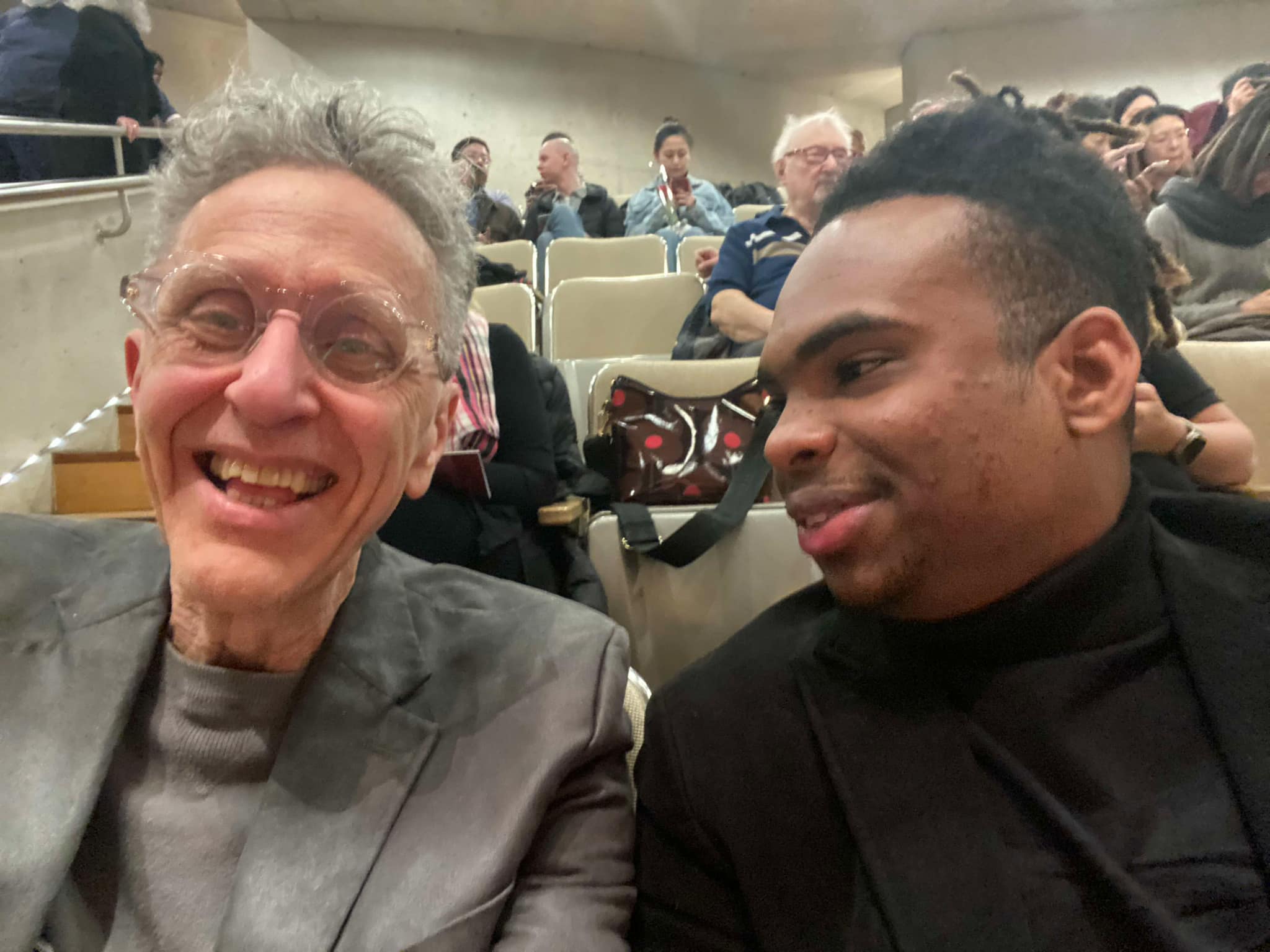
I think the first one was Danzon #2 by the Mexican composer Arturo Márquez. I only knew this because of my friend Yoel Becquer, the lovely young trombone-player sitting beside me at the concert. I took a selfie to properly credit him.
Leslie & Yoel after the concert
Second encore? I don’t know, I’m guessing it’s a Ligeti etude because it was similarly virtuosic & challenging as that first amazingMárquez piece, and I know that Yuja has played & recorded several of them. Beyond that, I’m just guessing. [next day I was told by TSO “SHOSTAKOVICH/arr. Yuja Wang: String Quartet No 8 (Met. 2)”]
So at this point Yuja had already given us the concerto and two remarkable encores.
And she came back for a third, the sixth Philip Glass Etude. While I’ve played the piece it does NOT sound this way when I play it (cue the laughter). Not even close.
There was a whole other half to the program before intermission.
Jocelyn Morlock’s My Name is Amanda Todd is a surprisingly powerful piece. I am of two minds about it, given that its subject is so powerful. When I heard it the first time, at a National Arts Centre concert a few years ago, I was very moved (and tearful): but likely was impacted by the powerful story of Amanda Todd that underlies the composition. Tonight I had another strong response, with additional sadness over the recent untimely death of the composer.
Jocelyn Morlock
I have been reading Time’s Echo, Jeremy Eichler’s 2023 book about music and the Holocaust, that suggests that music can help preserve histories & messages after the eye-witnesses have died: an idea I find interesting yet troubling. Can Morlock’s music tell us about Amanda Todd? I’m not sure, and I think the question is kind of complex, perhaps asking too much of the composition, taking us to the limits of what any music can do. All I do know is that Gustavo brought energy and inspiration to the work. I found myself intrigued and moved by a vulnerability I experienced in the beginning part, music that had me asking myself what I was feeling. At times the voices interact, the different parts seeming to quarrel, discuss, even fight, and eventually find something more unified by the end. I couldn’t help myself, reading Amanda Todd’s story into the music. Gustavo honours the piece, a fascinating emotional tone poem to begin our evening.
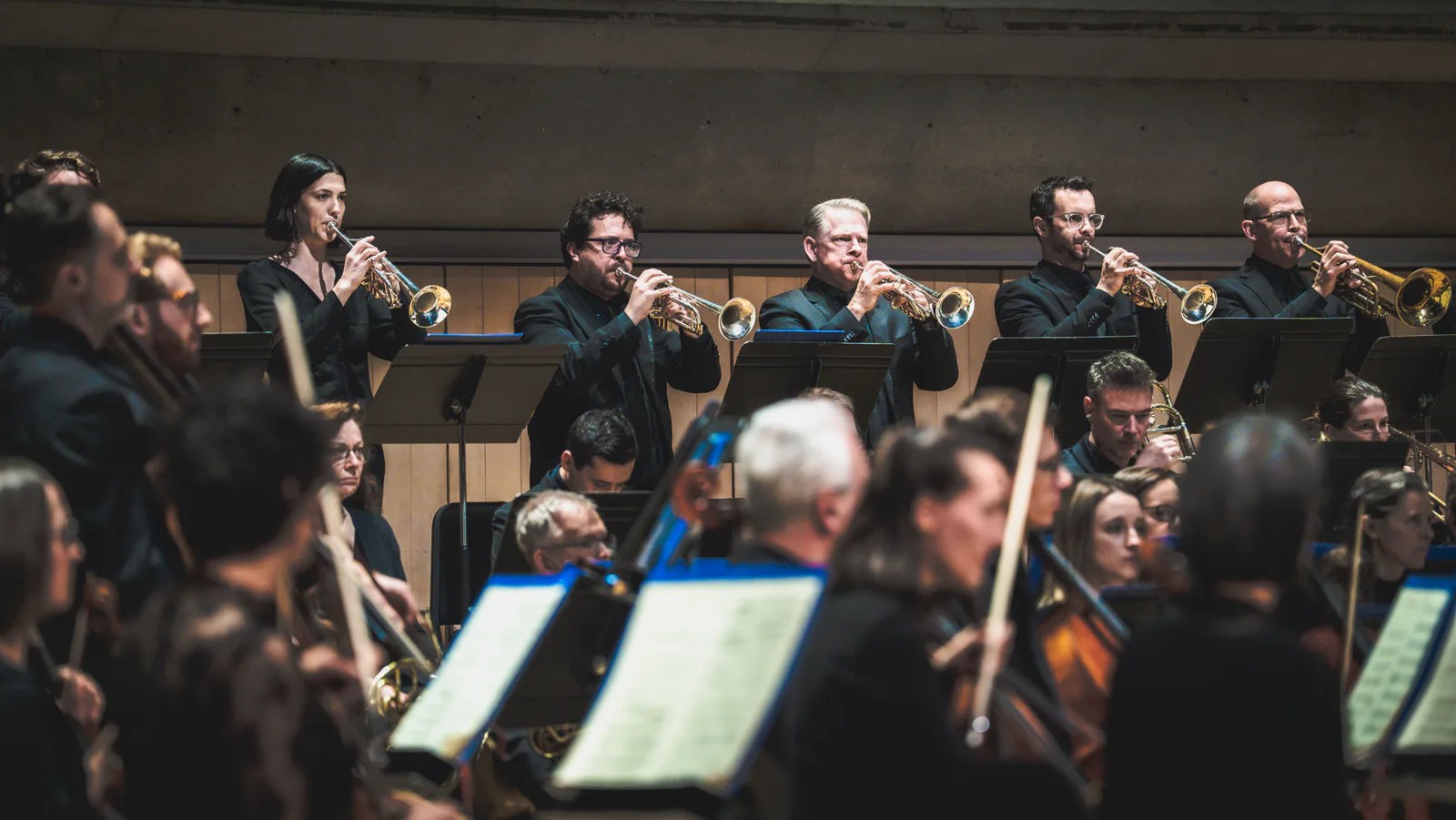
Speaking of music with powerful associations, the next work was Janacek’s Sinfonietta, a piece that will enjoy its centennial next year, and that I associate with former TSO music director Karel Ancerl, having heard his recording of the piece with the Czech Philharmonic. I love this piece. I was overwhelmed by what the TSO accomplished under Gustavo’s direction tonight, and hope someday that the TSO records this piece. Oh my God. I think Ancerl always pushed the pedal to the metal in the big brass sections, asking for fortissimo whenever there was an option, while Gustavo is subtler, going for a gradual build-up to the radiant ending. This is one of those times when Roy Thomson Hall’s acoustic sounded really good, the huge brass complement filling the hall perfectly.
Toronto Symphony trumpets (photo: Allan Cabral)
Gustavo invited all the inner voices to come through regardless of whether they were dissonant or not.
Maybe I’m a bit sentimental but when I thought of Ancerl who survived Auschwitz to come to the Toronto Symphony in 1969, I imagined him listening in the stunning perfect last few minutes, as my tears flooded down my face. Yes flooded.
Yuja and Gustavo and the TSO will be back to play the Tchaikovsky and Morlock and Janacek again Thursday and Saturday at 8;00 pm at Roy Thomson Hall. I believe they’re also sold out.
Lorne Michaels
I was thinking Saturday Night Live should get Yuja as their musical guest. Lizzo sang two decent songs this past week, better than the usual. Years ago SNL had Luciano Pavarotti on and surely could afford Yuja.
There’s nobody better.
Come on Lorne!
Gustavo Gimeno, Yuja Wang, Toronto Symphony (photo: Allan Cabral)
Opera Atelier brought their opulent 2022 Versailles production of Marc Antoine Charpentier’s 1688 opera/ballet David and Jonathan to Koerner Hall in Toronto. Artistic Director Marshall Pynkoski reminded us last night in his pre-show speech that the company began forty years ago.
This version of the story largely matches what I recall from the Bible, a story that goes from something happy to something much darker including something like madness. Everyone is happy when David defeats the Philistine giant Goliath. But King Saul becomes jealous of the young champion, driving David away, turning upon his son Jonathan and becoming more erratic and demented. Although David and Saul’s son Jonathan love one another, both Jonathan and Saul both eventually die in battle. David becomes King of Israel, heartbroken in the midst of the celebration.
While the Old Testament may be the source, it’s presented through an operatic lens including a witch who conjures a ghost in the Prologue, a trouser role to add an intriguing layer of ambiguity and moments of joyous celebration, fierce passion, jealousy, madness and death.
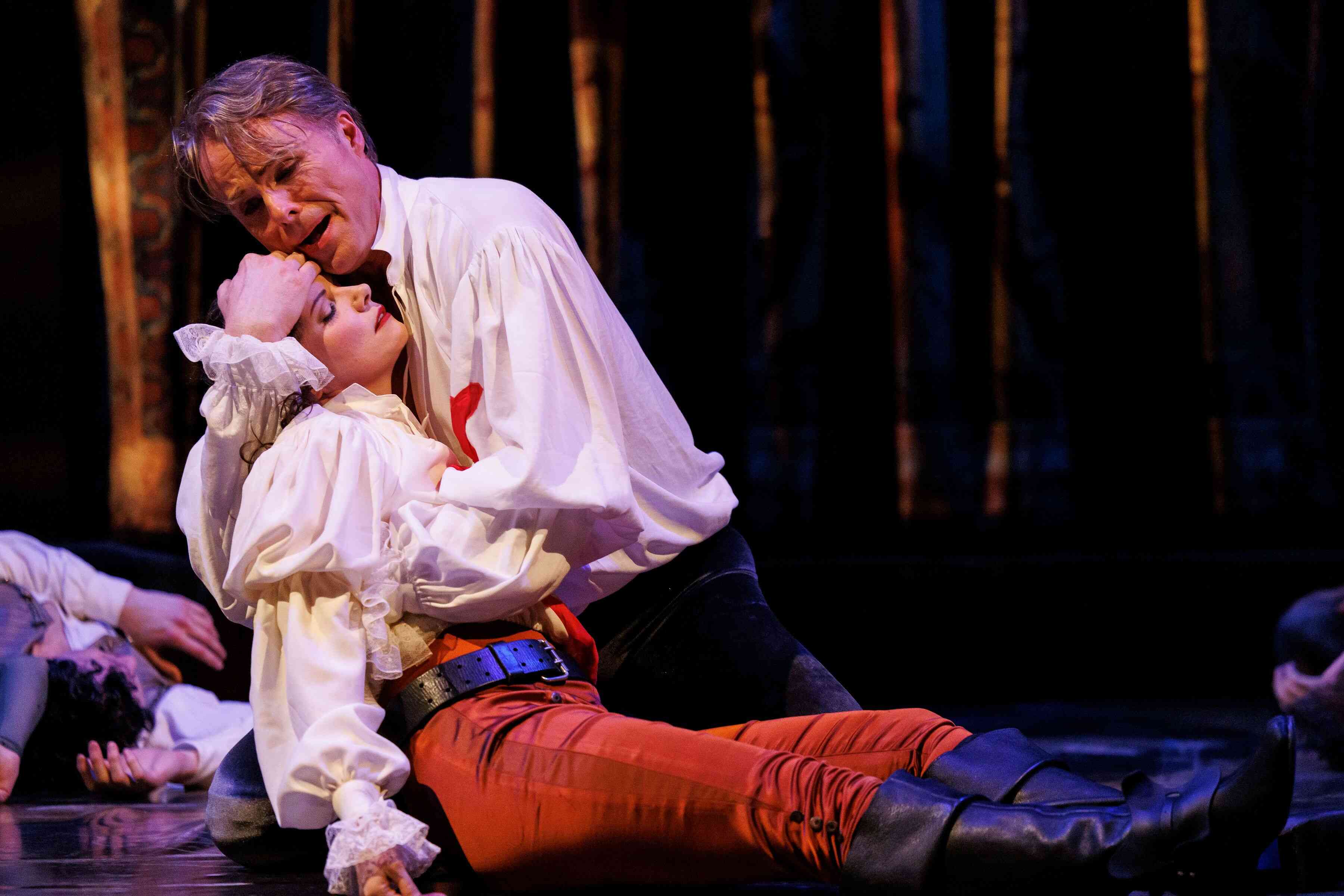
David (Colin Ainsworth) embraces a dying Jonathan (Mireille Asselin, photo; Bruce Zinger)
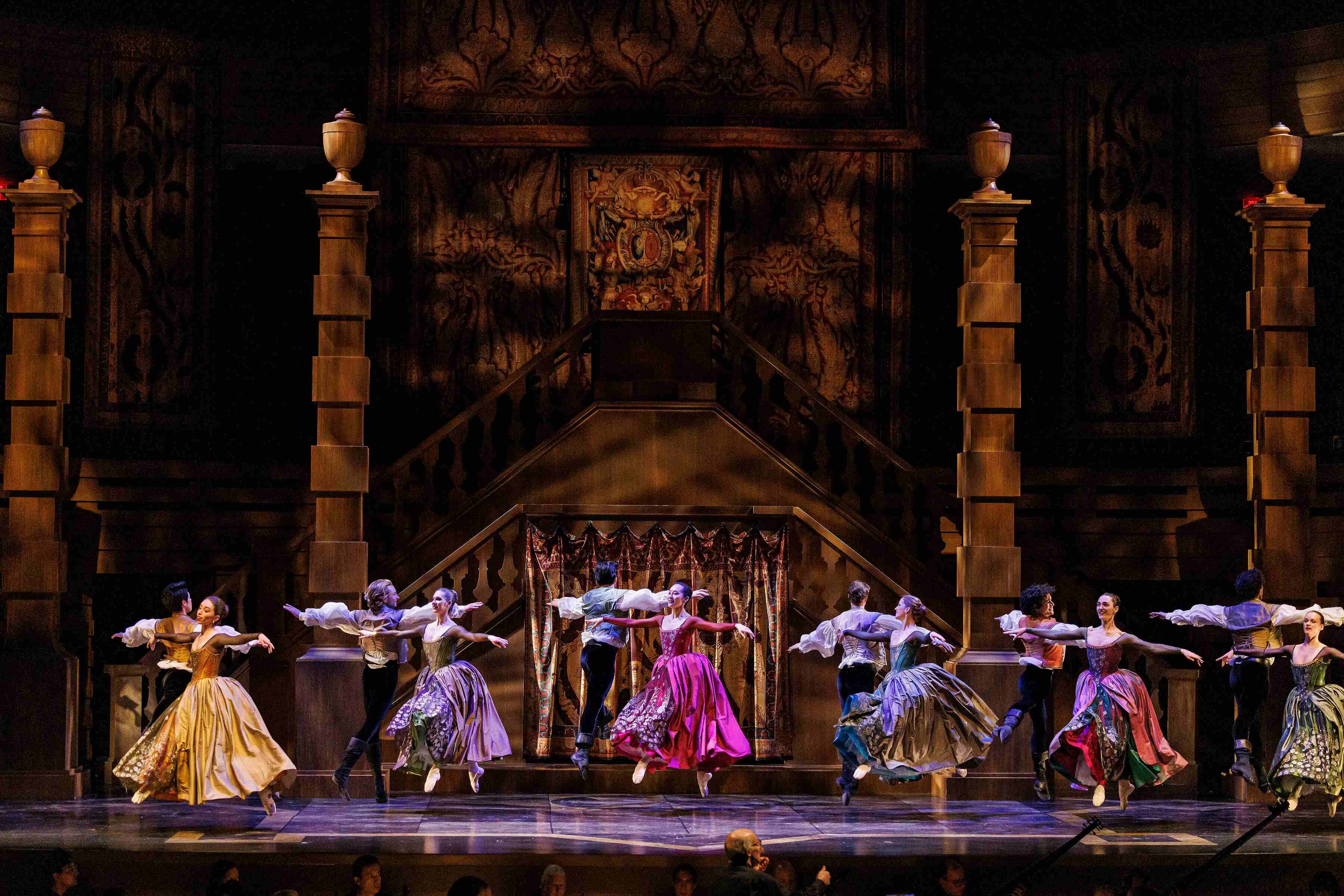
The style of the work is ideal for Opera Atelier, showcasing their dancers. Instead of arias, Charpentier’s arioso builds up dramatic tension until it’s released through divertissements in dance and/or chorus. Before intermission the set-pieces are mostly celebratory dance, while after intermission we see dances including sword-play, choreographed by Jeannette Lajeunesse Zingg and Fight Director Dominic Who.
A program note from Marshall & Jeannette says “For our 40th Anniversary we wish to reiterate our conviction that period performance is not a museum. It is a threshold–a point of departure and new discoveries”. Looking back on those four decades, one has to admit that not only have they and Opera Atelier been exploring and articulating historically informed performance practices, but we in the audience have been learning how to understand what’s put before us onstage. For this 17th century opera / ballet the gap between historically informed performance and modern interpretation seems narrower than usual, or in other words the work for Marshall and Jeannette on this production feels especially authentic.
Artists of Atelier Ballet (photo: Bruce Zinger)
Gerard Gauci’s set is a perfect match to the wooden surfaces and colour scheme of Koerner Hall’s interior.
In this my first experience of the opera/ballet, I was not always clear on what I was seeing as there’s some ambiguity in the work & its presentation. When we are seeing the happy faces of David or Jonathan, or during the Prologue I had no problem. But the complex scheming and plotting of Achis (the Philistine King, played by Christopher Dunham) and Joabel (the Philistine general, played by Antonin Rondepierre), messing with Saul (the Israelite King, played by David Witczak) left me sometimes unsure whose rantings I was hearing.
Achis (Christopher Dunham) and Saul (David Witczak, photo: Bruce Zinger)
I wonder if there is a movement vocabulary or gestural language to assist in differentiating? except that if Marshall and Jeannette employed these techniques (ways of standing, posing, singing, to signify madness or anger or jealousy) I am not sufficiently literate in these elements to easily decode what I saw. Or maybe it’s simply that the opera is new to me and I will understand it better next time.
The principals were effective, working with the gorgeous sounds of the Tafelmusik Baroque Orchestra and Tafelmusik Chamber Choir, conducted by David Fallis, sensitively ensuring that the singers were never covered. At times the choir, singing from the balcony, seem to address thoughts inside a singer’s head, as in the scene where Jonathan (Mireille Asselin) contemplates his conflicting loyalties and the upcoming battle. The sanest happiest characters at the heart of the story are the title roles of David (Colin Ainsworth) and Jonathan, surrounded by intrigue and lunacy. It’s a thrill hearing the powerful tenor voice of Colin Ainsworth, a stalwart performer for Opera Atelier.
The Prologue was for me a highlight, Mireille Lebel singing powerfully at the bottom of her vocal range, as the Pythonisse (a witch) conjuring the spirit of Samuel (Stephen Hegedus), who tells Saul (David Witczak) that heaven has abandoned him, similar to what we can read in 1 Samuel 28. It was compelling theatre to watch a 17th century take on madness as seen in the gradual decline and collapse of Saul.
Charpentier’s David and Jonathan will be presented again at Koerner Hall this weekend with performances Thursday April 10 and Saturday April 12 at 7:30 pm, and Sunday April 13 at 2:30pm. For tickets click here.
Marshall Pynkoski and Jeannette Lajeunesse Zingg in Versailles (photo: Bruce Zinger)