
Last night I watched a concert presentation of Rossini’s Otello from Opera By Request, a company who demonstrate their importance with every outing.
Bill Shookhoff leads from the piano working without a conductor, seated upstage of performers who face the audience from their music stands dressed in formal attire. Their usual venue of College St. United Church is an intimate space with a live acoustic ideal for this sort of exploration. The singers are in character, although sometimes when they’re looking at one another it is as much for musical reasons as dramatic ones.
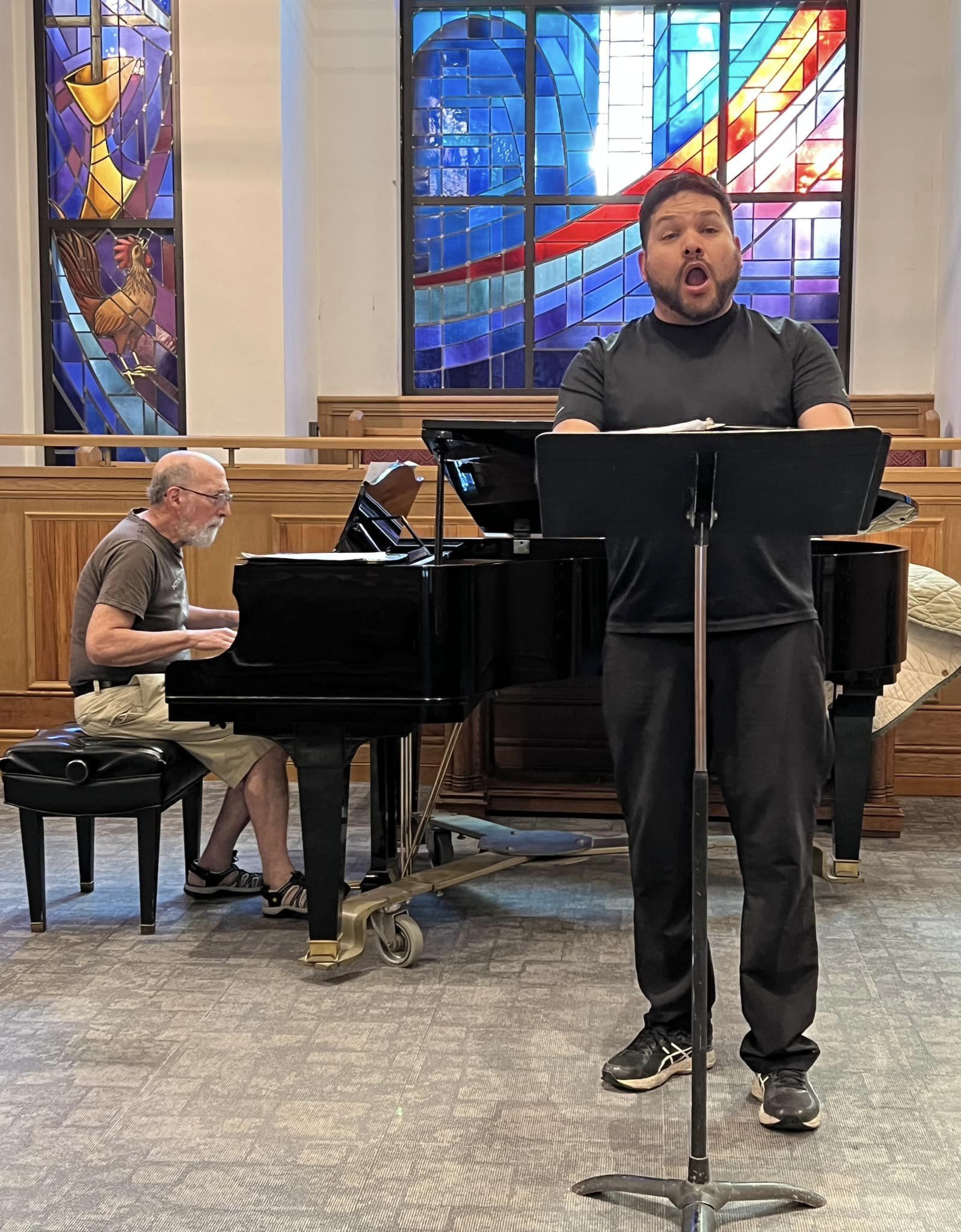
OBR explain their rationale in their program note:
“Opera By Request was launched in 2007 to provide opportunities for singers to learn and perform roles in their entirety, and for audiences to experience opera, both rare and familiar, at affordable prices. All Opera By Request productions are initiated by singers not by the director. Since its inception, more than 300 singers have presented over 200 performances of more than 100 different operas.”
And so on this occasion we encountered Rossini’s alternative to Verdi’s better known version of Shakespeare’s play, its libretto by Francesco Berio di Salsa that premiered in 1816 (in contrast to the better known adaptation by Arrigo Boito that premiered in 1887). The prolific Rossini, one of the quickest composers in history, who premiered three operas in 1816, and four the next year likely didn’t agonize over his work the way Boito and Verdi did. Does it matter that the story has been changed? Does it matter that some of the music in the scene where Otello murders Desdemona resembles music we hear in Barber of Seville, composed earlier the same year? Not when the goal is a virtuoso display of vocal fireworks. In fairness there’s nothing wrong with what he’s written, it’s just that this segment reminds me of the comedy. I don’t know whether it’s another reason why Verdi’s opera pushed Rossini’s out of the standard repertoire, although the fact that Rossini requires two amazing tenors is likely a bigger reason.
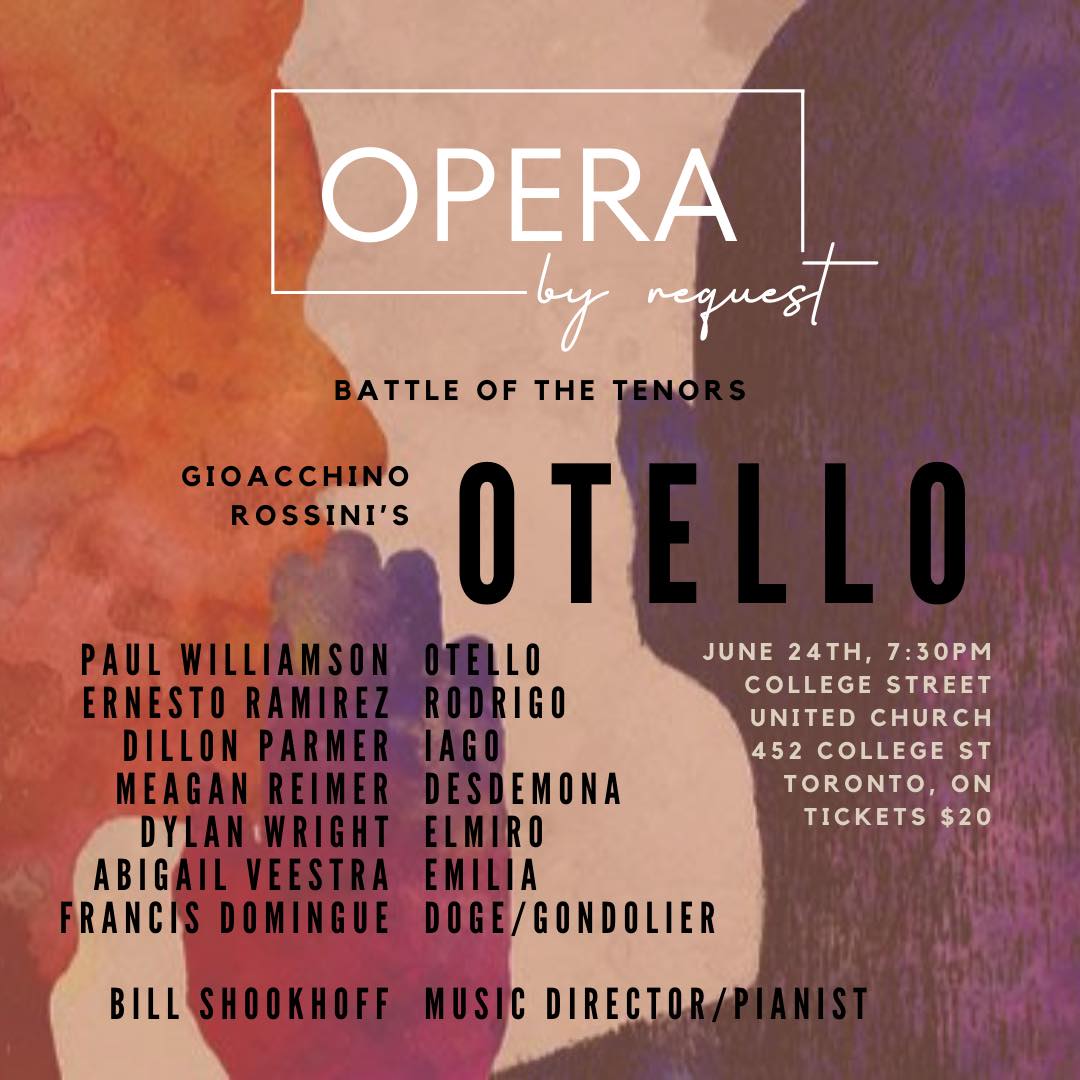
Shakespeare’s Iago is a major character who has more lines in the play than the title role, a disparity honoured in Boito’s adaptation even if he changes the motivations substantially. Rossini’s Iago (Dillon Parmer) is a much smaller part even if his machinations are still central to the plot, fueling mistrust by Otello (Paul Williamson) of his wife Desdemona (Meagan Reimer). The arc of her character is much darker in Rossini’s opera, distrusted and castigated by her father (Dylan Wright), concealing the marriage to Otello without any of the joyful lyrical moments such as the ones Verdi offers at the conclusion of his first act. Rodrigo (Ernesto Ramirez) is a much bigger character in this older version that requires a spectacular tenor voice. Rossini’s audience welcomed a bel canto showpiece for three tenor voices and a big soprano role rather than the more psychological writing Verdi created 71 years later. Tastes change.
Recalling the main reason for OBR—singers trying out roles—it was a privilege to see and hear this rarity. It’s a pleasure to see the opera sung with a black Otello, even as I wondered whether vocal type had any part in the casting. Paul has a dramatic sound that might be big enough for Verdi’s Otello. While Rossini’s Otello goes much higher than Verdi’s (who never reaches a high C), Paul’s colour was still of a more heroic timbre than that of Ernesto, whose role seems more conventionally bel canto in its requirement of an enormous amount of coloratura, often sung softly. I’m not sure which role lies higher in its overall tessitura (range) especially when singers may sometimes interpolate higher notes. The aesthetic is meant to impress us and in this respect they succeeded admirably. Paul sang a couple of very high notes, one that I think was a high D, even while defying expectations in also giving us a big heroic sound. If Verdi was familiar with Rossini’s take on the character he likely had a dramatic voice in mind, following up on the heavier writing in Don Carlos and for Rhadames in Aida. Ernesto’s singing was beautifully idiomatic, breath-taking at times, using the small venue to advantage, singing very softly with the piano accompaniment, an approach that likely would not have been heard opposite a full orchestra.
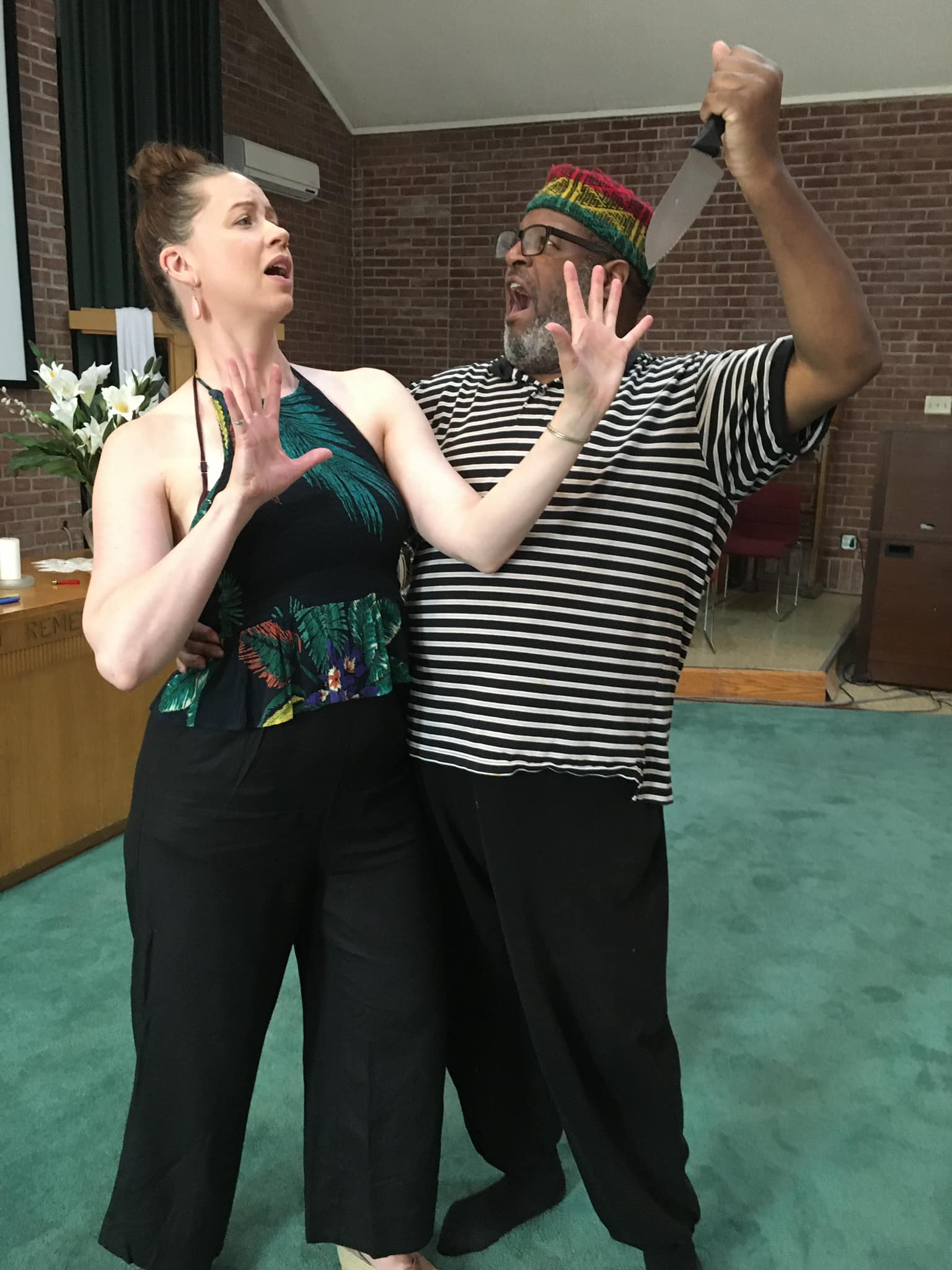
Meagan Reimer was very good in the last act of the role of Desdemona, especially the Willow Song, reminding me of Joan Sutherland in her secure pitch and focus, and precisely accurate coloratura.
Dillon Parmer was a subtle Iago, winning Otello’s trust without seeming too evil, which is helpful. Otherwise we lose all respect for Otello because he seems gullible to trust Iago. Dylan Wright was a powerful voiced Elmiro (Desdemona’s father), Abigail Veenstra was a sympathetic Emilia.
I am always amazed at what Bill accomplishes, as prolific and busy as Rossini himself. The piano part was full of quick passages, often exploding into loud octaves meant to simulate a big orchestra in the piano reduction.
OBR tell us that next season will include Rigoletto, Marriage of Figaro, Bartered Bride, Idomeneo, the Canadian premiere of Thomas Pasatieri’s The Segull, and more. You can find out more by calling (416) 455-2365, or follow them on Facebook.








 barczablog